
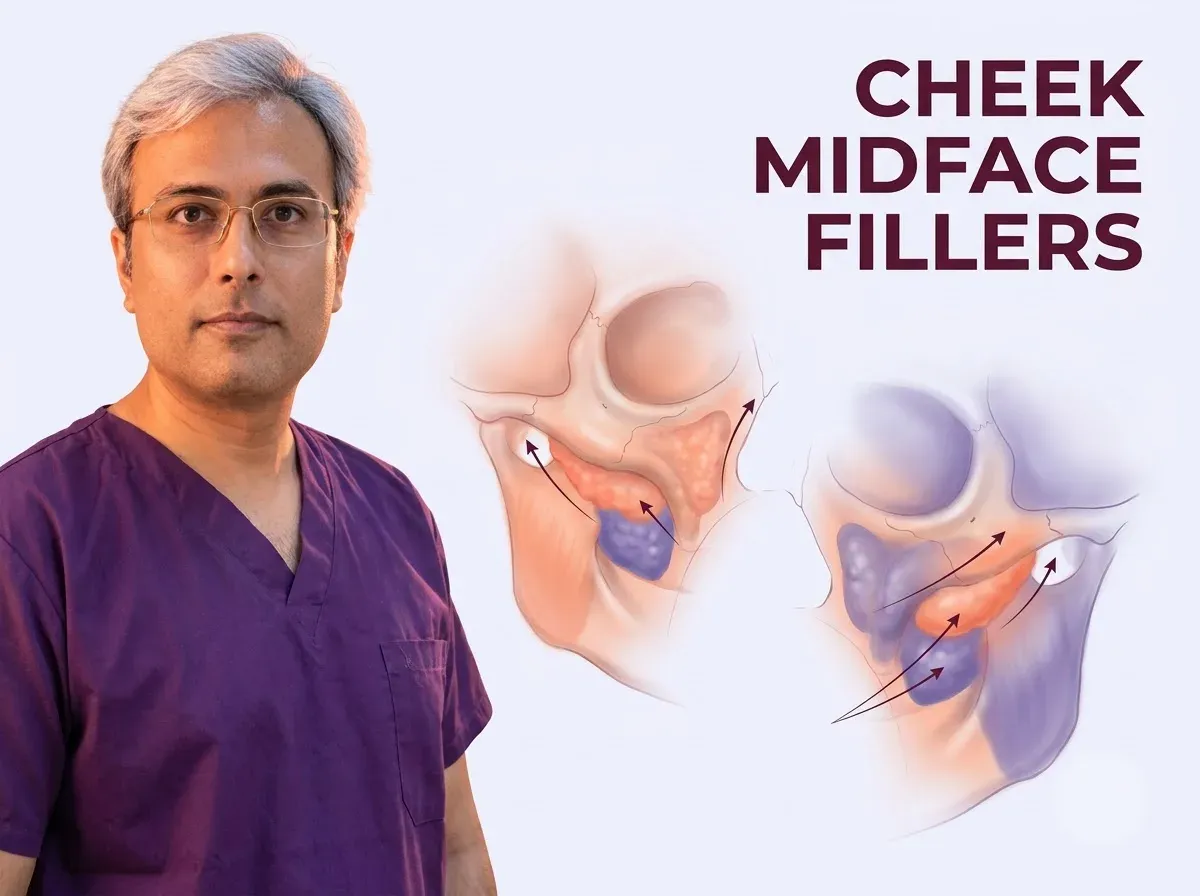

Understanding Dermal Fillers and Their Main Types
Dermal fillers are injectable soft gels placed beneath the skin to restore facial volume and soften static tissue folds. Choosing no treatment is always a valid option. A qualified medical consultation allows individuals to evaluate options calmly before deciding on any aesthetic intervention.
Injectable gels physically fill volume deficits in deeper tissue spaces without altering underlying cellular activity. Patients can read an overview of what dermal fillers achieve and their common facial treatment areas, such as the lips, cheeks, nasolabial folds, chin, and jawline contours.
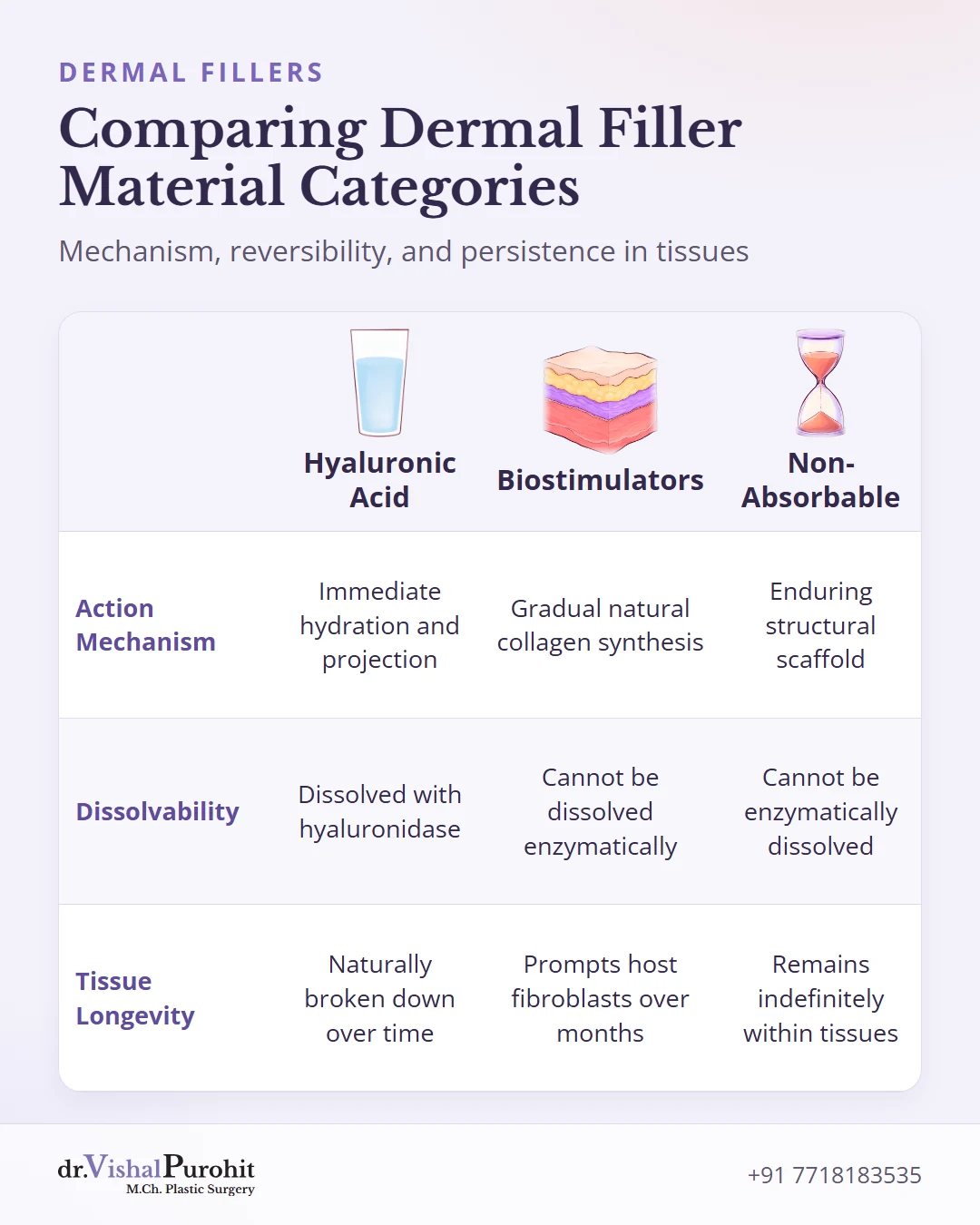
Products differ by their base material, reversibility, and persistence in facial tissues. Exploring the categories of dermal fillers including HA, stimulators, and long-term synthetic matrices explains how immediate space-filling gels compare with gradual collagen stimulators and non-absorbable materials.
Most modern fillers contain cross-linked hyaluronic acid, a water-binding sugar molecule that integrates into tissues to deliver immediate hydration and projection. Understanding how hyaluronic acid fillers work and how they can be dissolved clarifies how native carbohydrate chains are stabilized with cross-linkers like BDDE and how hyaluronidase can break down the gel if needed.
Other materials stimulate natural collagen synthesis rather than simply filling space. Reviewing calcium hydroxylapatite microspheres and collagen stimulation details how CaHA carrier gel provides initial projection before microspheres prompt host fibroblasts to form new structural collagen over subsequent months.
Material selection depends on anatomical needs and individual aesthetic goals:
- Hyaluronic acid gels offer immediate volume and can often be dissolved with hyaluronidase.
- Particulate biostimulators like calcium hydroxylapatite trigger gradual collagen synthesis and cannot be dissolved with hyaluronidase.
- Non-absorbable synthetic options remain indefinitely within tissues and cannot be naturally cleared.
At his practice in Jaipur, Dr. Vishal Purohit assesses each individual during an in-person consultation, where product suitability, material choices, and treatment plans are decided.
Collagen Stimulators, Non-Absorbable Fillers and Skin Boosters
While traditional hyaluronic acid gels mechanically fill volume deficits, other injectable options use different mechanisms to address facial concerns. Reviewing these distinct categories provides helpful education when evaluating soft tissue treatments.
Biostimulatory injectables use microparticles to stimulate fibroblasts and induce neocollagenesis (the formation of new collagen) gradually over several months. Readers exploring this biostimulatory approach can learn how poly-L-lactic acid stimulates endogenous tissue production over time through planned sequential sessions rather than immediate inert volume expansion.
Long-lasting synthetic options combine non-absorbable microspheres with a temporary bovine collagen carrier to create an enduring structural scaffold. Individuals evaluating non-biodegradable materials can review how non-absorbable polymethylmethacrylate microspheres remain embedded in facial structures indefinitely and cannot be enzymatically dissolved if complications arise.
Surface conditioning treatments use fluid, lightly cross-linked or non-cross-linked hyaluronic acid to spread across tissue layers. Understanding how dermal fillers and skin boosters address distinct facial concerns helps clarify the difference between structural projection for deep folds and superficial improvements in hydration and skin elasticity.
Product suitability, anatomical evaluation, and treatment choices are decided at the consultation with Dr. Vishal Purohit. Choosing no treatment is always a valid option.
Treatment Areas Including Hands and Acne Scars
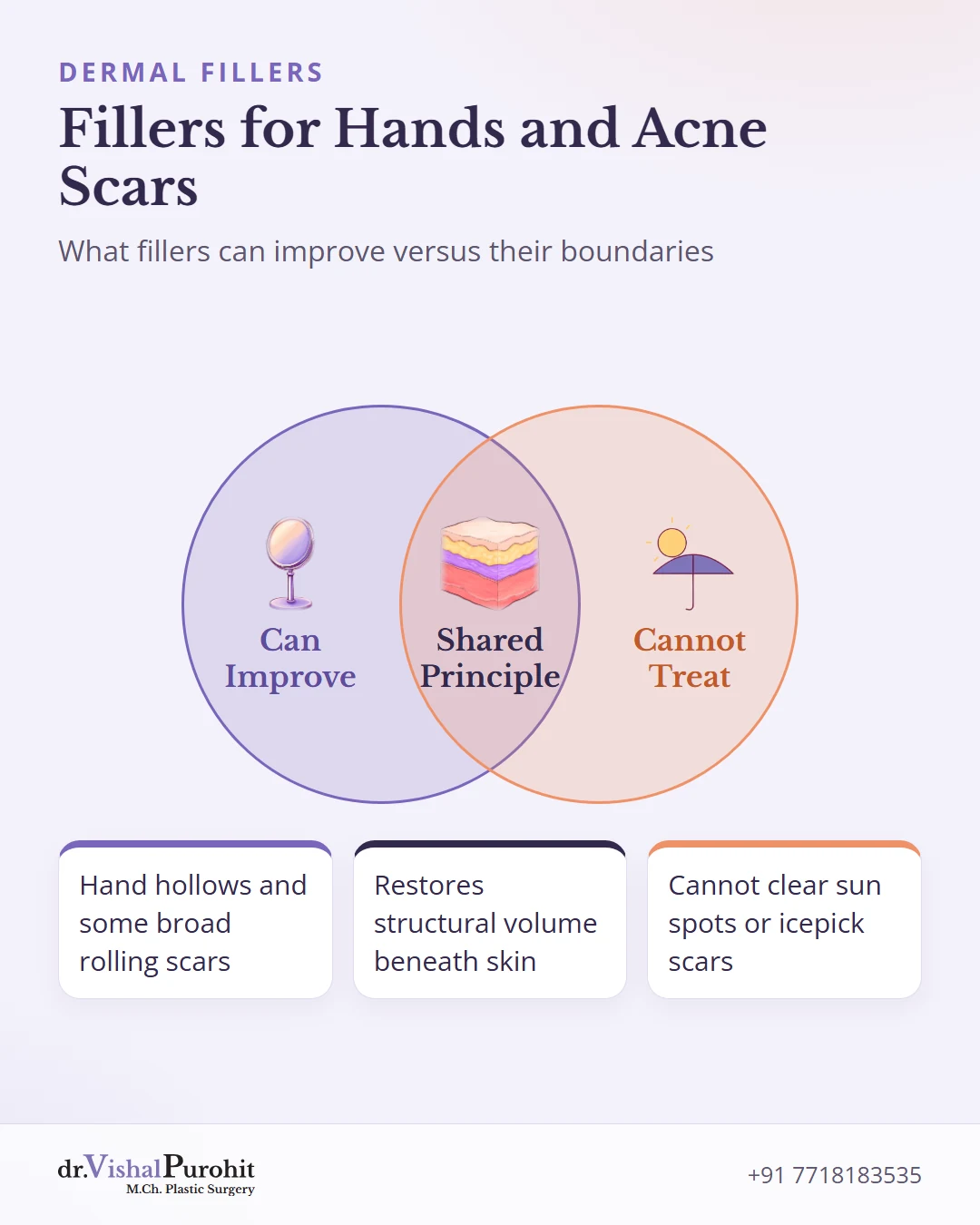
Dermal fillers are placed beneath the skin to restore lost structural volume or soften folds across different areas of the body. Individual anatomical structure, skin mobility, and surrounding blood vessels require careful evaluation before any injection.
In the face, injectable gels address anatomical zones where bone and fat have diminished. Readers can review where can dermal fillers be used and their limits across regions such as the cheeks, tear troughs, nasolabial folds, lips, and jawline. Fillers restore structural volume deficits, but they cannot resolve surface texture changes, dynamic wrinkles, or skin laxity.
Educational discussions also cover volume restoration on the back of the hands. Subcutaneous fat thinning causes superficial veins, extensor tendons, and bony contours to appear prominent. Placing soft-tissue fillers can camouflage these underlying dorsal features, as explained in the guide on what fillers can and cannot do for ageing hands. However, injectable gels cannot clear sun spots, epidermal thinning, or surface pigmentation.
For acne scarring, suitability depends on scar architecture. Broad rolling scars that smooth out when stretched may lift with soft-tissue augmentation, whereas deep icepick pits or tethered boxcar scars resist elevation. Understanding which acne scars may respond to filler helps clarify why fibrotic bands or steep scar walls often require surgical release rather than volume replacement alone.
Common anatomical target areas include:
- Cheeks and midface to restore volume and anatomical support
- Nasolabial folds and oral commissures to soften facial lines
- Chin and mandibular border for lower facial contouring
- Dorsum of the hands to cushion exposed veins and tendons
- Distensible rolling acne scars to elevate depressed contours
Whether dermal fillers suit an individual patient is decided at the consultation with Dr. Vishal Purohit, an M.Ch. plastic surgeon. The clinic offers no laser and no resurfacing of any kind.
Suitability, Natural Results and Choosing a Practitioner
Dermal filler treatments are elective procedures requiring careful clinical planning. A thorough assessment evaluates personal anatomy, health background, and realistic goals to ensure safe care.
Every procedure begins with a detailed medical screening to confirm safety. Certain conditions require postponing or avoiding treatment, and learning who should avoid or postpone dermal fillers helps patients understand why factors like active infections, dental work, pregnancy, breastfeeding, or autoimmune issues affect clinical eligibility.
Treatment focuses on respecting overall facial proportions rather than treating isolated lines. Achieving how staged, measured treatment keeps results natural relies on staging sessions, evaluating dynamic tissue movement, and balancing the upper face, cheeks, and jawline without distorting personal features.
Selecting a medically registered injector is essential for procedural safety. Guidance on what to check when choosing who injects your filler highlights the importance of checking statutory medical credentials, unhurried consent, authentic factory-sealed products, and preparedness for complications.
An initial evaluation provides an unhurried setting to discuss aesthetic goals and treatment limits. Attending your first filler consultation
Preparing for Treatment and Injection Techniques

Careful preparation and thoughtful timing help minimize procedural bruising and ensure predictable tissue recovery. Taking time to organize prior cosmetic records, review current medications, and understand delivery methods allows for an informed discussion during the initial consultation.
Before undergoing injections, following a thorough a checklist for the weeks before filler treatment helps patients compile their complete health history, document previous procedures, and pause non-essential bruising agents under medical guidance.
Essential steps to review when organizing pre-treatment care include:
- Documenting past aesthetic treatments and earlier cosmetic injections.
- Noting active skin conditions, healing tendencies, and any history of cold sores.
- Listing all prescription drugs, over-the-counter medications, and dietary supplements.
During the procedure, injectors deliver soft-tissue filler using specialized instruments. Understanding the differences between sharp needles and blunt microcannulas for fillers explains why clinicians select fine needles for targeted structural precision and flexible cannulas for sweeping distribution across broad facial planes. At his practice in Jaipur, Dr. Vishal Purohit determines instrument selection at the consultation.
Scheduling injections well ahead of social gatherings prevents visible swelling or bruising during celebrations. Following an established how far ahead of a wedding or event to plan filler allows injected material to settle naturally, provides a buffer for routine follow-up reviews, and coordinates safely around dental visits or heavy makeup applications.
Aftercare, Normal Healing and Other Treatments
Soft-tissue filler injections require gentle post-procedure care to let the placed gel settle smoothly. In Dr. Vishal Purohit's practice, specific aftercare rules, review visit timing, and touch-up policies are decided at the personal consultation.
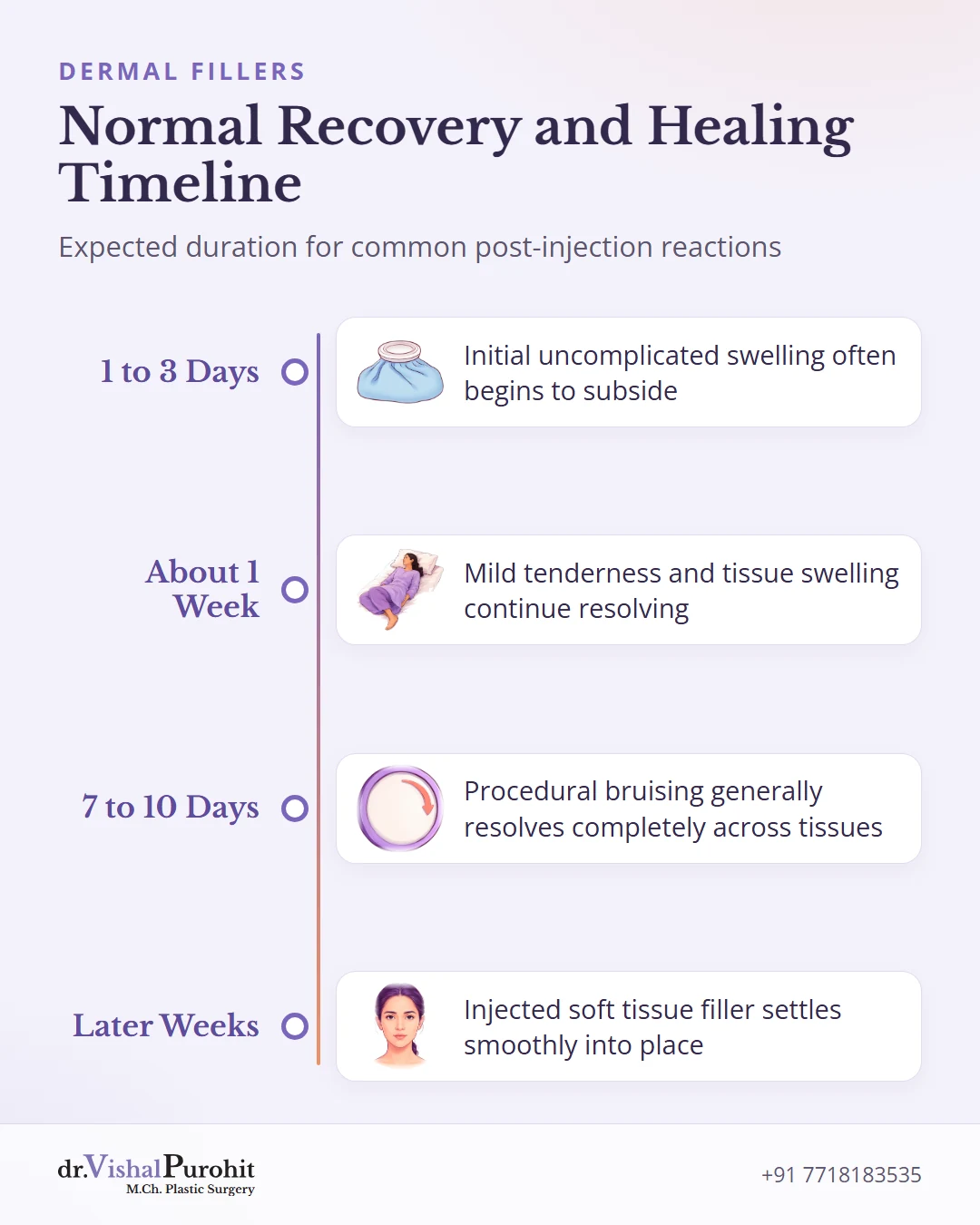
Mild swelling, tenderness, redness, and bruising are expected initial tissue responses. Studies report uncomplicated swelling often subsides within 1 to 3 days or about 1 week, while bruising generally lasts 7 to 10 days. Reviewing filler aftercare, normal swelling and healing stages helps individuals understand typical recovery, regional swelling variations, and daily activity precautions.
Spacing routine skin services and dental procedures away from facial filler placement protects tissue stabilization and lowers infection risks. External pressure or vigorous manipulation can cause filler migration or worsen initial swelling. Learning how facials, energy devices and dental work after dermal fillers interact helps coordinate safe intervals, as transient bacteremia from dental work can seed recently placed implants.
While early swelling resolves over days to weeks, unexpected lumps or puffiness can sometimes emerge much later. Understanding delayed lumps and inflammatory reactions after dermal fillers clarifies why individuals should avoid self-massage or unprescribed medications and seek an in-person physical assessment.
Patients should contact their clinician promptly if any of the following warning signs arise:
- Spreading tenderness, new redness, or localized warmth around a treated area
- Skin breakdown, fever, or fluid discharge suggesting an infection
- Sudden severe pain, skin turning pale, white, or mottled, or any vision changes, which require emergency care at once
Safety Realities and Urgent Warning Signs

Soft-tissue filler injections are medical procedures that alter facial tissues. While expected reactions are usually mild and resolve without intervention, cosmetic fillers carry genuine procedural hazards.
Most common side effects involve mild, localized responses directly from the injection process, such as swelling, redness, bruising, or tenderness. Understanding what what clinical studies report on dermal filler risks helps patients distinguish self-limiting tissue responses from rare issues like delayed inflammatory nodules, biofilms, or hypersensitivity reactions.
The most critical hazard is vascular occlusion, where filler material accidentally enters or compresses an artery. Recognizing urgent red flags and dermal filler emergencies is essential because blocked retinal circulation can cause irreversible vision loss within 60 to 90 minutes.
Emergency medical assessment is required immediately if any of these signs appear:
- Sudden, extreme, or escalating pain disproportionate to ordinary tenderness
- Skin blanching, persistent pallor, or mottled livedo patterns
- Sudden visual changes, blurred vision, double vision, or loss of sight
- Stroke symptoms, facial weakness, or neurological disturbance
- Generalized swelling, rash, or difficulty breathing
Extreme hazards also arise when bypassing medical environments. Learning why needle-free pens and unapproved injectables carry severe risks highlights that high-pressure devices force gel indiscriminately across tissues without anatomical control. Similarly, online formulations or liquid silicone injections carry high risks of severe infection, tissue death, and severe disfigurement.
How Long Fillers Last and Other Options
Every facial treatment addresses different aspects of tissue change. Understanding tissue longevity and non-surgical or surgical alternatives helps patients set realistic expectations.
Visible cosmetic improvement softens gradually as the body naturally breaks down injected gel through local free radicals and enzymatic action. How quickly this occurs depends on gel cross-linking density, individual metabolism, and tissue movement. To understand how mechanical motion and metabolic rates affect tissue persistence, read what decides how long filler results last.
When selecting non-surgical care, it is essential to distinguish volume deflation from active expression lines. Neuromodulators relax dynamic muscles that form expression creases, whereas soft tissue gels restore volume in static depressions. Patients evaluating dynamic expression lines versus volume deficits can compare how Botox and fillers treat different kinds of lines to understand their distinct anatomical purposes.
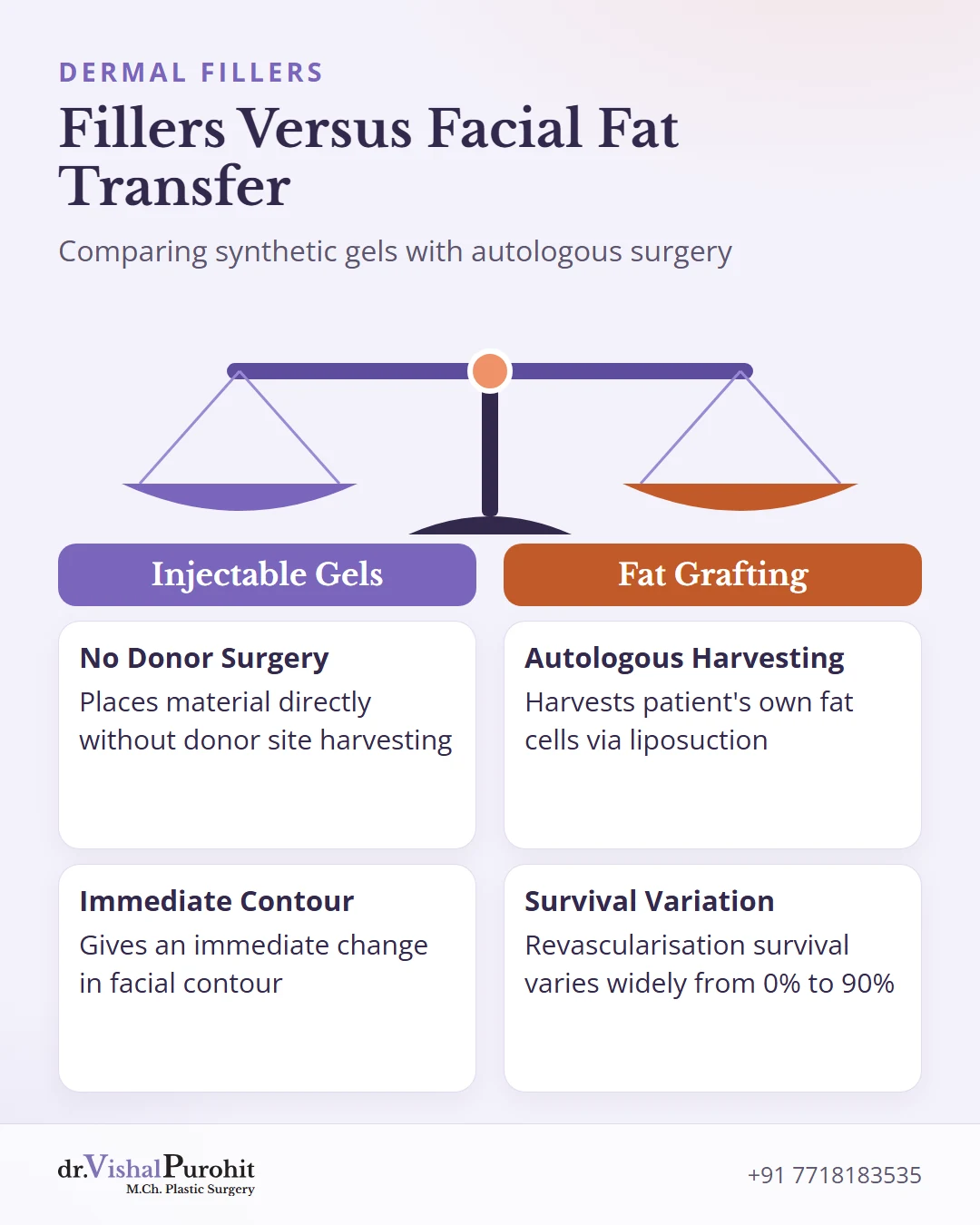
For structural restoration, volume can be added using synthetic gels or autologous surgical tissue grafting:
- Injectable gels place material without donor surgery and provide predictable contouring.
- Autologous fat grafting harvests a patient's own fat cells via liposuction.
- Grafted fat requires revascularisation, and studies report wide survival variation spanning from 0% to 90%.
Patients assessing recovery timelines and reversibility can explore how fillers compare with facial fat transfer.
Deep volume loss can also create pseudoptosis, which is the illusion of sagging caused by fat deflation. While fillers restore local volume, true structural laxity involving descended deeper tissues requires surgical repositioning. Evaluating tissue laxity alongside volume deflation clarifies the differences in when filler helps and when a facelift is the better fit surgery.
Dermal Filler Cost in Jaipur, Products and Consent

Dermal filler treatments require careful clinical planning, precise anatomical knowledge, and sterile technique. Each facial area presents unique contours and tissue depths, making an individual assessment essential before proceeding with any injectable procedure.
In aesthetic medicine, professional fees depend on the gel formulation selected, anatomical complexity, and required product amount. Pricing structures, what quotes include, review visit schedules, touch-up policies, and dissolving considerations are not predetermined and are explained at the consultation. Patients can review dermal filler fees and quote considerations to understand what to ask before deciding.
Injectable soft tissue products differ between manufacturers, and their doses are not interchangeable. Regulatory clearances evaluate formulations for specific indications and tissue depths, meaning an approved product is cleared only for evaluated anatomical sites. Patients can check regulatory standing and product packaging authenticity during their evaluation to confirm batch details, expiry dates, and manufacturer documentation.
A comprehensive consultation ensures every patient has adequate time to evaluate medical recommendations and provide written informed consent. During this discussion, patients can ask which product is used and what its official label covers. Essential elements of the consent process include:
- Clear explanations of product limitations and alternative treatments
- Transparent review of expected outcomes and recovery considerations
- Detailed discussion of frequent side effects and rare, serious complications
- Written documentation confirming procedural scope and agreed goals before treatment