
Restoring lost facial volume can be accomplished through non-surgical injections or autologous surgical tissue grafting. Understanding the clinical differences between synthetic gels and transferred living tissue helps patients evaluate which approach suits their cosmetic goals.
A thorough review of Types of Dermal Fillers: HA, Stimulators and Permanent Fillers provides background on injectable materials. While dermal fillers require no donor tissue, surgical fat grafting relies on harvesting cells through liposuction to restore structural contours.
Procedural Differences and Donor Site Requirements
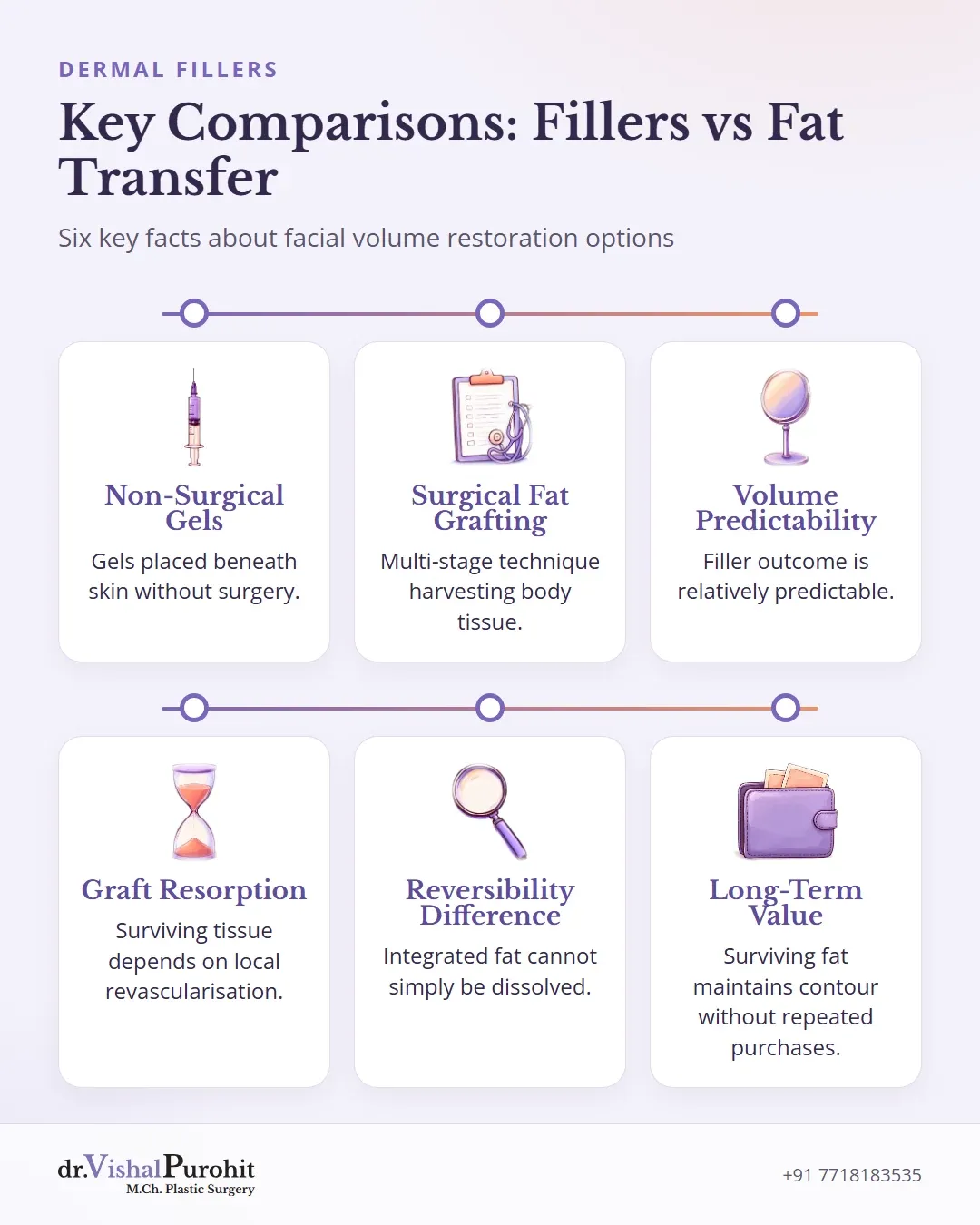
Dermal fillers and facial fat transfer take distinct clinical paths to restore volume.
Dr. Purohit’s note: Dr. Vishal Purohit provides dermal fillers as a non-surgical option in Jaipur, where gels are placed beneath the skin without surgery.
Facial fat transfer is a multi-stage surgical technique1. It requires minor liposuction to harvest a patient’s own fat cells before they are processed and reinjected into the face1.
Donor Site Selection and Surgical Steps
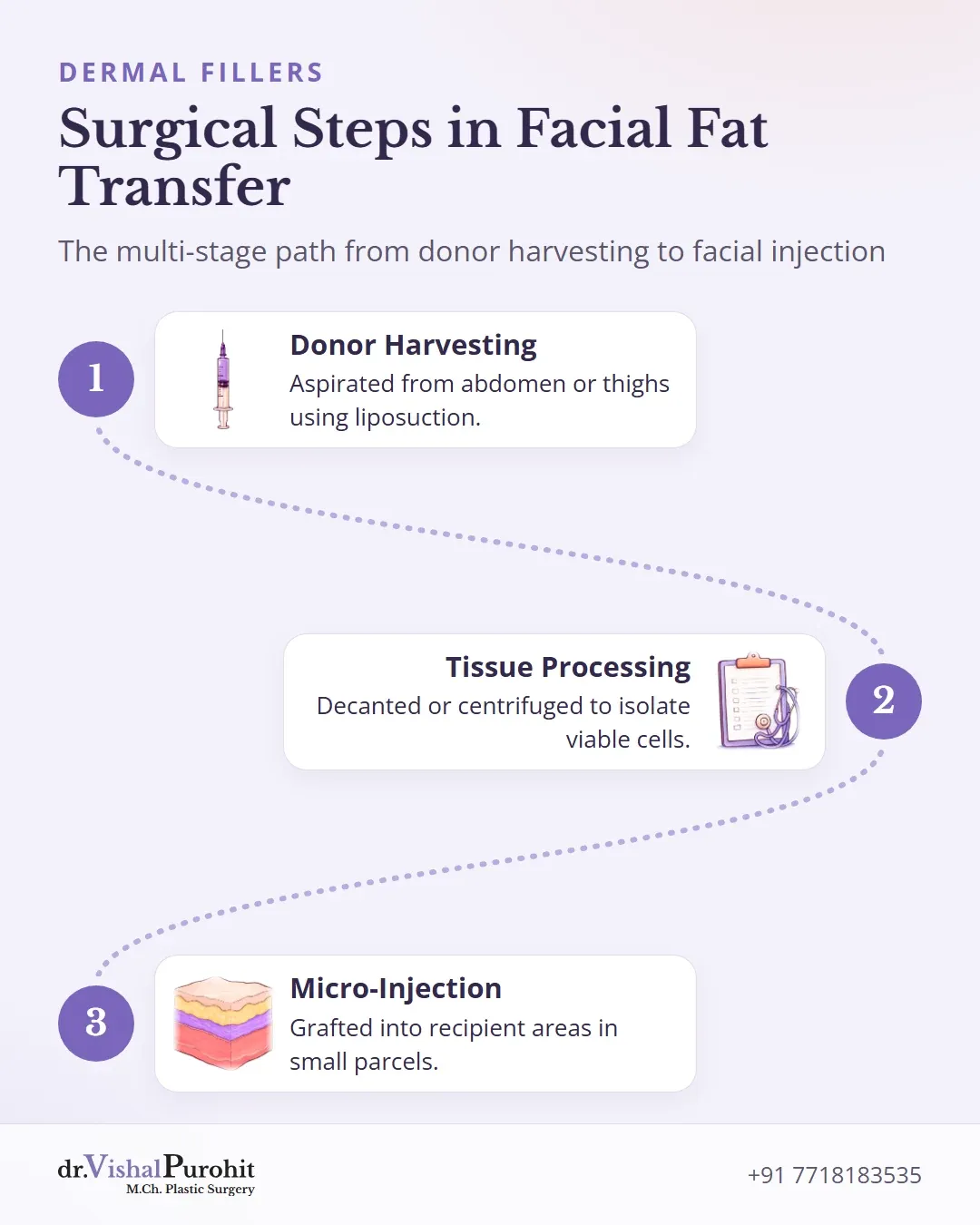
While dermal fillers require no preparation of donor tissue, autologous fat grafting depends on having an adequate supply of body fat2.
Donor Harvesting
Fat is typically aspirated from areas such as the abdomen or thighs using liposuction techniques23. Research indicates that the specific donor location does not significantly alter long-term graft retention or survival24.
Unlike dermal fillers, fat grafting introduces recovery requirements and potential healing complications at both the facial recipient site and the donor harvest site17.
Recovery Timelines and Volume Predictability
Hyaluronic Acid Dermal Fillers
Hyaluronic acid gels provide immediate cosmetic volume with little downtime8. The material causes immediate swelling that peaks the morning after treatment due to the body’s inflammatory response and fluid shifts while lying flat910. Most swelling settles over the initial days910.
Key points
- Hyaluronic acid fillers offer rapid recovery and relatively predictable immediate volume, with swelling settling in the initial days.
- Facial fat grafting involves donor-site healing and a longer recovery window.
- Fat graft volume stabilises over several months due to variable graft resorption and revascularisation.
Because the injected gel delivers a direct physical shape, the final aesthetic outcome is relatively predictable1112. The practitioner and patient assess the contours early, though follow-up reviews remain useful once initial swelling subsides9.
Facial Fat Grafting
Facial fat grafting requires a longer recovery period. Patients experience post-procedure swelling, bruising, and healing at the donor site where tissue was collected513.
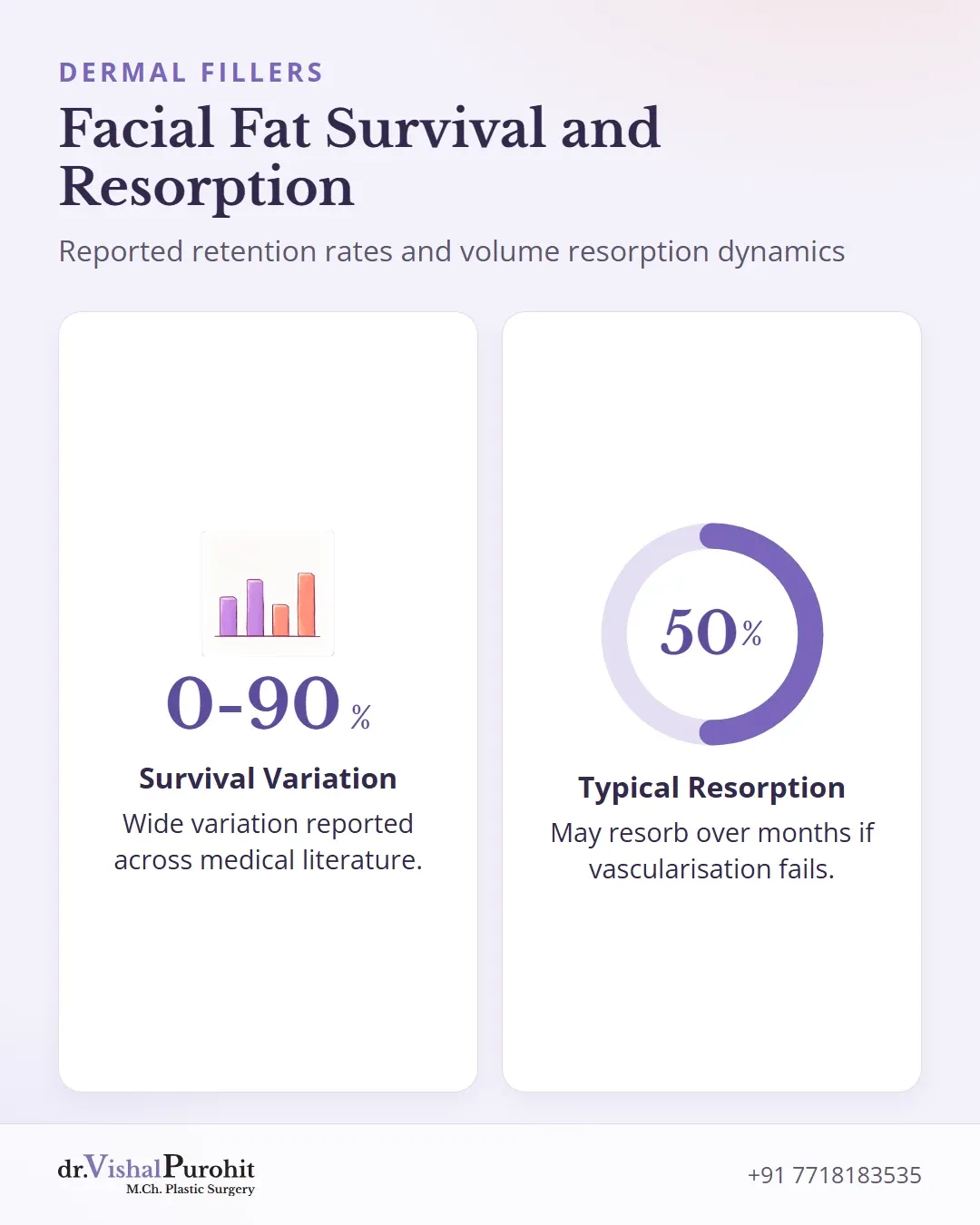
Predicting retained volume is more complex with fat transfer. Surviving tissue depends on local revascularisation, and lack of blood supply leads to graft resorption5. Literature reports wide variation in facial fat survival, spanning from 0% to 90%1415. Because resorption occurs gradually, the ultimate volume typically stabilises over several months, sometimes leaving underfilled areas or necessitating secondary procedures to achieve the target contour51315.
Reversibility and Distinguishing Complications
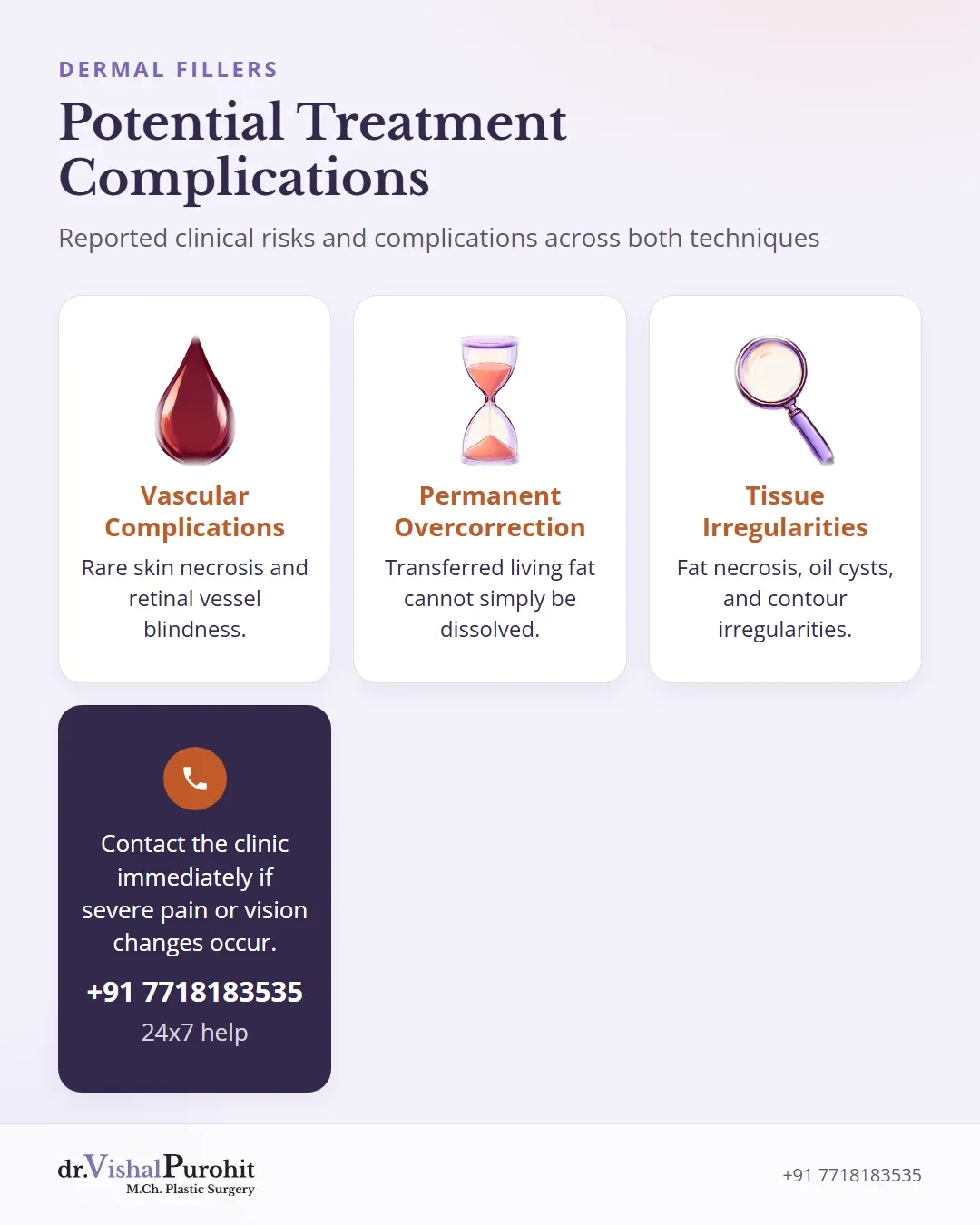
Hyaluronic acid dermal fillers and autologous facial fat transfer differ fundamentally in how complications are handled and whether an outcome can be reversed.
Hyaluronic Acid Filler Reversibility
Hyaluronic acid filler can often be dissolved with the enzyme hyaluronidase. However, dissolving is never guaranteed to be complete, nor is it entirely free of its own risks. Rare but serious vascular complications have been documented following filler placement, including skin necrosis and blindness caused by retrograde flow into retinal vessels1617.
Autologous Fat Transfer Outcomes
In contrast, transferred autologous fat obtains a living blood supply in recipient tissues, though approximately 50% may resorb over several months if vascularisation fails18. Once integrated, this tissue cannot simply be dissolved if overfilled or asymmetric19:
- Overcorrection remains difficult to manage because fat functions as a permanent living graft19.
- Removing excess fat across intricate facial anatomy is far more challenging than adding volume or relying on spontaneous resorption20.
- Other reported complications include localized ecchymosis, edema, fat necrosis, oil cysts, and contour irregularities161721.
Upfront Financials Versus Ongoing Maintenance
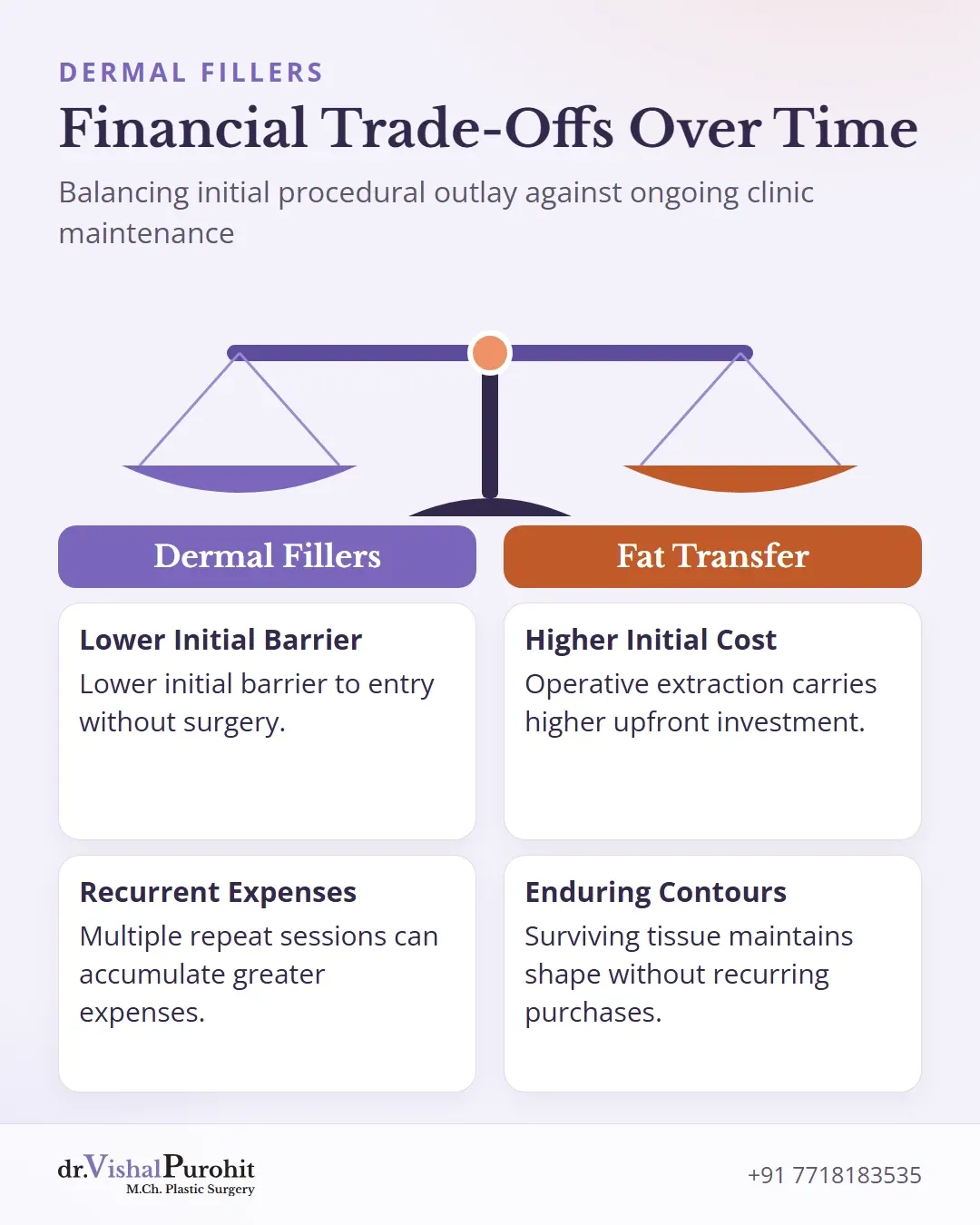
Financial considerations differ markedly between injectable gels and surgical fat transfer.
Initial Expenditure Versus Maintenance
Surgical fat grafting requires an operative extraction and placement process, which typically carries a higher initial cost to the patient18. However, autologous fat provides an enduring volumising option due to its longevity and biocompatibility1, meaning surviving tissue can maintain contour without ongoing product purchases22.
In contrast, dermal fillers offer a non-surgical option with lower initial barrier to entry, but the effects are short-lived1823. Maintaining cosmetic results requires recurrent injections over time2324. When widespread facial volume is required, multiple filler treatments can become more expensive over the long term than autologous fat transfer1822.
Clinical Approach in Jaipur
At his practice in Jaipur, Dr. Vishal Purohit assesses each individual face to determine which strategy offers practical value.
Tailoring the Decision to Your Lifestyle
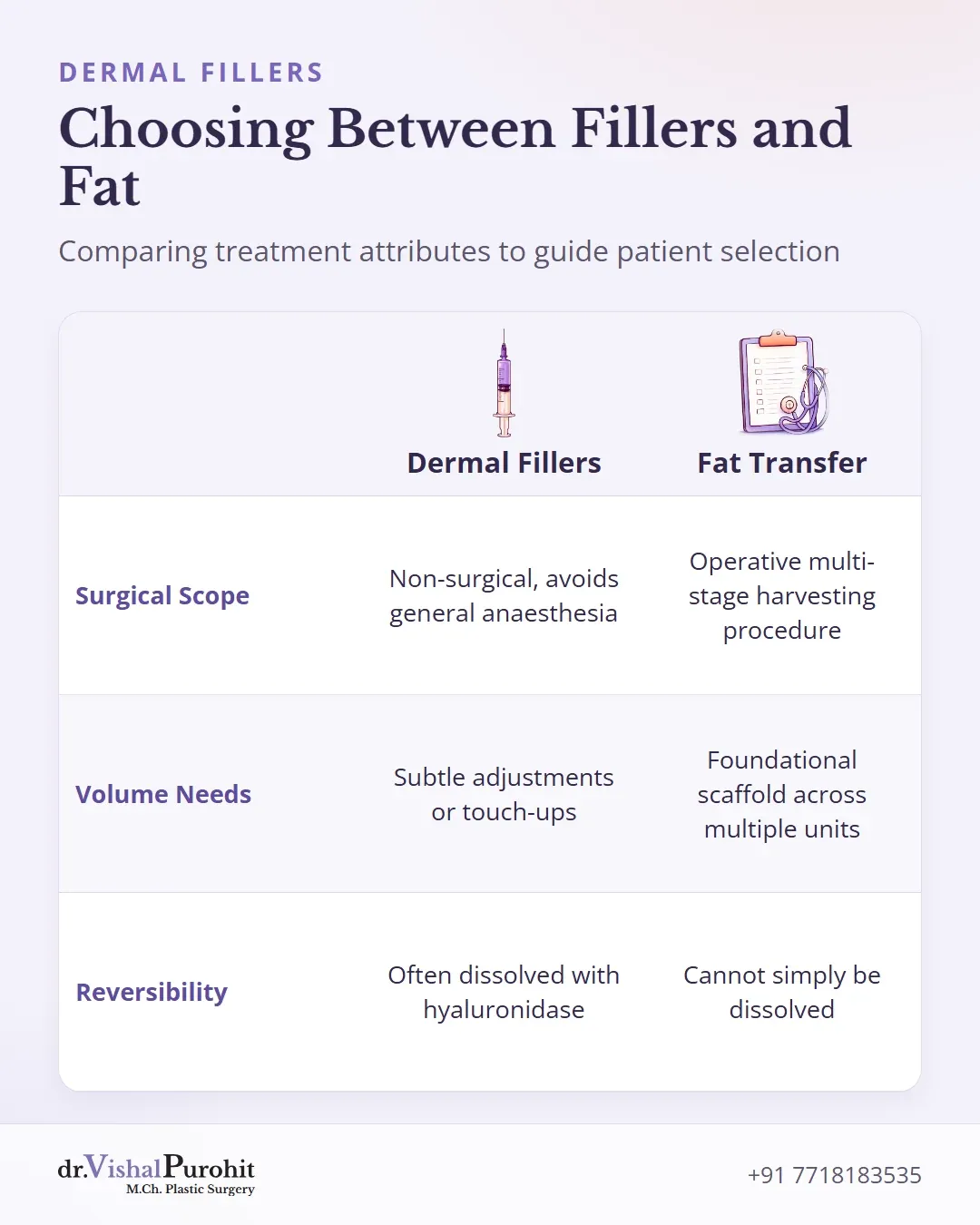
Selecting between dermal fillers and autologous fat transfer depends on personal goals, recovery allowances, and whether other procedures are planned25. Both approaches serve distinct roles in restoring facial fullness26.
Factors Influencing the Choice
- Surgical scope: Fat grafting and dermal fillers both address volume loss, often serving as complementary options or adjuncts to facial rejuvenation126. When someone is already undergoing surgery, fat grafting can be incorporated to establish structural volume12527.
- Recovery and ease: Dermal fillers remain widely chosen because of their ease of use and because they avoid surgical fat harvesting or general anaesthesia25.
- Volume needs: For individuals with extensive volume loss seeking lasting correction across multiple cosmetic units, autologous fat can provide a foundational scaffold2728. Conversely, fillers allow subtle adjustments or touch-ups without an operative harvest252728.
An individualised consultation helps clarify clinical expectations, procedural trade-offs, and risk profiles25. Rather than following external trends, treatment decisions are tailored through careful examination and shared decision-making to align with individual anatomy2529.
Consultation for Facial Volume Restoration in Jaipur
Choosing between non-surgical injectables and autologous fat transfer depends on personal volume needs, recovery capacity, and whether other surgical work is planned. Exploring Dermal Fillers in Jaipur clarifies procedural expectations and clinical options. For common queries regarding treatment methods, review the Dermal Fillers FAQs before arranging an appointment.
This is educational information, not medical advice.