
A facial aesthetic consultation provides a structured setting to evaluate individual goals and assess facial anatomy both at rest and during expression. Patients can review personal priorities alongside clinical safety checks, ensuring any planned procedure aligns with their expectations.
Understanding Who Should Avoid or Postpone Dermal Fillers? helps establish whether proceeding is clinically suitable. The consultation also explores potential non-surgical or surgical alternatives, confirming that choosing no treatment remains a fully supported clinical decision.
Aesthetic Goals and Facial Assessment
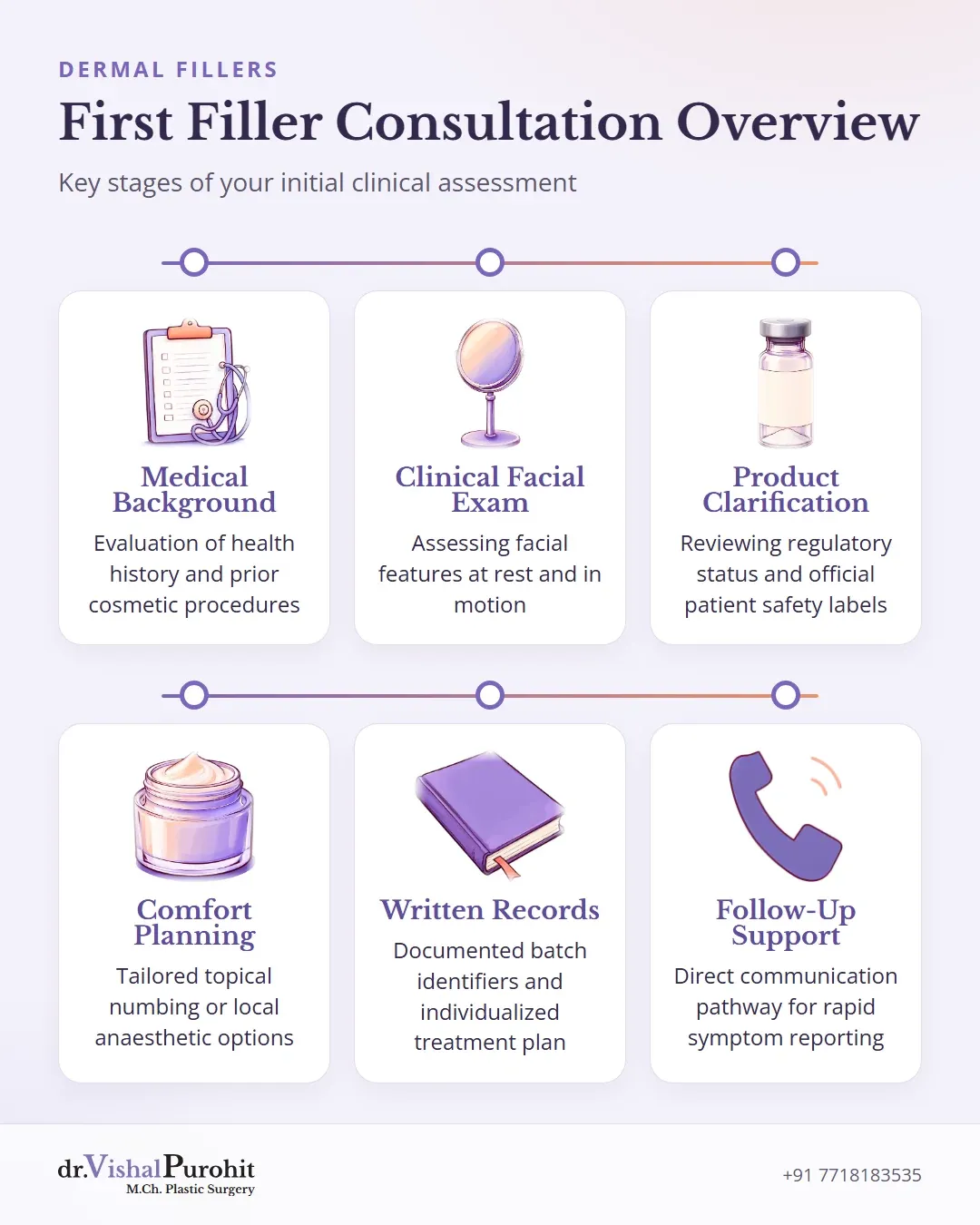
A filler consultation starts with an evaluation of medical background, systemic conditions, and prior cosmetic procedures12. The patient discusses their personal aesthetic priorities, holding a mirror to point out specific facial areas of concern2.
Clinical Examination
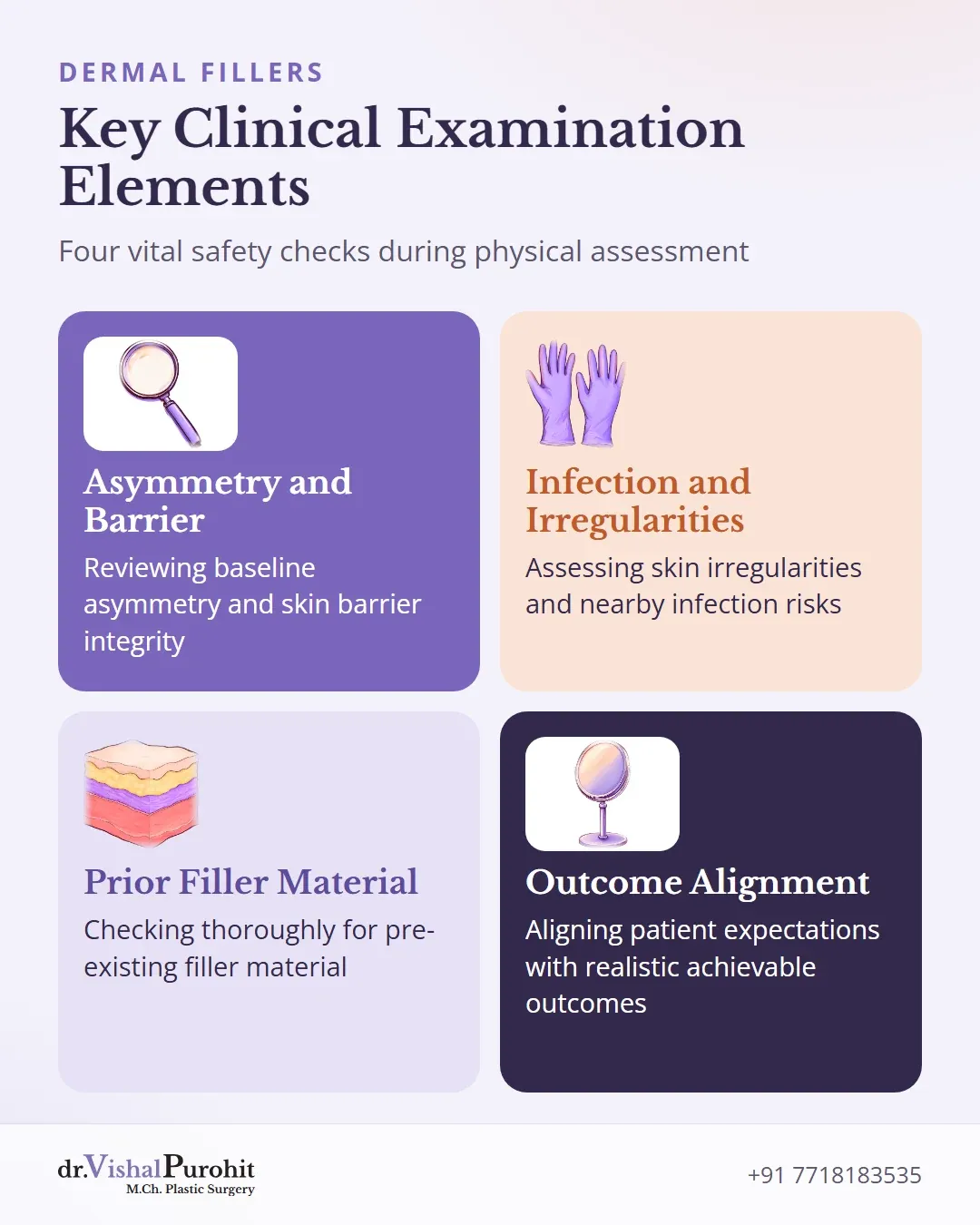
The physical assessment evaluates facial features both at rest and during facial expression34. Key aspects of this evaluation include:
- Reviewing baseline facial asymmetry and skin barrier integrity25.
- Assessing skin irregularities, rosacea, or potential sources of infection near planned sites56.
- Checking for pre-existing filler material5.
- Aligning patient expectations with realistic outcomes25.
Literature notes that when baseline photodocumentation is performed, it helps track treatment outcomes and demonstrates findings with the face at rest and with active movement46.
Questions About Product and Alternatives
A dermal filler consultation provides an opportunity to evaluate the treatment plan and verify that any proposed procedure aligns with individual goals.
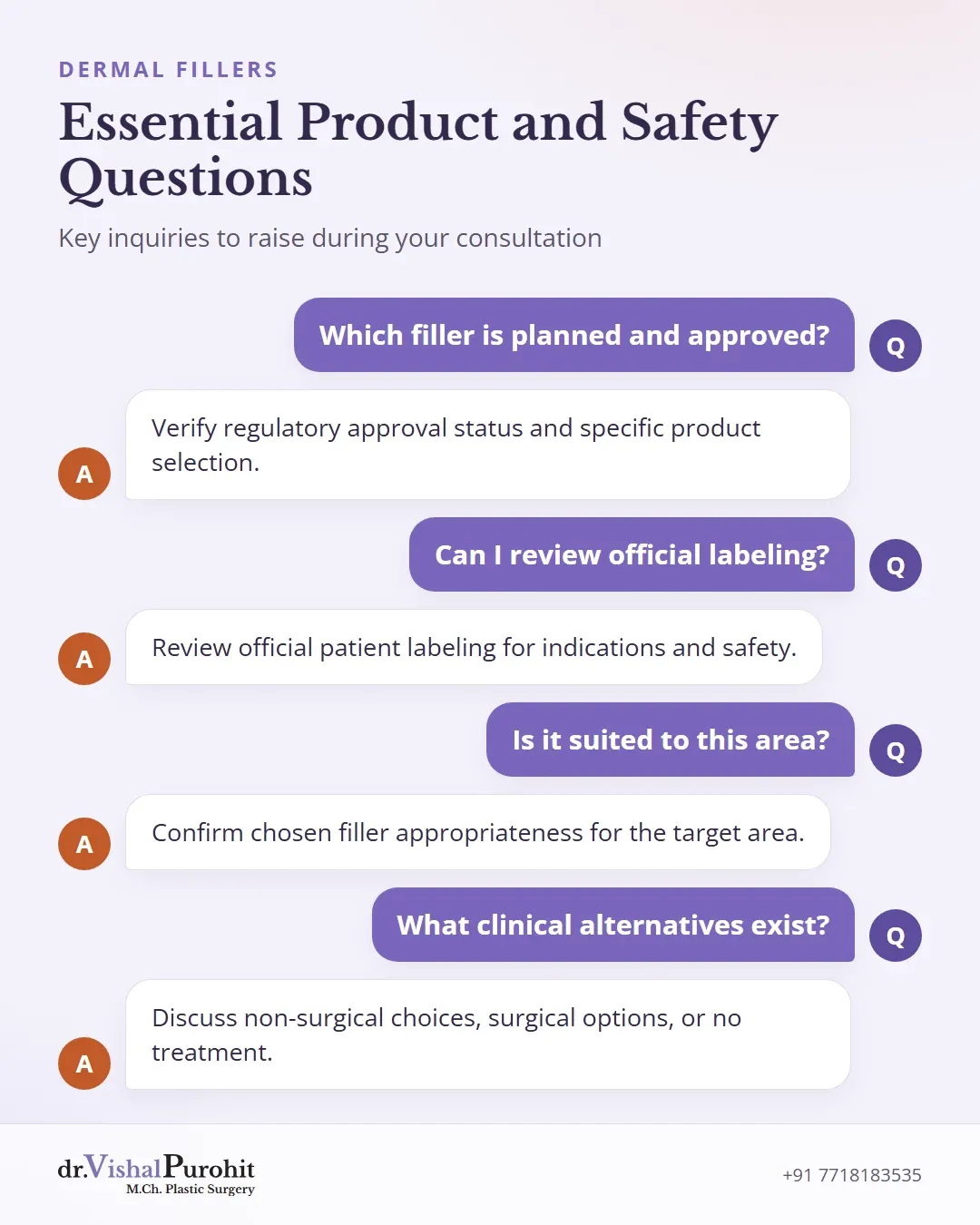
Key questions to raise during this discussion include:
- Which specific dermal filler product is planned, and what is its regulatory approval status78?
- Can the practitioner provide the official patient labeling to review indications and safety information910?
- Is the chosen filler appropriate for the intended facial area79?
- What alternative approaches exist, including non-surgical options or surgical procedures such as a facelift811?
The discussion should cover the expected benefits, risks, and alternatives of the planned procedure8. Professional guidance emphasizes presenting all suitable interventions to help patients make an informed choice11.
Choosing no treatment is a completely valid clinical decision12. If a competent individual chooses not to proceed, treatment cannot move forward12.
Dr. Purohit’s note: Dr. Purohit decides product selection individually during the consultation based on clinical assessment, ensuring that proceeding remains entirely the patient’s choice.
Appointment Steps and Discomfort Management
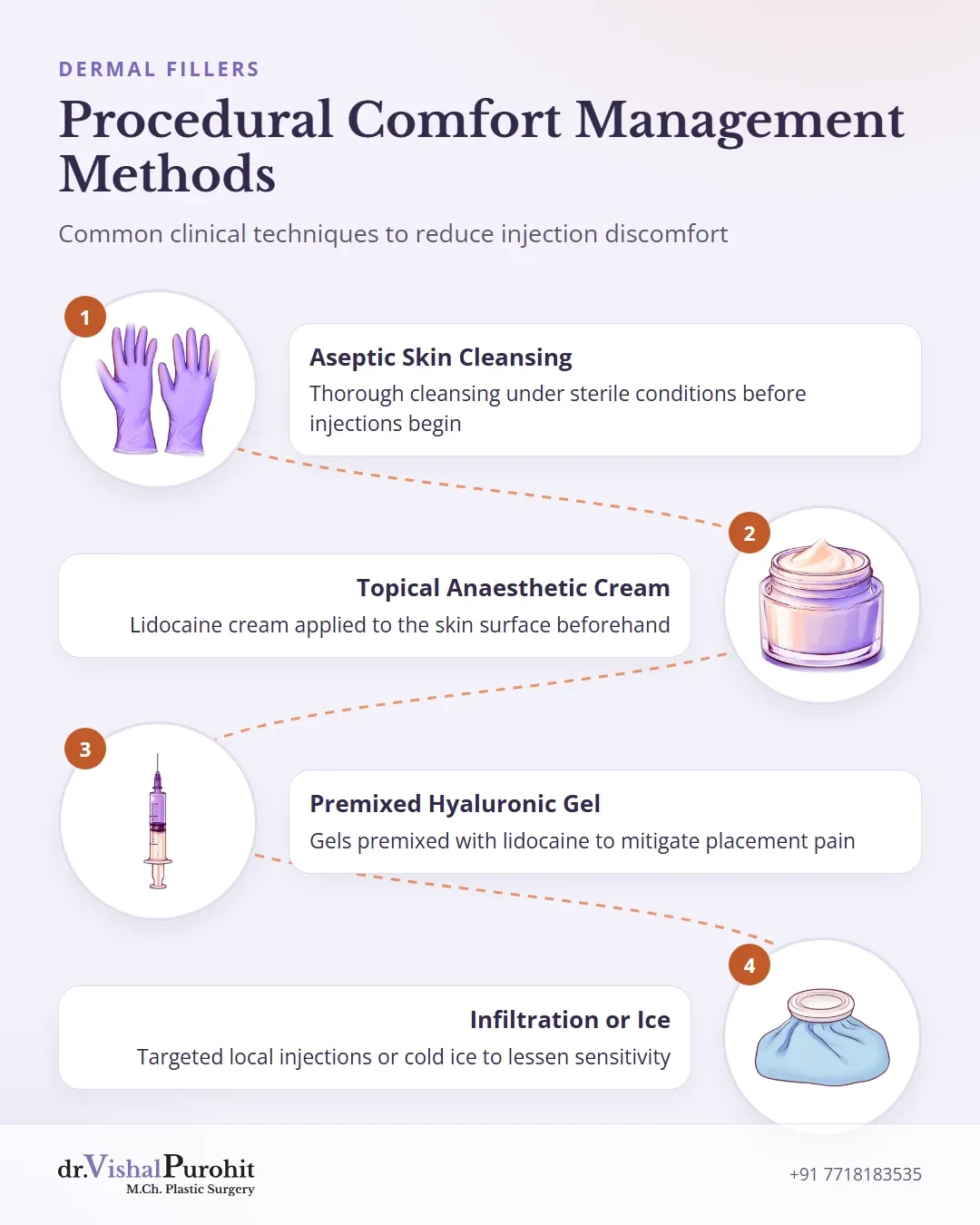
Dermal filler sessions follow structured clinical steps to maintain safety and patient comfort. The skin is cleansed thoroughly under aseptic conditions before treatment begins13.
Key points
- Dermal filler appointments follow aseptic protocols to maintain safety and comfort.
- Discomfort is managed through topical creams, premixed lidocaine gels, or local anaesthesia.
- Numbing approaches and injection techniques are customized during the clinical consultation.
Managing procedural discomfort is an integral part of facial injectables15. In aesthetic practice, discomfort is commonly addressed through several methods:
- Topical anaesthetic creams, such as lidocaine formulations applied before the procedure1314.
- Hyaluronic acid gels premixed with lidocaine to mitigate pain during tissue placement15.
- Local anaesthetic injections or ice application to reduce sensitive sensations1416.
Studies show that lidocaine-premixed formulations generally provide well-tolerated pain levels during injections15. Anesthetics carry potential reactions including transient skin irritation or redness14. Mild procedural tenderness, swelling, and temporary discomfort remain possible following treatment17.
Because every patient presents unique facial sensitivity and treatment goals, Dr. Vishal Purohit does not apply a single rigid protocol. The choice of numbing method and procedural technique is decided at the consultation following a detailed physical evaluation.
Written Plan and Product Traceability
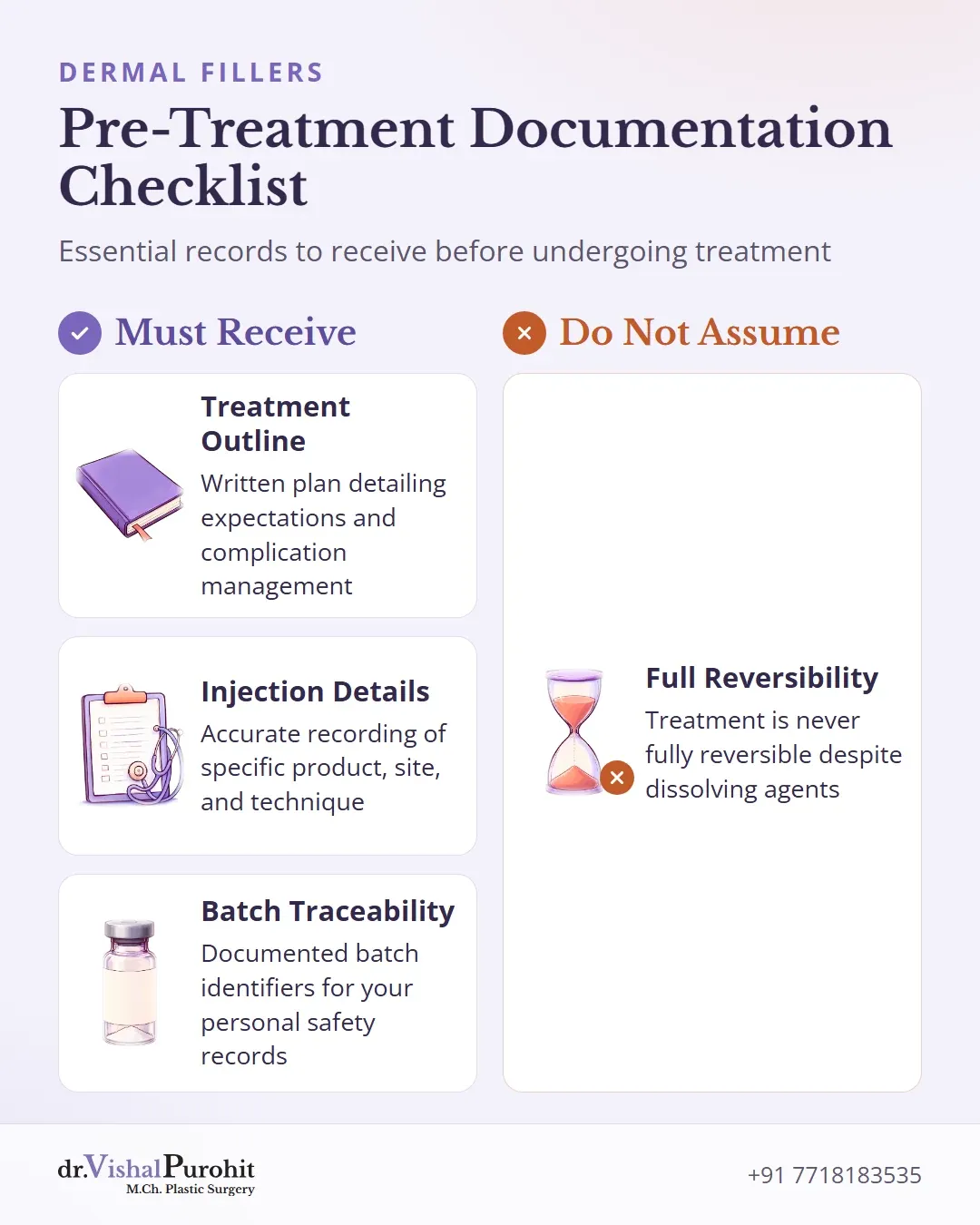
An individualized aesthetic treatment plan should be formulated during consultation to review details of the proposed dermal filler procedure4. Clear documentation is a fundamental element of safe aesthetic practice, helping to maintain patient safety and support clinical records45.
Patients should receive written details and record-keeping items covering:
- A written outline of the proposed treatment plan, realistic expectations, and potential complications and their management options45.
- Accurate documentation of the specific product used, injection site, and technique5.
- Product traceability details, such as batch identifiers, to document the exact product lot for personal safety records518.
Hyaluronidase can often dissolve hyaluronic acid dermal filler if needed1819. However, treatment is never fully reversible, and patients must be counseled that potential complications carry varying degrees of severity and reversibility5.
Follow-Up Contact and Review Visit
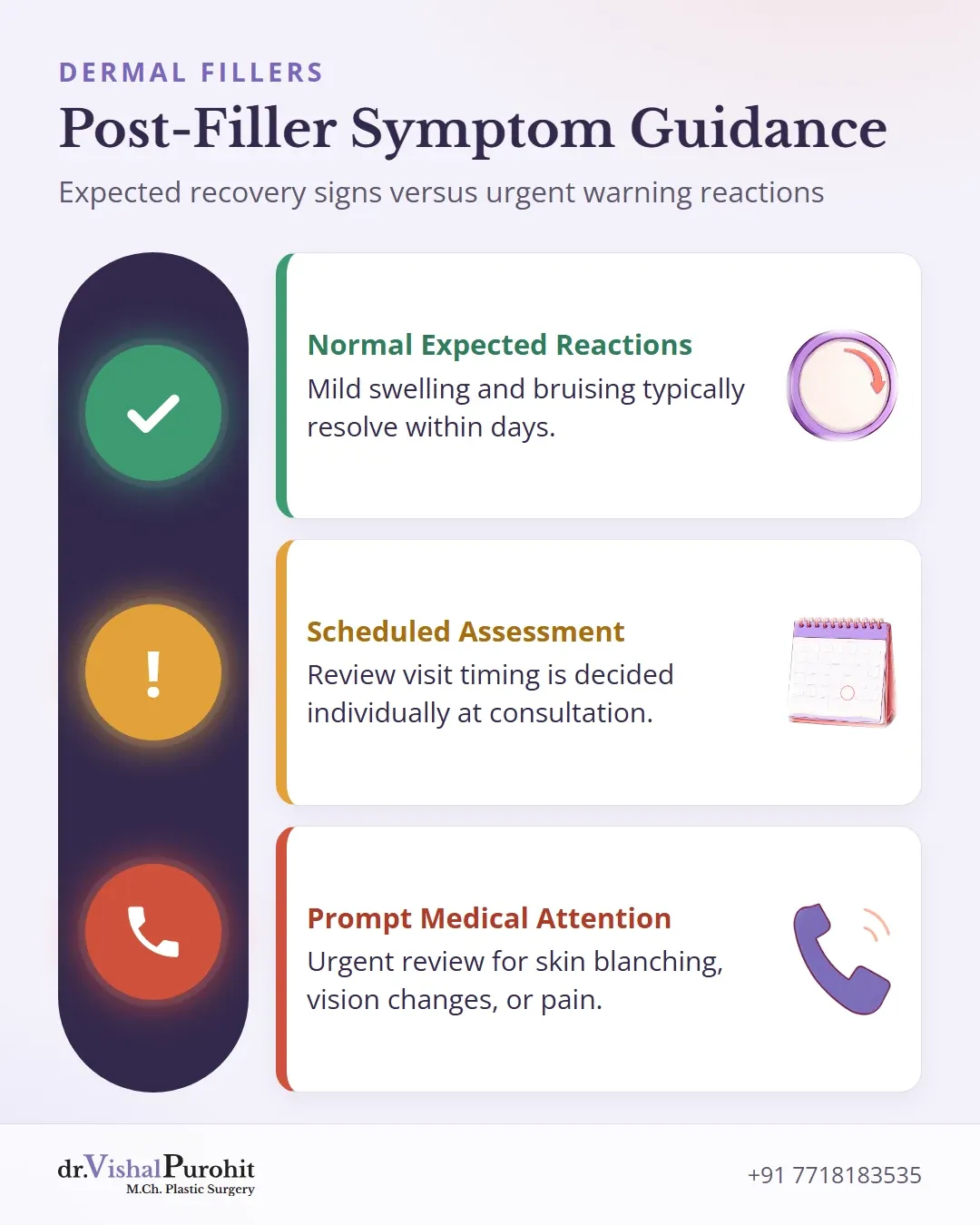
After receiving dermal fillers, patients need a direct communication pathway with their provider. Guidance notes that facilities should supply accessible contact details so individuals can quickly report unexpected reactions or concerns2021. At Dr. Vishal Purohit’s practice in Jaipur, patients receive individual post-procedure contact instructions, and the clinic phone is +91 7718183535.
Key points
- Facilities must provide accessible contact details so patients can quickly report unexpected reactions.
- Urgent medical attention is necessary for signs of vascular occlusion like blanching, vision changes, or severe pain.
- Review appointments assess healing and treatment outcomes, with timing decided individually at consultation.
Prompt medical attention is necessary if signs of a blocked blood vessel develop, including skin blanching, visual changes, or unusual pain22. In literature, common reactions such as mild swelling or bruising typically resolve within days2023.
Review Appointments
Published sources suggest that clinicians may assess facial filler outcomes around one month post-treatment to evaluate wrinkle reduction and check healing23. For Dr. Purohit’s patients, specific review visit timing, along with any touch-up or dissolving policy, is not fixed beforehand and is decided at the consultation. Selected follow-up assessments may take place by video when clinically appropriate, though in-person evaluation remains necessary if physical examination or active clinical issues require it.
Arranging a Facial Filler Evaluation in Jaipur
An initial consultation offers the time and clinical framework required to evaluate facial balance, review product details, and consider all clinical alternatives carefully. Patients interested in exploring Dermal Fillers in Jaipur can review their options without pressure to proceed immediately. For additional details on appointment planning, safety considerations, and procedural steps, please read the Dermal Fillers FAQs.
This is educational information, not medical advice.