
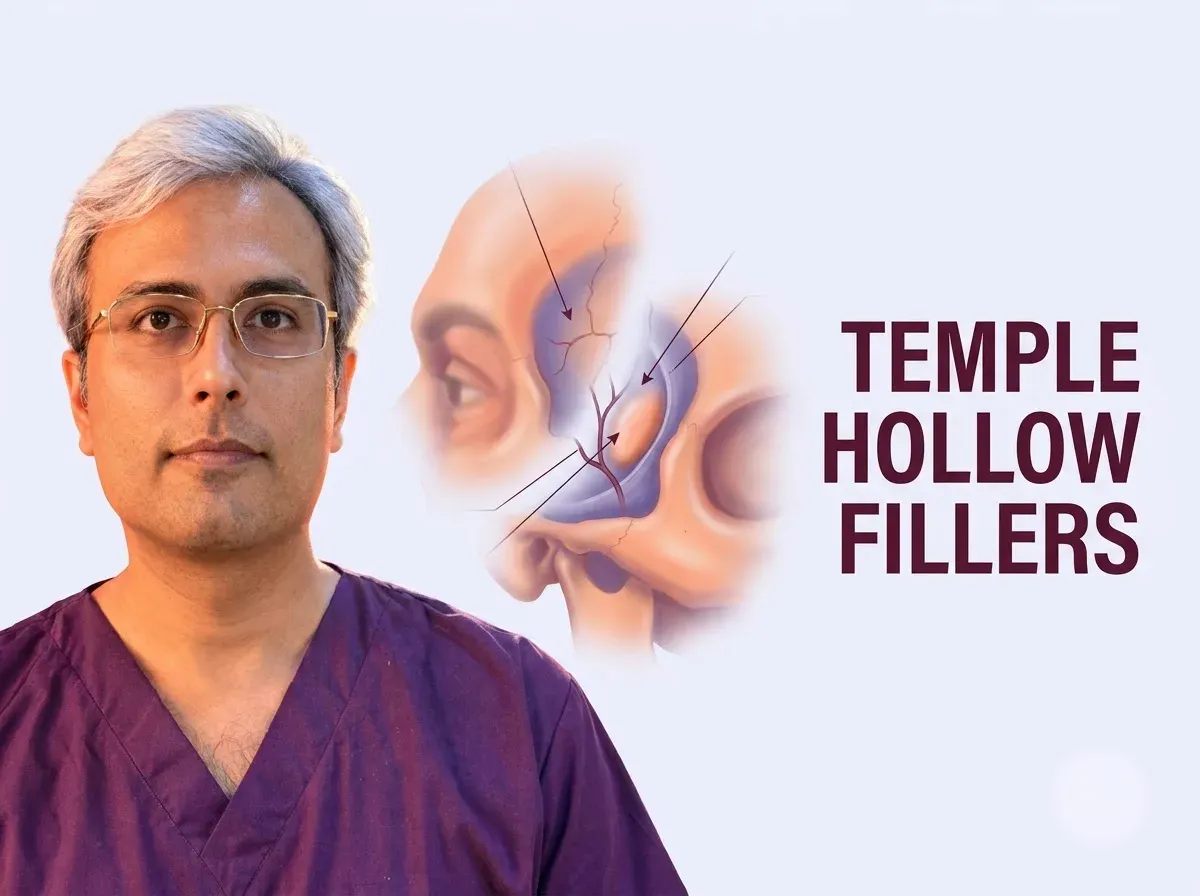

Understanding Hollow Temples and Treatment Limits
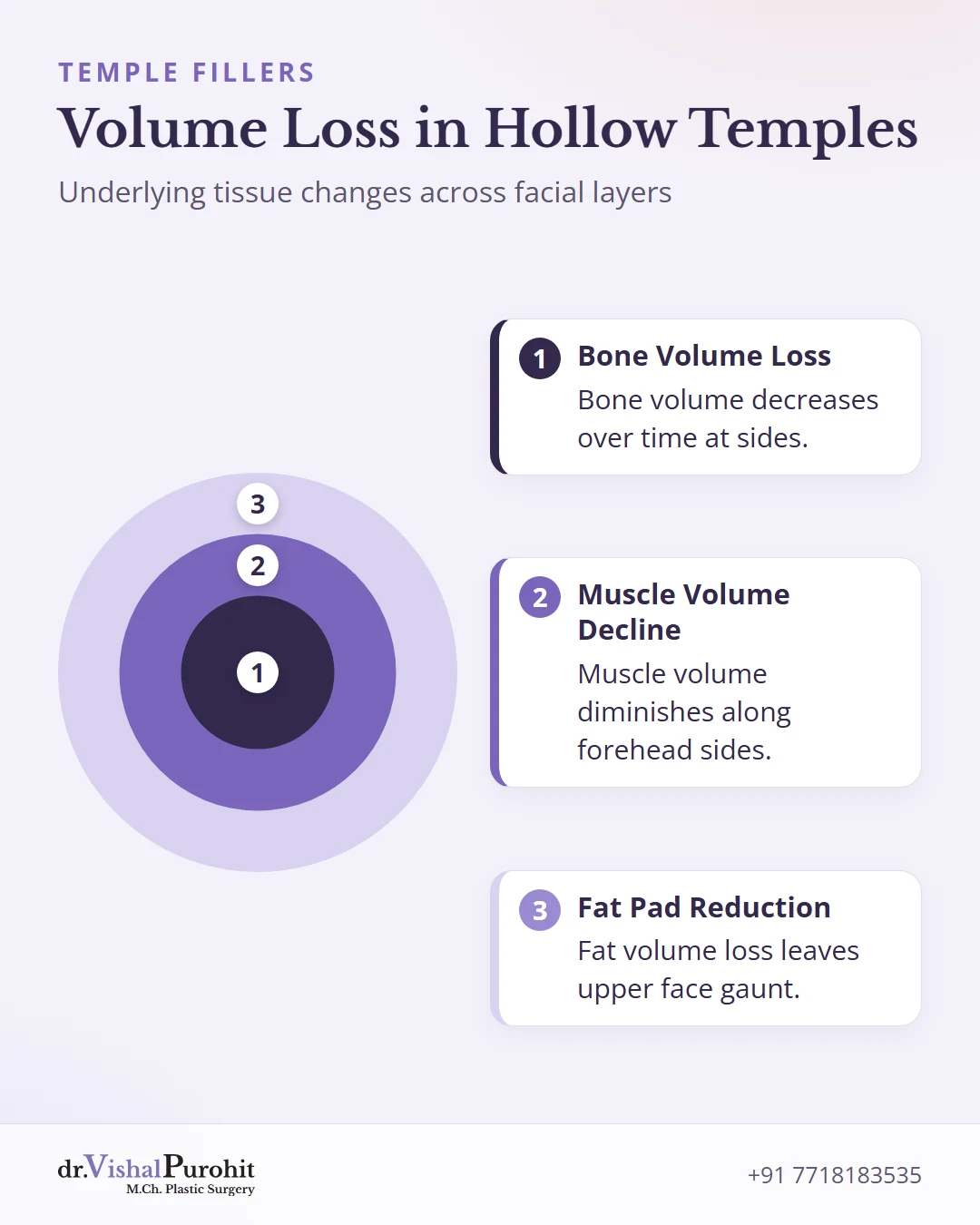
Temporal hollowing develops when fat, muscle, and bone volume decrease over time at the sides of the forehead. This shift can leave the upper face appearing gaunt or uneven. A clinical evaluation helps determine whether non-surgical treatment suits individual anatomy, while choosing no treatment remains a valid option.
When considering injectable filler options and limits for hollow temples, volume restoration aims to soften sunken margins rather than provide an eye lift. While smoothing the transition can improve lateral brow position, eyelid hooding requires separate assessment. Dermal filler adds volume without surgery, though absorption and retention vary in surgical fat grafting alternatives.
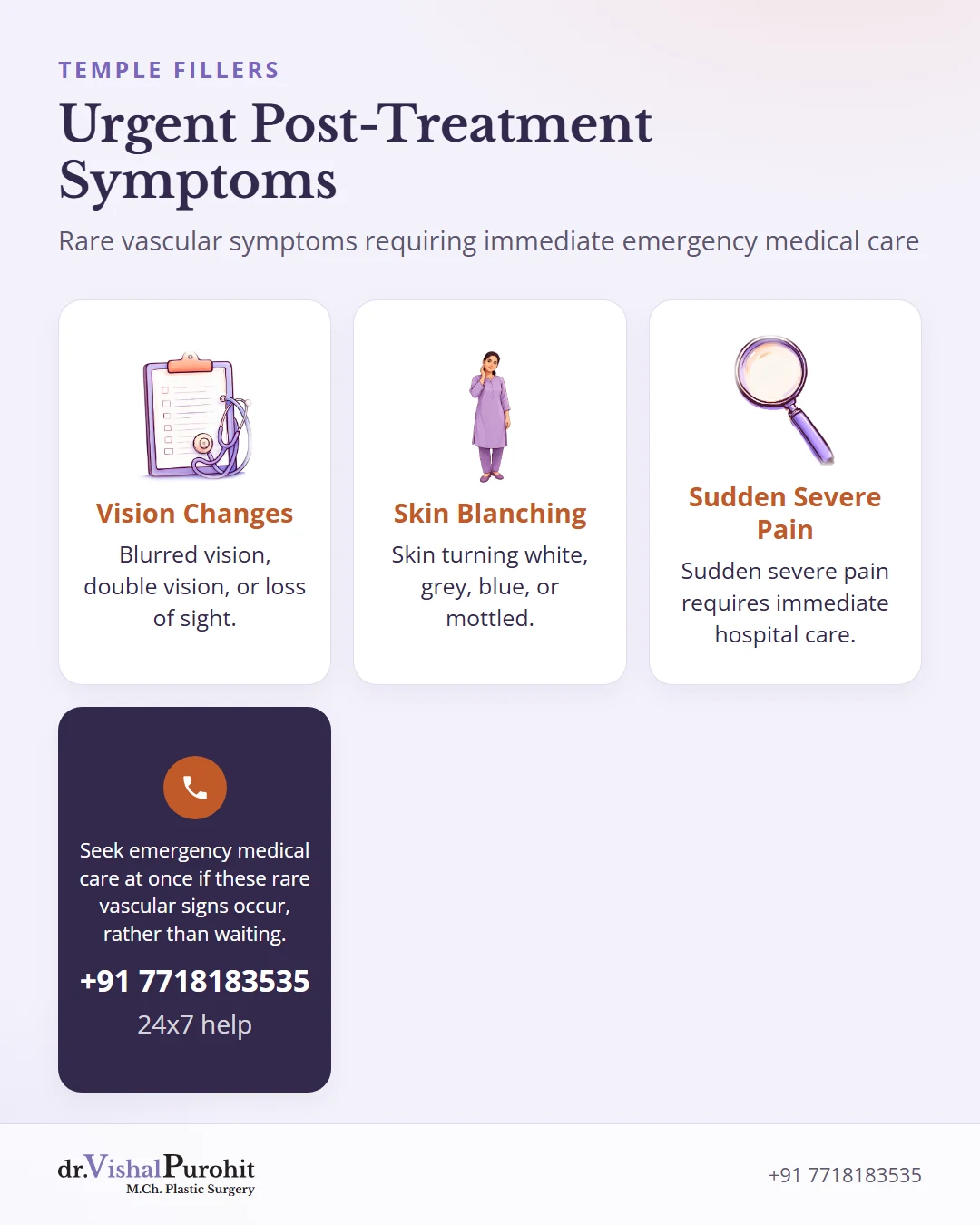
Certain symptoms after an injection require emergency care at once rather than waiting for clinic follow-up:
- any change in vision, such as blurred vision, double vision, or vision loss;
- skin blanching, or skin turning white, grey, blue, or mottled;
- sudden severe pain.
Assessing Goals and Outer Brow Limits
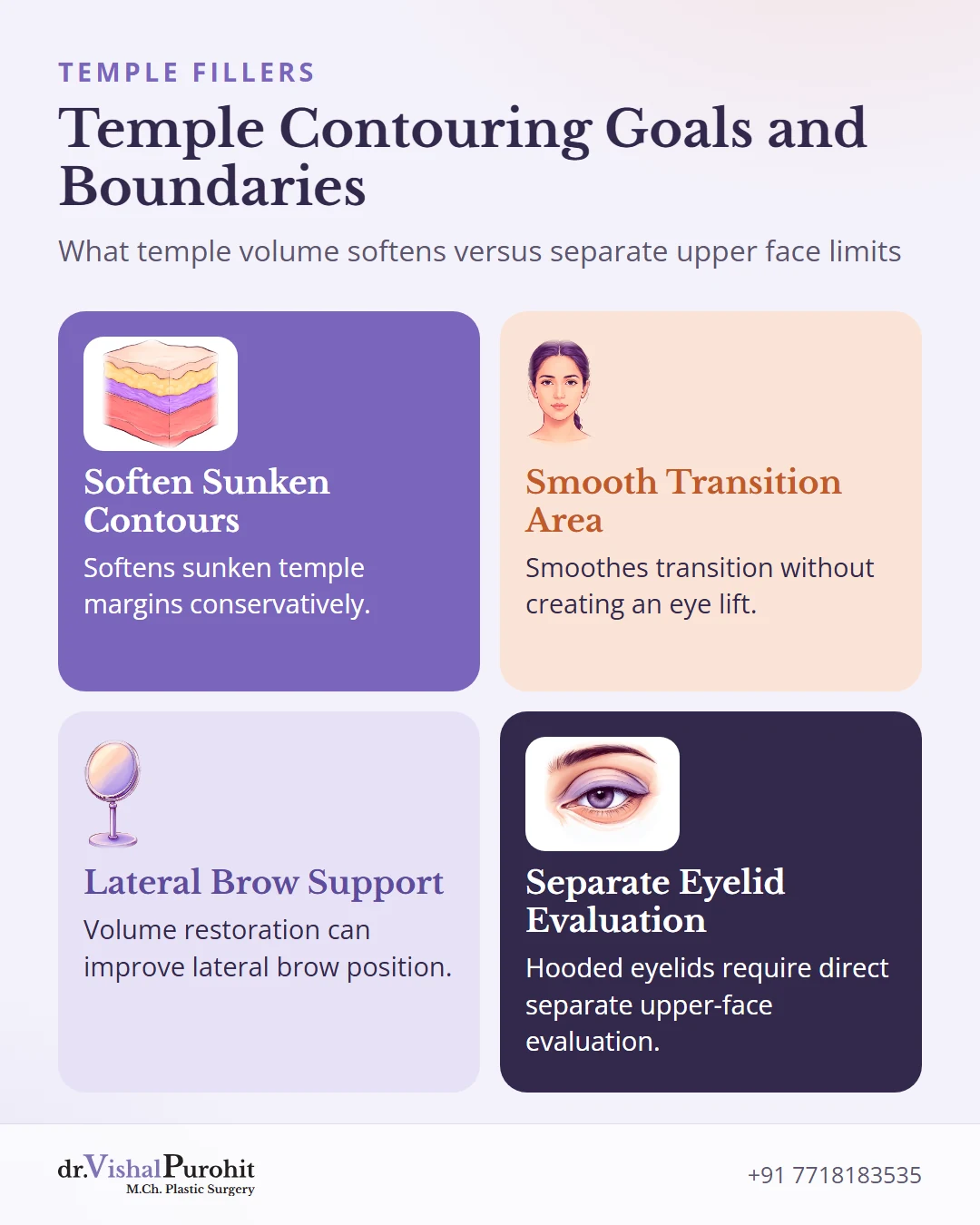
A consultation focuses on understanding your individual facial anatomy and establishing balanced, realistic expectations before treatment. Choosing no treatment remains a valid option.
When assessing volume loss, a conservative contour goal softens sunken temple margins without treating natural facial variation as a defect. In an evaluation of temple fillers for hollows, the temple and brow are examined together to smooth the temple-forehead transition rather than provide an eye lift.
Temple volume restoration can improve lateral brow position, but direct upper-face evaluation is required for hooded eyelids. Any direct brow manipulation is considered separately if lateral brow ptosis remains.
Comparing Temple Fillers and Fat Transfer Alternatives
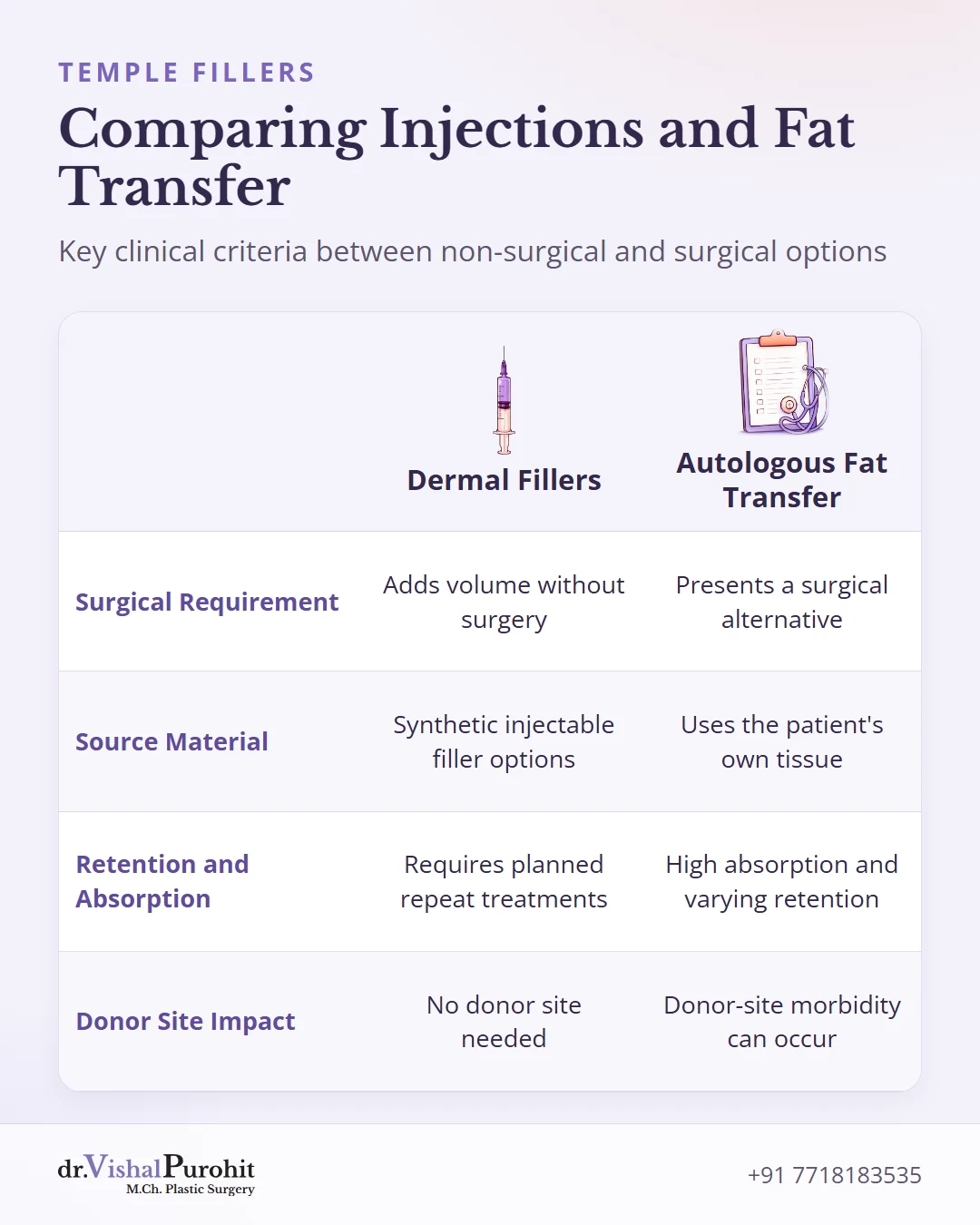
Temporal hollowing occurs as fat, muscle, and bone volume naturally diminish over time. When deciding how to soften sunken temple contours, patients often evaluate non-surgical dermal filler injections alongside surgical alternatives. A detailed clinical assessment helps determine which anatomical approach suits individual facial features and contour goals.
Dermal fillers provide volume without surgery, though synthetic options involve considerations such as repeat treatments, infection risks, and cost. When evaluating filler materials and fat transfer options for temporal hollowing, autologous fat grafting presents a surgical alternative using the patient's own tissue. Studies report fat transfer addresses temporal hollowness with high satisfaction, though volume retention varies, absorption is high, and donor-site morbidity can occur.
Post Treatment Chewing Ache and Warning Signs
Temple injections place filler near active facial muscles and major blood vessels. Understanding normal post-treatment sensations and recognising urgent symptoms helps patients navigate their recovery safely.
Jaw ache or tenderness while eating can occur after treatment because the temporalis muscle moves with chewing. As detailed in this guide on chewing discomfort after temple filler, these sensations are often mild and transient, though severe or worsening ache should not be dismissed.
In rare cases, filler can compromise blood vessels. Patients must seek emergency care at once, rather than waiting, if they notice any of the following symptoms:
- Any change in vision, including blurred vision, double vision, or vision loss
- Skin blanching, or skin turning white, grey, blue, or mottled
- Sudden severe pain
Temple Filler Cost in Jaipur and Product Consent

Temple filler pricing reflects an individualized plan based on facial anatomy and volume goals. The overall fee, what the cost includes, review visit timing, and any touch-up or dissolving policy are explained during the consultation with Dr. Vishal Purohit in Jaipur.
Product selection forms an essential part of informed consent. Patients can discuss different materials, such as hyaluronic acid or non-reversible biostimulatory options, when exploring can fillers help hollow temples. Injectable products differ, their doses are not interchangeable, and patients are encouraged to ask which specific product is planned and what its label covers.