
Dermal filler gels settle gradually into surrounding tissues after placement. Physical pressure, facial manipulation, and deep thermal energy can interfere with stabilization or worsen initial swelling, making treatment coordination essential.
Guidance on healing stages and normal swelling is detailed in Filler Aftercare: Swelling, Bruising and Normal Healing. Elective skin therapies and dental work require thoughtful intervals to protect outcomes and reduce the likelihood of complications.
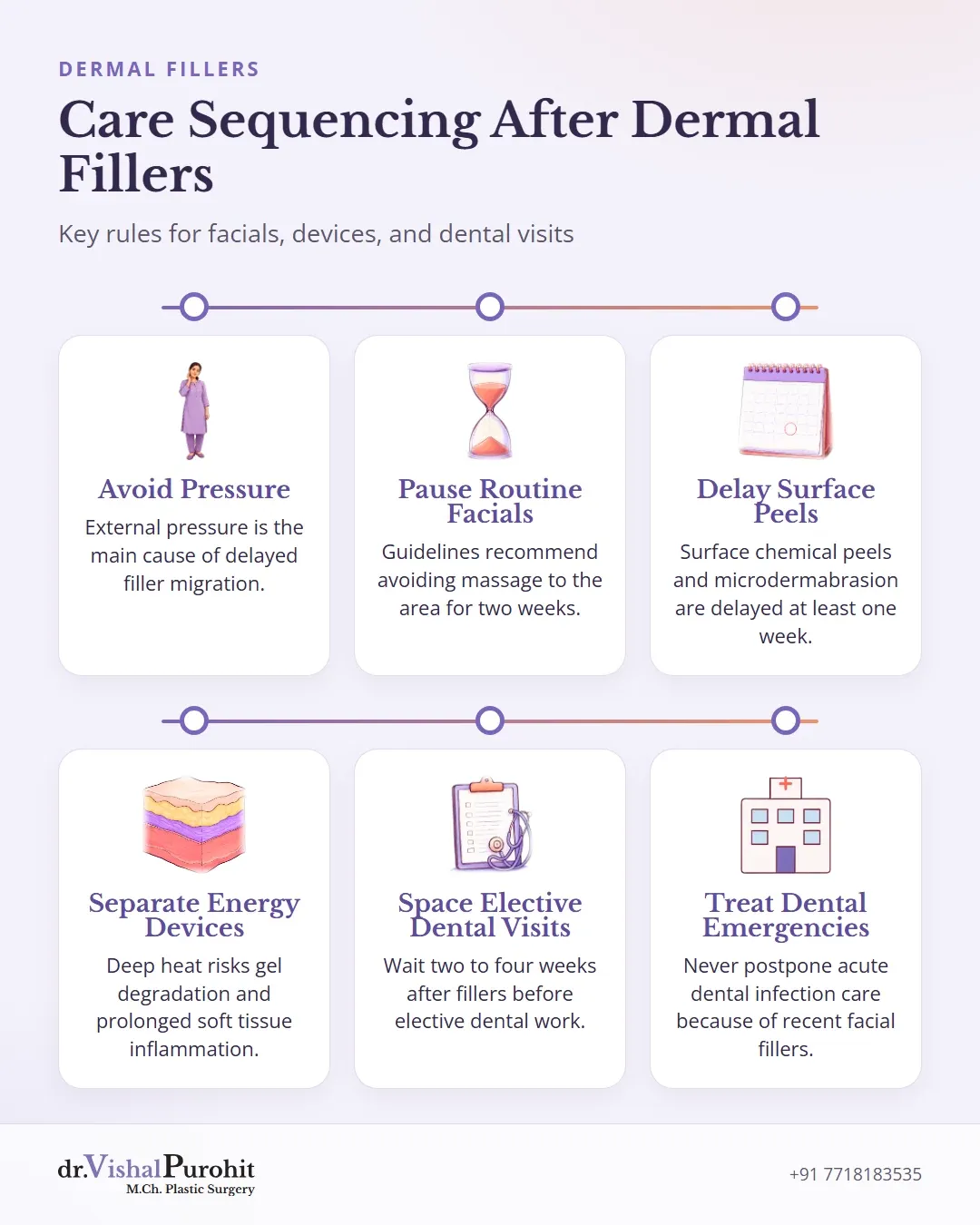
Pressure, Heat and Tissue Biomechanics
Freshly injected dermal fillers require stable local conditions to settle properly into surrounding facial tissues12. Understanding tissue biomechanics helps clarify why external forces and thermal energy can disrupt early healing.
Mechanical Forces and Migration
When injected, filler gel tends to move toward tissues with the lowest physical resistance2. Direct external pressure or patient manipulation is recognized as the most common cause of delayed filler migration2. Vigorous manipulation can also worsen short-term post-procedure swelling, which typically resolves on its own within 7 days3.
Dr. Purohit’s note: At his practice in Jaipur, Dr. Vishal Purohit advises patients that post-treatment care and activity timelines are decided at the consultation. He offers non-surgical facial treatments such as dermal fillers, while maintaining a strict policy of providing no laser and no resurfacing treatments.
Any planned aesthetic or dental work should be coordinated carefully with the treating plastic surgeon to safeguard early cosmetic outcomes.
Spacing Routine Facials, Massages and Peels
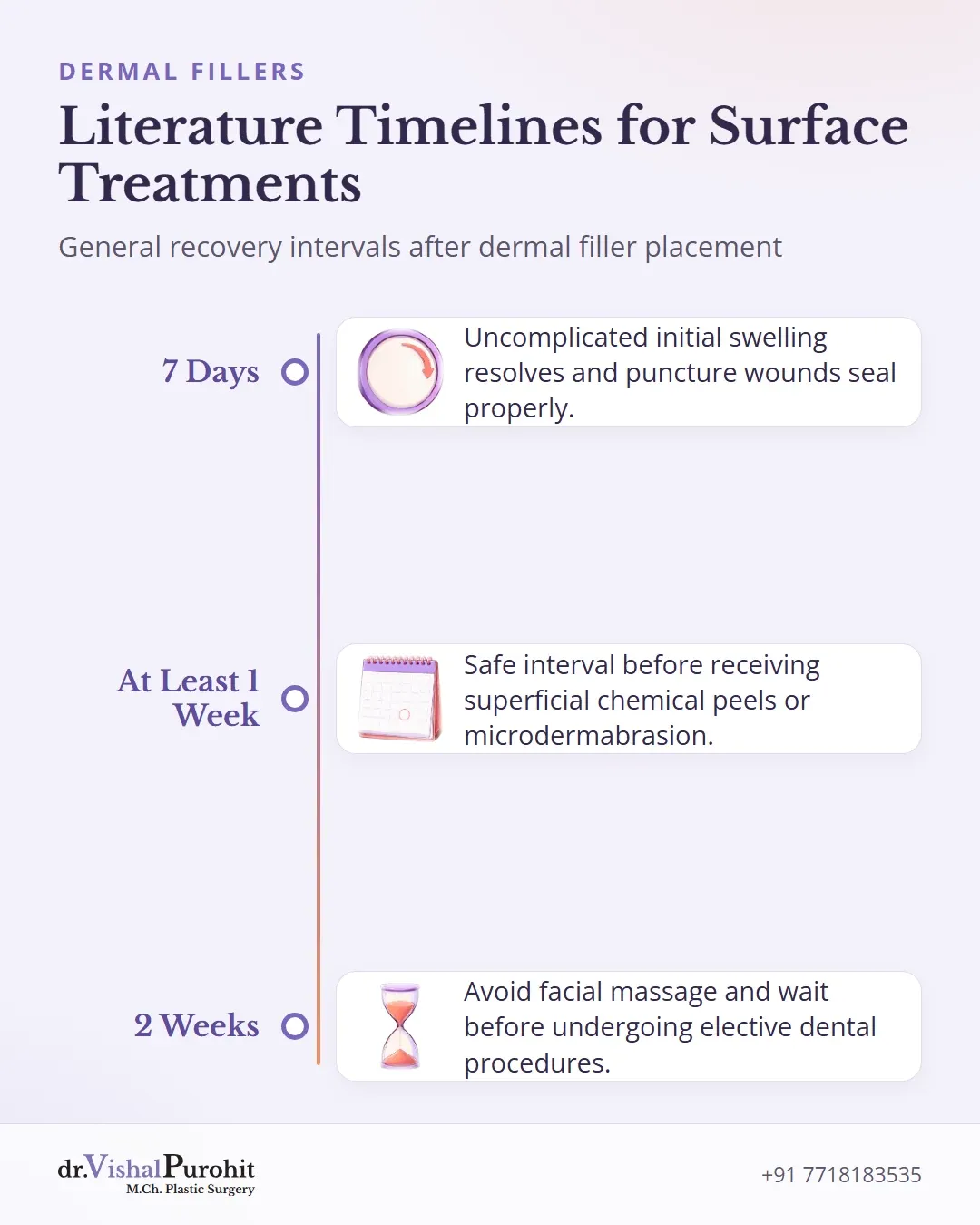
Superficial facials, aggressive manual lymphatic drainage, and superficial chemical exfoliations should be paused until injection points heal and swelling subsides. Introducing salon equipment or topical irritants too early raises the risk of introducing bacterial flora into unsealed puncture tracts.
In the published literature, general post-treatment guidelines advise avoiding massaging the treated area for 2 weeks after dermal filler placement4. Non-invasive procedures such as superficial chemical peels and microdermabrasion are commonly delayed until at least 1 week following treatment4. Most uncomplicated swelling after hyaluronic acid filler placement settles within approximately 1 week5. In occasional instances, swelling can persist for up to 2 weeks6.
Because aftercare protocols vary, Dr. Vishal Purohit’s own practice regarding the timing of routine facials, massages, and peels is not confirmed and is decided at the consultation.
Sequencing Radiofrequency and Ultrasound Devices
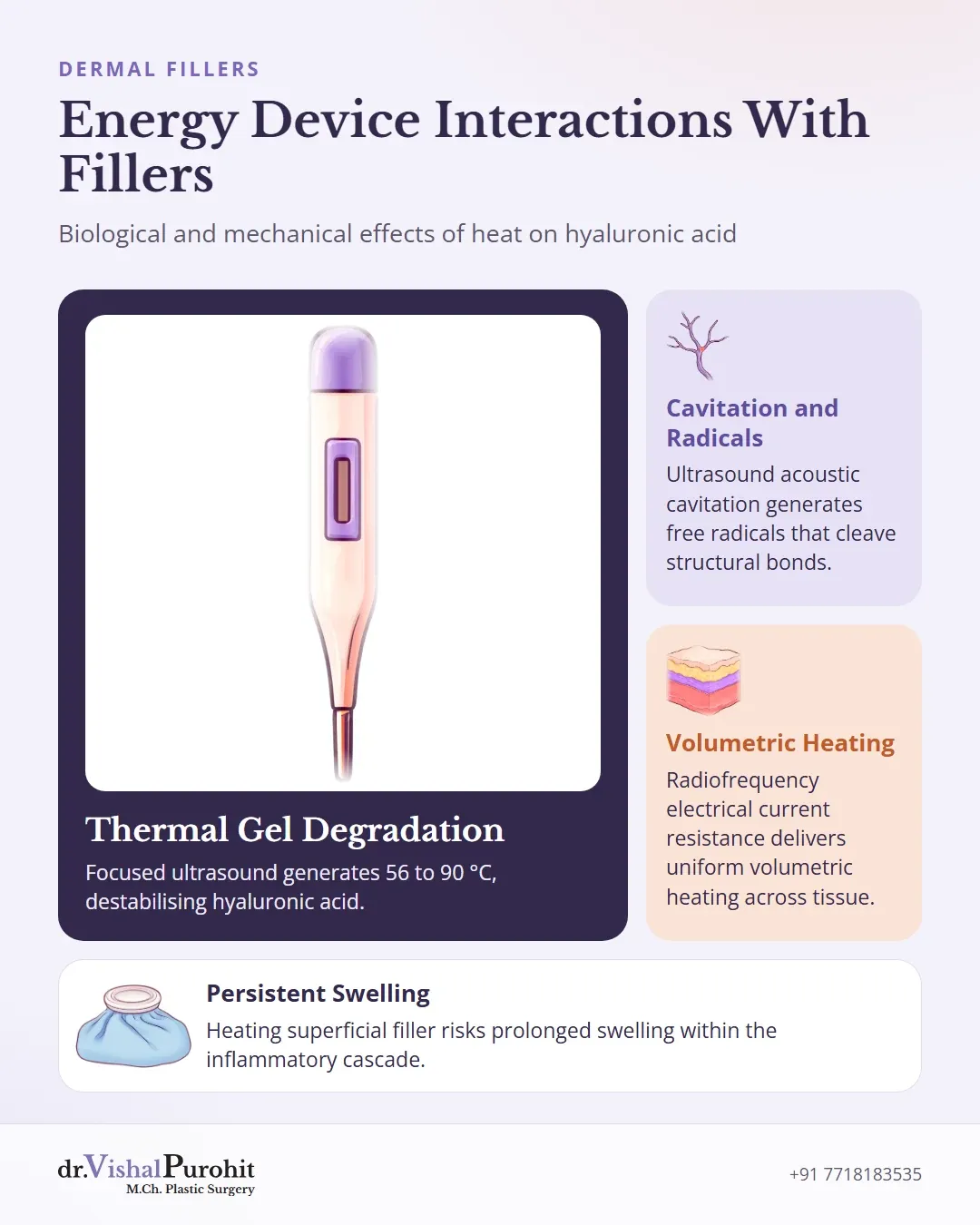
Deep skin-tightening modalities deliver energy into the deeper structural tissues. Micro-focused ultrasound heats tissue to create thermal coagulation zones that denature collagen7, whereas radiofrequency systems use electrical current resistance to generate uniform volumetric heating across tissues8910.
When scheduled too close to dermal filler treatments, energy devices introduce specific biological and mechanical considerations:
- Thermal exposure: Focused ultrasound produces focal temperatures between 56 and 90 °C, which exceeds the threshold for thermal destabilisation of hyaluronic acid and leads to degradation of the filler gel11.
- Cavitation and free radicals: Ultrasound energy generates acoustic cavitation and reactive free radicals that cleave the structural bonds of hyaluronic acid chains1112.
- Tissue inflammation: Heating soft tissues can interact with the surrounding inflammatory cascade, while superficial placement of filler risks persistent swelling when combined with heat-induced inflammation13.
Coordinating treatment sequences with a qualified doctor ensures that both modalities perform effectively without compromising filler integrity11. Planned timelines and whether treatments are combined are evaluated individually at the consultation.
Dental Procedures and Infection Prevention
Dental procedures carry specific considerations for individuals planning or recovering from dermal filler treatments.
Key points
- Dental work can cause transient bacteremia that seeds bacteria onto dermal filler implants.
- Bacterial colonization can form antibiotic-resistant biofilms, leading to persistent nodules or delayed inflammatory reactions.
- Elective dental appointments should generally be spaced 2 to 4 weeks away from filler treatments.
Infection Risks and Biofilms
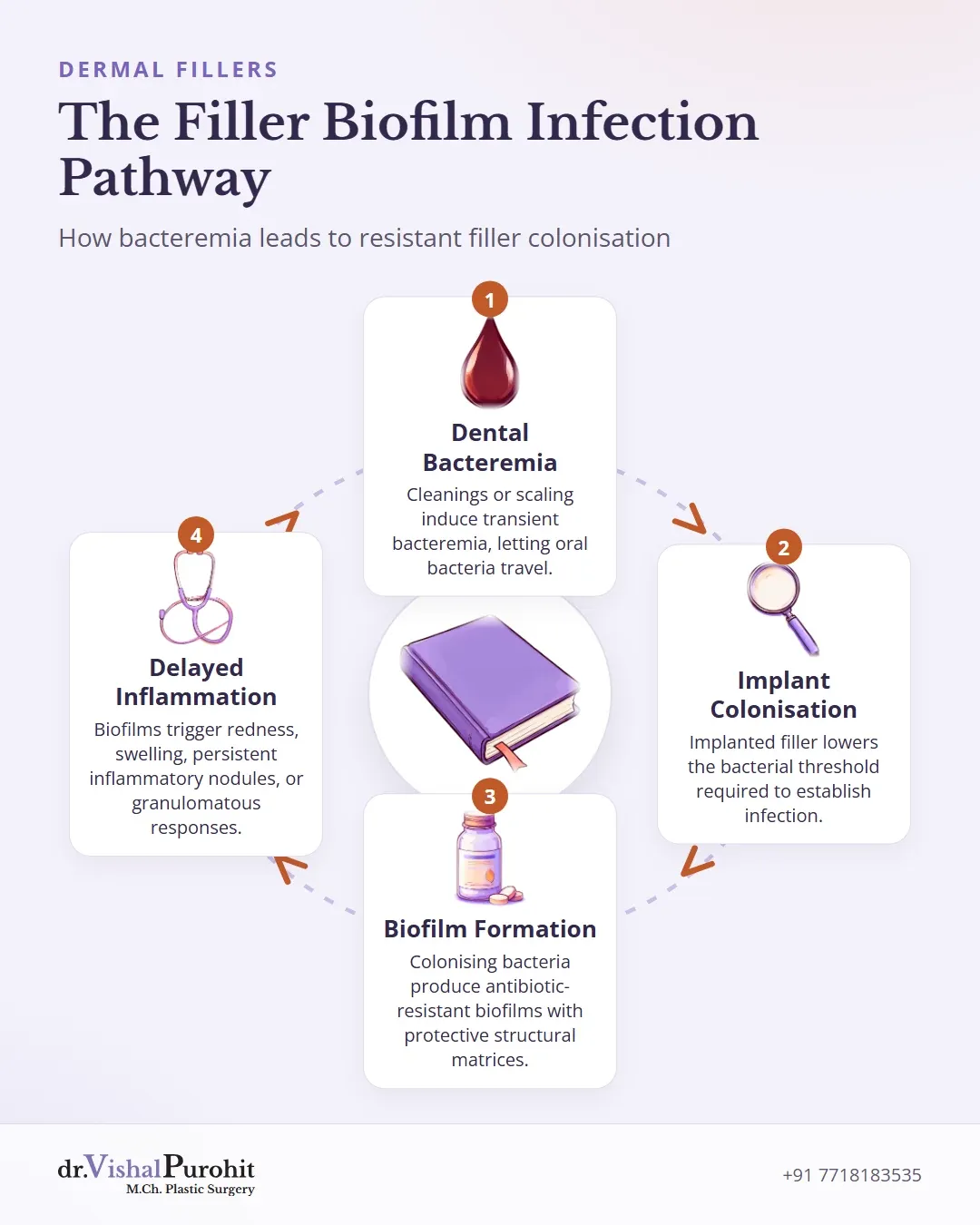
Any procedure that punctures the skin carries infection risks, and an implanted filler material lowers the threshold concentration needed for contaminating bacteria to establish an infection14. Dental procedures such as routine cleanings, scaling, or endodontic work can induce transient bacteremia, creating a pathway for bacteria to seed recently placed filler implants.
Delayed inflammatory reactions, presenting with redness, swelling, or nodules, may be triggered by dental procedures or infectious factors15. When bacteria colonize an implant, they can form biofilms14. Biofilms can cause localized or systemic infections, persistent inflammatory nodules, or granulomatous responses16. Furthermore, bacteria residing within biofilms exhibit heightened antibiotic resistance, partly due to structural matrix barriers impeding antimicrobial penetration17.
Timing Recommendations
Scheduling elective dental visits requires adequate separation from facial injections:
- Patients with chronic dental issues face higher tendencies for infection following filler injections in the central face17.
- A common clinical recommendation is to avoid filler implantation until 2 weeks after dental work, or wait 2 to 4 weeks after filler placement before undergoing elective dental procedures417.
- Pretreatment consultations should account for upcoming dental appointments to limit inflammatory reactions18.
Emergency Dental Care Versus Elective Treatments
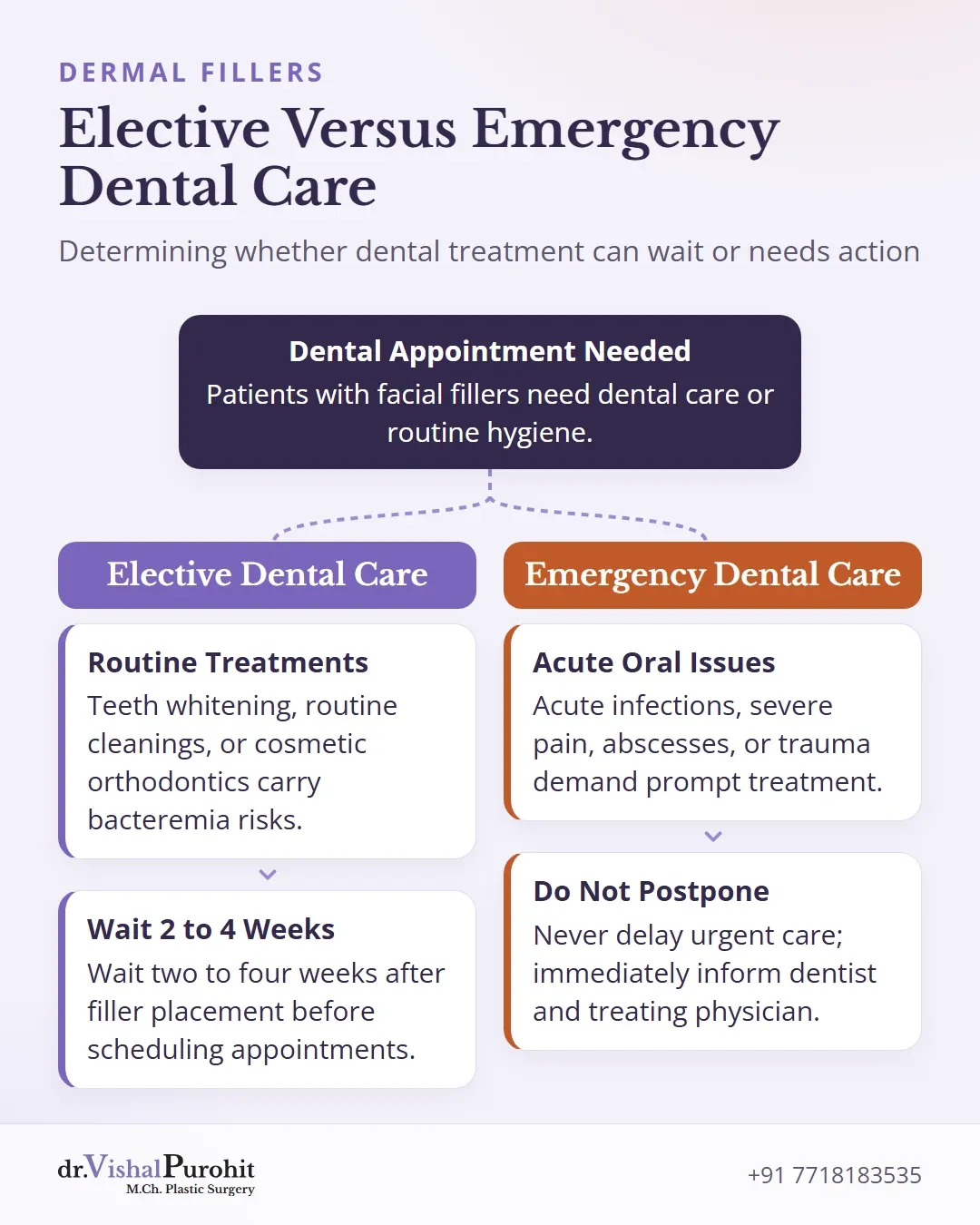
Elective aesthetic procedures, including teeth whitening, routine cleanings, or cosmetic orthodontics, should be planned cautiously around facial injectables. In contrast, sudden dental trauma or acute dental infections require prompt clinical attention.
Acute dental infections can involve severe pain, swelling, and spread to deep fascial spaces1920. Delayed management poses severe systemic risks, and acute abscesses or spreading odontogenic infections warrant urgent medical and surgical intervention, such as drainage or tooth extraction1920.
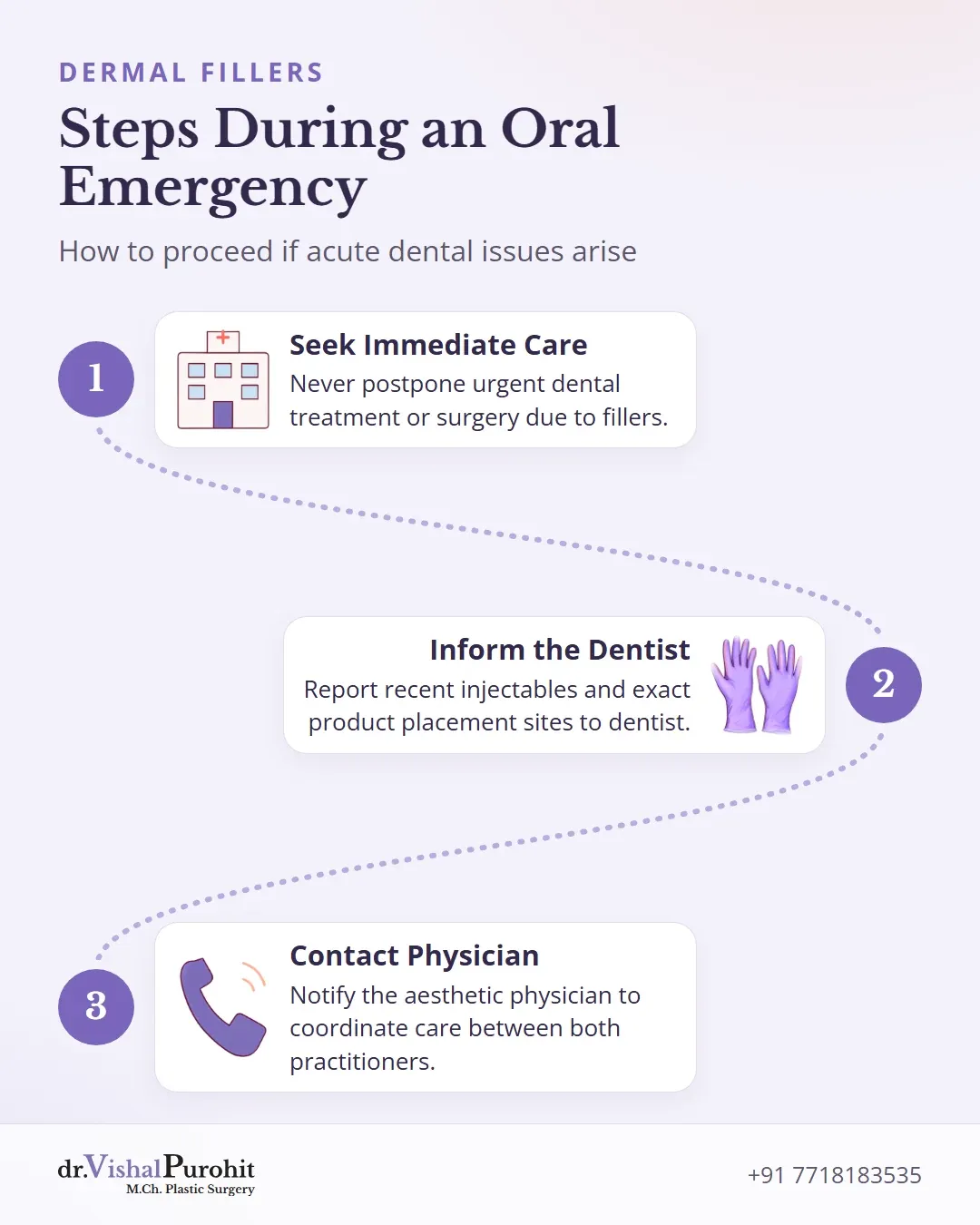
Patients should adhere to the following steps if dental emergencies arise:
Elective Treatments
- Includes teeth whitening, routine cleanings, or cosmetic orthodontics
- Should be planned cautiously around facial injectables
Emergency Care
- Never postpone urgent dental treatment or oral surgery because of recent dermal filler placement
- Inform the treating dentist immediately about any recent facial injectables, including product placement sites
- Contact the aesthetic physician so care can be coordinated between both practitioners
Coordinating Aesthetic and Dental Care in Jaipur
Scheduling non-surgical facial treatments alongside other aesthetic or dental procedures requires careful attention to tissue healing and infection risks. For comprehensive information on treatment options, visit Dermal Fillers in Jaipur. To understand common recovery questions, review the Dermal Fillers FAQs. All aftercare timelines and treatment combinations are decided at the consultation.
This is educational information, not medical advice.