
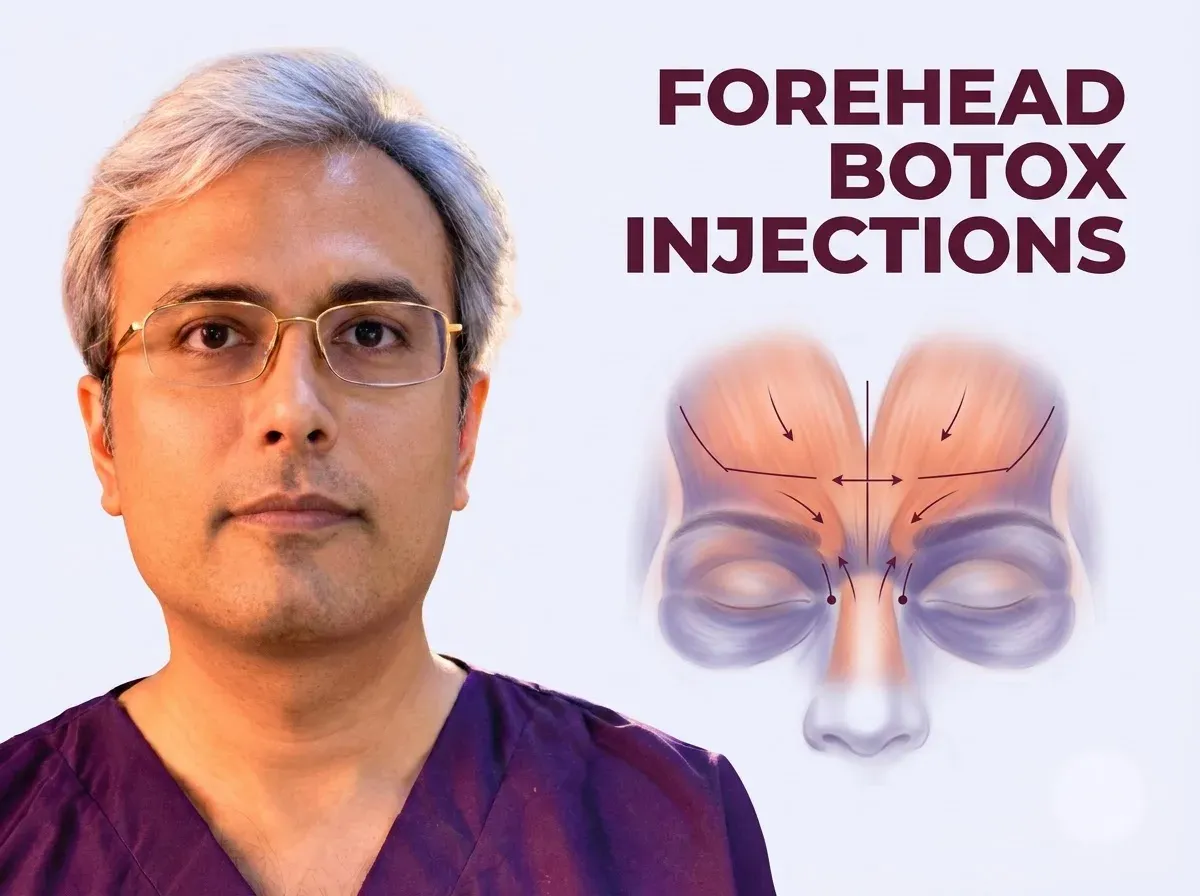

Forehead Lines and 11 Lines: Two Muscle Groups
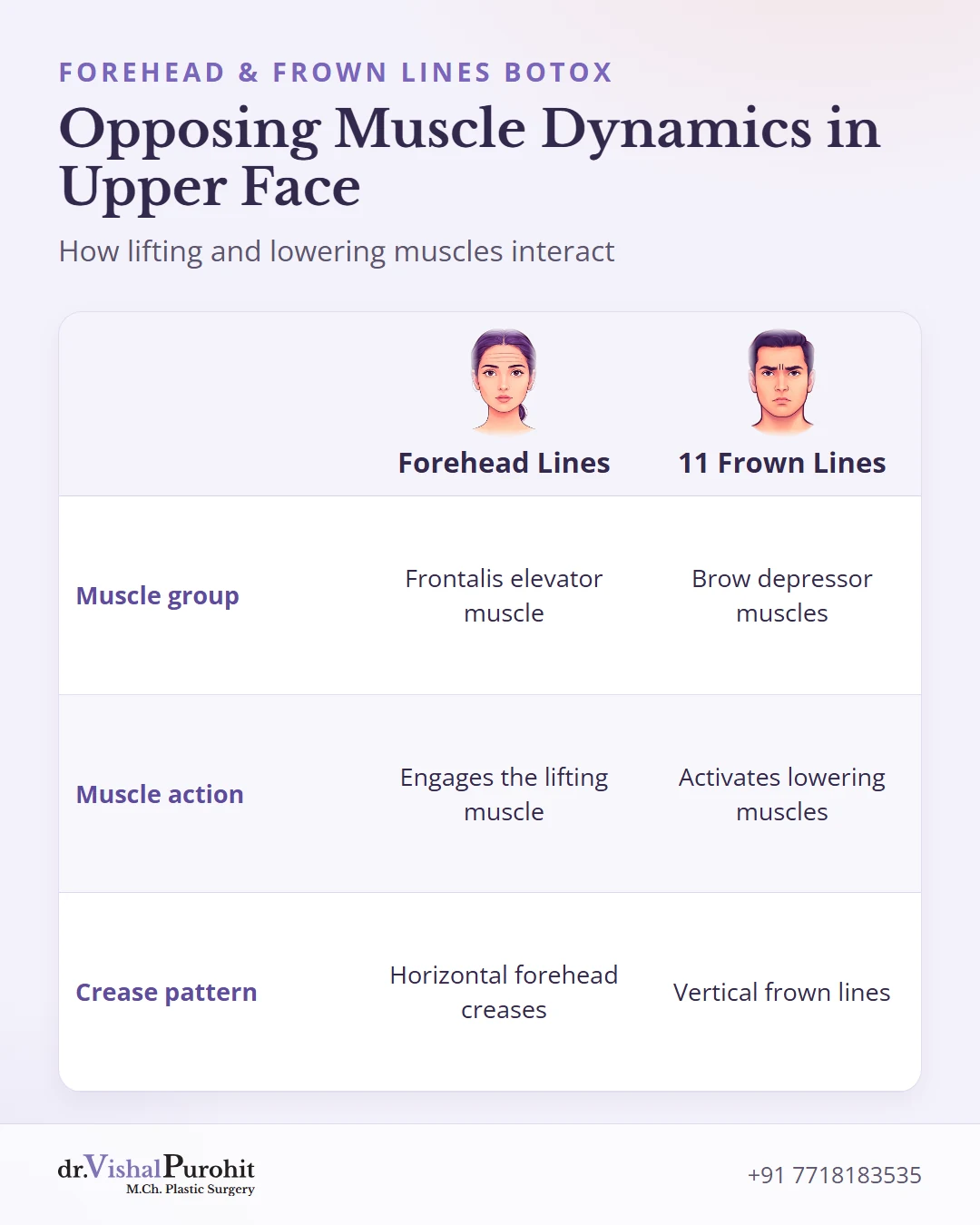
Horizontal forehead creases and vertical frown lines develop from opposing muscle actions across the upper face. Raising the eyebrows engages the lifting muscle, while drawing them together activates lowering muscles. Because these dynamic forces balance each other, evaluating upper facial movement helps guide thoughtful treatment planning.
A comprehensive assessment of forehead lines and 11 lines examines the frontalis elevator muscle alongside the brow depressors. Weakening forehead lift without considering downward-pulling frown muscles can alter resting brow height or cause brow descent, which is why Dr. Vishal Purohit assesses both muscle groups in person at the consultation.
Careful evaluation also addresses expectations for natural facial expression after forehead Botox. Botulinum toxin type A temporarily relaxes muscle movement rather than freezing it entirely. Treatment planning is discussed directly with Dr. Vishal Purohit during your consultation, and choosing no treatment remains a valid option.
Heavy Eyelids and Low Brows Are Checked First
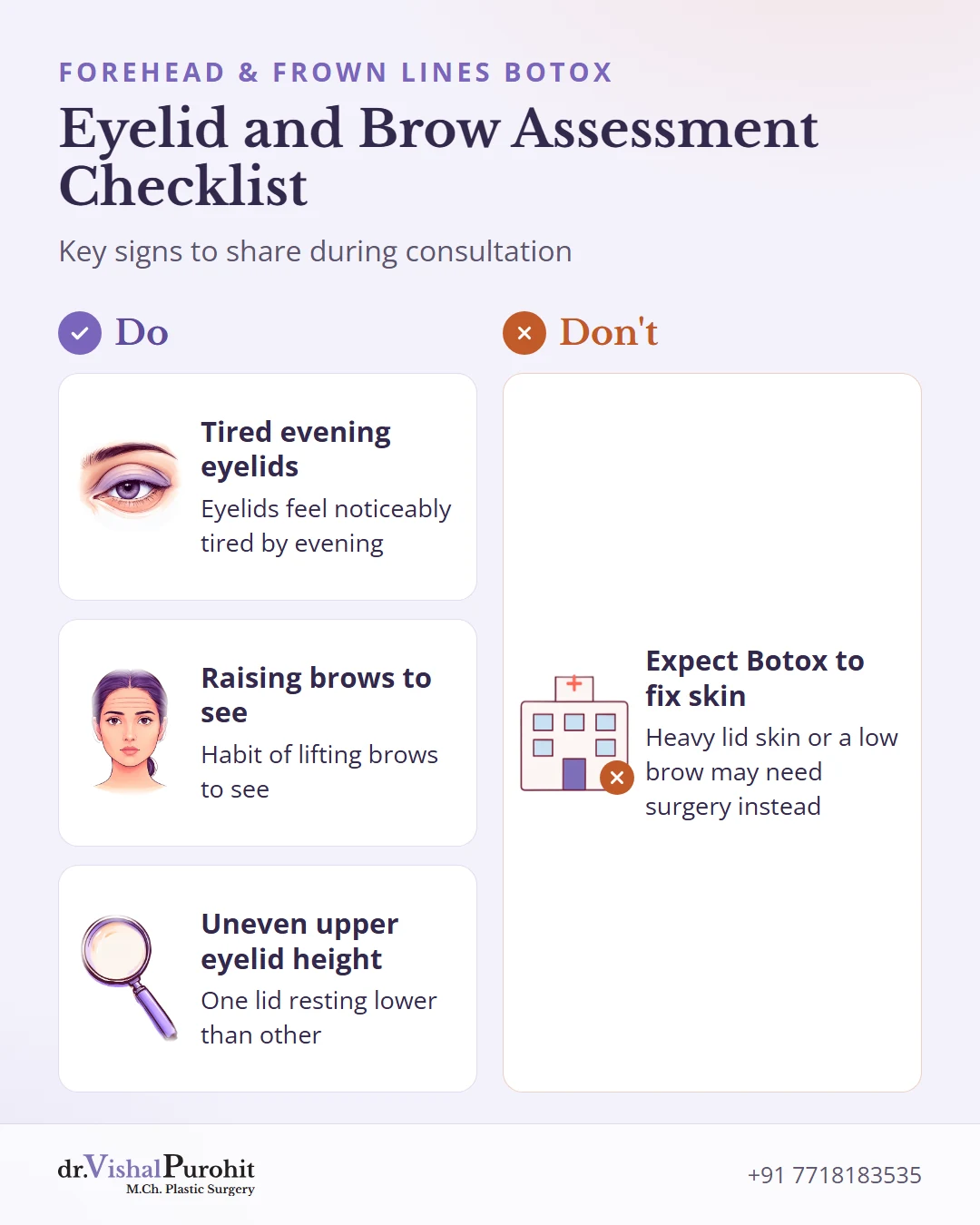
Horizontal forehead wrinkles often develop because the forehead muscle constantly lifts the eyebrows to clear the visual field when upper eyelid skin feels heavy. Assessing brow position and lid movement before treatment helps ensure injections do not lead to an unwanted drop in brow height.
Understanding why heavy eyelids matter before forehead Botox explains how relaxing forehead muscles can reveal an underlying lid droop or cause brows to settle lower. During assessment, Dr. Purohit evaluates brow elevation and eyelid symmetry at rest and during animation to design an appropriate injection plan.
Certain signs are valuable to share during the clinical examination:
- Eyelids that feel noticeably tired by the evening.
- A habit of raising the eyebrows to see more clearly.
- One upper eyelid resting lower than the other.
- Any history of previous eyelid surgery.
When heavy upper eyelid skin or significant brow descent is the primary concern, non-surgical treatment alone may not address the underlying anatomy. In such cases, surgical options like blepharoplasty or a brow lift, or choosing no treatment at all, can be discussed during the consultation.
Before Treatment: Health History and Medicines

A thorough health assessment ensures non-surgical injection treatment for horizontal forehead and vertical frown lines is appropriate.
During the consultation, reviewing your complete background with Dr. Vishal Purohit helps determine whether botulinum toxin type A injections can proceed. Learning why medical screening matters before forehead and frown Botox helps clarify how existing conditions affect planning.
Certain situations require postponing injections or avoiding them entirely:
- Active skin infections or rashes at the intended injection sites
- Neuromuscular disorders, including myasthenia gravis, Eaton-Lambert syndrome, or motor neuropathies
- Pregnancy and breastfeeding, as clinical safety during lactation is unestablished
- Known hypersensitivity to formulation ingredients such as albumin
Sharing all current prescriptions and supplements is vital. Aminoglycoside antibiotics can potentiate the neuromuscular effects of the toxin. Studies report mild bruising in 11% to 25% of injection patients, and blood thinners, aspirin, or supplements increase this chance.
Any trouble breathing, swallowing, or speaking, or general weakness, after treatment requires immediate emergency care.
After Treatment: Normal Reactions and Warning Signs
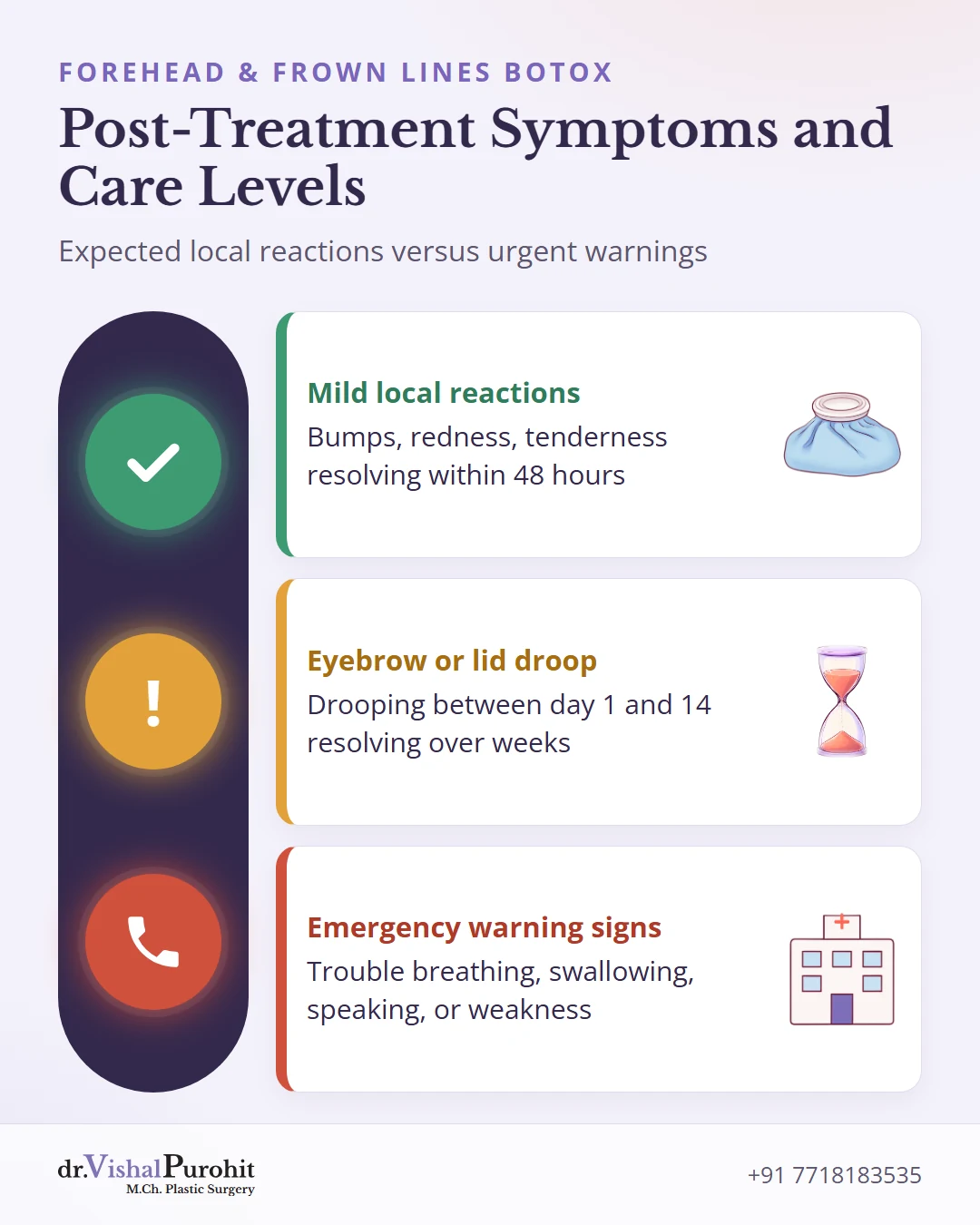
Following non-surgical injections for horizontal forehead and frown lines between the eyebrows, knowing what normal healing looks like helps distinguish minor physical responses from issues requiring attention.
Studies report temporary local responses around injection points, including:
- Raised bumps or wheals where fluid initially rests
- Localized skin redness
- Mild tenderness, swelling, or occasional bruising
- Short-lived, mild headache
In published upper facial observations, mild local reactions typically resolve within 48 hours without intervention. Specific aftercare rules, onset, and duration are explained at the consultation rather than set in advance.
Unwanted eyebrow heaviness or drooping of the upper eyelid can occasionally happen. Published reports note eyelid drooping may appear between day one and 14 days following treatment, resolving spontaneously over several weeks. Reviewing normal recovery signs and warning symptoms after forehead Botox explains why professional assessment is necessary instead of self-treatment.
Certain symptoms require urgent attention:
- Trouble breathing or shortness of breath
- Difficulty swallowing or speaking
- Generalized muscle weakness
- Vision changes like double or blurred vision
Trouble breathing, swallowing, or speaking, or general weakness, is an emergency requiring emergency care at once.
When It Works, How Long It Lasts, and Lines at Rest
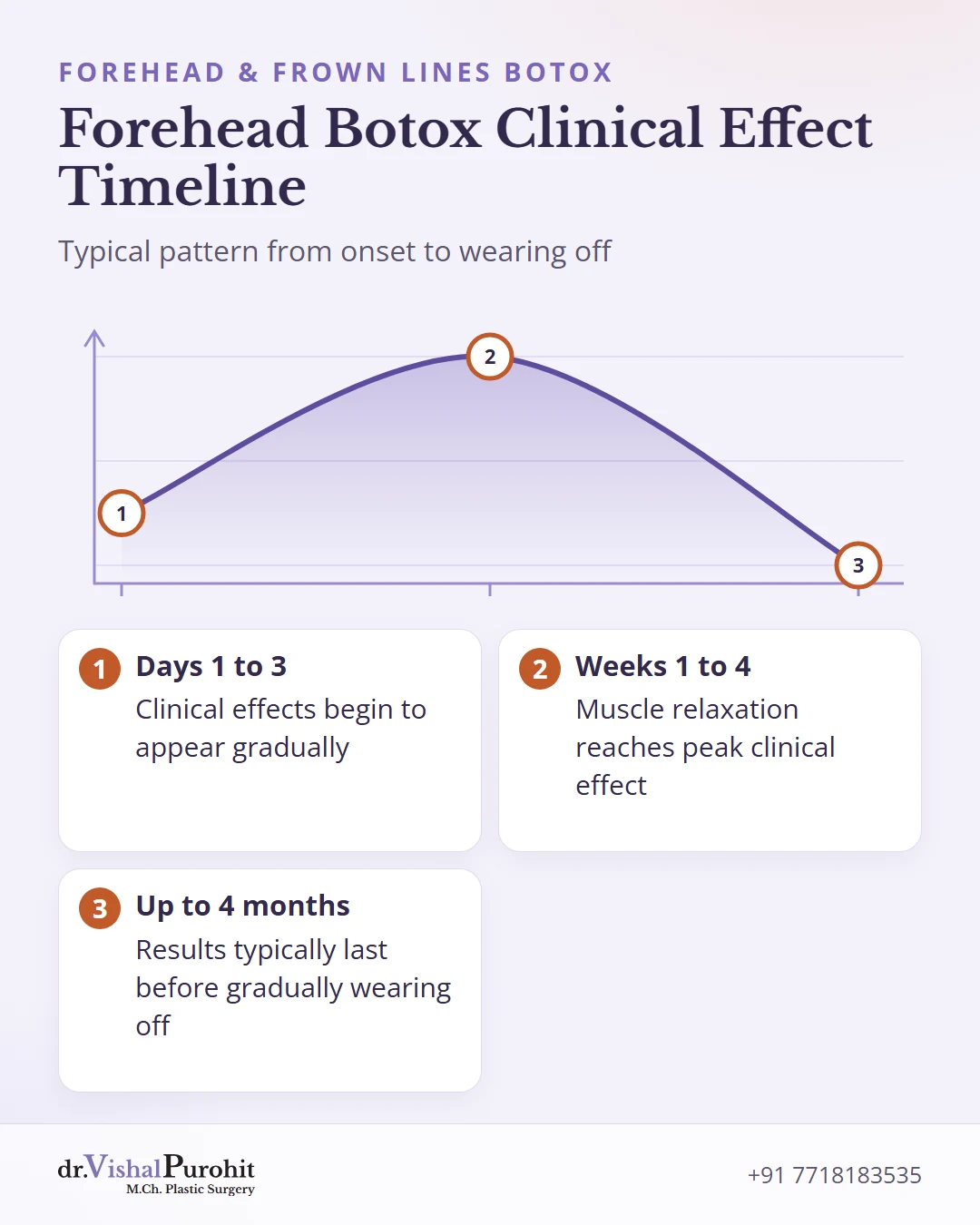
Botox temporarily softens moderate to severe dynamic lines by relaxing underlying facial muscles. Because individual response patterns vary, treatment begins with a personal evaluation rather than a fixed outcome.
Studies report clinical effects generally begin within one to three days, peaking between one and four weeks, and typically last up to four months. Details on general recovery timelines and follow-up assessments are discussed in what to expect regarding forehead Botox onset and wearing off.
In Dr. Purohit's practice, onset, duration, review visit timing, and any top-up policy are explained at the consultation in Jaipur.
Botox softens dynamic lines formed by facial movement, but etched creases present while facial muscles rest may not fully clear. Reviewing what Botox can and cannot smooth for resting lines explains why deep static furrows may only soften rather than disappear.
Skin thinning from sun exposure or ageing also influences results. Dr. Purohit assesses both movement and resting creases during your consultation, offering no laser or resurfacing treatments.
Forehead Botox Cost in Jaipur: Product, Consent and the Quote
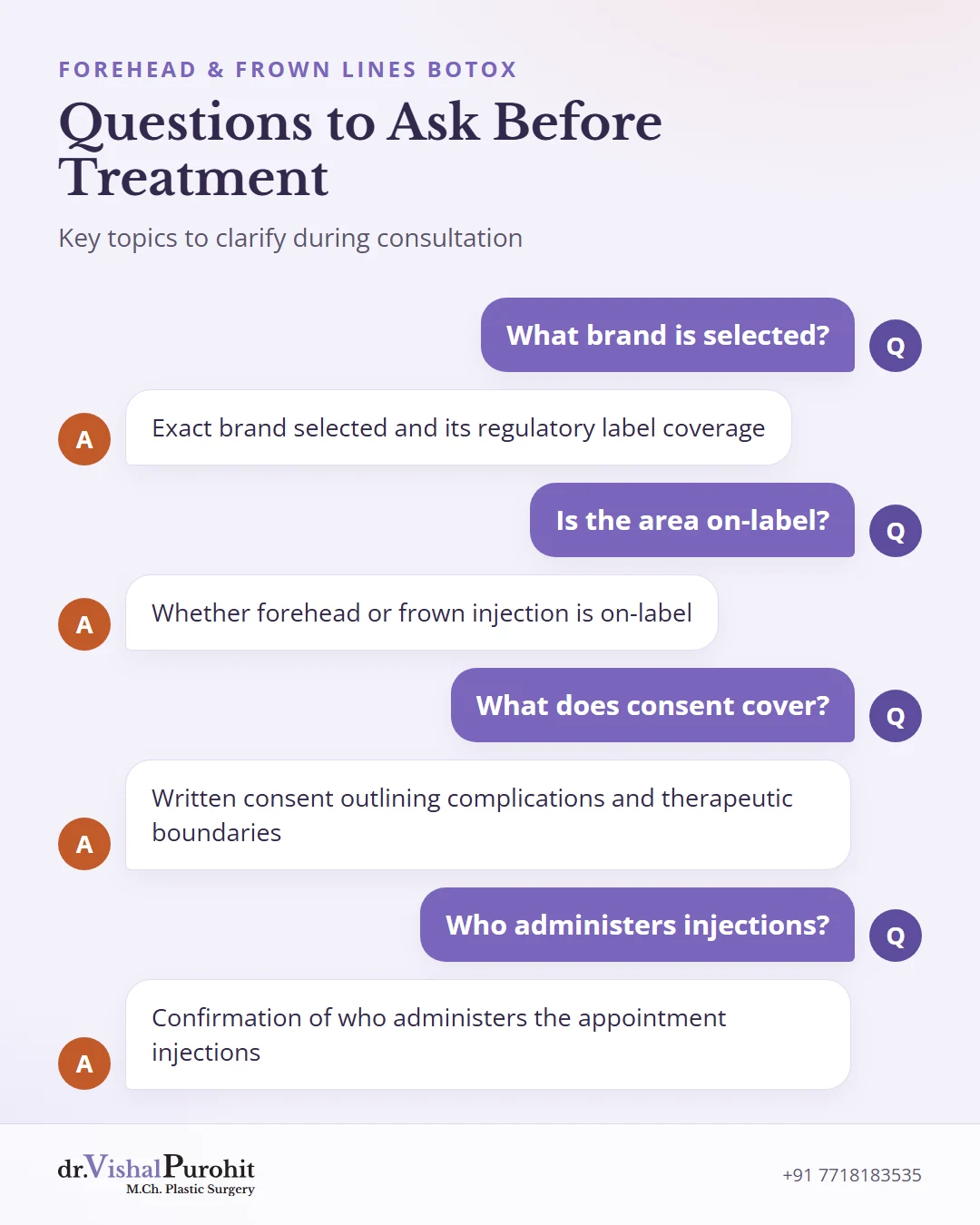
Planning treatment for forehead lines and frown lines involves understanding the medical product used, the scope of informed consent, and how a quote is formed. Because individual facial anatomy and movement patterns vary, the quote follows an in-person assessment by Dr. Vishal Purohit, an M.Ch plastic and reconstructive surgeon in Jaipur.
Patients evaluating facial injections can review key details regarding what decides the cost of forehead and frown Botox, including why different formulations cannot be swapped dose for dose. Distinct botulinum toxin type A preparations vary in protein content, molecular size and strength. Injections are non-surgical, and doses are not interchangeable across brands.
During the consultation, patients can ask direct questions about the proposed treatment plan:
- The exact brand selected and what its regulatory label covers.
- Whether injecting the forehead or frown lines is considered on-label or off-label for that preparation.
- Signing written informed consent outlining potential complications and therapeutic boundaries before injection.
- Confirmation of who administers the injections during the appointment.
A quote reflects specific clinical factors rather than a standard flat fee. For treatment with Dr. Purohit, the exact price, what the fee includes, product selection, numbing, review arrangements, and any top-up policy are explained at the consultation after an in-person assessment.