
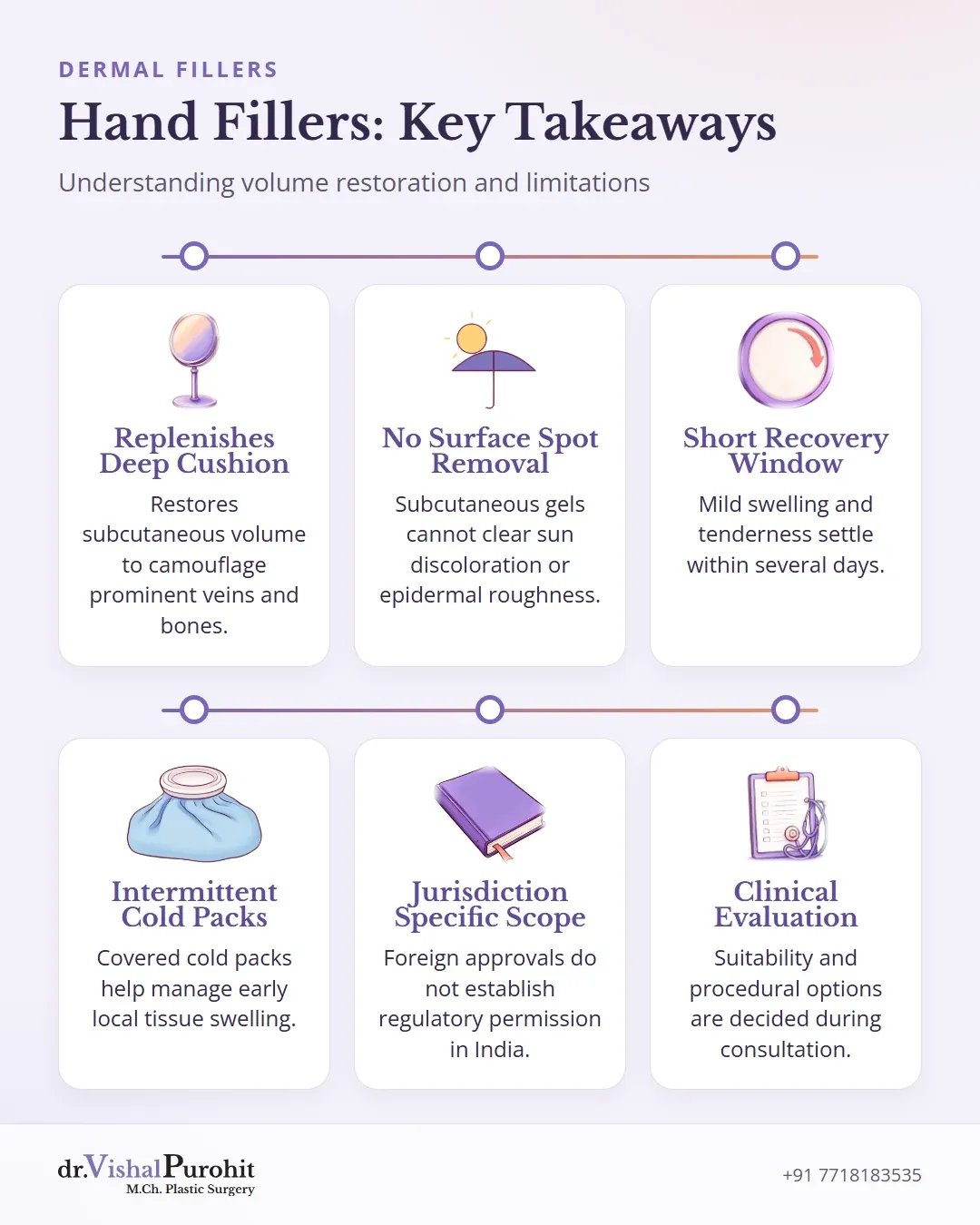
Aging on the dorsum of the hand often involves subcutaneous lipoatrophy, causing veins, tendons, and bony contours to appear increasingly noticeable. Injectable soft-tissue augmentation can replenish this depleted cushion, lifting the skin away from deeper anatomical structures.
However, restoring volume does not correct surface photoaging, rough texture, or epidermal discoloration. Understanding where can dermal fillers be used and their limits helps patients distinguish structural soft-tissue hollows from superficial skin changes before seeking clinical care.
Volume Loss and Visible Dorsal Structures
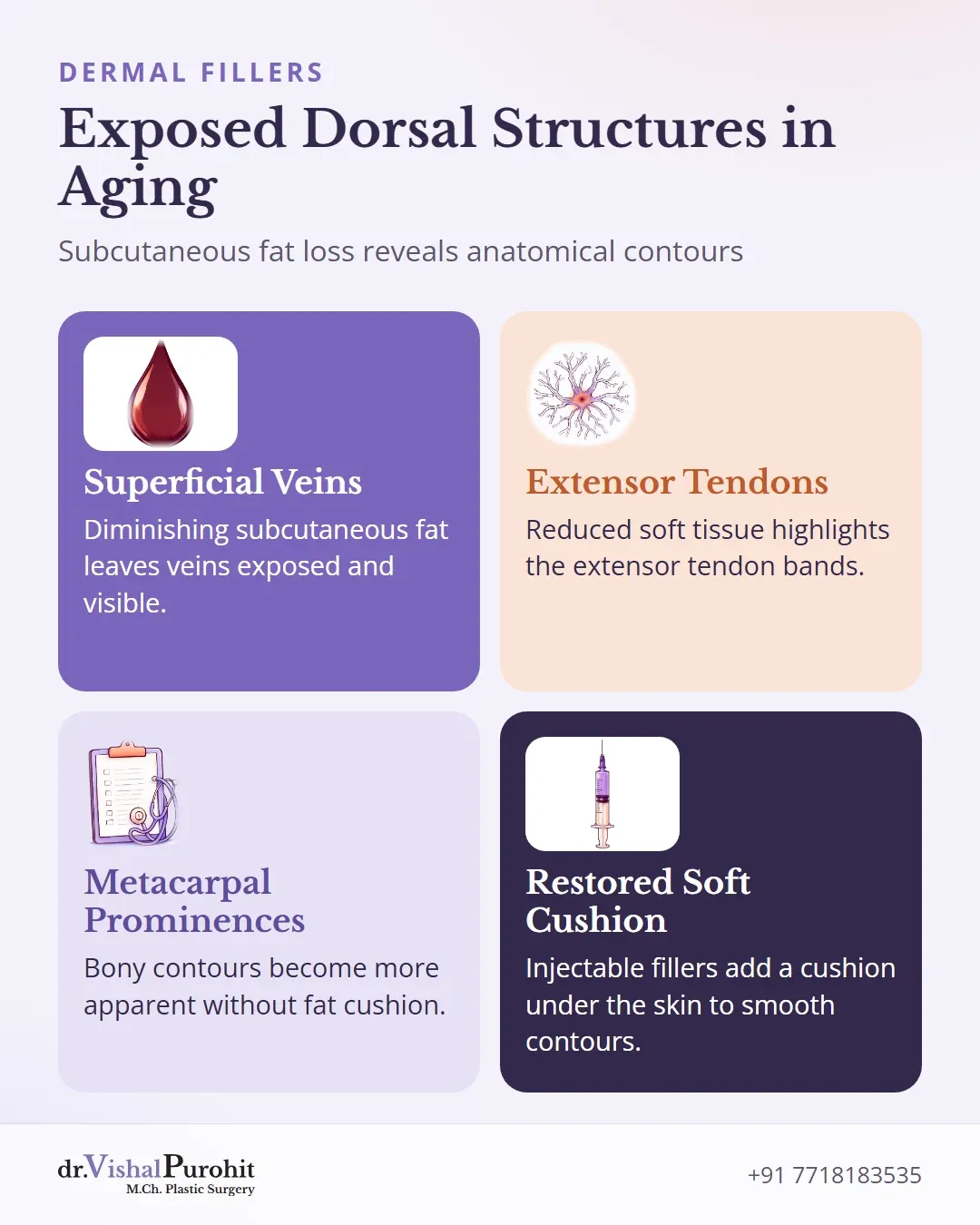
With aging, the dorsum of the hand experiences progressive volume loss related to lipoatrophy1. As subcutaneous soft tissue diminishes, anatomical structures beneath the skin become increasingly exposed23.
This process causes several underlying dorsal features to become more prominent23:
Dermal fillers provide soft-tissue augmentation that helps camouflage these visible structures by restoring a cushion beneath the skin surface34. Both hyaluronic acid (HA) gels and biostimulatory agents, such as calcium hydroxylapatite (CaHA), can be used to replenish dorsal hand fullness35. These injectable materials physically lift the overlying cutaneous tissue away from deeper veins and extensor tendons, smoothing the surface contour36.
Dr. Purohit’s note: At his practice in Jaipur, Dr. Vishal Purohit, an M.Ch. plastic surgeon, explains hand fillers purely as patient education. Whether any non-surgical procedure suits an individual patient is decided at the consultation.
Limits for Surface Spots and Crepey Skin
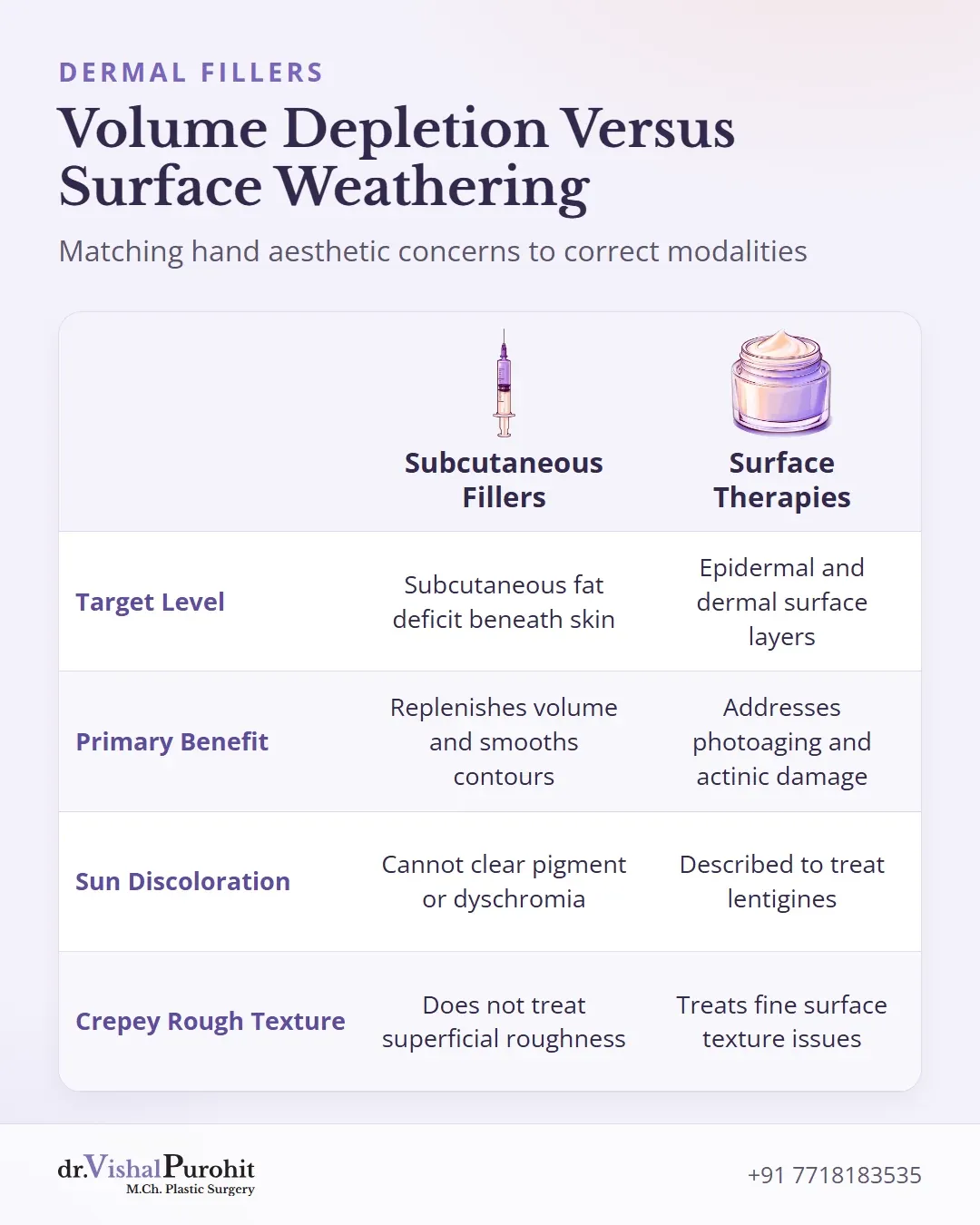
Injectable dermal fillers and collagen stimulators placed in the hands work beneath the surface to camouflage prominent tendons, bones, and veins while restoring lost volume146. However, volume loss on the back of the hand is often accompanied by epidermal and dermal thinning alongside irregular pigmentation1.
Key points
- Injectable dermal fillers restore lost volume beneath the surface but cannot treat superficial skin damage.
- Sun spots, thinning, and crepey texture require separate surface-directed therapies rather than volume replacement.
Dermal fillers do not resolve surface-level skin damage:
- Constant exposure to sun rays leads to skin cell changes and discoloration that fillers cannot clear4.
- Fillers target tissue deficit and volume loss, but they do not treat sun-induced dyschromia, keratoses, or superficial roughness16.
Addressing Surface Changes
In aesthetic literature, improving pigmentation, dyschromia, and fine surface texture relies on separate surface-directed therapies rather than subcutaneous gel16:
- Superficial or medium-depth chemical peels act on epidermal and dermal layers to address photoaging and actinic damage17.
- Light-based modalities and lasers are described in published protocols to treat lentigines and surface texture16.
In his practice in Jaipur, Dr. Vishal Purohit offers dermal fillers as non-surgical options, but his clinic provides no laser and no resurfacing of any kind. Individual hand concerns are evaluated during an in-person consultation.
Treatment Expectations and Hand-Specific Recovery
Dermal filler placement in the dorsal hands involves distinct recovery considerations compared to facial procedures. Following injection, patients commonly experience localized effects while the product settles into the tissues58.
Key points
- Hand filler recovery involves distinct localized effects like swelling and bruising as the filler settles.
- Most swelling and tenderness resolve within a few days, while bruising typically fades within 7 to 10 days.
- Suitability, product selection, and aftercare protocols are customized during an individual consultation.
Short-Term Post-Procedure Effects
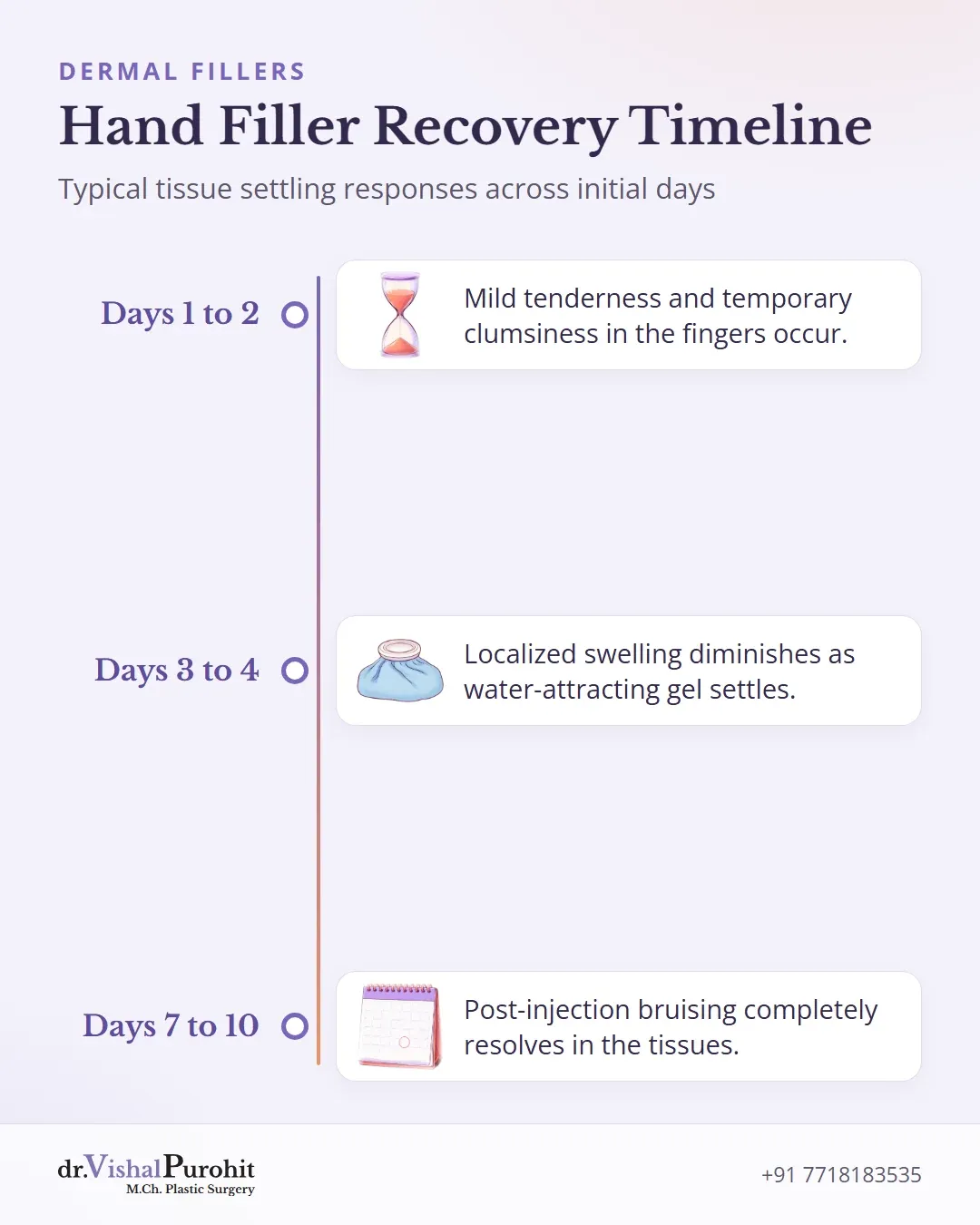
During the initial recovery window, typical tissue responses include:
- Local swelling, which occurs as hyaluronic acid attracts water and commonly subsides within 3 to 4 days8. General dermal filler swelling may take 1 to 3 days to diminish, while bruising resolves within 7 to 10 days9.
- Mild tenderness and temporary clumsiness or tightness in the fingers and hands during the first few days, related to local tissue distension.
Applying a covered cold pack intermittently can help manage early swelling89.
Individual Assessment and Protocol
Whether Dr. Vishal Purohit offers hand filler procedures, the specific dermal filler formulations chosen, and aftercare rules are not fixed in advance; each is decided at the consultation. Dr. Purohit assesses individual anatomical volume loss and skin quality before determining whether treatment is appropriate. Patients receive personalized guidance regarding daily manual tasks, sun protection, and routine follow-up during their clinical evaluation.
Product Indications and Regulatory Scope
In aesthetic medicine, regulatory clearances are indication-specific rather than universal permissions5. International authorities, such as the US Food and Drug Administration (FDA), evaluate dermal fillers through formal premarket approval pathways that assess clinical safety and effectiveness for precise anatomical targets510.
Certain injectable formulations have earned specific clearance abroad for restoring soft tissue volume in the dorsal hands:
- Calcium hydroxylapatite (CaHA) became the first injectable filler approved by the US FDA for hand rejuvenation11.
- Specific hyaluronic acid products, including Restylane Lyft, carry formal US approvals under dedicated product coding for dorsal hand augmentation1012.
An approval granted in the United States or another foreign jurisdiction applies solely within that regulatory system5. It does not establish official regulatory clearance or marketing permission in India.
For Indian patients considering hand rejuvenation, foreign approvals serve only as educational background. Specific treatment options, product selections, and permissible indications must be verified through the Indian product label and evaluated during a personal consultation with an M.Ch. plastic surgeon.
Deciding on Hand Volume Assessment
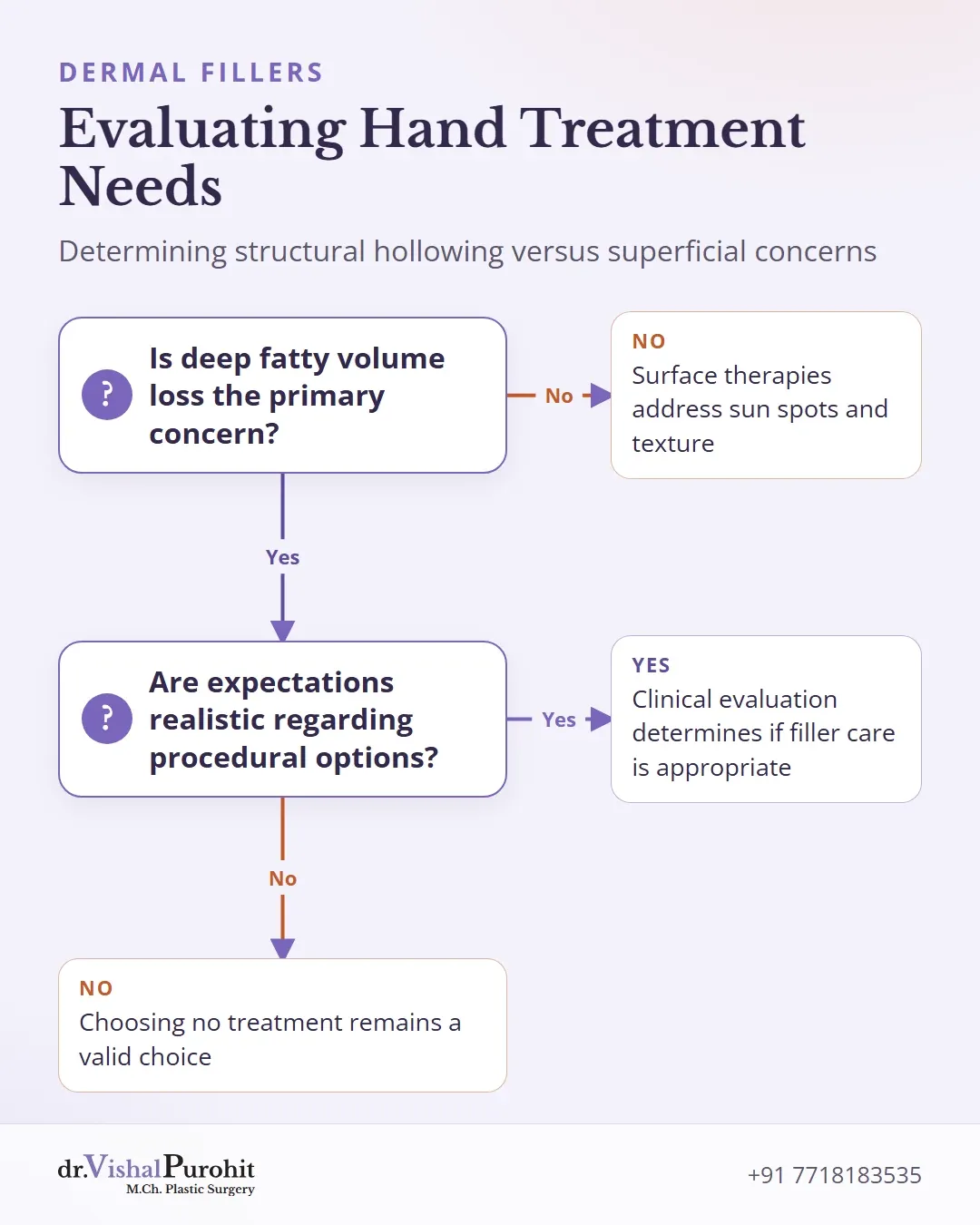
An initial consultation clarifies whether dorsal hollows or surface weathering cause the main aesthetic concern. In the hands, thinning of fatty tissue can make veins, tendons, and bones appear prominent, which differs from superficial skin changes13. Objective visual grading scales are available in the medical literature to evaluate fatty tissue loss and tendon visibility13.
Patients often seek aesthetic care wanting improvement without knowing which specific modality addresses their underlying anatomy1415. A thorough assessment ensures that individual expectations are realistic and that prospective candidates understand their treatment options1415.
Key considerations during this evaluation include:
- Distinguishing deep structural volume loss from epidermal quality or texture issues1314.
- Understanding available alternatives and the expected recovery process1415.
- Recognizing that choosing no treatment is always a valid choice.
Whether dermal fillers are suitable for an individual patient or whether treatment is offered is decided at the consultation. Dr. Purohit reviews individual anatomical goals and medical suitability in person before making any procedural plan.
Hand Assessment and Consultations in Jaipur
Evaluating dorsal hand changes requires distinguishing between subcutaneous fat depletion and superficial photoaging. Injections can add volume over exposed dorsal anatomy, but they cannot resolve sun-induced discoloration. Patients considering treatment can explore Dermal Fillers in Jaipur and review common questions via Dermal Fillers FAQs. An in-person consultation clarifies whether procedural care suits individual anatomical concerns.
This is educational information, not medical advice.