
Facial aging reflects distinct anatomical changes occurring across facial tissues over time. Repeated muscle movements create dynamic expression lines, while soft tissue depletion and bone changes lead to structural hollowing and deeper folds. Understanding these separate mechanisms helps clarify why neuromodulators and soft tissue injectables serve entirely different clinical purposes.
Selecting an appropriate approach begins with identifying whether dynamic creases or volume depletion cause specific aesthetic concerns. A foundational overview in Dermal Fillers: A Patient’s Guide to Getting Started details how soft tissue replacement functions, whereas neuromodulators temporarily relax underlying muscle action.
Dynamic Expression Lines Versus Volume Deficits
Facial aging involves distinct physiological processes that require different non-surgical approaches. Habitual muscle contractions during facial animation create dynamic wrinkles, notably in the upper third of the face1. These expression lines include frown lines between the eyebrows and crow’s feet around the eyes23. Botulinum toxin temporarily weakens or relaxes the underlying muscles that cause these dynamic creases34.
In contrast, structural hollows and folds stem from deeper tissue alterations. Age-related volume loss involves bone resorption, degradation of subcutaneous tissue, and the descent or deflation of fat compartments15. Dermal fillers address these static volume deficits rather than muscle movements36.
Dr. Purohit’s note: Dr. Purohit offers both Botox and dermal fillers as non-surgical treatment options, tailoring the choice to whether a patient presents with dynamic lines or volume loss.
Key Functional Differences
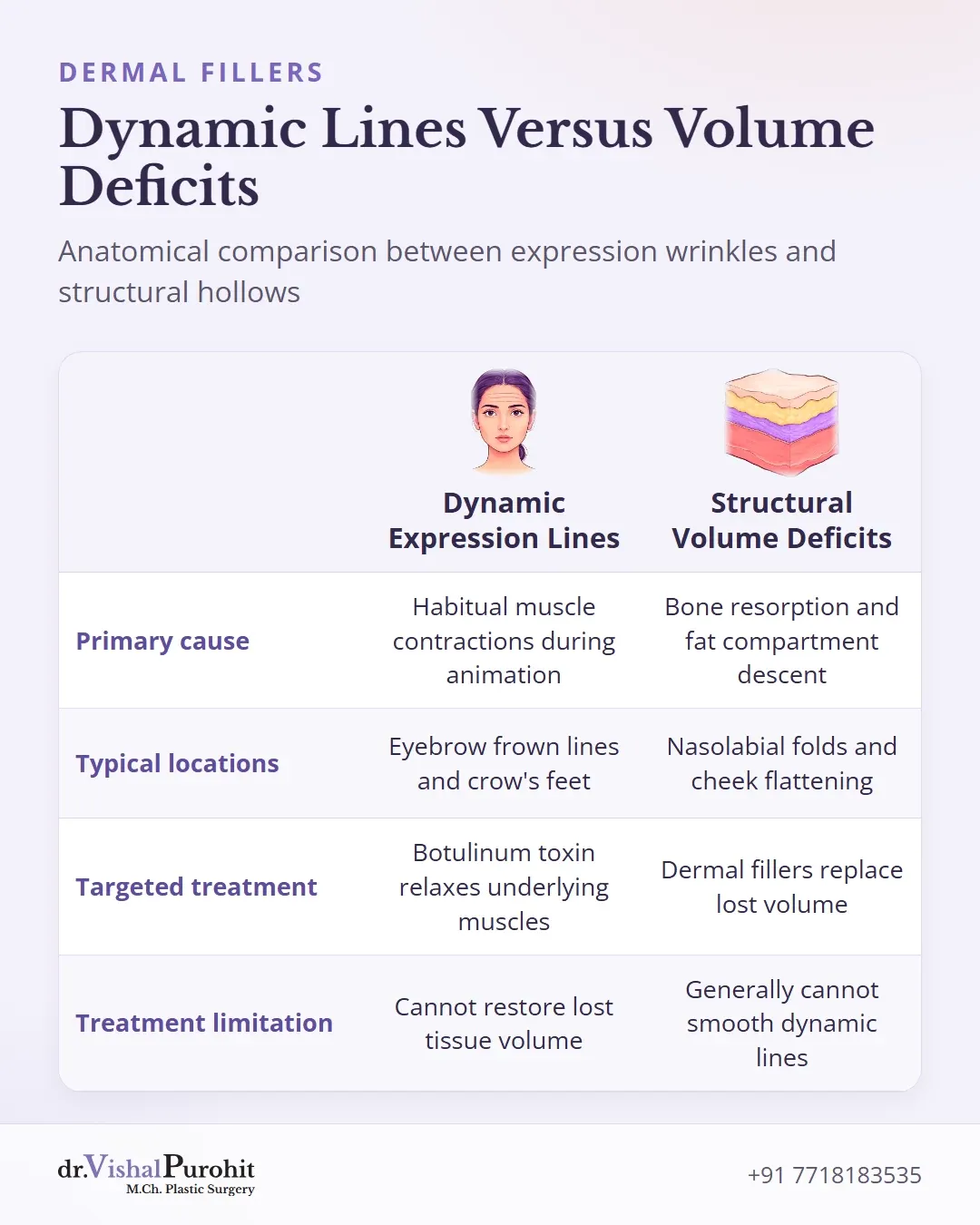
Understanding whether facial changes stem from active muscular motion or resting tissue loss determines the correct clinical approach.
Dynamic Lines
Distinct Treatment Goals and Inherent Limitations
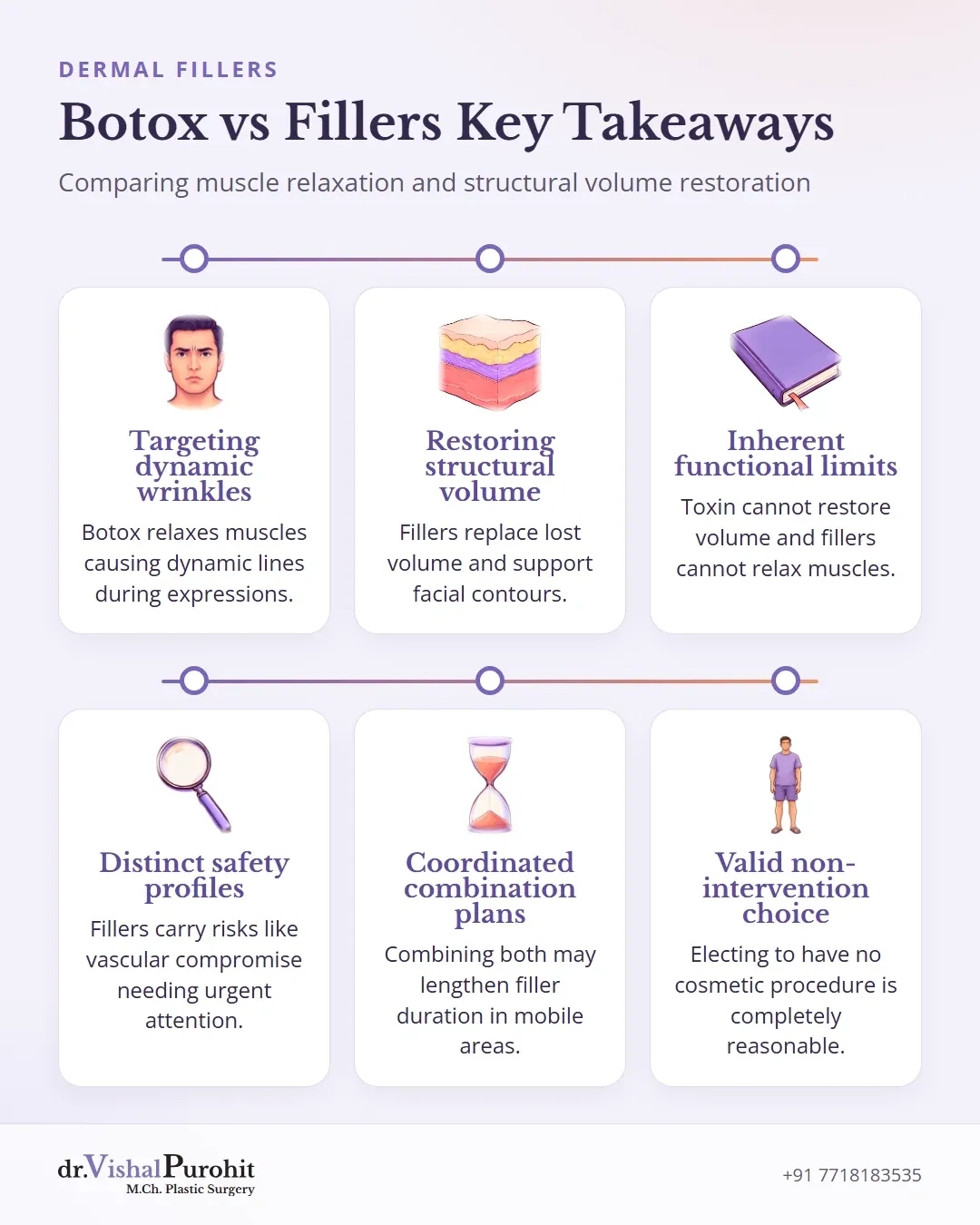
Understanding the physiological differences between neuromodulators and soft tissue fillers prevents unrealistic expectations and reduces the likelihood of over-treatment. Each injectable class targets a fundamentally separate mechanism of facial aging78.
Key points
- Neuromodulators and dermal fillers address fundamentally different mechanisms of facial aging.
- Neuromodulators relax dynamic muscle action but cannot restore lost volume or lift descending tissues.
- Fillers augment structural volume deficits but cannot stop or relax active muscular contractions.
Dynamic Lines Versus Structural Volume Loss
- Neuromodulators, such as botulinum toxin, target dynamic rhytids caused by hyperkinetic muscle contraction during facial expression8. However, relaxing muscle action cannot restore structural volume loss, re-inflate hollow cheeks, or lift tissues altered by deeper descent89.
- Dermal fillers act as space-occupying gels placed to fill volume deficits in tissue spaces and augment facial contours9. They cannot inhibit or relax active muscular movement89.
Setting Realistic Aesthetic Expectations

A precise evaluation of facial anatomy guides treatment selection8. Attempting to correct dynamic wrinkles solely with fillers can lead to aesthetic issues such as material migration, where muscle action displaces the gel1011. Conversely, using neuromodulators to address tissue hollowing leads to inadequate correction89. Dr. Vishal Purohit assesses each presentation individually during consultation to determine appropriate non-surgical treatment options based on anatomical needs.
Comparing Longevity, Maintenance and Safety Profiles
Treatment Longevity and Maintenance
Every dermal filler has a different use and expected duration of effect12. In the hand, soft tissue augmentation has been reported to last 6 to 9 months13. In Dr. Purohit’s practice, the expected duration of results and maintenance schedules are decided at the consultation.
Pretreatment with botulinum toxin can reduce dynamic muscle movement, which may promote the longevity of dermal filler placed in the tissue1415.
Safety Profiles and Distinct Risks
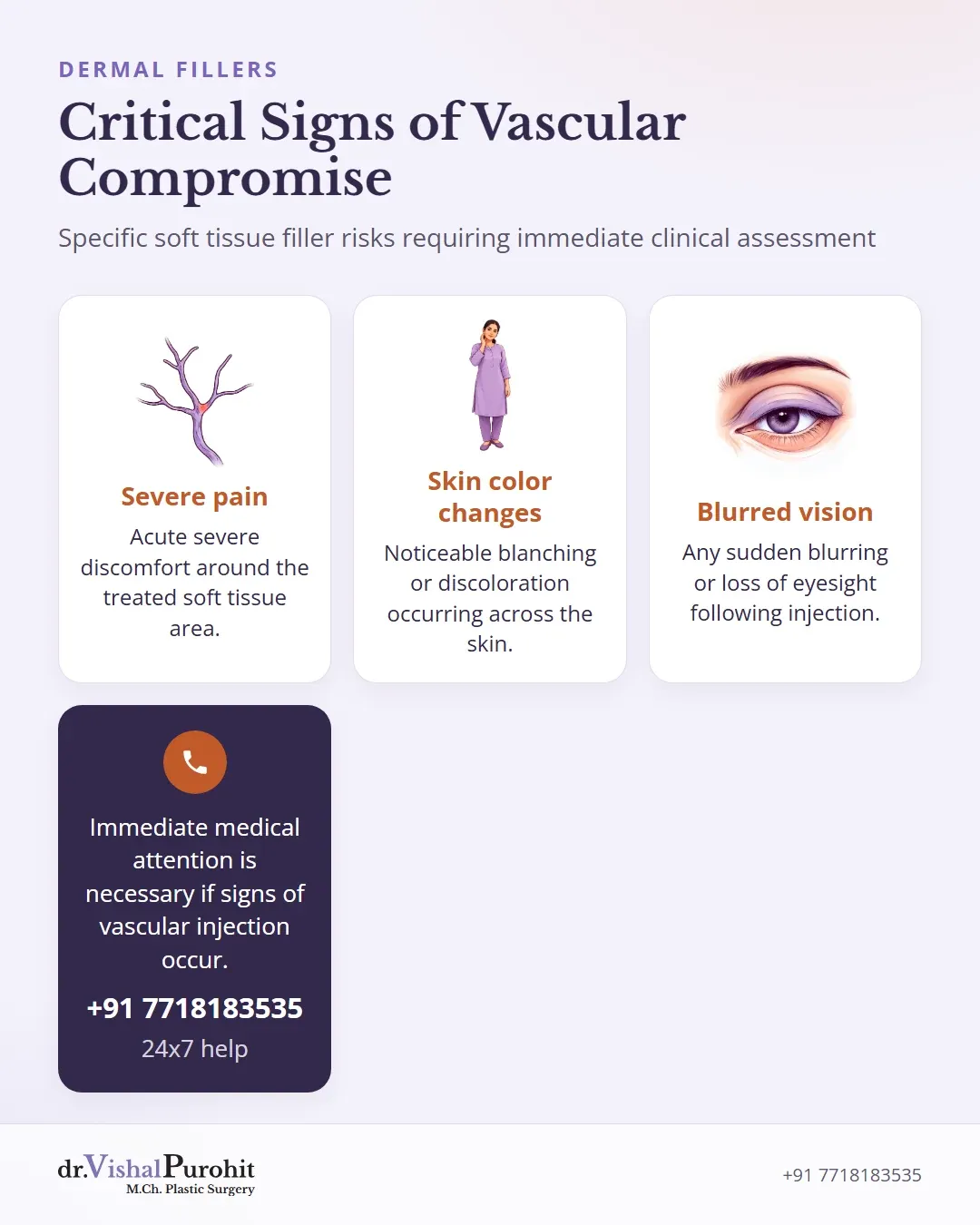
Both treatments require careful medical oversight, but their adverse event profiles differ. Soft tissue filler injections carry specific structural and vascular considerations1216:
- Immediate reactions can include swelling, erythema, bruising, tenderness, and pain16.
- Late reactions may involve nodule formation, inflammatory responses, chronic infections, or filler migration1617.
- Vascular compromise remains a critical risk specific to soft tissue fillers, which can manifest as skin color changes, severe pain, blurred vision, or loss of vision16.
Immediate medical attention is necessary if signs of vascular injection occur12.
Combining Modalities in an Individualised Plan
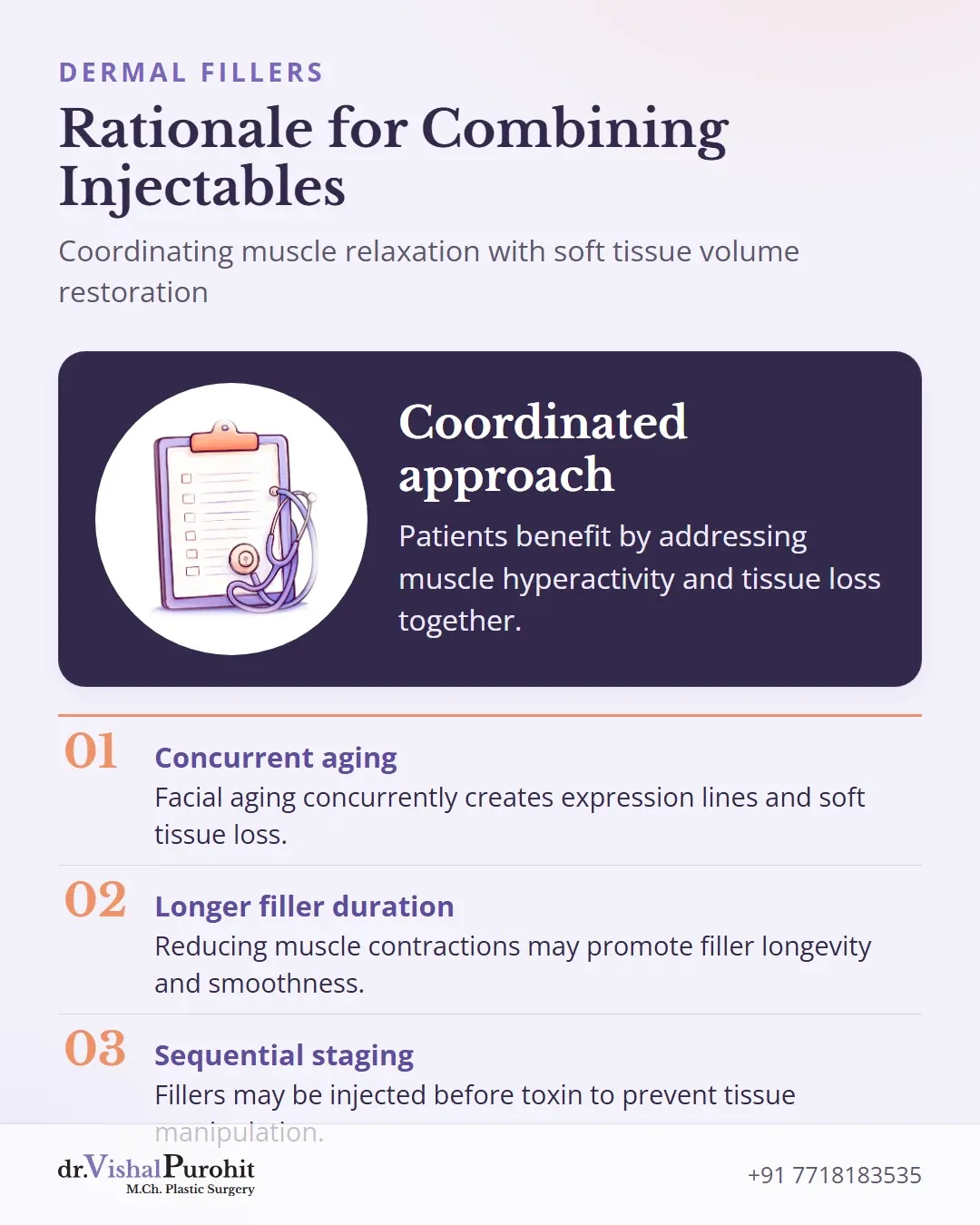
Facial aging involves concurrent structural alterations, including dynamic lines from muscle movement and soft tissue volume loss7. Because these concerns stem from distinct anatomical processes, many patients benefit from a coordinated approach addressing both muscle hyperactivity and underlying soft tissue depletion71819.
In clinical literature, pairing botulinum toxin with dermal fillers can address facial folds and restore volume while treating dynamic lines718. This combination can also offer advantages of longer filler duration and improve filler smoothness in highly mobile areas such as the lips and frown7. When treating the upper face, literature notes panels often consider sequential stages, or injecting filler prior to toxin during a single visit to prevent unnecessary tissue manipulation20.
Whether Dr. Vishal Purohit combines fillers with Botox or other treatments in a single strategy is not confirmed in advance and is decided at the consultation. During this assessment, each patient’s facial anatomy, movement patterns, and volume requirements are evaluated individually to determine whether a single modality or a staged combination is appropriate.
Selecting Your Treatment Path or Doing Nothing
A comprehensive aesthetic consultation assesses whether dynamic facial movements, volume deflation, or both contribute to visible aging changes2122. Dr. Vishal Purohit evaluates facial anatomical concerns individually to determine whether neuromodulation or soft tissue restoration aligns with clinical findings22122.
The Role of Conservative Clinical Assessment
An in-depth evaluation establishes realistic expectations, reviews medical history, and outlines procedure limitations and risks before deciding on any cosmetic therapy2123. Tailoring treatment helps address specific concerns, such as expression lines or structural soft tissue loss, without unnecessary interventions222425.
Choosing Not to Intervene
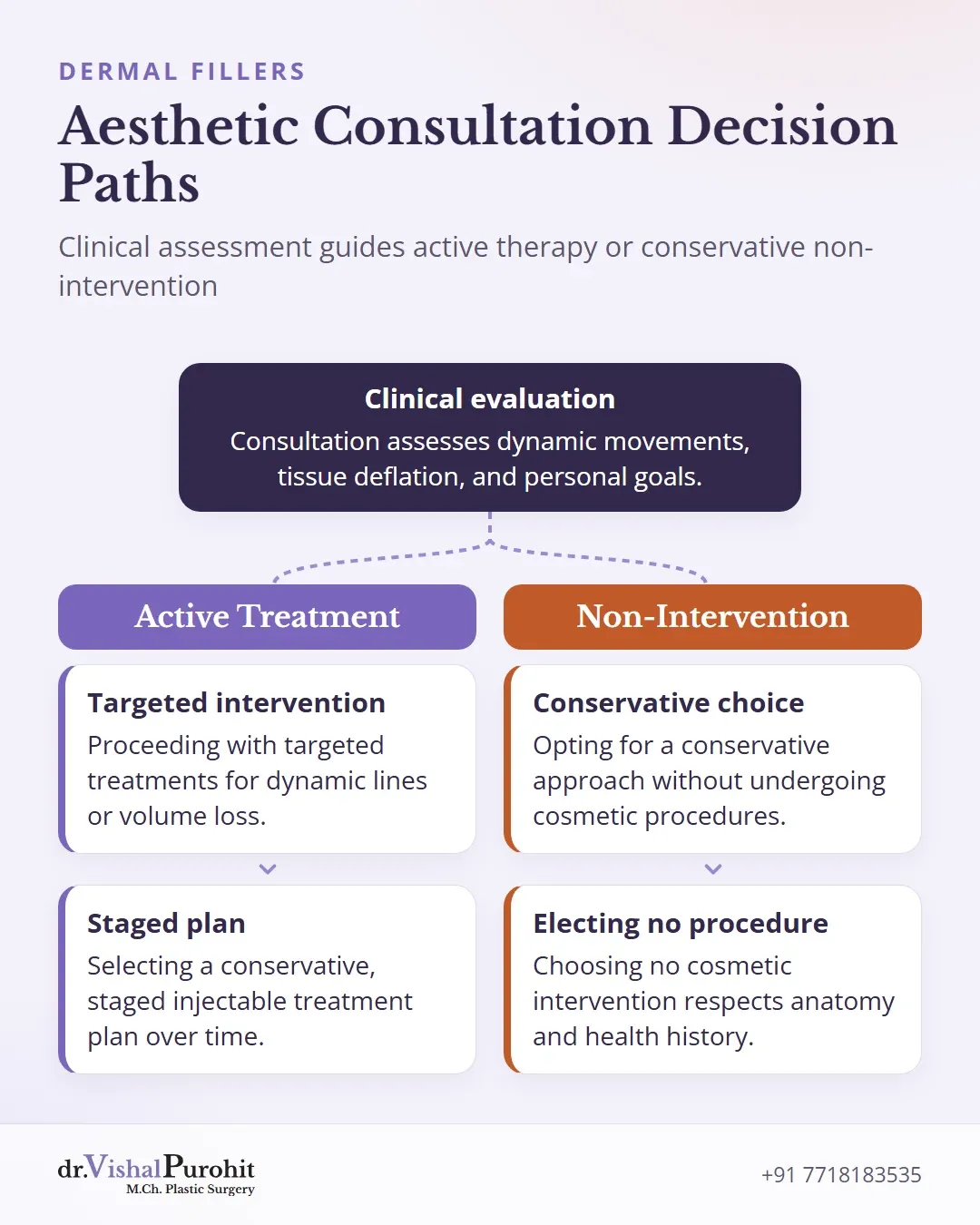
Opting for a conservative approach or electing to have no cosmetic procedure is an entirely reasonable choice26. Decisions remain individualized according to personal goals, anatomy, and clinical history24. Patients may consider several paths during consultation:
Non-Surgical Facial Consultation in Jaipur
Selecting between neuromodulators and soft tissue restoration requires a precise clinical evaluation of muscle movement and structural tissue loss. Individuals exploring treatment paths can learn more about injectable options through Dermal Fillers in Jaipur or review clinical details in the Dermal Fillers FAQs. An in-depth evaluation establishes realistic expectations, reviews health history, and determines whether single-modality care, a staged plan, or choosing no intervention aligns with personal aesthetic goals.
This is educational information, not medical advice.