
Facial aging involves distinct changes across multiple anatomical layers, including deep fat deflation, altered elasticity, and shifts in supporting structures. Understanding whether a change stems from volume deflation or true mechanical sagging determines whether soft-tissue restoration or surgical repositioning is appropriate.
Patients exploring non-surgical options can consult Dermal Fillers: A Patient’s Guide to Getting Started to learn how injectable treatments function. While fillers restore structural support in deflated areas, they operate differently from surgical procedures designed to address pronounced structural descent.
Differentiating Volume Loss from Structural Laxity
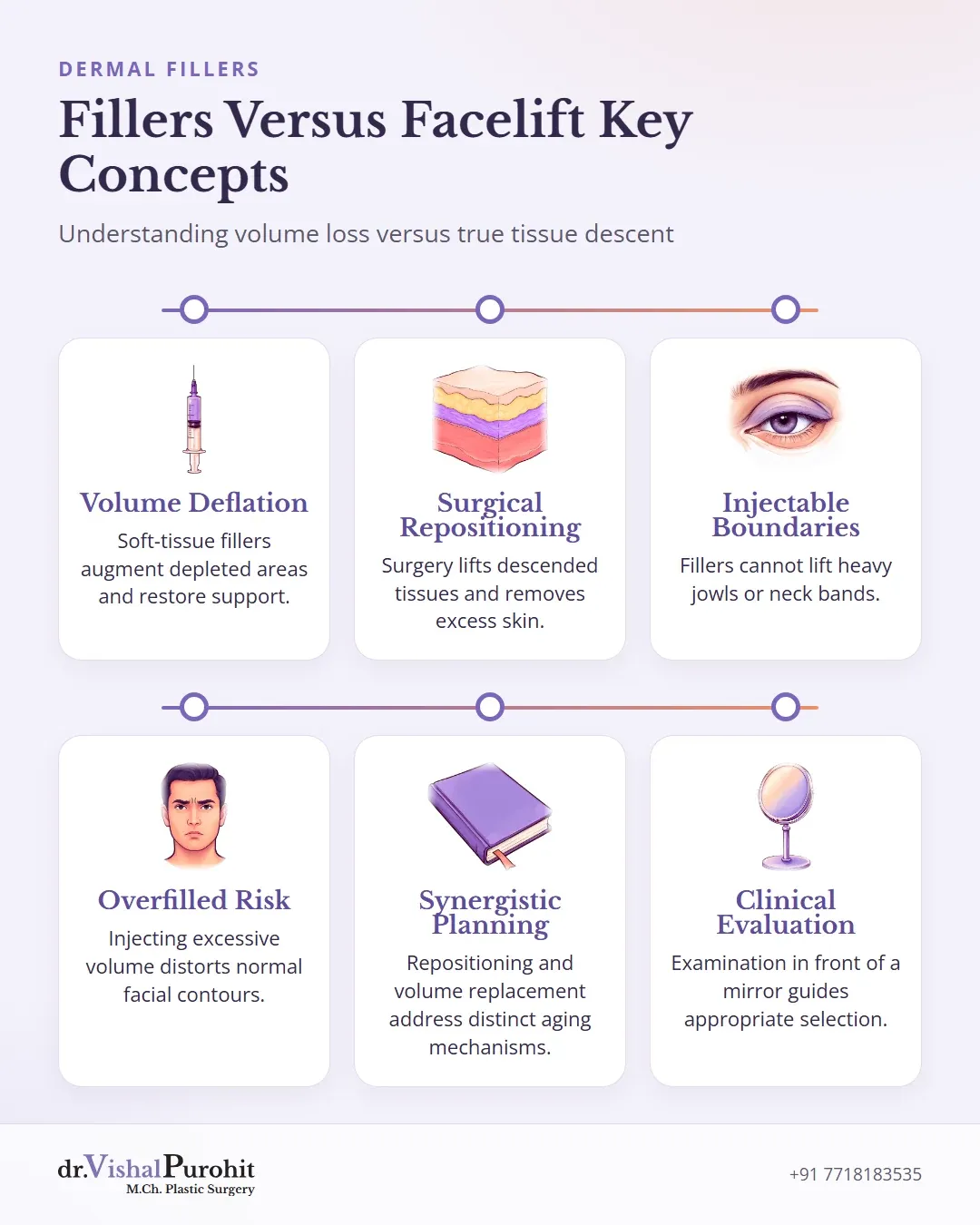
Facial aging involves changes across multiple anatomical layers, including fat deflation, dermal thinning, altered elasticity, and shifts in deeper retaining systems1. Understanding whether a facial change stems from deep volume deflation or true mechanical laxity determines the appropriate corrective approach23.
Volume Deflation
Aging leads to differential volume loss within facial fat compartments4. When deep fat deflates, the overlying soft tissues lose underlying support and can create an illusion of sagging, known as pseudoptosis45.
- Injectable soft-tissue fillers serve as agents to augment areas of deflation2.
- They restore lost structural support and improve facial contour12.
- Over-relying purely on volumisation to address deeper structural sagging can create unnatural fullness without restoring balanced facial geometry1.
Structural Laxity and Descent
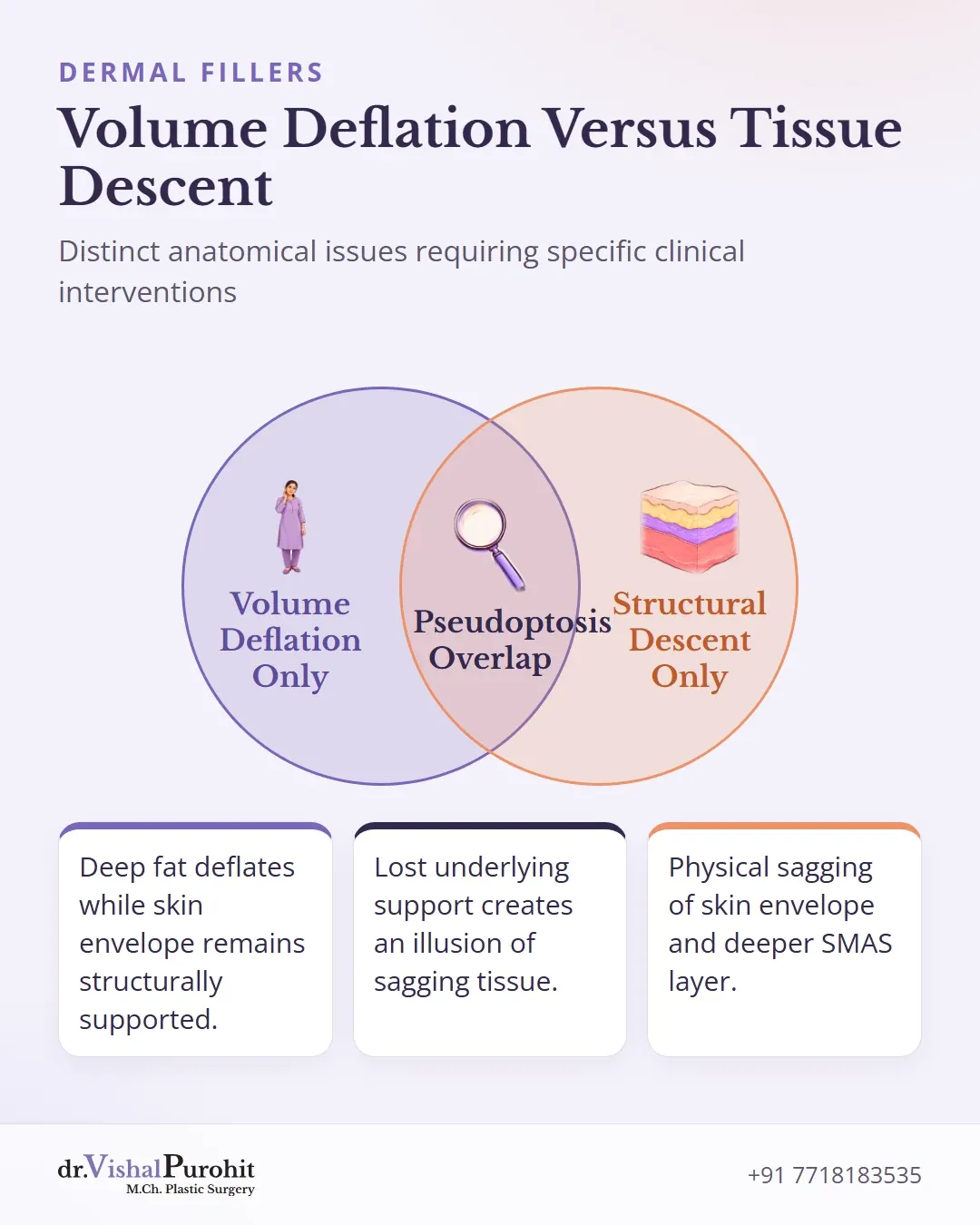
True structural laxity involves the physical descent and sagging of the skin envelope and deeper tissues, including the superficial musculoaponeurotic system (SMAS) layer46.
- A surgical facelift repositions descended soft tissues into anatomically youthful positions27.
- Surgical techniques manipulate the deeper SMAS layer to lift the face and excise redundant, sagging skin34.
- Repositioning alone cannot replace lost volume, just as fillers alone cannot lift substantial redundant tissue3.
Dr. Purohit’s note: Dr. Purohit assesses both volume distribution and tissue laxity during an initial consultation in Jaipur to recommend an individualized treatment plan.
Realities and Boundaries of the Liquid Facelift
Dermal filler injections can increase soft-tissue volume8. Both medial and lateral facial injections can create modest local lifting effects of up to 1 mm, with lateral placements providing additional regional lift8. These treatments can soften folds and provide subtle structural support to midface contours18.
However, injectables cannot duplicate the repositioning of surgery:
- They cannot lift heavy jowls or correct neck banding.
- Published rheological parameters of products may not translate directly into true clinical lifting capacity1.
- Surface changes often reflect outward contour projection rather than genuine tissue repositioning1.
Attempting to treat significant skin laxity by injecting large filler volumes creates distinct aesthetic problems:
- Indiscriminate volumization frequently leads to overfilled syndrome1.
- Expanding tissues excessively distorts normal facial anatomy, creating an unnaturally puffy or altered appearance1.
Dr. Vishal Purohit assesses facial structure in Jaipur to determine whether a patient is dealing primarily with volume deflation or marked tissue descent. Non-surgical injectable treatments are planned around structural support rather than excessive filling1, ensuring facial harmony is maintained without overloading the tissues.
Role of Surgery, Threads and Energy Modalities
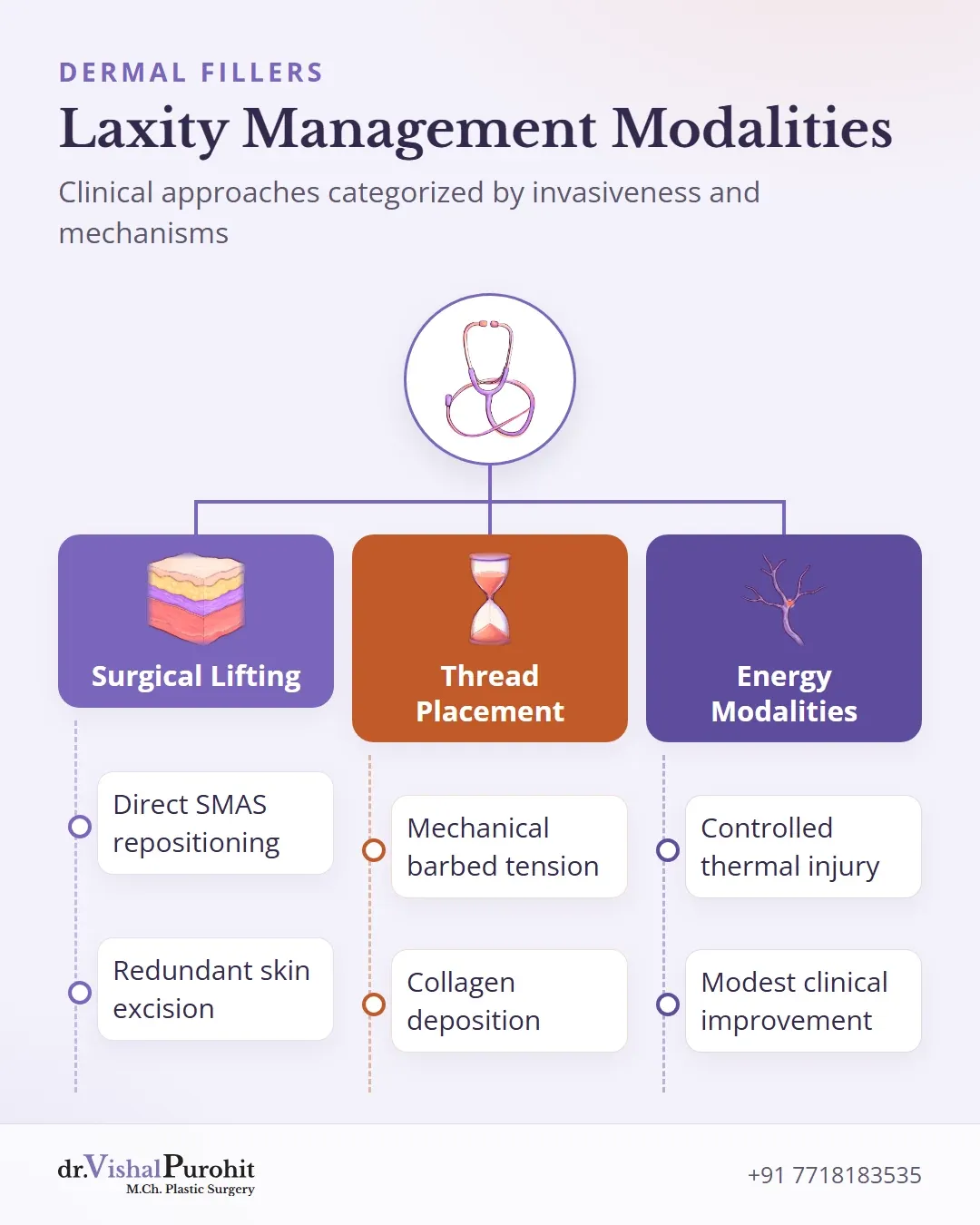
Facial skin laxity has traditionally been managed with surgical lifting procedures9. Surgery addresses structural tissue descent directly, whereas non-surgical technologies provide a different scope of change10. At his practice in Jaipur, Dr. Vishal Purohit does not offer laser treatments of any kind.
Key points
- Surgical lifting directly addresses structural tissue descent, whereas non-surgical technologies provide a different scope of change.
- Threads provide milder lift with less recovery time, while energy devices stimulate collagen with modest clinical improvement.
- Non-surgical modalities cannot replicate structural anatomical repositioning, making realistic expectations essential.
Threads and Non-Surgical Options
Thread placement is a semi-invasive option that provides a milder degree of tissue lift with less recovery time and lower initial cost compared to standard rhytidectomy1112. Barbs along the thread create mechanical tension that suspends sagging tissue, accompanied by collagen deposition around the threads12. When combined with injectables, some practitioners advise spacing treatments by several weeks to avoid soft tissue traction displacing the filler13.
Energy-Based Modalities and Expectations
Energy-based devices deliver modalities such as radiofrequency or ultrasound to create controlled thermal injury within the dermis9. The resulting healing response can stimulate collagen formation, though overall clinical improvement remains modest1014.
Outcomes vary between individuals, and some patients show subclinical responses10. For patients considering non-surgical lifting, maintaining realistic expectations is essential, as these devices cannot replicate structural anatomical repositioning10.
Synergistic Plans and Setting Realistic Expectations
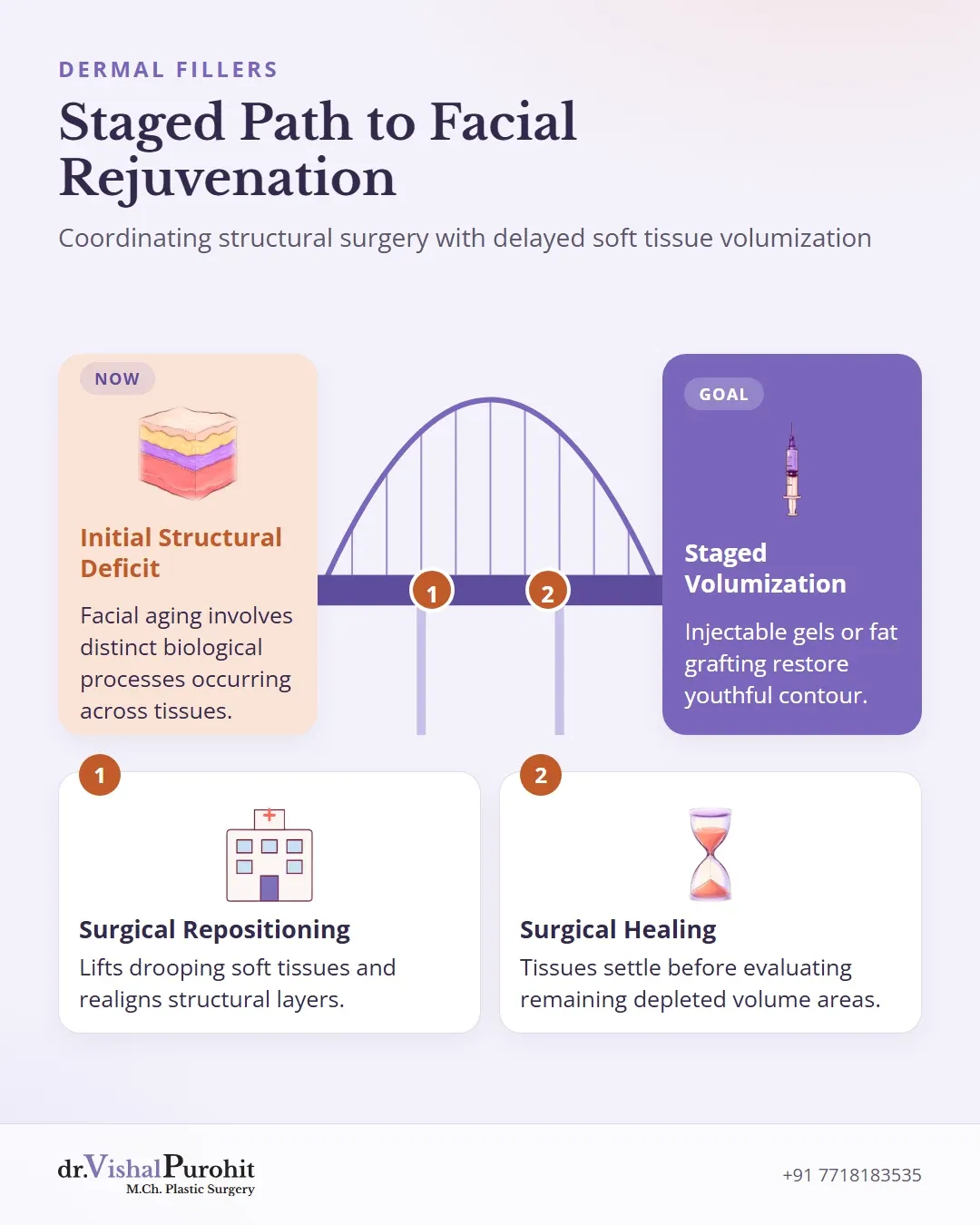
Facial aging involves distinct biological processes occurring across different tissues15. A surgical facelift repositions descended skin and deeper structures, yet it does not address underlying volume loss1617. Dermal fillers or autologous fat transfer provide the volume restoration needed to re-establish fullness1618.
For comprehensive facial rejuvenation, literature highlights that a single modality cannot address every concern15:
Volume Restoration
Injectable gels or fat grafting restore youthful contour where volume has depleted151618.
Staged Planning
Placing nonfat fillers after surgical healing has occurred is often easier and more accurate19.
Whether dermal fillers are combined with other procedures in his practice is decided at the consultation by M.Ch. plastic surgeon Dr. Vishal Purohit in Jaipur. Understanding that surgical repositioning and volume replacement target different structural needs helps individuals set realistic aesthetic expectations before proceeding with care17.
Choosing the Right Treatment Approach
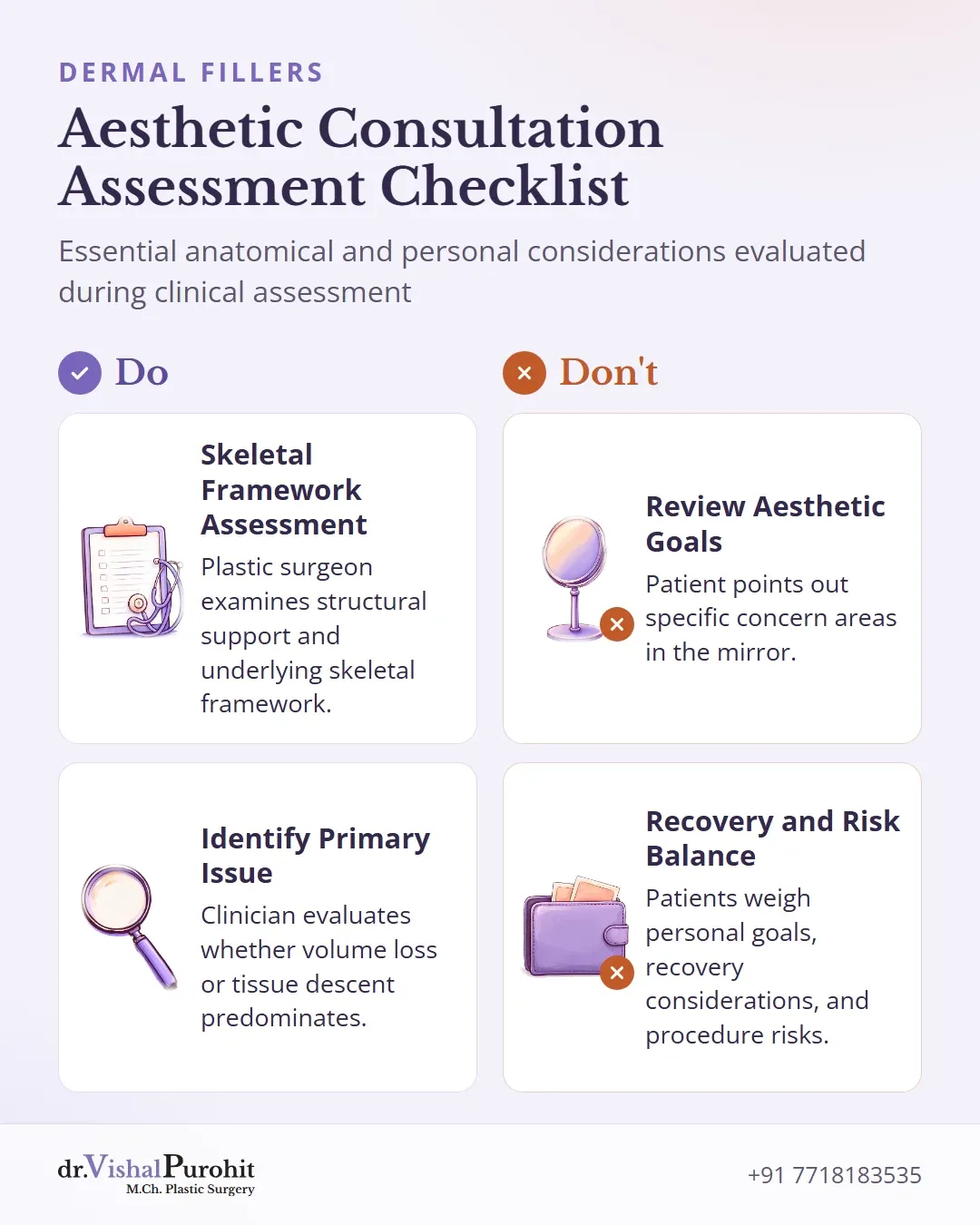
Facial aging involves changes across multiple anatomical layers, including skin, soft tissue, and bone20. Determining whether a person benefits more from volume restoration with dermal fillers or surgical repositioning through a facelift requires a detailed clinical evaluation62122.
During an aesthetic consultation, the plastic surgeon examines the structural support of the face, the condition of the skin, and the underlying skeletal framework22. In front of a mirror, the patient points out specific areas of concern and discusses their aesthetic goals23. The clinician evaluates whether volume loss, tissue descent, or skin laxity represents the primary issue2022.
Whether a patient is better suited for dermal fillers, surgery, or another option is decided at the consultation. Dr. Vishal Purohit assesses each individual’s facial anatomy, medical history, and expectations before recommending any treatment plan2122. Patients must also weigh their personal goals, recovery considerations, and the balance of benefits and risks24. Deciding against any cosmetic procedure remains a valid choice at all times.
Facial Rejuvenation Consultations in Jaipur
Determining whether volume loss or skin laxity represents your primary aesthetic concern begins with an individualized anatomical evaluation. Patients can explore treatment fundamentals through Dermal Fillers in Jaipur or review clinical details in the Dermal Fillers FAQs. An in-person consultation provides clear guidance on balanced treatment options, while choosing no cosmetic procedure remains a valid option at all times.
This is educational information, not medical advice.