


Platysma Muscle Bands Versus Loose Neck Skin
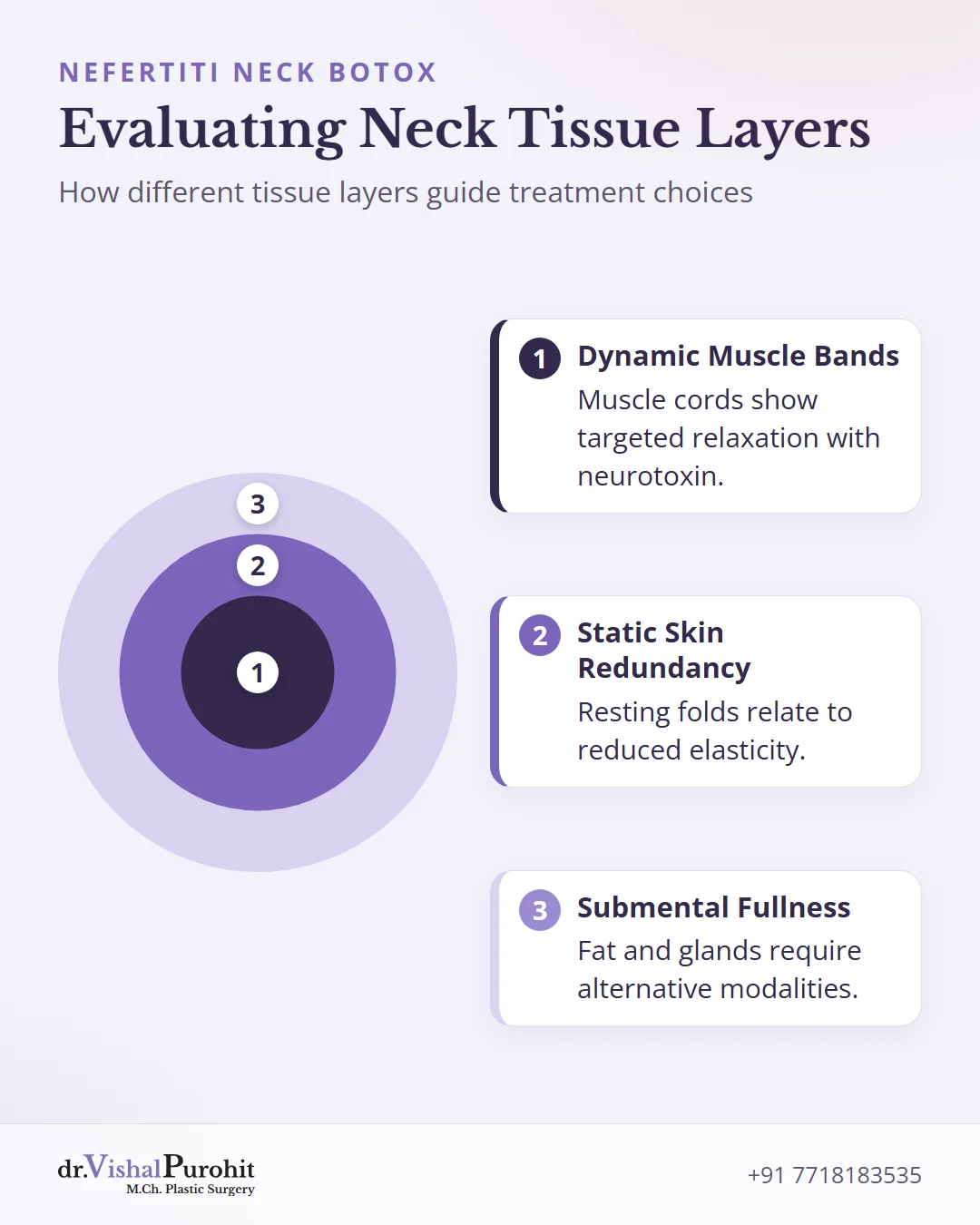
Visible changes along the neck can arise from distinct tissue layers. During an evaluation, a plastic surgeon assesses the neck both at rest and during movement to determine whether visible cords stem from active muscular tension or structural tissue laxity.
The superficial platysma muscle forms a thin sheet across the neck and jawline that pulls downward during speech or clenching. When assessing what neck-band Botox can and cannot change, neurotoxin injections target dynamic muscular cords rather than redundant skin, localized fat deposits, or descending salivary glands.
Botulinum toxin type A relaxes muscle pull, but it cannot lift heavy sagging tissues or tighten stretched skin envelope laxity. Key considerations during clinical assessment include:
- Dynamic bands that accentuate with neck contraction show the most targeted change.
- Static bands visible at rest often relate to decreased tissue elasticity or skin redundancy.
- Submental fullness, prominent glands, and loose skin require alternative clinical or surgical modalities.
Whether Botox or surgical intervention suits individual neck anatomy is decided at the consultation, and choosing no treatment remains a valid choice.
Candidate Assessment and Suitability for Treatment

Suitability for a Nefertiti neck lift begins with an individual consultation with Dr. Vishal Purohit, an M.Ch plastic surgeon in Jaipur. The assessment focuses on dynamic platysma muscle bands and early lower facial laxity. Choosing no treatment is always a valid option for any patient.
Key clinical details are clarified in person rather than assumed in advance:
- Dr. Purohit uses Allergan Botox, numbs with both numbing cream and ice, charges per vial (usually 50 units) combining areas of concern, and explains exact prices at the consultation.
- Treatment starts working in 3 to 5 days with full effect by about 7 days, lasts about 3 months on average, and requires following a 48-hour aftercare list.
- A review at about 2 weeks is advised but left to the patient, and any top-up is not charged.
Any sign of trouble breathing, swallowing, speaking, or generalized muscle weakness following botulinum toxin injections requires immediate emergency medical attention.
Medical Screening for Breathing and Swallowing Safety
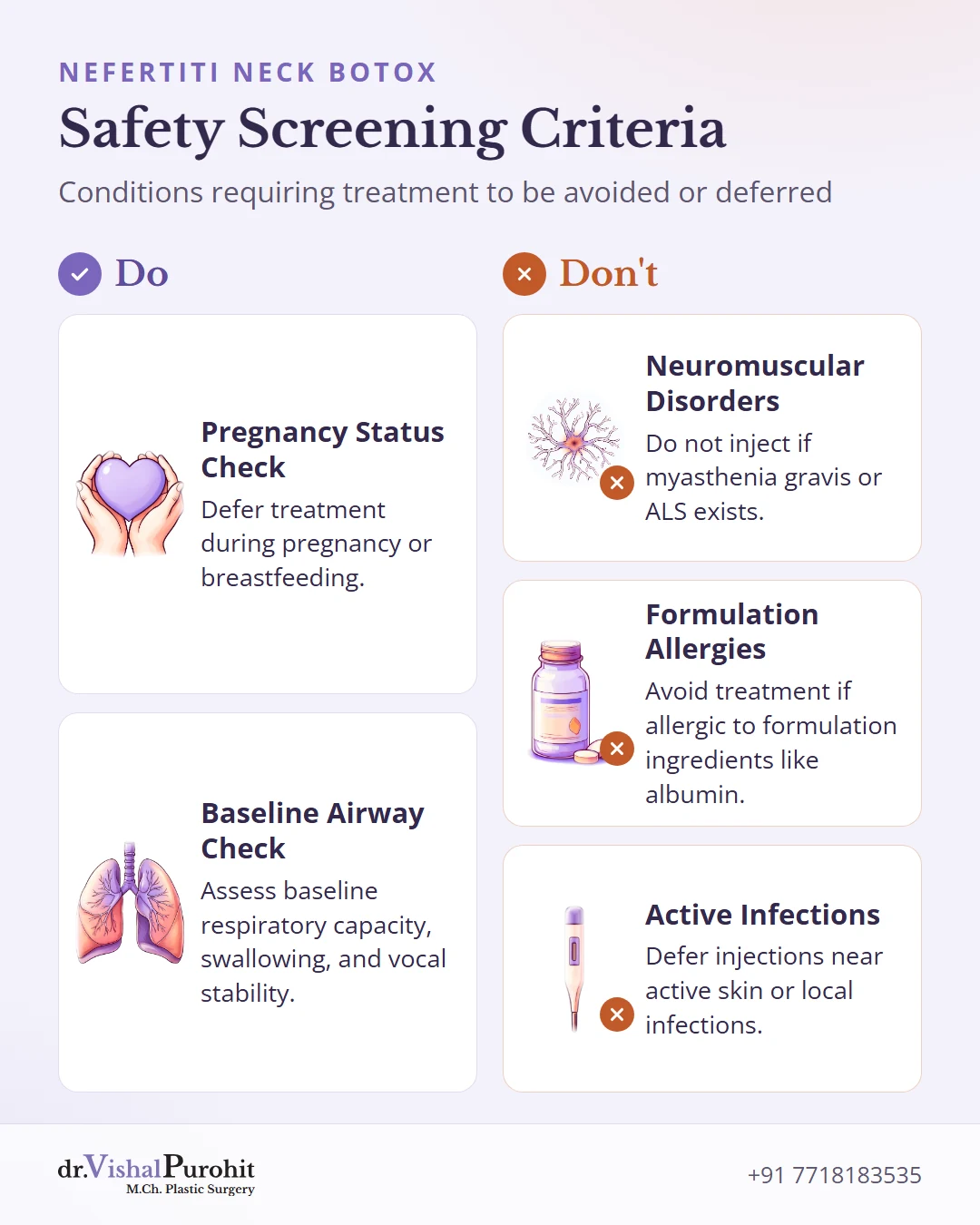
Injecting botulinum toxin into anterior neck muscles requires rigorous clinical evaluation beforehand. The platysma lies close to airway and swallowing structures. When evaluating patients for elective neck rejuvenation, baseline respiratory capacity, swallowing function, and vocal stability must be thoroughly assessed to preserve safety.
Careful clinical evaluation identifies individuals who should defer or avoid treatment entirely. In accordance with guidelines for the swallowing, breathing and medicine checks before neck treatment, neurotoxin injections must not proceed in the presence of certain conditions:
- Pre-existing neuromuscular disorders, such as myasthenia gravis, Eaton-Lambert syndrome, or amyotrophic lateral sclerosis
- Known hypersensitivity or prior allergic reactions to formulation ingredients such as albumin
- Active cutaneous or local infections near the planned injection sites
- Current pregnancy or breastfeeding, as clinical safety data remain limited
Studies report that botulinum toxin can weaken neck muscles that act as accessory muscles of ventilation. Diffusion into adjacent tissues can cause dysphagia (difficulty swallowing), dysphonia (voice changes), or dysarthria (speech difficulty). Any patient who develops trouble breathing, swallowing, speaking, or generalized weakness after an injection must seek immediate emergency medical care.
Critical Warning Signs and Red Flag Symptoms

Injections into the platysma muscle treat vertical neck bands, but unintended toxin diffusion into deeper cervical muscles can impair vital functions. Superficial needle reactions like mild redness, tenderness, or bruising remain confined to the skin.
Recognizing the difference between benign surface trauma and deeper complications is essential. Patients can review warning signs for neck Botox involving swallowing, voice, and breathing to distinguish expected injection tenderness from urgent red flags.
Seek emergency medical care at an emergency department at once if any of these critical symptoms develop:
- Difficulty swallowing liquids or food sticking in the throat (dysphagia)
- New voice hoarseness or vocal changes (dysphonia)
- Slurred speech or difficulty speaking (dysarthria)
- Shortness of breath or respiratory compromise
- Progressive or generalized muscle weakness
Never adopt a wait-and-see approach when breathing or swallowing is compromised. Dr. Vishal Purohit, M.Ch plastic surgeon, uses Allergan Botox, applies both numbing cream and ice, and provides a 48-hour aftercare list.
Expected Results Timeline and Treatment Duration
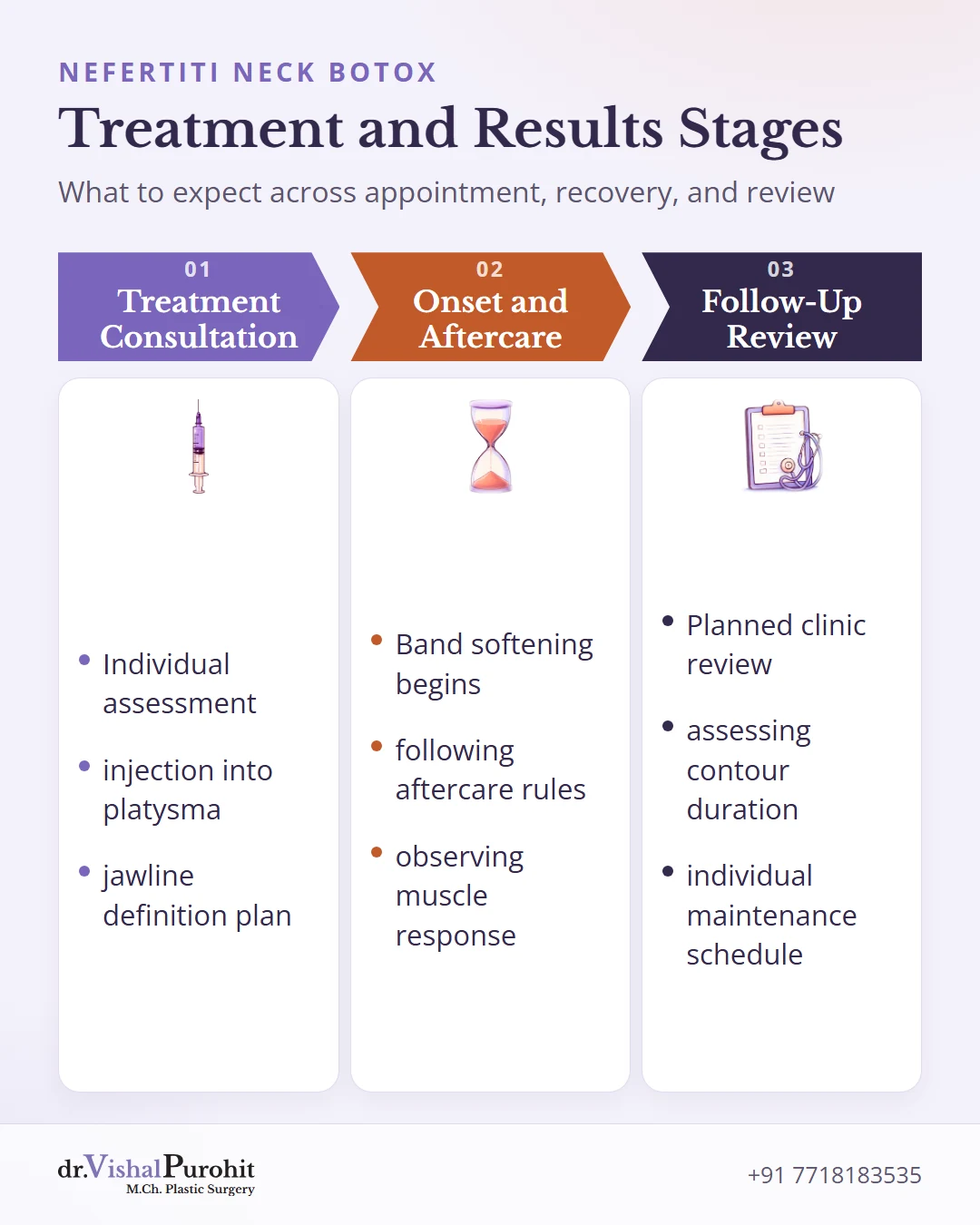
A Nefertiti neck lift uses botulinum toxin type A injections into the platysma muscle to soften vertical neck bands and define the lower jawline. In Dr. Vishal Purohit's patients, the effect starts working in 3 to 5 days, reaches full effect by about 7 days, and lasts about 3 months on average.
Each patient receives tailored guidance before proceeding with treatment, including details about:
- The expected onset and how long softening effects typically last
- Care recommendations to follow after injection appointments
- Any planned follow-up schedule and clinic review policies
Nefertiti Neck Botox Cost in Jaipur and Consent
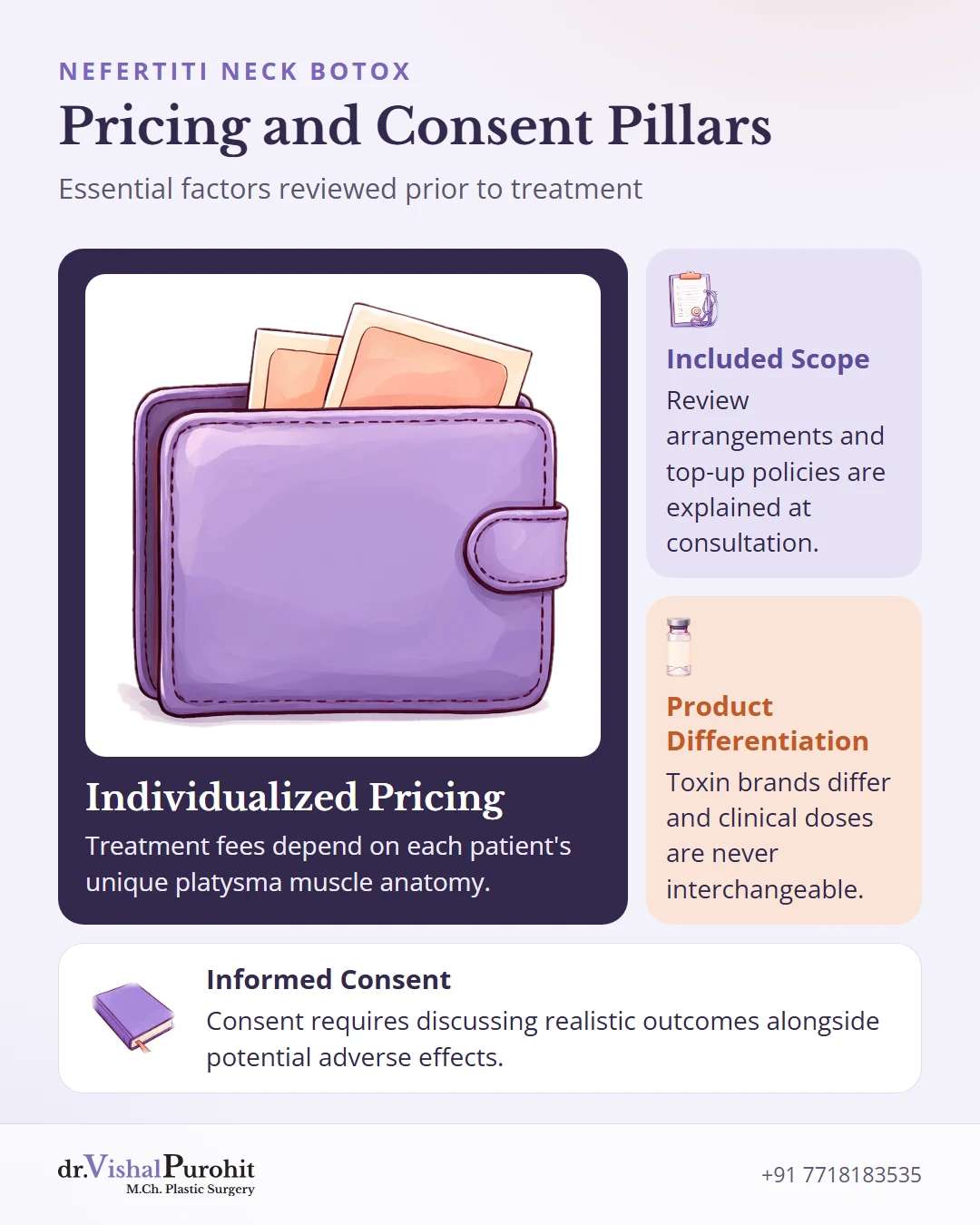
Planning for a Nefertiti neck lift involves understanding the total financial investment alongside the medical consent process.
Because every patient presents with unique platysma muscle anatomy, treatment pricing is individualized. Dr. Purohit charges per vial (usually 50 units) combining areas of concern so the single-patient vial is well used, advises a review at about 2 weeks at the patient's discretion without charging for a top-up, and explains exact prices at the consultation.
Botulinum toxin products differ across manufacturers, and their clinical doses are not interchangeable. During your visit, you are encouraged to discuss the specific product used and what its label covers.
Informed consent requires a clear discussion of realistic outcomes and potential adverse effects. Any difficulty breathing, swallowing, or speaking, or sudden general weakness after treatment is a medical emergency that requires immediate emergency care.