

TUE - SUN: 11:00 AM – 07:00 PM

Aesthetic & Reconstructive Surgery

Thigh Lift in Jaipur

Thigh Lift in Jaipur - Dr. Vishal Purohit Plastic Surgeon Jaipur11+ Years of Surgical Experience

Get your desired thigh shape

Expert thigh lift surgery in Jaipur to remove sagging skin and reveal the silhouette you've worked hard for.

View clinic timings and contact details →
  • M.Ch Plastic Surgeon · RMC Reg. 28041/14185
  • Day-care / short-stay procedure
  • Tonk Road, Jaipur
  • Jump to FAQs (10)

Treatment Areas

Thighs

Procedure Time

3-4 hours

Anesthesia

General Anaesthesia

Hospital Stay

2 to 5 days

Recovery Time

swelling 5 days, result in 21 days

Cost

Starting at ₹85,000 (consult for details)

The Lower Body Challenge

Tired of Painful Inner Thigh Chafing & Loose, Sagging Skin?

Major weight loss, pregnancy, or aging leaves the inner and outer thighs with redundant, draped skin folds that rub painfully together when walking and obscure your leg contours.

Painful Friction & Chafing

Inner thighs constantly rubbing against each other during walking, causing painful rashes and skin irritation.

Crepey, Flaccid Skin Folds

Loose skin pooling above the knees and along the inner thighs that squats and leg workouts cannot tighten.

Clothing & Swimwear Restrictions

Pants wearing out between the thighs, and avoiding shorts, skirts, or swimwear due to loose leg skin.

The Mechanical Vulnerability of Medial Thigh Skin

Medial thigh skin has poor dermal thickness and minimal deep fascial anchorage. Under gravitational pull and weight loss, it sags downward. Thighplasty anchors the lifted deep superficial fascial system (Colles' fascia) to ensure enduring, tight contouring without scar migration.

Dr. Vishal Purohit - M.Ch Plastic & Cosmetic Surgeon Jaipur

Dr. Vishal Purohit

M.Ch Plastic & Cosmetic Surgeon

✓

Credential Level

M.Ch Super-Specialty

RMC Reg. 28041/14185

Your Surgical Guide

Artistic Proportion & Advanced Surgical Safety

"A thigh lift restores smooth, comfortable leg proportions. By anchoring the tissue deep within the groin crease, we eliminate chafing and restore sleek, youthful leg definition."

— Dr. Vishal Purohit

1

M.Ch Plastic & Reconstructive Surgery, SMS Medical College, Jaipur

The highest super-specialty surgical qualification in India, ensuring total anatomical mastery of neurovascular planes and soft tissues.

2

11+ Years as a Plastic Surgeon

Practising plastic surgery in Jaipur since 2015, with a focus on natural, proportionate results.

3

Accredited Operating Suites

Dr. Vishal Purohit operates in sterile hospital operating theatres, with certified cardiac anaesthesiologists and ICU support.

Simple & Transparent

Your 3-Step Surgical Journey

We remove anxiety and uncertainty with a structured, transparent pathway designed for absolute safety and peace of mind.

1

Confidential Assessment

Dr. Purohit evaluates your anatomical baseline, skin elasticity, and health history. You receive an honest feasibility blueprint, personalized surgical plan, and transparent cost with zero pressure.

Step 1: Planning
2

Precision Operating Suite Procedure

Performed by Dr. Vishal Purohit in a sterile hospital operating theatre under gentle anaesthesia. Using advanced minimally invasive techniques, target areas are treated with microscopic care.

Step 2: Procedure
3

Monitored Recovery & Transformation

Supported with tailored recovery guidelines and post-operative follow-up visits. As tissue heals and settling occurs over the coming weeks, your refined results emerge.

Step 3: Recovery
Surgical Sculpting

Advanced Medial & Lateral Thighplasty

Dr. Vishal Purohit customizes each thigh lift to your specific pattern of skin laxity and fat distribution.

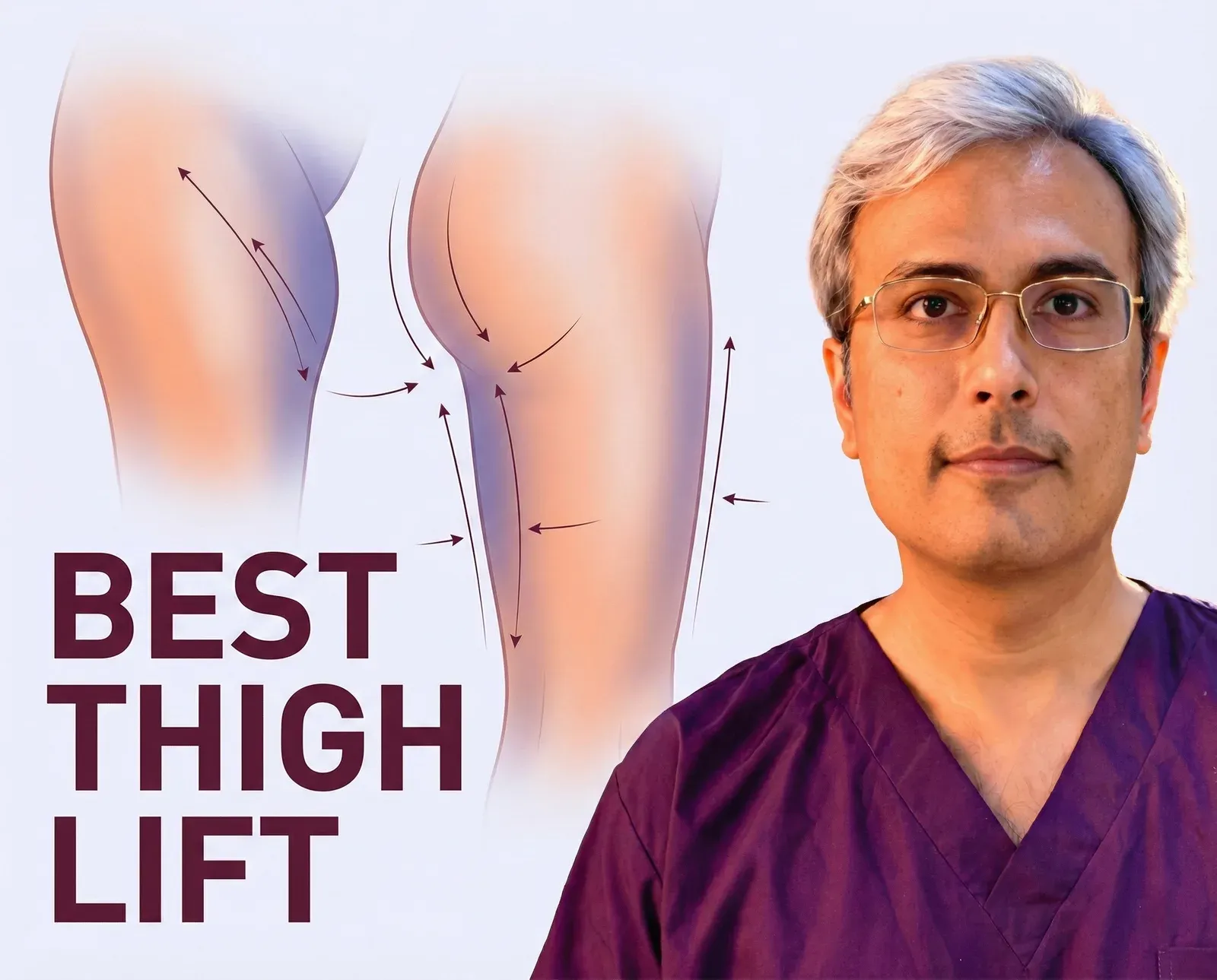
Medial Groin-Crease Thigh Lift

Concealed Bikini Incision

Incision hidden in the natural groin crease to elevate upper-third inner thigh slackness with well-hidden scars.

Vertical Extended Medial Thighplasty

Full-Length Leg Tightening

Addresses extensive skin laxity from groin to knee, sculpting a tight, streamlined contour along the entire inner leg.

Liposuction-Assisted Thighplasty

Contoured Adipose Debulking

Precision liposuction combined with surgical skin lifting to eliminate bulky fat pockets while tightening the leg silhouette.

Leg Contouring Focus

Upper Inner Thigh

Eliminating the chafing friction zone

Suprapatellar Knee Skin

Tightening loose skin above knees

Groin Crease Anchoring

Secure Colles' fascial fixation

Circumferential Thigh Gap

Restoring natural leg clearance

Lateral Thigh / Saddlebags

Smooth outer hip contour

Lymphatic Drainage Safety

Preserving saphenous vein & nodes

Clinical Guide & In-Depth Information

Comprehensive Medical Overview

Detailed procedural analysis, anatomical considerations, and patient guidelines by Dr. Vishal Purohit.

Thigh Lift by Dr. Vishal Purohit, Mch Plastic Surgeon, Jaipur

Introduction

In recent years, the world has seen an exponential surge in the realm of cosmetic surgery. As society progresses, so does the desire for individuals to enhance their physical appearance, not just for vanity but for a boost in self-confidence and overall well-being. Among these procedures, the thigh lift stands out as an increasingly popular choice for many, offering both aesthetic and functional benefits.

As a practicing Mch Plastic Surgeon in the heart of Jaipur, I, Dr. Vishal Purohit, have had the privilege of aiding numerous patients in their journey towards self-improvement. Every individual I meet brings a unique story, a distinct reason for their pursuit of this procedure. Through my years of practice, I’ve come to understand and deeply respect these motivations. It’s not just about looking good; it’s about feeling empowered.

Diving deeper into the world of thigh lift in Jaipur, this post will unravel its intricacies, benefits, and transformative potential. From the ideal candidates to the nitty-gritty of the surgical process, let’s embark on this enlightening journey together. Whether you’re considering the procedure or simply wish to expand your knowledge, I invite you to explore this subject through the lens of my experience and expertise.

What is a Thigh Lift?

The realm of plastic surgery is vast and varied, with each procedure tailored to address specific aesthetic and functional concerns. At the heart of this spectrum lies the thigh lift, a surgical procedure meticulously designed to reshape the thighs by reducing excess skin and, in some cases, fat. It offers an opportunity to refine and enhance the contours of the thighs, resulting in a smoother skin texture and better-proportioned contours of the thighs and the lower body.

For many of my patients, a thigh lift isn’t merely a cosmetic enhancement. It serves as a transformative chapter, especially for those who have undergone significant weight loss. Imagine working hard to shed those pounds, only to be left with sagging skin that doesn’t reflect your efforts. This procedure aims to align one’s external appearance with their internal achievements, granting them the silhouette they’ve worked hard for and truly deserve. The effects of a thigh lift go beyond the physical. The renewed self-confidence and self-assuredness it brings can be deeply empowering, impacting various facets of one’s life.

However, to truly understand the breadth of its impact, let’s delve into the specifics:

Types of Thigh Lifts:

  • Medial (Inner) Thigh Lift: Focuses on the inner thigh.
  • Lateral (Outer) Thigh Lift: Addresses sagging on the outer and front areas of the thigh.
  • Bilateral Thigh Lift: Targets the front and outside of the leg.

In conclusion, the decision to undergo a thigh lift, like any surgical procedure, is deeply personal. My role, as a trusted surgeon, is to provide all the necessary information and guidance, ensuring that each individual’s journey is safe, informed, and fulfilling.

Candidates for Thigh Lift

In the realm of cosmetic surgery, it’s pivotal to understand that not every procedure is suitable for everyone. While the transformative power of a thigh lift is undeniable, identifying the ideal candidate for the procedure is a meticulous process. It ensures not only the success of the surgery but also the safety and well-being of the individual.

Over the years, I’ve had the honor of consulting with a myriad of individuals, each with their unique motivations and medical histories. There are certain recurring factors, however, that make someone an ideal candidate for a thigh lift. At the forefront is the presence of excess soft tissue along the inner or outer thigh. This could be a result of natural aging, heredity, or significant weight fluctuations. Furthermore, candidates must possess good overall health, with no underlying medical conditions that might impede the healing process. Mental preparedness is equally important. Prospective candidates should have realistic expectations about the surgery, understanding both its possibilities and limitations.

To provide a clearer picture, here are the characteristics of an ideal candidate:

  • Physical Indicators:Excess soft tissue in the inner, outer, or both thigh areas.Stable weight for at least six months.Skin quality that lacks elasticity.
  • Excess soft tissue in the inner, outer, or both thigh areas.
  • Stable weight for at least six months.
  • Skin quality that lacks elasticity.
  • Health and Lifestyle:Non-smoker or willing to quit before and after the procedure.No underlying medical conditions that can hinder healing.Not pregnant or planning to be in the near future.
  • Non-smoker or willing to quit before and after the procedure.
  • No underlying medical conditions that can hinder healing.
  • Not pregnant or planning to be in the near future.
  • Mental and Emotional Preparedness:Realistic expectations about the outcome.Commitment to following post-operative care guidelines.A clear understanding of potential risks.
  • Realistic expectations about the outcome.
  • Commitment to following post-operative care guidelines.
  • A clear understanding of potential risks.
  • Excess soft tissue in the inner, outer, or both thigh areas.
  • Stable weight for at least six months.
  • Skin quality that lacks elasticity.
  • Non-smoker or willing to quit before and after the procedure.
  • No underlying medical conditions that can hinder healing.
  • Not pregnant or planning to be in the near future.
  • Realistic expectations about the outcome.
  • Commitment to following post-operative care guidelines.
  • A clear understanding of potential risks.

A thigh lift can be a powerful journey towards self-enhancement. But as with all journeys, the initial step of determining one’s suitability is of paramount importance. My commitment, as a surgeon, is to guide and support each individual in making informed and beneficial decisions.

Preoperative Consultation for Thigh Lift

Embarking on the journey of a thigh lift begins not on the operating table, but within the confines of the consultation room. The preoperative consultation, often overlooked, is in fact a cornerstone of the surgical process. It’s during this time that I, Dr. Vishal Purohit, immerse myself in understanding the unique needs, aspirations, and medical histories of my patients, paving the way for a successful surgical outcome.

The initial consultation serves multiple purposes. First and foremost, it’s an avenue for open dialogue. I encourage my patients to share their motivations, ask questions, voice concerns, and set forth their expectations. It’s vital for patients to feel heard and understood, ensuring a mutual alignment of goals. From a medical standpoint, the consultation involves a thorough physical examination of the thighs. This allows me to assess the quality of the skin, the extent of excess tissue, and the distribution of fat. Additionally, a detailed medical history is procured to identify any potential risks or contraindications.

To offer more clarity on what the consultation encompasses, here’s a breakdown:

  • Discussion Points:Patient’s motivations and expectations.Potential benefits and limitations of the procedure.The surgical technique most suitable for the patient.
  • Patient’s motivations and expectations.
  • Potential benefits and limitations of the procedure.
  • The surgical technique most suitable for the patient.
  • Physical Examination:Assessment of skin elasticity.Evaluation of excess skin and fat distribution.Identification of any asymmetries or unique anatomical features.
  • Assessment of skin elasticity.
  • Evaluation of excess skin and fat distribution.
  • Identification of any asymmetries or unique anatomical features.
  • Medical History Review:Previous surgeries or procedures.Current medications, allergies, and chronic conditions.Lifestyle habits, such as smoking and alcohol consumption.
  • Previous surgeries or procedures.
  • Current medications, allergies, and chronic conditions.
  • Lifestyle habits, such as smoking and alcohol consumption.
  • Patient’s motivations and expectations.
  • Potential benefits and limitations of the procedure.
  • The surgical technique most suitable for the patient.
  • Assessment of skin elasticity.
  • Evaluation of excess skin and fat distribution.
  • Identification of any asymmetries or unique anatomical features.
  • Previous surgeries or procedures.
  • Current medications, allergies, and chronic conditions.
  • Lifestyle habits, such as smoking and alcohol consumption.

Concluding, the preoperative consultation isn’t just a preliminary step; it’s the foundation upon which the success of the surgery is built. It’s my responsibility and privilege to ensure that every patient stepping out of my consultation room does so with clarity, confidence, and a shared vision of the transformative journey ahead.

The Surgical Procedure

The heart of the thigh lift journey is undeniably the surgical procedure. As an art form blending precision with aesthetics, the operation entails an amalgamation of meticulous technique, seasoned experience, and an in-depth understanding of human anatomy. It’s here that the aspirations and discussions from the preoperative consultations are translated into tangible results.

At its core, a thigh lift is designed to remove excess skin and, if necessary, fat, to sculpt the thighs into a more youthful and aesthetic contour. The specifics of the procedure can vary based on the type of thigh lift, the patient’s anatomy, and the desired outcome. Typically, incisions are made in inconspicuous locations to minimize visible scarring. Once the excess tissue is removed, the remaining skin is repositioned and sutured to achieve a smoother and tighter thigh appearance.

For a more granular understanding, here’s an outline of the typical steps involved in the procedure:

Preparation:

  • Administration of anesthesia to ensure comfort and safety.
  • Marking the thigh area to guide the incisions.

Incision:

  • Depending on the type of thigh lift, the incision could be made:In the groin area (for a medial thigh lift).Extending downward from the groin along the inner thigh (for more extensive lifts).Or from the groin around the hip (for a lateral or bilateral lift).
  • In the groin area (for a medial thigh lift).
  • Extending downward from the groin along the inner thigh (for more extensive lifts).
  • Or from the groin around the hip (for a lateral or bilateral lift).
  • In the groin area (for a medial thigh lift).
  • Extending downward from the groin along the inner thigh (for more extensive lifts).
  • Or from the groin around the hip (for a lateral or bilateral lift).

Reshaping and Tightening:

  • Removal of excess skin and fat.
  • Tightening of the underlying tissue to provide better support.
  • Redraping of the skin over the newly contoured thigh.

To ensure optimal results, I, Dr. Vishal Purohit, approach every thigh lift with a deep commitment to the individual nuances of each patient. The art lies not just in the technique, but in the capacity to tailor it to the unique needs and desires of each individual, ensuring outcomes that resonate with their envisioned selves.

Postoperative Care and Recovery

Emerging from the surgical suite, the journey of a thigh lift patient is far from over. In fact, the postoperative phase plays an equally, if not more, crucial role in determining the overall success and satisfaction derived from the procedure. Recovery isn’t just about healing; it’s about ensuring the fruits of the surgery are realized to their fullest potential.

In the immediate aftermath of the surgery, patients can expect some level of discomfort, swelling, and bruising in the operated area. These are natural reactions and typically subside within a few days to weeks. To facilitate optimal healing and contouring, I often recommend wearing compression garments. These not only reduce swelling but also support the newly shaped thighs during the initial stages of healing.

Here’s a detailed overview of the recovery timeline and care guidelines:

Immediate Aftercare (First 48 Hours) after Thigh Lift:

  • Mild to moderate discomfort, which can be managed with prescribed pain relief.
  • Usage of compression garments to reduce swelling.
  • Limited mobility; patients are advised to rest with elevated legs to promote blood circulation.

Intermediate Recovery (First 2 Weeks) after Thigh Lift:

  • Gradual reduction in swelling and bruising.
  • Possible return to light daily activities, but strenuous exercise or prolonged standing should be avoided.
  • Regular check-ups to monitor healing and remove any non-absorbable sutures.

Long-Term Recovery (Beyond 2 Weeks) after Thigh Lift:

  • Most patients return to regular activities, including exercise, by the 6th week.
  • Continuous wear of compression garments for the recommended duration.
  • Adherence to scar care treatments to ensure minimal visible scarring.

Every patient’s recovery journey is unique, and I take pride in providing tailored postoperative care that caters to individual needs. As with every step of the thigh lift process, my commitment remains steadfast – to guide, support, and ensure the best possible outcome for every patient under my care.

Potential Risks and Complications

While the thigh lift procedure, under experienced hands, is generally safe and yields transformative results, it’s imperative to approach it with a full understanding of the potential risks and complications. As with any surgical procedure, there exists an inherent set of challenges, albeit rare, that patients should be aware of. An informed decision, after all, is the cornerstone of a successful and satisfying surgical journey.

Common to most surgeries, risks such as adverse reactions to anesthesia, bleeding, infection, and prolonged swelling are possibilities. But specific to a thigh lift, there may be complications like asymmetry between the thighs, skin contour irregularities, and issues related to wound healing. It’s crucial to highlight, however, that while these risks exist, they are often rare, especially when the surgery is performed by experienced professionals.

For a clearer understanding, here’s a comprehensive list of potential risks:

General Surgical Risks:

  • Adverse reactions to anesthesia or sedation.
  • Postoperative bleeding or hematoma formation.
  • Possibility of infection.
  • Prolonged swelling or fluid accumulation.

Specific to Thigh Lift:

  • Asymmetry in the appearance of thighs.
  • Unsatisfactory scarring or scar migration.
  • Skin contour irregularities or discoloration.
  • Numbness or other changes in skin sensation.

Long-Term or Rare Complications:

  • Deep vein thrombosis or blood clots.
  • Persistent pain.
  • Complications related to sutures or internal stitches.
  • Need for revision surgery.

To mitigate these risks, I, Dr. Vishal Purohit, emphasize the importance of a thorough preoperative assessment, ensuring that the procedure is a fit for the individual. Postoperatively, adhering to the care guidelines and maintaining open communication can further reduce the potential for complications. It’s my foremost priority to ensure that every patient not only achieves their desired results but does so safely and confidently.

Ensuring Optimal Results

Achieving the desired outcome from a thigh lift is not just the fruit of a successfully executed surgical procedure; it’s the cumulative result of diligent preoperative planning, surgical precision, and postoperative care. Ensuring optimal results requires a synergy of efforts from both the surgeon and the patient. And while my role as a surgeon is to ensure technical excellence, the patient’s adherence to guidelines and their postoperative journey significantly influences the final outcome.

Right from the consultation phase, setting realistic expectations plays a pivotal role. I always stress the importance of understanding that while a thigh lift can provide significant improvements, perfection is elusive. It’s about enhancement and feeling better in one’s skin, rather than chasing an unattainable ideal.

For those keen on ensuring the best possible results, here are some guidelines to consider:

  • Before Surgery:Maintain a stable weight: Significant weight fluctuations can affect the surgical outcome.Cease smoking: Smoking can impair wound healing and increase complications.Follow dietary and medication guidelines: Certain foods and medicines can interfere with surgery and recovery.
  • Maintain a stable weight: Significant weight fluctuations can affect the surgical outcome.
  • Cease smoking: Smoking can impair wound healing and increase complications.
  • Follow dietary and medication guidelines: Certain foods and medicines can interfere with surgery and recovery.
  • After Surgery:Adherence to postoperative care: Following guidelines can expedite healing and reduce complications.Maintain a healthy lifestyle: Balanced diet and regular exercise can enhance and prolong results.Avoid direct sun exposure on scars: This can darken scars and make them more noticeable.
  • Adherence to postoperative care: Following guidelines can expedite healing and reduce complications.
  • Maintain a healthy lifestyle: Balanced diet and regular exercise can enhance and prolong results.
  • Avoid direct sun exposure on scars: This can darken scars and make them more noticeable.
  • Long-Term Maintenance:Regular moisturizing and skincare.Continue wearing compression garments as advised.Regular follow-ups: Ensuring that any concerns or irregularities are addressed promptly.
  • Regular moisturizing and skincare.
  • Continue wearing compression garments as advised.
  • Regular follow-ups: Ensuring that any concerns or irregularities are addressed promptly.
  • Maintain a stable weight: Significant weight fluctuations can affect the surgical outcome.
  • Cease smoking: Smoking can impair wound healing and increase complications.
  • Follow dietary and medication guidelines: Certain foods and medicines can interfere with surgery and recovery.
  • Adherence to postoperative care: Following guidelines can expedite healing and reduce complications.
  • Maintain a healthy lifestyle: Balanced diet and regular exercise can enhance and prolong results.
  • Avoid direct sun exposure on scars: This can darken scars and make them more noticeable.
  • Regular moisturizing and skincare.
  • Continue wearing compression garments as advised.
  • Regular follow-ups: Ensuring that any concerns or irregularities are addressed promptly.

In conclusion, while I, Dr. Vishal Purohit, ensure surgical excellence, the patient’s journey doesn’t end on the operating table. The path to optimal results is an ongoing one, marked by self-care, adherence to guidelines, and an understanding that the surgical process is a partnership between the surgeon and the patient. Together, we can achieve results that are both transformative and lasting.

Conclusion

The decision to undergo a thigh lift is both deeply personal and transformative. As we’ve traversed the multiple facets of this procedure in the preceding sections, it’s evident that while the technical aspect of the surgery is paramount, the emotional and psychological ramifications are equally profound. The ultimate goal isn’t just about reshaping the thighs but enhancing the overall quality of life, self-esteem, and confidence of those who choose this path.

Central to this journey’s success is the synergy between an experienced surgeon and an informed patient. Armed with knowledge, realistic expectations, and a commitment to postoperative care, the thigh lift procedure can yield results that are both visually impressive and functionally beneficial. It’s a journey of rediscovery, of reclaiming one’s body and the associated freedoms, be it in the choice of attire or the simple joy of unhindered movement.

For those contemplating this transformative procedure, or if you have more questions and wish to understand how a thigh lift can benefit you personally, I invite you to take the next step. Reach out to me directly via call on +91-7718183535. Let’s embark on this journey together, where your aspirations meet my expertise, culminating in a renewed you.

“Explore the transformative thigh lift procedure with Dr. Vishal Purohit. Achieve toned legs and renewed confidence. Call now!”

Your Safety Comes First

Why Your Surgeon’s Training Matters

Thigh Lift in Jaipur involves delicate anatomy, blood supply and tissue handling. Choosing on price alone, or an operator without plastic-surgery training, raises the risk of contour irregularities and complications.

With Dr. Vishal Purohit, your safety is backed by intensive-care support, certified cardiac anaesthesiologists and hospital-grade theatre protocols.

What to watch out for

  • Operators without plastic-surgery training
  • Rushed or imprecise tissue handling
  • Clinic rooms without emergency backup
  • Higher chance of visible scars or revision surgery

With Dr. Vishal Purohit

  • M.Ch super-specialist plastic surgeon
  • Careful, tissue-preserving technique
  • Hospital-grade operating theatre
  • Personal follow-up through recovery
Your Transformation

Smooth, Friction-Free Leg Silhouette

Walk, run, and exercise with effortless comfort, free from chafing and confident in shorts, skirts, and swimwear.

Chafing-Free Movement

Walk and run in total comfort without painful rubbing, rashes, or ruined trousers.

Confident in Shorts & Swimwear

Step out onto the beach or gym floor with smooth, firm legs that showcase your healthy lifestyle.

Sleek, Tapered Contours

Enjoy streamlined leg proportions that make finding fitted jeans and clothing an effortless joy.

Got Questions?

Frequently Asked Questions

Honest, clinically precise answers from Dr. Vishal Purohit regarding Thigh Lift in Jaipur.

Can thigh lift surgery improve skin chafing without creating a completely smooth inner thigh?

Thigh lift surgery can reduce excess inner-thigh skin and improve contour, but it cannot promise a completely smooth inner thigh. M.Ch. plastic surgeon Dr. Vishal Purohit in Jaipur can explain during consultation whether your skin laxity and goals fit an upper-inner-thigh, longer inner-thigh or combined approach.

Loose thigh skin commonly develops after significant weight loss, aging, reduced elasticity or repeated weight fluctuations. Exercise and weight loss may improve muscle tone or reduce fat, but they do not reliably remove skin that has lost elasticity. The surgical approach depends on where and how much skin is loose: an upper-inner-thigh lift mainly addresses the upper inner thigh, while a longer inner-thigh lift is used when laxity extends farther down. Liposuction may be added when excess fat is present. Some patients with substantial weight-loss-related skin excess require both components; scar pattern depends on skin quality and anatomy. The principal trade-off is a permanent scar in exchange for removing excess skin and improving contour.

After surgery, dressings or bandages may be applied and small drains may temporarily remove excess fluid or blood. You will receive specific instructions about wound care, medications, warning signs and follow-up. Because expectations are often too high, the amount of skin removal and scar placement should be discussed carefully beforehand. If inner-thigh skin concerns you, you may consult Dr. Vishal Purohit in Jaipur to discuss realistic contour improvement and scarring.

How do you tell whether my thigh fullness comes from fat, loose skin or swelling before a thigh lift?

Before a thigh lift, fullness is assessed by examining fat, skin laxity and swelling; chronic swelling or vascular and lymphatic problems may need resolution first. M.Ch. plastic surgeon Dr. Vishal Purohit in Jaipur can explain during consultation how your exam findings guide whether skin removal, liposuction or neither is appropriate, and the limitations involved.

Loose thigh skin commonly follows weight loss, aging, elasticity changes or fluctuations; exercise and weight loss may improve tone or fat but cannot reliably remove skin that has lost elasticity. During standing examination, skin drape, excess, bulges and tension are observed; bulging fat suggests liposuction, while thin tissues may need little undermining. Anterior and posterior thighs are examined from front, sides and behind; fat amount, irregularities, skin tone, cellulite and distal leg skin tone are noted. The relationship of skin to underlying adipose is noted, and exceptional residual obesity may be treated by liposuction or further weight loss. Chronic swelling, lymphatic, venous or arterial insufficiency are investigated and, if unresolved, may contraindicate surgery.

Thighs settle and become more defined over several months as swelling resolves; scars are permanent and mature 12 to 18 months or longer. Results last with stable weight and healthy lifestyle. Individual results vary by anatomy, skin quality and weight stability. If thigh fullness concerns you, you may consult Dr. Vishal Purohit in Jaipur to discuss exam findings, likely improvement and scar trade-offs, and ask about recovery and expected contour.

When would liposuction alone be preferable to a thigh lift?

Liposuction alone may be preferable when your thighs have localized excess fat but good skin elasticity, so the skin can conform after fat removal. M.Ch. plastic surgeon Dr. Vishal Purohit in Jaipur can explain whether fat removal alone or skin removal better suits your contour.

A thigh lift reshapes thighs by reducing excess skin and fat, while liposuction removes fat. If skin elasticity is good and laxity is minimal, liposuction alone may sometimes be appropriate, especially where skin can naturally conform to new contours. If significant loose skin is present, surgical skin removal is generally necessary. Liposuction may also be an independent treatment for fat-related contour problems without skin laxity or an adjunct to skin removal. In selected patients with too much overall thigh fat, liposuction may be a first step before later skin removal. Poor skin tone, aging, prior weight loss or cellulite can limit improvement. The main trade-off is accepting a permanent scar in exchange for removing excess skin and improving contour.

Thigh lifts are not weight-loss procedures, and patients should ideally complete most weight loss and maintain stable weight before surgery. Individual results vary with anatomy, skin quality, weight stability and overall health. If thigh contour concerns you, you may consult Dr. Vishal Purohit in Jaipur to discuss whether liposuction alone or a thigh lift better matches your skin and fat pattern.

Can a groin-only thigh lift correct loose skin near my knees?

A groin-only thigh lift generally does not correct loose skin near your knees; it mainly addresses loose skin in the upper inner thigh. M.Ch. plastic surgeon Dr. Vishal Purohit in Jaipur can explain whether your laxity is upper, lower or both, and which scar pattern may suit you during a consultation.

Thigh lift approach depends on where loose skin sits and how far it extends. A medial or upper thigh lift is generally appropriate when laxity is concentrated in the upper inner thigh, with the scar often near the groin crease. When loose skin extends farther down the inner thigh, a vertical thigh lift is generally required; it gives more powerful correction but leaves a longer vertical scar. Some patients need both upper and vertical excision. Liposuction may be added for excess fat, but significant loose skin usually needs surgical removal. The final scar pattern depends on amount, location, skin quality, weight-loss history, anatomy and your willingness to accept a longer scar for greater improvement.

Recovery and scar care vary with the extent of surgery, and your surgeon will discuss realistic contour improvement and scar placement. A thigh lift is not a weight-loss procedure, so stable weight is usually important before surgery. If loose thigh skin bothers you, you may consult Dr. Vishal Purohit in Jaipur to discuss whether a groin-only, vertical or combined thigh lift best matches your goals, including scarring.

When is a vertical thigh scar necessary in thigh lift surgery?

A vertical thigh scar is generally needed when loose skin extends farther down the inner thigh, especially after substantial weight loss, because a longer inner-thigh incision allows stronger correction of extensive laxity. M.Ch. plastic surgeon Dr. Vishal Purohit in Jaipur can explain whether an upper, vertical or combined thigh lift best matches your skin excess and scar tolerance.

The scar pattern depends on how much loose skin there is, where it sits, skin quality, previous weight loss, anatomy and your willingness to accept a longer scar for greater contour improvement. An upper thigh lift is generally appropriate when laxity is mainly in the upper inner thigh, with the scar often near the groin crease. A vertical incision may reach toward or past the knee when skin excess is significant, and some patients need both upper and vertical excision. Liposuction may be added for excess fat, while good skin elasticity with mainly fat excess may sometimes suit liposuction alone. The main trade-off is a permanent scar in exchange for removing excess skin and improving thigh contour.

Possible risks include bleeding, scarring, infection, skin discoloration, asymmetry, fluid accumulation, deep vein thrombosis and heart or lung complications; risk may increase with smoking, limited activity or a diet high in processed foods. Seek emergency medical help for chest pain, shortness of breath or an abnormal heart rate. If loose thigh skin concerns you, you may consult Dr. Vishal Purohit in Jaipur to discuss scar placement, likely improvement and these risks.

What does a T-shaped thigh lift involve?

A T-shaped thigh lift combines a horizontal thigh lift with a vertical inner-thigh excision to remove more extensive loose skin and fat after major weight loss. M.Ch. plastic surgeon Dr. Vishal Purohit in Jaipur can explain whether this combined approach fits your laxity pattern and scar trade-offs.

The T-thighplasty name comes from combining a circumferential or horizontal lift with a vertical thighplasty when laxity and excess are significant. A horizontal incision around the groin, hip or buttock area addresses upper-thigh and outer-contour laxity, while a vertical incision down the inner thigh removes skin extending toward the knee. Incision patterns vary with the area treated, degree of correction and surgeon preference. The operation is not weight-loss surgery; it removes excess skin and, when appropriate, fat. Because incisions may be extensive, permanent scars are an important trade-off. Liposuction may be combined when skin elasticity is poor, but thigh lifts are not intended strictly for fat removal.

The smoother contour is apparent almost immediately but initially obscured by swelling and bruising. Final contour settles as swelling subsides. Risks can include bleeding, infection, scarring, asymmetry, fluid accumulation and blood clots, and smoking or poor activity may increase risk. If extensive thigh skin laxity concerns you, you may consult Dr. Vishal Purohit in Jaipur during consultation to discuss likely improvement, incision placement, scarring and recovery expectations.

Can thigh surgery be combined with a lower-body lift after major weight loss?

After major weight loss, thigh surgery may sometimes be combined with a lower-body lift, depending on skin excess, fat amount and thigh-lift type. M.Ch. plastic surgeon Dr. Vishal Purohit in Jaipur can explain during consultation whether a combined or staged approach suits your body and recovery.

A lower-body lift mainly tightens outer thigh and buttock skin, while thigh surgery removes excess inner-thigh skin and fat. Combining them can be limited because the two areas pull in different directions during closure and recovery is demanding. One source prefers not combining a full-length inner-thigh lift with a lower-body lift, but may combine a short-scar upper-thigh lift; if prior tummy-tuck surgery, a posterior lower-body lift may allow same-time inner-thigh lift. Another warns against combining vertical thigh surgery with lower-body lift when very large thighs need much fat removal because wound-healing risk rises. The decision also depends on incision pattern, skin quality, weight stability and overall health. Your surgeon will assess these factors during consultation.

Recovery after a lower-body lift is significant, so combining procedures is balanced against healing, swelling, wound care and activity limits. Risks can include fluid collection, wound separation, swelling, scarring and blood clots. Your surgeon will decide staging based on your anatomy, weight stability and health. If you are considering body contouring after major weight loss, you may consult Dr. Vishal Purohit in Jaipur to discuss realistic sequencing and recovery.

How long should my weight be stable after bariatric surgery before thigh lift surgery?

A thigh lift is not weight-loss surgery; after bariatric surgery, your weight should be stable before thigh lift. M.Ch. plastic surgeon Dr. Vishal Purohit in Jaipur can explain how weight stability, nutrition and skin excess affect timing and likely improvement and what to expect from surgery.

Sources differ on the exact stability period: one says at least three months within a 5-kg range, another says a minimum of three months, and one study required variation under plus or minus 5 kg for at least six months. Another source says evaluation often occurs after two months of stable weight, commonly 12 to 18 months after gastric bypass, with weight within 10 to 15 percent of ideal goal weight and fluctuation no more than 1 to 2 pounds monthly over three to six months. Stable weight gives a reliable surgical plan; continued loss or gain can alter the result. Nutritional assessment, including albumin and vitamins, is especially important after malabsorptive bariatric procedures.

Thigh lift incision patterns vary with the area treated, degree of correction and patient and surgeon preference; scars can be extensive and expectations should be realistic. A detailed preoperative discussion helps align expectations. If you are considering thigh lift after major weight loss, you may consult Dr. Vishal Purohit in Jaipur to discuss weight stability, nutrition, incision placement, likely contour improvement and scarring.

How are protein and iron deficiencies checked before thigh surgery?

Before thigh surgery, protein and iron status is checked through your history, physical examination and selected laboratory tests, not by diet recall alone. M.Ch. plastic surgeon Dr. Vishal Purohit in Jaipur can explain which nutritional and anemia markers matter for your planned thigh lift and wound healing.

Nutritional assessment includes history of weight change, bariatric surgery and possible malabsorption, plus examination. Self-reported protein intake does not correlate with laboratory measures, so albumin and prealbumin are checked; transferrin and protein levels also help assess nutritional adequacy. Hemoglobin and hematocrit assess anemia, which is especially important after malabsorptive bariatric surgery. General medical conditions, nutrition and anemia are noted and improved as needed, and weight should be stable for at least three months before surgery. Chronic skin disease, swelling, vascular insufficiency and other medical conditions are also investigated because they may affect healing. Massive weight loss patients may receive special supplements. Smoking, activity and diet quality can also affect complications.

Correcting low protein or anemia before surgery supports wound healing and may reduce complications. If you have had major weight loss, your surgeon may also review bariatric history and refer you for nutrition support. If you are considering a thigh lift, you may consult Dr. Vishal Purohit in Jaipur to discuss preoperative assessment and realistic recovery. Recovery plans and scar care are individualized after examination.

Does existing leg lymphoedema change whether a thigh lift is advisable?

Existing leg lymphoedema can make a thigh lift less advisable because thighplasty may alter lymphatic drainage and worsen a pre-existing condition. M.Ch. plastic surgeon Dr. Vishal Purohit in Jaipur can explain how your history, examination and any further workup affect whether body contouring is appropriate for you.

Thighplasty can alter lymphatic drainage in the lower extremity and exacerbate any pre-existing condition. The leg’s lymphatic structures are concentrated medially and deep to the saphenous vein until they converge in the femoral triangle, so inadvertent injury during thigh lift surgery may result in possible lymphoedema. A history of chronic lymphoedema, deep vein thrombosis or venous insufficiency requires careful further workup. Chronic swelling, lymphatic, venous or arterial insufficiency that is not resolved will probably contraindicate surgery. Any signs of lymphoedema should raise concern, and a detailed thorough lower-limb clinical examination helps to exclude pre-existing scars, lymphoedema or deep vein pathology. Therefore, in your individual case, existing lymphoedema is a relative, not absolute, contraindication.

Modern techniques avoid the femoral triangle, which should reduce lymphocele risk, but seroma formation remains common, with reported rates averaging 15%. Swelling, scars and some recurrence of thigh laxity with age or further weight loss can occur. Recovery and scarring also vary. If you are considering a thigh lift, you may consult Dr. Vishal Purohit in Jaipur to discuss suitability, scars and possible risks.

Need more clinical answers?

Explore all 95 answered Thigh Lift Surgery questions.

Thigh Lift Surgery FAQ Hub (95 FAQs)
Begin Your Journey

Ready to Discuss Thigh Lift in Jaipur?

At his OPD suite, Kalpana Aesthetics (2nd Floor), Dr. Vishal Purohit evaluates your candidacy, discusses surgical options and gives you a transparent, tailored treatment plan.