TUE - SUN: 11:00 AM – 07:00 PM

Aesthetic & Reconstructive Surgery

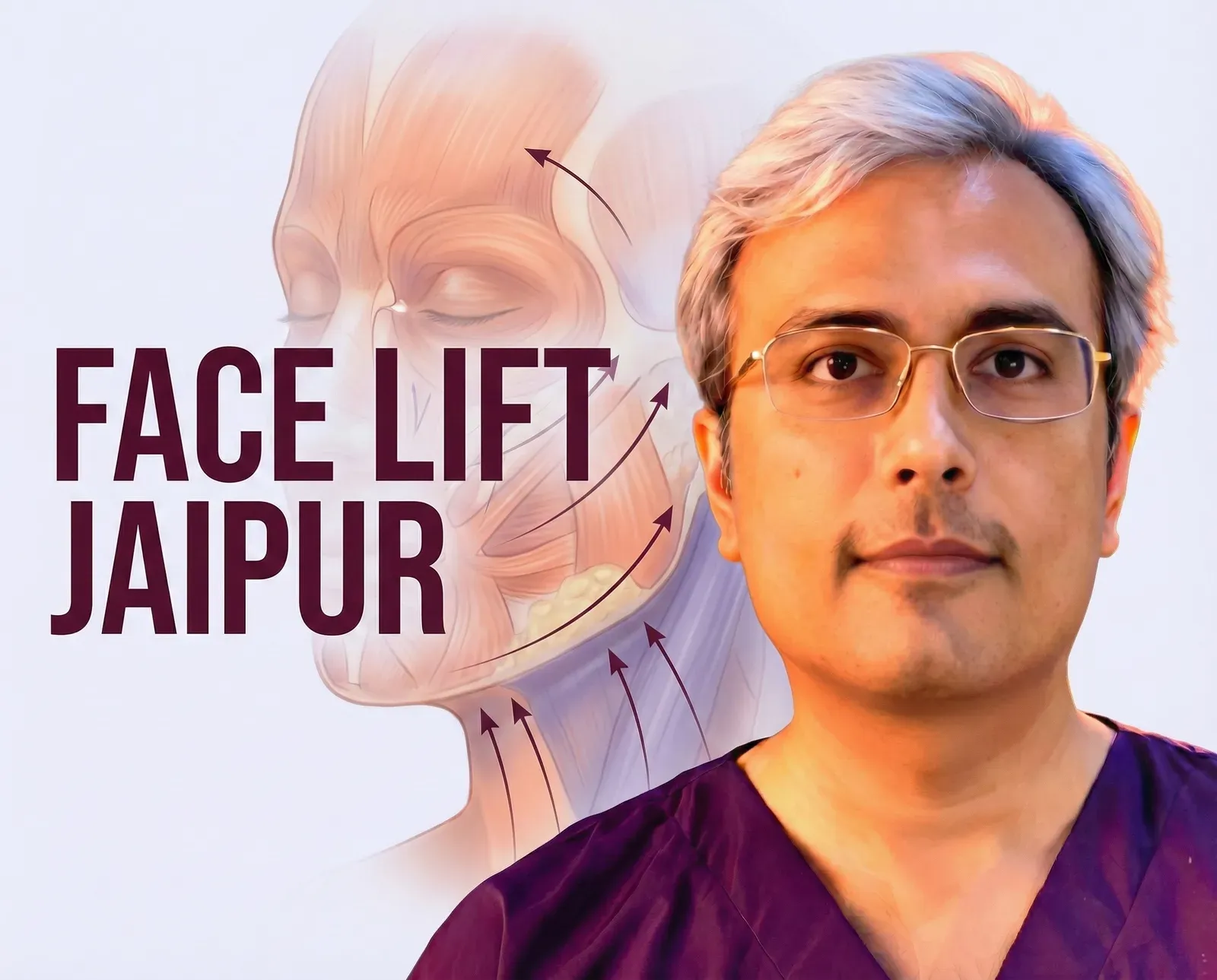
Face Lift in Jaipur

Face Lift in Jaipur - Dr. Vishal Purohit Plastic Surgeon Jaipur11+ Years of Surgical Experience

Facelift Surgery in Jaipur for the Jawline and Neck

Restore your natural contours and look as young as you feel inside.

View clinic timings and contact details →
  • M.Ch Plastic Surgeon · RMC Reg. 28041/14185
  • Day-care / short-stay procedure
  • Tonk Road, Jaipur
  • Jump to FAQs (10)

Treatment Areas

Lower face, jawline and neck

Techniques

SMAS plication and suspension; corset platysmaplasty when needed

Anesthesia

General Anesthesia

Hospital Stay

48 hours

Recovery Time

Planned individually at follow-up

Cost

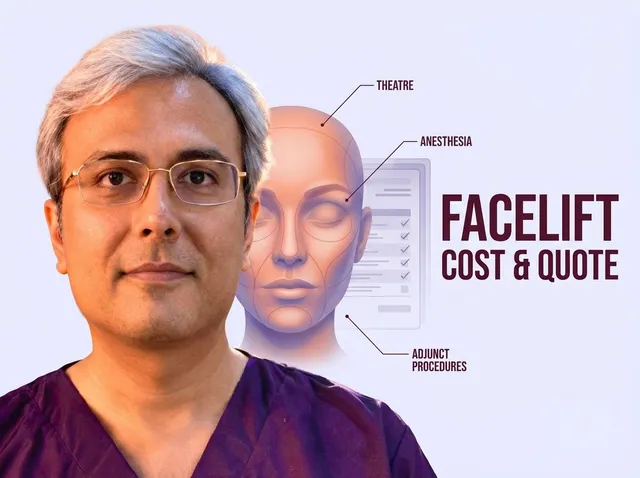
₹80,000 to ₹1,50,000 (combined package, depending on extent)

The Aging Silhouette

Feeling That Your Facial Reflection No Longer Matches Your Inner Energy?

As years pass, deep facial retaining ligaments relax, fat pads migrate downward, and the jawline loses its crisp definition—producing drooping jowls, marionette folds, and a slack neck.

Sagging Jowls & Lost Jawline

Fat and muscle pooling below the jawline, creating a square lower face and obscuring the neck angle.

Deep Nasolabial & Marionette Folds

Prominent smile lines and downturned mouth creases that convey an unintentional tired or somber look.

Platysmal Neck Bands & Turkey Neck

Separated vertical neck cords and loose submental skin destroying clean cervical profile definition.

Why the SMAS Layer Matters

Aging occurs in the deep musculoskeletal foundation, not just the skin. The SMAS (Superficial Muscular Aponeurotic System) supports the midface and jowls. Pulling skin alone can give a tight, artificial look. Dr. Vishal Purohit lifts the underlying SMAS layer, so the skin closes without tension.

Dr. Vishal Purohit - M.Ch Plastic & Cosmetic Surgeon Jaipur

Dr. Vishal Purohit

M.Ch Plastic & Cosmetic Surgeon

✓

Credential Level

M.Ch Super-Specialty

RMC Reg. 28041/14185

Your Surgical Guide

Artistic Proportion & Advanced Surgical Safety

"A good facelift leaves you looking refreshed, with your own features still recognisably yours. Lifting the deeper layer, not stretching the skin, keeps the result natural."

— Dr. Vishal Purohit

1

M.Ch Plastic & Reconstructive Surgery, SMS Medical College, Jaipur

The highest super-specialty surgical qualification in India, ensuring total anatomical mastery of neurovascular planes and soft tissues.

2

11+ Years as a Plastic Surgeon

Practising plastic surgery in Jaipur since 2015, with a focus on natural, proportionate results.

3

Accredited Operating Suites

Dr. Vishal Purohit operates in sterile hospital operating theatres, with certified cardiac anaesthesiologists and ICU support.

Simple & Transparent

Your 3-Step Surgical Journey

We remove anxiety and uncertainty with a structured, transparent pathway designed for absolute safety and peace of mind.

1

Confidential Assessment

Dr. Purohit evaluates your anatomical baseline, skin elasticity, and health history. You receive an honest feasibility blueprint, personalized surgical plan, and transparent cost with zero pressure.

Step 1: Planning
2

Precision Operating Suite Procedure

Performed by Dr. Vishal Purohit in a sterile hospital operating theatre under gentle anaesthesia. Using advanced minimally invasive techniques, target areas are treated with microscopic care.

Step 2: Procedure
3

Monitored Recovery & Transformation

Supported with tailored recovery guidelines and post-operative follow-up visits. As tissue heals and settling occurs over the coming weeks, your refined results emerge.

Step 3: Recovery
Deep Structural Elevation

Modern Multi-Layer Rhytidectomy

SMAS plication and suspension for the lower face and jawline, with corset platysmaplasty for the neck when it is needed.

SMAS Plication & Suspension

Deep Foundation Lifting

Tightening and elevating the deep muscular layer vertically to restore high cheekbones and crisp jawline definition without skin tension.

Cervicofacial Platysmaplasty

Neck Muscle Reconstruction

Joining separated platysma muscle edges in the midline (corset platysmaplasty) to tighten neck bands and define the neck-chin line.

Staged Fat Grafting

Volume, Months Later

When lost cheek or temple volume needs restoring, fat grafting is planned as a separate procedure a few months after the facelift.

Target Rejuvenation Planes

Mandibular Jawline

Firmer jawline contour

Submental Neck Angle

Tightening loose neck skin

Midface Malar Fat

Elevated cheek projection

Nasolabial Creases

Softened deep smile grooves

Marionette Lines

Lifting downturned mouth corners

Incision Around the Ear

Placed in natural creases

Clinical Guide & In-Depth Information

Comprehensive Medical Overview

Detailed procedural analysis, anatomical considerations, and patient guidelines by Dr. Vishal Purohit.

Who Is a Good Candidate for a Facelift?
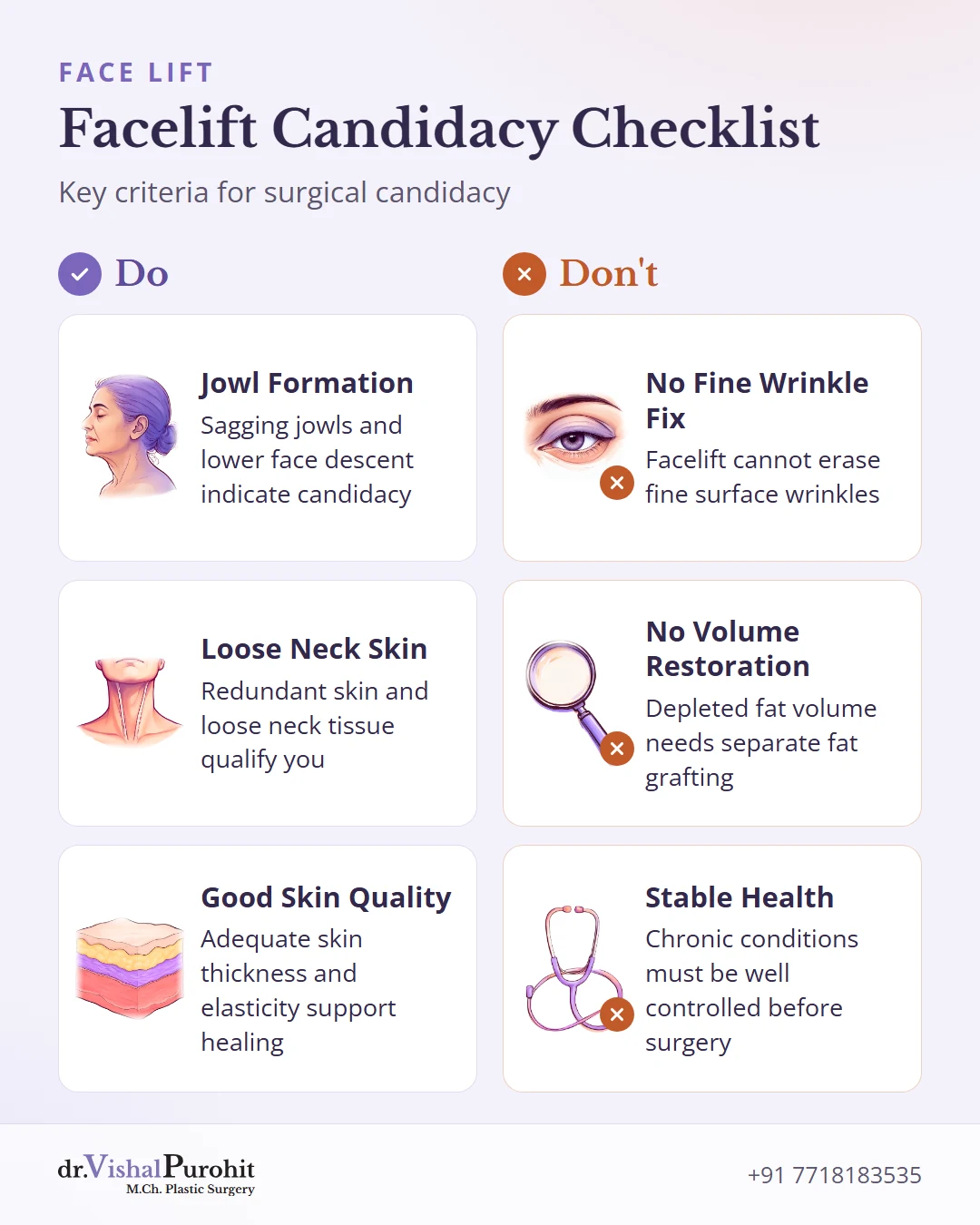
Checklist of six criteria for facelift candidacy including physical signs and limitations

Suitability for facial rejuvenation depends on physical tissue changes, general health and realistic goals rather than chronological age. During consultation, Dr. Vishal Purohit examines individual facial anatomy to determine whether surgical repositioning or non-surgical treatment is appropriate.

Surgical intervention addresses structural changes rather than a specific birthday. Candidates are evaluated on:

You may be a candidate if you have:

  • Jowl formation along the jawline and descent of lower facial soft tissues
  • Redundant skin and loose neck tissue
  • Skin quality, including thickness and underlying elasticity

Surgery is performed under general anaesthesia with 6 hours of preoperative fasting, requiring overall physical fitness and stable management of any chronic conditions.

Ageing alters the face through skin laxity, descending muscle, and lost volume. Repositioning the deeper superficial musculoaponeurotic system, or SMAS, lifts sagging tissue, but it cannot smooth fine surface wrinkles or restore depleted fat.

Understanding how anatomical changes in the jawline shape the surgical plan helps set clear expectations. Natural facial asymmetry remains present after surgery. When volume deflation occurs, soft tissue fillers provide a non-surgical option, while fat grafting is performed as a separate procedure a few months later.

Facelift or a Different Approach?
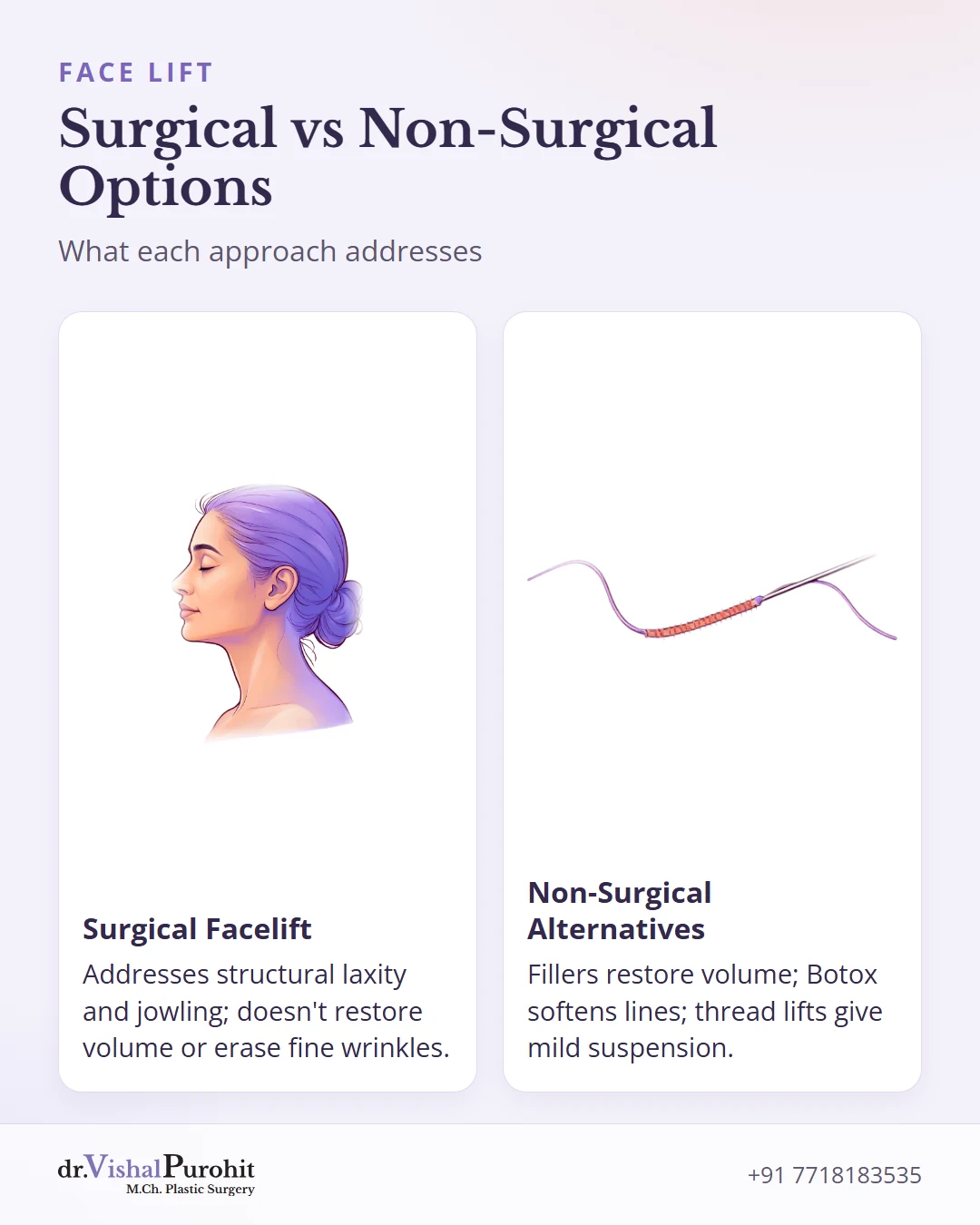
Comparison of surgical facelift and non-surgical alternatives showing what each addresses.

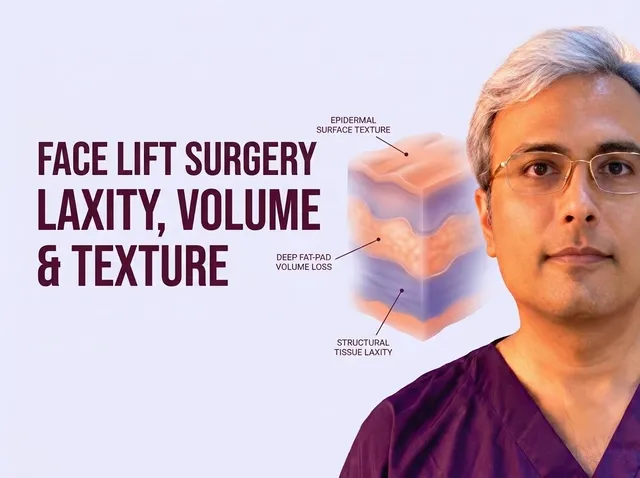
Facial ageing affects tissues differently across the face. While surgical repositioning lifts descending deeper structures, it does not alter every change that occurs over time.

Understanding the difference between sagging skin, volume loss, and surface creases helps clarify what each treatment can achieve.

A surgical facelift addresses structural tissue laxity and jowling along the lower face and neck, but it does not replenish lost facial volume or erase fine surface wrinkles.

Dr. Vishal Purohit offers non-surgical alternatives to address specific concerns without surgery:

Surgical facelift

  • Addresses structural tissue laxity and jowling along the lower face and neck
  • Does not replenish lost facial volume or erase fine surface wrinkles

Non-surgical alternatives

  • Dermal fillers to replenish depleted contours in areas such as the jawline
  • Botox injections to soften dynamic muscle lines
  • Thread lifts to provide mild soft-tissue suspension without skin excision

When structural volume restoration is needed alongside surgery, fat grafting is not performed together with the facelift; it is carried out as a separate procedure a few months later.

Dr. Purohit's Technique: SMAS Lift and the Neck
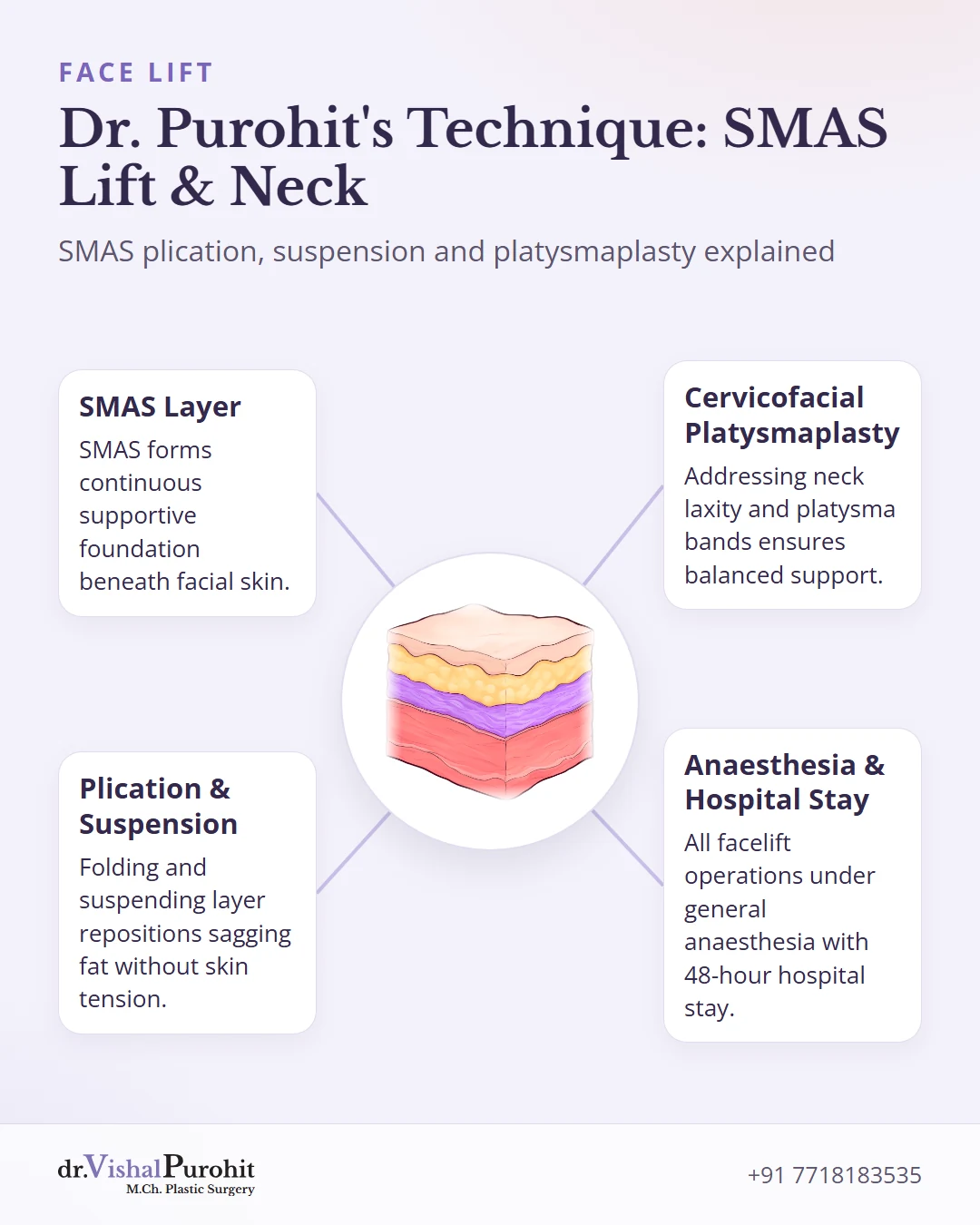
Infographic explaining Dr. Purohit's SMAS facelift technique with anatomical layers, plication, neck platysmaplasty and hospital stay.

Facial ageing involves deeper anatomical structures rather than simple surface stretching. Dr. Vishal Purohit performs SMAS plication and suspension facelift surgery, incorporating cervicofacial (corset) platysmaplasty for the neck when indicated. All facelift operations are performed under general anaesthesia with a 48-hour hospital stay.

Dr. Purohit's note: Dr. Purohit performs SMAS plication and suspension facelift surgery with cervicofacial platysmaplasty when indicated, under general anaesthesia with a 48-hour hospital stay.

The superficial musculoaponeurotic system, or SMAS, forms a continuous supportive foundation beneath facial skin. Folding and suspending this layer repositions sagging fat without skin tension. Understanding how anatomical extent and deeper tissue support guide facelift choices clarifies why lasting contours rely on structural repositioning rather than pulling the skin.

Lower facial descent connects directly with cervical tissues, where muscle separation or loose folds alter definition. Addressing neck laxity and platysma muscle bands ensures balanced support across the jawline and neck.

Preparing for Surgery and the Day of Surgery
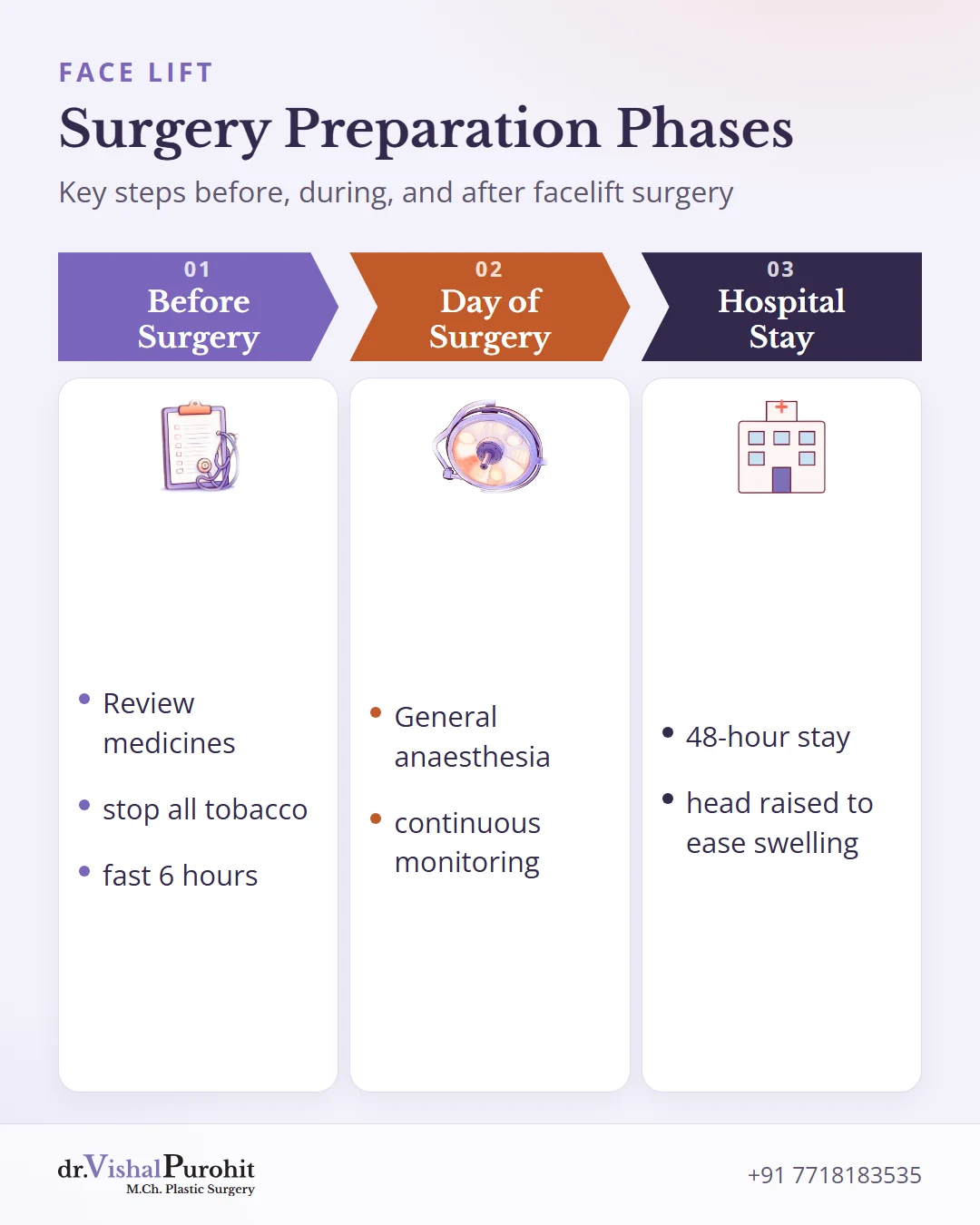
Three phases of facelift surgery preparation: before surgery, day of surgery, and hospital stay.

Careful preparation before a face lift safeguards blood circulation and sets a smooth course for tissue healing. Following structured medical evaluations, fasting rules, and post-discharge arrangements ensures safe care throughout the surgical stay.

Key points

  • Preoperative preparation includes medication review and mandatory nicotine cessation to protect flap circulation.
  • Facelift surgery uses general anaesthesia with a 48-hour hospital stay for flap monitoring and complication detection.
  • Call the surgical team immediately for sudden one-sided swelling, breathing difficulty, or facial weakness.

Preoperative Evaluation and Daily Habits

During the consultation, patients share a complete list of medicines:

  • Prescription blood thinners
  • Over-the-counter painkillers
  • Herbal remedies

Learning how to prepare for a face lift helps individuals navigate medical reviews, blood pressure stability, and mandatory nicotine cessation.

Discontinuing all forms of tobacco is critical because nicotine narrows small blood vessels and threatens skin flap circulation.

  • Cigarettes
  • Gutka
  • Khaini

Studies report that flap necrosis risk increases 10-fold to 13 times in smokers.

Practical steps before admission include:

  • Washing the hair and face thoroughly on the morning of surgery
  • Avoiding makeup, facial lotions, and pre-surgery hair chemical treatments
  • Arranging an adult caregiver and preparing loose, front-opening shirts
  • Observing 6 hours of fasting before general anaesthesia

Operating Theatre and Hospital Monitoring

Dr. Vishal Purohit performs facelift surgery always under general anaesthesia, providing continuous airway protection under an anaesthesiologist. Understanding facelift anaesthesia and discharge questions clarifies why sedation is not offered and how inpatient monitoring protects patient safety.

Following the operation, patients remain in the hospital for a 48-hour stay to observe flap circulation, manage swelling with head elevation, and detect early complications like haematomas. For any warning sign, such as sudden one-sided swelling, breathing difficulty, or facial weakness, the single instruction is to call the surgical team immediately on +91 7718183535.

Recovery, Scars and How Long Results Last
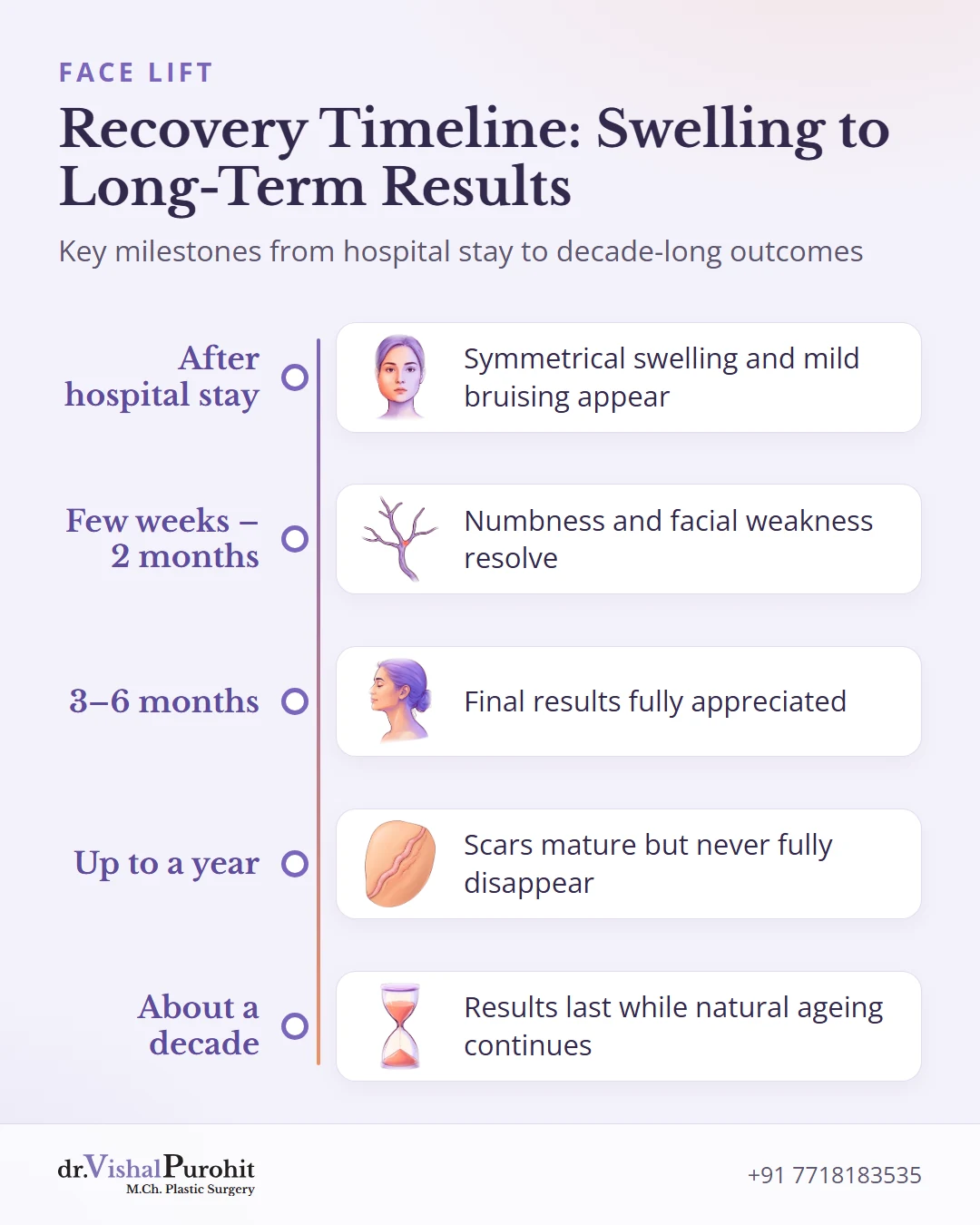
Timeline of recovery milestones: swelling after the hospital stay, numbness and weakness settling within weeks to about 2 months, final results at 3–6 months, scars maturing over a year, and results lasting about a decade.

Healing after facial surgery is a gradual process that requires careful post-operative attention, realistic expectations about incision maturation, and an understanding of ongoing biological change.

Healing Milestones and Resuming Daily Life

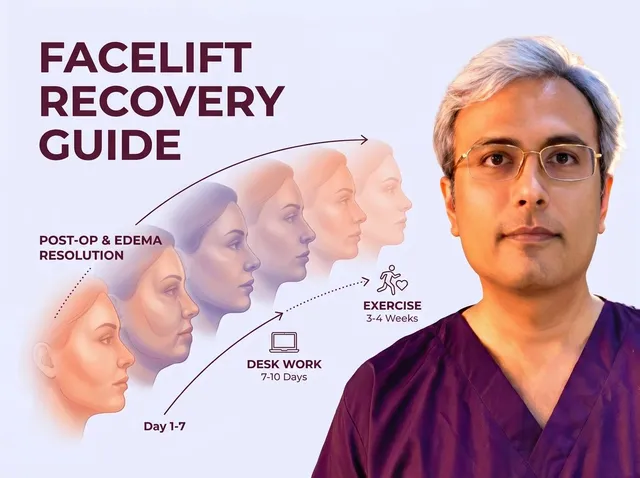
After the hospital stay, symmetrical swelling and mild bruising are expected, while numbness and temporary facial weakness typically resolve between a few weeks and about 2 months.

Understanding how swelling settles and when work resumes helps in planning downtime. Published reports indicate that most people return to desk jobs within 7 to 14 days, while social events often require 4 to 6 weeks.

Dr. Purohit's note: numbness and temporary facial weakness usually last from a few weeks to about 2 months, and the results last about a decade while the face keeps ageing.

Incision Maturation and Tissue Support

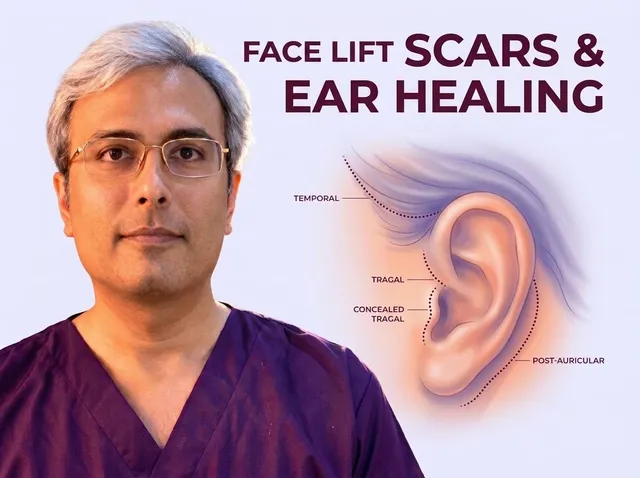
Surgical incisions are planned along natural anatomical borders and hair-bearing margins to blend into surrounding contours. Tension-free skin closure and deep SMAS plication support healing edges, reducing strain on the superficial skin.

Reviewing incision placement around the hairline and ear clarifies how surgical marks fade. Scars never completely disappear and take up to a full year to mature. Gentle tissue handling helps preserve sideburn position, avoid incisional hair loss, and prevent pulled-down earlobe distortion.

Long-Term Changes and Longevity

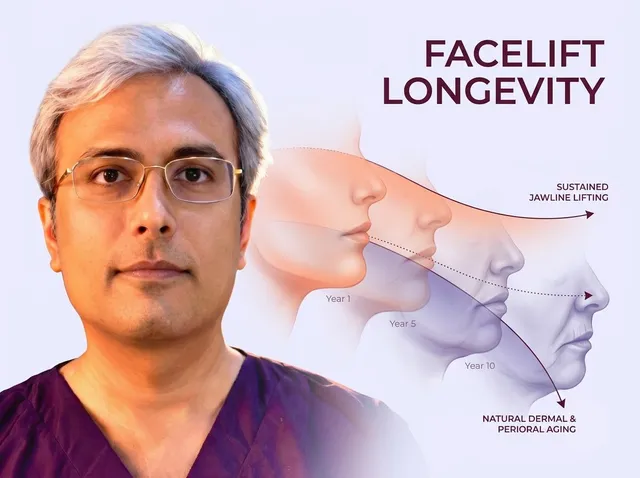
Surgical repositioning lifts sagging jowls and refines the jawline, but biological time does not stop. Studies report outcomes typically take between 3 and 6 months to be fully appreciated, as residual tissue edema resolves slowly.

Examining how facial tissues continue ageing after surgery outlines procedural boundaries. Dr. Vishal Purohit explains to patients that results last about a decade, during which natural ageing of bone, soft tissue, and skin continues. Non-surgical options such as dermal fillers, Botox, and thread lifts can provide subsequent maintenance.

Risks, Warning Signs and Revision
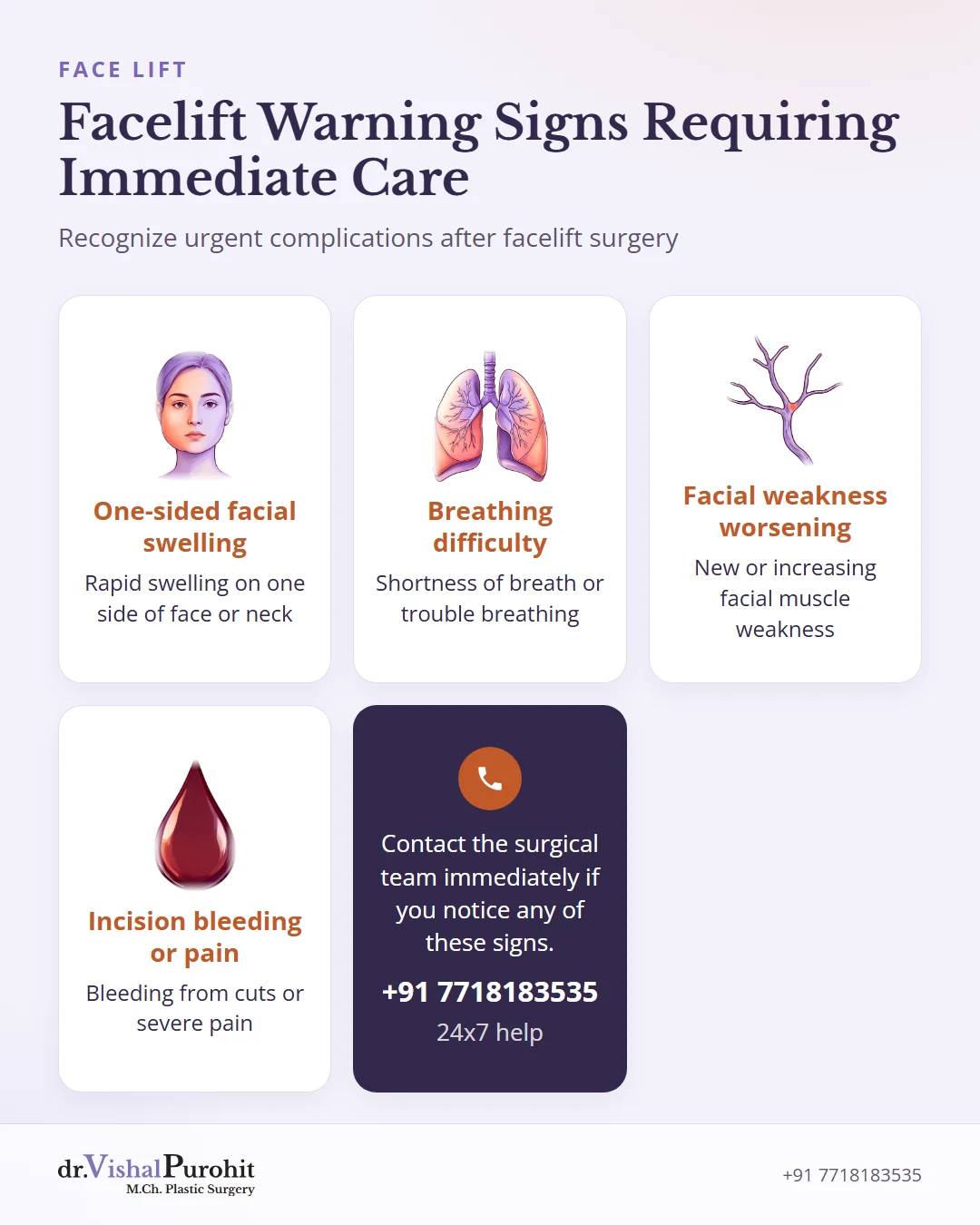
Four warning signs after facelift: one-sided swelling, breathing difficulty, facial weakness, incision bleeding.

Understanding normal healing and potential complications helps patients protect their recovery.

Recognising Complications and Warning Signs

Mild swelling and bruising resolve gradually, but sudden issues require prompt medical attention. A haematoma, or pool of blood under the skin, is the most common early complication and typically develops within 12 to 24 hours. Studies report haematoma rates between 1% and 15%.

Patients should monitor their recovery and review key facelift complications and warning signs that need urgent help. In Dr. Purohit's practice, numbness and temporary facial weakness usually last from a few weeks to about 2 months.

Contact the surgical team immediately on +91 7718183535 if you notice warning signs:

Call the surgical team immediately if you notice sudden or rapid swelling on one side of the face or neck, difficulty breathing, new or worsening facial weakness, or active bleeding from incision lines or severe escalating pain.

  • Sudden or rapid swelling on one side of the face or neck
  • Difficulty breathing
  • New or worsening facial weakness
  • Active bleeding from incision lines or severe escalating pain

Assessing the Need for Revision Surgery

Healing tissues need time to settle before anyone can evaluate the final outcome. Uneven fluid retention or healing can cause temporary asymmetry. Published surgical guidelines recommend waiting at least 6 to 12 months before considering a revision procedure to ensure tissues have softened and stabilised.

Patients evaluating persistent looseness or scar concerns can learn about revision facelift assessment. A formal secondary rhytidectomy addresses altered anatomy or scar tissue, while primary facelift results generally last about a decade as natural facial ageing continues.

Facelift Cost in Jaipur
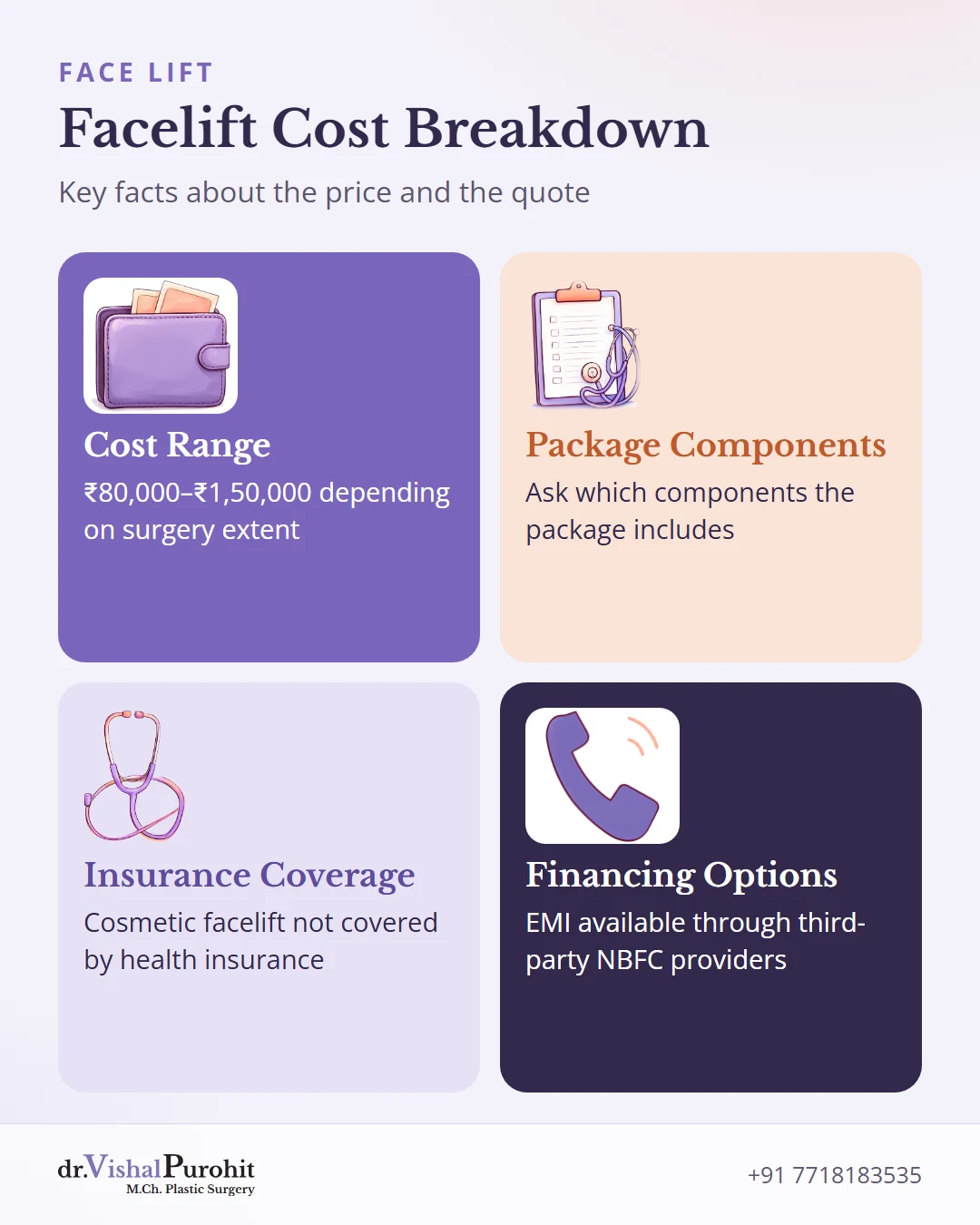
Four tiles showing facelift cost range, package components, insurance exclusion, and financing options

At the practice of Dr. Vishal Purohit in Jaipur, the combined package for a facelift costs from about ₹80,000 to ₹1,50,000, depending on the extent of surgery. An exact quote follows an in-person consultation to evaluate anatomical needs and the surgical plan.

Key points

  • Facelift package costs ₹80,000–₹1,50,000 depending on extent.
  • Ask which components the package includes; the exact quote follows consultation.
  • Cosmetic facelift is not covered by insurance; financing options exist.

A facelift quote can cover several components, so ask which of these the package includes:

  • Surgeon's operating fee
  • Anaesthetist's professional fee
  • Operating theatre and facility charges
  • The 48-hour hospital stay and nursing care
  • Prescribed medications
  • Post-surgery garments and dressings
  • Postoperative follow-up visits

Cosmetic facelift surgery is elective and not covered by health insurance.

Patients may use equated monthly instalment financing through third-party non-banking financial company providers, subject to external approval without zero-interest arrangements. Reviewing standard surgical quote components helps individuals clarify facility fees, revision policies, and whether neck tightening or eyelid surgery is included.
Your Safety Comes First

Why Your Surgeon’s Training Matters

Face Lift in Jaipur involves delicate anatomy, blood supply and tissue handling. Choosing on price alone, or an operator without plastic-surgery training, raises the risk of contour irregularities and complications.

With Dr. Vishal Purohit, your safety is backed by intensive-care support, certified cardiac anaesthesiologists and hospital-grade theatre protocols.

What to watch out for

  • Operators without plastic-surgery training
  • Rushed or imprecise tissue handling
  • Clinic rooms without emergency backup
  • Higher chance of visible scars or revision surgery

With Dr. Vishal Purohit

  • M.Ch super-specialist plastic surgeon
  • Careful, tissue-preserving technique
  • Hospital-grade operating theatre
  • Personal follow-up through recovery
Your Transformation

Look as Young & Dynamic as You Feel

Greet the world with a refreshed, contoured face that reflects your authentic vitality and confidence.

A Natural, Refreshed Look

Lifting the deeper tissue keeps your own features; the result lasts about a decade while the face keeps ageing naturally.

A Firmer Jawline and Neck

A cleaner jawline and neck contour, in photos and in person.

Carefully Placed Scars

Incisions follow the natural creases around the ear and the hairline; they fade over months but do not disappear.

Got Questions?

Frequently Asked Questions

Honest, clinically precise answers from Dr. Vishal Purohit regarding Face Lift in Jaipur.

What is facelift surgery?

A facelift lifts and tightens sagging facial and neck tissues, helping improve jowls and loose neck skin without stopping aging. M.Ch. plastic surgeon Dr. Vishal Purohit in Jaipur can explain which changes a facelift may address for you and which concerns may need a different approach.

A facelift works by lifting and repositioning deeper tissues, adjusting fat where appropriate, and removing excess skin before the remaining skin is redraped. Incisions are generally placed around the ears and hairline. The extent of skin separation, lifting, and reshaping depends on your individual needs and the chosen technique. Facial aging also involves changes in skin quality and the upper face, so a facelift does not address every aging change by itself. Other procedures, such as a brow lift, eyelid surgery, or fat transfer, may be considered separately or alongside it. The potential benefits, incision pattern, and limitations therefore need to be understood before choosing surgery.

NHS guidance gives recovery estimates of two to four weeks, bruising for at least two weeks and stitch removal after seven to fourteen days; full results may take six to nine months. Risks include bleeding, infection, nerve injury, asymmetry and thick scars; results are not guaranteed. To explore whether a facelift fits your goals, you can consult Dr. Vishal Purohit in Jaipur to weigh the benefits, scars and limitations.

What is meloplasty?

Meloplasty is an older term historically used for a facelift, literally meaning shaping of the cheek. Dr. Vishal Purohit, M.Ch. plastic surgeon in Jaipur, can explain how modern facelift surgery addresses sagging facial and neck tissues and what it may or may not improve for you.

A facelift lifts and repositions deeper facial tissues, removes excess skin and fat, and redrapes remaining skin to improve jowls and loose neck skin. Incisions are usually around the hairline and ears. The extent of lifting, tissue repositioning and skin removal depends on individual anatomy and goals, so not every face needs the same approach. Facial aging also involves skin quality and upper-face changes, so a facelift alone does not address every concern. Deeper tissues are repositioned and excess skin removed before redraping, creating smoother contours while maintaining a natural appearance. It is usually carried out under general anaesthetic, with incisions above the hairline and around the ears, results are not guaranteed.

NHS guidance estimates full recovery in about two to four weeks, bruising for at least two weeks, and stitch removal after seven to fourteen days; full results may take six to nine months. Risks include nerve injury, asymmetry, thick scars, bleeding and infection, and results are not guaranteed. If you are considering facial rejuvenation, you may consult Dr. Vishal Purohit in Jaipur to discuss realistic improvement, scars and limitations.

Is meloplasty the same as facelift surgery?

Meloplasty is an older word for facelift surgery, literally meaning shaping of the cheek; today a facelift (rhytidectomy) usually tightens the lower face and neck, but ageing continues. M.Ch. plastic surgeon Dr. Vishal Purohit in Jaipur can explain which facial changes a facelift may improve and which concerns may need another approach.

Historically, early facelift benefit was limited to the outer cheek, and terms such as meloplasty and rhytidectomy were used before the operation extended to the neck. A modern facelift lifts and pulls back facial skin to tighten the lower face and neck. Incisions are usually placed around the hairline and ears; surplus skin is removed, and deeper tissues or fat may be repositioned. The extent depends on your needs and the chosen technique. Ageing changes include thinner skin, loss of facial fat, gravity, sun damage, smoking, heredity and stress, so a facelift does not address every change; brow lift, eyelid surgery or fat transfer may be considered separately or at the same time.

NHS guidance estimates recovery at about two to four weeks, bruising for at least two weeks, stitch removal after seven to fourteen days, and full results in six to nine months. Risks include nerve injury, asymmetry, thick scars, bleeding, infection, blood clots and anaesthetic reactions; results are not guaranteed. If you are considering a facelift, you may consult Dr. Vishal Purohit in Jaipur to discuss your own goals, scars and limitations carefully.

What does facelift surgery treat?

A facelift (rhytidectomy) improves visible signs of aging in the face and neck, such as sagging skin, jowls, deepened folds and loose neck skin, but it does not stop aging. M.Ch. plastic surgeon Dr. Vishal Purohit in Jaipur can explain which changes a facelift may address for you and when upper-face or skin concerns may need a different approach.

A facelift lifts and repositions deeper facial tissues, removes excess skin and fat, and redrapes the remaining skin to improve jowls, folds and neck contour. Incisions are usually placed along the hairline and around the ears. The extent of lifting, tissue repositioning and skin removal depends on your individual needs and the chosen technique. Because aging also affects the upper face and skin quality, a facelift alone may not address every change; brow lift, eyelid surgery, fat transfer or skin treatments may be considered separately or alongside it. The procedure is designed mainly for the lower half of the face and neck, so your surgeon should explain likely benefits and limits before surgery.

Recovery usually takes about two to four weeks, bruising is visible for at least two weeks, and full results may take six to nine months; stitches are often removed after seven to fourteen days. Risks include nerve injury, asymmetry, thick scars, bleeding and infection, and results are not guaranteed. If you are considering a facelift, you may consult Dr. Vishal Purohit in Jaipur to discuss likely improvement, scars and limitations.

Which areas of the face can be improved with a facelift?

A facelift mainly improves the lower face and neck, especially jowls and loose neck skin; modifications may also lift the outer eye angle and reduce crow’s feet. M.Ch. plastic surgeon Dr. Vishal Purohit in Jaipur can explain which areas your facelift may address and which concerns may need another procedure.

The procedure lifts and repositions facial skin and deeper tissues, removes excess skin, and may redistribute fat; incisions are usually around the hairline and ears, making them less visible. It is designed for lower-face and neck laxity, not every aging change. Upper-face concerns such as sagging eyebrows or forehead wrinkles may be addressed with a brow lift, while eyelid surgery or skin resurfacing may be considered for other changes. The extent of lifting and reshaping depends on your individual needs and the chosen technique, so benefits, incision placement and limitations should be understood before surgery. A facelift is usually performed under general anaesthesia and requires individual assessment.

NHS guidance estimates full recovery in about two to four weeks, bruising for at least two weeks, and final results in six to nine months; risks include nerve injury, asymmetry, thick scars and healing problems. Results are not guaranteed. If you are considering a facelift, you may consult Dr. Vishal Purohit in Jaipur to discuss likely improvement, incision placement and whether combined procedures are appropriate.

Does facelift surgery treat the entire face?

No, a facelift mainly improves the lower face and neck, not the whole face. M.Ch. plastic surgeon Dr. Vishal Purohit in Jaipur can explain which aging changes it may address, which concerns may need a brow lift, eyelid surgery, fillers or other options, and its limitations during consultation.

It lifts and repositions deeper tissues and removes excess skin to improve jowls, jawline and neck skin. It does little for the upper face and only minimally affects the midface, so cheeks, folds and central areas may not improve much. For more complete rejuvenation, brow lift, eyelid surgery, facial implants, fat transfer or skin treatments may be considered separately. Dr. Purohit's confirmed approach uses SMAS plication and suspension facelift with cervicofacial platysmaplasty when indicated; fat grafting, if needed, is done separately later. Blepharoplasty is commonly combined with facelift. A facelift is always done under general anaesthesia, with a 48-hour hospital stay and six hours of fasting beforehand. The exact plan depends on your anatomy and goals.

NHS guidance estimates recovery in about two to four weeks, bruising for at least two weeks, and final results in six to nine months; risks include nerve injury, asymmetry, thick scars, bleeding and infection. Results are not guaranteed. If you are considering facial rejuvenation, you may consult Dr. Vishal Purohit in Jaipur to discuss likely improvement, combined procedures, scarring and recovery.

What is the difference between a facelift and facial rejuvenation?

A facelift mainly lifts and tightens sagging lower-face and neck skin, while facial rejuvenation is the broader goal of improving overall facial aging, often needing additional treatments. M.Ch. plastic surgeon Dr. Vishal Purohit in Jaipur can explain which changes a facelift may address and which concerns may need a different approach.

A facelift repositions and tightens facial tissues, removes excess skin, and may redistribute fat to improve jowls and neck contour. Facial rejuvenation is broader because aging also affects the upper face and skin quality, so one operation cannot correct every change. Surgeons therefore assess forehead, eyelids, cheeks, jawline and neck separately, then decide whether a facelift alone or combined procedures better match your concerns. This is why the term facelift is sometimes used loosely, while true facial rejuvenation considers the whole face and neck and may include other treatments. The exact plan depends on your anatomy, goals and tolerance for scars and recovery.

NHS guidance estimates recovery in about two to four weeks, bruising for at least two weeks, and full results in six to nine months. Risks include nerve injury, asymmetry, thick scars, bleeding and infection, and results are not guaranteed. If you are considering facial rejuvenation, you may consult Dr. Vishal Purohit in Jaipur to discuss realistic scope, scars, risks and whether a facelift alone is enough.

What is the difference between a surgical facelift and a nonsurgical facelift?

A surgical facelift lifts and repositions facial tissues and removes excess skin, while nonsurgical options such as fillers, Botox or thread lifts add volume or relax muscles without removing skin. M.Ch. plastic surgeon Dr. Vishal Purohit in Jaipur can explain which changes each approach may realistically address for you.

Surgically, incisions are usually placed around the hairline and ears, sometimes under the chin if the jawline is lifted; deeper tissues are repositioned, excess skin and fat are removed, and the skin is redraped to improve jowls and loose neck skin. The surgeon may also redistribute facial fat or add fat. A facelift is usually done under general anaesthesia and most people stay in hospital overnight. Nonsurgical treatments focus on volume enhancement, neuromodulators or tightening, but they do not remove sagging skin or reposition deeper tissues in the same way. They may include fillers, Botox or thread lifts; the clinic offers no laser or resurfacing procedures. Surgical lifting addresses deeper sagging more directly.

After surgery, recovery is about two to four weeks, bruising is visible for at least two weeks, stitches are removed after seven to fourteen days, and full results may take six to nine months. Risks include nerve injury, asymmetry, thick scars, bleeding and infection. Nonsurgical options may involve less downtime but cannot replace surgical lifting. If you are weighing these choices, you may consult Dr. Vishal Purohit in Jaipur to discuss realistic benefits and limitations.

What is the difference between a facelift and a thread lift?

A facelift is surgery that lifts and removes excess facial and neck skin while repositioning deeper tissues; a thread lift uses barbed threads under the skin to lift sagging tissue without removing skin. M.Ch. plastic surgeon Dr. Vishal Purohit in Jaipur can explain which option may suit your degree of sagging and skin laxity.

A facelift usually involves incisions around the hairline and ears, removal of surplus skin, and repositioning of deeper facial tissues; it is generally performed under general anaesthesia and may take two to three hours. A thread lift is a semi-invasive procedure in which barbed threads grasp and suspend tissue, with collagen forming around them over about six weeks. It does not remove skin, so it is less suitable when skin is very loose, and it may have shorter longevity and possible dimpling. Thread lifts are offered as non-surgical options at the clinic, and Dr. Vishal Purohit can explain benefits and limitations during consultation.

Facelift recovery is commonly two to four weeks, with bruising for at least two weeks, stitches removed after seven to fourteen days, and full results in six to nine months; risks include nerve injury, asymmetry, thick scars, bleeding and infection. Thread lift recovery is usually shorter, though results vary and should be discussed with your surgeon. If you are considering either option, you may consult Dr. Vishal Purohit in Jaipur to compare benefits.

What is the difference between a facelift and a liquid facelift?

A facelift surgically lifts and tightens loose facial and neck skin and deeper tissues; a liquid facelift uses fillers and neurotoxins to soften wrinkles and folds temporarily. It cannot reposition the deeper facial support layer, improve jowls or remove excess neck skin. M.Ch. plastic surgeon Dr. Vishal Purohit in Jaipur can explain suitability.

A surgical facelift usually involves incisions around the hairline and ears, removal of surplus skin, and repositioning of deeper facial tissues and fat. It reduces loose skin around the lower face and neck. A liquid facelift is not a true facelift; it uses fillers and neurotoxins to contour and soften wrinkles and folds, can refresh appearance, but needs repeated treatments and cannot replace surgery for jowls or loose neck skin. Fillers and neurotoxins may also complement surgery. Dr. Vishal Purohit offers dermal fillers, Botox and thread lifts, but no laser or resurfacing procedures. The size of incisions, detachment, traction and remodeling are decided by the surgeon based on your needs and technique.

Recovery may take two to four weeks; risks include nerve injury, asymmetry, thick scars, bleeding, infection and anaesthetic allergy. At Dr. Vishal Purohit's clinic, a facelift is done under general anaesthesia with a 48-hour hospital stay, and numbness or temporary facial weakness may last weeks to about two months. Results are expected to last about a decade. If you are considering a facelift, you may consult Dr. Vishal Purohit in Jaipur to discuss your options.

Need more clinical answers?

Explore all 488 answered Facelift (Rhytidectomy) questions.

Facelift (Rhytidectomy) FAQ Hub (488 FAQs)
Begin Your Journey

Ready to Discuss Face Lift in Jaipur?

At his OPD suite, Kalpana Aesthetics (2nd Floor), Dr. Vishal Purohit evaluates your candidacy, discusses surgical options and gives you a transparent, tailored treatment plan.

Patient Library

Face Lift in Jaipur: Patient Guides

13 Guides Available
Patient Guide•Nov 2, 2026

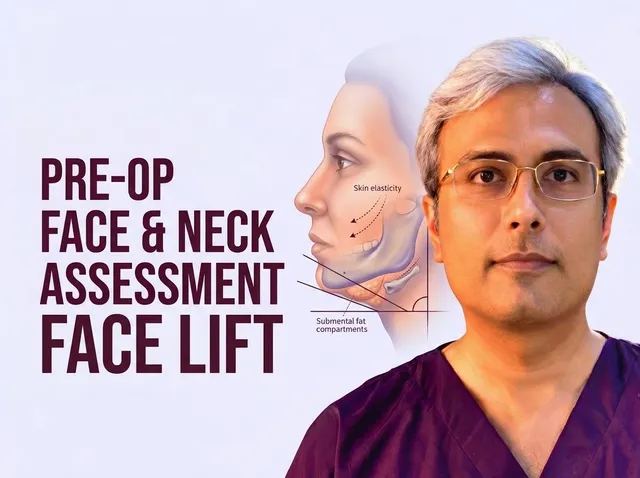
What Is Assessed Before a Face and Neck Lift?

Learn what is evaluated during a face neck lift consultation assessment in Jaipur with M.Ch. plastic surgeon Dr. Vishal Purohit before planning surgery.

Read Full Article
Patient Guide•Nov 2, 2026

Facelift or a Different Approach? Laxity, Volume Loss and Skin Texture

Explore facelift alternatives, surgical limits, and how tissue laxity, volume depletion, and skin texture are addressed by Dr. Vishal Purohit in Jaipur.

Read Full Article
Patient Guide•Nov 2, 2026

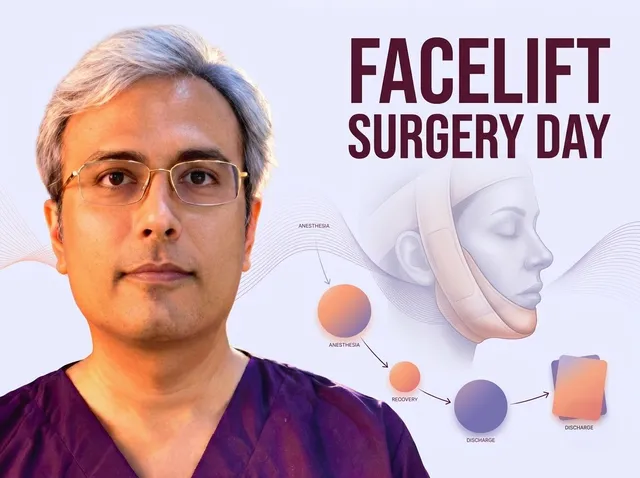
Anaesthesia, Dressings and Discharge: The Facelift Surgery Day

Learn about facelift anaesthesia hospital stay protocols, operative monitoring, surgical dressings, and discharge steps with Dr. Vishal Purohit in Jaipur.

Read Full Article
Patient Guide•Nov 2, 2026

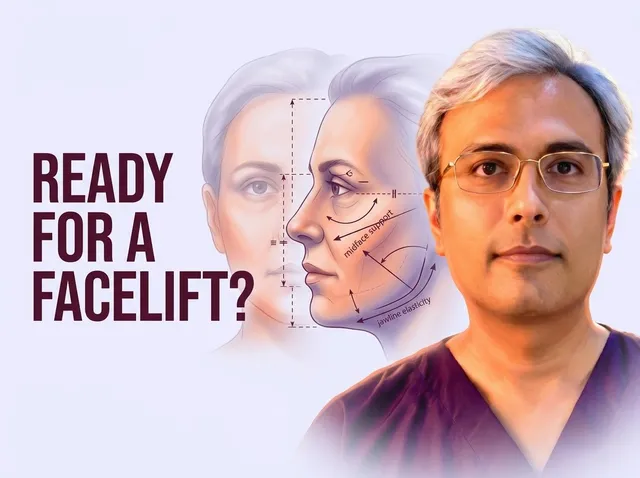
Am I Ready for a Facelift? Health, Age and Realistic Goals

Learn what determines facelift candidacy, from tissue sagging and health fitness for anaesthesia to realistic personal goals with Dr. Vishal Purohit in Jaipur.

Read Full Article
Patient Guide•Nov 2, 2026

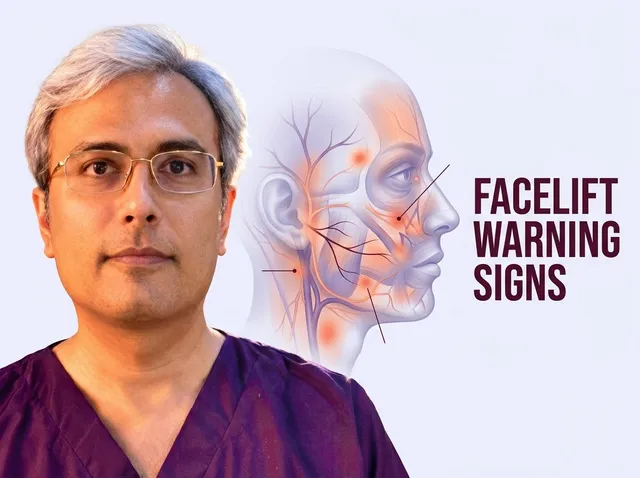
Facelift Complications and Warning Signs That Need Urgent Help

Recognise early facelift risks warning signs, including expanding haematoma and facial weakness, to know when to seek urgent surgical care during recovery.

Read Full Article
Patient Guide•Nov 2, 2026

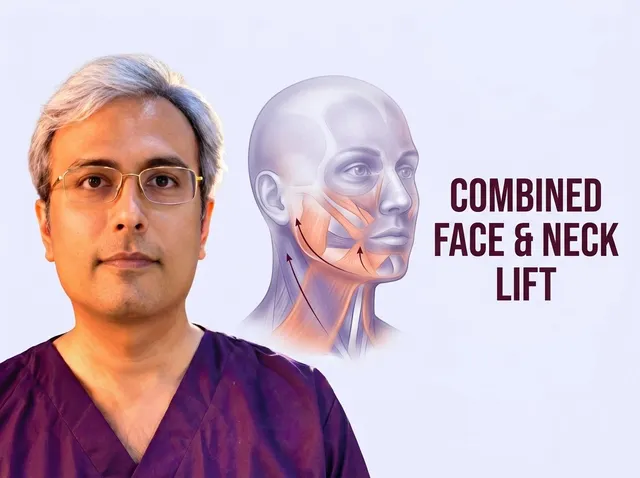
When Does Facelift Planning Also Involve the Neck?

Learn when a facelift with neck lift is planned together, how SMAS and platysma tissues connect, and what limits neck contouring in plastic surgery.

Read Full Article
Patient Guide•Nov 2, 2026

Understanding a Facelift Quote: What Is Included and What Can Change

Learn the primary facelift cost components, what influences surgical pricing, and how hospital fees and neck procedures shape your total package estimate.

Read Full Article
Patient Guide•Nov 2, 2026

Facelift Recovery: Swelling, Work and Return to Activity

Understand the facelift recovery timeline, swelling resolution, return to desk work, and daily activities following surgery with Dr. Vishal Purohit in Jaipur.

Read Full Article
Patient Guide•Nov 2, 2026

How Long Do Facelift Results Last, and What Will Still Age?

Learn how long does a facelift last, what tissue changes continue over time, and realistic expectations with Dr. Vishal Purohit, M.Ch. plastic surgeon.

Read Full Article
Patient Guide•Nov 2, 2026

Facelift Scars, Hairline Changes and Healing Around the Ears

Learn where incisions are placed, how facelift scars mature, hairline preservation, earlobe contouring, and scar care for Indian skin tones.

Read Full Article
Patient Guide•Sep 1, 2023

How to Prepare for a Face Lift

Learn how to prepare for a face lift in Jaipur with Dr. Vishal Purohit. Review medicines, nicotine cessation, health checks, fasting, and home recovery.

Read Full Article
Patient Guide•Nov 2, 2026

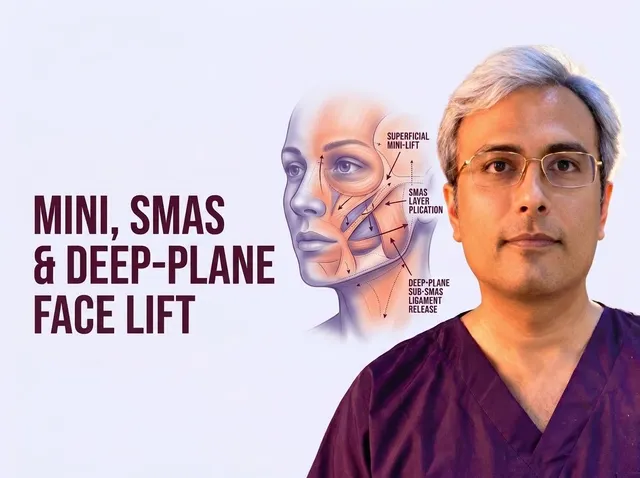
Mini, SMAS and Deep-Plane Facelift: What Do the Names Tell Patients?

Understand SMAS vs deep plane facelift terminology, surgical planes, and why technique names alone do not determine natural or lasting results.

Read Full Article
Patient Guide•Nov 2, 2026

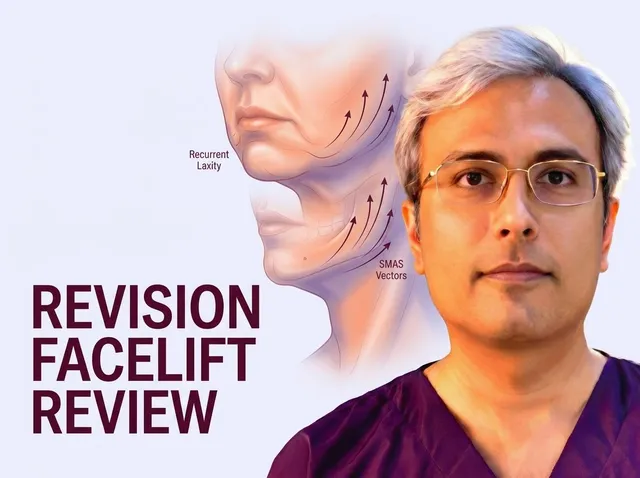
Dissatisfaction or Returning Laxity: When to Discuss a Revision Facelift

Learn when to discuss a revision facelift, how to distinguish normal swelling from returning laxity, and key surgical choices with Dr. Vishal Purohit in Jaipur.

Read Full Article