
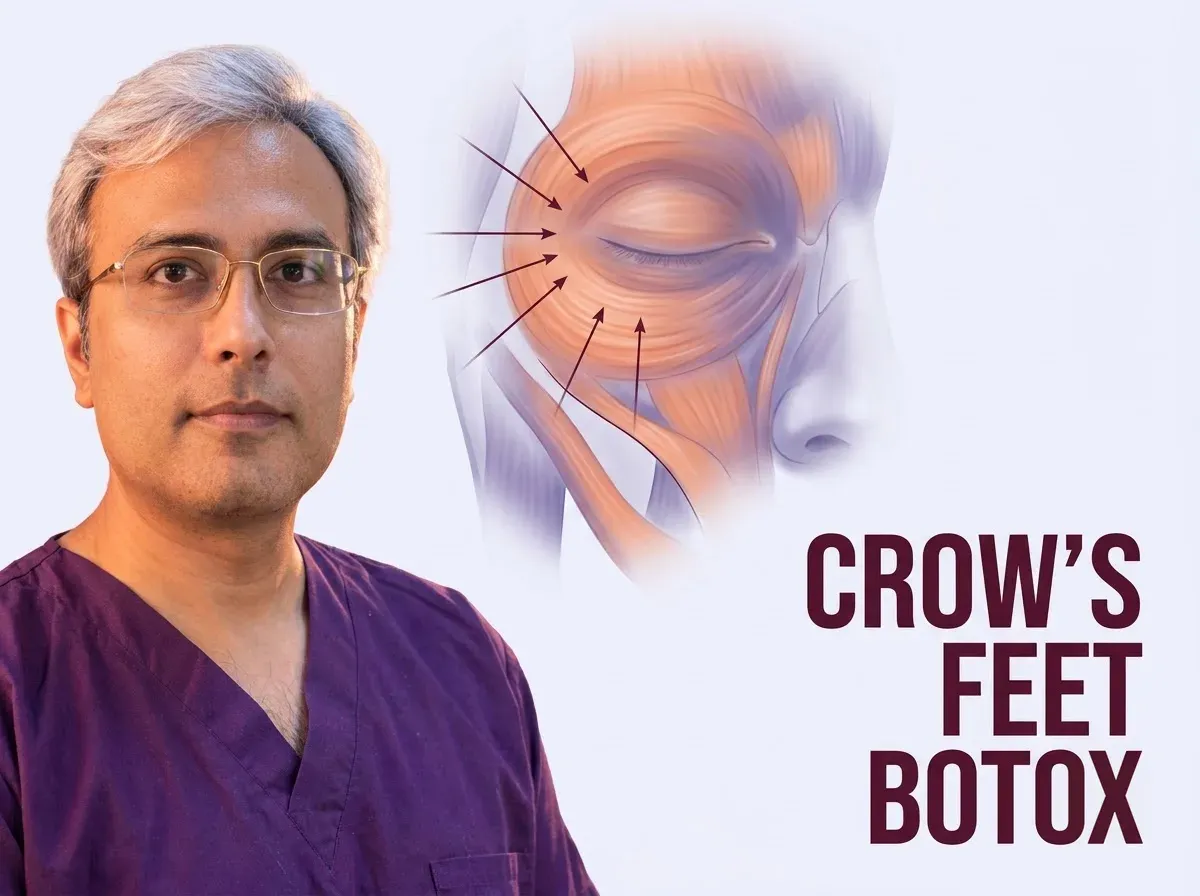

Smiling Lines Versus Resting Lines and What Changes
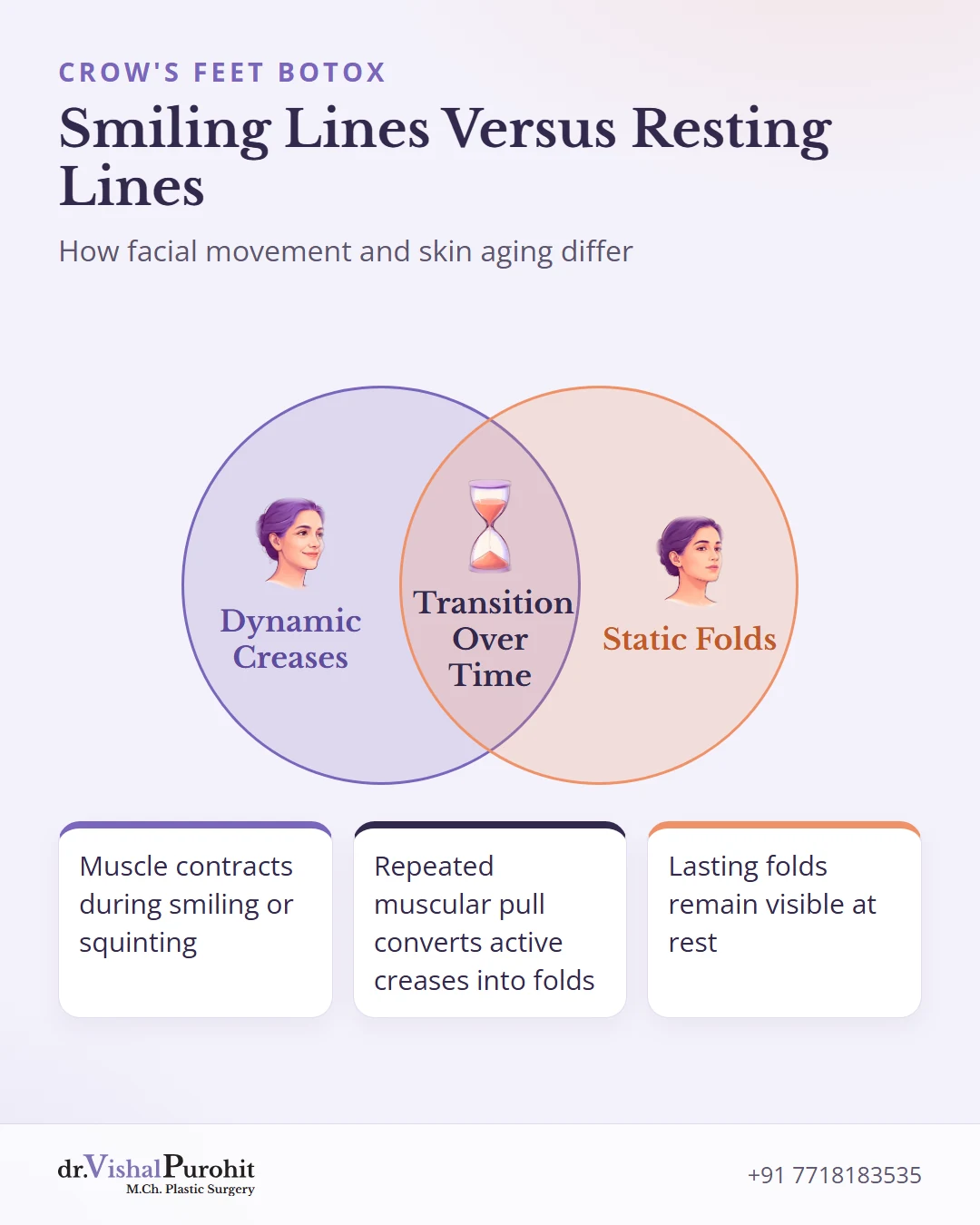
Crow's feet, or lateral canthal lines, behave differently depending on whether facial muscles are moving or resting. Understanding how muscles and skin interact helps individuals evaluate what non-surgical care can alter and what remains unchanged.
Dynamic creases form when the lateral part of the orbicularis oculi muscle contracts during facial expressions like smiling, laughing, or squinting. Injections block nerve signals to relax these muscles and soften active skin crumpling. However, botulinum toxin targets muscle movement rather than removing fine wrinkles from sun damage or completely smoothing deeply etched static folds.
Over time, repeated muscular pull, tissue aging, and intense ultraviolet radiation cause dynamic creases to convert into lasting resting folds. Learning about smiling lines versus static creases and botox limits clarifies why treatment aims to soften movement lines rather than offer complete removal. Choosing no treatment is always a valid option.
Under-Eye Bags, Hollows and Assessing Expression Changes
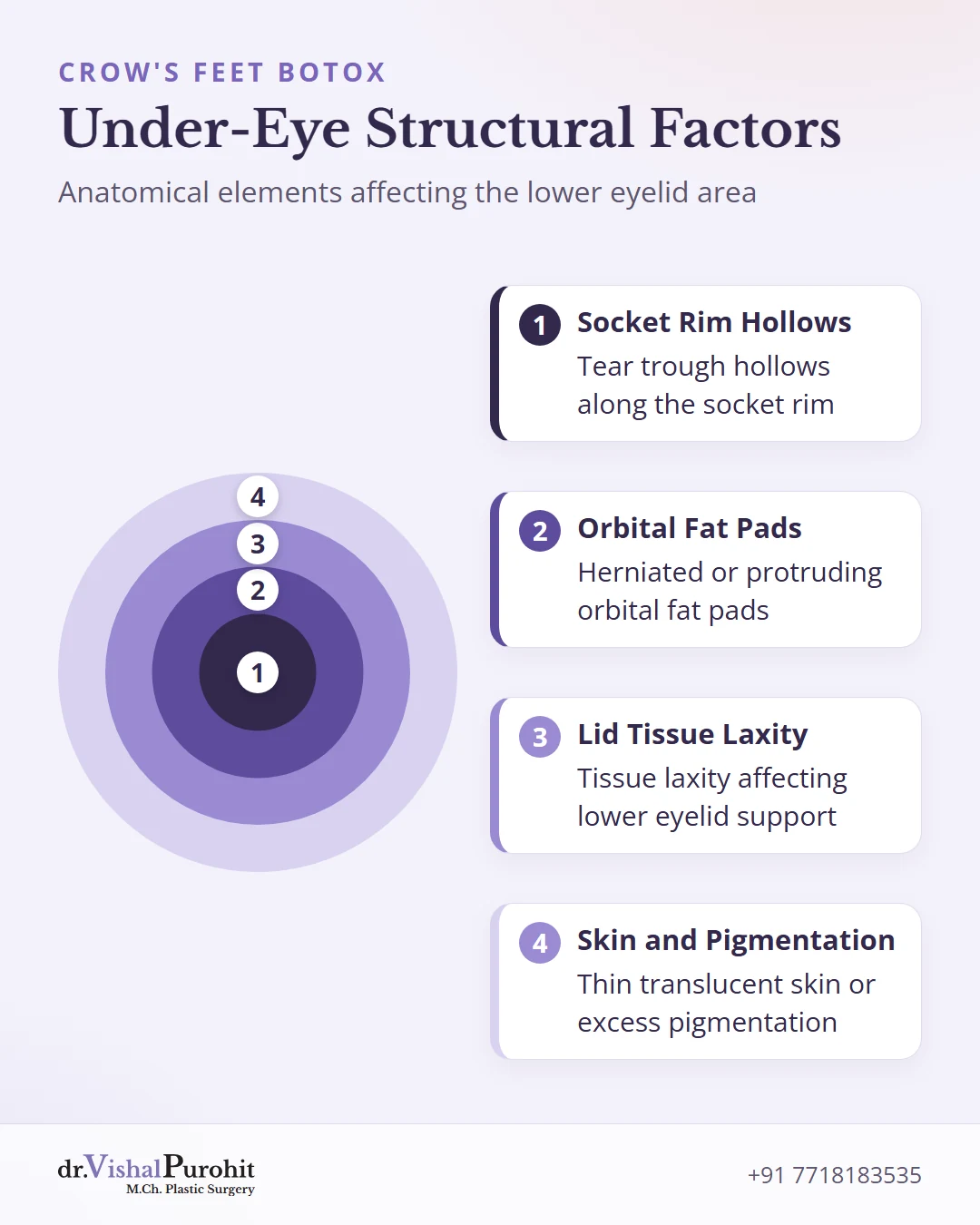
The skin around the eyes involves distinct anatomical structures that behave differently during facial expression. A careful clinical evaluation distinguishes lines formed by muscle movement from structural changes in eyelid support and volume.
Crow's feet sit at the outer corners of the eyes, while under-eye bags and tear troughs occupy the lower lid and socket rim. Reviewing why crow's feet, eye bags and hollows need different options explains why relaxing muscle softens lateral creases but cannot clear protruding orbital fat or replace lost volume.
Structural under-eye concerns often arise from several coexisting anatomical factors:
- Tear trough hollows along the infraorbital socket rim
- Herniated or protruding orbital fat pads
- Thin translucent skin or excess pigmentation
- Tissue laxity affecting lower eyelid support
Understanding whether crow's feet Botox changes your smile or eye movement highlights how targeted injections temporarily block acetylcholine to soften dynamic squint creases without attempting complete loss of movement. Because the lateral eye muscle sits close to cheek elevators, assessment evaluates baseline symmetry, blink mechanics, and natural animation.
Before Treatment: Eye History and Medical Screening

A thorough medical evaluation protects periocular health before any non-surgical injection treatment for lateral canthal lines. Relaxing the orbicularis oculi muscle affects blinking dynamics and tear-film stability, making underlying eye comfort central to the assessment.
A detailed evaluation addresses eye surface health, past procedures, and overall physical safety, as detailed in the guide on screening for eye history and medicines before crow's feet Botox. Key elements examined during the clinical consultation include:
- Pre-existing ocular dryness, irritation, excessive tearing, or contact lens intolerance
- Prior refractive procedures such as LASIK or SMILE, cataract surgery, or blepharoplasty
- In-person eyelid tone tests, including the snap-back test and distraction test
- Active skin infections near the planned injection sites, pregnancy, or breastfeeding
- Underlying neuromuscular conditions such as myasthenia gravis or Lambert-Eaton syndrome
Patients must disclose all prescribed medicines and supplements, especially blood-thinning agents, non-steroidal anti-inflammatory drugs, or high-dose vitamin E. Prescribed antithrombotic medications must never be stopped independently without consulting the prescribing doctor. At the practice in Jaipur, the specific product, quote inclusions, and review visit details are explained at the consultation.
After Treatment: Recovery, Bruising and Warning Signs

Following outpatient injections at the outer eye corners, minor tissue responses settle naturally. Specific aftercare guidelines, numbing, and review timings are explained at the consultation.
Studies describe minor swelling, localized redness, and bruising around delicate vessels. Guidance recommends planning appointments ahead, as detailed in advice on recovering from crow's feet Botox, work schedules, bruising, and red flags. Severe systemic reactions such as trouble breathing, swallowing, or speaking require immediate emergency hospital care.
Toxin relaxation of the orbicularis oculi muscle can also alter tear spreading. Studies note mild ocular dryness or compensatory tearing, highlighting why patients monitor dry or watery eyes and eyelid closure warning signs after crow's feet Botox. Prompt clinical evaluation is advised if persistent irritation develops.
When Treatment Works, Duration and Review Timing
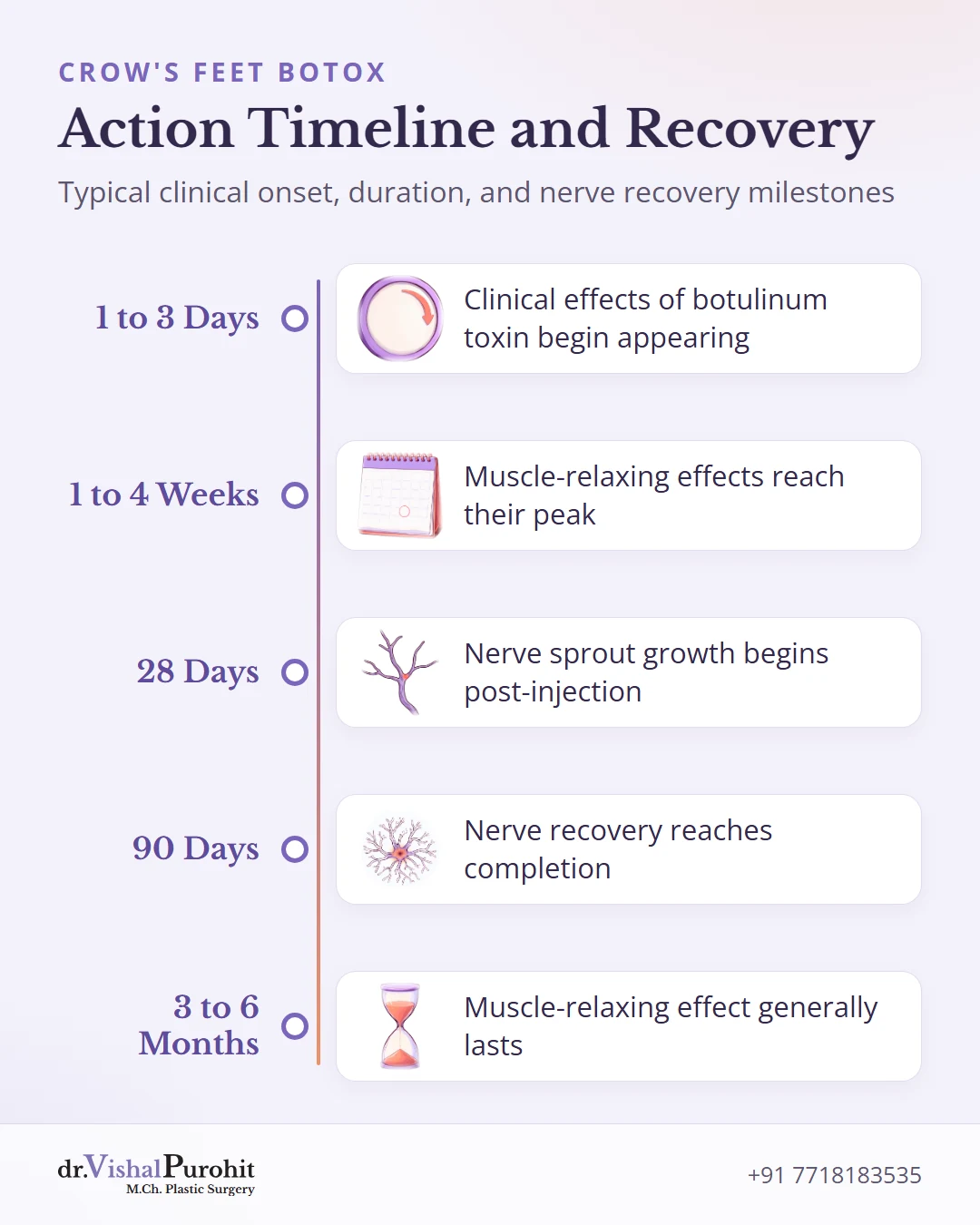
Botox for crow's feet works by temporarily softening muscle action around the eyes.
Studies report that the clinical effects of botulinum toxin type A typically begin to appear within one to three days, with initial muscle relaxation commonly noticed within the first week. Effects peak between one and four weeks after administration. Clinical texts discourage evaluating initial cosmetic outcomes prematurely before neural blockade fully establishes.
In published medical literature, the muscle-relaxing effect generally lasts between 3 and 6 months, with trials frequently citing an active duration of 3 to 4 months. For those considering crow's feet Botox results, review timing, and repeat treatment, studies report that nerve sprout growth begins around 28 days post-injection, completing recovery at roughly 90 days.
At Dr. Vishal Purohit's practice, the specific onset, duration, review visit timing, and any top-up policy are not fixed timelines and are explained at the consultation. During review, remaining lines are examined under standardized lighting rather than angled mirrors to differentiate active muscle movement from resting skin folds.
Crow's Feet Botox Cost in Jaipur and Consent
Crow's feet treatment is an elective, non-surgical injection procedure, and choosing no treatment is always a valid option. Because facial anatomy and muscle activity vary from person to person, care begins with an in-person assessment before any procedure is planned.
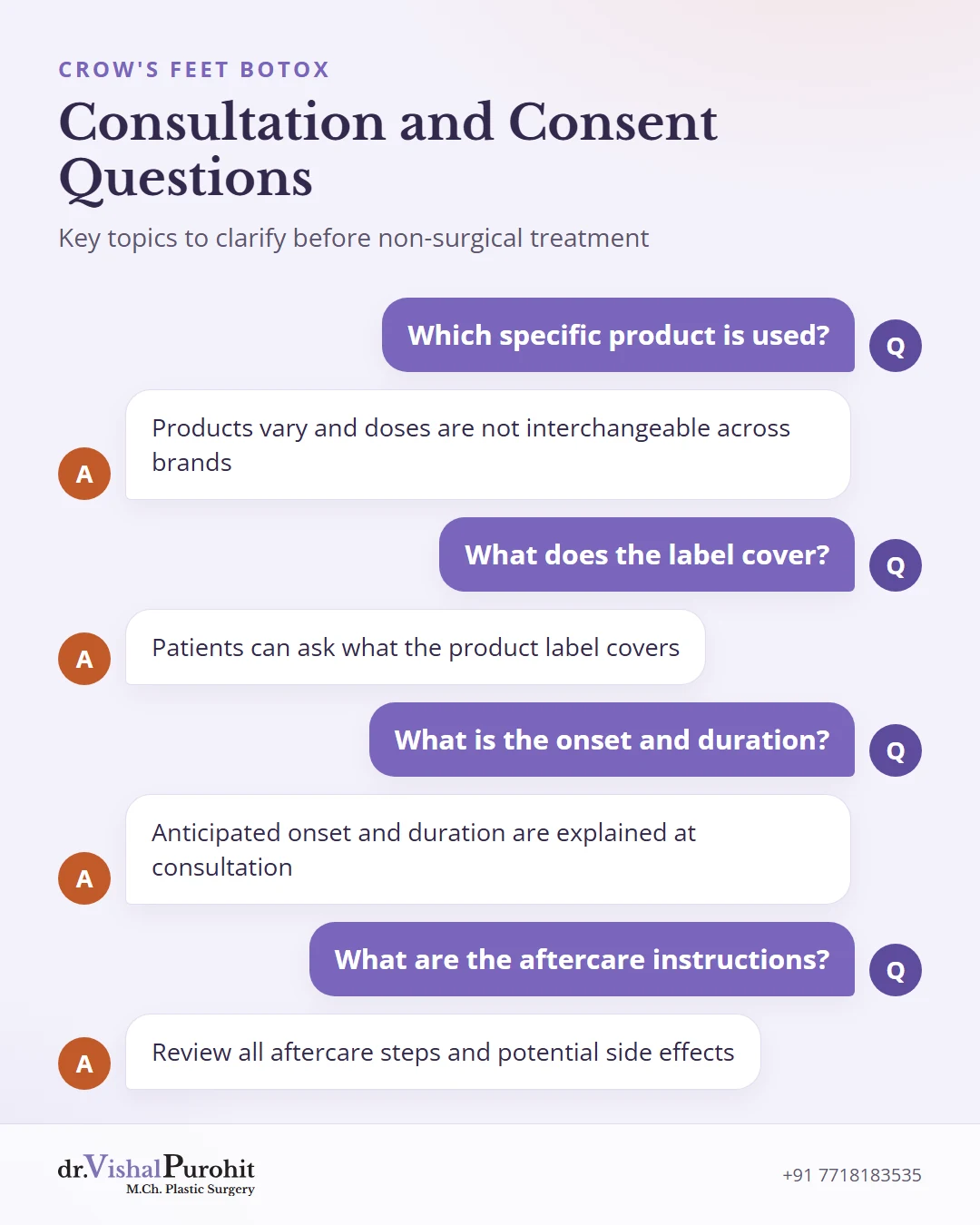
The total fee, what it includes, review visit timing, and any top-up policy are explained at the consultation with Dr. Vishal Purohit. Different botulinum toxin products exist, and their doses are not interchangeable across brands.
During the consultation, patients can ask about the following aspects of their care:
- Which specific botulinum toxin product is used
- What the product label covers
- The anticipated onset and duration of effect
- All aftercare instructions and potential side effects
Informed consent includes understanding rare but critical risks. Any trouble breathing, swallowing, or speaking, or general weakness after a toxin treatment is an emergency that requires emergency care at once.