
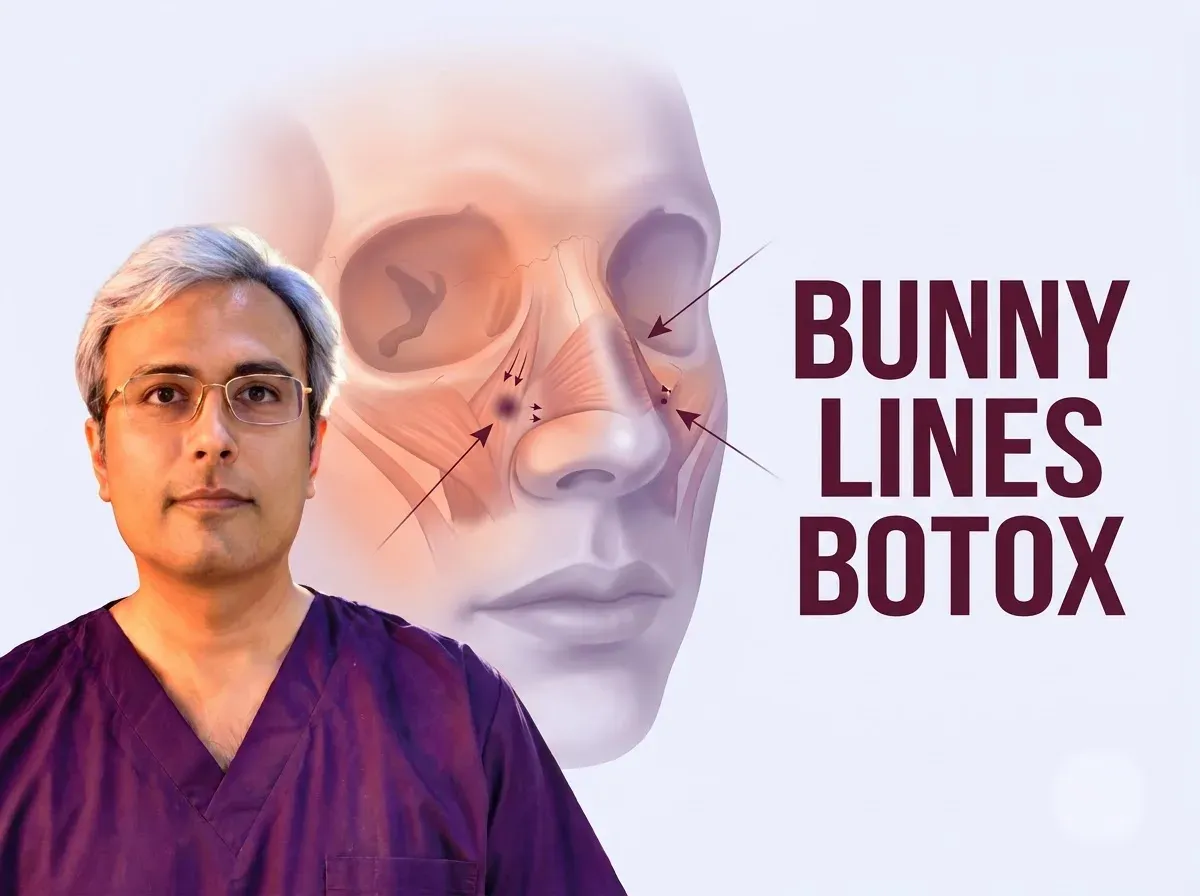

Dynamic Versus Static Nose Wrinkles and Treatment Suitability
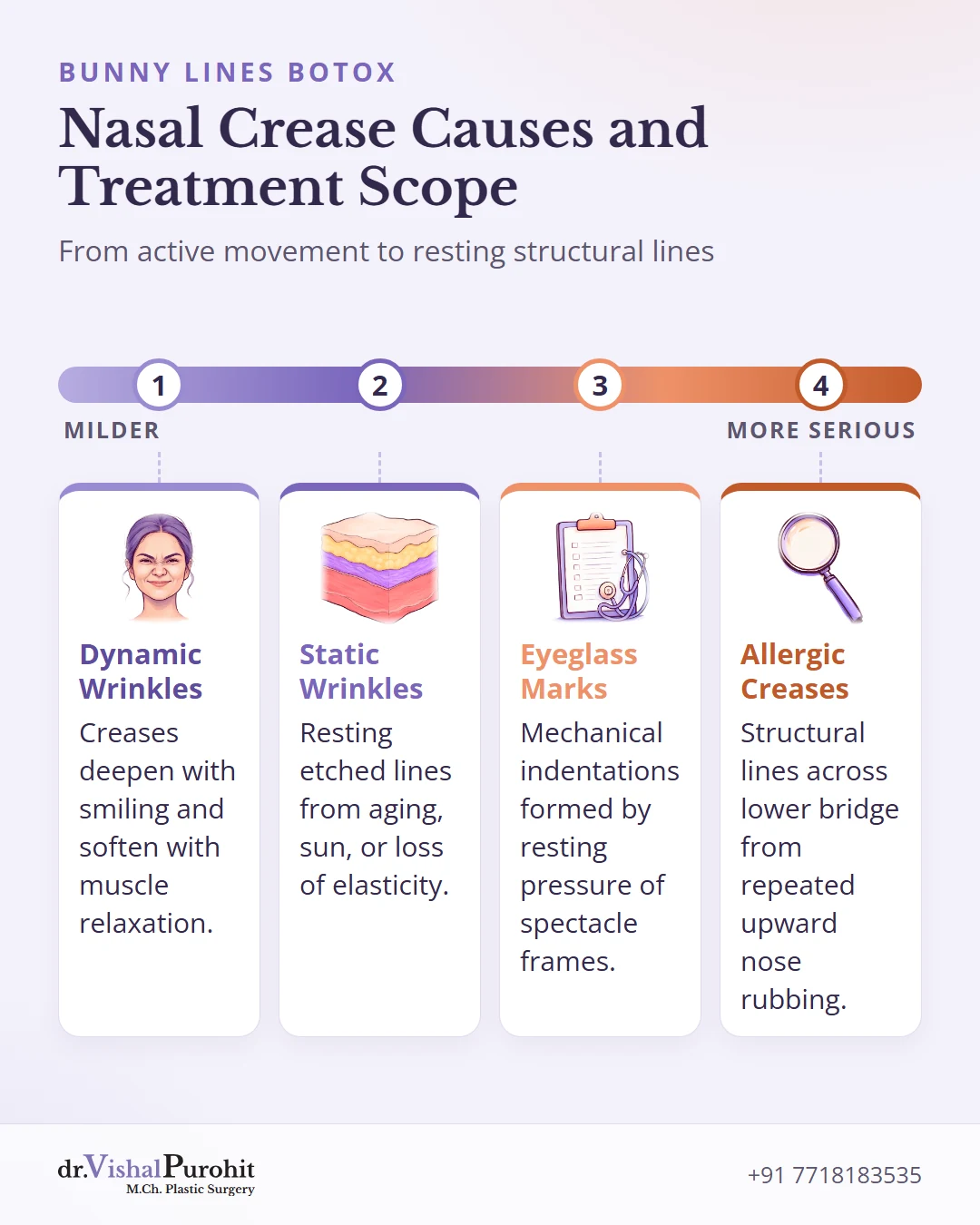
Nasal crinkles commonly form along the bridge and sidewalls during active facial animation. A careful evaluation helps determine whether lines stem from muscle movement or resting structural changes, guiding appropriate expectations before considering non-surgical care.
An in-person assessment separates dynamic creases caused by facial movement from resting skin changes, as explained in the guide on which nose wrinkles Botox can soften. Identifying these distinct patterns ensures patients understand what non-surgical injection treatment can address.
- Dynamic wrinkles: Functional creases that appear or deepen when smiling or scrunching perinasal muscles, softening with targeted muscle relaxation.
- Static wrinkles: Etched lines visible even when the face is at rest, resulting from age-related skin changes, sun exposure, or loss of elasticity.
- Eyeglass bridge marks: Mechanical indentations created by the resting pressure of frames or nose pads.
- Transverse allergic creases: Horizontal structural skin lines across the lower bridge formed by repeated upward nose rubbing.
Targeted botulinum toxin relaxes hyperactive muscular contraction, but it does not correct indentations from spectacles, structural allergic folds, or deep resting lines etched into the skin structure. Clinical photographs are taken solely for treatment records and are never shared publicly.
Details such as product choice, numbing, price, review visits, and aftercare are explained during the consultation with Dr. Vishal Purohit. Choosing no treatment is always a valid option.
Facial Anatomy Assessment Before Bunny Lines Injections
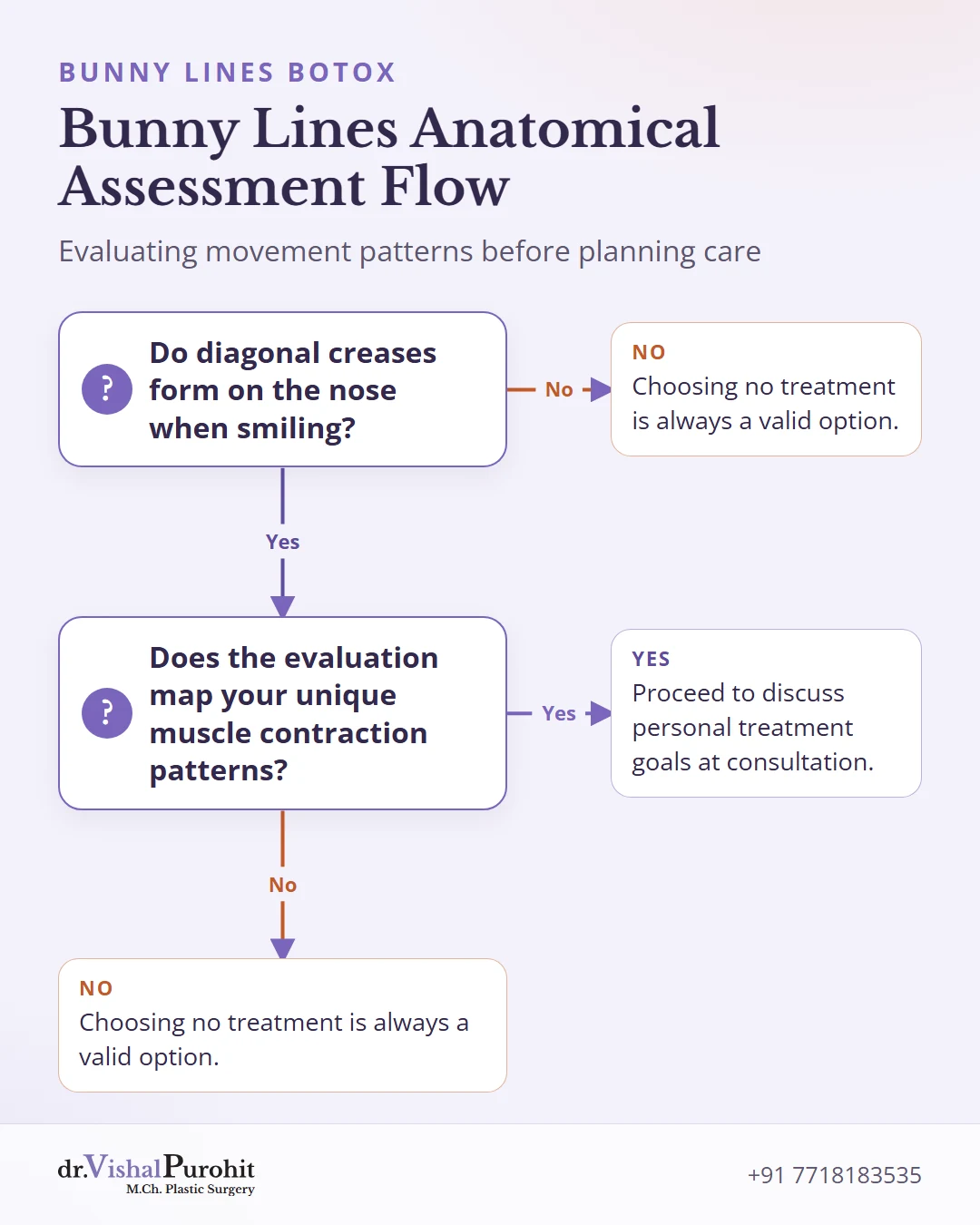
A careful anatomical evaluation is essential before planning botulinum toxin type A injections for bunny lines, the diagonal creases that form on the sides of the nose. Every face moves differently, and muscle patterns vary widely between individuals when smiling or scrunching the nose.
During the initial assessment, the surgeon examines how the facial muscles interact during animation and at rest. This evaluation helps map individual muscle contraction patterns and ensures that treatment goals are discussed thoroughly. Choosing no treatment is always a valid option for anyone considering non-surgical options.
Specific details regarding product selection, pricing, numbing, aftercare guidelines, expected onset, duration, and review visits are not predetermined. Dr. Vishal Purohit explains each of these clinical aspects directly to patients during the personal consultation.
Before Treatment: Medical History and Preparation Steps
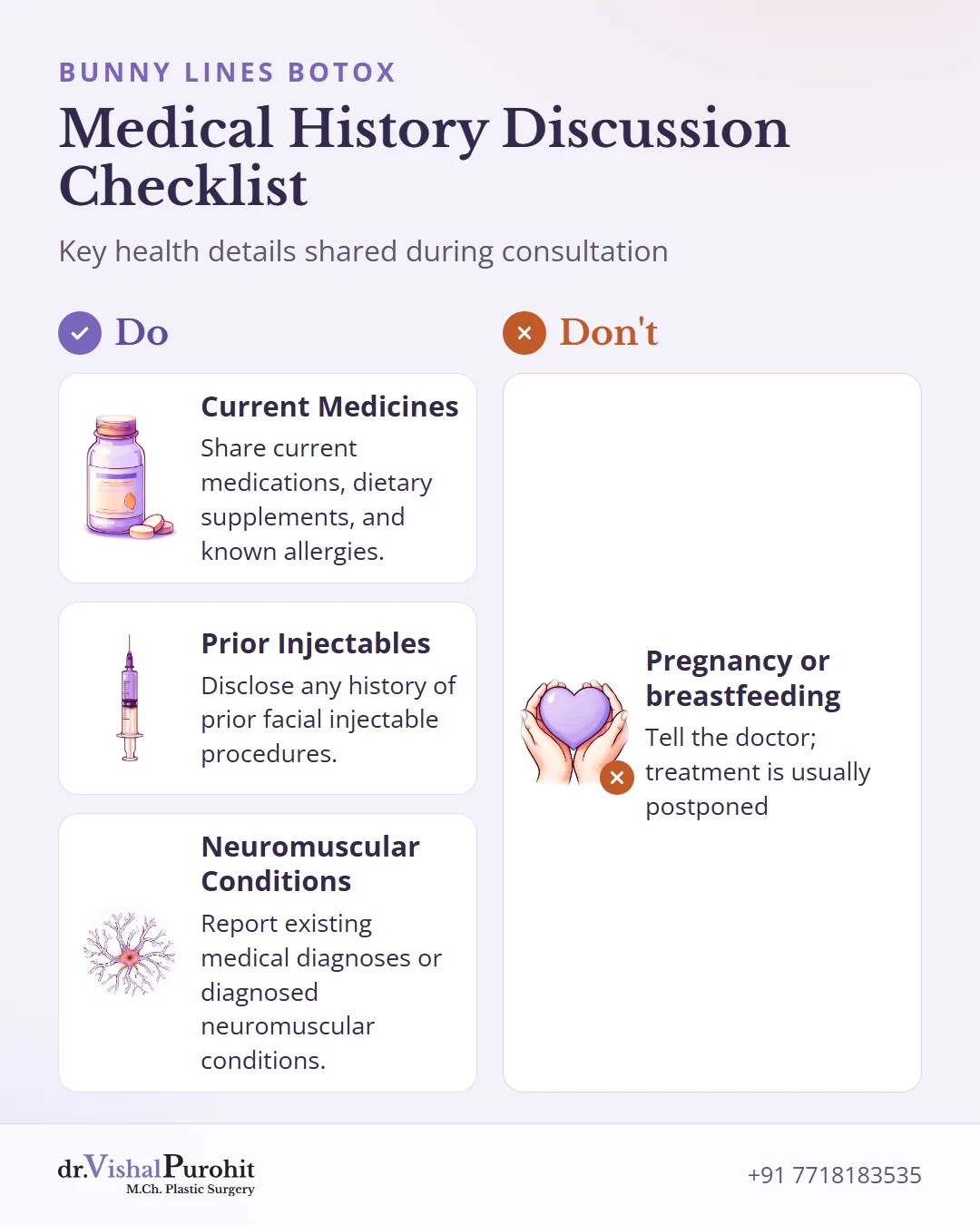
Preparing for bunny lines botulinum toxin type A injections begins with a thorough medical assessment. A complete medical history allows Dr. Vishal Purohit to determine whether non-surgical treatment is suitable.
During the consultation, patients share relevant health details, including:
- Current medications, supplements, and known allergies.
- Any history of prior facial injectable treatments.
- Existing medical diagnoses or neuromuscular conditions.
- Whether you are pregnant or breastfeeding.
Specific clinic protocols, such as product selection, numbing options, visit length, review timings, pricing, and aftercare rules, are not predetermined here and are explained directly at the consultation.
After Treatment Reactions and Upper Lip Warning Signs
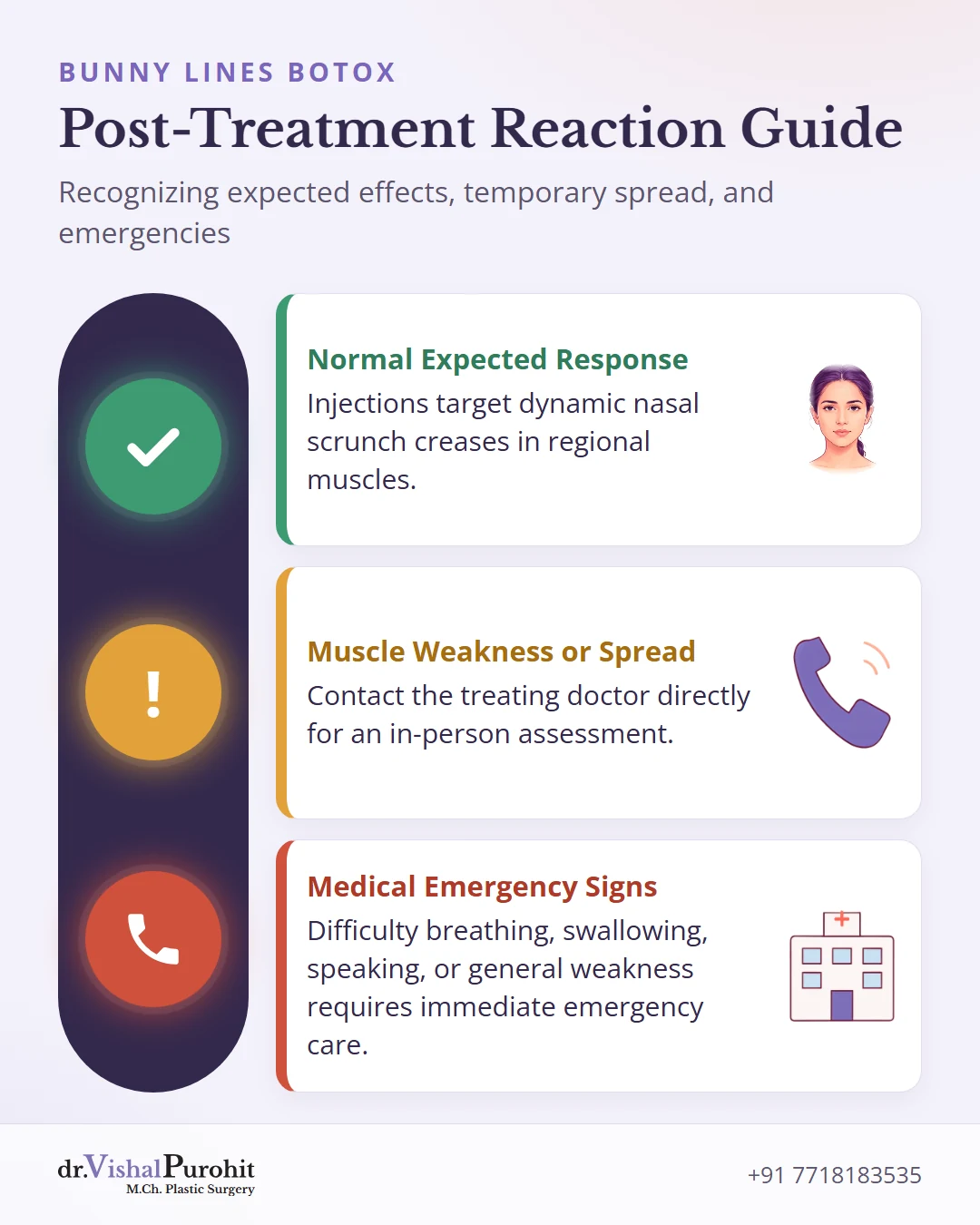
Botox for bunny lines involves non-surgical injections into the nasalis muscle on the sides of the nose. While treating dynamic scrunch creases, understanding regional anatomy helps protect adjacent muscles that move the mouth and support normal facial expression.
Unintended diffusion into adjacent muscles can temporarily alter resting symmetry or upper lip elevation. When botulinum toxin type A spreads laterally into the levator labii muscle fibers, patients may notice reduced movement or an asymmetric smile. Learning how to identify reporting lip weakness and functional changes helps individuals recognize unintended spread early.
Studies report that when unintended muscle weakness occurs, the effects are temporary and self-limiting. Published reports note improvement within 4 to 8 weeks, with the medication gradually wearing off over 2 to 4 months. If diffusion nears the medial canthus, altered tear pump mechanics may temporarily cause watery eyes until muscle activity normalizes.
Patients experiencing unexpected weakness should contact the treating doctor directly for an in-person assessment rather than attempting online remedies. Any general weakness, or difficulty with breathing, swallowing, or speaking after a toxin procedure, represents a medical emergency that requires emergency care at once.
Bunny Lines Botox Results Duration and Review Timing
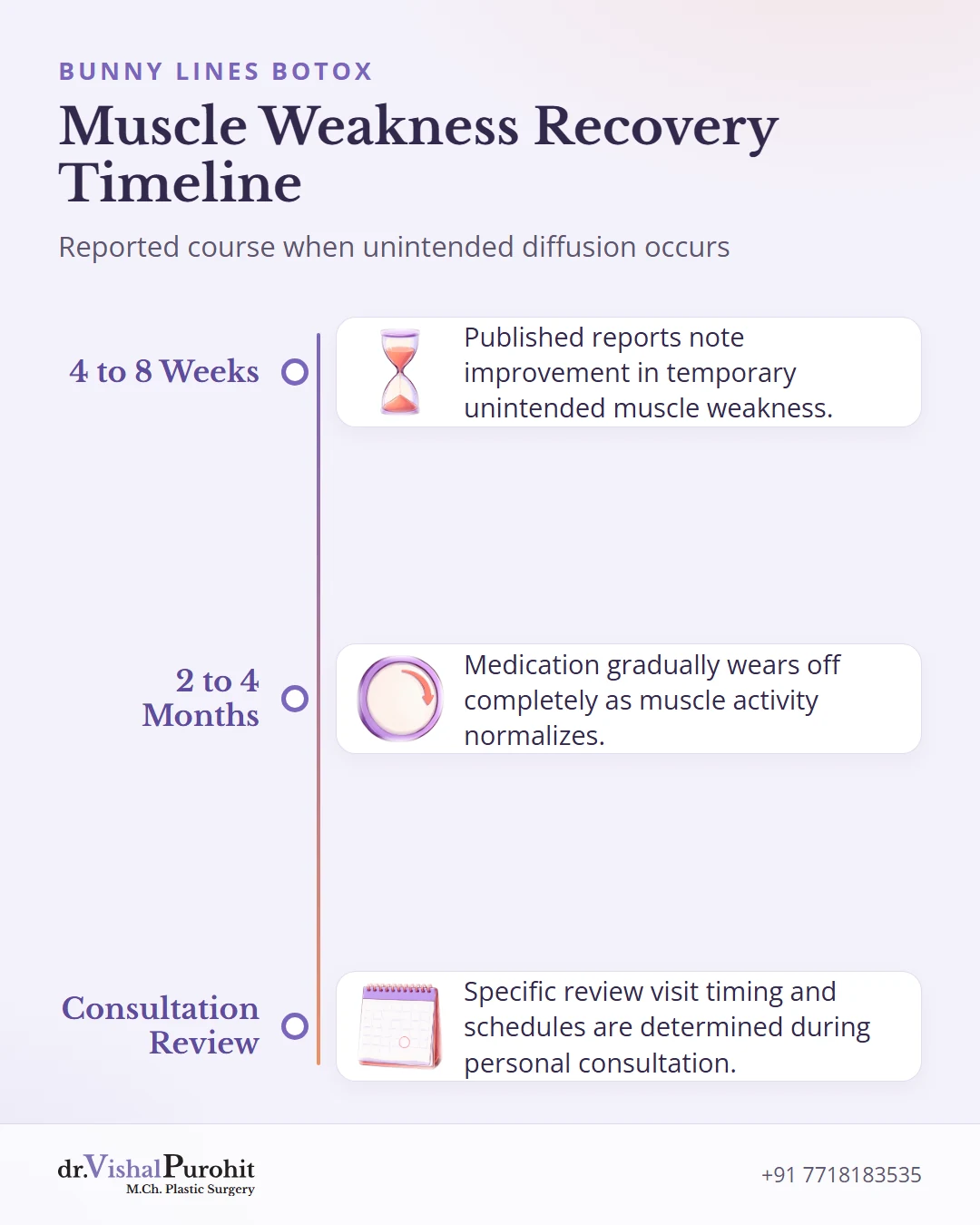
Botox softens dynamic nasal creases by temporarily relaxing the underlying muscles responsible for scrunching. For adults considering this non-surgical injection treatment, individual onset, duration, and review schedules vary. Specific details regarding expected timelines in his patients, follow-up visits, and top-up policies are explained at the consultation with Dr. Vishal Purohit.
Individual results depend on personal muscle movement and metabolism.
Bunny Lines Botox Cost in Jaipur: Product and Consent
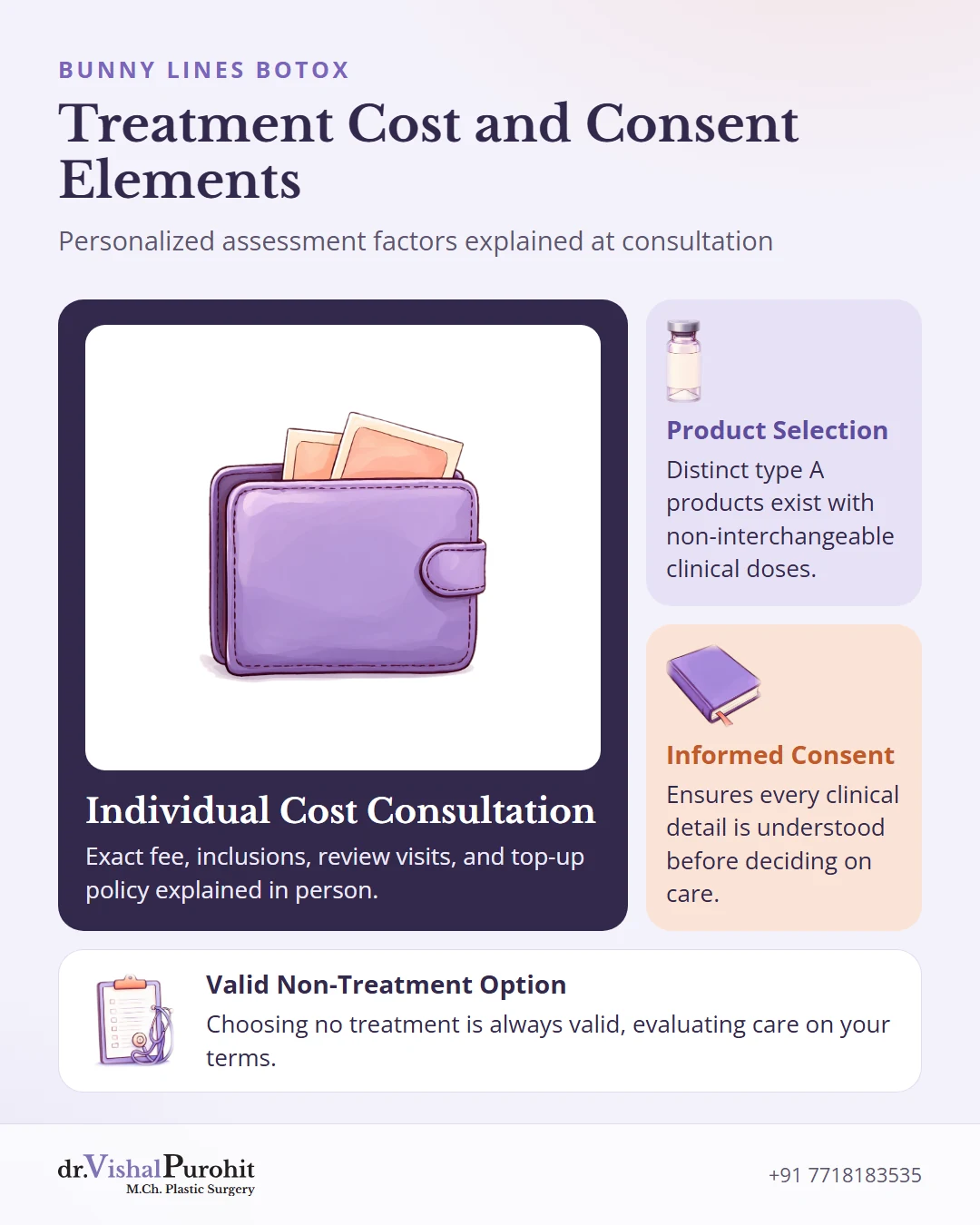
The exact fee for bunny lines Botox, what the cost includes, the review visit, and any top-up policy are explained in person at the consultation rather than set as a fixed figure in advance.
Several distinct botulinum toxin type A products exist, and their clinical doses are not interchangeable. During an assessment, patients can ask which specific product is selected and what its official label covers.
Informed consent ensures every detail is understood before deciding on care.