
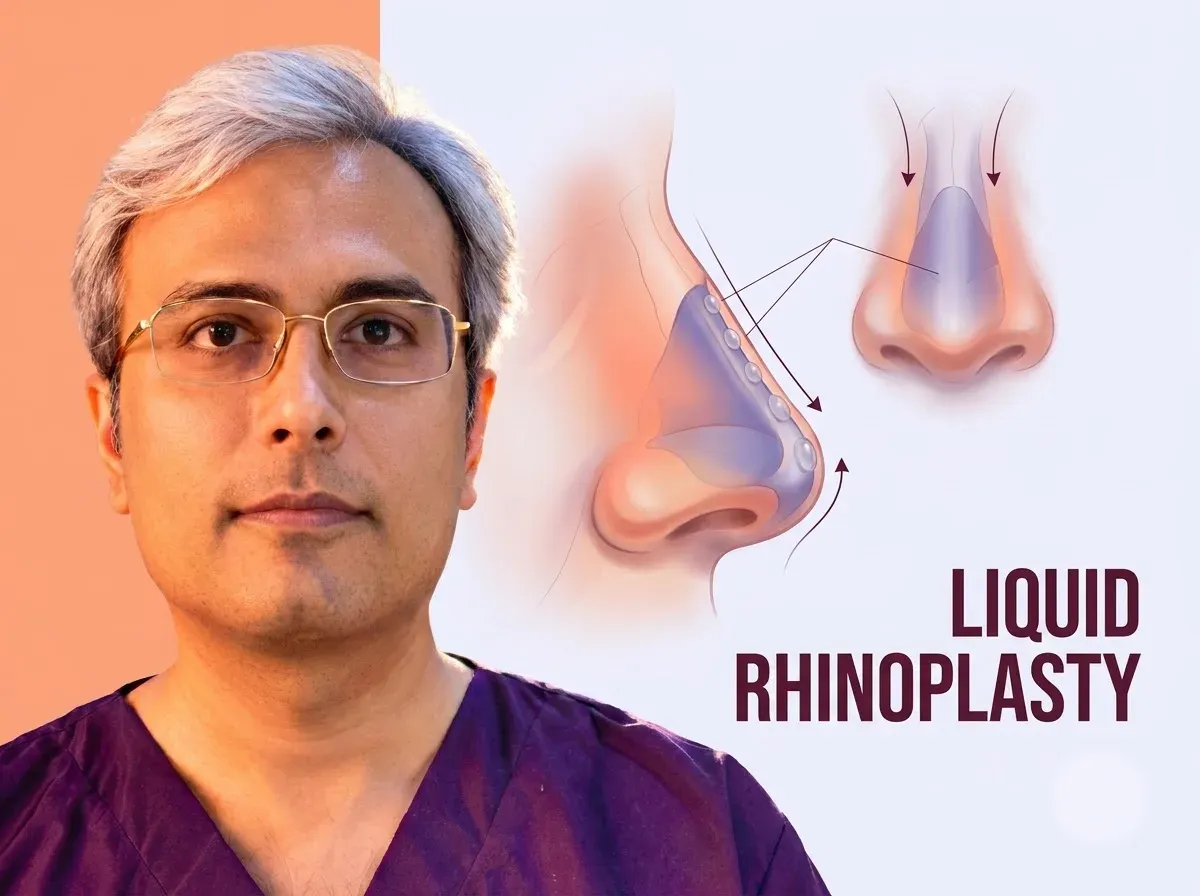

Low Bridges and Camouflage Versus Reducing Nasal Size
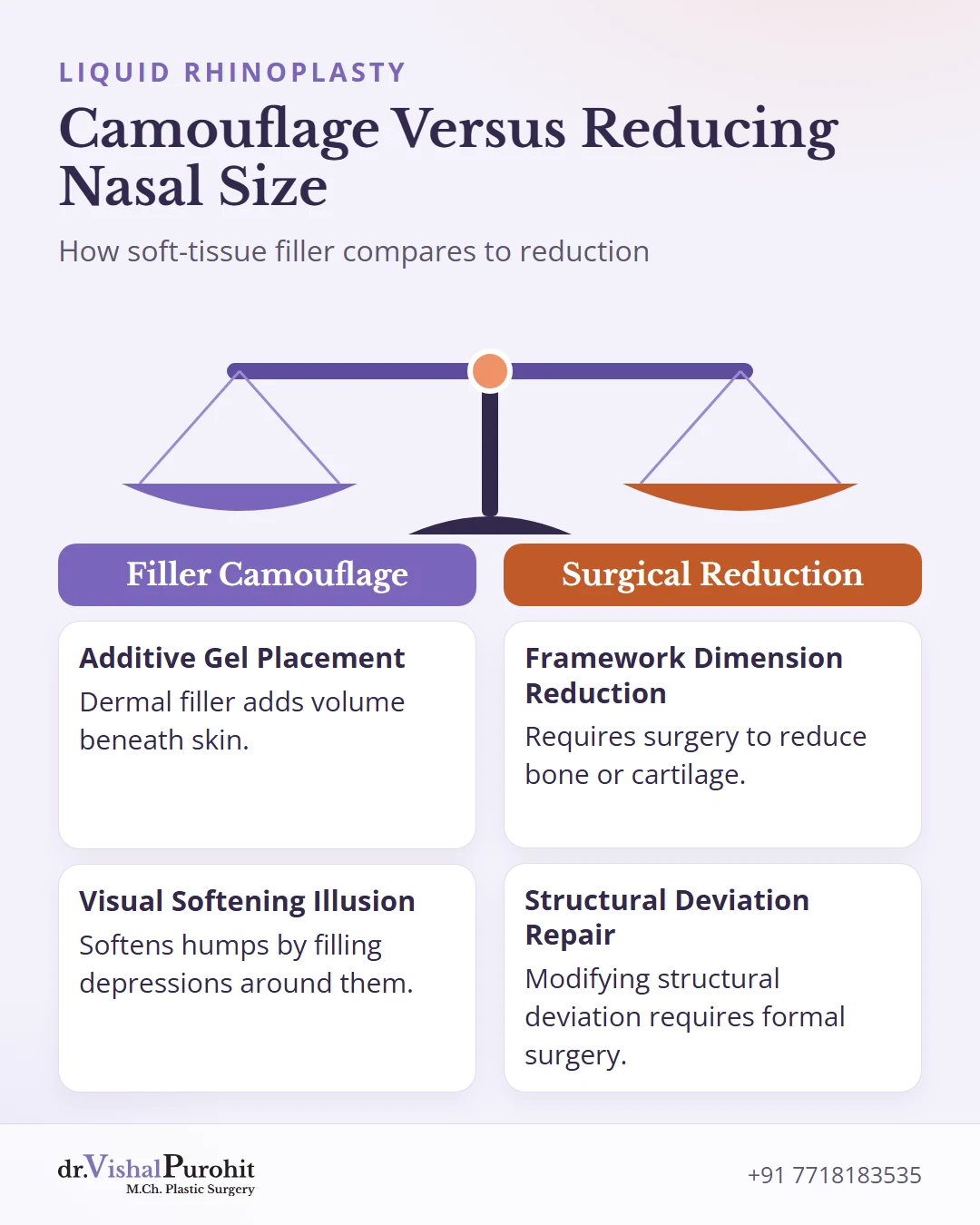
Dermal filler is an additive substance placed beneath the skin. It cannot reduce bone or cartilage framework dimensions. Understanding how soft-tissue gel behaves helps clarify what non-surgical contouring can achieve.
A dorsal hump can be visually softened by placing filler into depressions directly above and below the prominence. This technique creates an optical illusion of a straighter dorsal line. However, elevating these adjacent low areas subtly increases overall nasal height and tissue width.
Because injectable filler only adds volume, it cannot make a nose smaller, narrow the nasal bones, or realign internal anatomy. In nose fillers rhinoplasty limitations, clinical assessments highlight that modifying structural deviation requires surgery rather than soft-tissue camouflage. Choosing no treatment remains a completely valid decision.
Tip Projection Nostril Width and Indian Nasal Anatomy
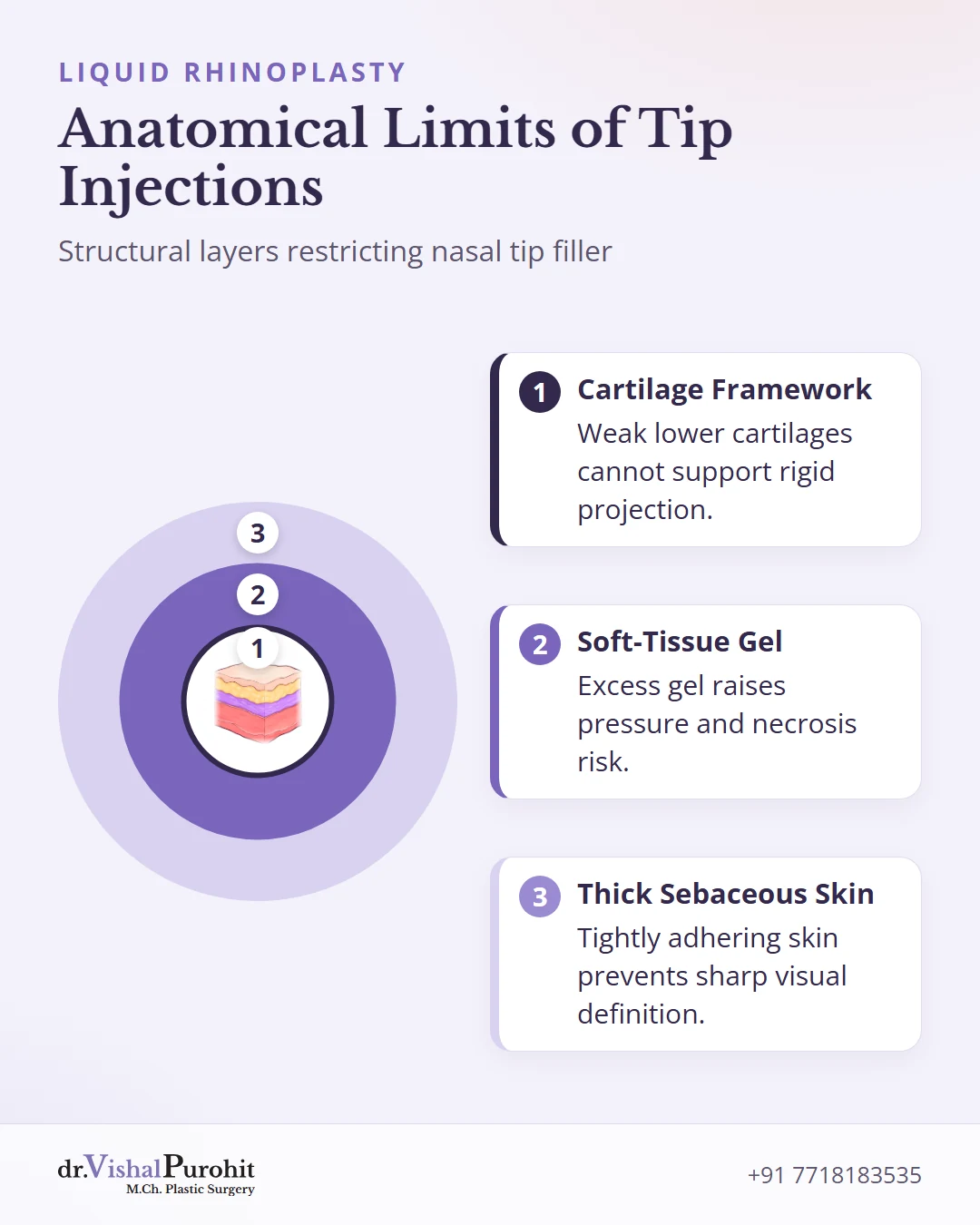
Dermal filler cannot narrow wide nostrils, remove bulbous tissue, or reliably lift a plunging tip. Injectable filler adds soft-tissue volume rather than subtracting structure, making direct placement into a bulbous tip unsuitable because it adds bulk.
Understanding these structural boundaries and limits of nasal filler is essential when evaluating profile goals. Thick, sebaceous skin tightly adheres to the nasal tip, limiting sharp visual definition and preventing tight draping over underlying changes. Adding product into a heavy tip increases broadness rather than sharpening contours.
Several anatomical factors restrict what non-surgical injections can achieve:
- Weak lower lateral cartilages cannot support rigid projection against a thick soft-tissue envelope.
- Injecting excess gel to force projection into a tight tip raises tissue pressure and creates skin necrosis risks.
- Desiring tip narrowing or alar reduction requires formal surgical evaluation rather than repeated filler treatments.
Choosing no treatment remains an entirely valid decision during any aesthetic consultation.
Airway Obstruction and Structural Breathing Limits Before Injections
Liquid rhinoplasty places soft-tissue gel beneath the skin rather than providing rigid support.
Injectable gel cannot unblock an obstructed nasal airway, straighten a deviated septum, or repair internal nasal valve collapse. In an overview of nose fillers and rhinoplasty limitations, restoring compromised nasal airflow requires dedicated surgical evaluation to address underlying skeletal and cartilaginous causes rather than soft-tissue gel.
Surgical Cartilage Support Versus Injectable Gel
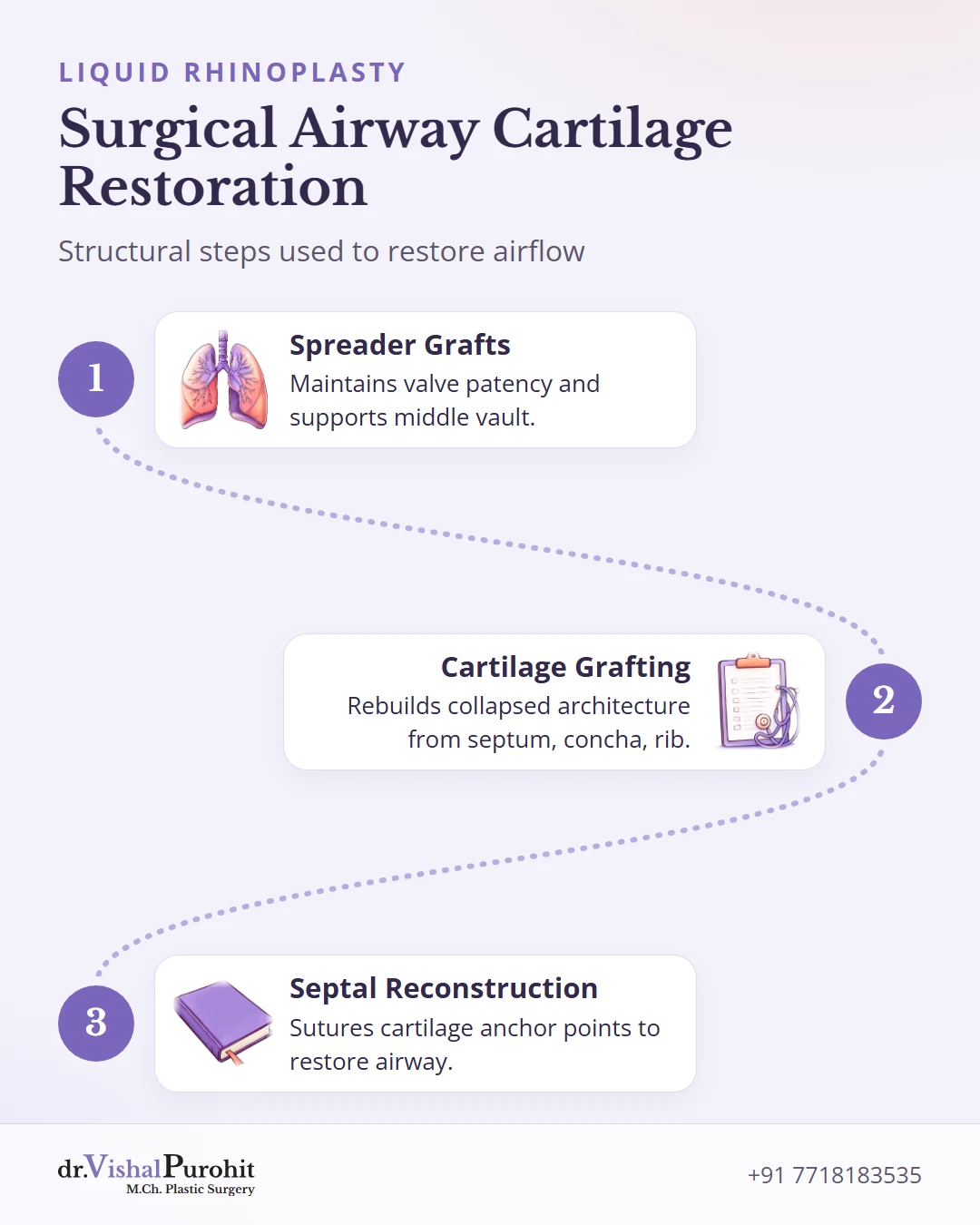
Restoring airflow involves structural interventions rather than cosmetic volume:
- Placing spreader grafts between upper lateral cartilages and the septum to maintain valve patency, restore valve angles, and support middle vault collapse
- Rebuilding collapsed structural architecture and opening obstructed valves using cartilage grafts taken from the septum, concha, or rib
- Suturing cartilage at specific anatomical anchor points during total septal reconstruction to re-establish adequate airway dimensions
Why Filler Is Not a Surgical Rhinoplasty Preview
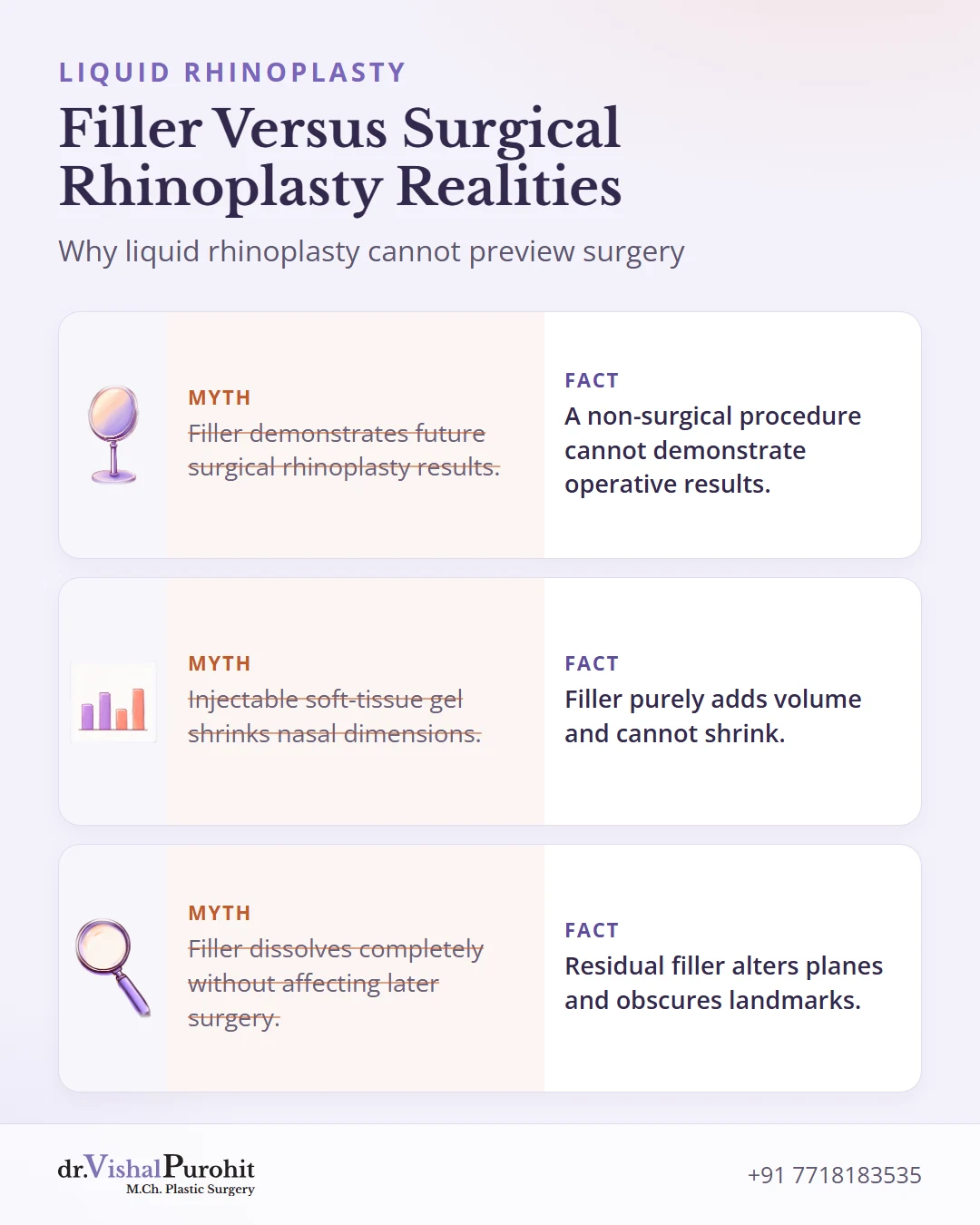
Liquid rhinoplasty adds soft-tissue gel beneath the skin rather than removing bone or cartilage. Because dermal filler is purely additive, it cannot replicate structural changes such as bone reduction, narrowing, or internal cartilage repositioning.
A non-surgical procedure cannot demonstrate operative results. Reviewing the limits of nose fillers compared to surgical rhinoplasty explains why filler cannot narrow wide nostrils, unblock an obstructed airway, or shrink nasal dimensions.
Injecting dermal filler before an operation can also complicate surgical planning. Residual filler alters tissue planes and obscures anatomical landmarks. Studies note that even after dissolving filler with hyaluronidase beforehand, residual product is often found during an operation and removed directly.
Liquid Rhinoplasty Cost in Jaipur: Product and Consent

Deciding on injectable nasal contouring involves understanding both the financial investment and the clinical realities of adding dermal filler.
The total fee, what the treatment includes, review visits, touch-up policies, and dissolving procedures are not fixed in advance. Instead, Dr. Vishal Purohit explains each of these details during the consultation in Jaipur.
Dermal filler products differ, and their doses are not interchangeable. During an assessment, patients can ask which specific product is planned and what its label covers.
Because soft-tissue gel adds volume beneath the skin rather than removing bone or cartilage, understanding what filler can camouflage and where surgical techniques remain necessary is essential before giving consent. Studies report that filler cannot narrow the bridge, repair an obstructed airway, or replace formal structural surgery.