
Sharp needles and blunt-tip microcannulas are the primary delivery instruments used in soft-tissue filler procedures. Each device offers distinct physical properties that influence tissue interaction, precision, and early recovery responses.
Selecting an appropriate injection technique requires careful evaluation of facial anatomy and aesthetic goals. Reviewing Are Dermal Fillers Safe? Side Effects, Risks and Warning Signs helps patients understand how anatomical knowledge guides clinical decisions during treatment.
Understanding Needles and Blunt-Tip Cannulas
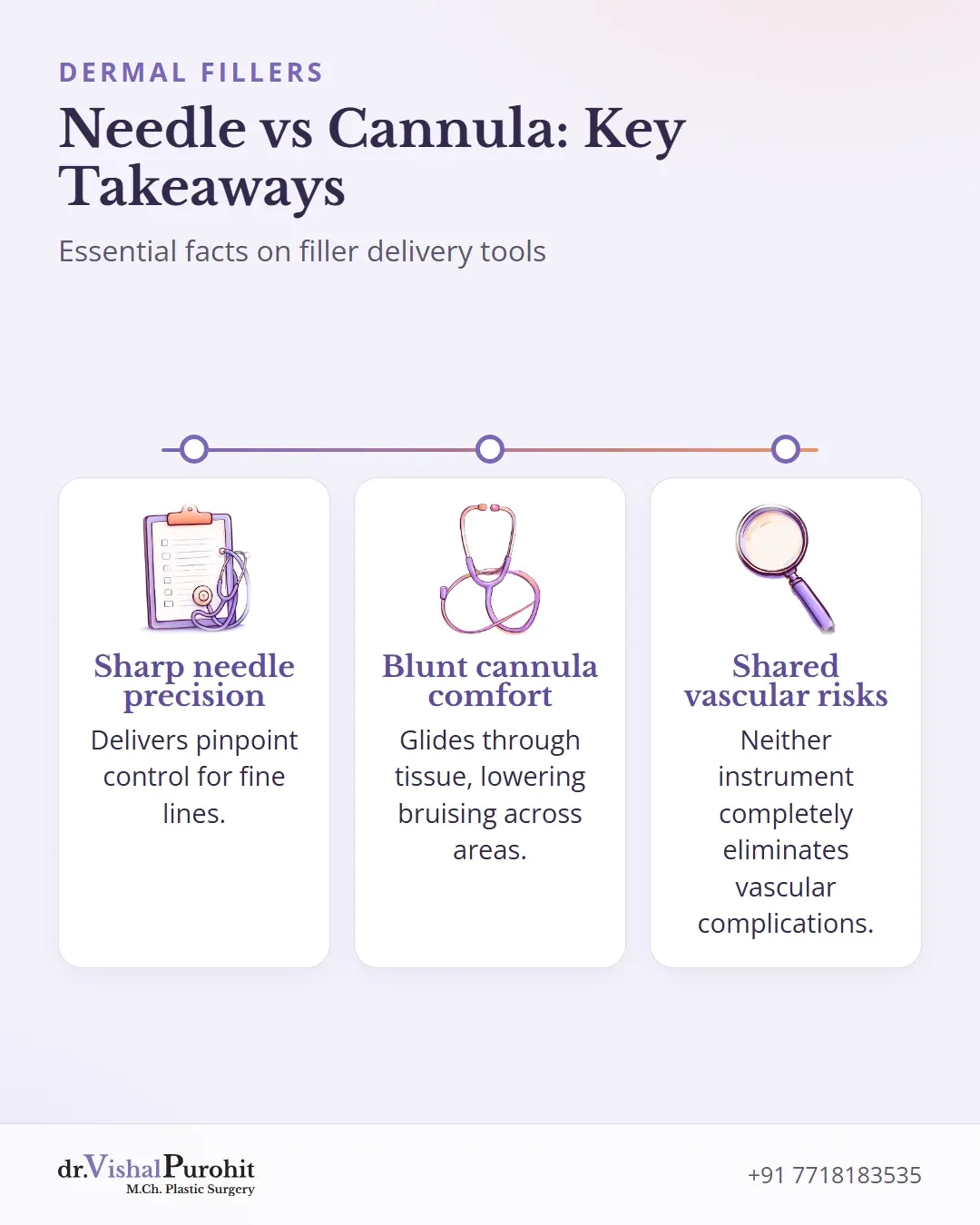
Sharp needles and blunt-tip microcannulas are the two primary delivery instruments used during soft-tissue filler treatments123. Both play vital roles in modern aesthetic practice, depending on the anatomical area and the treatment goals2.
Sharp Needles
Sharp needles feature a pointed bevel designed to pierce the skin and underlying tissue cleanly12. They allow precise product placement at targeted anatomical landmarks124. However, the sharp tip can puncture blood vessels, which may lead to bruising or swelling145.
Blunt-Tip Microcannulas
Blunt-tip microcannulas have a smooth, rounded end with a side port13. Because the tip is not sharp, an initial pilot puncture is made through the skin using a needle to create an entry point36. The cannula then glides through tissue planes, which is less likely to pierce vessel walls, helping reduce the risk of intravascular injection, bruising, and discomfort1237.
Dr. Purohit’s note: Whether a needle, a cannula, or both are chosen is decided at the consultation by Dr. Vishal Purohit.
Why Clinicians Select One Tool Over Another
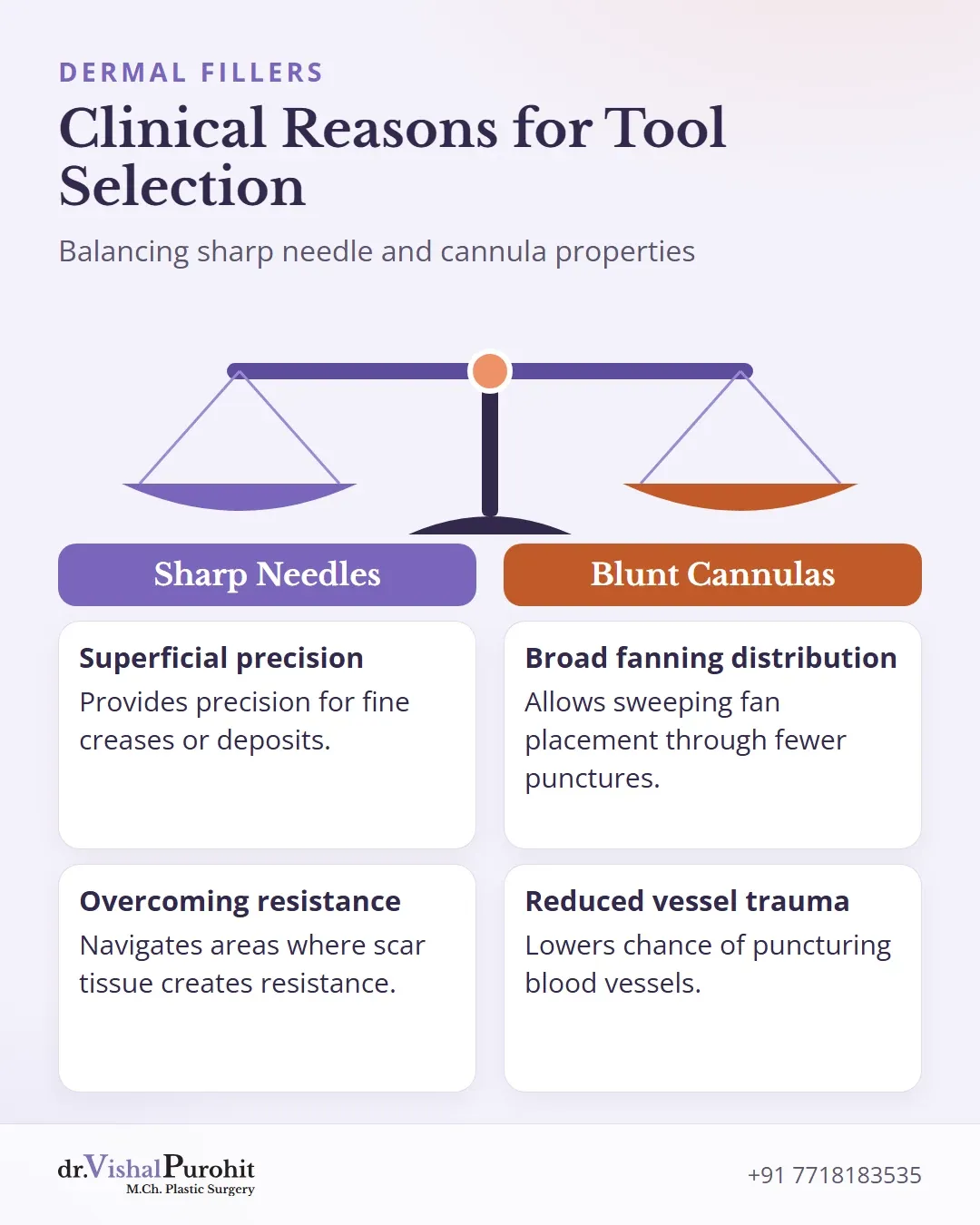
Tool selection depends on facial anatomy, target depth, and the intended distribution of material across different facial regions289. Clinicians choose between sharp needles and blunt cannulas based on specific clinical needs:
- Needles provide precision for fine superficial creases or distinct structural bolus deposits891011.
- Cannulas allow sweeping, fan-shaped distribution across broad planes through fewer entry points2912.
- Blunt tips may lower the chance of puncturing blood vessels in high-risk zones, whereas needles carry a higher risk of bruising12810.
- Scar tissue or previous surgery can create resistance, making a cannula harder to guide through tissue planes213.
Whether Dr. Vishal Purohit uses a needle, a cannula, or a combination of both is decided at the consultation following an in-person assessment.
Comfort, Swelling and Bruising Differences
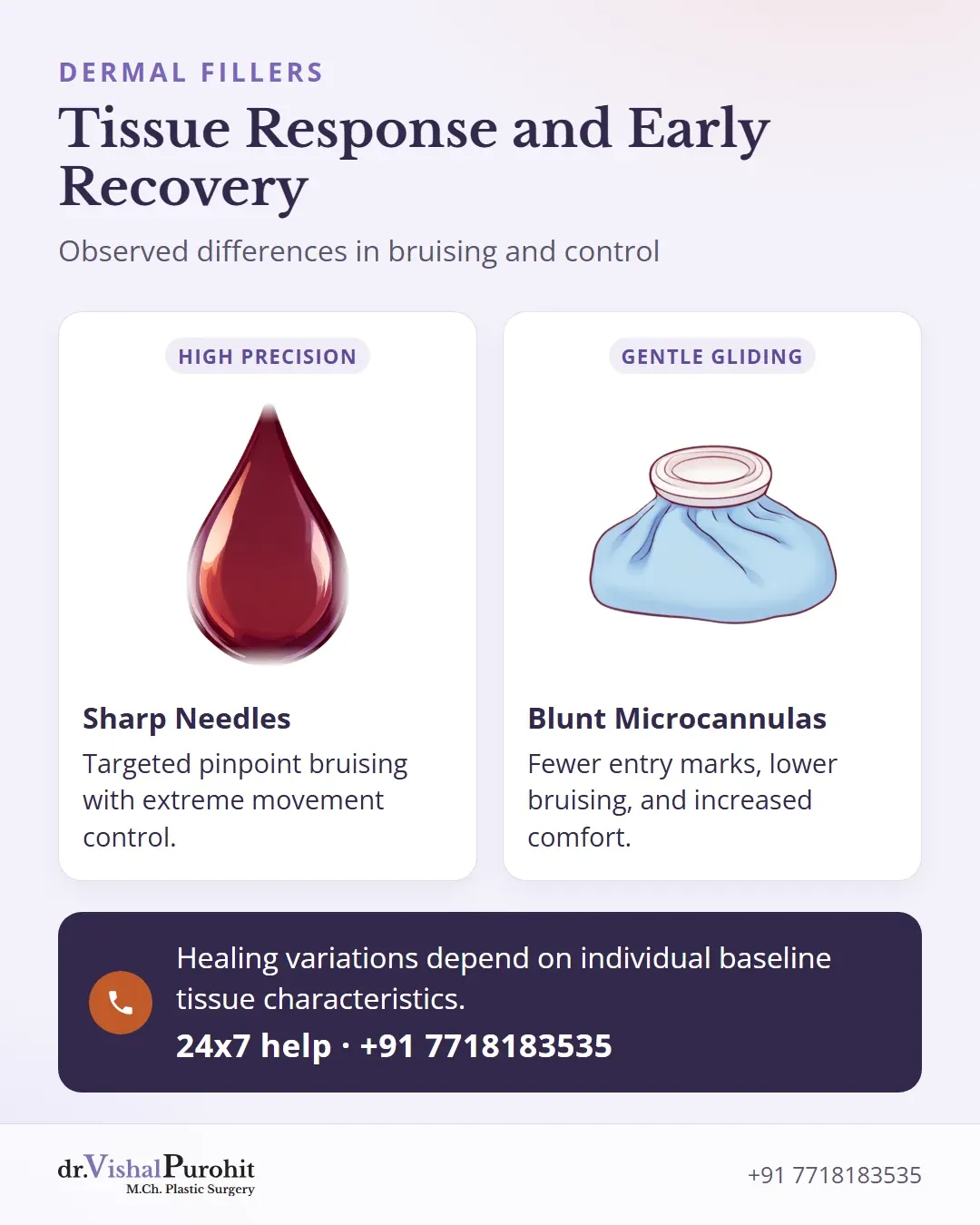
The choice between a needle and a cannula influences early post-treatment tissue responses.
Key points
- Blunt cannulas displace vessels to reduce tissue trauma, bruising, swelling, and discomfort.
- Sharp needles carry higher bruising risk but offer precision along delicate boundaries.
- Individual tissue characteristics and healing tendencies also shape post-procedure swelling.
Because blunt cannulas tend to push small blood vessels aside rather than lacerating them, they cause less tissue trauma114. This mechanism often translates to fewer individual entry marks and lower initial bruising and swelling across broad treatment areas114. Furthermore, patients frequently report increased comfort when cannula techniques are used1.
In contrast, sharp needles carry an increased risk of bruising and local vessel laceration1014. They can produce targeted pinpoint bruising at each puncture site410. Despite this, needles provide unmatched control and extreme precision of movement when working along delicate anatomical boundaries or fine lines114.
Whether a cannula or a needle is chosen, post-procedure responses are not identical for everyone. Individual healing tendencies, tissue characteristics, and baseline vascularity remain significant factors in the degree of swelling or bruising experienced after soft tissue filler placement15. The specific instrument selection for each treatment area is decided at the consultation with Dr. Purohit.
Safety Realities and Vascular Risk Facts
Dermal filler injections carry a small but critical risk of vascular occlusion, which occurs when product enters an arterial lumen or compresses surrounding vessels1617. While blunt cannulas are often preferred to reduce tissue trauma, neither instrument eliminates vascular complications11819.
Key points
- Dermal fillers carry a small but critical risk of vascular occlusion from arterial entry or compression.
- Neither blunt cannulas nor sharp needles eliminate the risk of vascular complications.
- An in-depth understanding of facial anatomy is vital to minimize vascular risks.
Research demonstrates no significant difference between sharp needles and blunt cannulas regarding the incidence of vascular penetration20. Flexible cannulas can pass into unintended tissue planes or give a false sense of security, whereas needles allow precise placement11920. Consequently, an in-depth understanding of facial vascular anatomy is essential to minimize the risk of accidental intravascular placement regardless of device choice2122.
Urgent Warning Signs
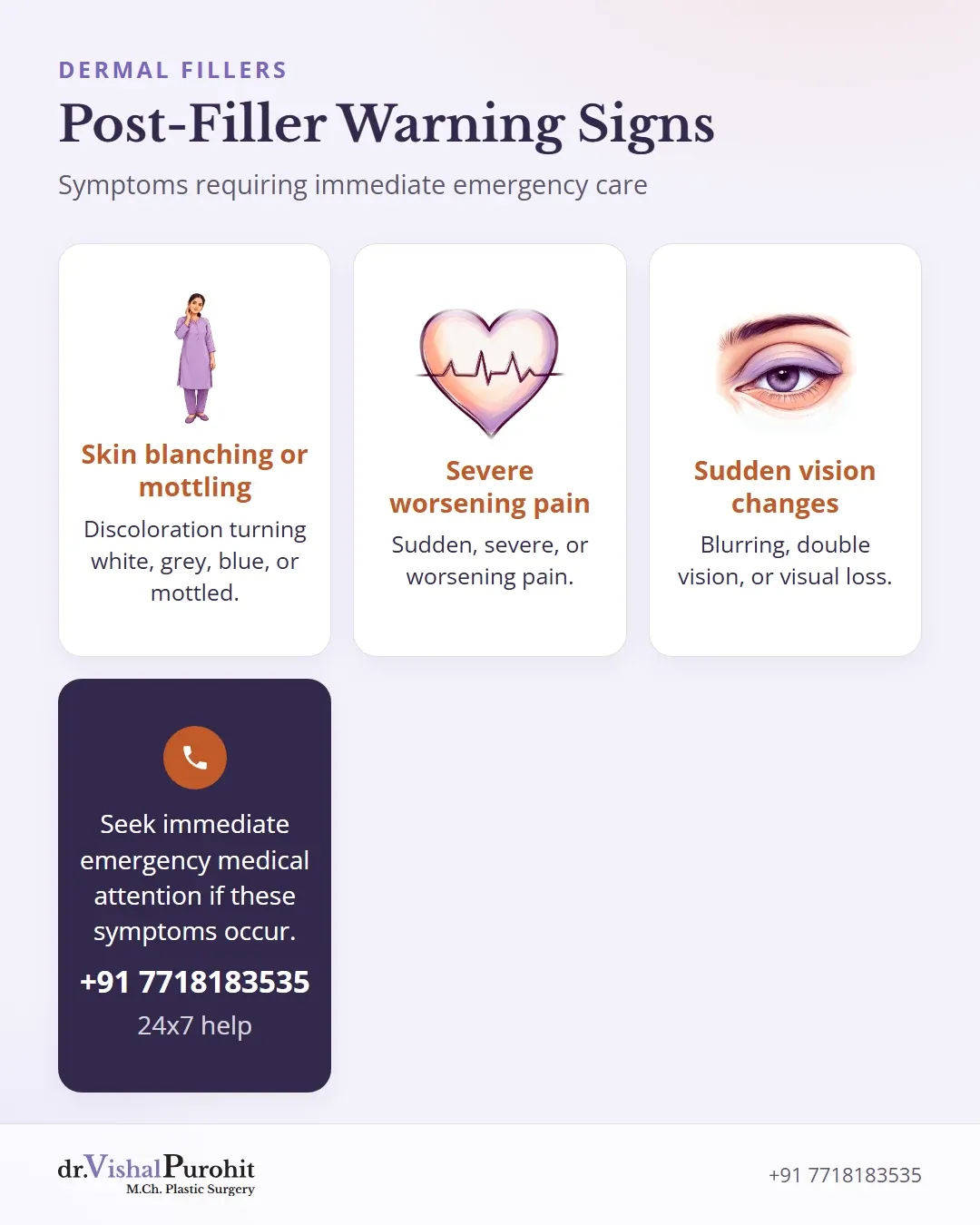
Accidental arterial blockage can lead to localized tissue necrosis, scarring, or vision loss1622. Immediate emergency medical attention is required if any of the following symptoms appear:
- Skin blanching, dusky discoloration, or turning white, grey, blue, or mottled
- Sudden, severe, or worsening pain
- Vision changes, blurring, double vision, or visual loss
Prompt evaluation ensures rapid clinical management, as delaying assessment compromises tissue recovery1622.
Discussing Procedural Techniques with Your Surgeon
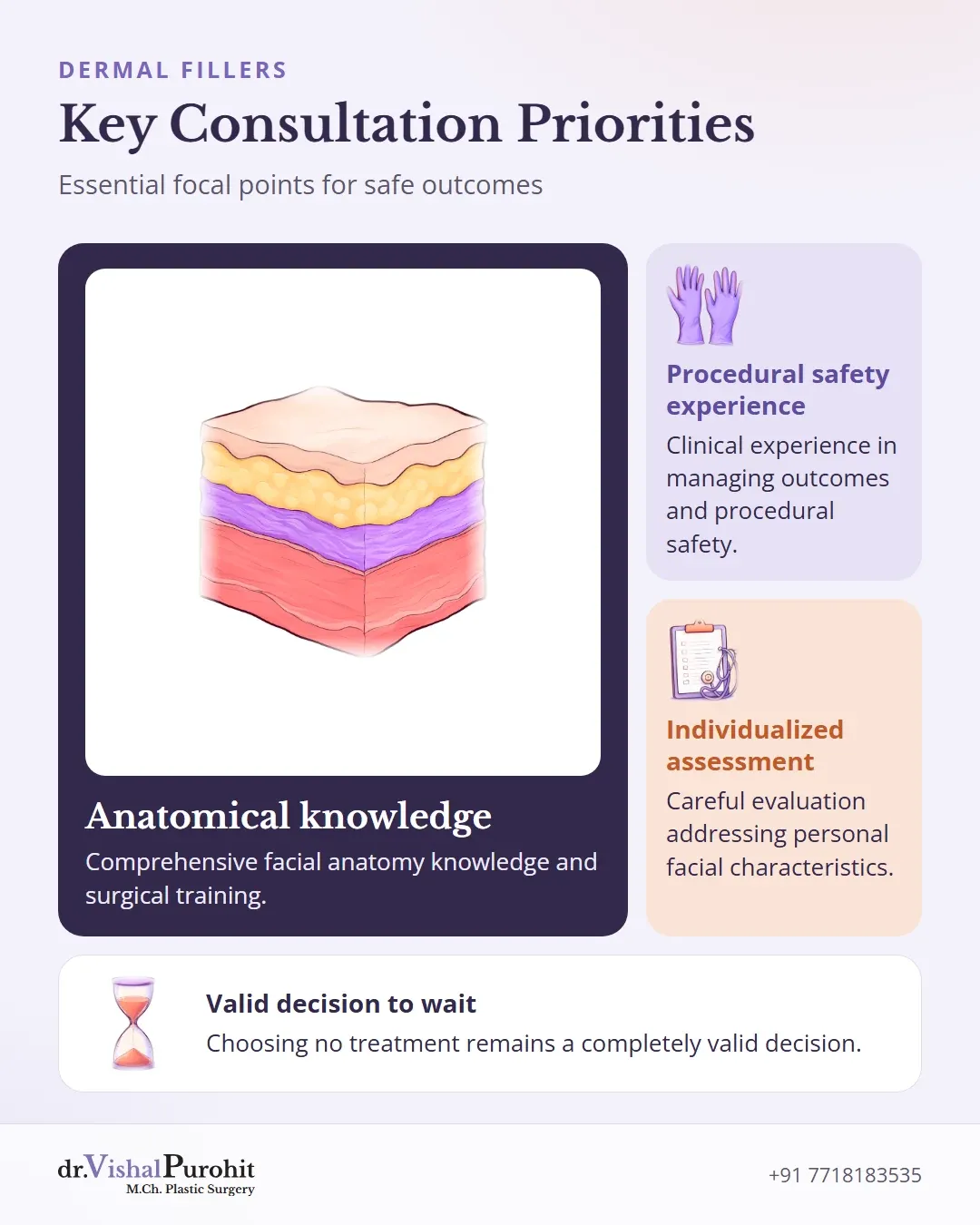
During an initial consultation, the medical discussion establishes realistic expectations, reviews personal goals, and weighs the overall balance of benefits and risks232425. Injection techniques serve as adaptable instruments within a structured assessment rather than rigid, universal protocols26.
Practitioners often combine needles and cannulas during a single session, tailoring their choice to differing facial areas, tissue layers, and structural needs262728. Rather than insisting on a specific instrument or delivery method, patients benefit most from focusing on:
- Comprehensive anatomical knowledge and surgical training2629
- Clinical experience in managing outcomes and procedural safety2329
- An individualized assessment that addresses personal facial characteristics2426
At his practice in Jaipur, Dr. Vishal Purohit determines all procedural details, including instrument selection, during the private clinical consultation. Choosing no treatment remains a completely valid decision at every evaluation stage30. Patients should feel unhurried to reflect on all available options before proceeding.
Clinical Filler Consultations in Jaipur
Selecting between needles and cannulas is a clinical decision based on anatomy and procedural goals. To learn more about treatment options, visit Dermal Fillers in Jaipur or read Dermal Fillers FAQs for common questions. At his practice, Dr. Vishal Purohit, M.Ch. plastic surgeon, determines all procedural details and instrument selection during a private consultation. Choosing no treatment remains a valid decision at every stage, allowing patients time to reflect before proceeding.
This is educational information, not medical advice.