
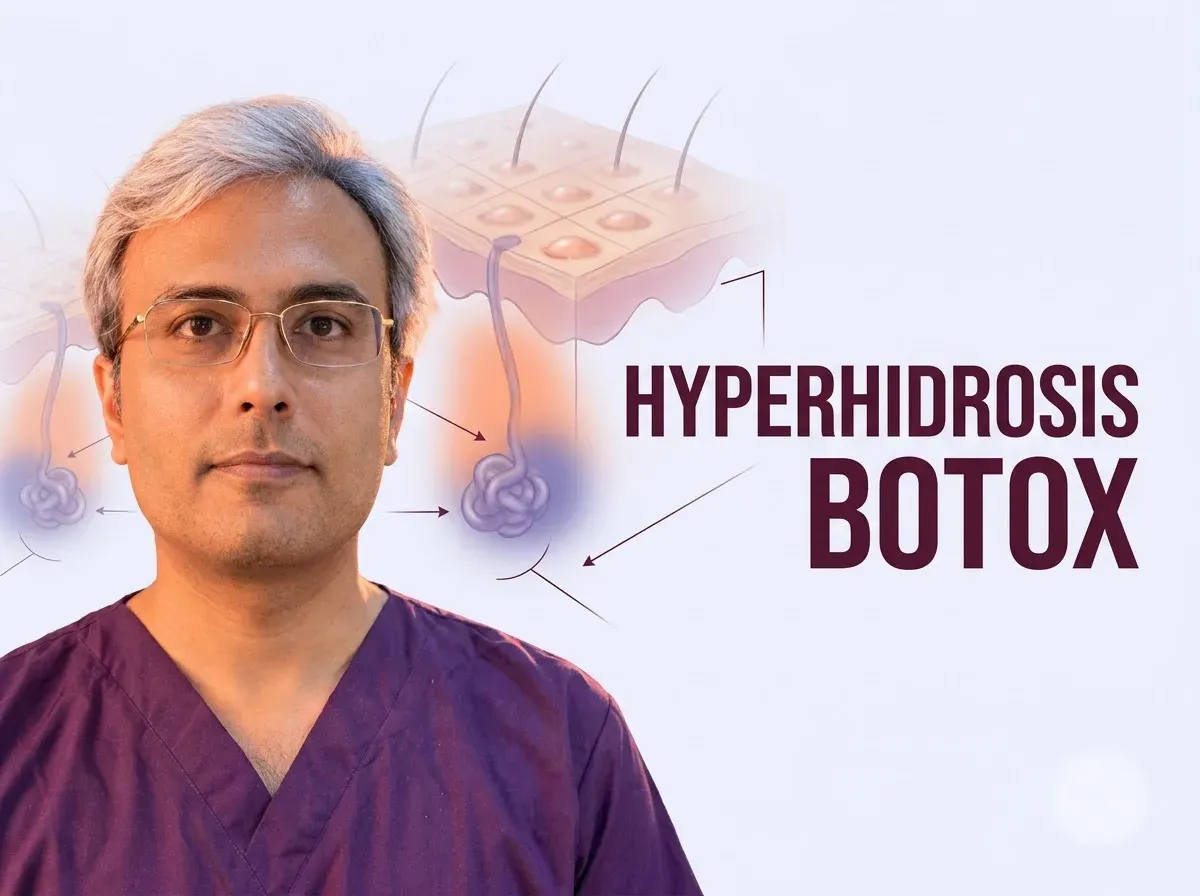

Understanding Hyperhidrosis and Comparing Your Treatment Options
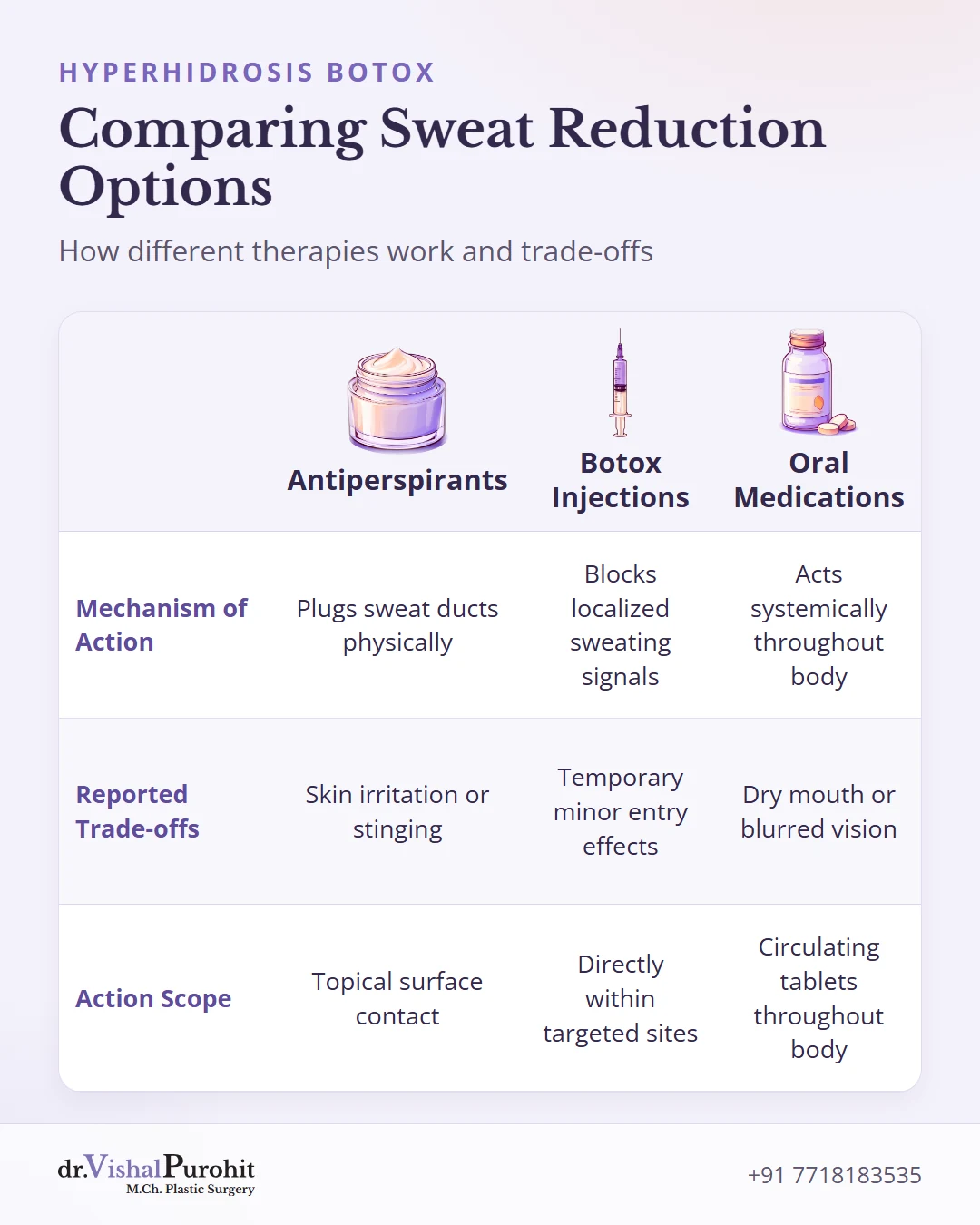
Excessive sweating can affect daily routines, clothing choices, and skin comfort. Managing focal perspiration begins by reviewing conservative therapies alongside medical options to see what fits your individual pattern of symptoms.
When conservative measures prove insufficient, patients often explore an antiperspirants, iontophoresis, and focal Botox comparison to understand how different interventions function across specific anatomical areas.
Non-surgical approaches carry distinct features and trade-offs:
- Prescription antiperspirants with aluminium salts physically plug sweat ducts, though moisture can create skin irritation or stinging.
- Iontophoresis passes a mild electrical current through water trays, which studies report alleviates sweating in about 85 percent of treated patients for palms and soles.
- Botulinum toxin injections act directly within the skin of targeted sites to block localized sweating.
- Oral anticholinergic medications act systemically throughout the body, but circulating tablets can trigger widespread effects like dry mouth or blurred vision.
Any severe reaction such as trouble breathing, swallowing, or speaking, or general muscle weakness after a toxin treatment requires emergency medical care at once. Choosing no treatment remains a valid option. Dr. Vishal Purohit explains suitable options, numbing, pricing, and aftercare during your private consultation.
Medical Assessment and Evaluating Sweating Severity First
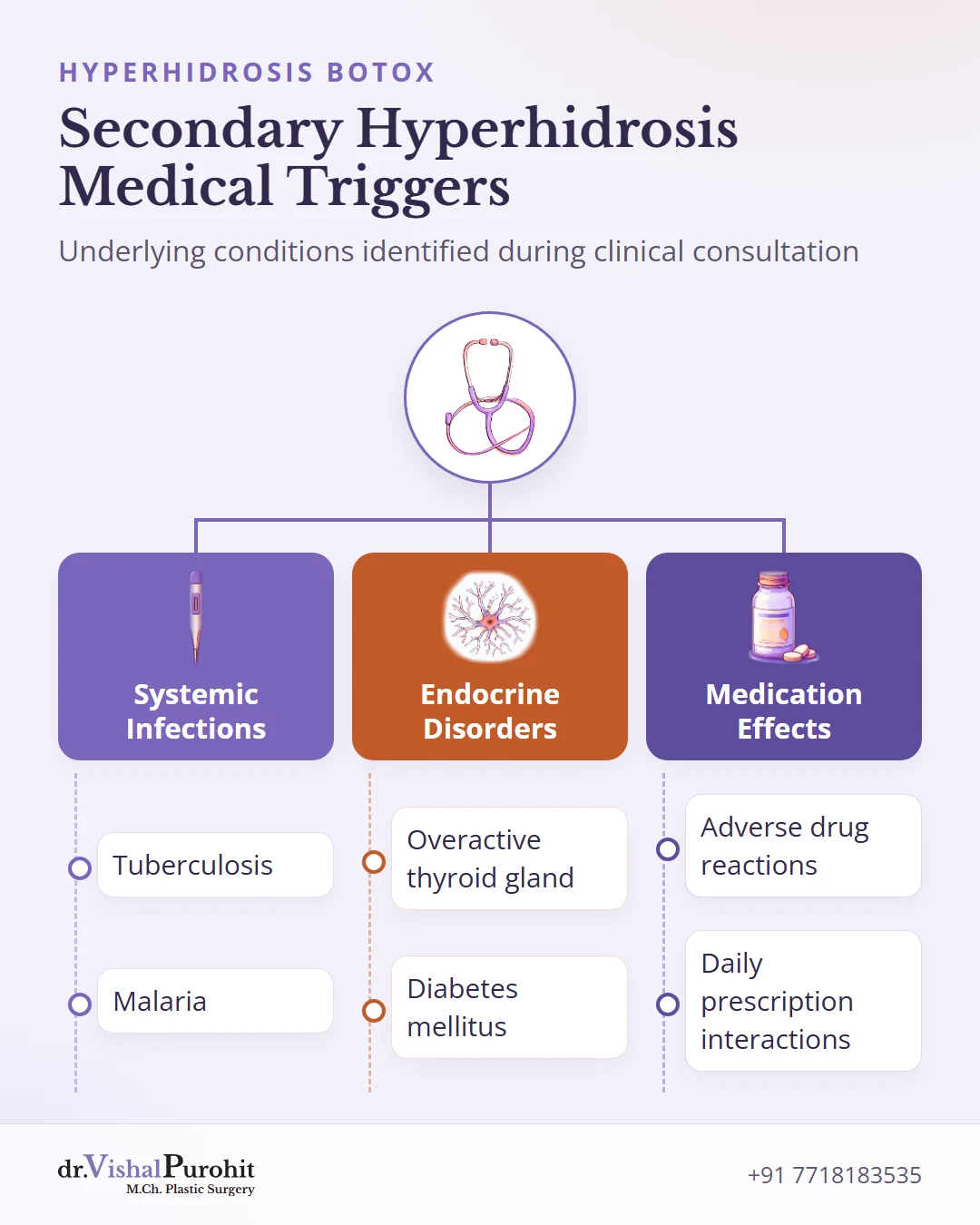
Excessive sweating, or hyperhidrosis, involves sweat production beyond normal temperature regulation. Before considering non-surgical options, clinical evaluation determines whether perspiration is localized or secondary to systemic triggers. Patients can review a when excessive sweating needs a medical check first to understand how health history and symptom questionnaires distinguish primary disorders from secondary illnesses.
Symptoms interfere differently across anatomical sites. Underarm sweating often leads to soaked garments and social distress, whereas palm involvement directly impairs manual tasks and reduces workplace productivity. Assessing these site-specific functional barriers helps clarify treatment priorities, as detailed when comparing why palms and underarms are different decisions and procedural considerations.
A comprehensive consultation identifies potential secondary causes, which may include:
- Systemic infections, such as tuberculosis or malaria
- Endocrine disorders, including an overactive thyroid gland or diabetes mellitus
- Adverse reactions related to specific daily medications
Underlying illnesses require direct management with the prescribing physician rather than isolated symptomatic injections. Choosing no treatment remains a valid option. Specific products, numbing, procedural plans, and aftercare rules are explained at the consultation with Dr. Vishal Purohit.
Before Hyperhidrosis Treatment: Medical History and Preparation
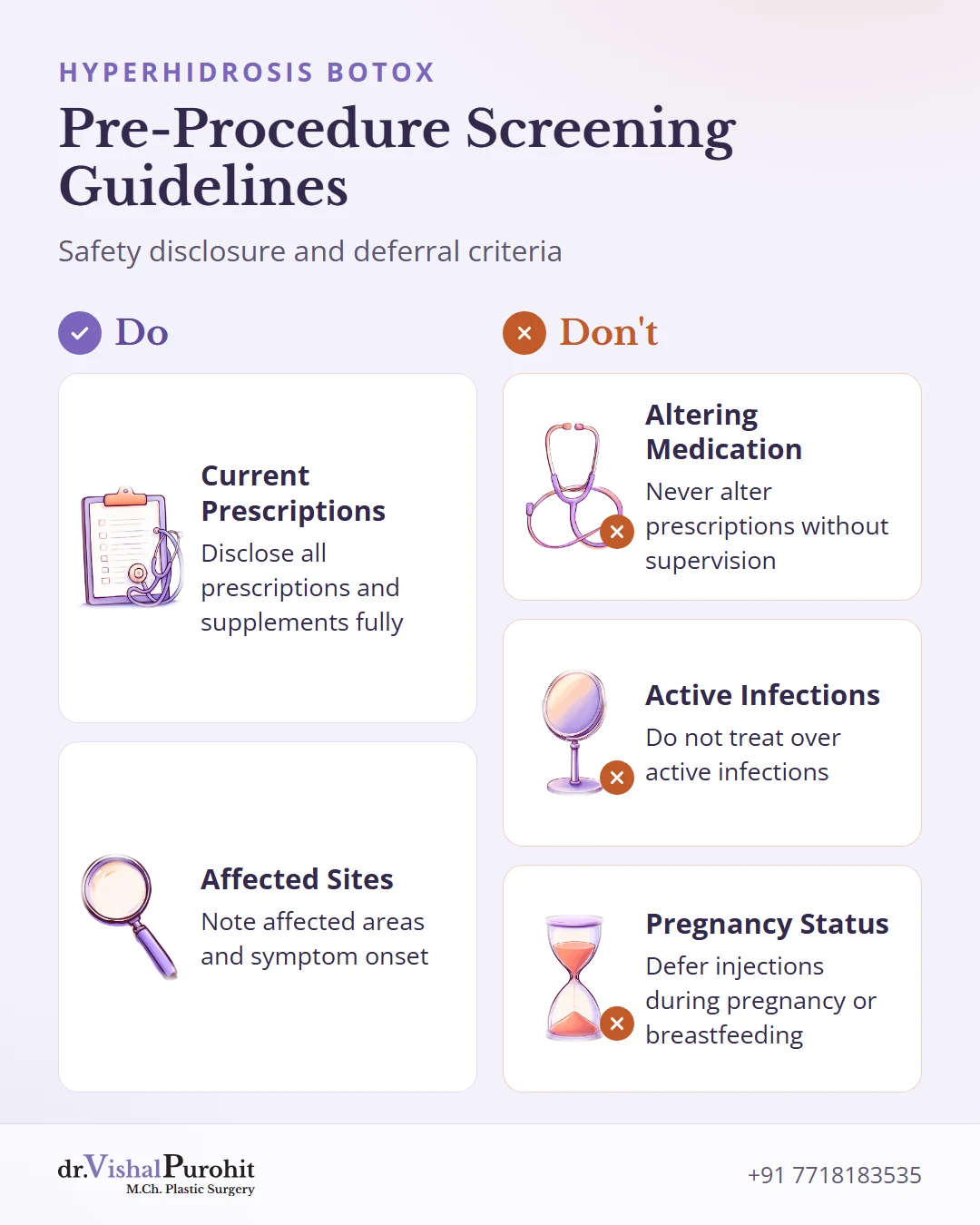
Injectable botulinum toxin type A offers a non-surgical option when topical antiperspirants provide inadequate relief for excessive sweating. Preparing for an evaluation requires reviewing past treatments, overall physical health, and personal therapy goals.
Before attending an evaluation, patients should note their affected areas and symptom onset. A thorough assessment covers past topical therapies and medical background to determine whether neurotoxin injections suit the individual.
Safety screening requires full disclosure of all current prescriptions, supplements, and prior neurotoxin sessions. Certain prescription muscle relaxants and aminoglycoside antibiotics can potentiate toxin effects, increasing the risk of muscle weakness. Patients must never alter prescribed medications without direct medical supervision.
Pre-procedure screening also evaluates neuromuscular conditions, respiratory vulnerabilities, and local skin health. Active skin infections at the planned site or known allergies to product ingredients like human albumin prohibit treatment. In addition, elective sweat injections are deferred during pregnancy and breastfeeding.
Individuals can review essential details on medical disclosure, screening, and consent before hyperhidrosis Botox to understand safety considerations.
After Treatment: Common Reactions and Urgent Warning Signs
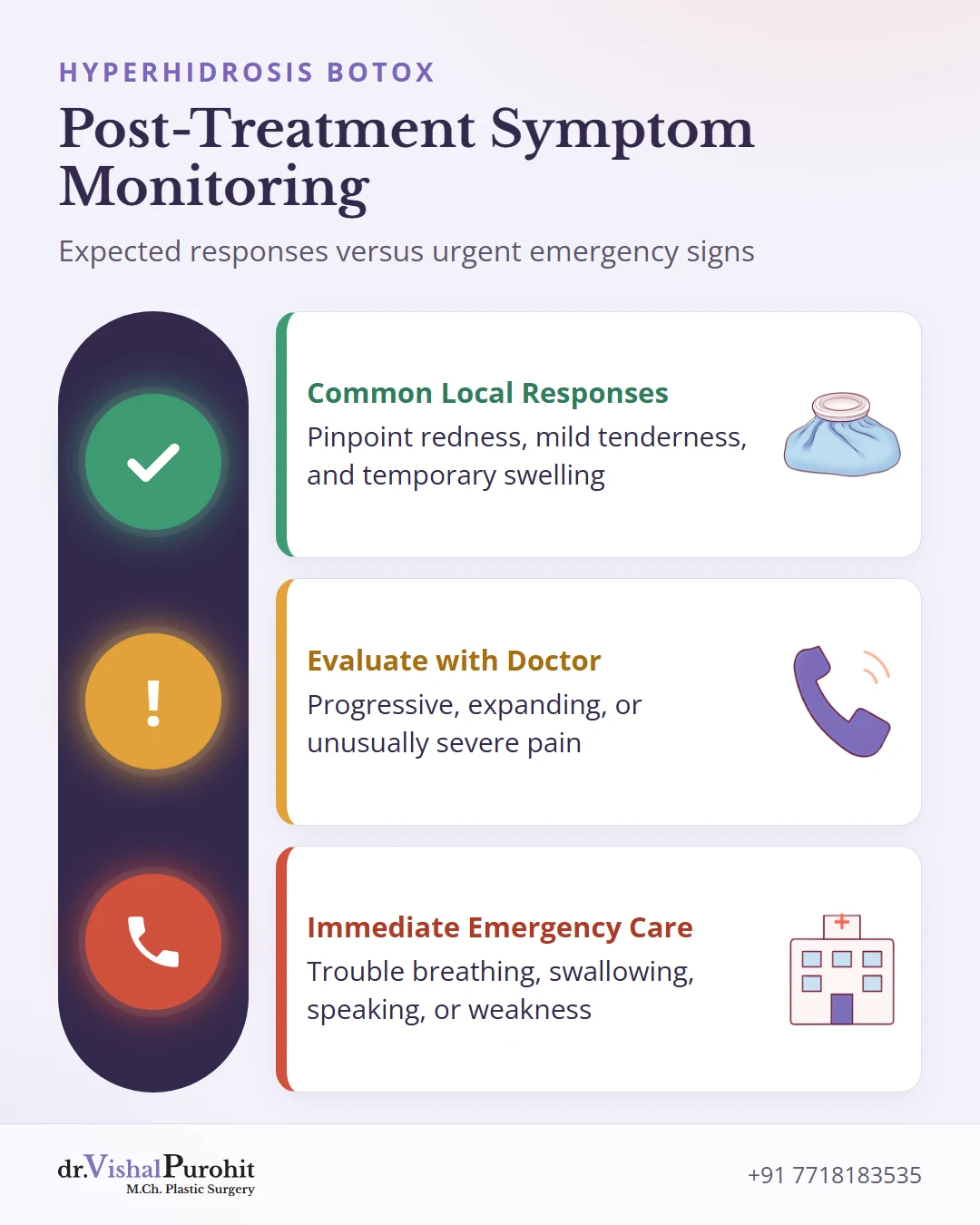
Botox injections into the skin involve minor needle punctures that trigger brief local reactions. When injections are performed, common local responses settle on their own, but patients must know which symptoms require prompt evaluation.
Minor needle entry effects can include pinpoint redness, temporary swelling, mild tenderness, bruising, or brief changes in skin sensation. Understanding side effects and urgent warning signs after sweating treatment helps distinguish these normal events from issues requiring assessment, such as progressive, expanding, or unusually severe pain.
When treating the palms, studies report temporary hand muscle weakness with reduced fine motor skills lasting several weeks. Patients experiencing reduced grip strength should observe daily functional safety precautions:
- Avoid driving or operating heavy machinery until strength normalises.
- Refrain from handling hazardous precision equipment.
- Avoid tasks requiring full manual dexterity.
Trouble breathing, swallowing, or speaking, or general muscle weakness after treatment is an emergency requiring immediate emergency medical care at the nearest hospital. Dr. Purohit explains specific aftercare rules and personal suitability at the consultation.
Sweating Botox Cost in Jaipur: Duration, Consent and Quotes

Planning non-surgical sweat control involves balancing temporary symptom relief against the financial commitment of repeat sessions. Botulinum toxin type A injections into the skin block chemical signals to eccrine sweat glands, but nerve endings gradually restore communication over time.
Formulations such as onabotulinumtoxinA and abobotulinumtoxinA have biological strengths that are not interchangeable. Because dilution and reconstitution practices differ, patients can ask which specific product is used and what its label covers during their clinical evaluation.
When assessing a written estimate, patients should check whether the quote encompasses the entire clinical episode:
- The initial specialist consultation
- The injection procedure itself
- Anaesthetic comfort measures
- Post-treatment follow-up reviews
For individuals treated by Dr. Vishal Purohit in Jaipur, the fee, what it includes, review visit timing, and any top-up policy are not confirmed in advance and are explained at the consultation.
Because sweat reduction represents maintenance rather than a lifelong cure, understanding sweating Botox duration and repeat treatment cycles helps clarify ongoing commitments. Clinical trials report axillary durations ranging between 4 and 10 months, while palmar responses vary from 3 to 12 months. Discontinuing treatment remains an option at any time, after which perspiration returns toward baseline.