
Selecting a medical practitioner for injectable treatments requires careful evaluation of training, clinical judgment, and regulatory standing. Injectable fillers are medical procedures requiring thorough anatomical knowledge rather than casual salon visits.
Preparing questions in advance helps patients evaluate safety standards and clinical communication. Reviewing Your First Filler Consultation: What Happens and What to Ask provides a structured starting point for assessing practitioner qualifications and individualized treatment planning.
Recognised Qualifications and Medical Registration
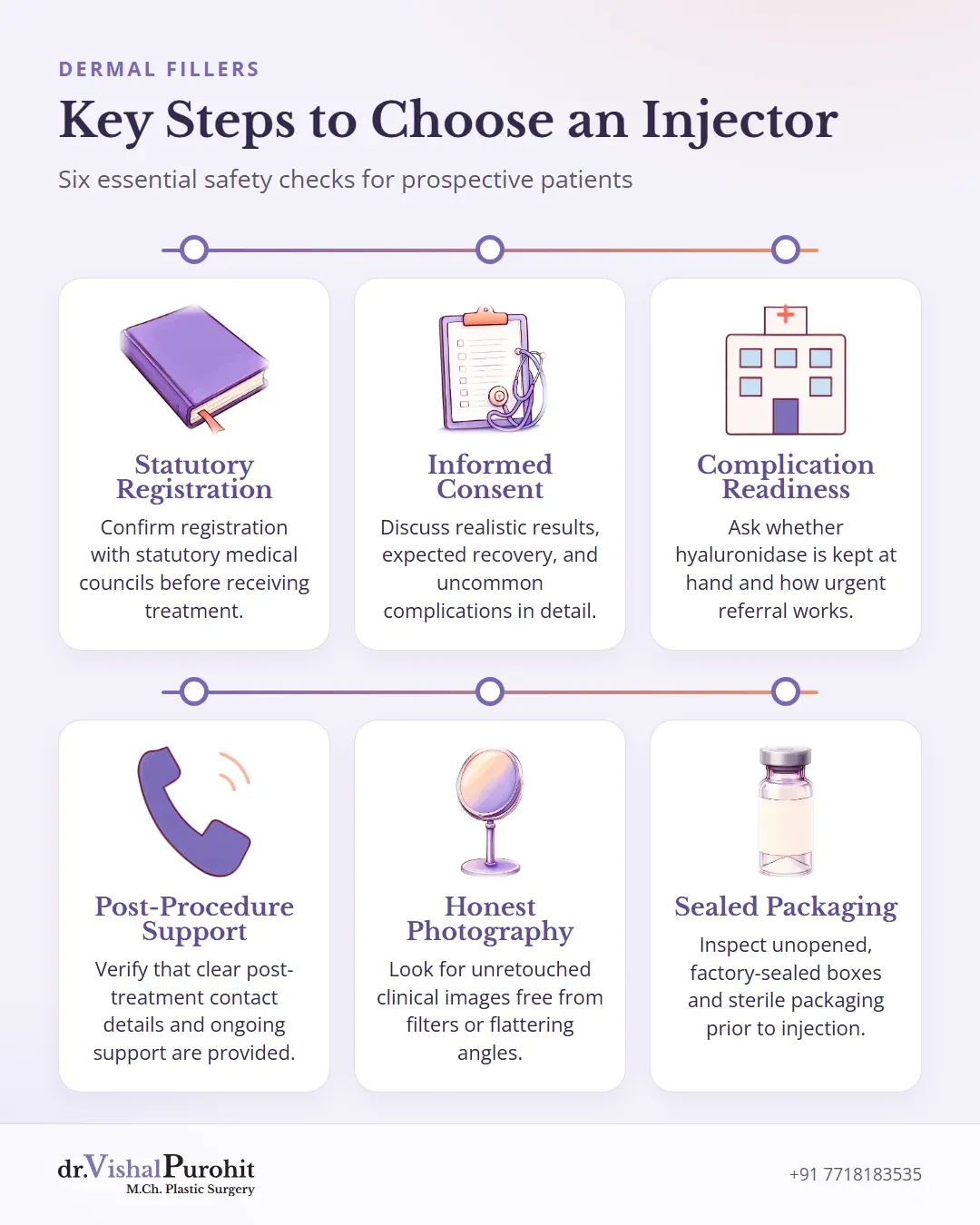
Choosing a qualified medical practitioner who is registered with statutory medical councils forms the foundation of safe care. Dermal fillers are medical procedures that require deep anatomical knowledge, aseptic technique, and the ability to manage complications. Unqualified personnel administering injections carry a distinct risk of serious adverse events12.
Formal training in plastic surgery or dermatology provides vital anatomical knowledge. However, a practitioner’s specialty alone cannot replace individual clinical diligence and careful assessment during each patient encounter.
Verifying Professional Credentials
Patients should confirm that their injector holds formal registration with relevant medical councils. Key considerations include:
- Verification of recognized medical degrees and council registrations prior to treatment.
- Assessment of whether the practitioner can promptly identify and manage adverse reactions.
- Understanding that formal specialty training provides foundational anatomical safety, though individual judgment remains essential.
Dr. Purohit’s note: In Dr. Vishal Purohit’s practice, specific treatment choices and procedural approaches are decided at the consultation. He is an M.Ch. plastic surgeon registered with the Rajasthan Medical Council (RMC Reg. 28041/14185) in Jaipur.
Clinical Experience and Detailed Consent Quality
A thorough consultation requires an unhurried evaluation where aesthetic goals, medical background, and procedural realities are discussed in depth34. Injectable fillers involve medical interventions rather than casual beauty procedures45. At Dr. Vishal Purohit’s practice in Jaipur, elective minor procedures are considered only after proper clinical assessment, informed consent, and adequate time to decide. Choosing no treatment remains an entirely valid decision.
Essential Elements of Informed Consent
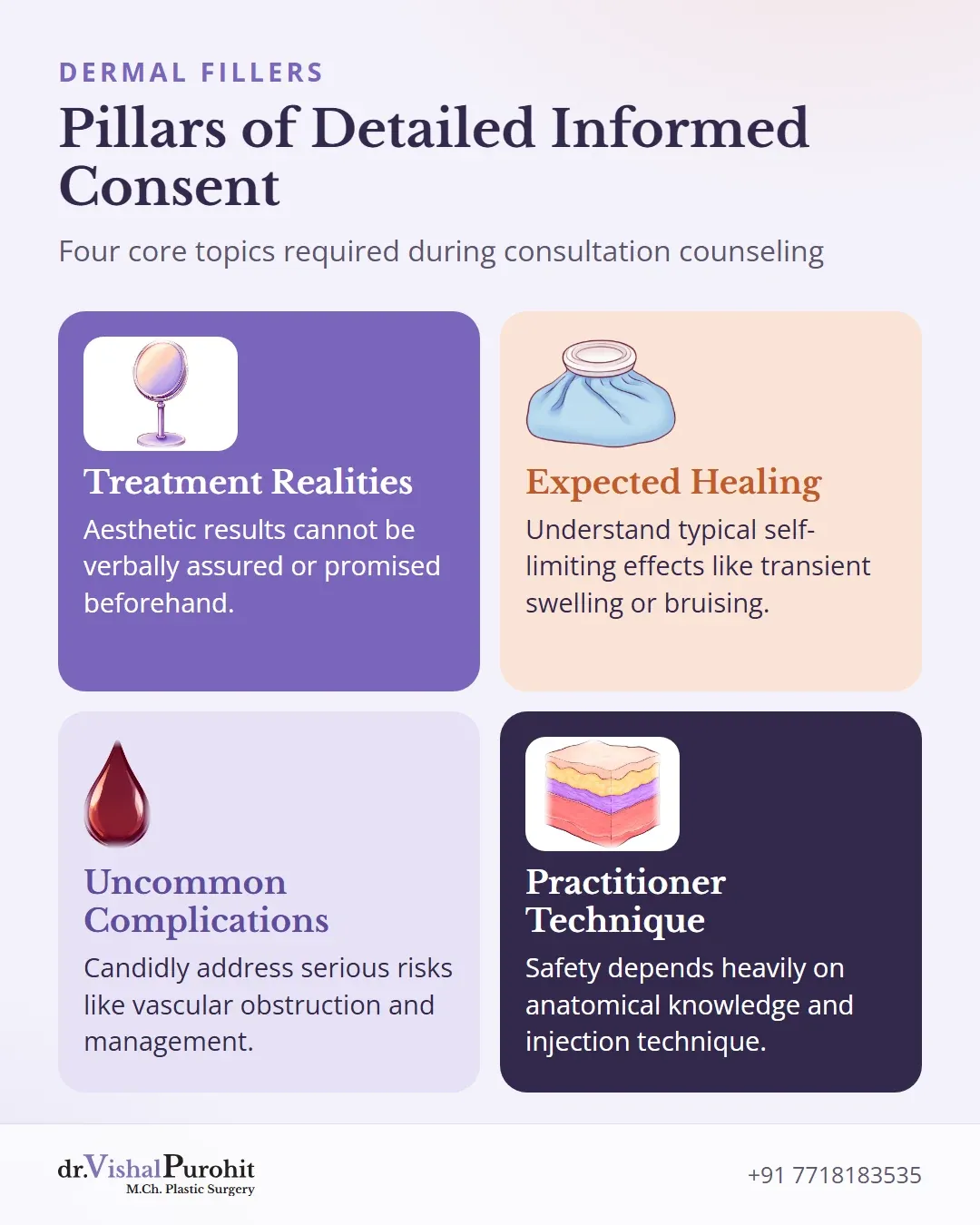
The consent process relies on both detailed verbal counseling and written documentation to ensure full understanding3:
Treatment Realities
Aesthetic results cannot be promised or verbally assured3. Managing expectations regarding subtle changes and potential asymmetry is an essential part of counseling356.
Emergency Protocols and Ongoing Follow-Up Access
When selecting an injector, verifying clinic preparedness for complications is critical. Hyaluronic acid dermal filler administration carries rare risks of vascular occlusion, tissue necrosis, and visual loss91011. Preparedness requires immediate on-site access to hyaluronidase to reverse complications, alongside clear referral pathways for urgent medical or ophthalmic evaluation912. Patients can ask at the consultation whether hyaluronidase is kept at hand.
Key points
- Confirming clinic readiness and on-site hyaluronidase access is vital when choosing a dermal filler injector.
- Responsible practitioners ensure patients have direct post-procedure contact details for follow-up support.
- Sudden severe pain, skin blanching, vision changes, or stroke-like symptoms demand immediate emergency evaluation.
A responsible practitioner provides clear post-procedure contact details rather than leaving patients without support913.
Urgent Warning Signs
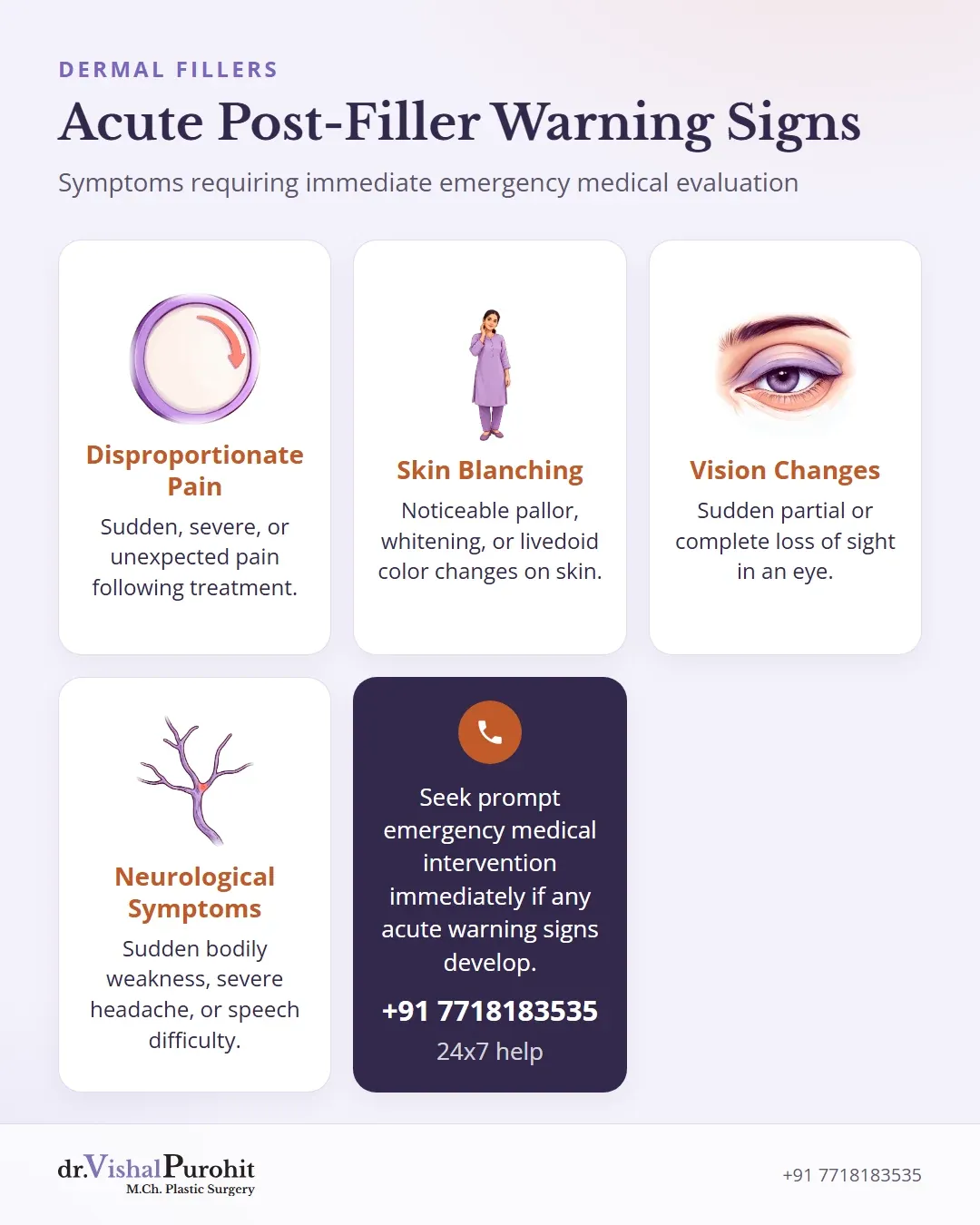
Mild swelling, tenderness, or bruising may occur after treatment13. However, certain acute signs require immediate emergency medical evaluation rather than delay:
- Sudden, severe, or disproportionate pain1114
- Skin blanching, pallor, or livedoid color changes9111214
- Sudden visual loss or vision changes91011
- Stroke-like symptoms such as weakness, headache, or speech difficulty9
If these symptoms arise, prompt medical intervention is essential to prevent permanent complications91114.
Honest Photographs and Realistic Clinical Claims
When evaluating clinical photographs, prospective patients should look for standard angles, uniform lighting, and unretouched outcomes. Modifying clinical photographs or digitally airbrushing imperfections is regarded by professional plastic surgery ethics standards as false and misleading advertising15. Reposting patient images that rely on digital filters or flattering selfie angles to distort surgical or aesthetic changes also breaches professional photographic ethics16.
Signs of Balanced Clinical Practice
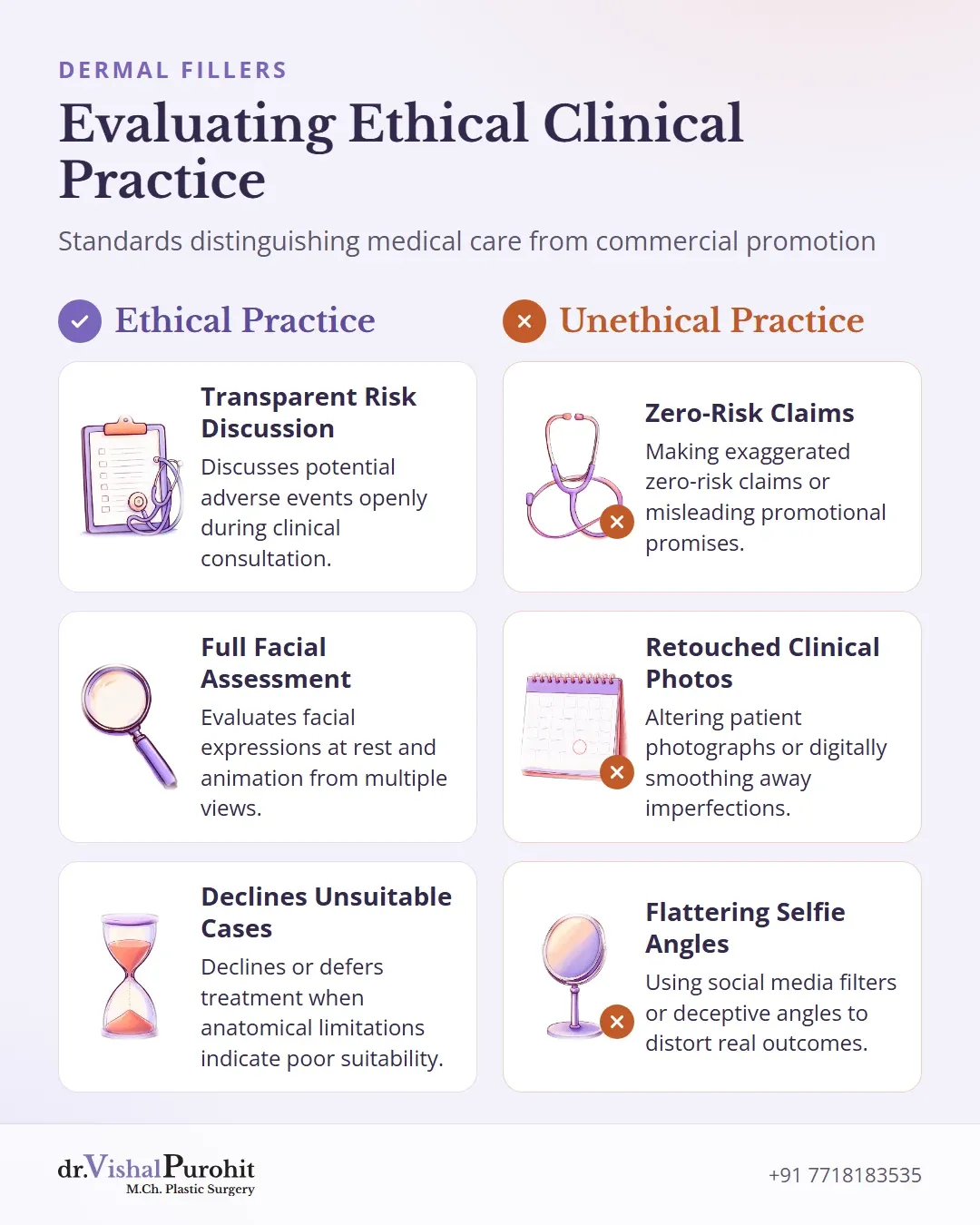
A dependable practitioner prioritizes medical safety over commercial promotion:
- Avoids hyperbolic zero-risk claims and discusses potential adverse events transparently during consultation4.
- Bases treatment on realistic clinical expectations, distinguishing what soft-tissue fillers can achieve from surgical options171819.
- Evaluates the face at rest and during animation from frontal and profile views20.
- Declines or defers elective procedures when anatomical limitations or screening indicate poor suitability1718.
Product Verification and Packaging Transparency
Patients have the right to inspect unopened, factory-sealed packaging before any injection begins. Healthcare regulatory agencies, including the US FDA, urge practitioners and patients to inspect all dermal filler packages carefully for authenticity21.
Supply Chain Safety and Counterfeit Risks
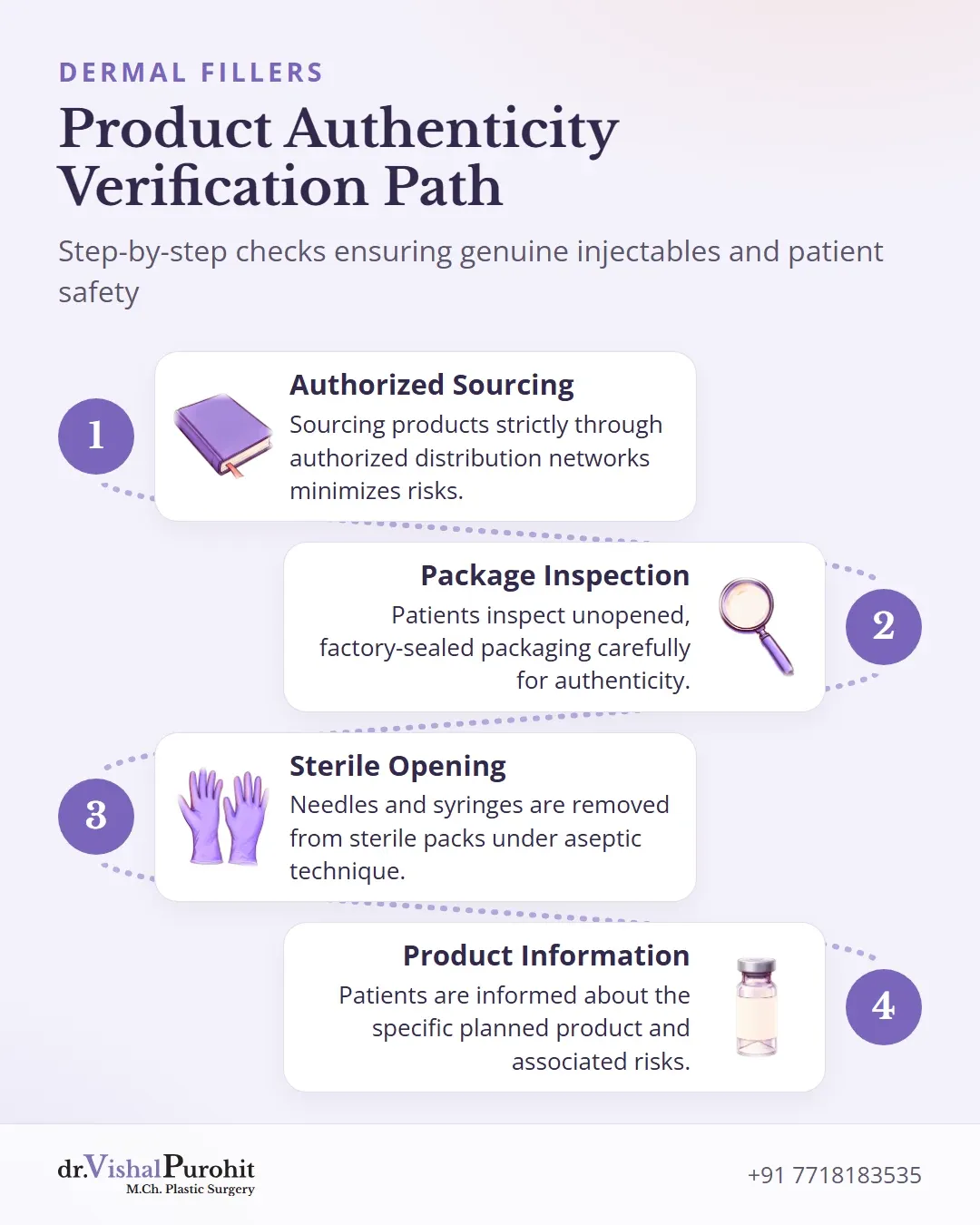
Confirming legitimate supply chains protects against compromised or counterfeit injectables:
- Sourcing authentic products through authorized distribution networks minimizes procedural risks1021.
- Regulatory authorities have issued warnings regarding counterfeit dermal fillers distributed outside authorized channels21.
- Needles and syringes should be safely removed from sterilized individual packaging under strict aseptic technique to reduce the risk of infection22.
- Patients should be thoroughly informed before injection about the specific product planned for use, as well as its associated risks21.
Detailed product verification and regulatory specifics are discussed in dedicated guides.
Consultations for Dermal Fillers in Jaipur
Selecting an injector requires verifying recognized medical qualifications, informed consent discussions, and clinic complication preparedness. Prospective patients considering Dermal Fillers in Jaipur can schedule an unhurried clinical evaluation to discuss suitability, realistic aesthetic expectations, and procedural considerations. Understanding treatment limits helps patients make sound medical decisions. For answers to common procedural questions and safety details, review the Dermal Fillers FAQs.
This is educational information, not medical advice.