
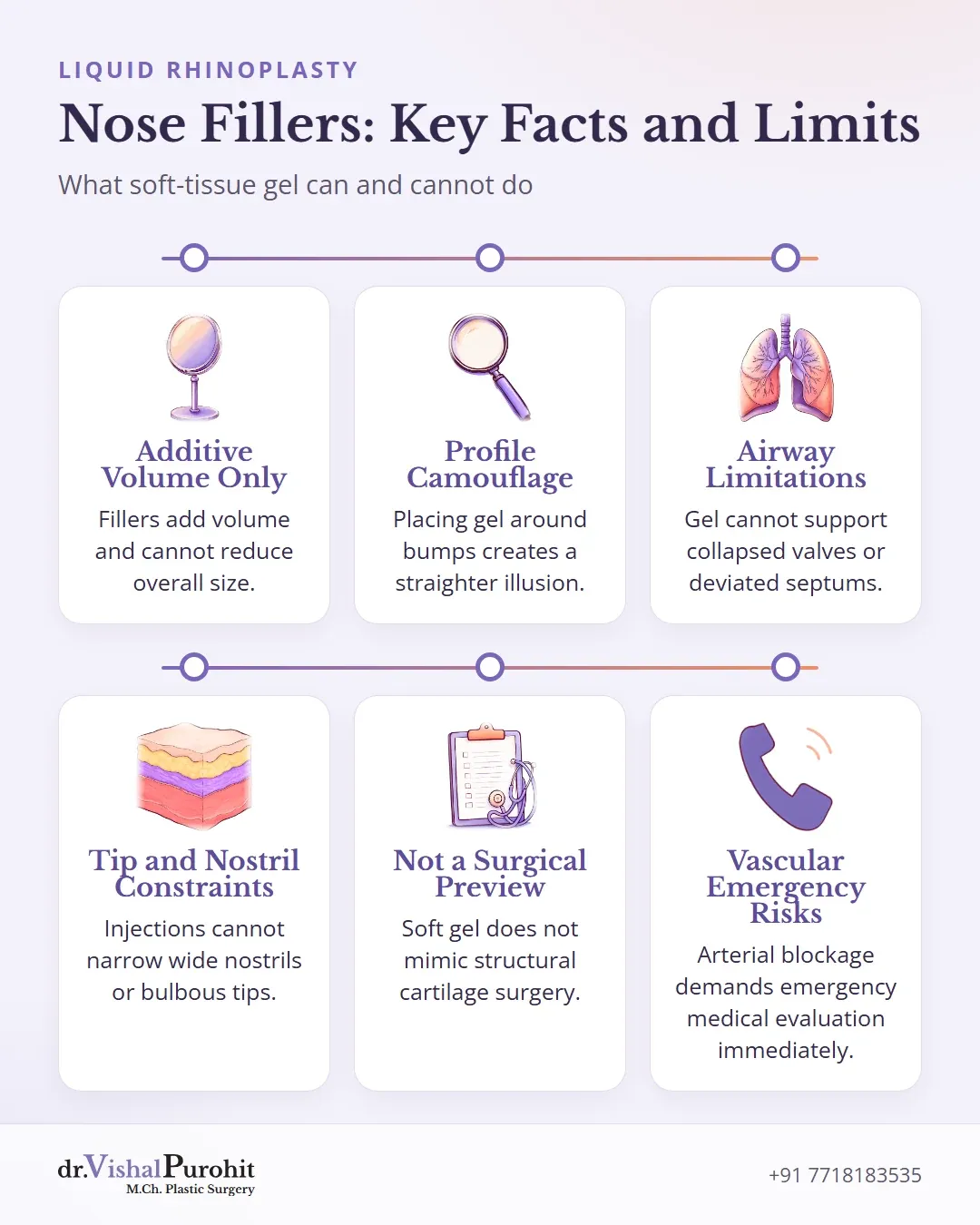
Dermal fillers alter facial contours by placing soft-tissue gel beneath the skin rather than removing underlying bone or cartilage. Because injectable filler is an additive substance, it cannot reduce the overall physical dimensions of the nasal framework.
Patients considering profile changes often ask whether non-surgical options can deliver a smaller appearance. During an evaluation, an injector assesses tissue proportions to clarify what filler can camouflage and where surgical techniques remain necessary.
Camouflage Versus Reducing Nasal Size
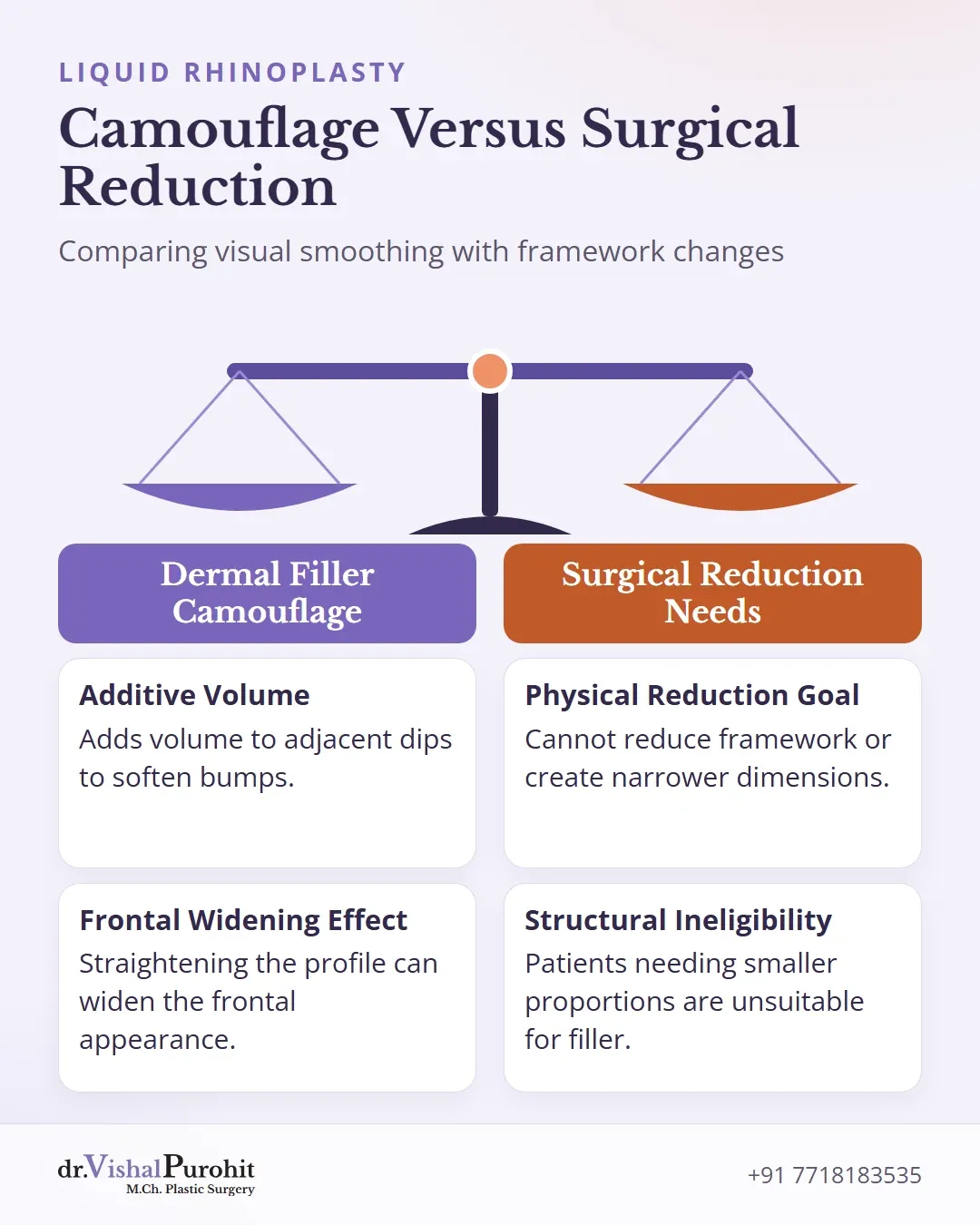
Liquid rhinoplasty relies entirely on adding physical volume rather than removing cartilage or bone12. Because dermal filler is additive rather than reductive, it cannot make a nose smaller or narrow the nasal framework12.
Instead, a dorsal hump is camouflaged by placing filler into adjacent depressions above and below the prominence134. This creates the visual illusion of a straighter dorsal profile, but it does so by elevating low areas and subtly expanding overall nasal dimensions135.
During an assessment, several clinical factors require careful balance:
Profile versus frontal view
Additive limits
Personal choice
- Undergoing an aesthetic injection is entirely optional
- Choosing no treatment remains a completely valid decision
At the consultation in Jaipur, Dr. Vishal Purohit evaluates both the profile and frontal contours to discuss whether camouflaging a contour irregularity aligns with realistic expectations.
Low Bridges and Surface Irregularities
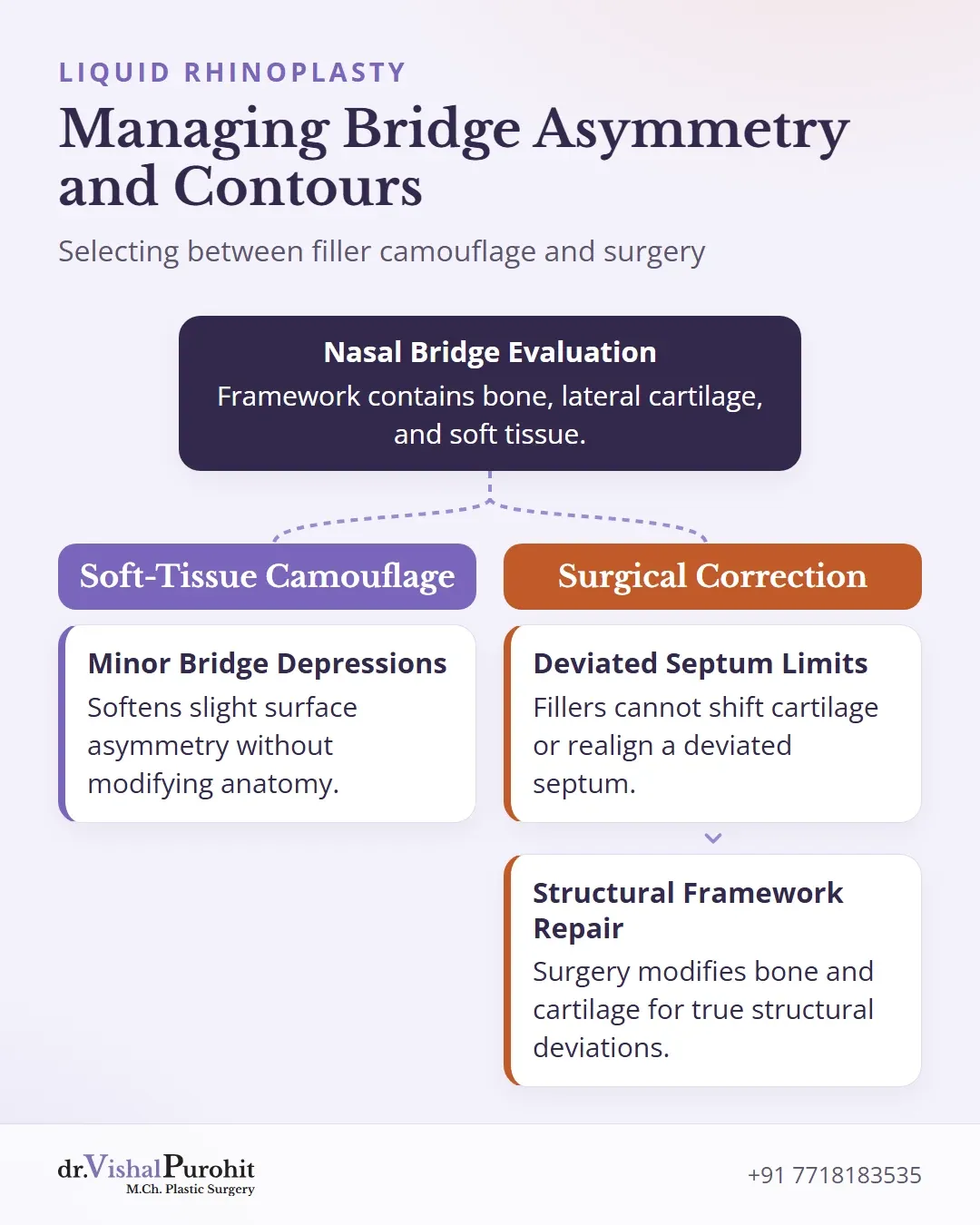
Minor bridge depressions or slight surface asymmetry can sometimes be softened by adding dermal filler to contour the area67. By placing filler above a depression or along the opposite side of a crooked bridge, an injector can camouflage minor irregularities without altering the underlying anatomy6.
However, soft-tissue fillers have strict anatomical limits:
- Structural boundaries: The nasal framework consists of bone and cartilage, including the nasal bones and lateral cartilages7.
- Internal alignment: Fillers add volume to soft tissue8; they cannot shift displaced cartilage, realign a deviated septum7, or reduce structural dimensions67. True structural deviations or significant asymmetries require surgical rhinoplasty rather than injectable contouring67.
Achieving realistic aesthetic goals requires an individualized assessment based on facial proportions and multi-angle evaluation rather than chasing an arbitrary ideal9. In cases involving deeper framework irregularities, surgery remains the definitive method to modify nasal bone and cartilage67.
Airway Obstruction and Structural Breathing Limits
Injectable dermal filler cannot unblock an obstructed airway, straighten a deviated septum, or repair internal nasal valve collapse. Dermal fillers place soft-tissue gel beneath the skin rather than providing rigid structural support.
Individuals presenting with functional airway concerns, severe deviations, or major structural deformities require referral for dedicated surgical evaluation rather than cosmetic camouflage2.
Structural Support Versus Soft-Tissue Gel
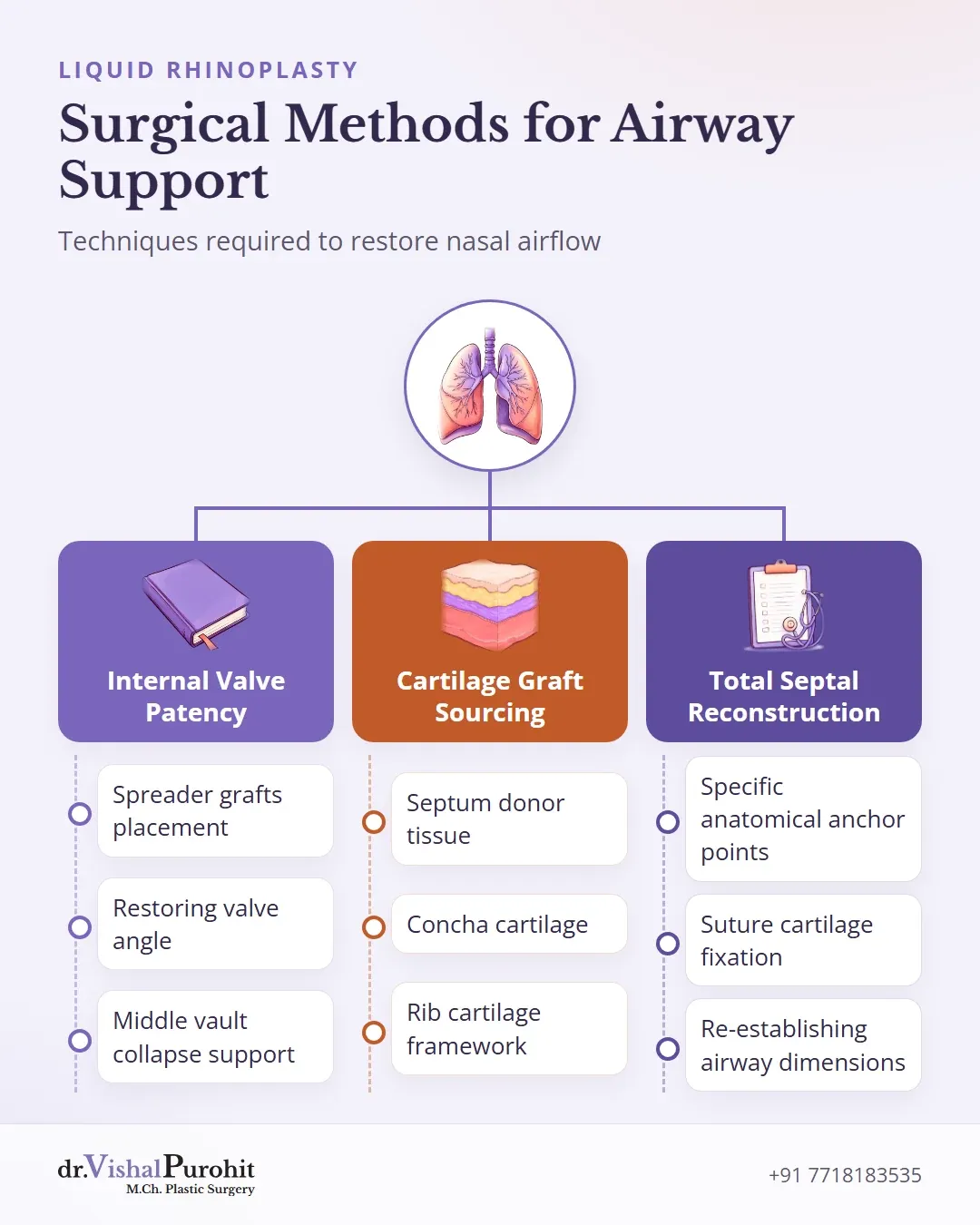
Restoring nasal airflow requires surgical cartilage support rather than gel placement:
- Separating the upper lateral cartilages from the septum and placing spreader grafts is used to maintain internal nasal valve patency, restore the valve angle, and support middle vault collapse10111213.
- Cartilage grafts harvested from the septum, concha, or rib provide the physical framework needed to rebuild collapsed structural architecture and open obstructed valves1112.
- Total septal reconstruction requires suturing cartilage at specific anatomical anchor points to re-establish adequate airway dimensions10.
Patients experiencing restricted nasal airflow or anatomical blockage need an in-person surgical assessment to address the underlying skeletal and cartilaginous causes.
Tip Projection Nostril Width and Indian Anatomy
Dermal filler cannot remove bulbous tissue, narrow wide nostrils, or reliably lift a severely plunging tip14. Injected product adds volume rather than subtracting structure. Direct filler placement into the nasal lobule should be avoided in a bulbous tip, as it adds unnecessary bulk14.
Anatomical Limits of Filler
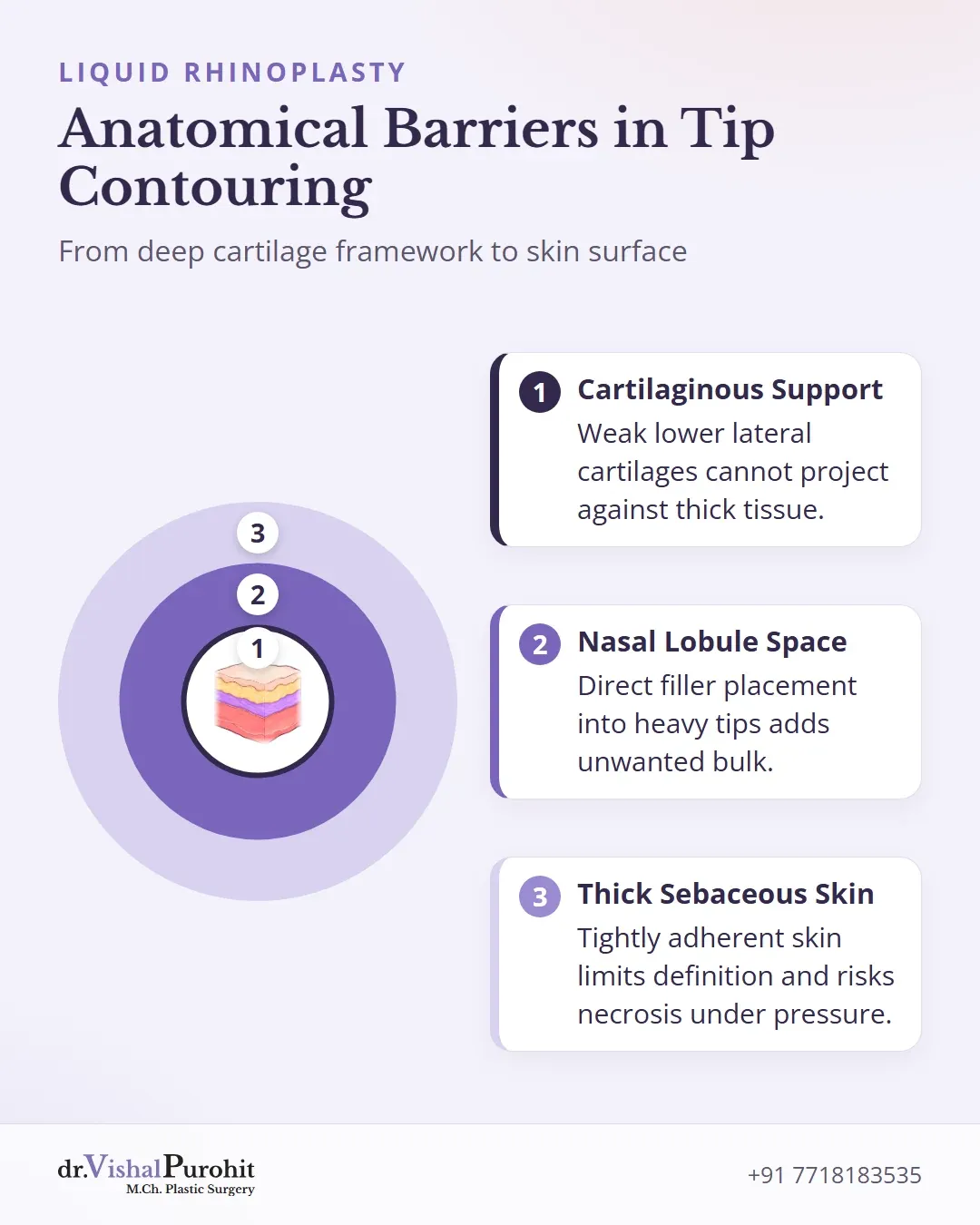
In thick nasal skin, defining subtle structural shifts remains difficult1516.
- Thick, sebaceous skin: Tightly adherent soft tissue over the nasal tip limits sharp visual definition and fails to drape tightly over underlying framework changes151617. Adding product into an already heavy tip can increase broadness rather than sharpen it1417.
- Cartilaginous framework: Soft or weak lower lateral cartilages cannot provide rigid projection against a thick soft-tissue envelope1415.
Injecting excessive product to force projection into a tight nasal tip increases tissue pressure and creates a risk of skin necrosis17. When patients desire substantial tip narrowing, structural reshaping, or alar reduction, a formal surgical consultation is appropriate rather than repeated filler treatments1415.
Why Filler Is Not a Surgical Preview
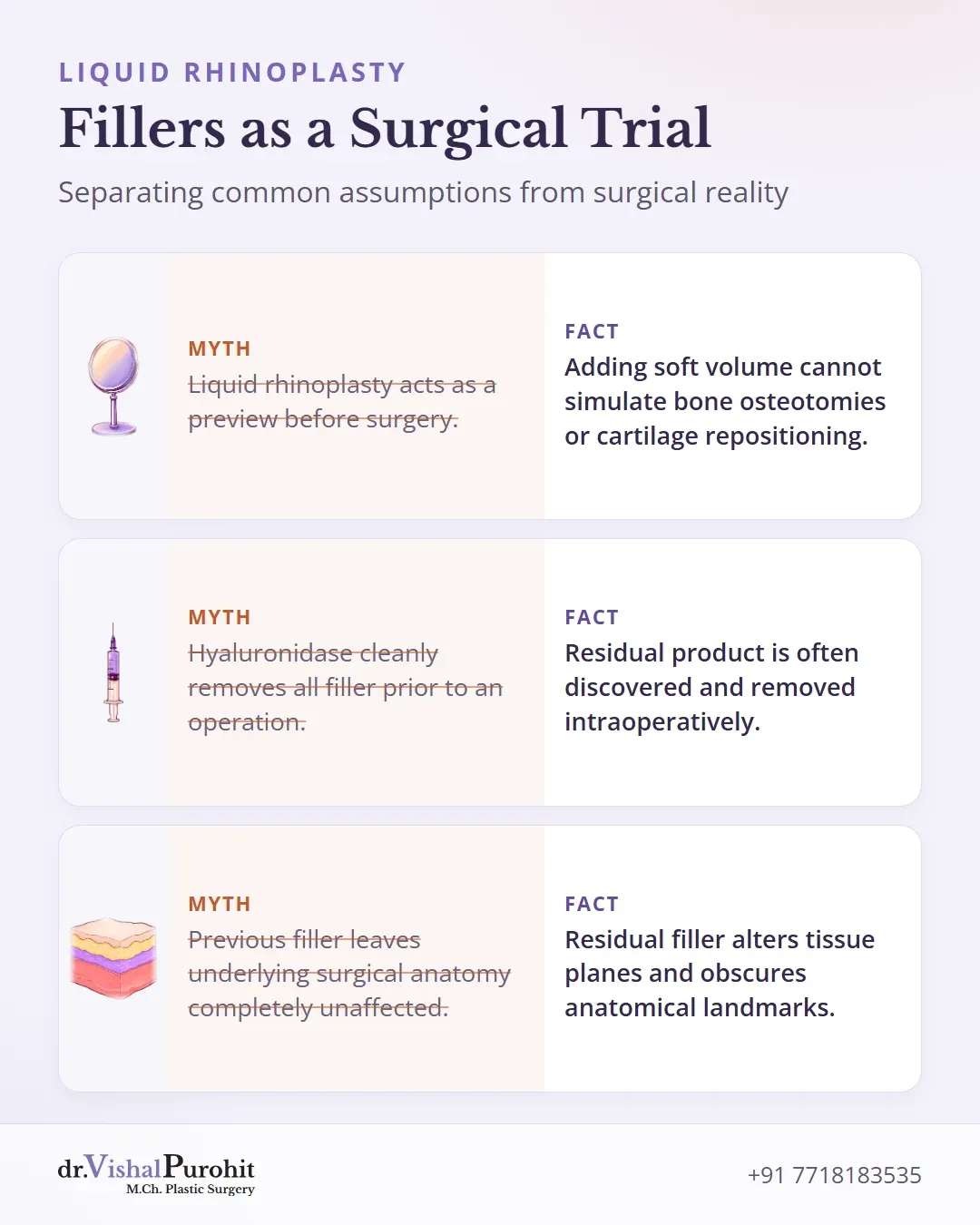
Temporary dermal filler adds volume under the skin18. It cannot accurately simulate structural surgical changes such as reductive rhinoplasty, bone osteotomies, or cartilage repositioning.
Although liquid rhinoplasty is sometimes considered by patients wishing to evaluate nasal changes before an operation19, residual hyaluronic acid filler can alter the tissue plane. In surgical preparation, clinicians may dissolve filler with hyaluronidase beforehand, such as three months prior to surgery20. However, residual product is often still found intraoperatively and removed directly during the operation20. Residual filler can obscure anatomical landmarks during future surgical planning.
For safe operative evaluation, any previous rhinoplasty, nasal trauma, or past filler must be fully disclosed alongside previous surgical records.
Critical Vascular Risks and Informed Consent
Liquid rhinoplasty carries rare but severe circulatory hazards. Facial vessels connect directly with the ophthalmic circulation, meaning accidental entry of dermal filler into an arterial lumen can allow material to travel into the ophthalmic artery2122. This vascular occlusion can lead to skin necrosis or permanent, irreversible blindness2122.
Key points
- Accidental filler injection into facial vessels can cause skin necrosis or permanent blindness.
- Warning signs like sudden severe pain, skin blanching, or vision changes require emergency medical evaluation.
- Hyaluronic acid fillers can be treated with emergency hyaluronidase intervention if vascular compromise occurs.
While advanced surgical training and anatomical knowledge reduce avoidable technical errors, they cannot eliminate individual anatomical hazard. Specific procedural details and safety precautions for each patient are decided at the consultation.
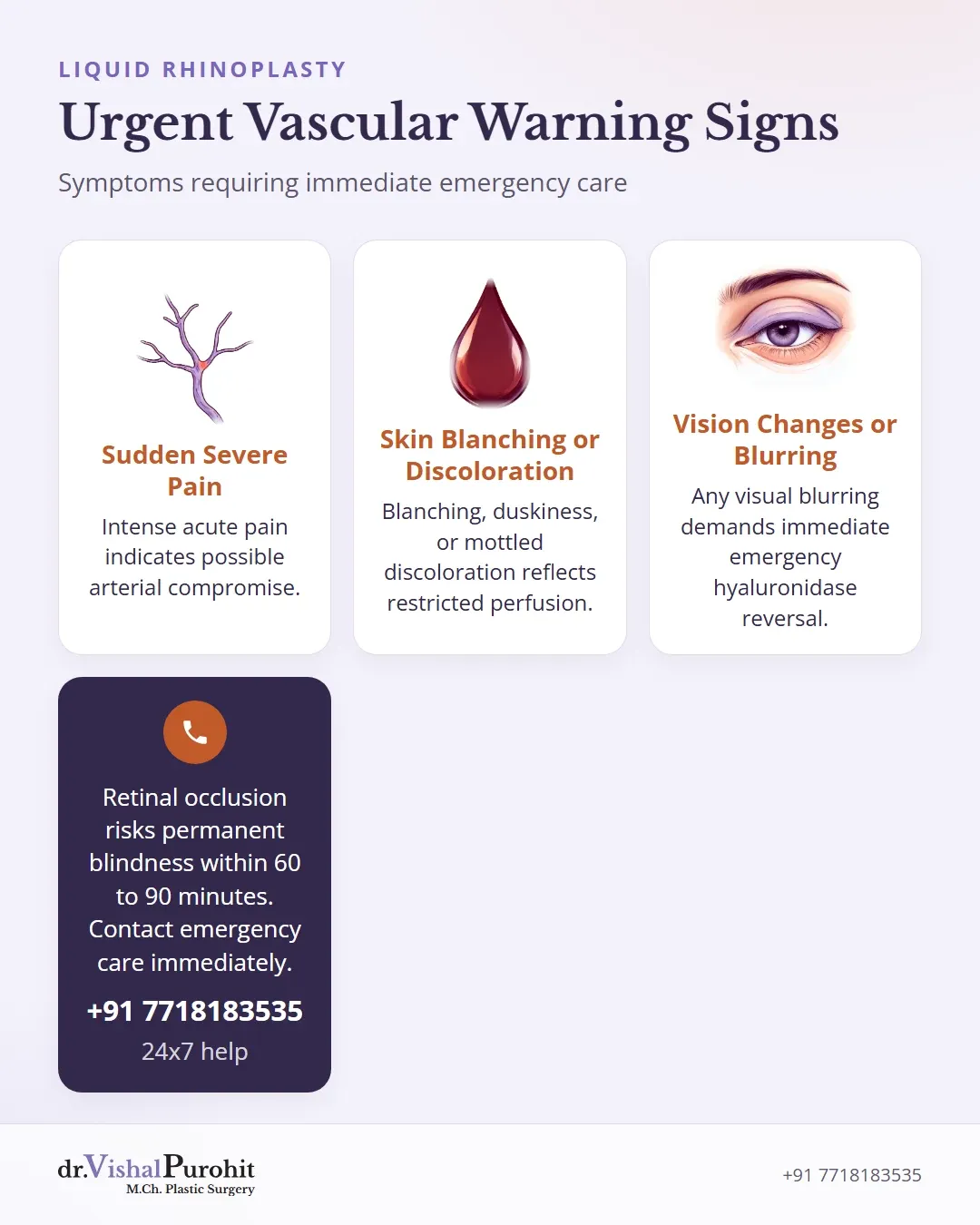
Certain symptoms indicate compromised blood flow and demand immediate emergency medical evaluation rather than waiting for routine review:
- Sudden severe pain21
- Skin blanching, duskiness, or mottled discoloration23
- Any vision change, such as blurring or visual loss21
If hyaluronic acid filler is used, emergency intervention with hyaluronidase is indicated to help address vascular compromise2324. Because retinal artery occlusion can cause permanent blindness within 60 to 90 minutes21, immediate medical assessment is vital when any warning sign appears. Informed consent requires understanding these vascular realities before proceeding.
Nasal Assessment and Consultations in Jaipur
Undergoing an aesthetic nasal injection is always a personal choice, and choosing no treatment remains a valid path. For individuals considering subtle profile camouflage, exploring Liquid Rhinoplasty in Jaipur provides guidance on anatomical possibilities and procedural limits. Reviewing Liquid Rhinoplasty FAQs helps clarify how additive soft-tissue gel functions before scheduling an in-person clinical assessment.
This is educational information, not medical advice.