
TUE - SUN: 11:00 AM – 07:00 PM

Aesthetic & Reconstructive Surgery

Bruxism & Teeth Grinding Botox Treatment in Jaipur

Bruxism & Teeth Grinding Botox Treatment in Jaipur - Dr. Vishal Purohit Plastic Surgeon Jaipur11+ Years of Surgical Experience

Easing Jaw Muscle Tension and Clenching Discomfort Alongside Dental Care

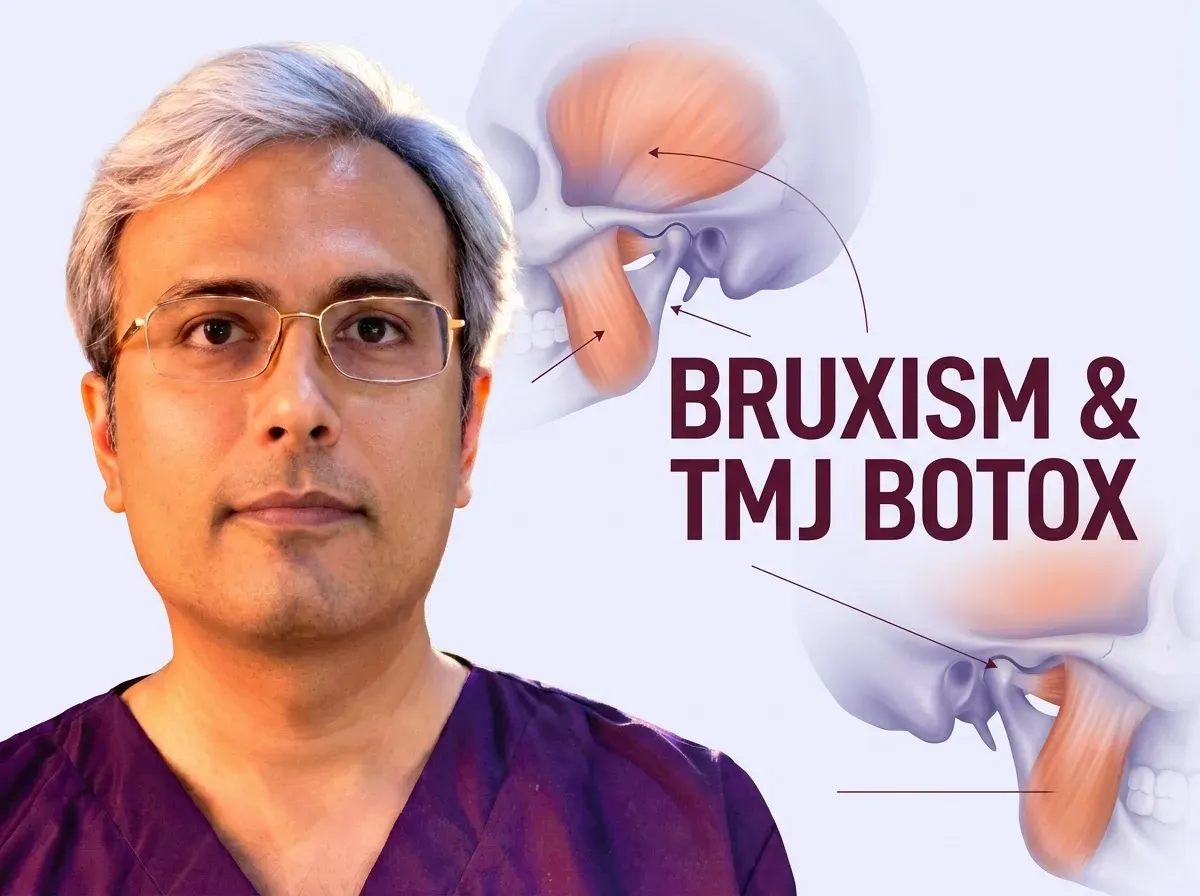
Botox temporarily relaxes hyperactive masseter muscles behind severe clenching and grinding. Dr. Vishal Purohit, M.Ch. plastic surgeon, assesses jaw symptoms, chewing function and dental history first, explaining what treatment can and cannot achieve.

View clinic timings and contact details →
  • M.Ch Plastic Surgeon · RMC Reg. 28041/14185
  • Day-care / short-stay procedure
  • Tonk Road, Jaipur
  • Jump to FAQs

Treatment Time

A short clinic visit

Anesthesia

Comfort options discussed at the visit

Downtime

Usually little; precautions explained

Results Onset

Over days; full effect in about 2 weeks (studies)

Duration

Usually a few months (studies)

Setting

Clinic visit, home the same day

Functional Relief • Anatomical Reality

Why Bruxism Botox Requires Precision Medical Care

Bruxism involves repetitive jaw muscle contractions through clenching, grinding, or bracing. It can happen during sleep or waking hours, putting heavy pressure on teeth, dental restorations, and the jaw joints. Symptoms often include morning jaw ache, temple tightness, and tired chewing muscles.

Biological / Muscular Vector

Injections of botulinum toxin type A into the masseter muscles temporarily reduce excessive contraction force, which can ease muscular pain and morning tightness. However, relaxing the chewing muscles does not change central neurological triggers, nor does it replace protective dental night guards.

Aesthetic Frustration

Patients often feel their resting face conveys fatigue, stress, severity, or premature aging that does not reflect how energetic they truly feel inside.

Why Assessment Comes First

Product, amount and depth are planned for each face. A heavy brow, a droopy eyelid, an uneven smile or a problem with a blood vessel are known risks that careful assessment aims to reduce.

Biological Action

Botulinum toxin type A blocks the release of acetylcholine at the neuromuscular junction, temporarily decreasing contraction intensity in overactive masseter muscles. Over several months, peripheral nerve endings recover and baseline muscle activity gradually returns.

Dr. Vishal Purohit - M.Ch Plastic & Cosmetic Surgeon Jaipur

Dr. Vishal Purohit

M.Ch Plastic & Cosmetic Surgeon

✓

Credential Level

M.Ch Super-Specialty

RMC Reg. 28041/14185

Your Treatment Guide

Anatomy First, Honest Advice

"Masseter injections require careful evaluation of facial anatomy, chewing function, and lower-face balance. As an M.Ch. plastic surgeon, Dr. Vishal Purohit assesses jaw muscles alongside bite dynamics, explaining potential side effects such as chewing fatigue or subtle contour changes honestly."

— Dr. Vishal Purohit

1

M.Ch Plastic & Reconstructive Surgery, SMS Medical College, Jaipur

India's super-specialty degree in plastic surgery, with detailed training in facial muscles, nerves and blood vessels.

2

11+ Years as a Plastic Surgeon

A focus on natural, proportionate results that still look like you.

3

Assessment Before Any Injection

Dr. Vishal Purohit assesses your face in person, explains what treatment can and cannot change, and says when another option would help more.

Simple & Transparent

Your 3-Step Treatment Plan

A clear pathway: an assessment first, treatment only if it suits you, and a review afterwards.

1

Assessment

Dr. Purohit palpates the masseter muscles, checks jaw movement and bite comfort, and reviews your dental history and medications.

Step 1: Planning
2

Treatment Visit

If treatment is appropriate, the product, plan, and consent are explained, and injections are administered in the clinic.

Step 2: Treatment
3

Settling and Review

Muscular relaxation develops over subsequent days. A follow-up plan is discussed, and warning signs are reviewed before you leave.

Step 3: Review
Assessment and Method

Clinical Science and Methodology for Bruxism Botox

Bruxism involves repetitive jaw muscle contractions through clenching, grinding, or bracing. It can happen during sleep or waking hours, putting heavy pressure on teeth, dental restorations, and the jaw joints. Symptoms often include morning jaw ache, temple tightness, and tired chewing muscles. Injections of botulinum toxin type A into the masseter muscles temporarily reduce excessive contraction force, which can ease muscular pain and morning tightness. However, relaxing the chewing muscles does not change central neurological triggers, nor does it replace protective dental night guards. Dr. Vishal Purohit conducts a thorough clinical assessment to separate muscular strain from joint derangement or primary dental issues. Because mild clenching without tissue harm may need only observation, choosing conservative dental care or no injection treatment is always a valid option.

Planned for Your Face

Individual Assessment

The plan follows your own muscle movement, skin and facial structure, looked at in person.

A Named, Sealed Product

Know What Is Used

You are told which product is used. Products differ, and their doses are not interchangeable.

Care Around Vessels and Nerves

Anatomy First

Technique is chosen with facial vessels and nerves in mind. Bruising and rarer side effects are explained before treatment.

Candidate Indicators and Focus Points

Adults experiencing persistent jaw muscle soreness, morning tension, or temple tightness from clenching.

Clinical Indication

People whose dentists recommend jaw muscle relaxation alongside protective dental night guards.

Clinical Indication

Individuals whose symptoms stem primarily from muscular hyperactivity rather than mechanical joint locking.

Clinical Indication

People seeking realistic functional symptom relief while keeping regular dental care in place.

Clinical Indication

Clinical Guide & In-Depth Information

Comprehensive Medical Overview

Detailed procedural analysis, anatomical considerations, and patient guidelines by Dr. Vishal Purohit.

Understanding Awake Clenching and Night Grinding Patterns
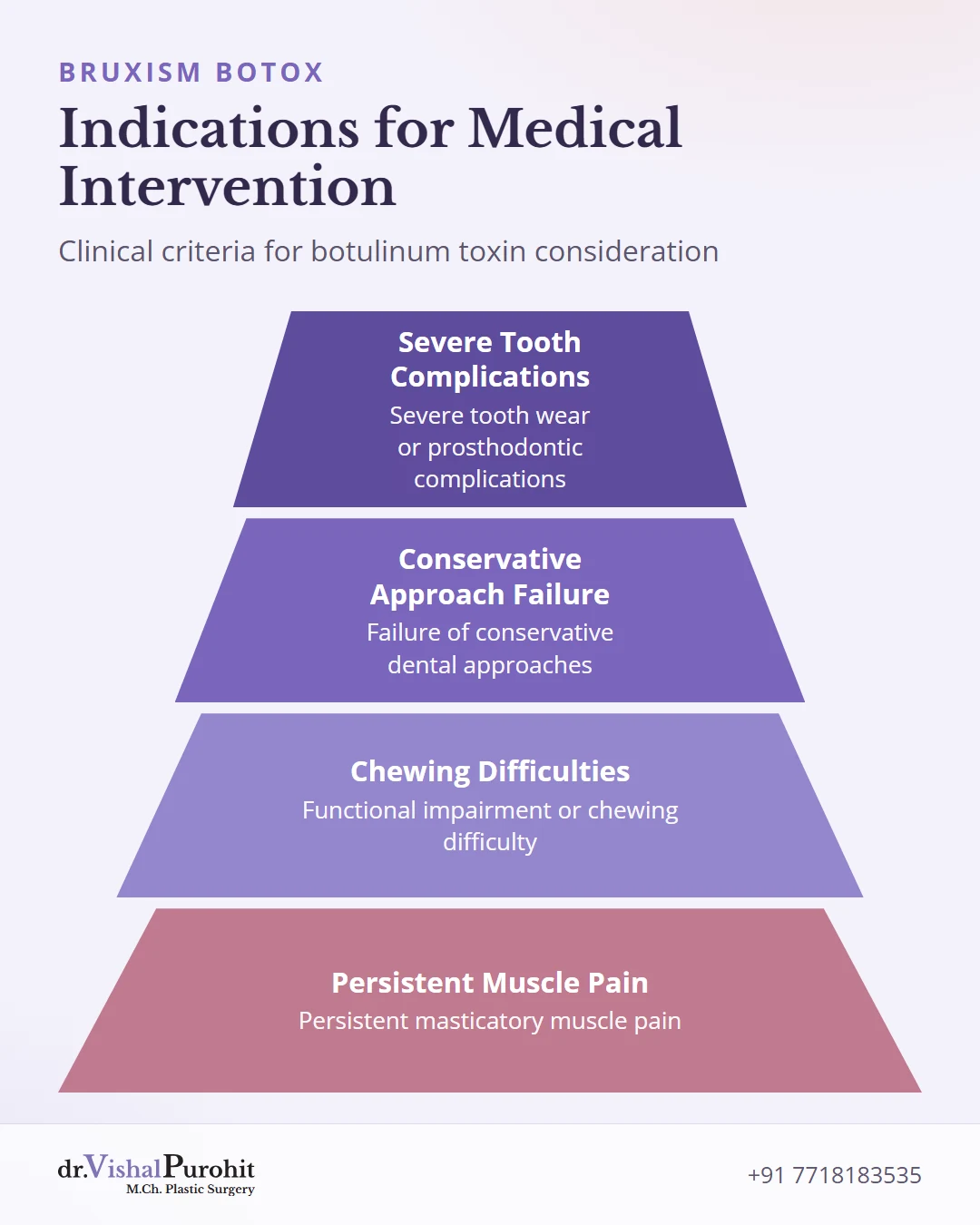
Pyramid showing clinical indications for jaw muscle intervention from persistent pain to severe tooth complications

Bruxism involves repetitive jaw muscle activity through clenching, grinding, bracing, or thrusting. Distinguishing between daytime habits and nocturnal muscle contractions helps guide appropriate clinical care alongside dental evaluations.

Recognizing the difference between why daytime clenching and night grinding differ is essential because muscle activity during wakefulness often links to psychosocial stress, whereas sleep grinding is considered a sleep-related movement disorder.

Studies indicate that medical interventions like botulinum toxin type A target clinically relevant consequences rather than bruxism activity alone. Indications include:

  • Persistent masticatory muscle pain
  • Muscle hypertrophy
  • Functional impairment or chewing difficulty
  • Severe tooth wear or prosthodontic complications
  • Failure of conservative dental approaches

When muscle contractions cause no symptoms or tissue harm, choosing no treatment remains a valid option. A clinician may recommend periodic dental monitoring instead of procedural intervention. Practical details such as product selection, numbing, pricing, onset, duration, and aftercare rules are explained at the consultation.

Clinical Assessment for Jaw Pain and Tooth Wear
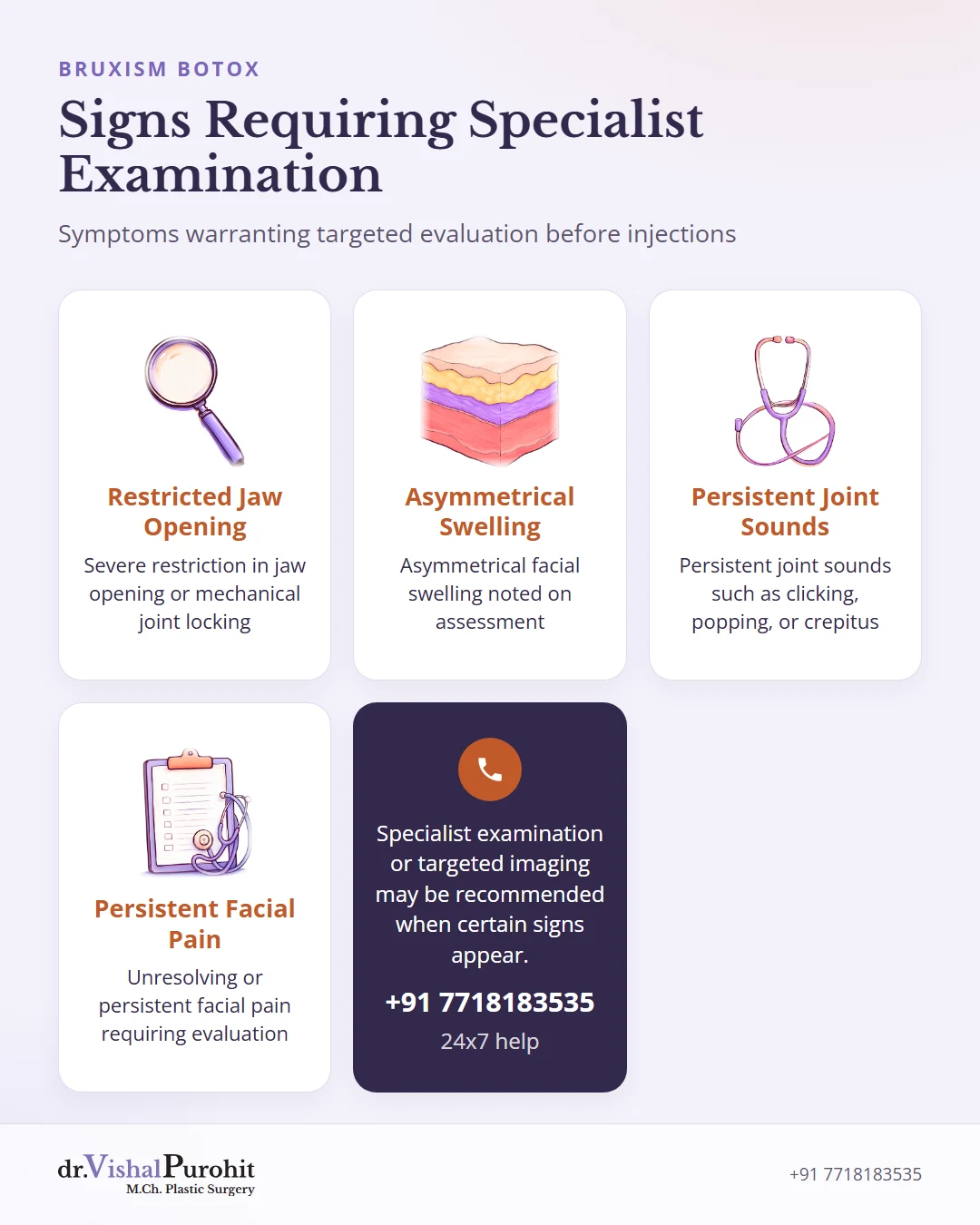
Warning signs requiring specialist examination before jaw muscle treatment

Jaw tightness, dental wear, and morning headaches require careful evaluation before planning any treatment. An examination helps confirm whether symptoms stem from tooth issues, mechanical jaw joint concerns, or muscle tension.

Before considering muscle-relaxing injections, a the dental and jaw checks before treatment helps differentiate muscular hyperactivity from dental decay, joint disorders, or sleep-related breathing conditions.

Specialist examination or targeted imaging may be recommended when certain signs appear:

  • Severe restriction in jaw opening or mechanical joint locking
  • Asymmetrical facial swelling
  • Persistent joint sounds such as clicking, popping, or crepitus
  • Unresolving or persistent facial pain

Comparing Night Guards and Habit Changes Before Injections
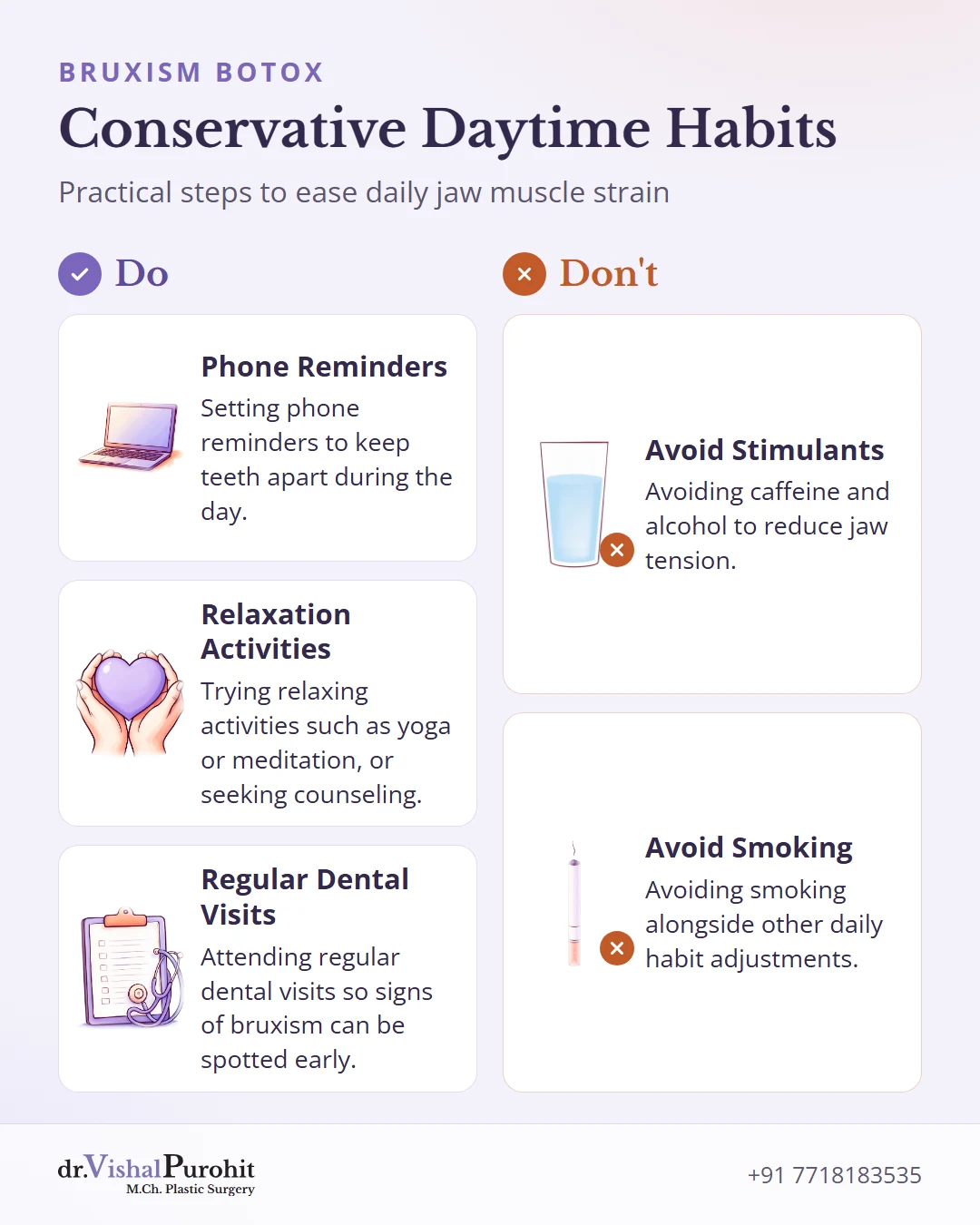
Checklist of daily dos and donts to manage daytime clenching habits

Teeth grinding and clenching can wear down enamel, cause fractures, and lead to persistent jaw muscle discomfort. Before considering medical procedures, conservative steps help protect the teeth and address daily muscle strain. Choosing no injection treatment is always a valid option, and mild cases may not require any treatment at all.

A custom night guard acts as a physical barrier between the dental arches. Made by a dentist to cover all teeth on one arch, it absorbs biting forces to prevent fractures and wear. Studies report that oral splints do not necessarily stop central grinding activity, but they prevent tooth damage during sleep.

Daytime clenching often improves through habit awareness, relaxation activities, and lifestyle adjustments. Patient guidance suggests simple daily habits:

  • Setting phone reminders to keep teeth apart during the day.
  • Trying relaxing activities such as yoga or meditation, or seeking counseling.
  • Avoiding caffeine and alcohol, and avoiding smoking.
  • Attending regular dental visits so signs of bruxism can be spotted early.

Patients comparing dental splints and lifestyle steps can read about night guards, habit changes, and jaw muscle injections to understand how different approaches interact.

Relaxing the masseter muscles with injections can temporarily ease muscle tension and reduce contraction intensity. However, direct evidence that injections prevent tooth fracture or prosthetic failure is lacking. Injections do not replace a prescribed dental appliance, and Dr. Vishal Purohit offers them strictly as a non-surgical treatment alongside regular dental care.

Aftercare and Monitoring Chewing Weakness or Jaw Changes
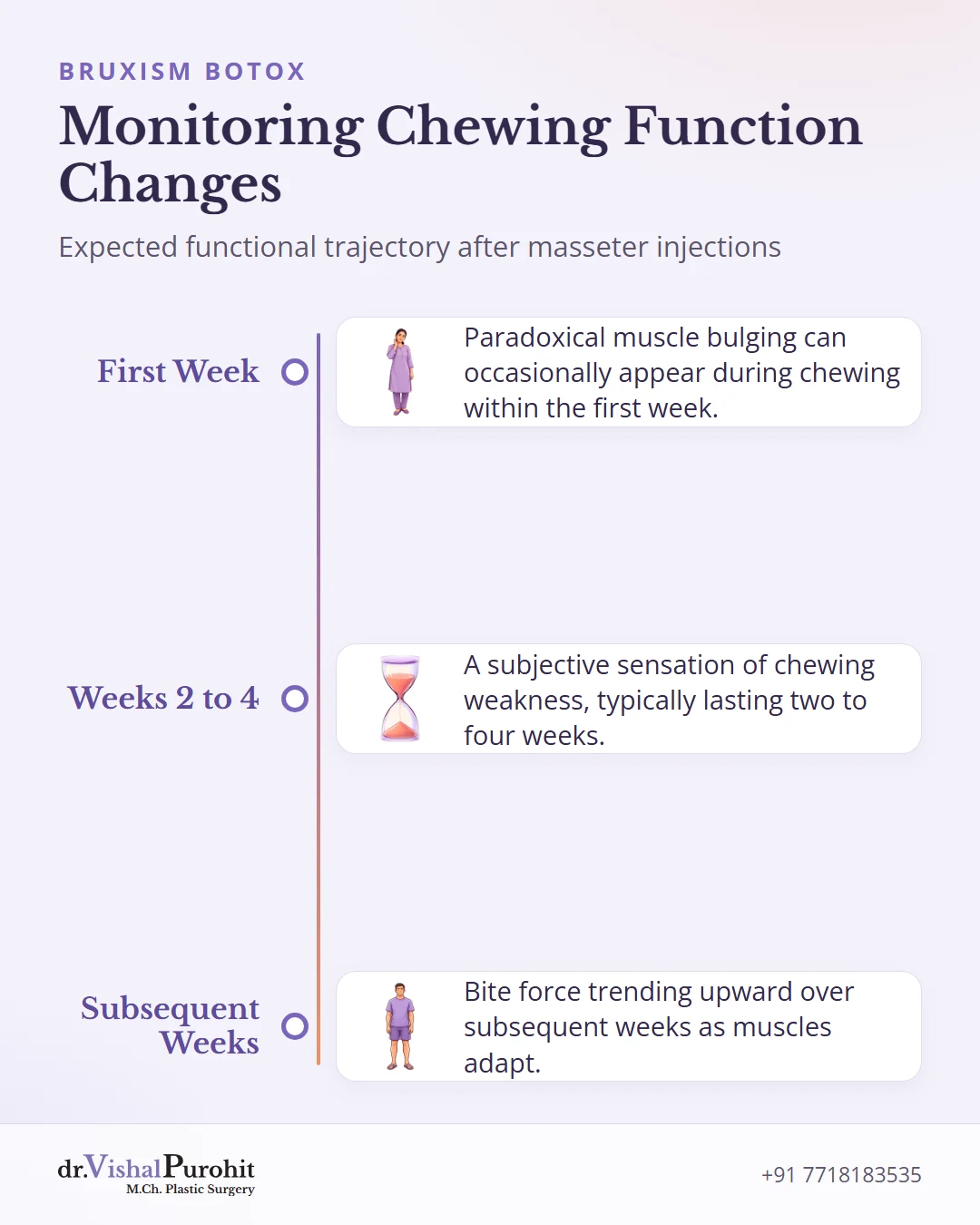
Timeline illustrating temporary chewing weakness and bite recovery following jaw injections

Care after botulinum toxin injections for teeth grinding focuses on monitoring muscle relaxation while protecting normal daily function. Specific aftercare rules and dietary modifications are explained at the consultation rather than fixed in advance.

Injections lower clenching tension in the masseter muscles, but reducing their strength can lead to temporary mealtime fatigue or bite changes. Patients can learn about managing chewing weakness and lower-face shape changes after jaw Botox to understand these functional trade-offs before proceeding with care.

Clinical studies report several temporary effects following treatment:

  • A subjective sensation of chewing weakness, typically lasting two to four weeks.
  • Early mealtime tiredness when chewing firm foods, with bite force trending upward over subsequent weeks.
  • Mild, localized reactions such as temporary bruising, tenderness, or edema at the injection site.

Studies also note possible lower-face contour adjustments, such as cheek hollowing or visible jowl sagging in individuals with loose skin. Paradoxical muscle bulging can occasionally appear during chewing within the first week or initial four weeks. Any unusual bulge warrants clinician review to assess the muscle layers.

If any trouble breathing, swallowing, or speaking develops after toxin treatment, seek emergency care at once.

Treatment Results, Limitations and Repeat Session Bone Health
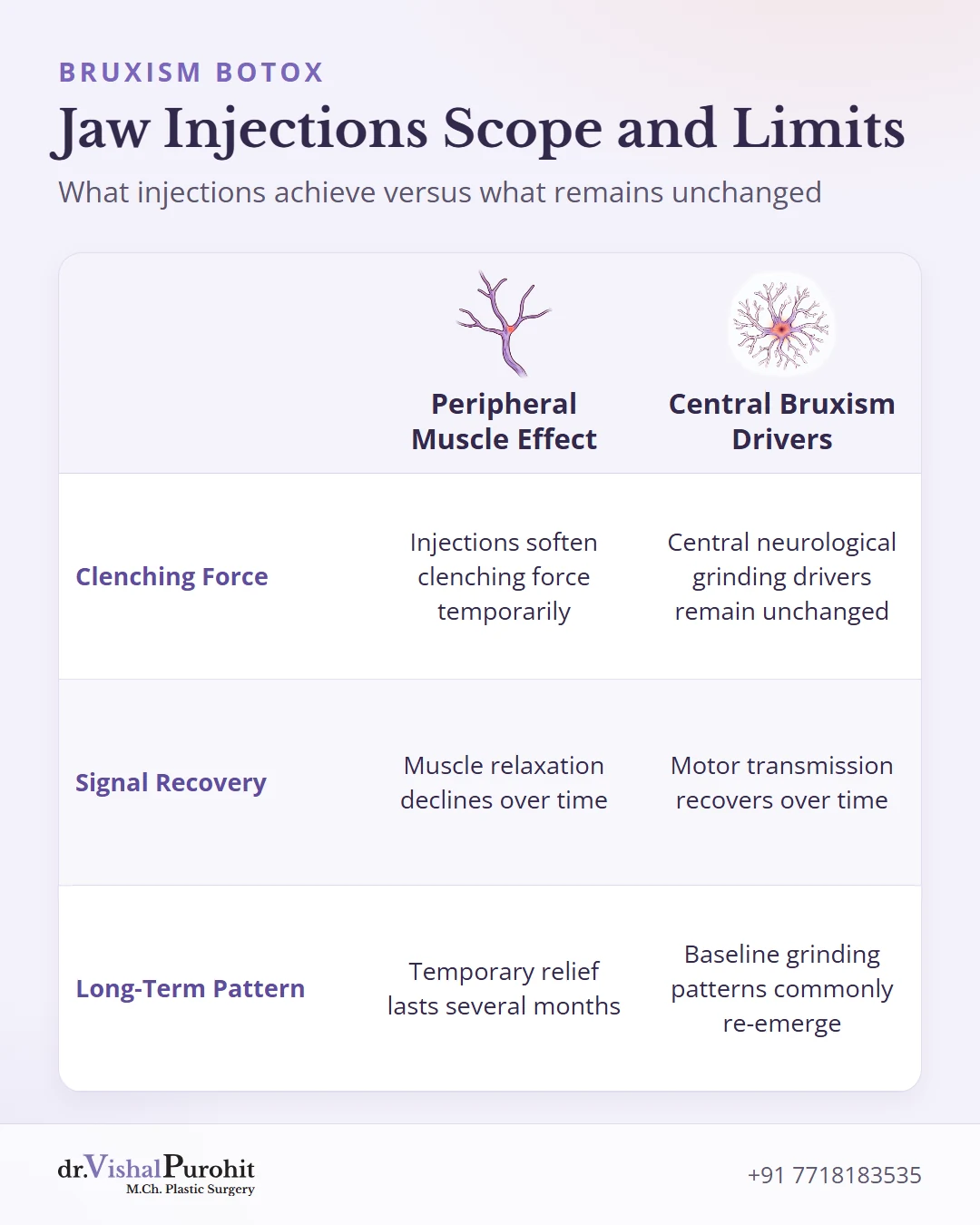
Matrix comparing muscle relaxation effects with central neurological grinding drivers

Adults considering jaw injections often look for clear facts on expected relief, treatment limits, and how chewing muscles respond over time. Knowing how injections interact with jaw function supports realistic expectations alongside dental care.

Injections temporarily limit muscle contraction by blocking chemical signals at nerve terminals, but studies report that relief lasts several months before gradually declining. Reviewing clinical evidence reveals key boundaries:

  • Injections soften clenching force without changing central neurological grinding drivers.
  • Clinical trials report that functional muscle relaxation gradually declines as nerve signals recover.
  • Subjective pain scores do not always correlate directly with electromyographic muscle activity.
  • Baseline grinding patterns commonly re-emerge as motor transmission recovers over time.

Understanding how the neurotoxin acts on peripheral motor endplates helps clarify whether botox cures bruxism and its evidence limitations. In clinical practice, Dr.

Because chewing muscles pull directly on bone attachments, reduced functional loading has led researchers to use computed tomography scans to evaluate bone remodeling. Reported imaging variations in small studies include:

  • Decreased bone volume at muscle attachment areas
  • Reduced cortical thickness in limited study cohorts
  • Decreased cortical and trabecular bone density

Systematic reviews note this imaging evidence is very low quality, and scans show structural remodeling rather than fractures, joint breakdown, or clinical harm. You can examine research on what repeat treatment may mean for the jaw bone before deciding on ongoing care.

At Dr. Vishal Purohit's practice, specific injection plans, review visits, and treatment schedules are decided at the consultation. Any sudden trouble breathing, swallowing, speaking, or general weakness requires emergency care at once.

Bruxism Botox Cost in Jaipur: Product and Consent
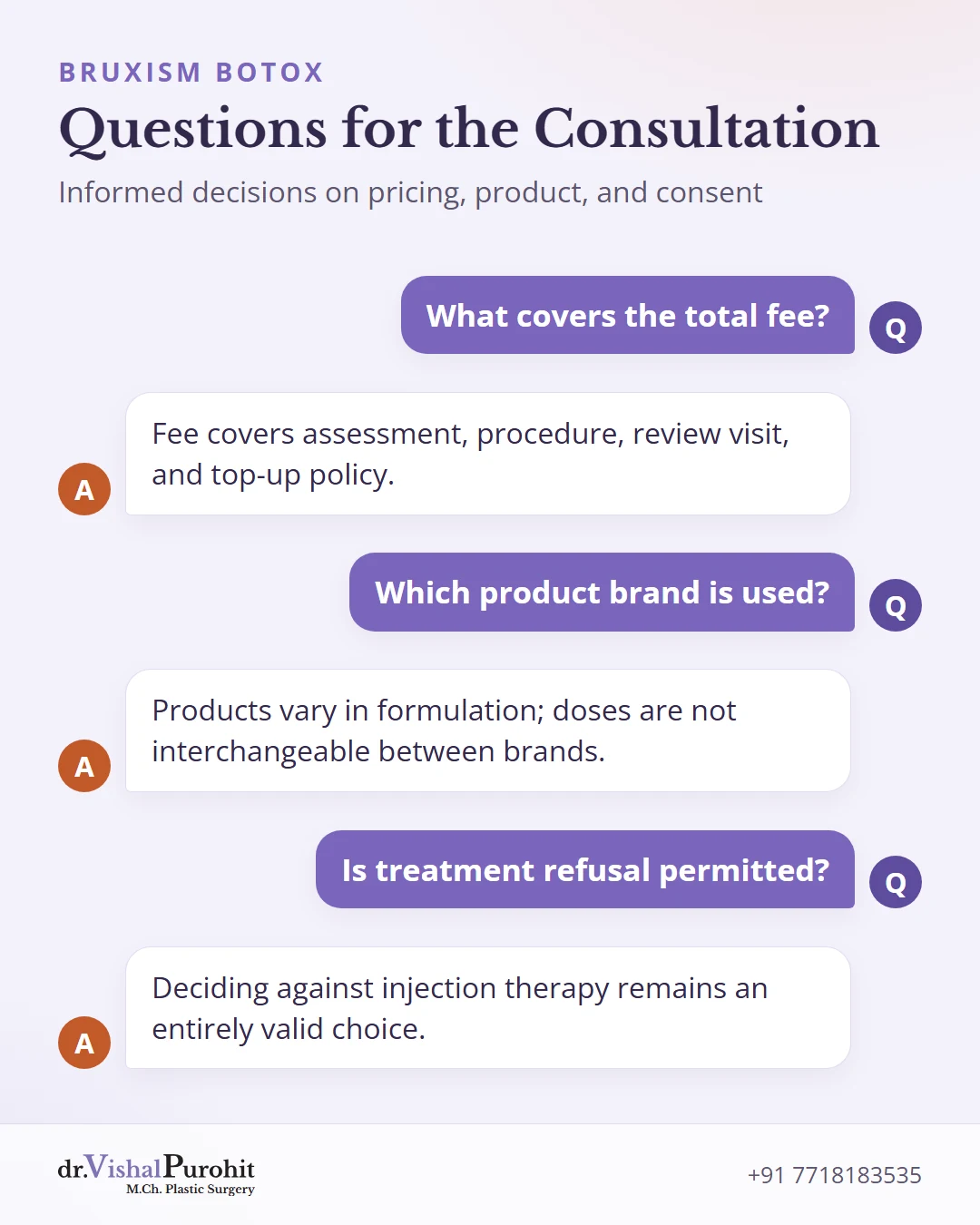
Questions and answers regarding jaw botox fees, products, and consent

Understanding the financial and clinical details before treatment helps patients make informed decisions about managing teeth grinding. Every jaw muscle injection plan is tailored individually, meaning exact details are discussed in person rather than fixed in advance.

Dr. Vishal Purohit explains the complete fee, what it covers, the review visit, and any top-up policy during the private consultation. Treatment charges depend on individual assessment, and deciding against injection therapy remains an entirely valid choice for every patient.

Different botulinum toxin type A products vary in formulation, and their doses are not interchangeable between brands. During an assessment, patients are encouraged to ask which specific product will be used, discuss how it works, and clarify what its label covers before giving consent.

Your Safety Comes First

Why Training and Assessment Matter

Bruxism & Teeth Grinding Botox Treatment in Jaipur involves facial muscles, nerves and blood vessels. A careful assessment, a named product and clear warning signs help lower the risk of a heavy brow, an uneven result or rarer complications.

With Dr. Vishal Purohit, you are told which product is used, what to expect, and which symptoms need a call or emergency care.

Risks worth avoiding

  • Treatment before the brows and eyelids are checked
  • A product that is not named or shown
  • No clear plan if a brow or eyelid droops
  • A quote that is unclear about reviews and top-ups

With Dr. Vishal Purohit

  • M.Ch plastic surgeon
  • Brows, eyelids and skin assessed first
  • The product named before treatment
  • Warning signs explained before you leave
What to Expect

The Aim: A Refreshed, Natural Look

Bruxism & Teeth Grinding Relief Botox aims for a refreshed look that still looks like you. Results differ from person to person and are discussed honestly at the consultation.

Natural Expression

The plan aims to soften what bothers you while keeping the expressions you want to keep.

Risks Explained Up Front

Side effects and warning signs are explained before treatment by an M.Ch. plastic surgeon.

Planning Around Your Week

Most people return to daily routines soon after; any precautions are explained at the visit.

Got Questions?

Frequently Asked Questions

Honest, clinically precise answers from Dr. Vishal Purohit regarding Bruxism & Teeth Grinding Botox Treatment in Jaipur.

What is Botox treatment for bruxism and teeth grinding?
It is a non-surgical clinical treatment where botulinum toxin type A is injected into hyperactive masseter muscles to temporarily soften excessive clenching forces. This peripheral chemical denervation helps ease muscular tightness without altering central neurological triggers. Dr. Vishal Purohit in Jaipur conducts a clinical assessment first to determine whether muscular relaxation suits your specific symptoms.
Who is an ideal candidate for bruxism Botox in Jaipur?
Adults experiencing persistent jaw muscle tightness, fatigue, or tension headaches linked to clenching, in whom acute dental disease or structural joint faults have been evaluated. Candidates must be in good general health and understand that injections do not replace night guards. Suitability is evaluated in person by Dr. Vishal Purohit in Jaipur at the consultation.
How quickly does bruxism Botox relieve teeth grinding and jaw pain?
Clinical literature and small studies report that muscle relaxation begins over several days, with full functional effect taking around two weeks. Symptom relief typically lasts a few months before muscle action gradually recovers as nerve signals regenerate. What individual response to expect is discussed thoroughly with Dr. Vishal Purohit in Jaipur during the initial consultation.
Does bruxism Botox cure TMJ disorder?
No, Botox is not a cure for bruxism or internal joint disorders. Injections reduce masseter contraction intensity temporarily, but they do not stop nocturnal grinding habits or fix mechanical disc issues like clicking without pain. Dr. Vishal Purohit in Jaipur explains realistic functional goals, emphasizing that conservative observation or splints remain valid alternatives without injections.
Will bruxism Botox make it hard to chew food?
Transient chewing fatigue or decreased bite force can happen when tough foods are chewed, typically lasting two to four weeks while neighboring pterygoid and temporalis muscles adapt. Severe masticatory weakness is minimized by careful individualized planning. How everyday chewing and firmer Indian dietary staples may feel is explained by Dr. Vishal Purohit in Jaipur.
What is the cost of bruxism and teeth grinding Botox in Jaipur?
Treatment fees depend on the clinical assessment, the muscle bulk, the specific registered product chosen, and whether follow-up visits are included. Dr. Vishal Purohit in Jaipur explains the fee and exactly what it covers during your in-person consultation. You can also discuss the product used, its storage, and what its official label covers.
Can bruxism Botox help reduce chronic tension headaches?
When morning temple tightness and facial discomfort arise directly from sustained masseter and temporalis muscle strain, relaxing those chewing muscles may ease it, though the evidence is limited and relief is not certain. However, Botox does not replace dedicated medical care for primary migraine or non-muscular head pain. Diagnostic considerations are discussed carefully with Dr. Vishal Purohit in Jaipur before considering any procedural treatment.
Are there any side effects from bruxism Botox injections?
Documented side effects in clinical trials include local tenderness, bruising, temporary chewing fatigue, and occasionally paradoxical muscle bulging or subtle lower-cheek contour hollows. Severe complications are uncommon with careful planning. Dr. Vishal Purohit in Jaipur reviews potential side effects during consultation; any breathing, swallowing, or speaking difficulty requires emergency medical attention immediately.
What aftercare should I follow after bruxism Botox?
General precautions include avoiding firm, tough foods and refraining from rubbing or massaging the treated jaw muscles for a brief period. Individualized aftercare instructions, dietary adjustments, and follow-up timing are explained directly by Dr. Vishal Purohit in Jaipur at the visit. Any emergent difficulty with speaking, swallowing, or breathing warrants immediate emergency care.
Why should I choose Dr. Vishal Purohit for bruxism Botox?
Dr. Vishal Purohit in Jaipur is an M.Ch. plastic surgeon who brings detailed knowledge of craniomaxillofacial anatomy and deep muscular planes to non-surgical facial treatments. He ensures injections balance muscular comfort with facial harmony and dental considerations, while clearly stating when conservative dental splints or choosing no injection is the safer, more appropriate path.

Need more clinical answers?

Search 14,800+ answers in our FAQ directory.

Browse All 14,800+ FAQs
Begin Your Journey

Ready to Discuss Bruxism & Teeth Grinding Botox Treatment in Jaipur?

At his OPD suite, Kalpana Aesthetics (2nd Floor), Dr. Vishal Purohit evaluates your candidacy, discusses surgical options and gives you a transparent, tailored treatment plan.