
Dermal fillers are injectable soft-tissue treatments placed into specific facial regions and the hands to replenish structural volume loss. Because facial aging affects both deep structural support and superficial tissue layers, understanding Botox vs Dermal Fillers: Which Problem Does Each Address? helps clarify which age-related changes respond to volume replacement.
However, fillers cannot treat every aesthetic concern. Distinct anatomical compartments, complex vascular networks, and variations in tissue mobility mean that every treatment area requires precise individual planning.
Overview of Facial and Hand Areas
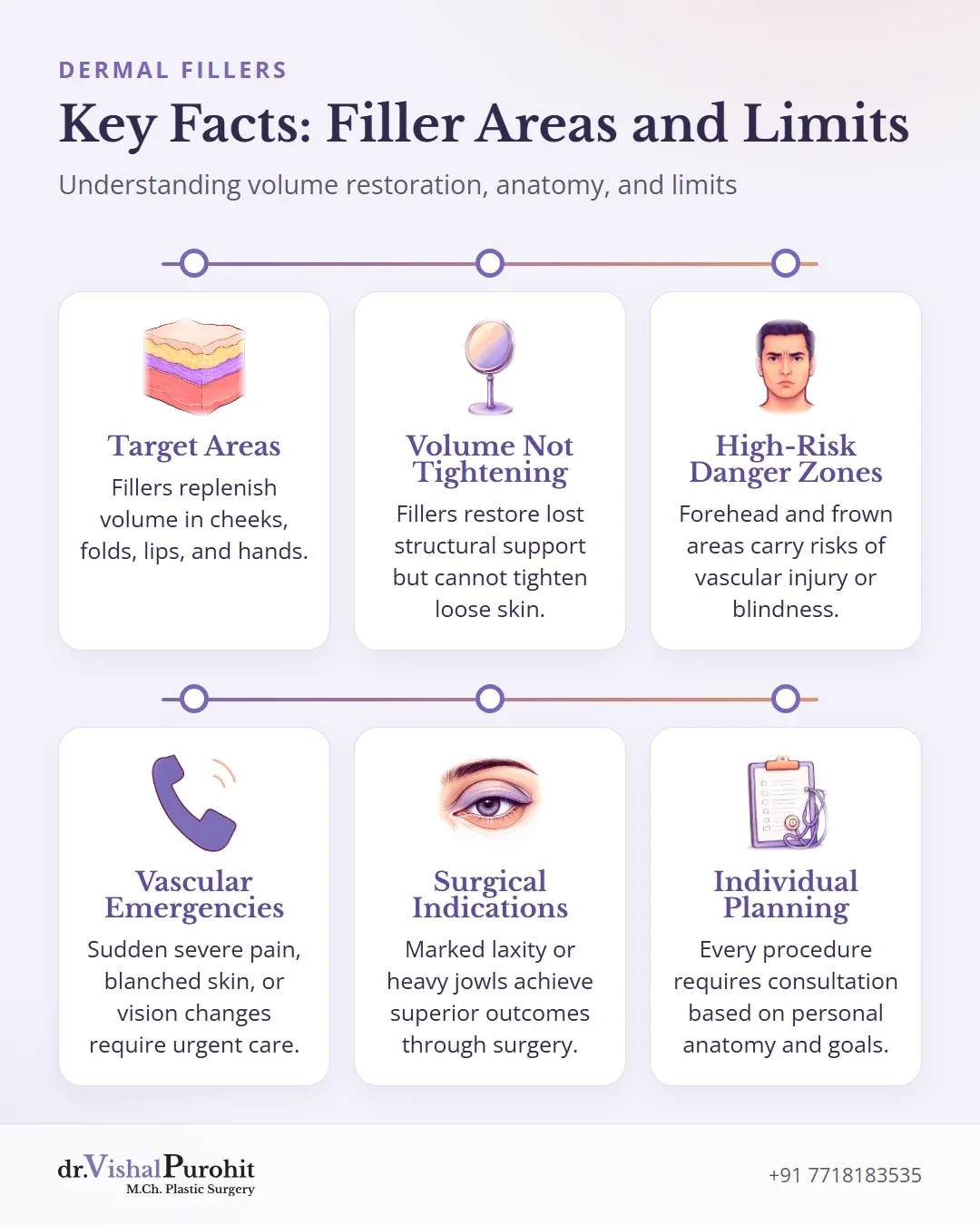
Dermal fillers are placed into specific anatomical regions of the face and dorsum of the hands where subcutaneous fat and bone have diminished123. Treatment must account for unique tissue dynamics, retaining structures, and variable vascular networks across separate anatomical compartments4.
Common Anatomical Target Zones
Injectable soft-tissue fillers are studied and used to restore volume or soften lines across several distinct regions:
- Nasolabial folds and oral commissures256
- Cheeks, malar, and zygomatic regions1256
- Chin and lateral mental regions256
- Mandibular border and contour56
- Lips2
- Dorsum of the hands, where filler helps decrease the hollow appearance of veins, extensor tendons, and bony prominences23
Every region requires individualized planning. Because retaining ligaments lie near critical vessels and vascular anatomy varies widely between individuals, there are no universally safe injection zones4.
Dr. Purohit’s note: Dr. Vishal Purohit assesses underlying anatomical structure and tissue mobility during consultation to plan appropriate placement.
Volume Loss Versus Texture and Laxity
Dermal fillers correct static wrinkles and contour depressions by replacing lost volume beneath the skin78. Facial aging involves gradual skin thinning, loss of elasticity, bone resorption, and descent of fat pads7. While space-occupying fillers restore structural support in areas of focal volume deficit, they cannot correct all age-related changes48.
Structural Deficits Versus Skin Quality
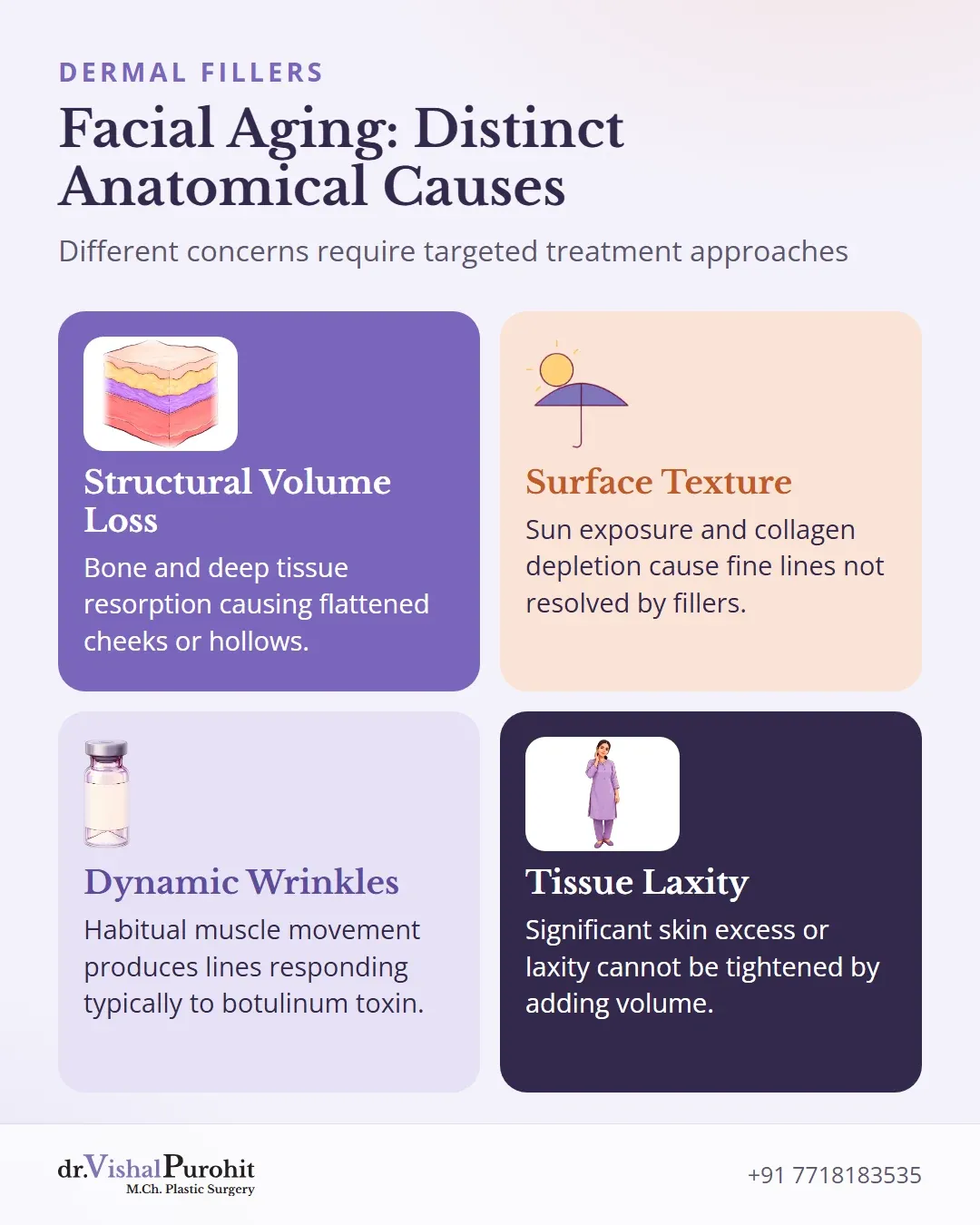
Different facial aging concerns stem from distinct anatomical causes:
Structural Volume Loss
Texture, Wrinkles and Laxity
- Extrinsic factors such as sun exposure accelerate collagen depletion and produce fine lines or surface irregularities that fillers do not resolve7
- Habitual muscle movement creates dynamic wrinkles, especially in the upper face, which typically respond to botulinum toxin injections rather than volumisation7
- Significant skin excess or tissue laxity cannot be tightened by adding volume alone49
Attempting to treat loose skin or general tissue laxity by expanding filler quantities can create an unnatural, overly bulky appearance9. In his practice, Dr. Vishal Purohit assesses underlying anatomical support to confirm whether volume replacement or an alternative approach is suitable4.
Common Facial Treatment Regions
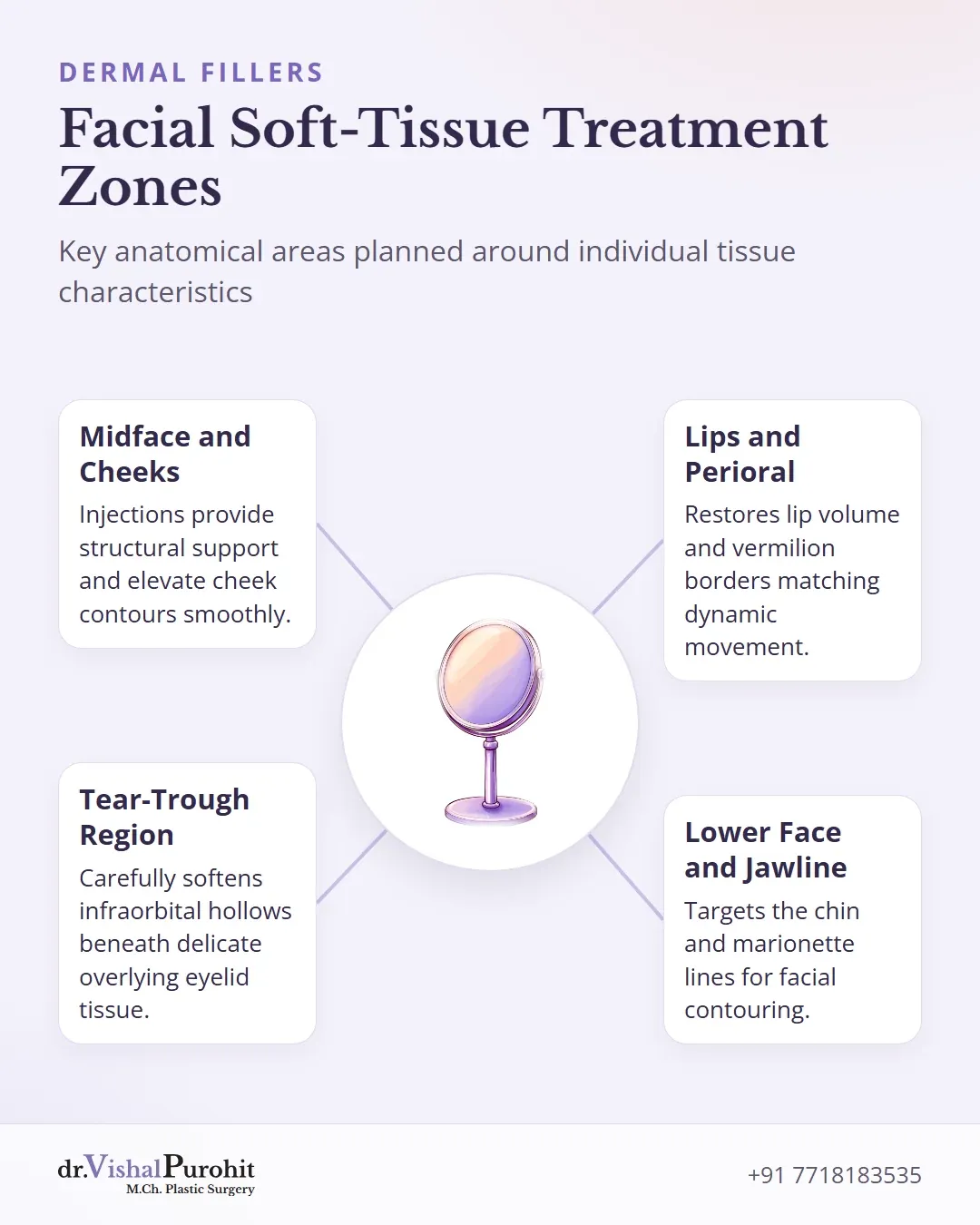
Injectable dermal fillers aim to restore lost volume and soften the appearance of facial lines1011. Because facial tissues age at different rates across superficial and deep layers12, treatment is planned around distinct anatomical zones.
Midface and Cheeks
Midface and cheek injections help restore volume loss to provide structural support1012 and elevated cheeks13. This anatomical replenishment helps support tired facial folds and transitions smoothly into adjacent areas1314.
Tear-Trough and Orbital Region
Injections in the infraorbital area address hollows under the eyes1315. However, anatomical structures such as the tear trough ligament and thin overlying soft tissue require careful evaluation, as inadequate technique or misplacement can cause contour irregularities, nodules, or bulging16.
Lips and Perioral Area
Lip enhancement can restore volume, treat the body or vermilion border, or address surrounding vertical lines1718. Products with suitable mechanical properties are selected to match the dynamic movement of the mouth14.
Lower Face and Jawline
Lower face injections target areas such as the chin and marionette lines1517. In Dr. Vishal Purohit’s practice, suitability for facial contouring is decided at the consultation.
Higher-Risk Zones: Forehead and Glabella
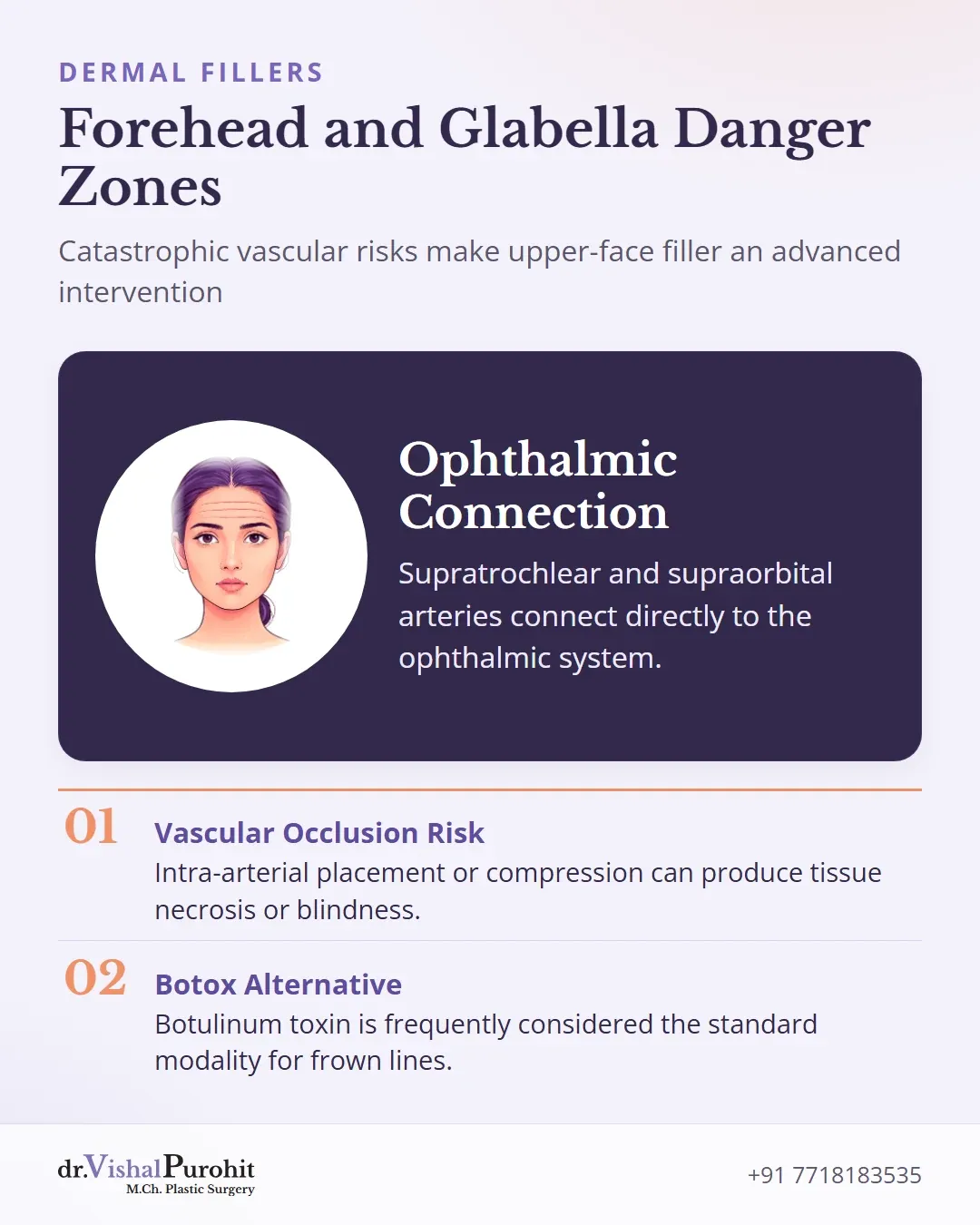
The forehead and glabellar frown complex are particularly high-risk facial danger zones for dermal filler procedures1920. The supratrochlear and supraorbital arteries supply these areas and represent terminal branches connected to the ophthalmic system20212223. Inadvertent intra-arterial placement or vascular compression can produce vascular occlusion, ischemic tissue necrosis, or retrograde flow into the ophthalmic circulation leading to blindness20212224.
Key points
- The forehead and glabella carry severe vascular risks from dermal filler procedures, including tissue necrosis and vision loss.
- Botulinum toxin is frequently preferred as a standard alternative modality for dynamic upper face lines.
- Symptoms such as sudden severe pain, vision changes, or skin discoloration require immediate emergency care.
Because of these catastrophic vascular risks, treating forehead lines or glabellar frown creases with dermal fillers is an advanced intervention rather than a casually promoted treatment2225. Botulinum toxin (neuromodulators) is frequently considered the standard alternative modality to soften dynamic frown lines in the upper face25. At his practice in Jaipur, Dr. Vishal Purohit assesses suitability individually during consultation, discussing alternative non-surgical approaches such as Botox.
Critical Warning Signs Requiring Immediate Emergency Care
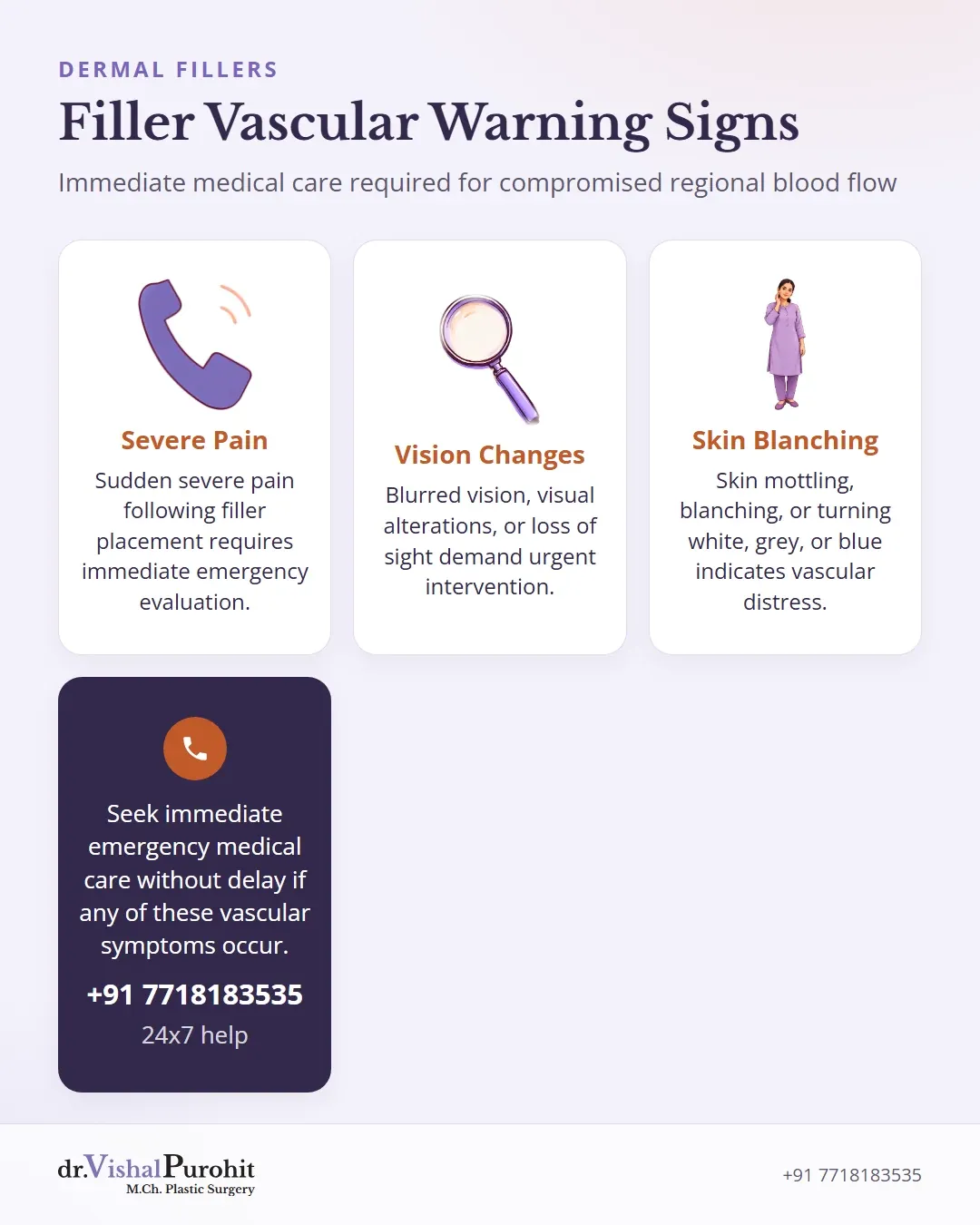
Any unexpected compromise to regional blood flow constitutes a medical emergency. Patients must seek immediate emergency medical care if any of the following symptoms appear:
When Assessment Suggests Other Treatments
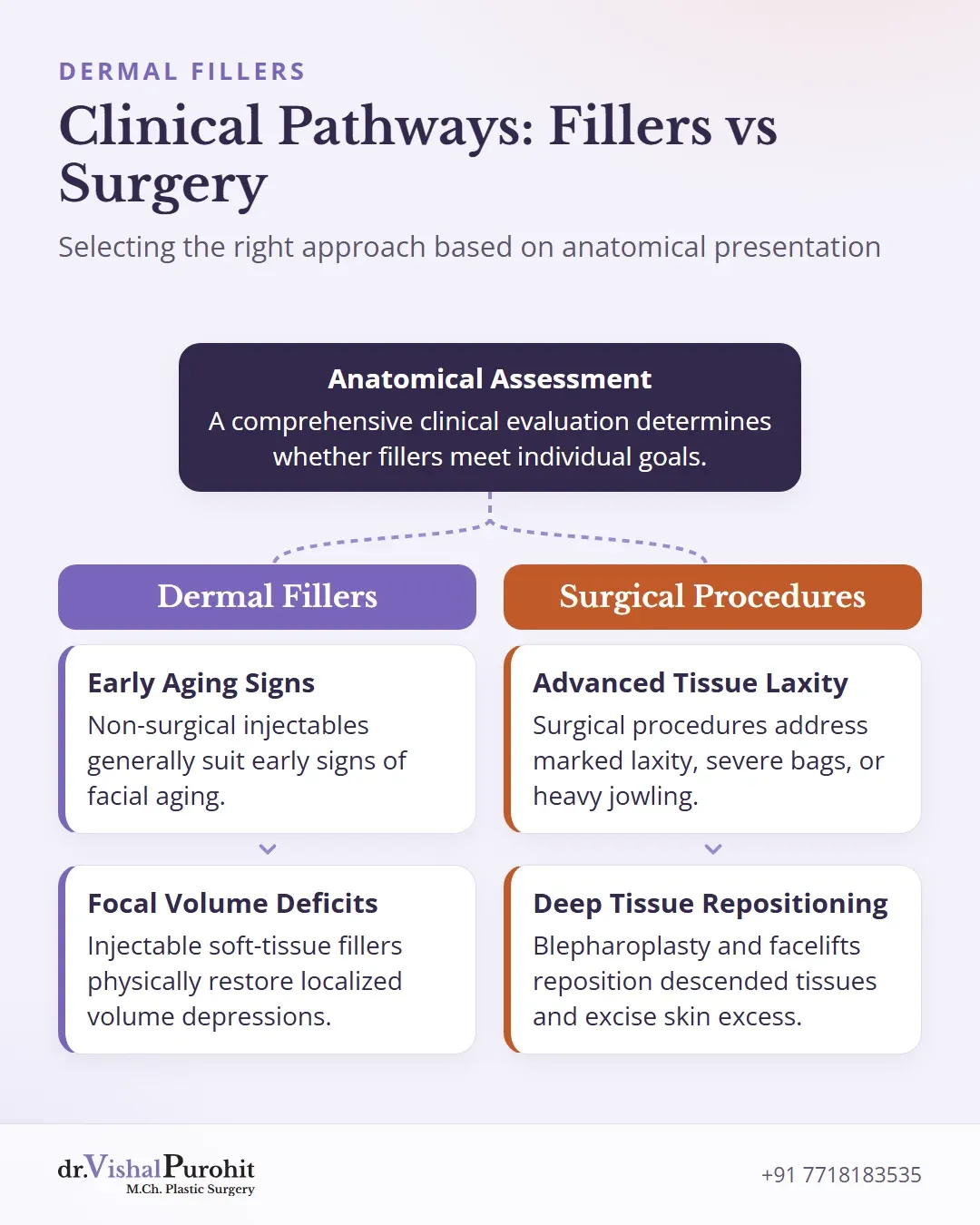
A comprehensive clinical evaluation helps determine whether dermal fillers can meet an individual’s goals. When anatomical assessment reveals marked laxity, severe eyelid bags, or heavy jowling, surgical procedures or autologous fat grafting often achieve superior outcomes262728.
Non-surgical injectables generally suit early signs of facial aging26. For more advanced structural changes, surgical approaches such as blepharoplasty or a facelift address displaced deeper tissues and skin excess directly2627. Recommending surgery over dermal filler preserves natural facial harmony and prevents soft tissue distortion.
Alternative surgical considerations include:
- Blepharoplasty to excise prominent bulging fat pads and loose eyelid skin2728
- Facelift techniques to reposition descended deeper facial tissues26
- Autologous fat grafting to replenish lost volume2628
Dr. Vishal Purohit evaluates facial structure individually, and procedure selection for these indications is decided at the consultation. Choosing no treatment is always a valid choice, allowing each person to decide without external pressure.
Consultation and Clinical Evaluation in Jaipur
Planning soft-tissue treatments requires an understanding of underlying anatomy, tissue dynamics, and vascular pathways. Choosing no treatment remains a valid personal decision for every individual. To learn more about treatment areas, visit Dermal Fillers in Jaipur or read Dermal Fillers FAQs. Suitability for facial contouring is decided at the consultation with Dr. Purohit, who can be contacted by phone or WhatsApp at +91 7718183535.
This is educational information, not medical advice.