

TUE - SUN: 11:00 AM – 07:00 PM

Aesthetic & Reconstructive Surgery

Genital & Perineal Reconstructive Salvage in Jaipur

Genital & Perineal Reconstructive Salvage in Jaipur - Dr. Vishal Purohit Plastic Surgeon Jaipur11+ Years of Surgical Experience

Specialized fasciocutaneous and muscle flap coverage for Fournier's gangrene, hidradenitis, and traumatic perineal defects.

Urgent and elective reconstructive salvage surgery restoring anatomical integrity, urinary continence, and soft tissue coverage to perineal and scrotal defects.

View clinic timings and contact details →
  • M.Ch Plastic Surgeon · RMC Reg. 28041/14185
  • Day-care / short-stay procedure
  • Tonk Road, Jaipur
  • Jump to FAQs (10)

Procedure Time

2–4 hours

Anesthesia

General or Spinal/Epidural Anesthesia

Hospital Stay

4–7 days

Recovery Time

Perineal wound care: 3–4 weeks; Complete tissue consolidation: 6–8 weeks

Indications

Post-Fournier's gangrene tissue loss, extensive perineal hidradenitis suppurativa, post-oncologic pelvic exenteration defects, traumatic perineal avulsions

Techniques

Pudendal thigh flap (Singapore flap), Gracilis muscle flap transposition, bilateral VY advancement flaps, scrotal advancement and skin grafting

Complex Perineal Tissue Loss

Can deep genital and perineal defects heal safely?

Extensive perineal and scrotal tissue loss compromises basic hygiene, exposes vulnerable vital structures, and severely disrupts normal sitting, urinary comfort, and everyday mobility.

Severe Fournier's Gangrene Tissue Loss

Necrotizing infection strips vital soft tissue, creating raw perineal wounds that risk severe infection and painful scar contractures without vascularized flap coverage.

Exposed Testes and Pelvic Space

Extensive skin loss leaves testes unprotected and deep pelvic dead space open, compromising physiological thermoregulation and inviting chronic regional fistulae.

Debilitating Perineal Hidradenitis Suppurativa

Chronic destructive disease and radical oncological resections create extensive defects that cannot close on their own without severe strictures and pain.

The Challenge of Perineal Healing

Simple secondary intention healing fails in extensive perineal defects. Without well-vascularized tissue transfer, open wounds develop severe scar contractures, urethral strictures, and chronic fistulae. Vascularized regional flaps are essential to obliterate deep pelvic dead space, provide durable coverage, and protect exposed testicular and pelvic anatomy.

Dr. Vishal Purohit - M.Ch Plastic & Cosmetic Surgeon Jaipur

Dr. Vishal Purohit

M.Ch Plastic & Cosmetic Surgeon

✓

Credential Level

M.Ch Super-Specialty

RMC Reg. 28041/14185

Your Surgical Guide

Artistic Proportion & Advanced Surgical Safety

"Our priority is urgent anatomical salvage, filling deep pelvic dead space with reliable vascularized muscle, and restoring robust perineal soft tissue coverage."

— Dr. Vishal Purohit

1

M.Ch Plastic & Reconstructive Surgery, SMS Medical College, Jaipur

The highest super-specialty surgical qualification in India, ensuring total anatomical mastery of neurovascular planes and soft tissues.

2

11+ Years as a Plastic Surgeon

Practising plastic surgery in Jaipur since 2015, with a focus on natural, proportionate results.

3

Accredited Operating Suites

Dr. Vishal Purohit operates in sterile hospital operating theatres, with certified cardiac anaesthesiologists and ICU support.

Simple & Transparent

Your 3-Step Surgical Journey

We remove anxiety and uncertainty with a structured, transparent pathway designed for safety and peace of mind.

1

Confidential Assessment

Dr. Purohit evaluates your anatomical baseline, skin elasticity, and health history. You receive an honest feasibility blueprint, personalized surgical plan, and transparent cost with zero pressure.

Step 1: Planning
2

Precision Operating Suite Procedure

Performed by Dr. Vishal Purohit in a sterile hospital operating theatre under gentle anaesthesia. Using advanced minimally invasive techniques, target areas are treated with microscopic care.

Step 2: Procedure
3

Monitored Recovery & Transformation

Supported with tailored recovery guidelines and post-operative follow-up visits. As tissue heals and settling occurs over the coming weeks, your refined results emerge.

Step 3: Recovery
Clinical Guide & In-Depth Information

Comprehensive Medical Overview

Detailed procedural analysis, anatomical considerations, and patient guidelines by Dr. Vishal Purohit.

Reconstructive Plastic Surgery for Complex Genital & Perineal Defects

Extensive soft-tissue defects of the perineum, scrotum, and perianal region represent some of the most challenging conditions in reconstructive surgery. These defects commonly arise from life-threatening necrotizing fasciitis (Fournier's Gangrene), radical oncological resections (pelvic exenteration, anorectal carcinoma), severe perineal hidradenitis suppurativa, or high-energy pelvic crush trauma. Simple secondary intention healing results in painful contractures, urethral strictures, and exposed testes.

Principles of Durable Perineal Reconstruction

Dr. Vishal Purohit utilizes specialized vascularized regional flaps to reconstruct the perineum:

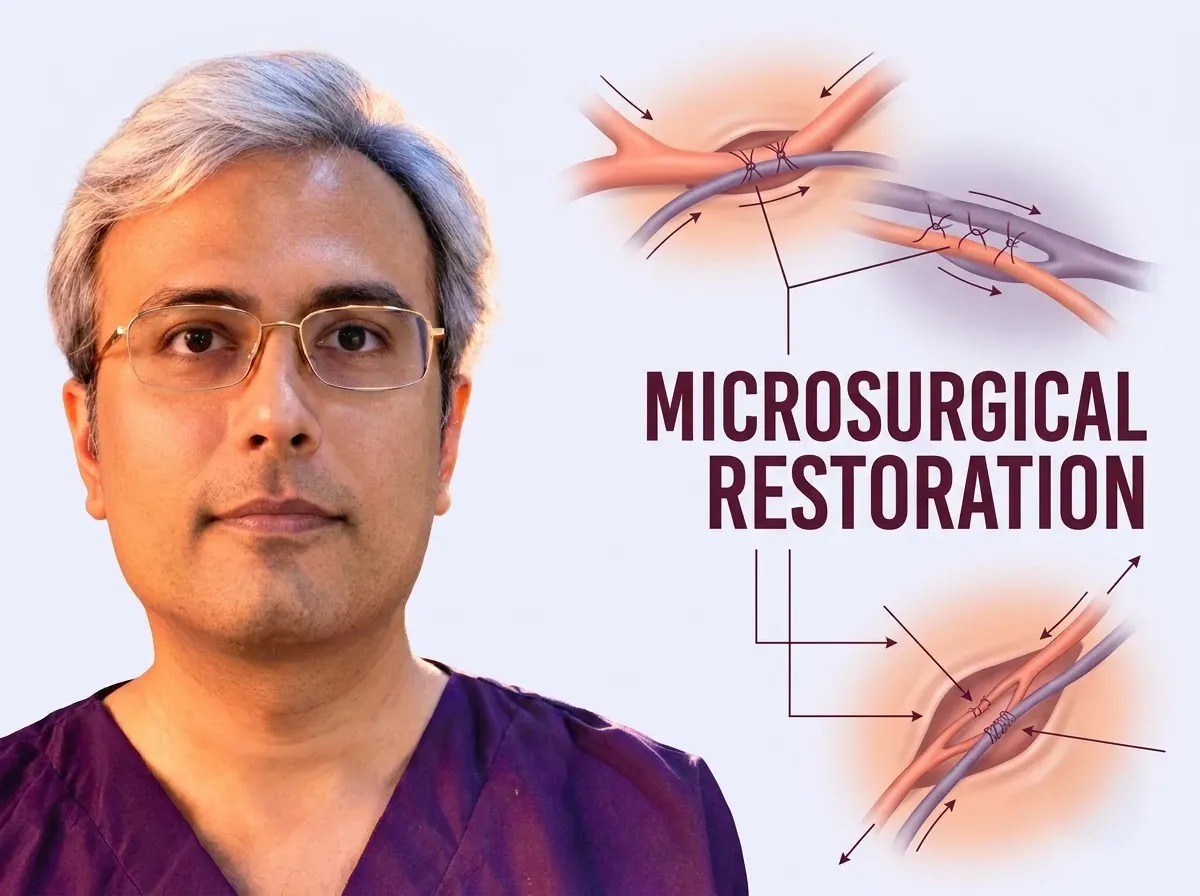
  • Singapore Pudendal Thigh Flap: A reliable fasciocutaneous flap based on the posterior scrotal/labial branches of the internal pudendal artery, ideal for resurfacing the perineum, vulva, and perianal defects with thin, pliable, sensitive tissue.
  • Gracilis Muscle Flap Transposition: A robust, well-vascularized muscle flap mobilized from the medial thigh to obliterate deep pelvic dead space, cover exposed pelvic hardware, and repair rectovaginal or perineal fistulae.
  • Scrotal Reconstruction: Meticulous scrotal reconstruction using residual dartos muscle flaps or mesh skin grafting over the testes to preserve testicular thermoregulation and fertility.

Compassionate Functional and Psychological Restoration

Beyond providing durable skin closure and infection control, reconstructive surgery restores urinary and bowel hygiene, protects reproductive organs, and alleviates psychological distress.

Your Safety Comes First

Why Your Surgeon’s Training Matters

Genital & Perineal Reconstructive Salvage in Jaipur involves delicate anatomy, blood supply and tissue handling. Choosing on price alone, or an operator without plastic-surgery training, raises the risk of contour irregularities and complications.

With Dr. Vishal Purohit, your safety is backed by intensive-care support, certified cardiac anaesthesiologists and hospital-grade theatre protocols.

What to watch out for

  • Operators without plastic-surgery training
  • Rushed or imprecise tissue handling
  • Clinic rooms without emergency backup
  • Higher chance of visible scars or revision surgery

With Dr. Vishal Purohit

  • M.Ch super-specialist plastic surgeon
  • Careful, tissue-preserving technique
  • Hospital-grade operating theatre
  • Personal follow-up through recovery
Durable Functional Salvage

Restoring Anatomical Integrity and Perineal Function

Specialized fasciocutaneous and muscle flap coverage restores resilient skin protection, preserves vital reproductive organs, and re-establishes manageable urinary and bowel hygiene.

Durable Vascularized Soft Tissue Coverage

Pudendal thigh flaps and VY advancement flaps provide pliable, sensitive regional tissue resurfacing to prevent strictures and chronic breakdown.

Obliteration of Deep Dead Space

Transposed gracilis muscle flaps reliably fill deep pelvic defects, cover exposed pelvic structures, and aid in repairing complex perineal fistulae.

Protection of Testicular Function

Meticulous scrotal reconstruction using residual dartos flaps or mesh skin grafting safely encloses exposed testes to preserve thermoregulation and fertility.

Got Questions?

Frequently Asked Questions

Honest, clinically precise answers from Dr. Vishal Purohit regarding Genital & Perineal Reconstructive Salvage in Jaipur.

What is genital and perineal reconstructive surgery in Jaipur?

Genital and perineal reconstructive surgery rebuilds damaged or missing tissue in the genital and perineal area after congenital, traumatic, infectious, cancer-related or other acquired problems. M.Ch. plastic surgeon Dr. Vishal Purohit in Jaipur can explain which reconstructive options may suit your situation and what functional and appearance goals are realistic.

The operation restores skin, soft tissue and sometimes specialized structures such as the urethra, vagina or penis, aiming for coverage, support, function and acceptable appearance. Most defects can be rebuilt with nearby or regional tissue, but larger or complex defects, radiation damage, poor donor tissue or specialized structures may require tissue brought from elsewhere. Decisions also consider healing factors such as diabetes, smoking, nutrition, prior radiotherapy and need for further cancer treatment. Nerve injury can affect bladder, sexual or fertility function, so planning matters. Wound closure technique depends on defect size, radiation damage, donor tissue and patient or surgeon preference. The important trade-off is accepting scars and possible functional limits for better coverage and support.

Recovery depends on defect size, tissue used and whether cancer treatment continues; wound care, drains, mobilization and specialist follow-up may be needed. Complications can include wound breakdown, infection or functional changes, and some patients need further treatment within weeks. Sexual function, bladder function and fertility are important considerations. If you are facing such a defect or planning reconstruction, you may consult Dr. Vishal Purohit in Jaipur to discuss realistic goals and next steps.

How is scrotal tissue reconstructed after Fournier’s gangrene?

After Fournier gangrene, scrotal reconstruction is usually delayed until infection is controlled and a healthy wound bed is ready. Options include direct closure for partial defects, split-thickness skin grafts, medial thigh pockets, or flaps, depending on defect size and available tissue. M.Ch. plastic surgeon Dr. Vishal Purohit in Jaipur can explain which approach may suit your situation.

Fournier gangrene is a necrotizing fasciitis of the perineum, scrotum and penis, and early aggressive debridement is essential. Patients may undergo up to an average of 3.5 debridements before definitive reconstruction, and vacuum-assisted closure may be used beforehand to aid debridement and prepare a graft bed. The reconstructive choice depends on defect size, location, severity and surrounding soft tissue. Partial scrotal defects may close directly; advancement flaps suit small to medium defects; split-thickness grafts are common, with testes sutured midline and meshed grafts conforming well; medial thigh pockets cover exposed testes while avoiding elevated temperatures affecting spermatogenesis, but require sufficient laxity and may alter contour. Tissue expansion is described where perineal skin remains intact.

Fournier gangrene has a high mortality rate, reported up to 67%, linked to hospital stay, causative organisms, heart or kidney failure and coagulopathy; early debridement is associated with decreased mortality. Reconstruction is generally delayed until local tissue shows healing. Quality of life, sexual function, bladder function and fertility matter, and nerve injury can cause significant dysfunction. If recovering, consult Dr. Vishal Purohit in Jaipur to discuss options and expectations.

What is a Singapore pudendal thigh flap?

A Singapore pudendal thigh flap is a pedicled fasciocutaneous flap from the proximal medial thigh used to reconstruct vaginal, vulval, perineal, penile or scrotal defects. M.Ch. plastic surgeon Dr. Vishal Purohit in Jaipur can explain when this sensate flap may suit a smaller defect and when another option is needed.

It is an axial-pattern, sensate flap based on perforators from the internal pudendal artery, especially the posterior labial artery, with innervation from pudendal and posterior cutaneous nerve branches. The skin is raised deep to the adductor fascia, so the flap can be moved while keeping its blood supply. It is thin and relatively easy to harvest, with an inconspicuous donor site, but it provides limited bulk. Therefore it is usually chosen for smaller vulvovaginal or perineal defects, rectovaginal fistula repair, vulvectomy, or penile and scrotal reconstruction, rather than large pelvic exenteration defects. The original and modified designs differ in how the labia are released and the flap is inset.

Because the flap is hair-bearing, donor-site and inset planning matter. Suitability depends on defect size, radiation damage, donor tissue, and patient factors such as diabetes, smoking, nutrition and prior treatment. Recovery and wound care are individualized; perineal reconstruction can affect sexual, bladder and quality-of-life outcomes, so expectations should be discussed beforehand. If you are considering perineal or genital reconstruction, you may consult Dr. Vishal Purohit in Jaipur to discuss suitable flap options and limitations.

When is a gracilis muscle flap used in perineal surgery?

A gracilis muscle flap is used in selected cases when perineal or vaginal surgery leaves a large soft-tissue defect, dead space or distortion, especially after cancer resection or pelvic exenteration. M.Ch. plastic surgeon Dr. Vishal Purohit in Jaipur can explain whether this regional flap may be suitable for your reconstruction and what alternatives exist.

The gracilis is a thin thigh muscle with its own blood supply. As a muscle or myocutaneous flap, it brings healthy, well-vascularized tissue into the pelvis, fills dead space, separates abdominal contents from the perineal wound, and often lies outside the radiation field. It may be chosen after vulvovaginal resection, exenteration, anorectal excision, or when irradiated tissue needs support. The flap can also cover exposed pelvic bone, support urethral repairs and help fill the perineum after exenteration, while donor-site and stoma plans influence whether it is used alone or paired. Approach varies with defect size, radiation history, donor-site considerations and whether one or both sides are needed.

Recovery depends on the larger operation and wound care. In one reported series after anorectal excision with intraoperative radiotherapy, major perineal wound-healing complications were fewer with gracilis flaps than with direct closure, though superficial wound problems still occurred. If you are facing perineal reconstruction, you may consult Dr. Vishal Purohit in Jaipur to discuss expected healing, donor-site effects and follow-up.

What is the hospital stay and recovery timeline for perineal surgery?

Hospital stay and recovery after perineal surgery vary with the procedure, defect and your health. Some reconstructive cases average no more than 20 days in hospital, with bed rest for at least 48 hours. M.Ch. plastic surgeon Dr. Vishal Purohit in Jaipur can explain the likely stay and milestones for your specific plan.

Early protection matters: sitting up can pressure the perineal closure or flap and delay healing, so bed rest is advised for at least 48 hours, then walking with a physical therapist. Donor-site drains may be removed around day 5 and sutures left about 7 days. Antibiotics and daily flap checks are part of hospital care. Sitz baths or peri-bottle rinsing, witch-hazel pads, and avoiding vigorous activity for one to two weeks support healing; modest activities may resume in one week, full physical activity after at least three weeks, and intercourse or vaginal insertion only after clearance, often six to nine weeks.

Recovery continues beyond discharge: gradual resumption of physical and sexual activity is commonly around three months, and a modest bloody discharge may last two to three weeks. Some wounds need longer conservative care, and one case series reported phalloplasty averaging 2.5 weeks in hospital. If you are planning perineal surgery, you may consult Dr. Vishal Purohit in Jaipur to discuss expected hospital stay, wound care and return to activity.

Will scrotal reconstruction affect sperm production or fertility?

Scrotal reconstruction can affect sperm production or fertility, especially after major injury or total scrotal loss, because the scrotum helps regulate testicular temperature and movement. M.Ch. plastic surgeon Dr. Vishal Purohit in Jaipur can explain how defect size, tissue choice and nerve risk may influence your outlook.

The scrotum holds the testicles and adjusts their position to help control temperature for sperm production. Skin grafts can restrict scrotal movement and have been reported to cause azoospermia, meaning no sperm in semen, in two of three cases after traumatic scrotal avulsion. A bulky flap can raise testicular temperature and may impair sperm production, while thinning a thick flap has been reported to improve it. Total scrotal reconstruction may not match native scrotal function, and infertility may occur. Pelvic nerve injury can also affect ejaculation or sexual function. Fertility outcomes are individual and should be discussed with your surgeon before surgery.

Recovery and sexual function depend on the original injury and reconstruction method. Scars and tissue changes may remain, and expectations should be realistic. Discuss fertility concerns before surgery. He can explain likely improvement and limitations. If scrotal injury or reconstruction concerns you, you may consult Dr. Vishal Purohit in Jaipur to review options, benefits, and limitations. Ask about planned recovery timelines, wound care, follow-up, and fertility preservation options during your consultation today.

How should toileting and wound cleaning be performed safely after genital and perineal reconstructive surgery?

After genital or perineal reconstructive surgery, toileting and wound care usually focus on keeping urine and stool away from the incision, gentle cleaning, and avoiding wiping or pressure early on. M.Ch. plastic surgeon Dr. Vishal Purohit in Jaipur can explain how your specific reconstruction and surgeon’s instructions shape safe daily care.

The perineum combines a contaminated operative field with functional structures, so suture-line care aims to limit maceration and bacterial contamination from urine or stool. Depending on defect location, urinary catheterization may be needed; if the wound involves the anal canal, fecal diversion may be necessary. Avoiding dependent pressure on the reconstruction, with positioning tailored to the defect and flap, helps protect healing. Ambulation is important to reduce venous thromboembolism risk, though some prefer delayed ambulation; if mobility is restricted, VTE prophylaxis matters. Cancer-related reconstruction may also require specialist wound care and planning for further treatment; nerve injury can affect bladder or sexual function, so urinary complications may require prolonged drainage and urology referral.

For female genital plastic procedures, patients may void in the shower or with a bidet or squirt bottle and avoid wiping for the first week; showering can start right away, while prolonged hot baths are avoided early. Warm sitz baths or peri-bottle rinses may be used, with witch hazel pads after urination or bowel movements. If you are recovering from such surgery, you may consult Dr. Vishal Purohit in Jaipur to review your wound-care plan and warning signs.

Why choose Dr. Vishal Purohit for perineal reconstruction in Jaipur?

Perineal reconstruction is chosen for the defect’s cause, size, tissue needs and healing risks, not by surgeon name alone. In Jaipur, M.Ch. plastic surgeon Dr. Vishal Purohit can explain reconstructive options, benefits and limitations during consultation, including suitability, realistic expectations and individual goals for your specific defect.

Perineal defects can arise from congenital problems, trauma, infection, malignancy, radiation, prior surgery or gender-related surgery. Most are amenable to reconstruction with local or regional tissue, while specialized structures such as the urethra, vagina or penis may need distant tissue transfer. Planning should consider prior radiotherapy, chemotherapy, diabetes, smoking, vascular disease, nutrition and steroid use. Cancer patients may need further treatment within twelve weeks, so wound closure, drains and mobilization need careful planning. Nerve injury can affect sexual and bladder function, and quality of life matters. Specialist postoperative wound care may be needed. A sympathetic working relationship between gynecological oncology and plastic surgery supports nuanced decisions.

Complications can include wound breakdown, which may need active techniques such as negative pressure dressing, and urinary problems that may require prolonged bladder drainage and urology referral. Quality of life, sexual function, bladder function and fertility are important considerations. If you are considering perineal reconstruction, you may consult Dr. Vishal Purohit in Jaipur to discuss your defect, options and realistic expectations. Please bring your medical records and questions.

How does genital and perineal reconstruction differ after cancer, trauma or a severe infection?

Genital and perineal reconstruction differs mainly by cause, depth and tissue loss. Cancer often needs multidisciplinary planning; trauma or severe infection may follow debridement and healing. M.Ch. plastic surgeon Dr. Vishal Purohit in Jaipur can explain how defect size, prior radiotherapy, diabetes, smoking, vascular disease and nutrition affect closure options.

After cancer, defects may be deep and involve pelvic structures; radiotherapy, chemotherapy timing, drains and mobilization may need planning, and nerve injury can affect sexual and bladder function. Cancer patients may also need adjuvant treatment within twelve weeks, so wound closure, drains and mobilization require planning. Patients with urinary complications may need prolonged bladder drainage and referral to a urologist. Vaginal reconstruction may be possible with pedicled flaps, and intercourse is feasible for many women after this. After trauma or severe infection, reconstruction usually waits until the primary process is identified and resolved, then resurfaces external skin. Depth, bacterial load, moisture, mobility, radiation, ostomies and dead space differ. Quality of life, sexual function, bladder function and fertility are important considerations.

Deep cancer-related reconstruction may involve multidisciplinary teams and quality-of-life considerations; superficial cases may heal secondarily with negative pressure or grafts. Reconstruction aims for coverage, lining, dead-space obliteration, hernia prevention and function. Complications can include wound breakdown, infection, hernia or empty-pelvis problems. Outcomes vary by cause and patient factors. If you are considering reconstruction, you may consult Dr. Vishal Purohit in Jaipur to discuss likely goals, risks and recovery.

Which signs of an active perineal infection require emergency treatment first?

Signs that can mean a dangerous active perineal infection include rapidly worsening pain, swelling, redness, skin darkening or breakdown, fever, confusion, or feeling very unwell; these may indicate necrotizing infection and need emergency care immediately. M.Ch. plastic surgeon Dr. Vishal Purohit in Jaipur can explain reconstruction options after infection is controlled.

Fournier's gangrene is a necrotizing infection of perineal, genital and perianal tissues. Its range includes local redness, swelling and pain through skin death, wound breakdown, sepsis and septic shock. Necrotizing infection can spread rapidly along tissue planes into the abdominal wall, back and retroperitoneum, causing life-threatening whole-body illness. It is a high-mortality surgical emergency; population-level analyses report overall mortality about 19.8%. Diabetes is present in about 30-40% of patients. It predominantly affects middle-aged and older men, with a male-to-female ratio about 10:1 and peak incidence 40-59 years. It can also occur in otherwise healthy individuals, though diabetes and immune compromise are common risk factors. Early recognition and prompt surgical management are crucial.

If you notice rapidly spreading redness, severe pain out of proportion, skin turning dark or blistering, fever, confusion, or feeling faint, seek emergency care now; do not wait for a routine consultation. After stabilization and debridement, reconstruction may be planned with your surgeon. If you need perineal reconstruction after infection, you may consult Dr. Vishal Purohit in Jaipur to discuss options.

Need more clinical answers?

Explore all 94 answered Genital / Perineal Reconstructive Flap Surgery questions.

Genital / Perineal Reconstructive Flap Surgery FAQ Hub (94 FAQs)
Begin Your Journey

Ready to Discuss Genital & Perineal Reconstructive Salvage in Jaipur?

At his OPD suite, Kalpana Aesthetics (2nd Floor), Dr. Vishal Purohit evaluates your candidacy, discusses surgical options and gives you a transparent, tailored treatment plan. He performs the operation himself.