
Poly-L-lactic acid (PLLA) functions differently from traditional dermal injectables by stimulating endogenous tissue production over time. Understanding the distinctions among Types of Dermal Fillers: HA, Stimulators and Permanent Fillers helps individuals evaluate whether a biostimulatory mechanism matches their personal aesthetic preferences.
Because initial carrier fluid resolves within days, volume correction emerges gradually across sequential appointments. Patients considering this option can explore how progressive collagen renewal unfolds across clinical literature.
Gradual Onset and Course Expectations
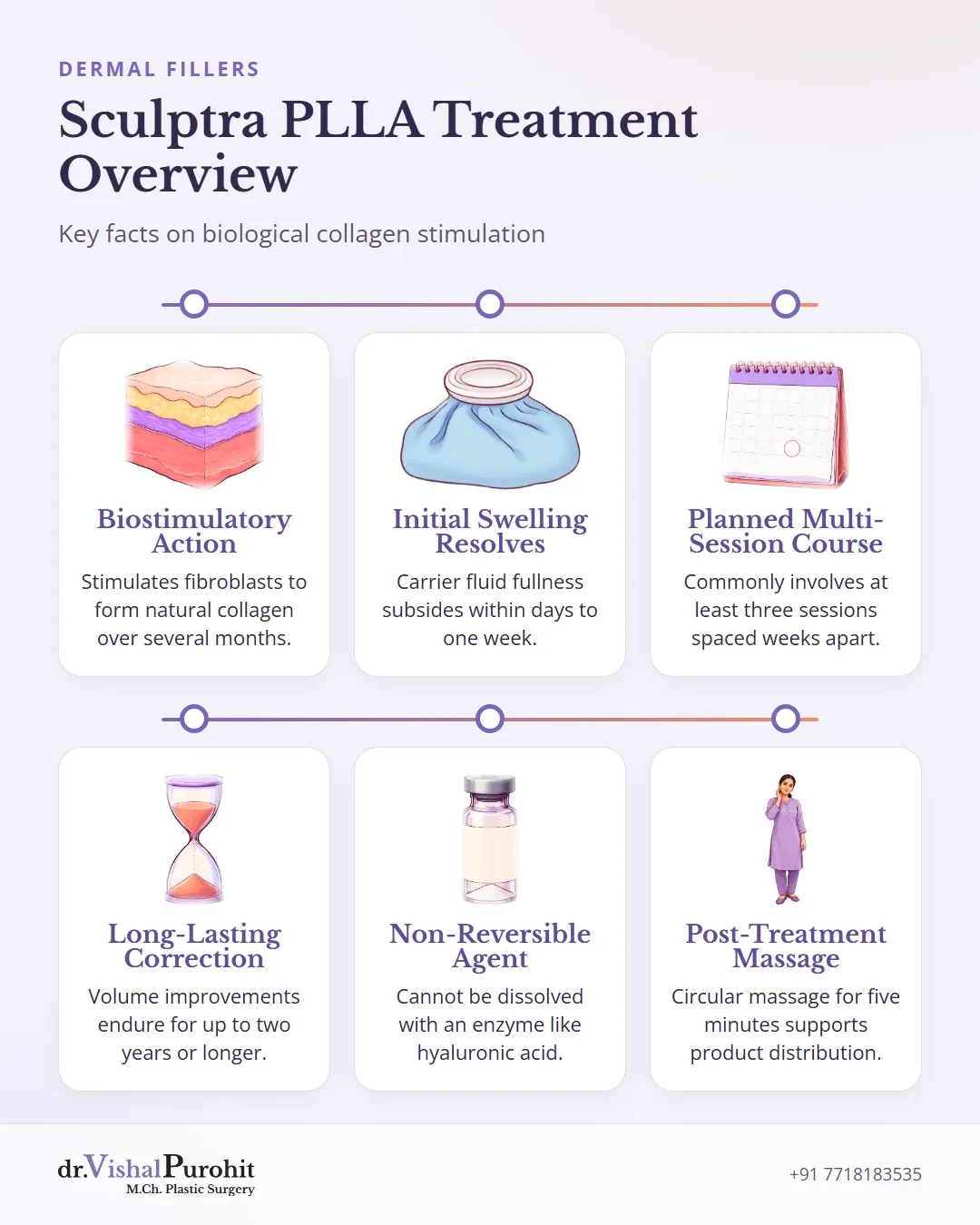
Poly-L-lactic acid (PLLA) is supplied as a lyophilized powder that is reconstituted with sterile water12. Unlike conventional products that provide immediate space-filling volume, PLLA acts as a biostimulatory agent13. Microparticles of polymer stimulate fibroblasts and induce neocollagenesis, leading the body to form its own collagen over several months rather than relying on inert volume expansion13.
Key points
- PLLA works as a biostimulator that prompts the body to produce its own collagen over several months.
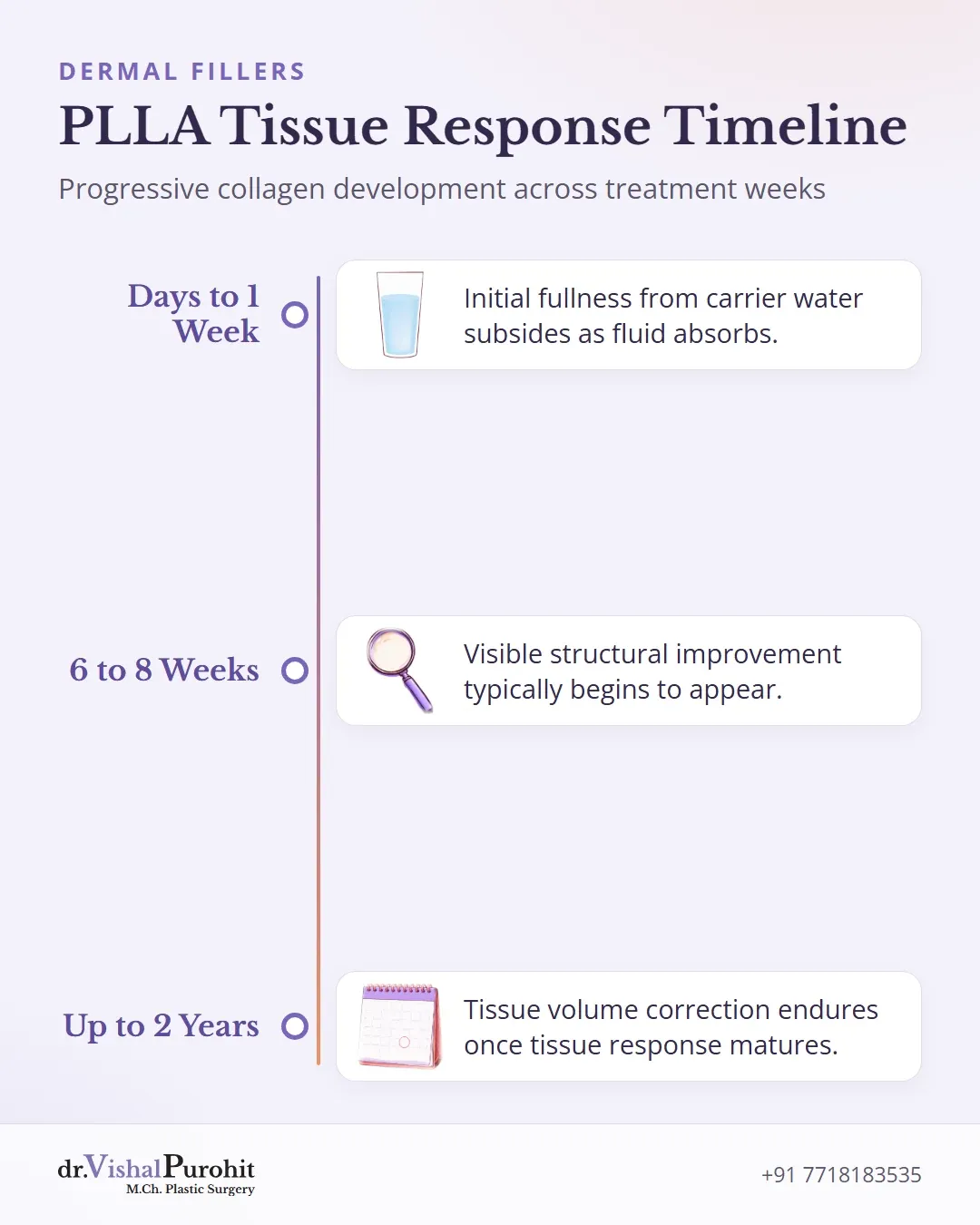
- Early fullness from the reconstituted fluid resolves within about a week, with visible collagen growth starting around six to eight weeks.
- Results build progressively over multiple planned sessions and can endure for two years or longer.
The early swelling and full appearance produced by the carrier fluid resolve within days to about one week as the water absorbs34. This leaves subtle or transient fullness before progressive tissue responses and gradual structural thickening emerge over subsequent weeks and months134. Visible improvement typically begins around six to eight weeks following the first session4.
Who May Discuss PLLA
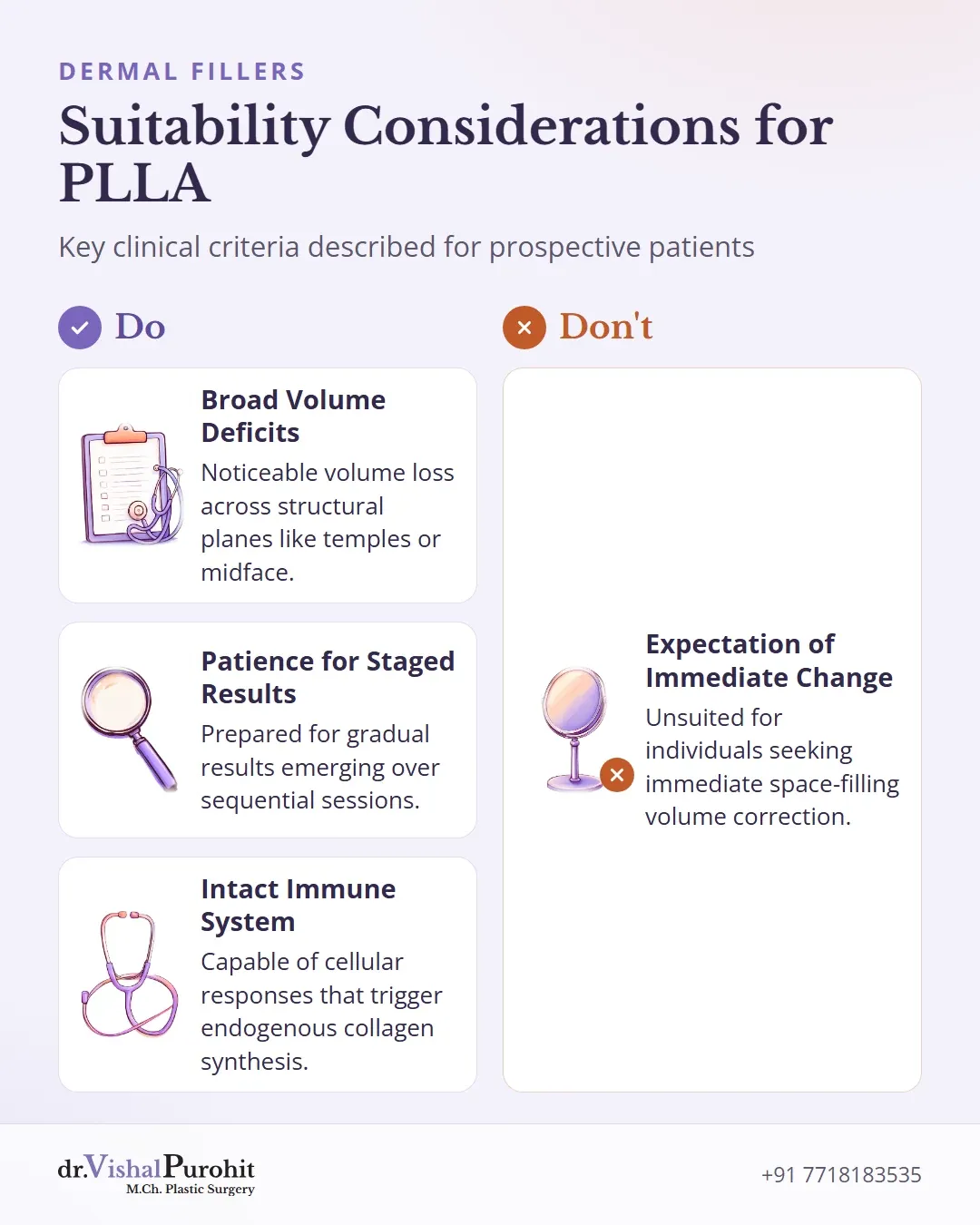
Poly-L-lactic acid (PLLA) is an option for individuals seeking educational guidance on non-immediate facial rejuvenation. In clinical literature, it is discussed for patients experiencing diffuse facial volume loss, deep temple hollows, or midface deflation6789. It is suited for those who prefer subtle, progressive structural improvement rather than immediate change16.
Candidates typically need:
- Noticeable volume deficits across broad structural planes, such as temporal hollowing or midfacial flattening679.
- The patience required for staged results that emerge over sequential treatment sessions16.
- An intact immune system capable of initiating the cellular response that triggers new endogenous collagen synthesis110.
Because PLLA works by stimulating the body’s own tissue response rather than acting as a passive gel, biological factors directly influence the outcome1. Whether Dr.
Verified Labeling and Duration
Clinical literature notes that poly-L-lactic acid (PLLA) functions as a biostimulatory agent rather than an immediate volume filler111. Treatment outcomes develop gradually across sequential sessions as host macrophages and fibroblasts trigger progressive collagen synthesis1. Published clinical data report that the resulting tissue volume improvements endure for up to 2 years, with typical duration described between 18 and 24 months112.
Key points
- PLLA acts as a biostimulatory agent with results developing gradually over multiple sessions.
- Tissue volume improvements typically last between 18 and 24 months.
- United States FDA approval applies strictly within US jurisdiction and does not constitute approval in India.
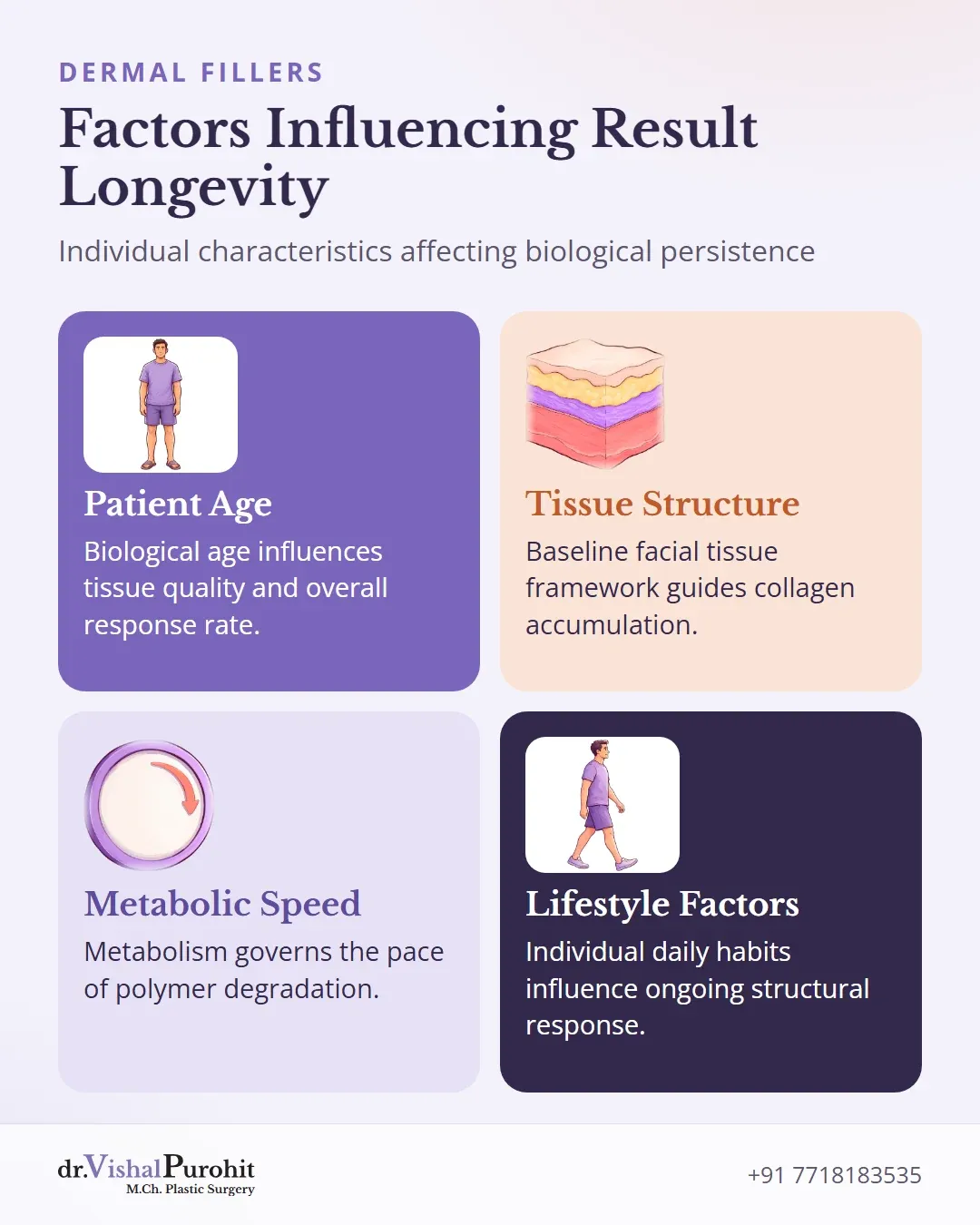
However, the persistence of these clinical changes is not uniform across all individuals. The duration of aesthetic response varies based on individual characteristics:
- Patient age and baseline tissue structure
- Metabolic rate and the biological speed of polymer degradation12
- Individual lifestyle factors and overall tissue response
From a regulatory standpoint, United States FDA approvals for soft tissue fillers are granted based on controlled clinical studies conducted under United States jurisdiction1314. An FDA clearance or approval is strictly specific to the United States regulatory framework and does not constitute regulatory approval in India1314.
Key Limitations and Non-Reversibility
Poly-L-lactic acid (PLLA) functions as a biostimulatory material rather than a temporary gel, meaning that PLLA is non-reversible1. Unlike hyaluronic acid dermal fillers, it cannot be dissolved with an enzyme.
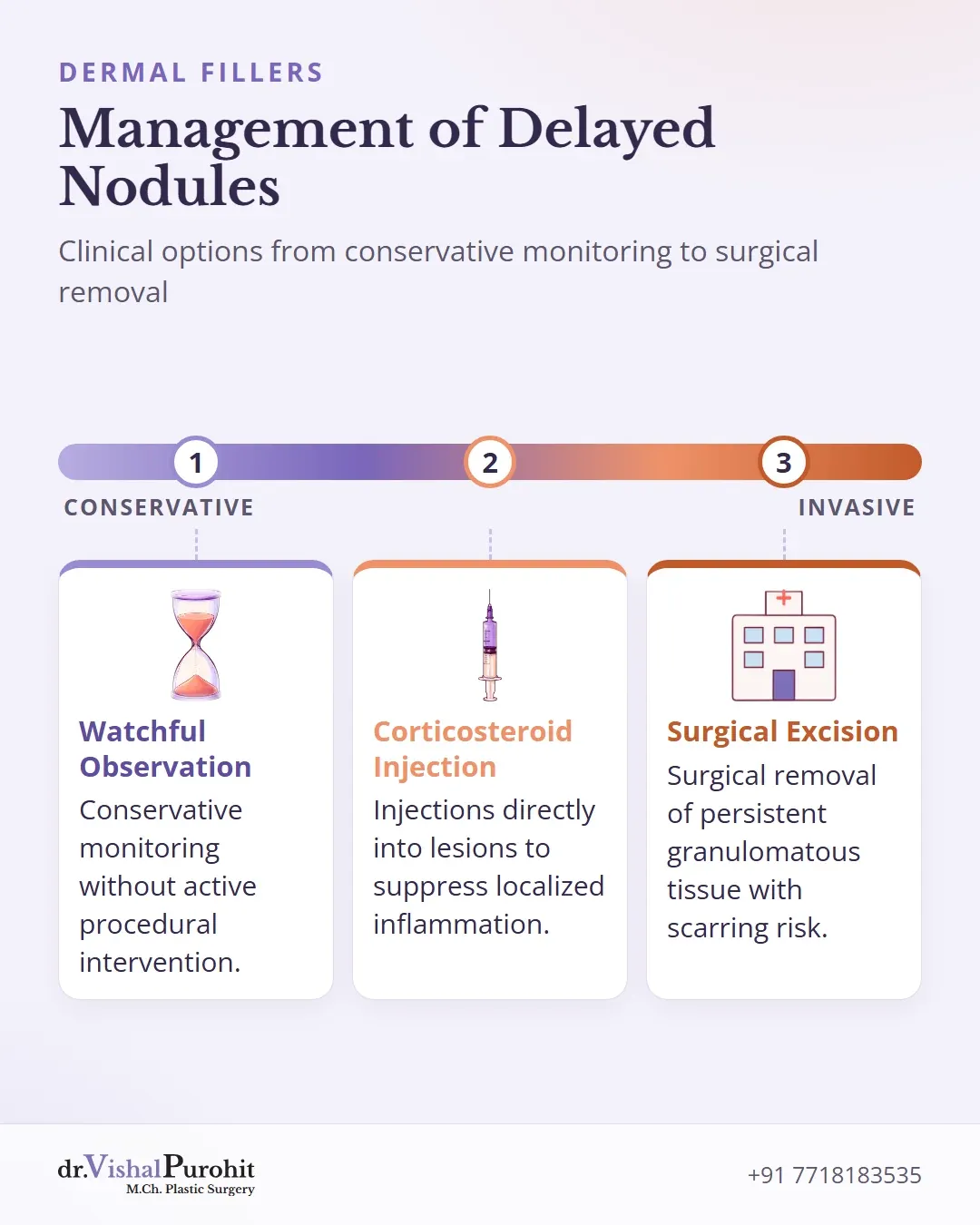
Because the product works by inducing gradual tissue thickening, late-onset nodules or foreign body granulomas present distinct management challenges15. The options for addressing these reactions include:
- Watchful waiting and conservative observation.
- Intralesional corticosteroid injections to suppress local inflammatory responses151617.
- Surgical excision of persistent nodules or surrounding granulomatous tissue, which carries risks of scarring or cosmetic deformity1516.
To minimize the danger of palpable nodules, PLLA is avoided in mobile or delicate anatomical locations:
Every patient should remember that choosing no treatment is always a valid choice. Undergoing aesthetic procedures is an elective personal decision, and no individual should feel pressured by trends or external expectations.
Post-Treatment Care and Follow-Up
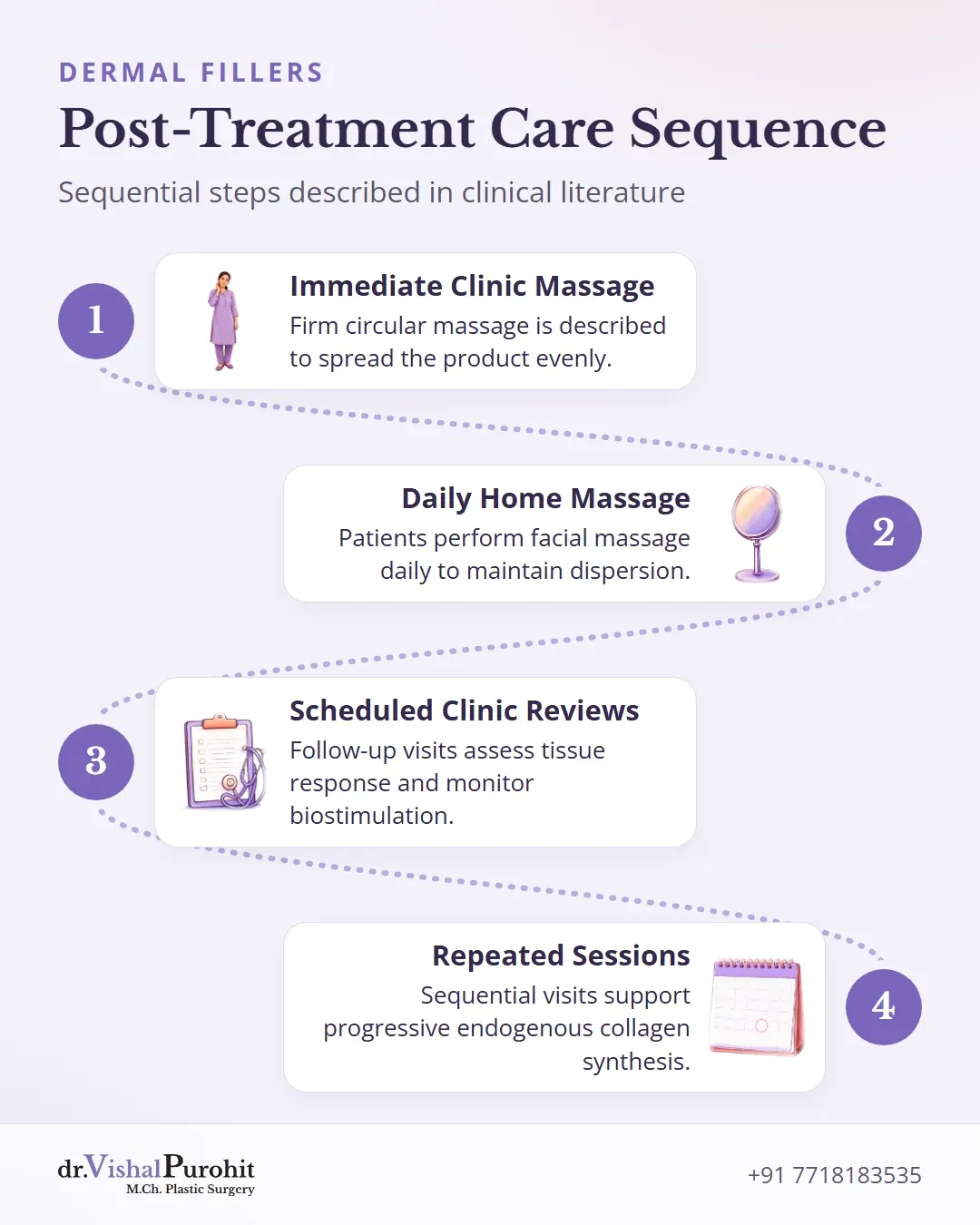
In the literature, clinicians historically perform at least 5 minutes of massage immediately after injection18. Vigorous postinjection massage using a firm, circular motion is described to ensure even product distribution and lower the incidence of nodules19. Patients in these reports are also advised to massage the face daily at home18.
Dr. Purohit’s note: Specific post-treatment care routines and review schedules in Dr. Vishal Purohit’s practice are decided at the consultation, reviewing each patient individually rather than applying a single universal aftercare instruction.
Follow-up appointments allow the clinician to assess tissue response across sequential sessions119. Most of the initial visible volume subsides within the first weeks as carrier water and postinjection edema clear18. Repeated treatments are scheduled to support progressive endogenous collagen synthesis119. Adhering to planned clinic evaluations ensures that this gradual biostimulation is monitored as therapeutic changes unfold over several months118.
Clinical Consultation for Dermal Fillers in Jaipur
Electing to undergo aesthetic procedures is an entirely personal choice, and choosing no treatment remains a valid decision. For those exploring facial volume restoration, a detailed anatomical assessment helps determine suitable options. Learn more about available options under Dermal Fillers in Jaipur or read answers to common patient concerns under Dermal Fillers FAQs. Contact +91 7718183535 to schedule a discussion.
This is educational information, not medical advice.