
Dermal filler injections require careful post-treatment observation to identify rare but serious adverse events quickly. Learning about Are Dermal Fillers Safe? Side Effects, Risks and Warning Signs helps individuals recognize unexpected reactions.
Accidental entry of filler into an artery can compromise local circulation, resulting in severe pain, skin blanching, or sudden vision loss. Immediate hospital assessment protects tissue health and preserves sight.
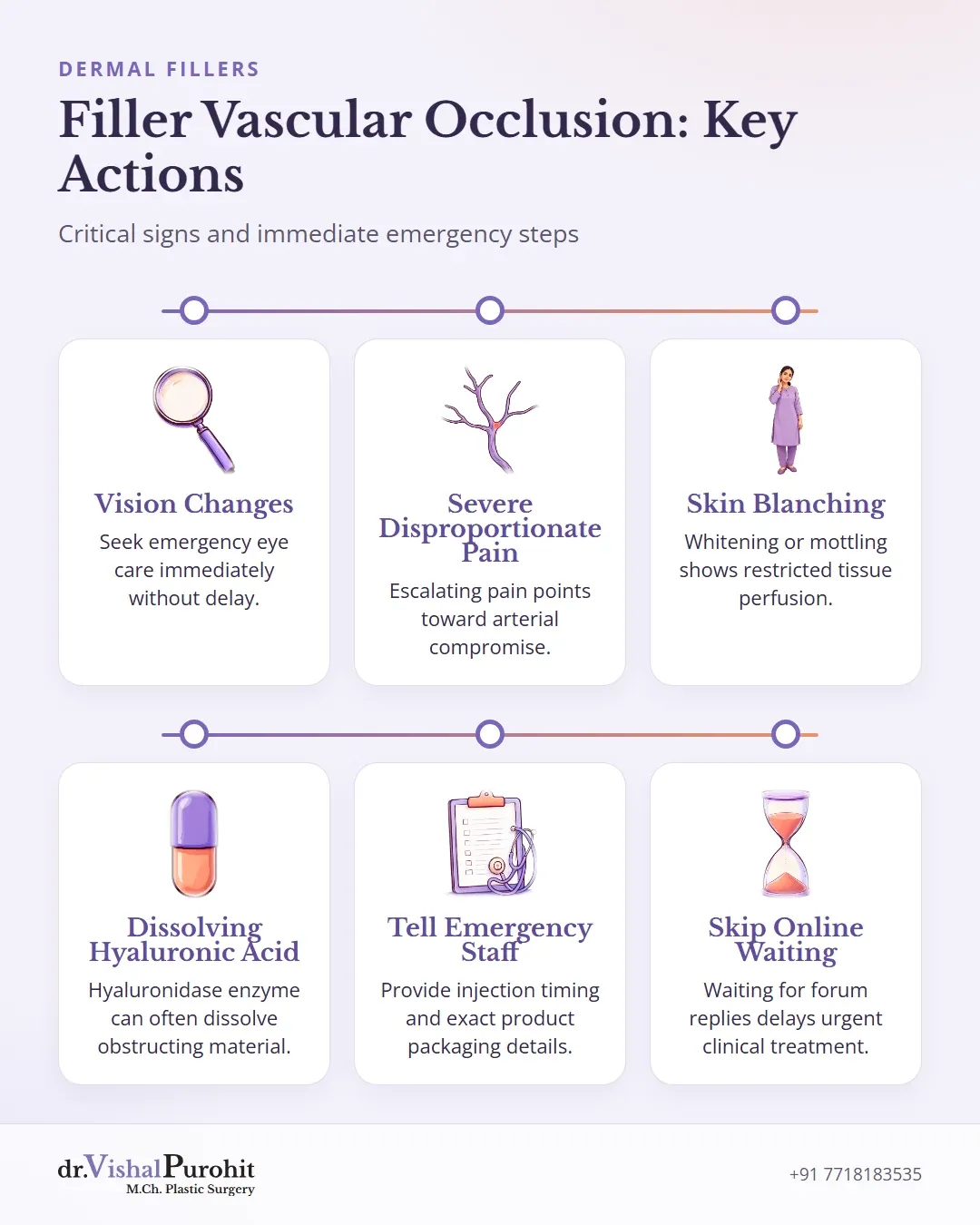
Vision Changes and Immediate Red Flags
Certain warning signs after dermal filler injections signal acute medical emergencies that require immediate hospital attention12. These complications cannot wait for clinic opening hours or home remedies.
Patients must seek emergency medical care at once if they notice any of the following symptoms:
- Sudden loss of sight, blurred vision, or visual disturbances123
- Severe eye pain or headache13
- Droopy eyelids or double vision3
- Stroke-like symptoms, including numbness or cerebral signs234
- Signs of an acute systemic allergic reaction, such as generalized swelling, respiratory problems, or shock5
Accidental injection of dermal filler into a blood vessel can obstruct circulation24. Embolization affecting the ophthalmic or retinal circulation is a time-critical emergency13. Retinal circulation must be restored within 60 to 90 minutes to prevent permanent visual loss13. Any patient experiencing visual changes should proceed directly to the nearest hospital eye department without delay1.
Unusual Pain and Skin Blanching
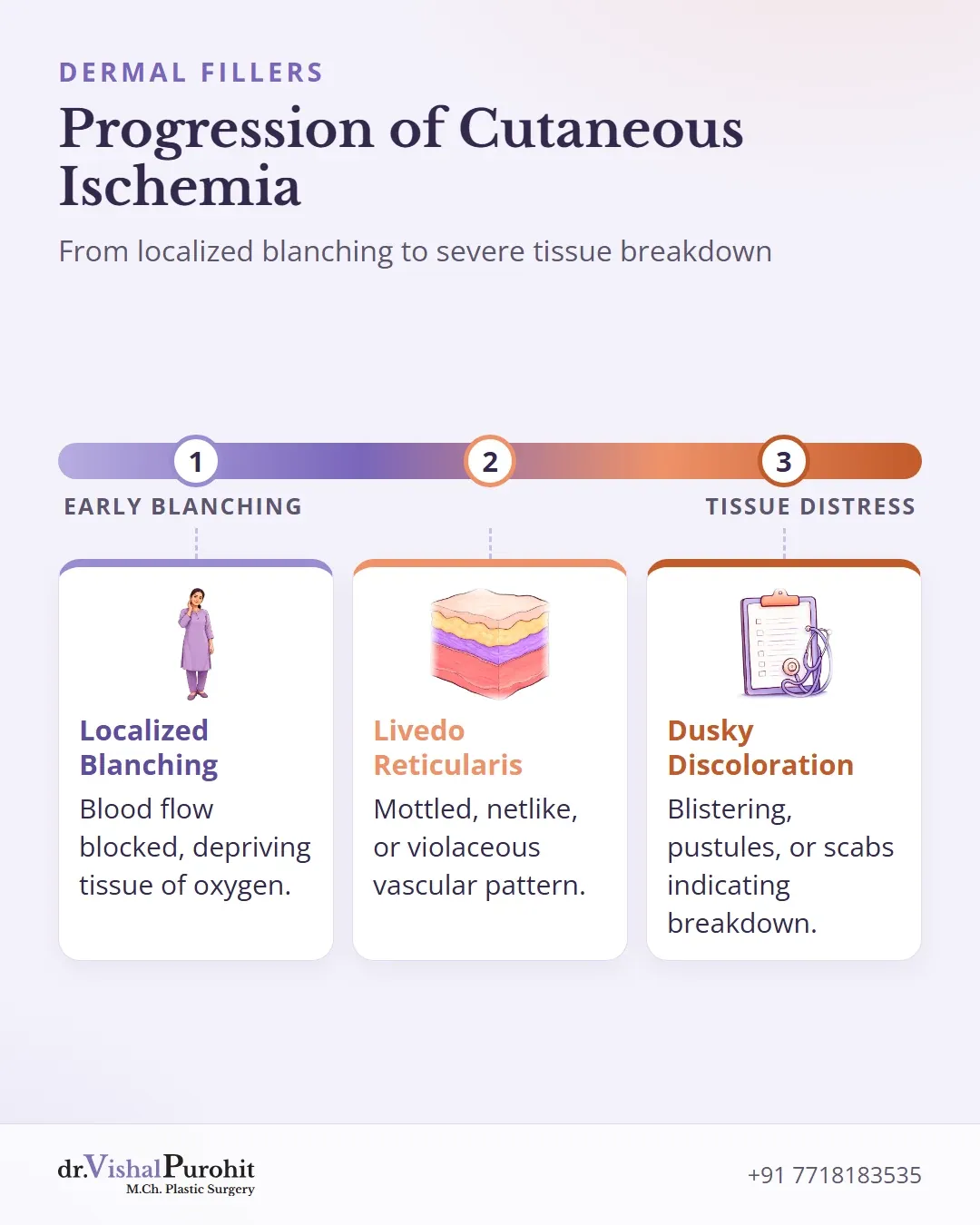
Pain and changes in skin colour are two primary diagnostic signs of vascular occlusion following dermal filler injections6. While mild tenderness can happen normally, severe, immediate, or escalating pain is disproportionate and points toward arterial compromise67.
Skin blanching occurs when blood flow through an artery is blocked or compressed, depriving tissue of oxygen and nutrients89. This vascular compromise can progress rapidly to livedo reticularis, marked by a mottled, netlike, or violaceous appearance710. Over subsequent days, affected skin may develop dusky discoloration, blistering, pustules, or scabs711.
Warning features requiring urgent medical assessment include:
- Severe, extreme, or escalating pain disproportionate to normal post-treatment tenderness7812
- Persistent, mottled, or localized skin blanching7
- A lace-like, livedoid, or reticular skin pattern713
- Cool skin or delayed capillary refill712
- Dusky, violaceous discoloration, or signs of tissue distress711
Prompt evaluation by a qualified doctor is critical, as treatment delay increases the risk of tissue breakdown and skin necrosis7912.
Dr. Purohit’s note: Dr. Vishal Purohit advises patients never to ignore sudden severe pain or skin turning white, blue, or mottled, as immediate assessment protects skin viability.
What Happens During Vascular Occlusion
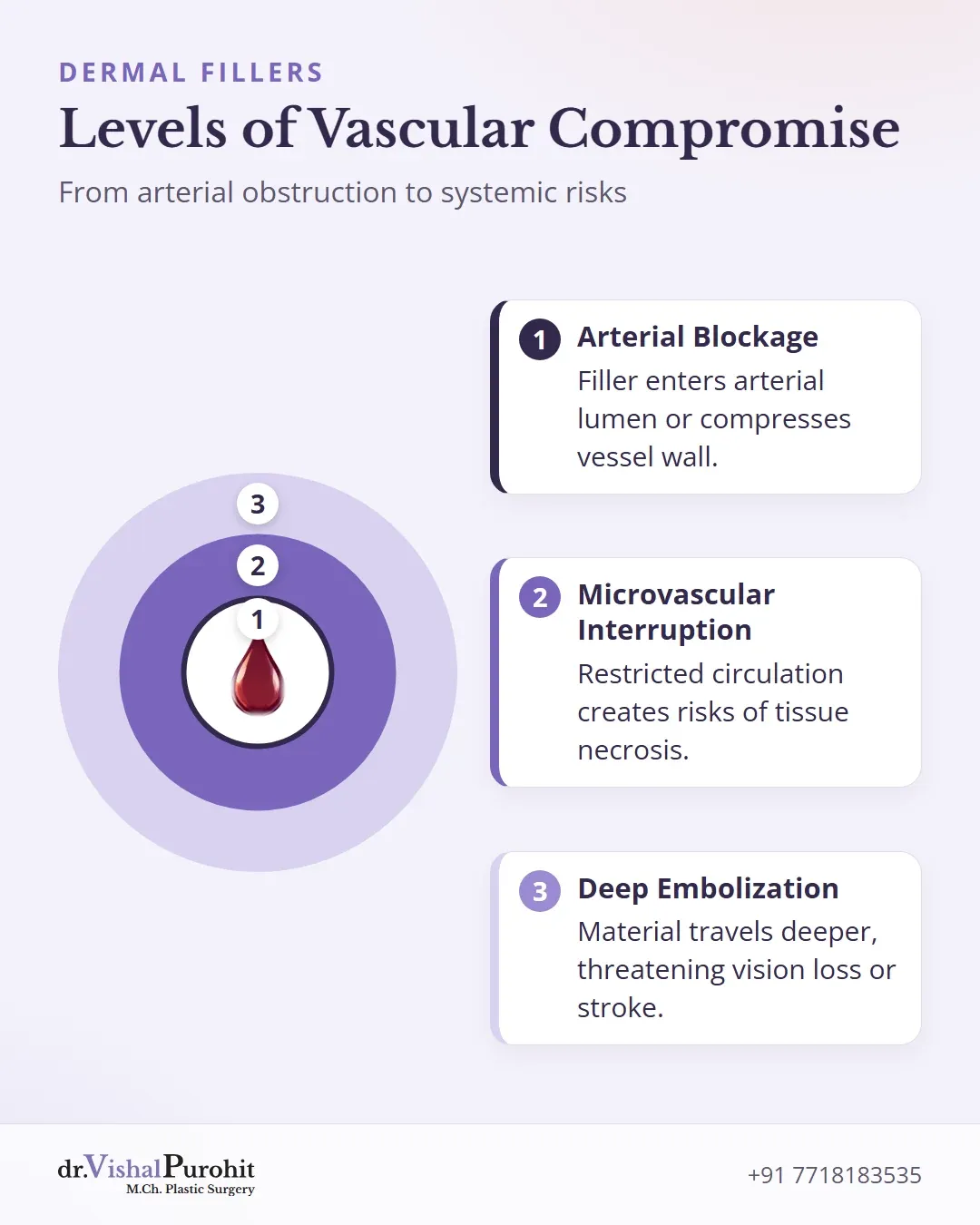
Vascular occlusion occurs when dermal filler accidentally enters an arterial lumen or exerts external pressure on a vessel814. When this happens, an embolism forms or local tissues compress the vessel wall, restricting local blood flow and tissue perfusion814.
Key points
- Vascular occlusion happens when filler blocks or compresses blood vessels, restricting tissue blood flow.
- Interrupted circulation can cause serious complications like tissue necrosis or sudden vision loss.
- Hyaluronidase may dissolve hyaluronic acid filler, but prompt medical evaluation is critical.
This restriction can interrupt microvascular circulation, which carries serious risks such as tissue necrosis or permanent scarring14. In severe cases, filler material can travel into deeper arterial branches, creating a risk of sudden vision loss or ischemic stroke1415.
When hyaluronic acid (HA) filler is involved, an enzyme called hyaluronidase can often dissolve the material1617. However, treatment is never described as fully reversible, and dissolving does not guarantee complete restoration. Prompt medical evaluation by a qualified doctor is essential if vascular compromise is suspected68.
Every individual retains the right to make their own healthcare choices. Choosing no treatment remains a valid patient option, and decisions should always be made with clear information rather than urgency or outside pressure.
What to Tell Emergency Medical Staff
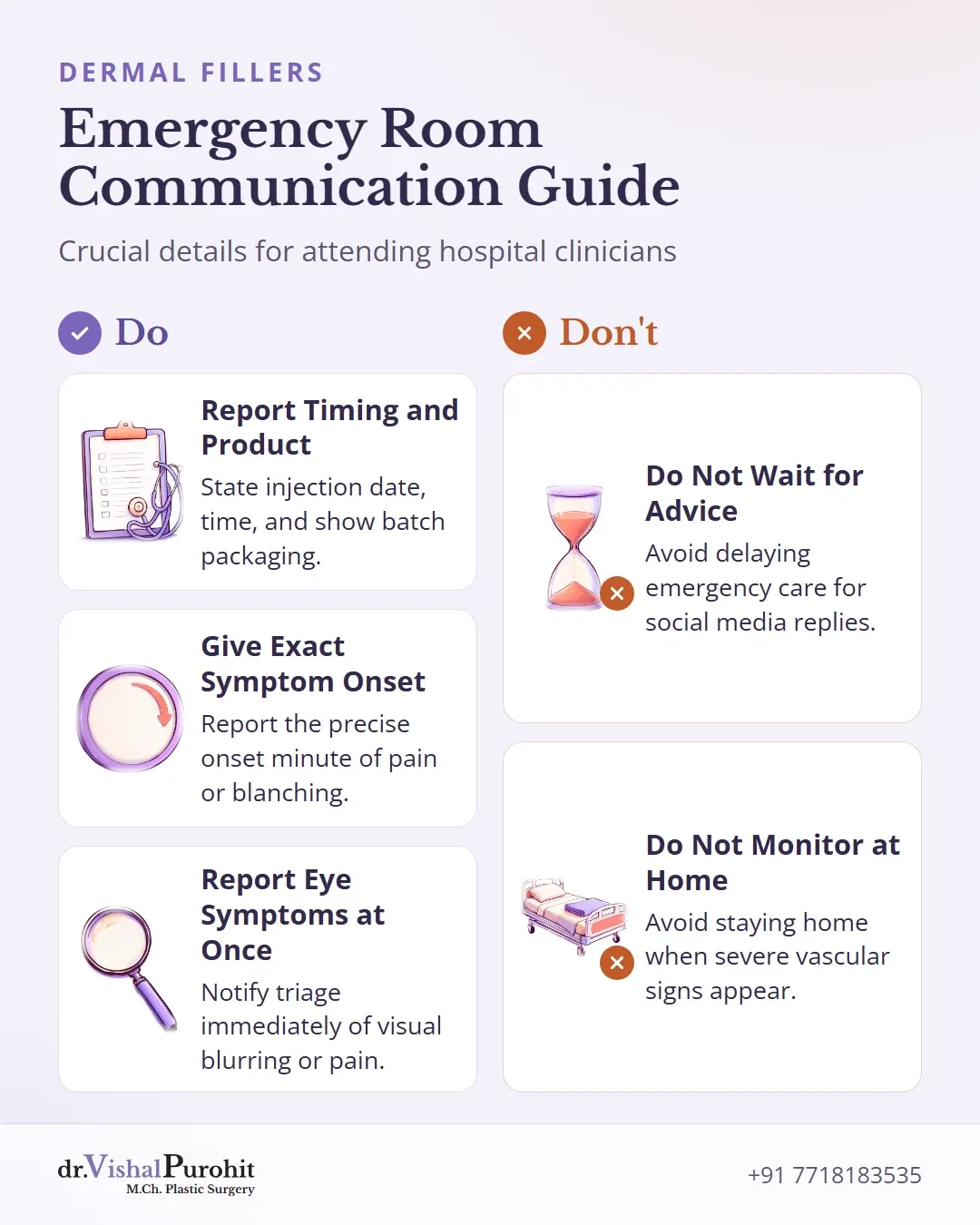
When arriving at an emergency department, inform the triage staff immediately that a dermal filler injection was performed. Clear communication helps clinicians distinguish soft tissue filler complications from unrelated medical issues1418.
Provide the treating medical team with the following specific details without delay:
- State clearly that dermal filler was injected and provide the exact time and date of administration1819.
- Present the packaging details, product names, or batch numbers directly to the clinicians if available.
- State the precise onset time of any severe pain, blanching, dusky mottling, or skin colour abnormalities819.
- Report any sudden visual changes, blurred vision, or eye pain instantly, noting the exact minute symptoms began18.
Visual loss and vascular compromise represent acute emergencies where blood flow must be evaluated rapidly18. Immediate recognition by attending staff allows appropriate emergency protocols to begin820.
Why Waiting for Online Advice Is Dangerous
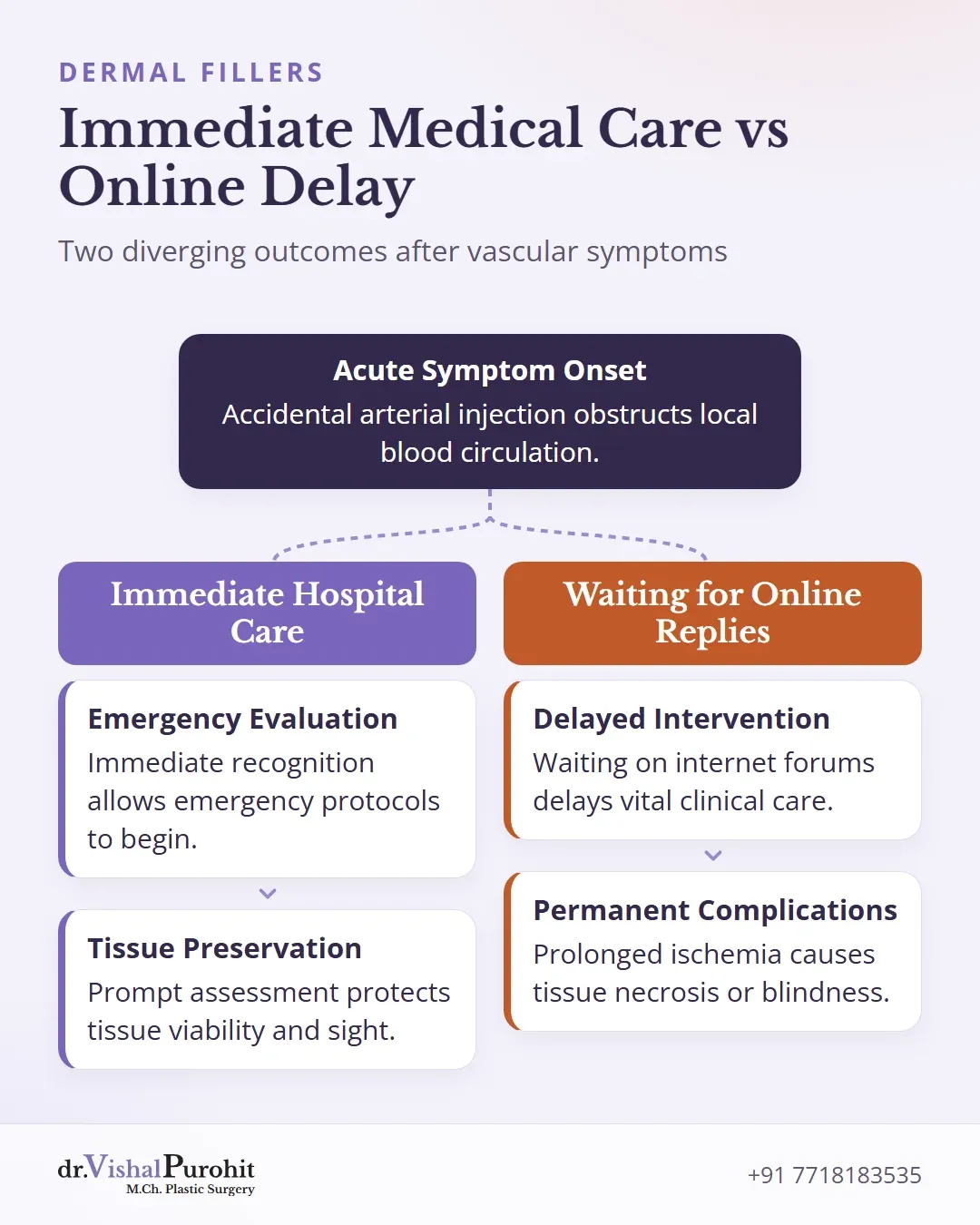
Posting on internet forums or waiting for social media replies when unexpected symptoms appear carries severe risks. Adverse effects from dermal fillers are time-sensitive, and prompt diagnosis and medical intervention are essential21. Waiting hours for unverified opinions delays vital treatment and can allow tissue damage to worsen22.
Key points
- Adverse reactions from dermal fillers are urgent medical emergencies requiring immediate care.
- Waiting for online advice delays treatment and risks severe tissue damage, necrosis, blindness, or stroke.
- Emergency warning signs require immediate medical contact rather than monitoring at home.
Accidental injection of filler into a blood vessel can cause vascular occlusion, preventing blood flow through the artery8. If ischemia is allowed to persist, cellular death, subdermal fat atrophy, and tissue necrosis can follow222. Vascular compromise can also lead to irreversible blindness or stroke28. For these reasons, patients must contact their doctor immediately when symptoms occur rather than monitoring them at home23.
Immediate hospital assessment is required without delay if any of these emergency warning signs occur:
Emergency Care and Dermal Fillers in Jaipur
Recognizing acute red flags ensures timely intervention for vascular compromise. To understand treatment options or consult an M.Ch. plastic surgeon, explore Dermal Fillers in Jaipur for clinical information. Review common concerns and safety guidance through Dermal Fillers FAQs. While choosing no treatment remains a valid personal decision, any sudden vision loss or severe skin blanching requires immediate emergency department attendance.
This is educational information, not medical advice.