
Mild swelling and bruising are common after treatment and typically resolve over days to weeks. However, delayed lumps or unexpected puffiness can emerge weeks, months, or even years later, requiring professional medical review.
Understanding normal recovery versus delayed complications is essential. Reviewing Filler Aftercare: Swelling, Bruising and Normal Healing helps patients monitor their recovery, while persistent or tender nodules always warrant an in-person physical assessment.
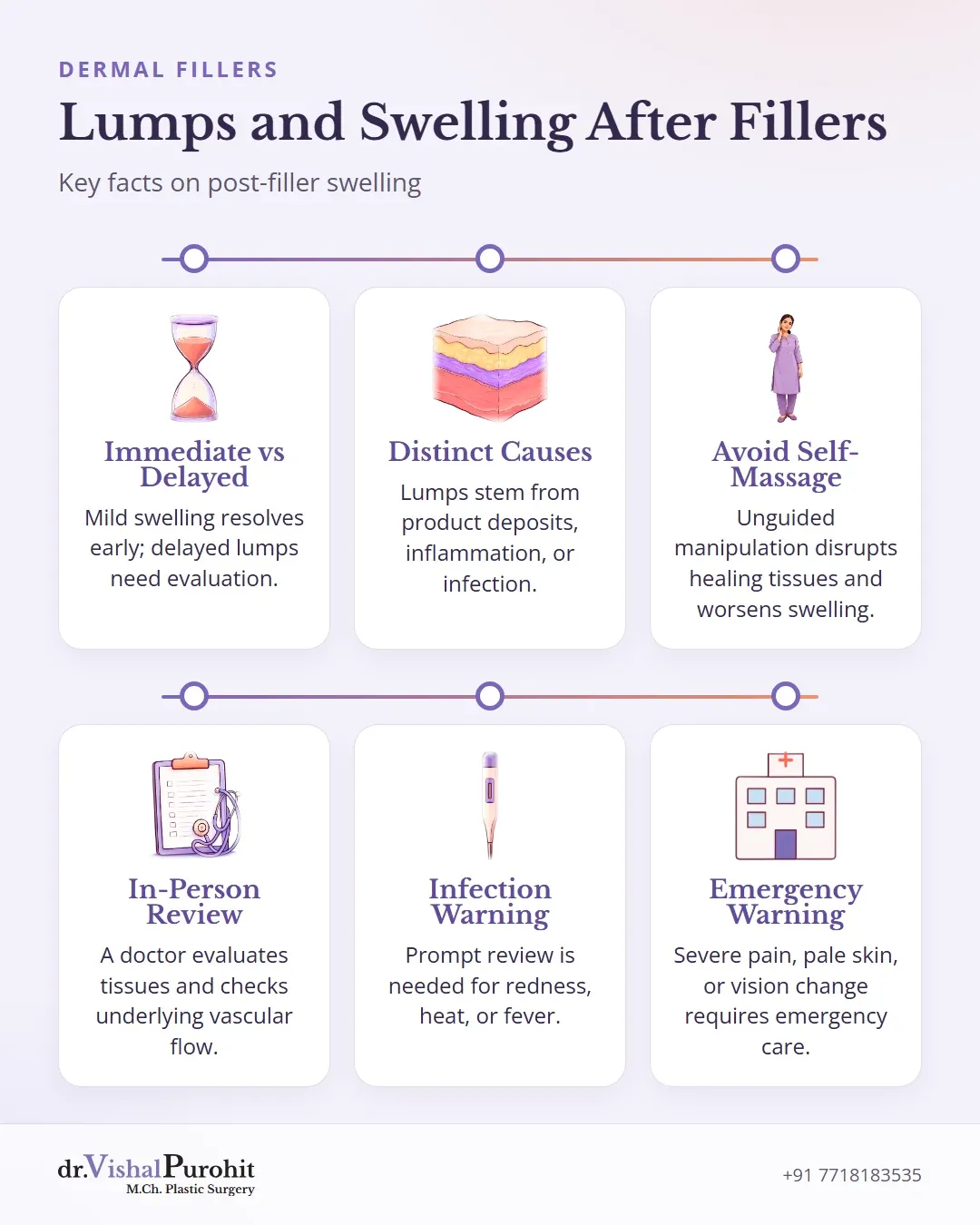
Timing of Swelling and Lumps to Report
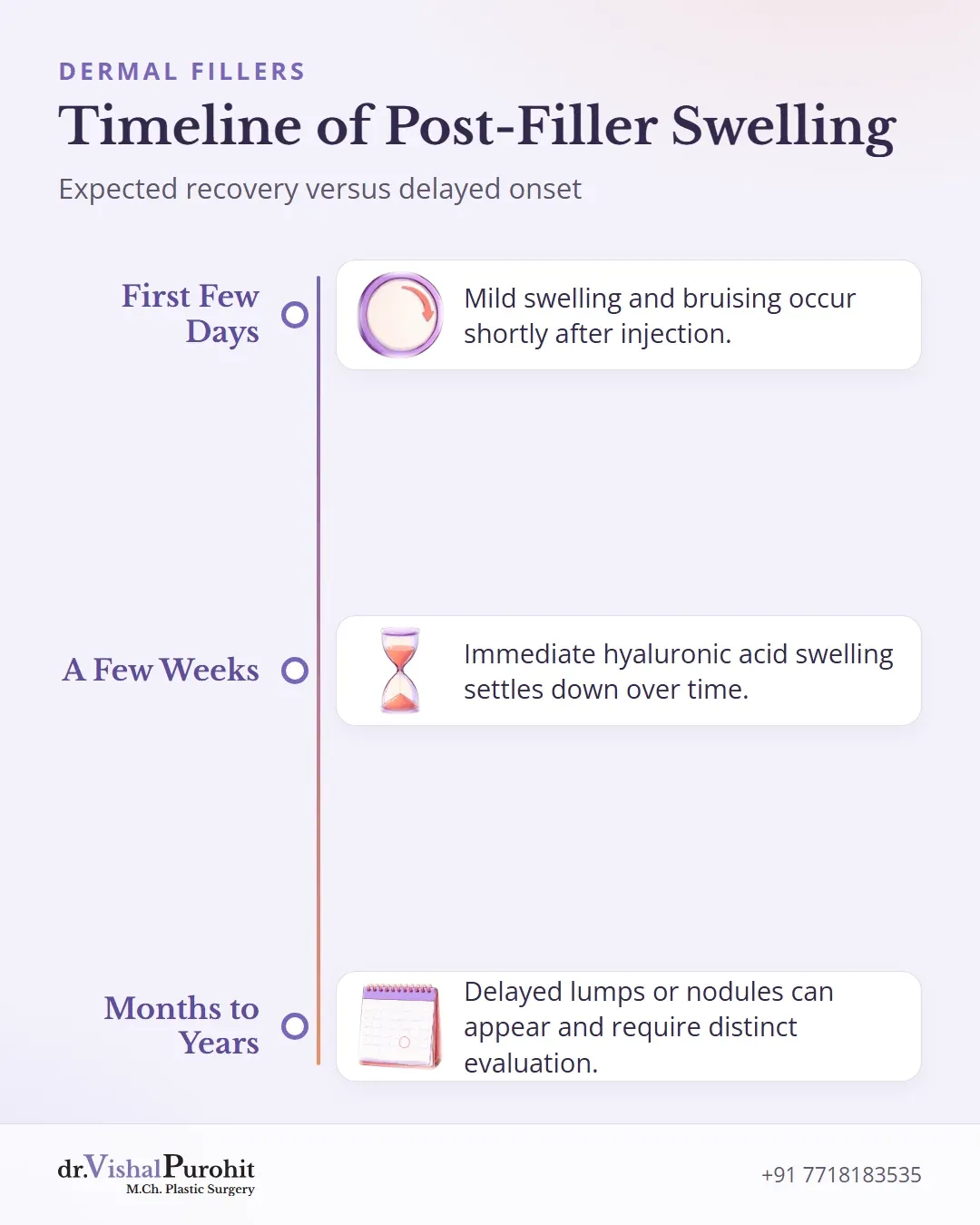
Most common side effects after dermal filler injections, including mild swelling and bruising, occur shortly after treatment and many resolve within a few days to weeks1. Hyaluronic acid fillers can cause immediate swelling that settles over time2.
In contrast, delayed lumps, nodules, or swelling require distinct medical evaluation. These changes can appear weeks, months, or even years after dermal filler treatment13. Delayed-onset nodules can occur with soft-tissue fillers, including cross-linked hyaluronic acid3, and may present several months after the initial procedure4.
To assist accurate clinical evaluation, patients should note:
- The exact date or timing when new swelling or lumps first appeared.
- Any spreading pattern, repeated swelling episodes, or changes over time5.
- Any associated symptoms, such as tenderness6, color changes3, or a preceding illness7.
Dr. Purohit’s note: Dr. Purohit assesses individual postoperative concerns during clinical follow-up. For urgent queries, his team can be reached on +91 7718183535.
Any sudden severe pain, vision changes, or skin pallor requires immediate emergency medical evaluation rather than waiting.
Explaining Swelling Causes in Plain Language
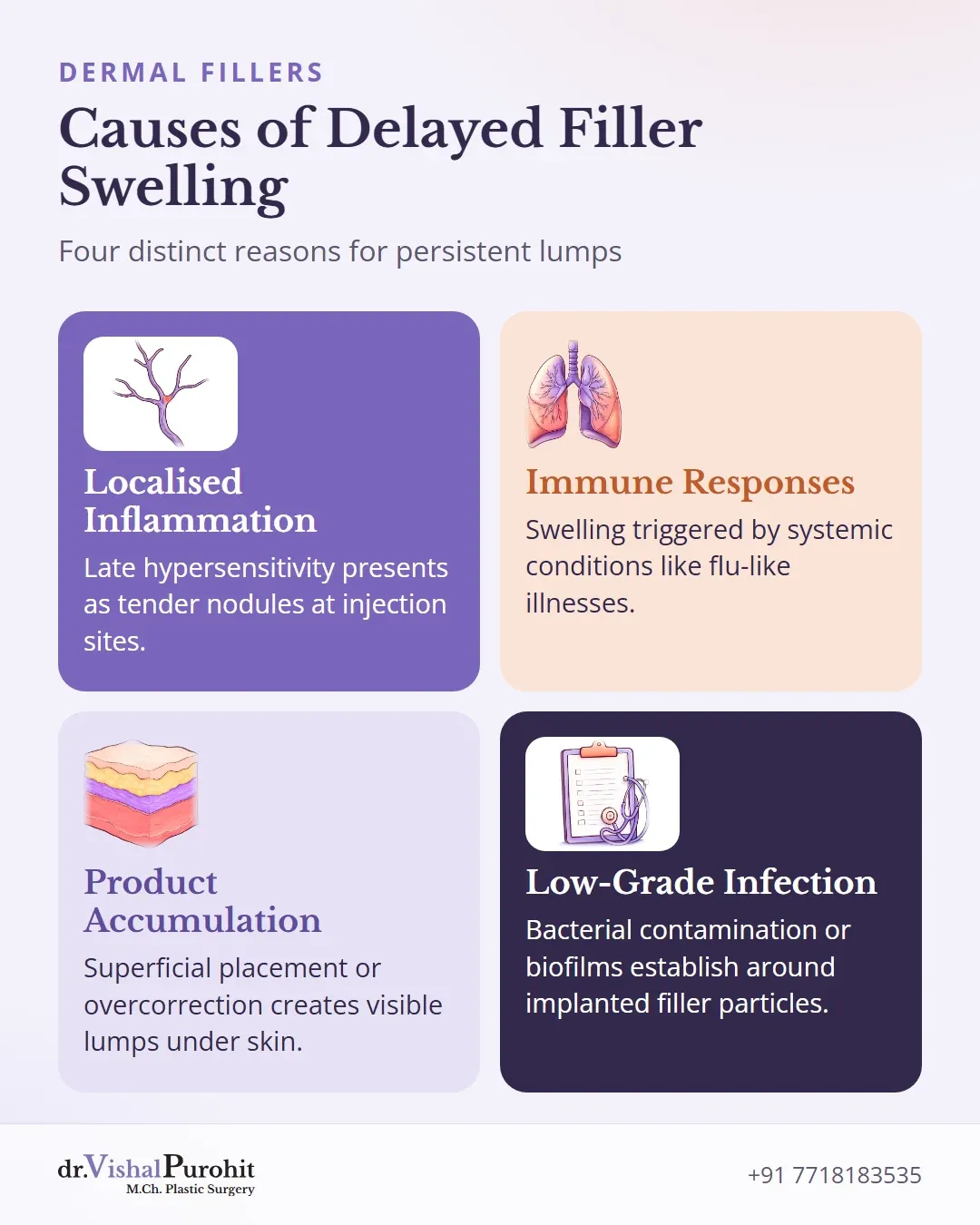
Persistent swelling or nodules after dermal filler injections can develop for several distinct reasons:
Key points
- Persistent swelling or nodules after dermal fillers stem from inflammation, immune triggers, product misplacement, or low-grade infection.
- Self-diagnosis is strongly discouraged because distinguishing between biofilms, granulomas, and misplaced product requires an objective clinical examination.
- An in-person physical assessment is essential to determine the accurate cause and guide safe management.
- Localised inflammation: Late hypersensitivity or inflammatory reactions can manifest as tender, painful nodules at the injection site8.
- Immune responses: Delayed inflammatory swelling may be triggered by systemic conditions such as influenza-like illnesses or upper respiratory tract infections8.
- Product accumulation: Too superficial placement or overcorrection can result in visible or palpable lumps under the skin9.
- Low-grade infection: Infectious inflammatory nodules can arise when low-grade bacterial contamination or biofilms become established around the implanted filler particles81011.
Self-diagnosis of complex entities such as biofilms or foreign body granulomas is strongly discouraged. Distinguishing an immune-mediated reaction from an indolent infection or simple uneven product placement requires an objective clinical examination81012.
At his practice in Jaipur, Dr. Vishal Purohit advises that concerning or persistent swelling warrants an in-person physical assessment. A qualified medical evaluation allows the clinician to palpate the tissues, inspect for inflammation or infection, and determine the accurate underlying cause before formulating a management plan812.
Signs That Require Urgent Review
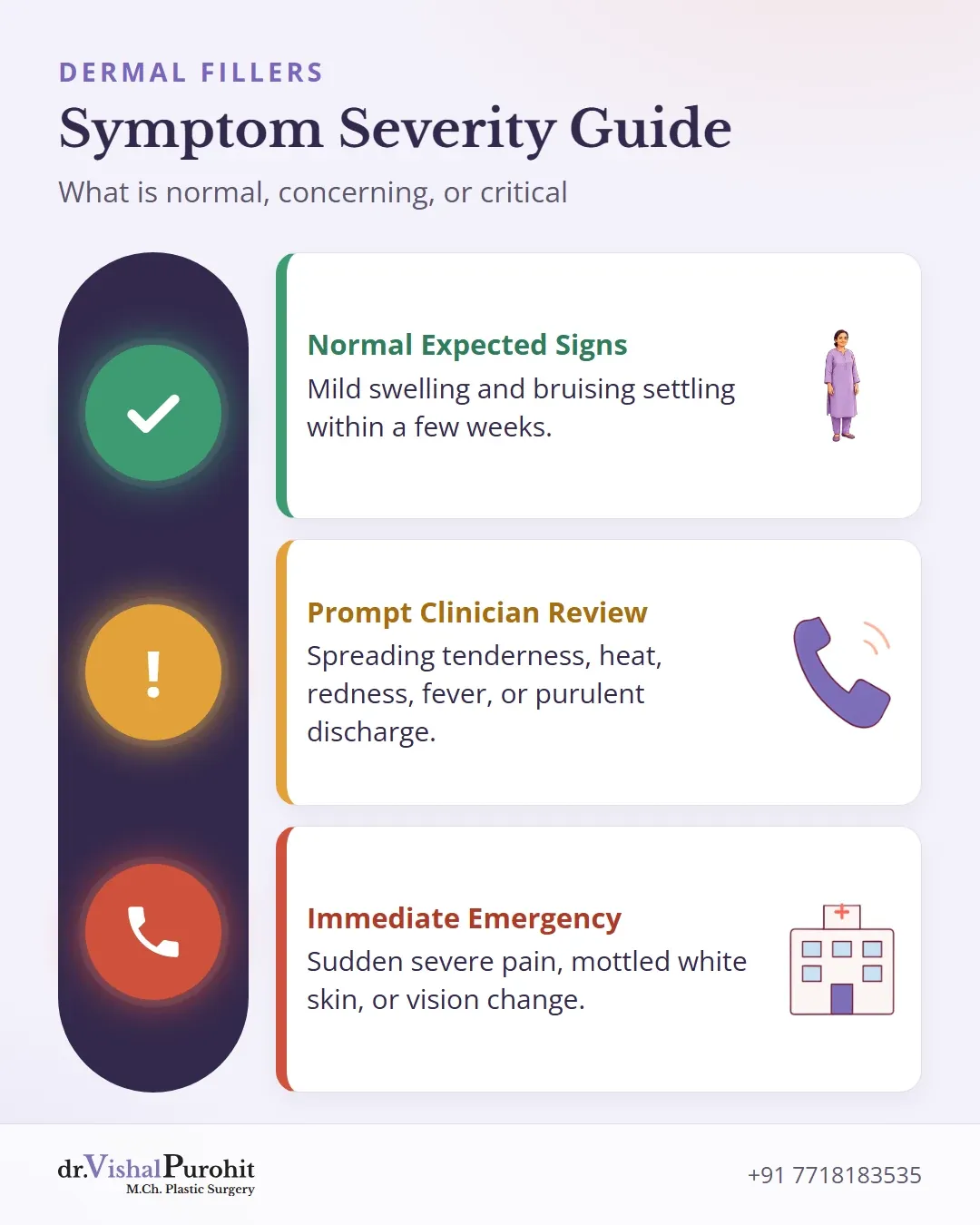
Certain skin changes following dermal filler injection require prompt evaluation by a clinician to prevent worsening complications1314.
Symptoms Requiring Prompt Clinician Review
A patient should seek timely medical assessment if any of the following signs develop around a nodule or treated area:
- New redness or erythema131415
- Localized warmth or heat14
- Spreading tenderness or pain1315
- Flu-like symptoms or fever15
- Skin breakdown, purulent discharge, or a fluctuant nodule suggesting an abscess13141617
Immediate Emergency Warnings
Other acute symptoms require emergency care at once, rather than waiting for an appointment:
- Sudden severe pain
- Skin turning white, grey, blue, or mottled, indicating blanching or vascular compromise15
- Vision change, blurred vision, or loss of vision15
At his practice in Jaipur, Dr. Vishal Purohit assesses concerning post-treatment signs in person. Patients who notice critical warning signs should seek urgent medical attention immediately.
What Clinical Evaluation May Involve
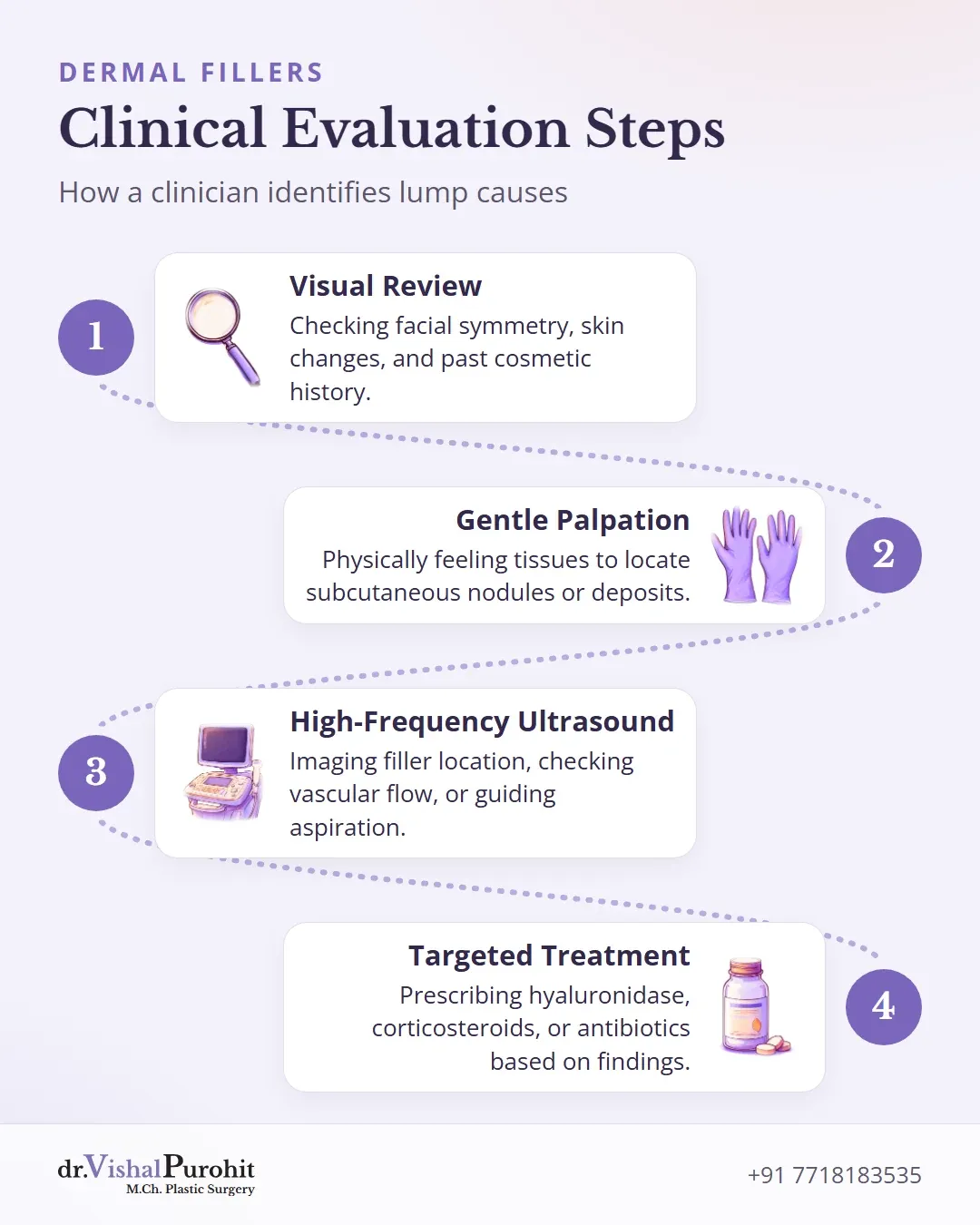
When delayed lumps, swelling, or nodules develop after dermal filler treatment, a doctor conducts a step-by-step clinical evaluation1819. At Dr. Purohit’s practice, any specific diagnostic procedure, dissolving plan, or intervention is not confirmed beforehand and is decided at the consultation.
A medical evaluation may include:
- Visual review and history: Checking the face for asymmetry or surface changes, alongside reviewing past cosmetic injections and previous photographs where accessible1820.
- Palpation: Gentle physical feeling of the tissues to locate subcutaneous nodules or firm filler deposits20.
- High-frequency ultrasound: Imaging may help identify the location and type of underlying filler material, check vascular flow, or guide aspiration and biopsy21.
- Targeted prescription treatments: When clinically indicated, prescription medications such as hyaluronidase injections, oral or intralesional corticosteroids, or antibiotics may be considered based on whether the nodule shows inflammatory, hypersensitive, or non-inflammatory characteristics4212223.
Careful assessment helps determine whether delayed swelling represents an immune-mediated reaction, infection, or filler displacement31824.
Avoiding Self Massage and Unsupervised Medication
When a new lump, bump, or area of swelling appears after dermal filler treatment, manipulating the area without professional direction presents distinct clinical risks.
Why Unsupervised Actions Should Be Avoided
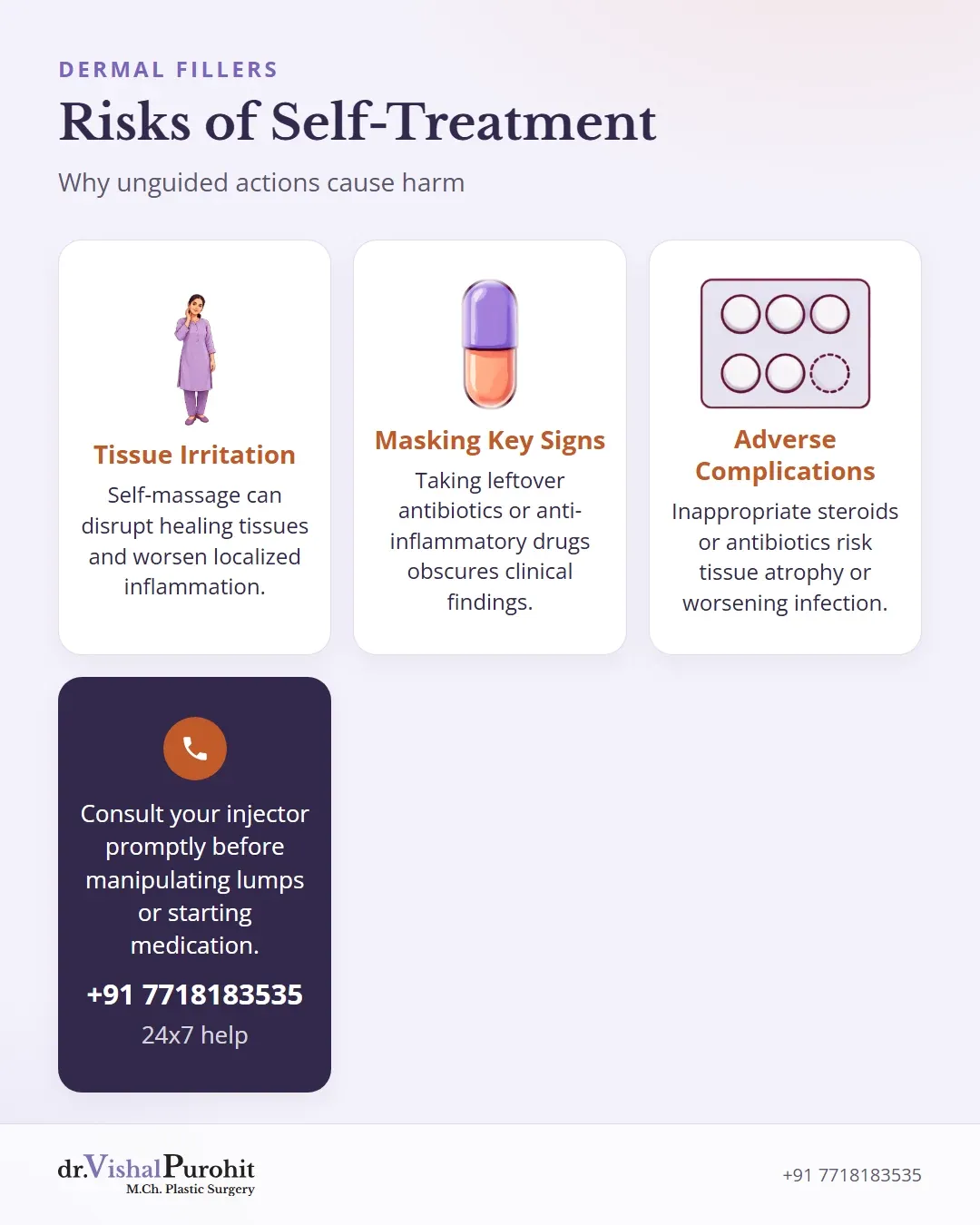
Common post-procedure complications include lumps, bumps, irregularities, and swelling2526. Attempting self-massage without guidance can disrupt healing tissues and worsen localized inflammation, which leads to tissue irritation and delayed resolution. Delayed-onset nodules or persistent swelling may represent late hypersensitivity, infection, or chronic granulomatous reactions that require targeted professional evaluation, such as formal clinical assessment, culture, or imaging82728. Taking leftover antibiotics or anti-inflammatory drugs without supervision obscures clinical findings, masking critical diagnostic signs. Inappropriate steroid or antibiotic administration can lead to complications such as tissue atrophy, skin discoloration, or worsening underlying infection28, illustrating the severe risk of adverse effects from unsupervised medical therapy.
Tissue Irritation
Attempting self-massage without guidance can disrupt healing tissues and worsen localized inflammation, leading to delayed resolution.
Masking Critical Signs
Taking medications without supervision obscures diagnostic signs needed to identify infection or granulomatous reactions.
Adverse Effects Risk
Unsupervised medical therapy carries substantial risks such as tissue atrophy, skin discoloration, or worsening infection.
Dr. Vishal Purohit advises patients in Jaipur to consult their injector promptly before manipulating lumps or starting any medication.
Clinical Assessment of Filler Concerns in Jaipur
Anyone experiencing delayed nodules or unexplained swelling can consult Dr. Vishal Purohit for an objective physical evaluation. Learn more about treatment options with Dermal Fillers in Jaipur or read Dermal Fillers FAQs for further details on post-treatment care and clinical evaluation.
This is educational information, not medical advice.