
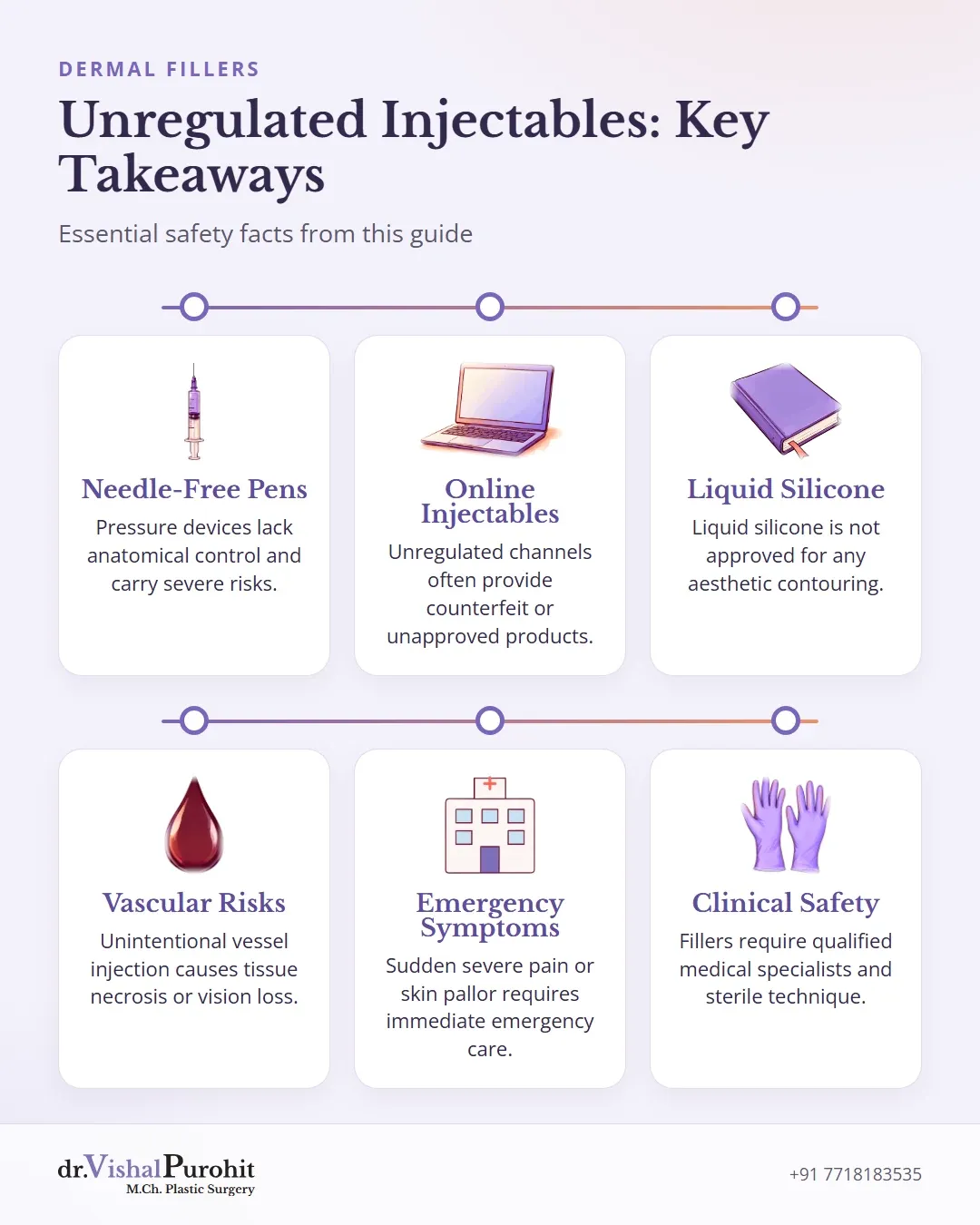
Needle-free devices and internet injectables may appear convenient, but unregulated cosmetic procedures present severe medical dangers. Devices relying on mechanical pressure force substances indiscriminately into tissue layers without anatomical control, while online channels frequently supply counterfeit formulations. Understanding Are Dermal Fillers Safe? Side Effects, Risks and Warning Signs helps patients evaluate these hazards objectively.
Administering dermal fillers requires formal medical training and precise anatomical knowledge. Shortcuts that bypass qualified specialists can cause irreversible tissue death, visual impairment, or systemic harm. Safe clinical care prioritises rigorous sterile technique and evidence-based methods over unverified aesthetic trends.
The Risks of Needle-Free Hyaluron Pens
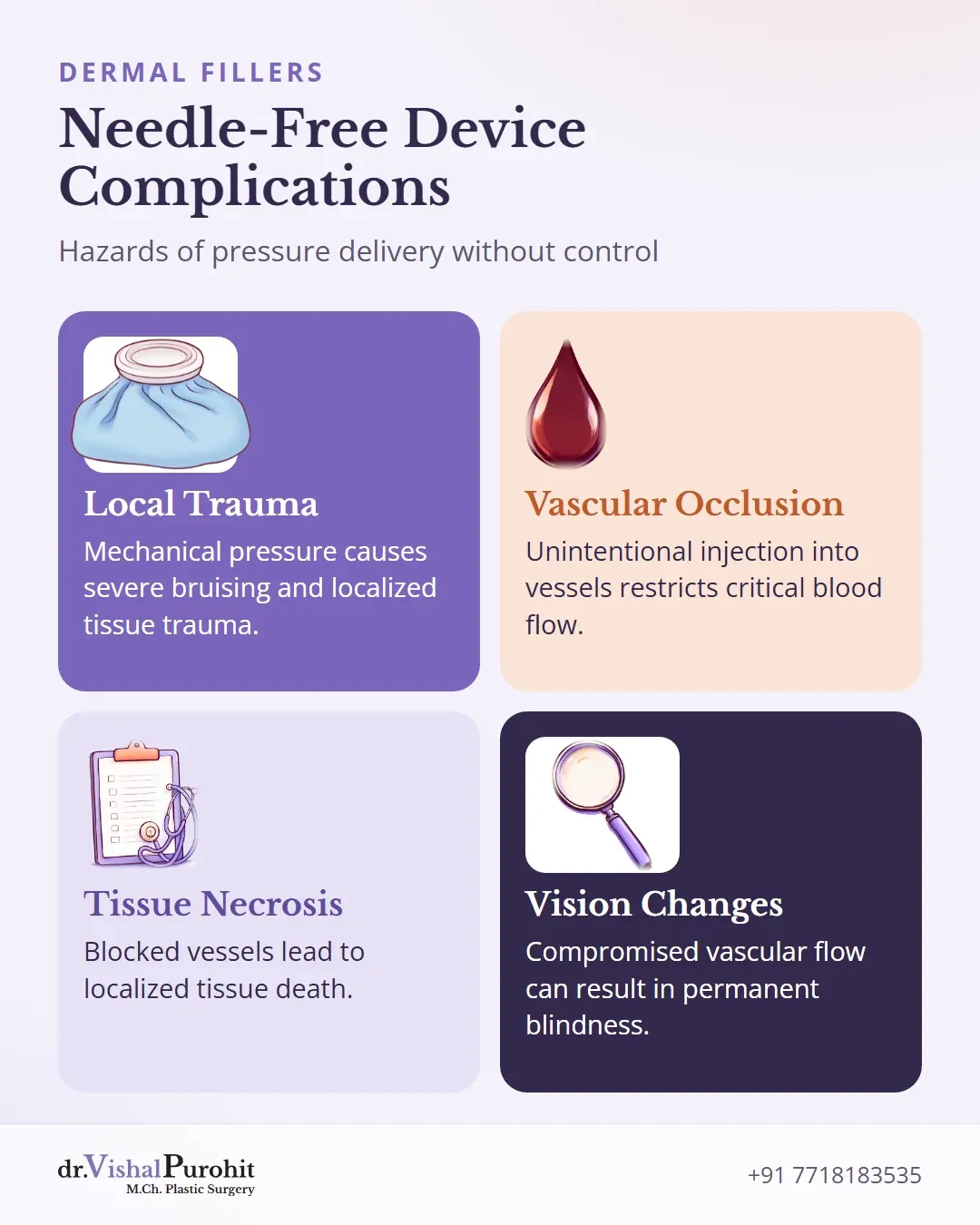
Needle-free devices rely on high mechanical pressure rather than a needle or cannula to force cosmetic filler through the skin surface1. The safety and effectiveness of needle-free devices for the injection of dermal fillers are not known, and these devices are not approved by the FDA1. Dermal fillers are also not approved for over-the-counter use1.
Key points
- Needle-free filler devices are unapproved and lack anatomic precision.
- Indiscriminate pressure-based injection can cause severe complications, including vascular occlusion and tissue necrosis.
- Correcting misplaced filler from these devices may require surgical or clinical intervention.
Because pressure-based devices deliver filler indiscriminately across tissue layers without anatomic control, their use has led to reports of serious adverse events1.
Regulatory health authorities and medical reports note that unintended administration can cause significant complications12:
- Severe bruising and localized trauma134
- Vascular occlusion from unintentional injection into blood vessels, which restricts blood flow125
- Tissue necrosis, or tissue death, caused by blocked vessels25
- Scarring and permanent skin damage235
- Blindness or vision changes resulting from vascular compromise125
When side effects or misplacement occur, reducing or removing the deposited product may require corrective injections or surgery, which carry their own distinct clinical risks1.
Dangers of Purchasing Injectables Online
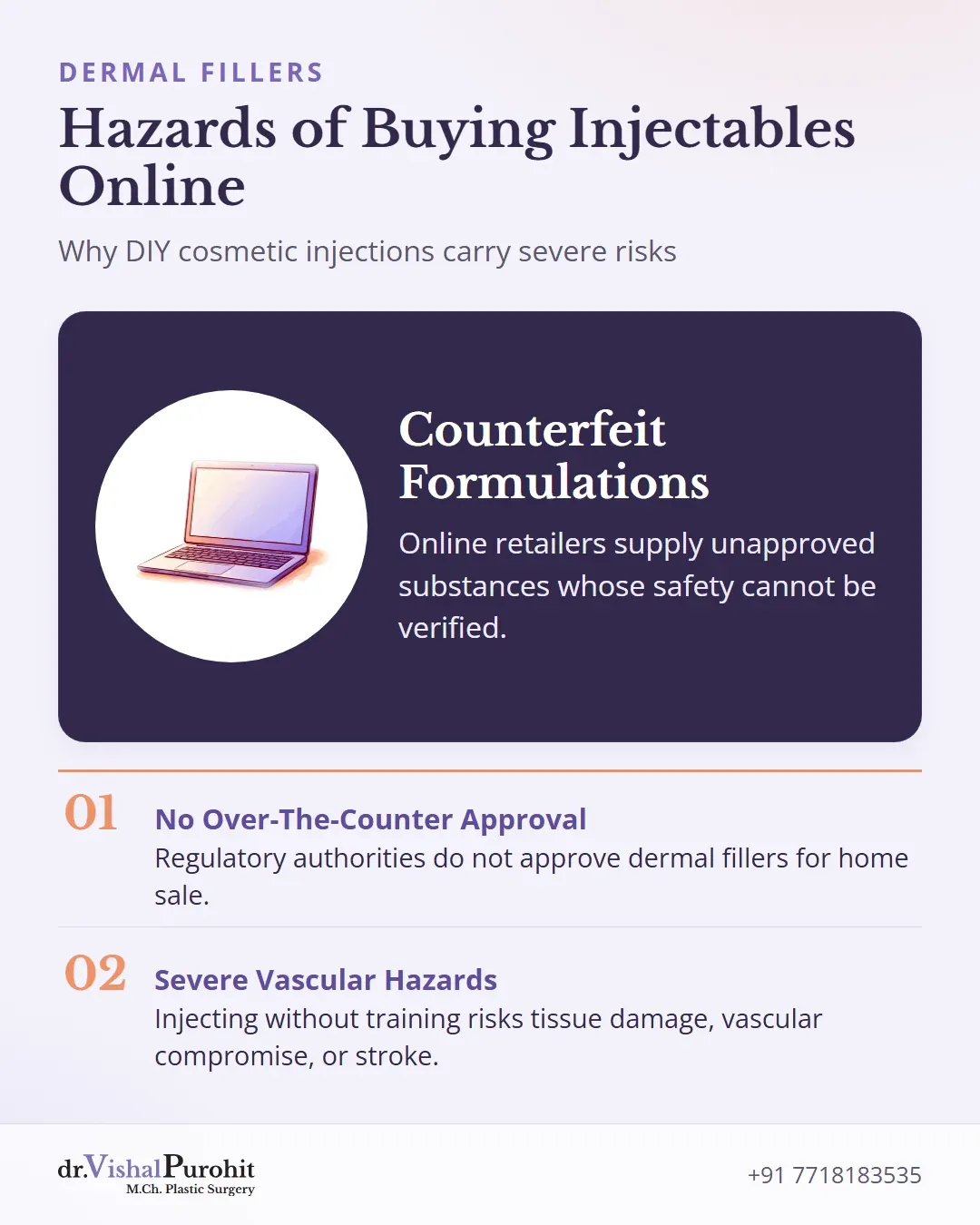
Injectable dermal fillers should never be bought online or injected at home16. Regulatory authorities do not approve any dermal fillers for over-the-counter sale7. Dermal filler injections are medical procedures requiring formal training, not casual cosmetic treatments6.
Products acquired online carry significant hazards:
- Unregulated channels frequently supply counterfeit or unapproved formulations whose safety and effectiveness cannot be verified1689.
- Regulatory warnings specifically highlight the distribution of unapproved prescription fillers through online retailers8.
- Injecting without proper medical training creates serious risks because unfamiliarity with anatomy near blood vessels can result in vascular compromise, tissue damage, or stroke1910.
Administering soft tissue filler requires precise anatomical understanding to avoid injecting near critical blood vessels19.
Dr. Purohit’s note: In his practice, Dr. Vishal Purohit views patient safety as requiring proper clinical assessment by an M.Ch. plastic surgeon rather than self-treatment.
Any sudden skin pallor, discolouration, or visual changes warrants immediate emergency evaluation1.
Injectable Silicone and Large-Volume Body Warnings
Injecting liquid silicone or unapproved materials for large-volume body enhancement presents severe, irreversible medical dangers1112. Official regulatory guidelines explicitly advise against injecting liquid silicone or dermal fillers for body contouring, such as gluteal or breast augmentation11112. Liquid silicone is not approved for any aesthetic contouring procedure1.
Key points
- Liquid silicone is never approved or safe for large-volume aesthetic body enhancement.
- Injectable silicone and unapproved bulk fillers cause severe complications including granulomas, migration, and fatal embolisms.
- Managing silicone-related tissue damage is extremely complex, making safe evidence-based techniques essential.
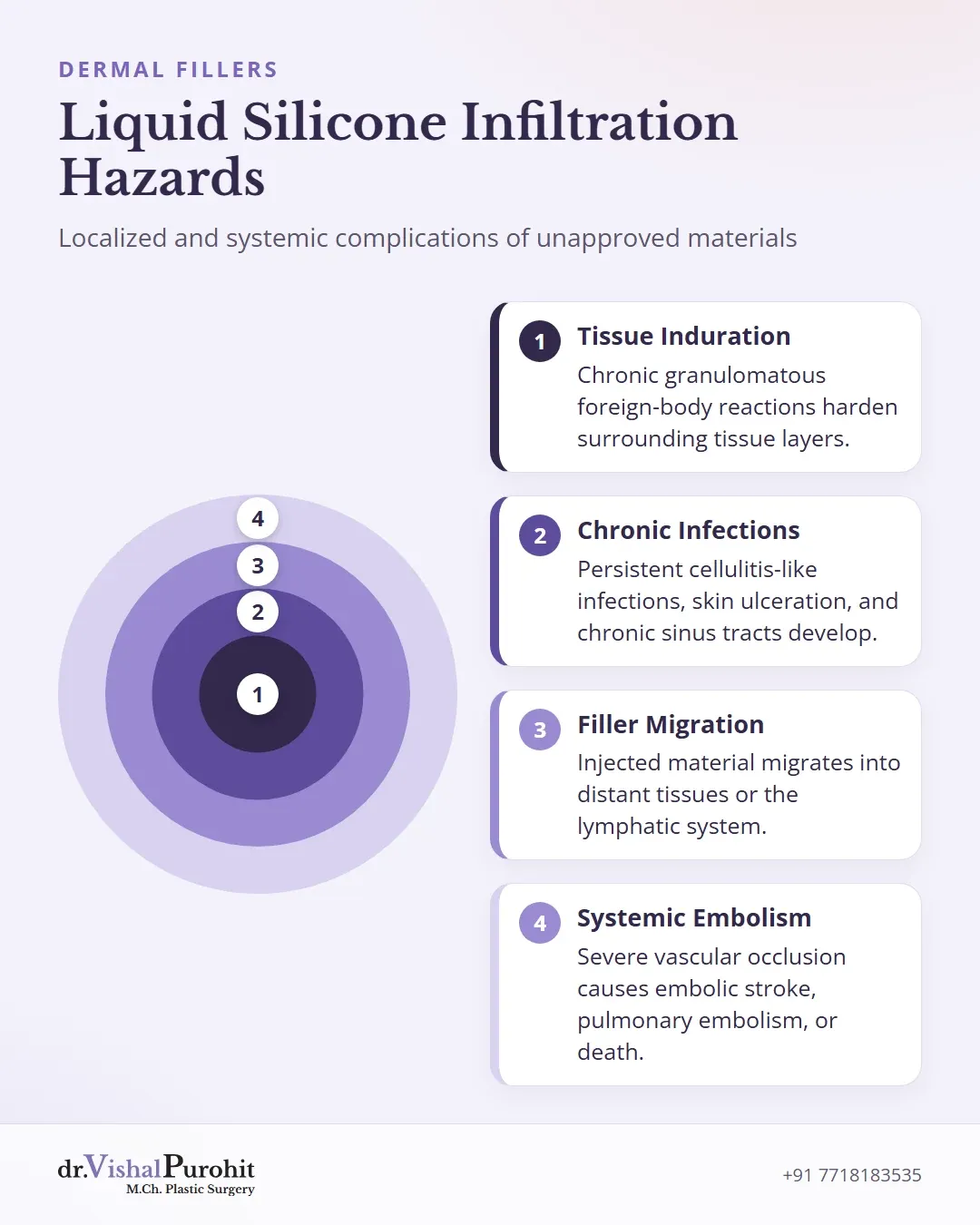
Large-volume body injections and permanent liquid silicone are associated with significant localized and systemic complications:
- Chronic granulomatous foreign-body reactions and tissue induration1213
- Persistent or recurrent cellulitis-like infections, ulceration, and chronic sinus tracts1314
- Filler migration into distant tissues or the lymphatic system131415
- Severe vascular occlusion, embolic stroke, pulmonary embolism, permanent disfigurement, and death112
Both medical-grade and non-medical-grade liquid silicone can produce these unpredictable reactions, with risks increasing significantly when non-medical-grade substances are introduced15. Migrated materials and widespread granulomas are difficult to manage and often require complex medical therapies13.
Dr. Vishal Purohit prioritises anatomical precision and uncompromised patient safety in Jaipur. For body contouring or volume restoration, medical guidance requires avoiding unregulated bulk materials and relying solely on evaluated, evidence-based surgical methods.
What to Do After an Unregulated Treatment
Anyone experiencing pain, swelling, or skin irregularities after an unverified injection should seek a professional medical consultation immediately. Complications are best prevented or managed with prompt medical assessment16, and inadvertent placement or technique-dependent problems may require specialised clinical intervention1718. In his practice in Jaipur, Dr. Vishal Purohit assesses such concerns in person, with the treatment plan decided at the consultation.
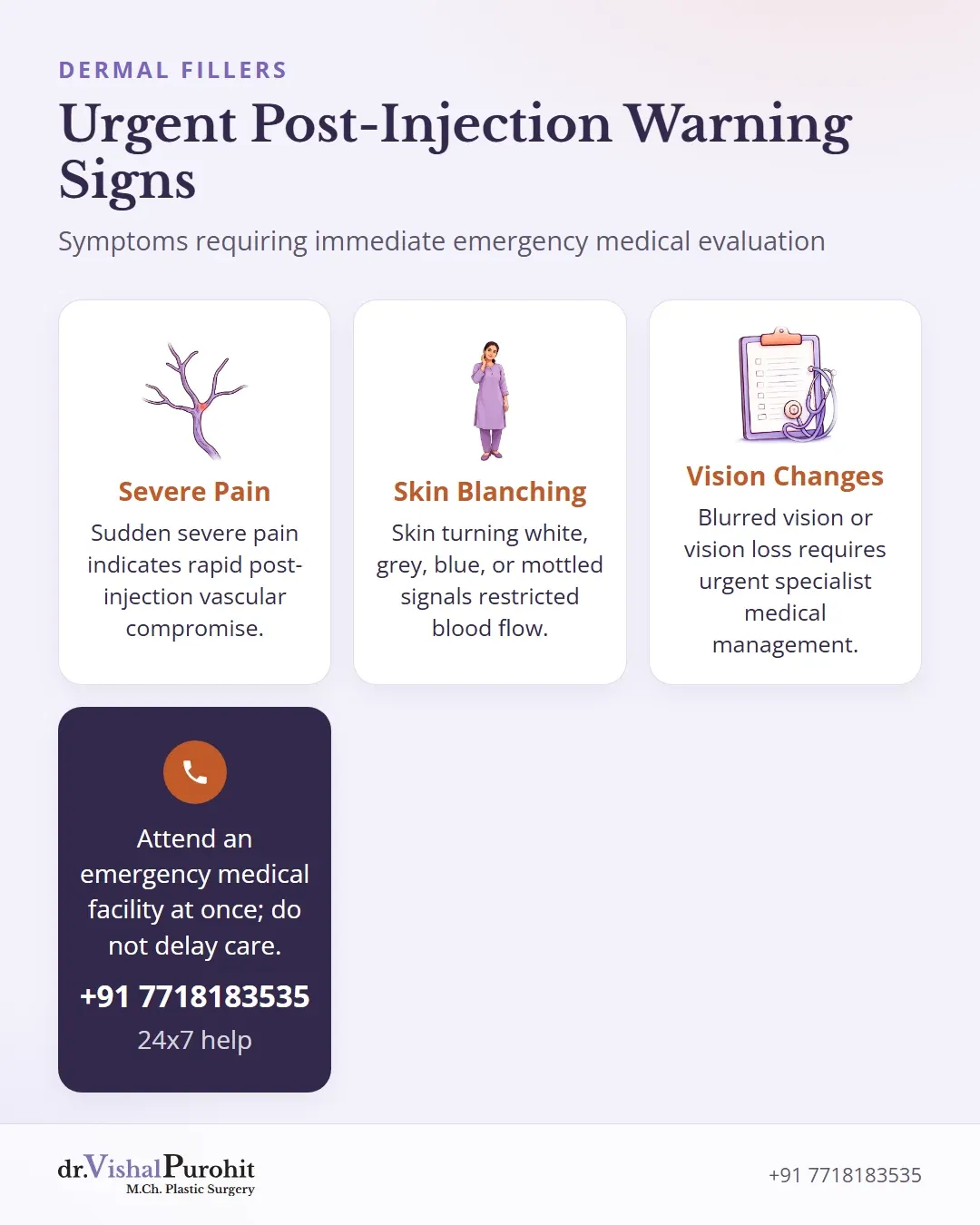
Certain symptoms indicate serious complications that require urgent emergency medical care rather than waiting:
- Sudden severe pain
- Skin turning white, grey, blue, or mottled (skin blanching)
- Vision changes, such as blurred vision or vision loss
Vascular compromise can progress rapidly following injections by non-medical injectors10. Inadvertent placement near ocular structures can cause acute or persistent visual changes that require urgent specialist evaluation and management19. When concerning symptoms arise, patients must not delay care or attempt self-treatment, but instead attend an emergency medical facility at once.
Choosing Safe Clinical Standards Over Shortcuts
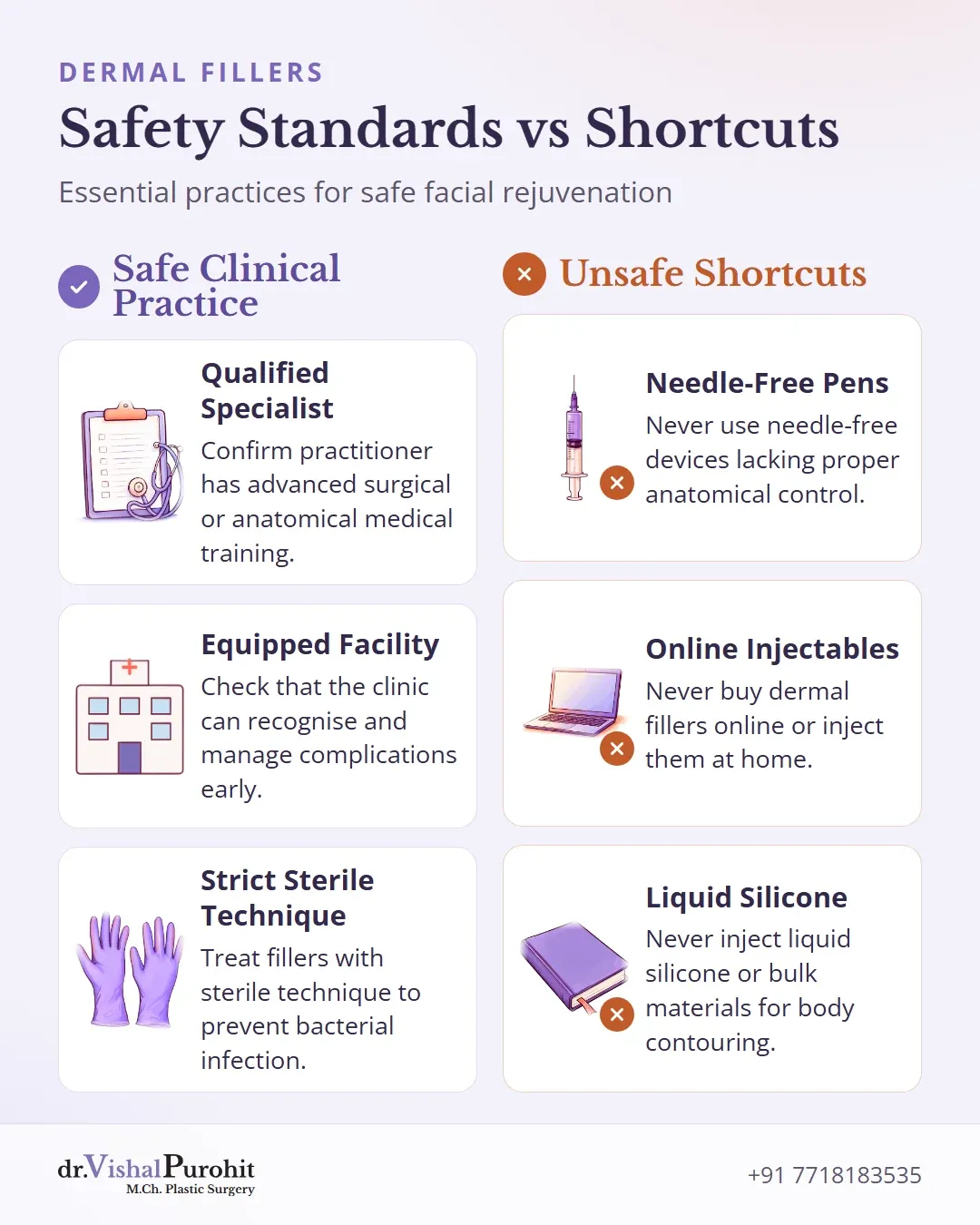
Aesthetic treatments require strict sterile conditions, anatomical mastery, and prompt emergency management preparedness. Because fillers are implant materials, practitioners must treat them with sterile technique to prevent bacterial contamination, frank infection, and inflammatory responses like nodules or granulomas2021. Standard injection safety protocols minimize errors and avoid disease transmission22.
Complication avoidance depends on understanding filler characteristics, patient anatomy, and careful injection technique2021.
When considering facial rejuvenation, patients should verify practitioner credentials and clinical safety protocols:
- Confirm the practitioner is a qualified medical specialist with advanced surgical or anatomical training2023.
- Ensure the procedure occurs in a clinical facility equipped to diagnose and manage complications early2425.
- Remember that aesthetic treatments are elective and desired rather than essential25, and choosing no cosmetic procedure is completely valid.
Professional Consultations for Dermal Fillers in Jaipur
Undergoing cosmetic injections requires strict anatomical precision, sterile clinical environments, and verified medical products. Rather than taking risks with needle-free devices or unapproved online injectables, explore professional care through Dermal Fillers in Jaipur. To understand treatment parameters, candidate suitability, and safety standards, review the comprehensive Dermal Fillers FAQs before arranging a personal consultation.
This is educational information, not medical advice.