
Modern cosmetic practice offers multiple approaches to soft tissue volume restoration. Readers exploring options can review Types of Dermal Fillers: HA, Stimulators and Permanent Fillers to understand how materials differ across categories.
Permanent dermal fillers incorporate non-biodegradable particles suspended in temporary carrier gels. While temporary materials degrade naturally, synthetic components remain in facial structures indefinitely, presenting unique clinical implications over time.
PMMA and Bovine Collagen Carrier
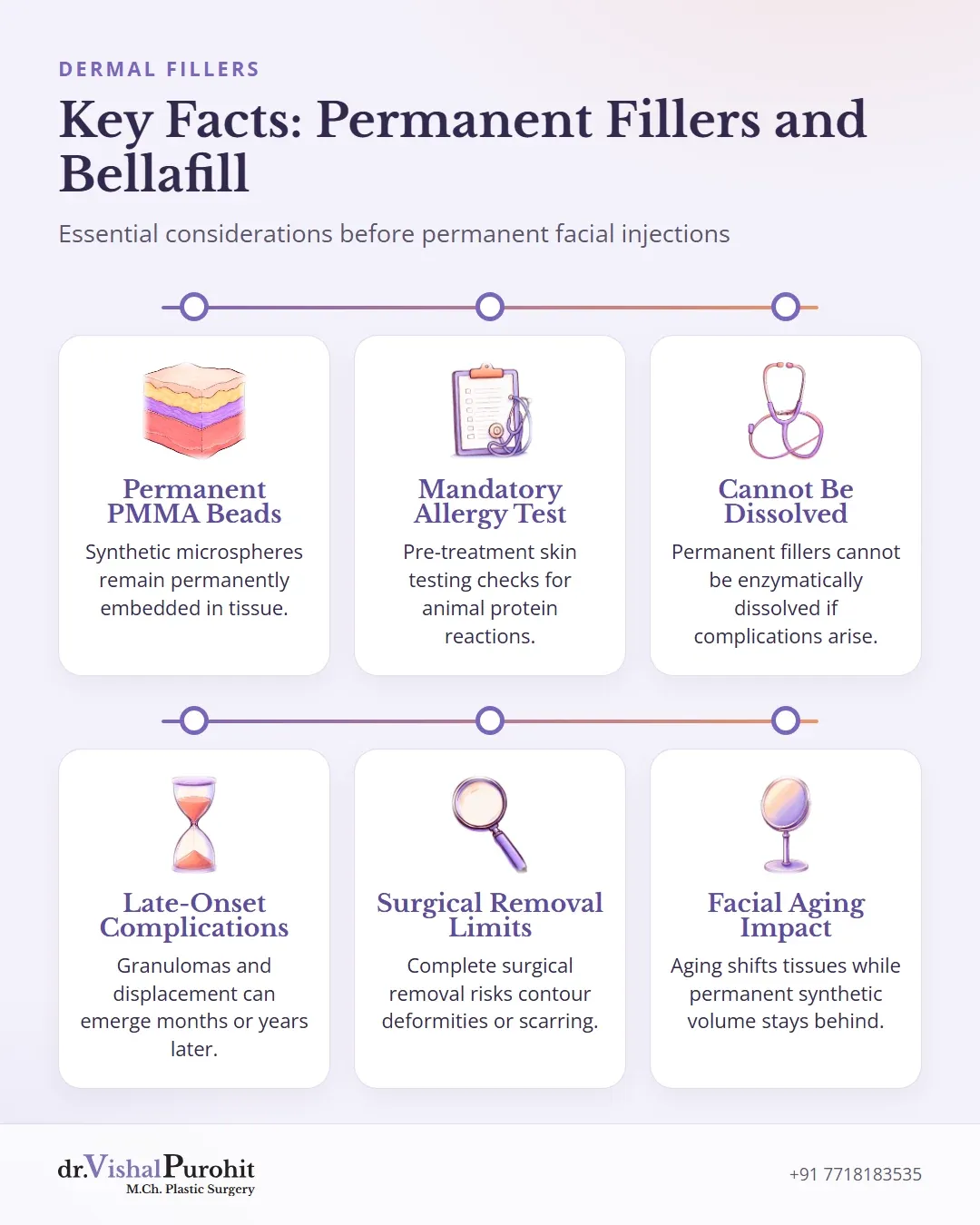
Bellafill is a permanent soft tissue filler composed of non-absorbable polymethylmethacrylate (PMMA) microspheres suspended in a carrier gel1. This carrier consists of purified bovine collagen and lidocaine23.
Dr. Purohit’s note: While Dr. Vishal Purohit provides education on permanent fillers, specific product selection and suitability are decided at the consultation.
Dual-Action Mechanism
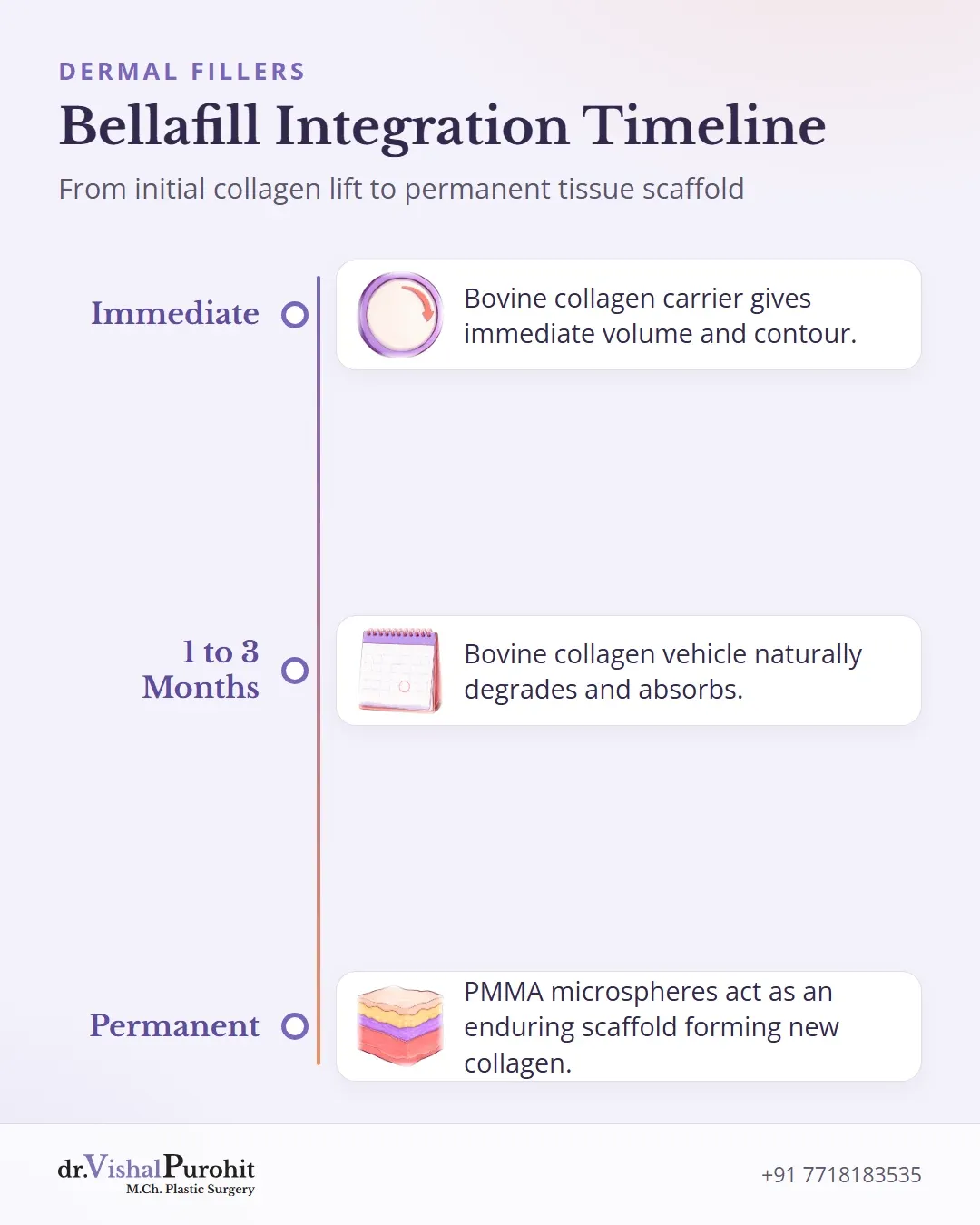
The material works through an immediate lifting phase followed by long-term tissue support:
- Immediate contour lift: The bovine collagen carrier provides instant volume and contour correction upon injection12.
- Carrier resorption: Over a period of one to three months, the bovine collagen vehicle naturally degrades and absorbs345.
- Permanent integration: The synthetic PMMA microspheres do not dissolve and remain permanently embedded in the tissue16.
Structural Scaffold
Because the non-biodegradable PMMA beads are not absorbed by the body, they act as an enduring scaffold67.
Allergy Screening and Approved Uses
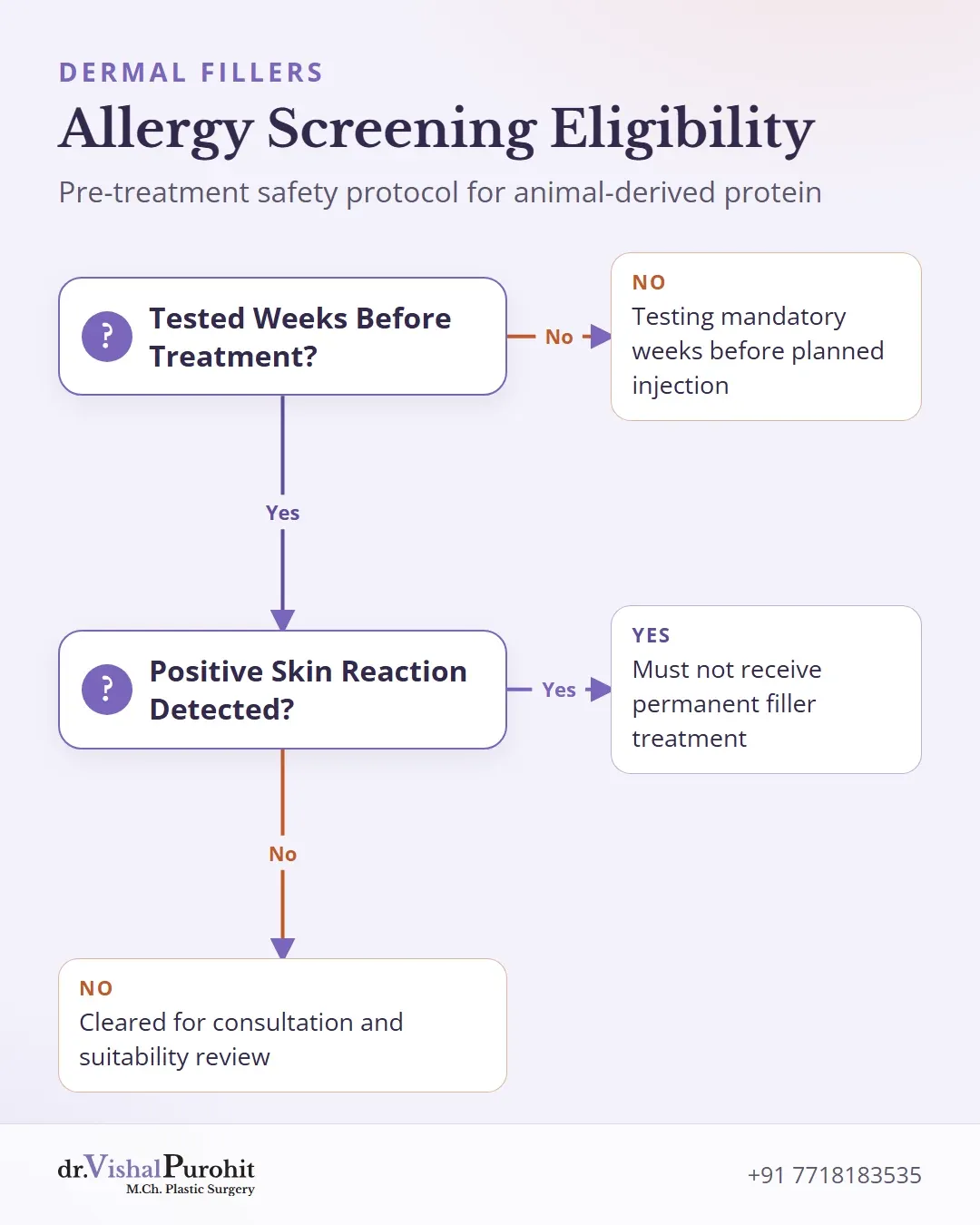
Permanent fillers such as Bellafill combine polymethylmethacrylate (PMMA) microspheres with a bovine collagen carrier gel1. Because the carrier contains animal-derived protein, an allergic response can occur89.
Formal pre-treatment skin allergy testing is mandatory to check for hypersensitivity before clinical administration8910. This screening is carried out weeks before any planned procedure91011. Individuals showing a positive reaction must not receive the treatment10.
Regulatory Indications Overseas
In overseas markets, regulatory clearances designate specific uses112:
- Deep facial creases, particularly nasolabial folds112.
- Moderate-to-severe atrophic cheek acne scars19.
Clearance by the US FDA reflects regulatory standing in the United States alone1213. It does not indicate approval in India, where regulatory assessments operate independently under separate frameworks.
Long-Term Commitment and Irreversibility
Unlike biodegradable options, permanent fillers cannot be enzymatically dissolved and remain in facial tissues indefinitely121415. As natural facial bone and soft tissue age over time, this unchanging synthetic volume stays behind, which can alter facial proportions15.
Key points
- Permanent fillers remain in tissues indefinitely and cannot be enzymatically dissolved.
- Complications such as chronic granulomas, late infections, and displacement can emerge years later.
- Infiltrated permanent filler particles are difficult to manage conservatively and challenging to surgically remove.
Choosing to have no aesthetic treatment is always a valid choice, and patients should consider whether a lasting change suits their long-term plans15.
Late-Onset Complications

Adverse effects from permanent fillers disproportionately contribute to late complications that can emerge months or years later121416:
- Chronic granulomas: Nodules and inflammatory foreign-body granulomas can develop after prolonged dormant periods121617.
- Late infection: Bacterial contamination or manipulation near the site can trigger infections years after placement14.
- Material displacement: Permanent filler migration can create visible contour irregularities and lumps1214.
Management Challenges
These complications are often refractory to conservative therapies like intralesional steroid injections121718. Because permanent particles infiltrate between surrounding tissues, complete surgical removal is technically challenging and risks contour deformities or scarring12141618. This makes late issues very difficult to manage without invasive surgery1218.
Historical Legacy of Injectable Collagen
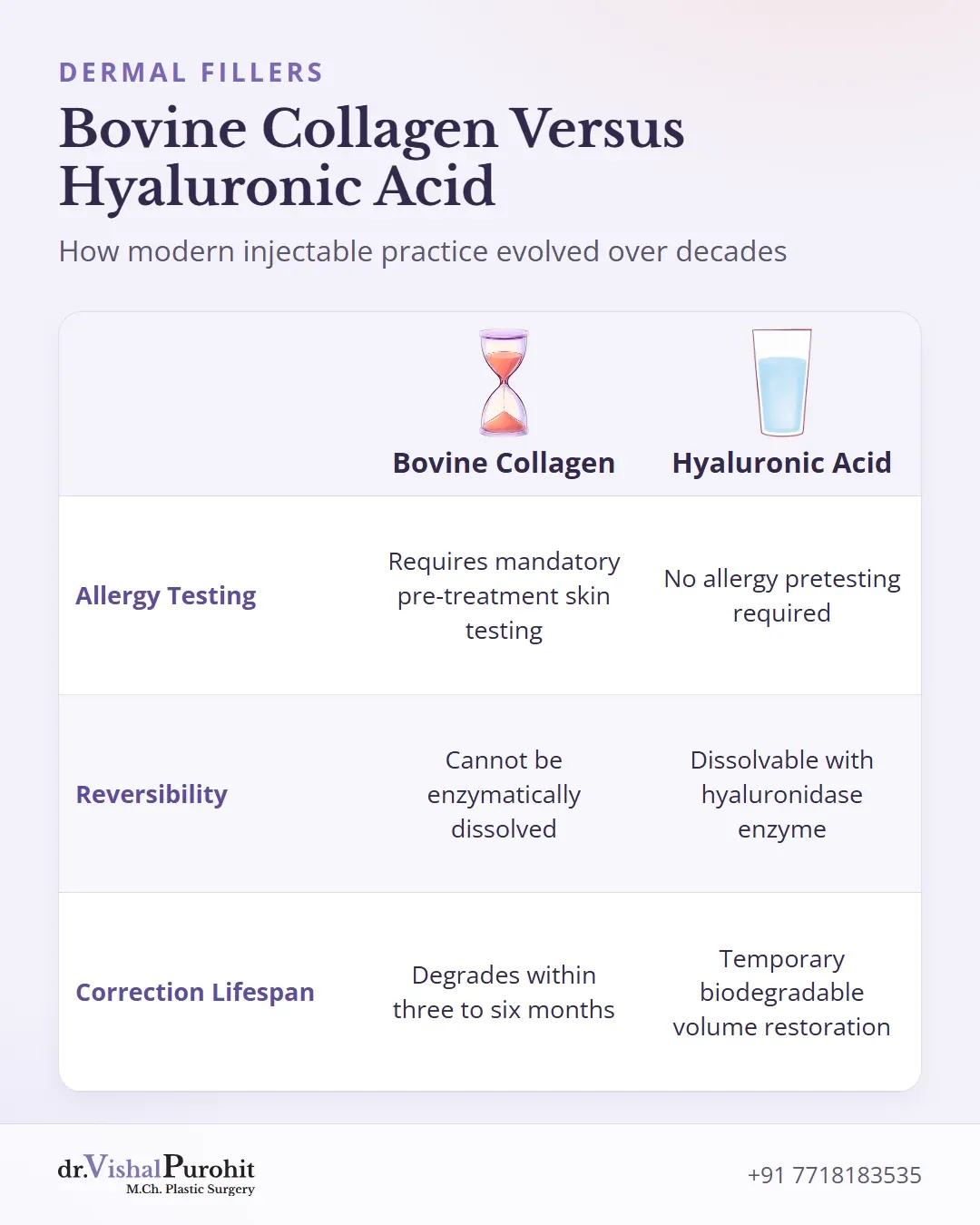
Modern cosmetic filling began in the 1980s with injectable bovine collagens such as Zyderm and Zyplast11920. While these treatments established soft-tissue filling, they carried a 1% to 3% risk of hypersensitivity2122. Patients required two skin tests spaced over several weeks to check for allergic reactions before proceeding2123. Even when tolerated, the aesthetic correction was short-lived, typically degrading within three to six months2122.
In contemporary permanent fillers, purified bovine collagen is repurposed merely as a temporary carrier1. The collagen matrix provides initial volume correction and gradually breaks down over several weeks, leaving behind suspended synthetic polymethylmethacrylate (PMMA) beads that remain as non-biodegradable, permanent implants1.
Clinical consensus has largely moved away from bovine collagen toward hyaluronic acid technologies2022. Modern practice favors hyaluronic acid fillers because they do not require allergy pretesting and can often be dissolved with hyaluronidase if complications arise12224. Whether a filler is suitable is decided at the consultation with Dr. Vishal Purohit.
Making an Informed Decision
Committing to permanent foreign material requires exhaustive consideration of how facial tissues change over subsequent decades. While filling a fold may appear satisfactory initially, natural aging alters structural support, which can make the long-term cosmetic outcome less appealing or lead to visible irregularities over time2526. Furthermore, misplaced permanent material cannot be dissolved with enzymes and may require surgical excision that is difficult or impossible to complete2526.
Whether permanent products or alternative dermal fillers are appropriate is not predetermined; this is decided at the consultation with Dr. Vishal Purohit after an individual anatomical assessment.
Warning Signs Requiring Urgent Care

Certain acute symptoms following an injection demand immediate medical evaluation rather than observation2728:
- Sudden skin blanching or pale discoloration, indicating possible vascular occlusion2829
- Any visual changes, blurred vision, or loss of sight28
- Extreme or severe localized pain2728
If any of these signs develop after treatment, prompt emergency intervention is necessary to evaluate blood supply and prevent complications such as tissue breakdown2728.
Consultation for Dermal Fillers in Jaipur
Selecting facial aesthetic treatments requires an individualized evaluation of facial anatomy and long-term goals. Patients interested in soft tissue restoration can explore Dermal Fillers in Jaipur to learn more about treatment options. Deciding to have no cosmetic procedure remains a valid choice. For answers to common patient concerns, review the Dermal Fillers FAQs.
This is educational information, not medical advice.