

What a Lipoma Is and When to Have It Checked
A lipoma is a benign, slow-growing soft tissue swelling made of fat cells that forms between the skin and underlying muscle. They are usually soft, doughy and movable under the skin, and usually harmless. They are commonly noticed on the extremities, trunk, neck, arms, abdomen, or thighs, though they may develop anywhere fatty tissue exists.
Key points
- Lipomas are benign, slow-growing, and typically harmless fat tissue swellings.
- Many small lipomas can simply be monitored without surgery.
- Clinical evaluation helps confirm the diagnosis and determine if removal is appropriate.
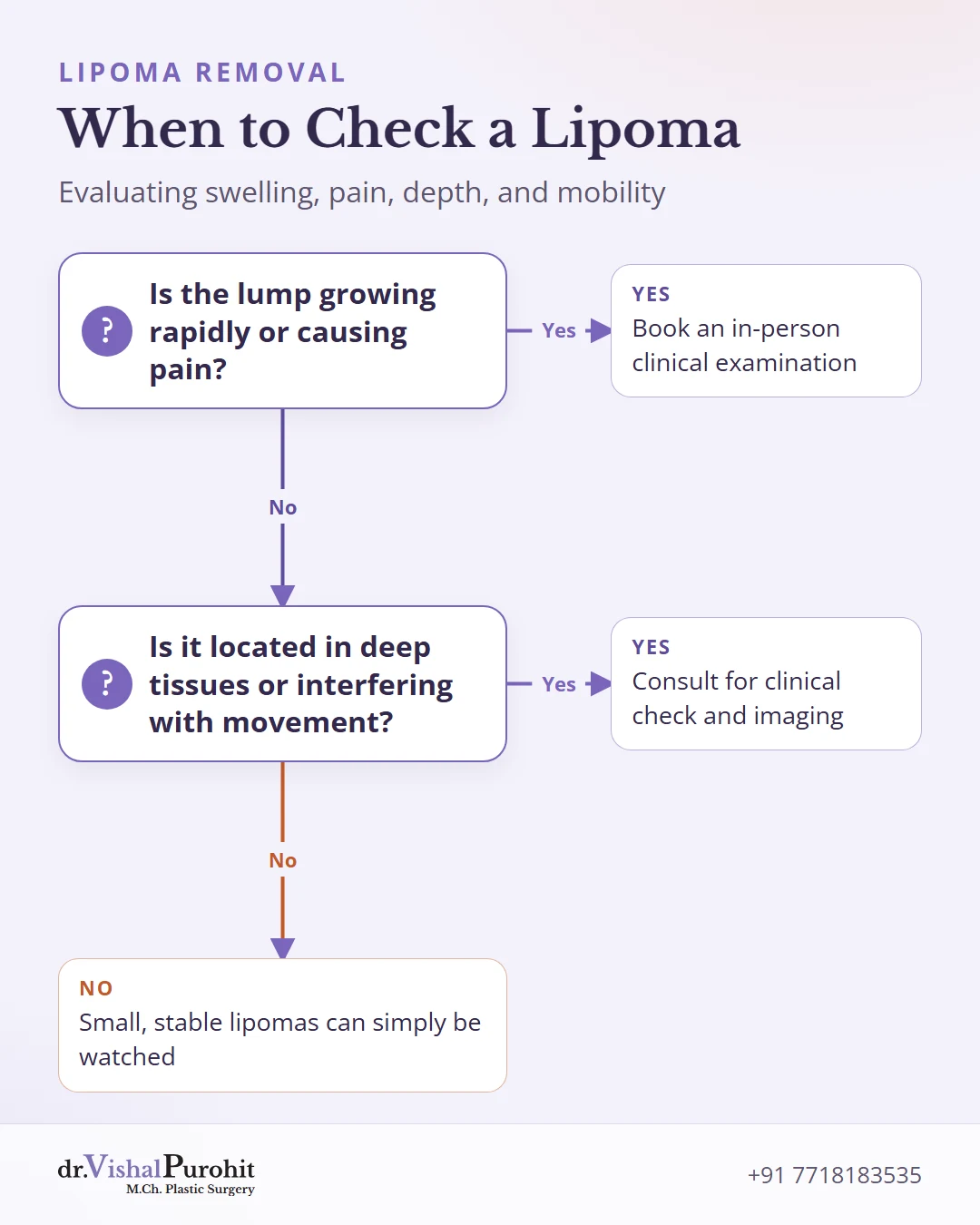
Many lipomas stay small and can simply be watched rather than operated on. However, medical evaluation is helpful when deciding how lipomas are treated. Examination helps tell a typical lipoma apart from other soft tissue swellings, such as deeper masses or rare malignant growths known as liposarcomas.
An in-person clinical examination is recommended if you notice certain symptoms or changes:
- A swelling that keeps growing or is larger than a usual lipoma.
- Pain, tenderness, or discomfort caused when the lump presses against nearby nerves or tissues.
- Location in deep tissues, such as within or between muscles.
- Lumps that interfere with joint movement, cause physical awkwardness, or feel bothersome to look at.
For a lump that causes discomfort, limits mobility, keeps enlarging, or causes aesthetic concerns, surgical removal through excision or liposuction can be considered after discussing the pros and cons.
Ultrasound or MRI Before Surgery
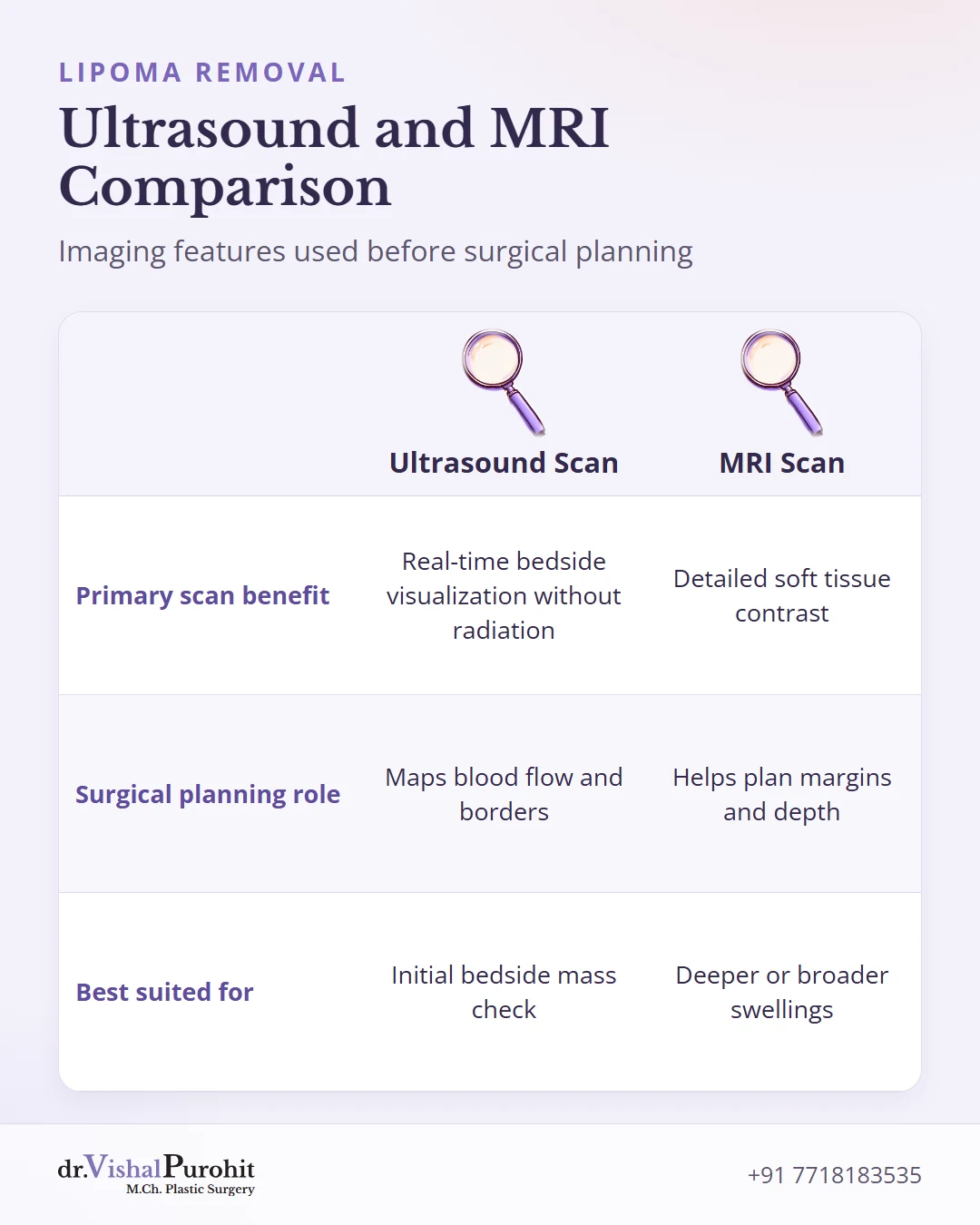
Dr. Purohit asks for an ultrasound or magnetic resonance imaging (MRI) scan first when there is a single, deep, large swelling. This scan is especially advised when the mass is located on the chest or abdominal wall before deciding on surgical removal.
Dr. Purohit's note: I advise an ultrasound or MRI scan first when evaluating a single, deep, large swelling, particularly on the chest or abdominal wall, before deciding on surgical removal.
Imaging evaluates the tissue structure and depth below the skin before surgery. Studies report that what feels like a simple lipoma can occasionally be an atypical lipomatous tumour, which is a low-grade malignancy that rarely spreads to other body parts but requires careful assessment.
Studies report that scans help differentiate these growths by checking specific internal features:
- Internal dividing bands known as septa, which appear broader and more frequently in atypical tumours
- Contrast enhancement patterns under imaging that highlight blood supply within the mass
- The exact dimensions, margins, and relationship to underlying layers
Studies report that ultrasound offers real-time bedside visualization without radiation, helping map blood flow and clear borders. For deeper or broader swellings, an MRI provides detailed soft tissue contrast, allowing the surgeon to plan appropriate operative margins and protect adjacent structures during excision.
Removing a Lipoma by Excision
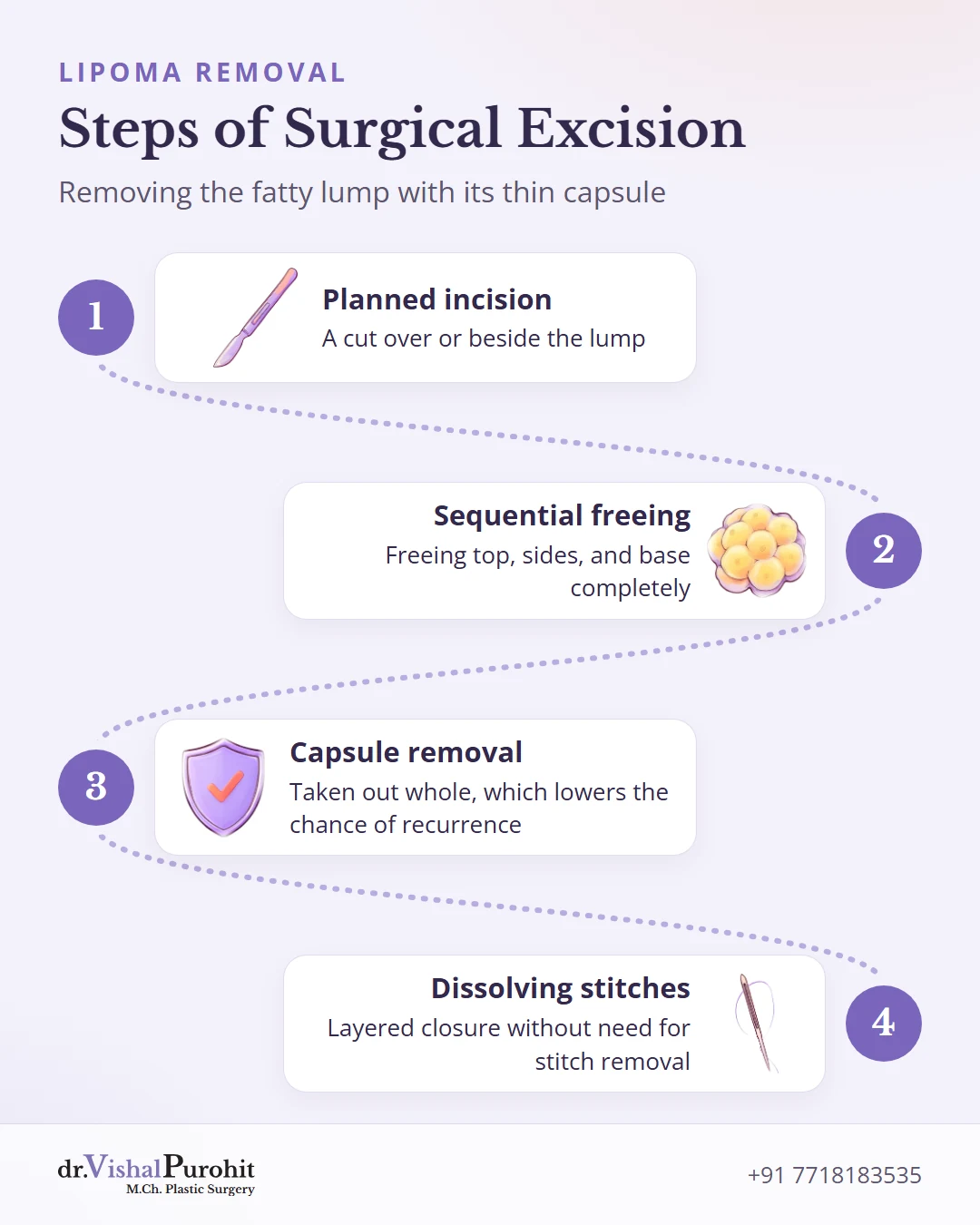
Surgical excision involves making an incision directly over or beside the fatty lump, freeing the tissue, and removing the mass completely. Dr. Vishal Purohit offers both surgical excision and liposuction removal, selecting the appropriate approach after explaining the pros and cons of each option to the patient.
During the procedure, delivering the lipoma intact within its surrounding fibrous capsule is essential. Studies report that leaving residual fragments behind or failing to achieve complete removal can lead to recurrence. Freeing all attachments allows the entire growth to come out cleanly, helping keep the area clear over time.
Published surgical series describe techniques that reduce the size of the required skin cut:
- Incision designs planned along relaxed skin tension lines to assist natural healing
- Fluid injection around the lump to separate tissue layers gently before dissection
- Sequential freeing of the top, sides, and base to deliver the mass through limited openings
Once the mass and its capsule are fully removed, the surgical space is checked and closed. Dissolving stitches are used to bring the deeper tissues and skin together neatly, eliminating the need for later suture removal.
Liposuction for Lipomas, Including Many at Once
Lipomas can be removed surgically by excision or by tumescent liposuction. The technique is chosen after explaining the pros and cons of each option. During tumescent liposuction, fluid is infused into the area, and fatty tissue is aspirated through a small cut using a thin cannula.
Key points
- Lipomas can be removed via traditional surgical excision or tumescent liposuction through small incisions.
- Tumescent liposuction allows several lipomas to be treated in a single sitting with smaller scars.
- Residual tissue fragmentation can leave capsular parts behind, carrying a risk of recurrence.
This technique offers distinct practical benefits alongside specific boundaries. While traditional open surgery requires direct incisions over each lump, liposuction provides an alternative approach:
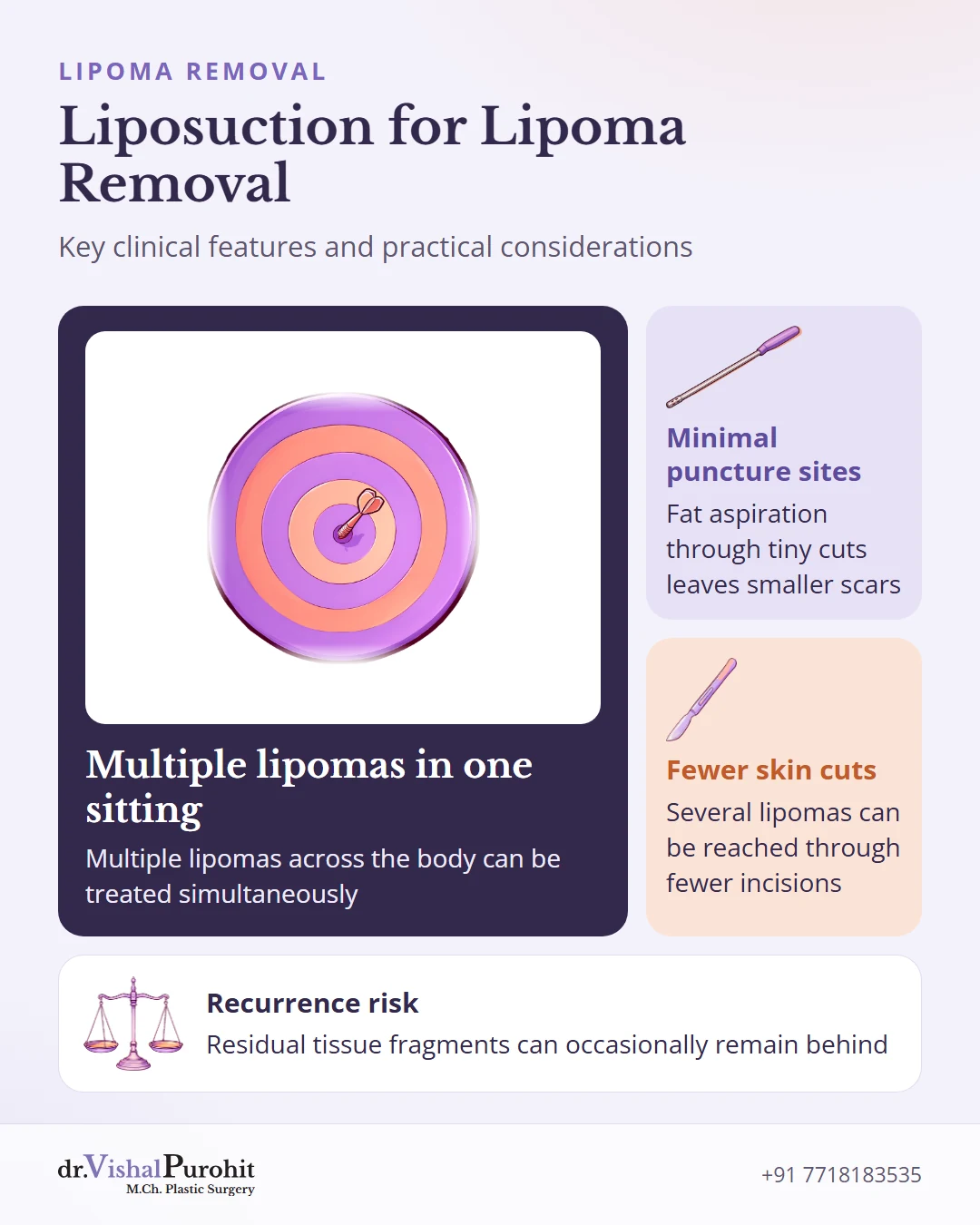
- It allows lipoma removal through small puncture sites that leave smaller scars.
- Several lipomas can be reached and treated through fewer incisions.
- Tissue fragmentation means some residual tissue or capsular parts can be left behind, which studies report carries a risk of recurrence.
For individuals with multiple lipomatosis, having fatty lumps distributed across the body, multiple lipomas can be treated in one sitting. Patients considering suction techniques can learn more about how liposuction in Jaipur contours fatty tissue through small incisions.
Local or General Anaesthesia and Your Surgery Day
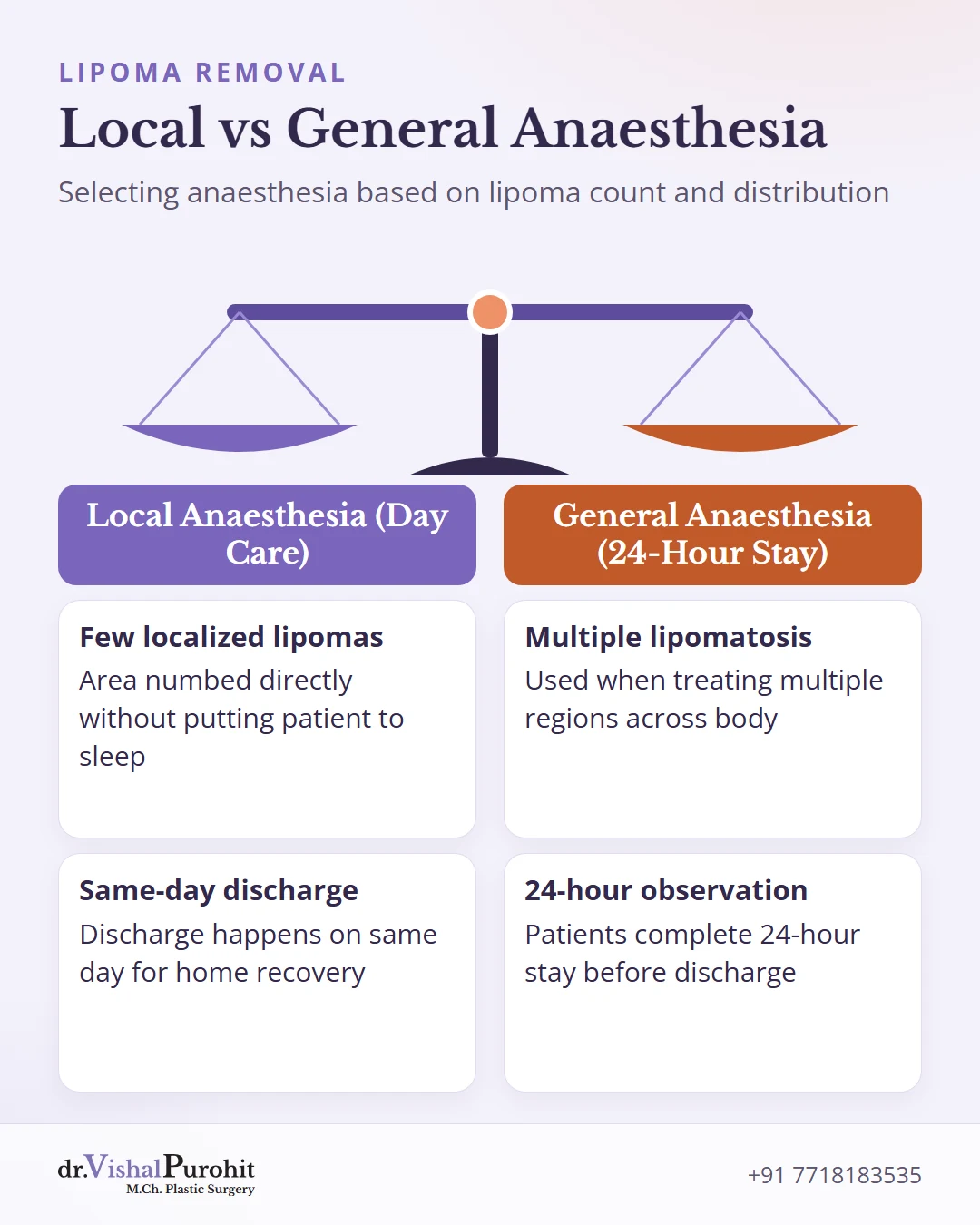
The choice of anaesthesia depends on how many lipomas need treatment and where they sit on the body. A consultation helps decide whether surgical excision or liposuction is suitable, after discussing the benefits and trade-offs of each approach.
When a few lipomas are removed, the procedure takes place under local anaesthesia. Numbing medication is placed directly around each lump so the area remains insensitive during surgery. This option works whether the lumps are cleared through excision or by tumescent liposuction.
Patients having treatment under local anaesthesia receive day care management:
- The surgical area is numbed without putting the patient to sleep.
- Dissolving stitches are placed to close the skin incisions.
- Discharge happens on the same day, allowing recovery to continue at home.
General anaesthesia is used when lipomas distributed all over the body, known as multiple lipomatosis, are cleared using liposuction. Because this involves treating multiple regions across the trunk or extremities in one sitting, patients remain fully asleep throughout the operation.
Following liposuction under general anaesthesia, patients complete a 24-hour stay for monitoring and post-operative care before discharge. Follow-up dressings are arranged to oversee initial healing.
Stitches, Lab Testing, Risks and Recurrence
After surgical removal of a lipoma, wounds are closed with dissolving stitches, meaning there is no need for suture removal later. Follow-up dressings are included in the treatment quote. Sending the removed tissue for histopathology, which is laboratory examination under a microscope, is not routine for every lipoma.
Surgical treatments carry potential complications. Clinical studies examining lipoma removal report several possible adverse events:
- Collection of fluid under the skin, known as seroma
- Collection of blood in the tissue, known as haematoma
- Surgical wound infection
- A remaining scar along the incision line
- Regrowth of the lump, termed recurrence
Rates differ between studies. In one study of minimal-incision excision, seroma occurred in 10.98% of cases and haematoma in 7.3%, with no infections or nerve injuries noted during follow-up. Another study evaluating tumescent liposuction reported seroma formation in 8.7% of cases, skin irregularities, and indentations without wound infections.
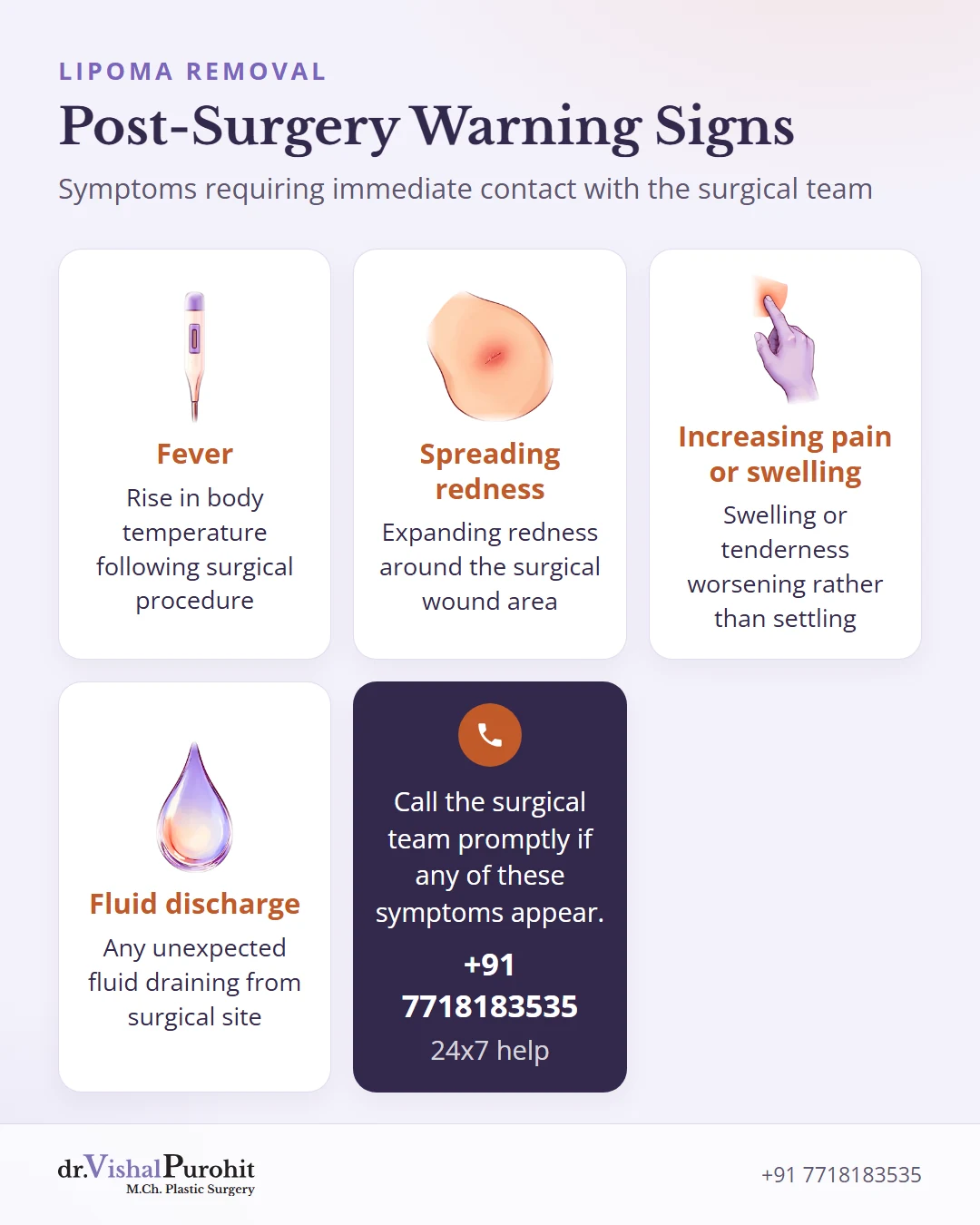
Call the surgical team immediately if there is fever, spreading redness, increasing swelling or pain, or fluid discharge from the surgical site.
Injections and Laser: What You May Read About
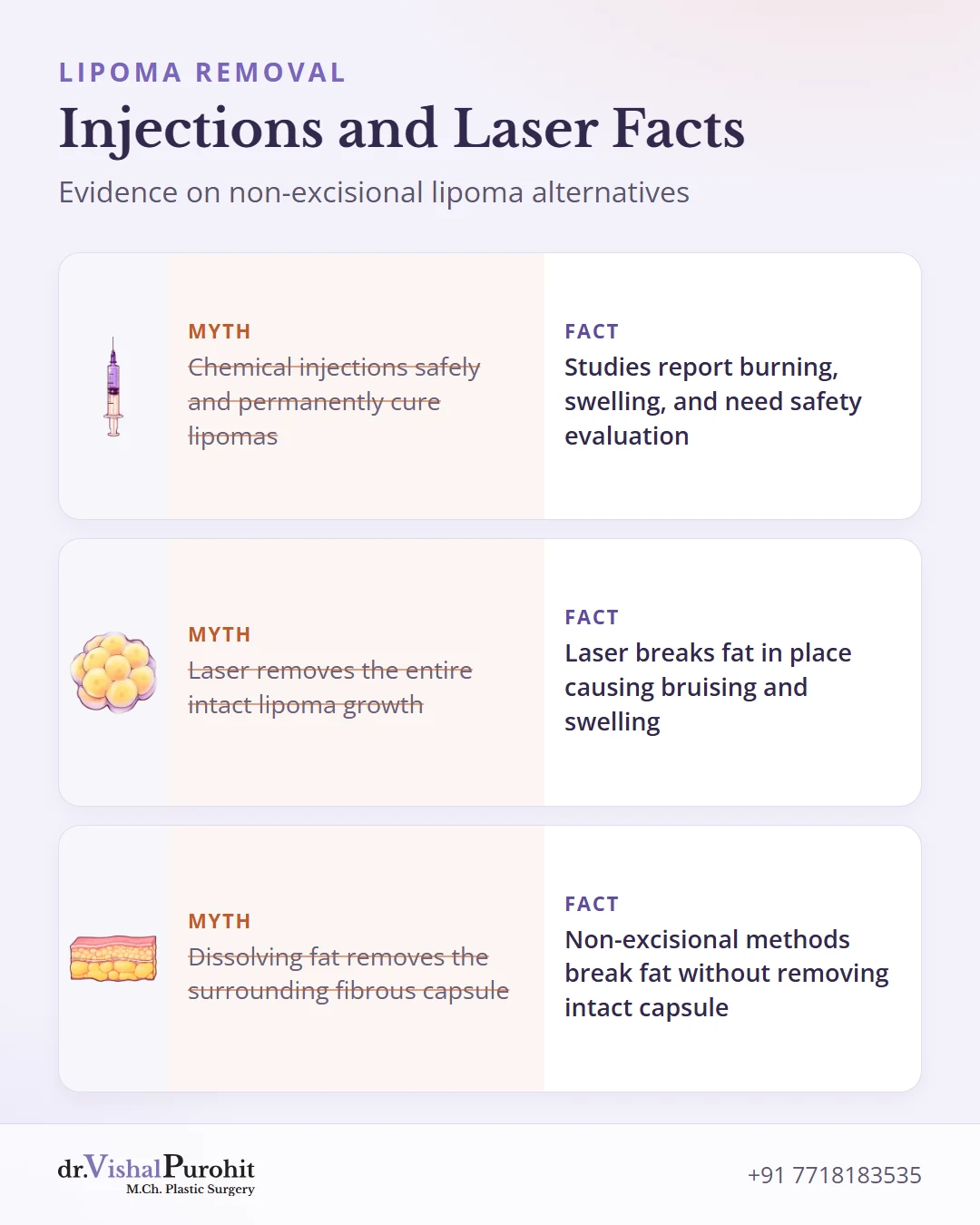
When searching for ways to treat a fatty lump under the skin, you may come across non-excisional options described in medical literature. Some studies report using injection lipolysis, where chemical solutions such as deoxycholate are injected into subcutaneous fat to dissolve cells. Other papers evaluate laser-assisted techniques using specialized wavelengths.
These published alternatives carry specific observations in clinical reports:
- Injection lipolysis studies report localized swelling, redness, burning, and possible skin contour irregularities, along with the need for further evaluation regarding safety.
- Laser procedures use heat to break down fat membranes through a small skin entry point, though studies report transient swelling or bruising.
- Both approaches break the fat down in place rather than lifting out the intact growth with its capsule.
In Dr. Purohit's practice, lipomas are treated surgically only, using either surgical excision or tumescent liposuction. The clinic does not use steroid or deoxycholate injections to shrink lipomas, and has no laser of any kind. The surgical method is chosen after carefully explaining the pros and cons of each approach to the patient.
Lipoma Removal Cost in Jaipur
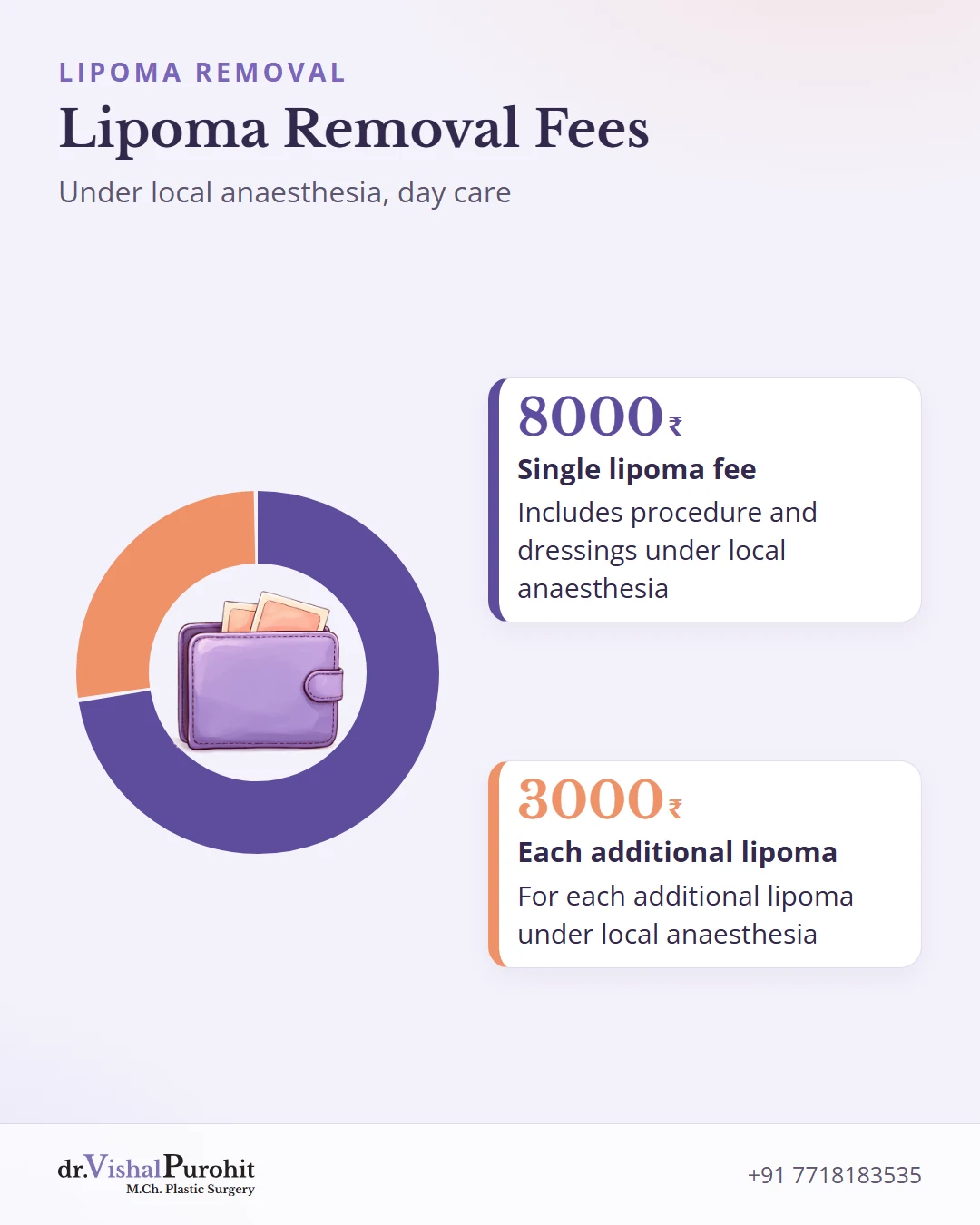
The cost of surgical lipoma removal depends on the number of swellings treated and the type of anaesthesia required. Pricing is kept straightforward so patients understand their financial commitment before planning the procedure.
Key points
- Lipoma removal cost depends on the number of swellings and the type of anaesthesia used.
- Day-care removal under local anaesthesia starts at ₹8,000 for one lipoma and ₹3,000 for each additional one, including dressings.
- Cases requiring liposuction under general anaesthesia are quoted after an in-person consultation, with insurance coverage depending on policy terms.
For treatment under local anaesthesia in day care, the fees include:
- ₹8,000 for one lipoma under local anaesthesia
- ₹3,000 for every additional lipoma removed under local anaesthesia
- The surgical procedure itself along with all follow-up dressings
Several lipomas can be removed in a single sitting using either surgical excision or liposuction. The chosen method is determined after explaining the pros and cons of each approach to the patient.
When liposuction is needed for lipomas situated all over the body, the procedure is carried out under general anaesthesia with a 24-hour hospital stay. Because the surgical scope varies significantly in multiple lipomatosis, this price is quoted after an in-person consultation.
Whether health insurance covers lipoma excision depends on your specific policy terms and the medical reason for surgery. Patients considering coverage details can review guidance on health insurance approval for fat removal to understand documentation requirements, such as imaging or functional restrictions.