
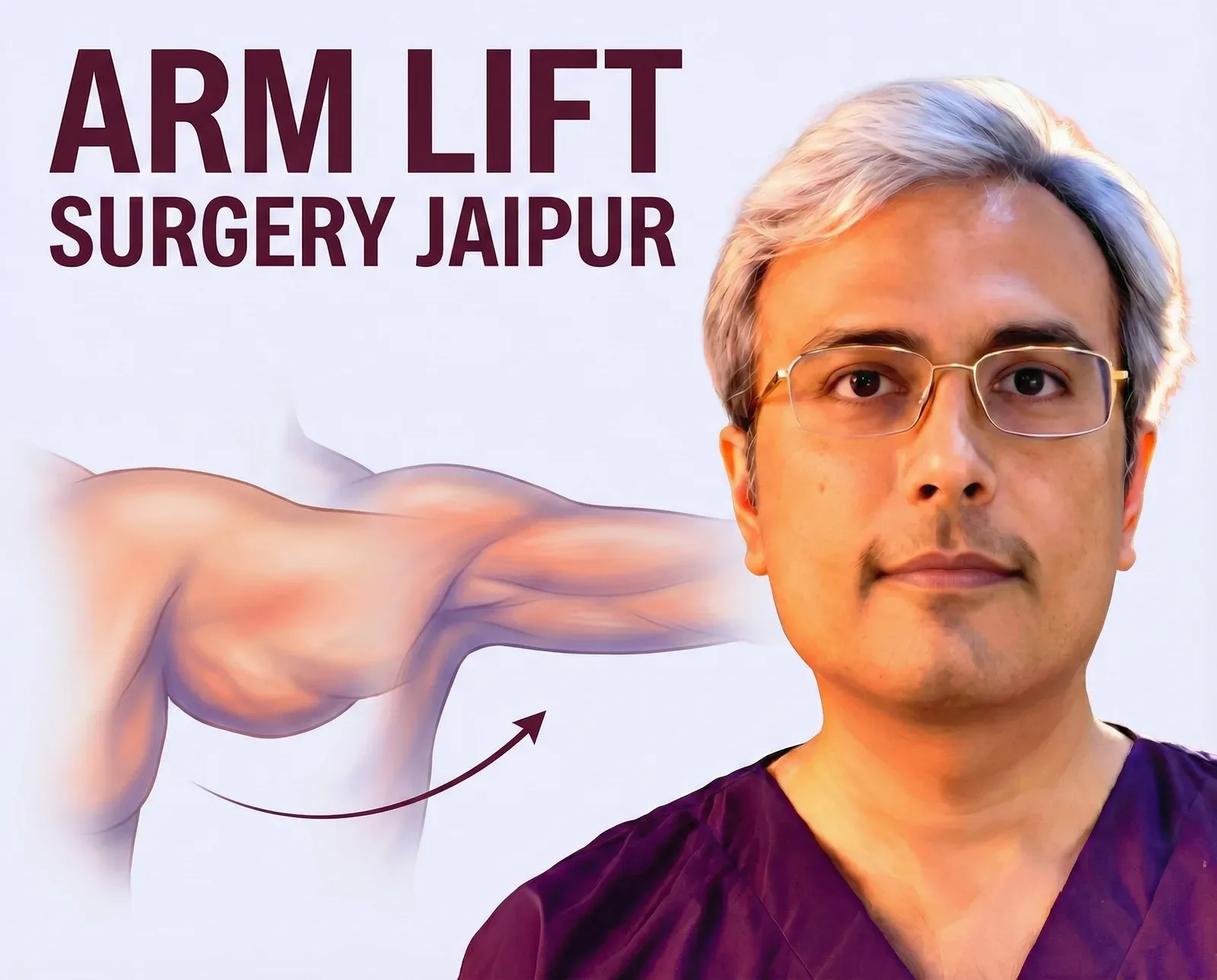

# Arm Lift Surgery in Jaipur: The Definitive Clinical & Patient Guide
Why Choose Dr. Vishal Purohit's practice in Jaipur
M.Ch. Plastic Surgeon Expertise
Why Choose Dr. Vishal Purohit's practice in Jaipur
Dr. Vishal Purohit is a M.Ch. Plastic, Reconstructive & Aesthetic Surgeon with extensive dedicated surgical experience in body contouring and post-massive weight loss surgery. His M.Ch. super-specialization training provides in-depth mastery of upper limb vascular anatomy, lymphatic preservation, brachial plexus proximity, and axillary aesthetic unit design - critical competencies that differentiate a qualified plastic surgeon from a general cosmetic practitioner for brachioplasty. This expertise enables precise preoperative stratification of arm deformities into lipodystrophy-dominant, dermo-chalasis-dominant, and combined types, allowing selection of the optimal vector of resection, scar placement in the medial bicipital groove, and need for adjunctive VASER liposuction versus direct excision, thereby minimizing complications such as hypertrophic scarring, lymphoedema, seroma, and sensory dysesthesia.
Unlike high-volume cosmetic centers where arm lift is delegated or performed under local anesthesia by non-M.Ch. doctors, in Jaipur every brachioplasty is personally planned and executed by Dr. Purohit under strict NABH-standard hospital protocols with board-certified anesthetist support, advanced electrocautery and layered barbed-suture closure, and intraoperative tailoring to preserve functional range of motion at shoulder and elbow. His reconstructive background ensures adherence to tension-free closure principles, preservation of subdermal lymphatic network and medial cutaneous nerves, meticulous hemostasis with drain protocol optimization, and evidence-based postoperative compression and scar modulation with silicone therapy and fractional laser when indicated. This combination of super-specialist qualification, hospital-based safety, and longitudinal follow-up for scar maturation over 12 months is why patients seeking definitive, complication-averse Arm Lift Surgery in Jaipur prioritize M.Ch.-led care.
Ultra-Modern Accredited Operating Facilities and Anesthetic Safety
Ultra-Modern Accredited Operating Facilities and Anesthetic Safety are non-negotiable prerequisites for safe brachioplasty, and in Jaipur, arm lift surgery is performed exclusively in a fully accredited, hospital-grade modular operating theatre equipped with advanced multiparameter monitoring, emergency resuscitation protocols, and strict adherence to NABH-standard sterilization and infection-control SOPs. This controlled environment is critical for brachioplasty because the procedure involves extensive longitudinal incisions from axilla to elbow with wide undermining and prolonged operative time, creating inherent risks of surgical site infection, hematoma, seroma, and wound dehiscence if performed in minor OT or clinic procedure-room settings. The facility maintains dedicated pre-operative, intra-operative, and post-anesthesia recovery zones with continuous nursing surveillance, standardized WHO surgical safety checklist implementation, autoclaved instrument traceability, and availability of electrocautery, suction, blood cross-match support, and ICU backup, ensuring that extended-arm contouring, concomitant axillary liposuction, and revision cases can be managed with maximal asepsis and immediate complication rescue capability.
Anesthetic safety is ensured through administration by a qualified MD anesthesiologist using balanced general anesthesia with secured airway, invasive-grade monitoring of ECG, SpO2, EtCO2, NIBP, temperature, and urine output, coupled with pre-anesthetic evaluation including cardiac risk stratification, BMI and OSA screening, smoking and comorbidity optimization, hemoglobin, coagulation, and metabolic workup tailored to post-massive-weight-loss and higher-BMI brachioplasty patients. Intraoperatively, multimodal analgesia, PONV prophylaxis, active warming to prevent hypothermia-induced coagulopathy, precise fluid management, sequential compression devices and early chemoprophylaxis planning for venous thromboembolism prevention, and meticulous arm positioning with padding to prevent brachial plexus stretch injury and ulnar neuropraxia are routinely employed. Post-operatively, monitored recovery with Aldrete scoring, opioid-sparing pain protocols, arm elevation and compression garment supervision, drain management, and structured discharge criteria provide a continuous safety chain, making the accredited facility-anesthesia ecosystem in Jaipur fundamentally superior to office-based sedation models for delivering predictable, low-morbidity arm lift outcomes in Jaipur.
What is an Arm Lift (Brachioplasty)?
Anatomical Definition and Surgical Purpose
What is an Arm Lift (Brachioplasty)?
An Arm Lift, or Brachioplasty, is a body-contouring procedure that surgically corrects laxity of the brachial region — specifically the posteromedial upper arm extending from the axilla to the olecranon. The deformity is characterized by excess, inelastic skin, subcutaneous adiposity, and attenuation of the superficial fascial system, often resulting in the ptotic "bat wing" appearance. This condition most commonly follows massive weight loss, age-related dermal elastosis and collagen loss, or genetic predisposition, where diet and triceps brachii hypertrophy cannot restore the skin envelope. Anatomically, the surgeon must navigate the medial brachial and antebrachial cutaneous nerves, basilic vein, and axillary lymphatics while resuspending tissue to restore a smooth, tapered arm contour.
The surgical purpose is therefore both functional and aesthetic: to excise redundant skin and fat, tighten the underlying fascial support, and re-drape the remaining tissue to achieve a defined, proportionate upper arm. Unlike liposuction alone, which only debulks fat and relies on skin retraction, brachioplasty directly addresses severe skin excess that has lost all recoil capacity. By placing a longitudinal incision along the inner arm — concealed in the bicipital groove — or a limited transverse incision confined to the axilla for mild cases, the procedure restores axillo-brachial continuity, eliminates intertriginous rashes and hygiene issues from skin-on-skin contact, and allows patients to comfortably wear sleeveless garments with restored arm confidence.
Who Benefits: Post-Bariatric, Post-GLP-1 and Aging Candidates
What is an Arm Lift (Brachioplasty)?
The ideal brachioplasty candidate presents with Bat Wing deformity — Grade IIb to Grade III brachial ptosis characterized by redundant skin envelope exceeding underlying adipose and muscular volume, poor skin elastic recoil, and distal descent of the posterior axillary fold beyond the brachial sulcus. This phenotype is now seen predominantly in three cohorts: post-bariatric patients after massive weight loss (>30-40 kg or >50% excess weight loss) with circumferential dermal laxity, collagen and elastin fragmentation, and intertriginous dermatitis; post-GLP-1 receptor agonist patients (semaglutide, tirzepatide) with rapid 15-25% total body weight loss over 12-18 months resulting in disproportionate upper-arm deflation, sarcopenia of the triceps-brachialis complex, and thin, crepey skin that fails non-surgical tightening; and aging involutional candidates (typically 45-65 years, especially women) with actinic elastosis, hormonal dermal thinning, and lipodystrophic proximal arm fullness combined with distal skin excess. Clinically, these patients are differentiated from liposuction-only candidates by a positive pinch test >4-5 cm, failure of skin retraction on abduction-adduction maneuver, and presence of longitudinal striae and hanging pannus that does not improve with strength training.
From a surgical selection standpoint, benefit is maximal when BMI is stabilized <30-32 kg/m² for at least 6 months, nutritional parameters are optimized (hemoglobin, albumin, iron, vitamin D, B12 — particularly critical after bariatric malabsorption and GLP-1 induced appetite suppression with lean mass loss), smoking is ceased, and comorbidities such as diabetes and hypothyroidism are controlled, as this ensures safe anesthesia, reliable wound healing at the high-tension medial arm incision, and durable contour. Post-bariatric and post-GLP-1 patients specifically benefit because brachioplasty addresses what diet, weight-loss drugs, and energy-based devices cannot — excision of excess dermis, re-suspension of the superficial fascial system to the brachial fascia, axillary Z-plasty or L-extension to prevent scar contracture and cording, and concurrent liposuction for residual lipodystrophy — thereby restoring a tapered brachial circumference, defined deltoid-to-elbow transition, improved hygiene, elimination of friction rash and odor, and expanded clothing options. For aging candidates, the procedure reverses pseudoptosis and restores upper-arm proportionality to the shoulder and forearm, making it a cornerstone of upper body rejuvenation often combined with breast reshaping, lateral chest excision, or thigh lift in staged post-weight-loss body contouring.
Surgical Classifications and Deformity Grading
The Pittsburgh Rating Scale (PRS Grades 0-3)
The Pittsburgh Rating Scale, originally described by Pitanguy and later formalized by Hurwitz and colleagues at the University of Pittsburgh following massive-weight-loss body contouring analysis, remains the most widely accepted objective grading system for brachial ptosis and deformity stratification in arm lift surgery. Grade 0 denotes minimal adiposity with no ptosis and good skin elasticity, typically not requiring surgical excision. Grade 1 is characterized by mild adiposity with Grade 1 ptosis (minimal bat-wing deformity within 5 cm of the brachial sulcus) and good skin tone, often amenable to liposuction alone or short-scar limited brachioplasty. Grade 2 represents moderate adiposity with Grade 2 ptosis (5-10 cm hanging tissue) and moderate skin laxity with loss of elasticity, dermal striae, and deflation - the classic post-bariatric or post-pregnancy arm. Grade 3 denotes severe adiposity with Grade 3 ptosis (>10 cm infra-brachial hang), severe skin excess, poor elasticity, intertrigo, and functional impairment. In our Jaipur practice, where combined massive weight loss after bariatric surgery and age-related dermal elastosis after multiple pregnancies are both prevalent, accurate PRS grading at initial consultation is non-negotiable for procedure selection, scar counseling, and outcome prediction.
Clinically, the PRS directly dictates the surgical algorithm for Arm Lift Surgery in Jaipur. PRS Grade 1 patients with preserved elasticity and localized fat are ideal candidates for tumescent arm liposuction alone, avoiding the longitudinal brachioplasty scar entirely. PRS Grade 2a (moderate skin laxity, good fat distribution) is best addressed by a minimal-incision brachioplasty with axillary Z-plasty and liposuction, confining the scar to the axilla and proximal arm. PRS Grade 2b and Grade 3 deformities, however, mandate a traditional extended brachioplasty with full-length medial arm excision from axilla to medial epicondyle, often with extension into the lateral chest wall (brachioplasty plus thoracoplasty) to address axillary roll continuity. Failure to respect PRS grading - for example, attempting liposuction alone in a Grade 3 arm - inevitably leads to worsened ptosis, crepe-paper skin redundancy, patient dissatisfaction, and secondary corrective brachioplasty. Therefore, standardized photography in abduction, pinch-test measurement of ptosis in centimeters, and documented PRS grade form the medico-legal and aesthetic foundation of every arm lift plan in our Jaipur centre.
Evaluating Skin Laxity vs. Excess Adiposity
Surgical Classifications and Deformity Grading: Evaluating Skin Laxity vs. Excess Adiposity
The fundamental clinical distinction determining candidacy for brachioplasty versus liposuction alone lies in differentiating true dermal elastosis and fascial laxity from excess subcutaneous adiposity, a differentiation performed through systematic pinch testing, gravity-dependent assessment, and evaluation of skin recoil. The surgeon grasps the posteromedial arm tissues between thumb and forefinger to estimate subcutaneous fat thickness versus redundant skin envelope, while observing the arm in both abducted 90-degree and dependent positions to quantify ptosis grade — from Grade I (minimal adiposity with good tone, suitable for liposuction) to Grade IIa/IIb (moderate fat with mild-to-moderate laxity), Grade III (severe ptosis with poor elasticity requiring extended brachioplasty), and Grade IV (massive post-bariatric deflation requiring circumferential contouring). Critical discriminators include the presence of striae, intertriginous dermatitis, loss of dermal snap-back on stretch-release testing, BMI stability for minimum six months, and history of massive weight loss exceeding 30-40 kg, all of which signal irreversible collagen and elastin fragmentation unresponsive to energy-based tightening or liposuction alone and mandating excisional surgery for definitive correction.
In the Jaipur patient population, this evaluation must additionally account for higher Fitzpatrick skin types III-V, propensity for post-inflammatory hyperpigmentation and hypertrophic scarring, nutritional vitamin D deficiency affecting wound healing, and cultural considerations regarding scar visibility in sleeveless ethnic attire that influence the risk-benefit calculus of limited-incision versus traditional longitudinal brachioplasty. High-resolution ultrasound measurement of subcutaneous fat thickness (>2.5 cm favoring staged liposuction debulking), assessment of axillary and lateral chest wall tissue continuity, evaluation of lymphedema risk via prior axillary surgery history, and documentation of brachial sulcus descent in centimeters provide objective metrics for operative planning and medicolegal records. Surgeons in Jaipur must counsel that patients with predominant adiposity and preserved elasticity (typically younger patients, BMI 27-32) achieve excellent contour with power-assisted or VASER liposuction through 3-mm axillary ports avoiding visible scars, whereas those with combined laxity-adiposity or isolated severe laxity — most commonly postpartum women over 35 and post-bariatric patients — require formal excision with superficial fascial system suspension to the axillary fascia to prevent early recurrent ptosis, accepting a trade-off of a permanent medial brachial scar for durable circumferential tightening and functional relief from hygiene-related morbidity.
Overview of Arm Lift Surgical Techniques
Mini Transaxillary vs. Standard vs. Extended L-Brachioplasty
Overview of Arm Lift Surgical Techniques
Mini transaxillary brachioplasty is indicated for Grade I upper-arm laxity confined to the proximal third, where excess is predominantly transverse and fat-dominant with preserved dermal elasticity. Performed through a short 4-6 cm concealed incision within the axillary vault, often combined with tumescent liposuction of the posterior arm compartment, it allows limited undermining to the level of the brachial fascia and superomedial fixation of the superficial fascial system to the axillary fascia of Clodius to prevent inferior scar migration and protect the intercostobrachial nerve and basilic vein-lymphatic complex. Standard longitudinal brachioplasty remains the workhorse for Grade II-III dermatochalasis with moderate vertical excess extending from axilla to medial epicondyle, requiring fusiform excision along the medial bicipital groove with en-bloc resection of skin and subcutaneous tissue, preservation of a thin areolar layer over deep fascia to safeguard medial antebrachial cutaneous nerves and lymphatics, layered closure with Scarpa's fascia-anchoring sutures, and excision of 6-12 cm of vertical width depending on pinch test and vector analysis. Extended L-brachioplasty is reserved for massive weight loss patients with Grade III-IV deformity and lateral chest wall laxity, where the longitudinal arm incision is continuous with a transverse axillary and lateral thoracic extension forming an inverted L, enabling comprehensive resection of bat-wing deformity, axillary rolls, and lateral mammary ptosis in a single stage, albeit at the cost of longer scars, higher risk of hypertrophic scarring, seroma, lymphedema, and wound dehiscence at the axillary triple-point junction requiring meticulous Z-plasty or breaking of the axillary crease.
Selection among these three vectors depends on quantitative assessment of skin surplus, fat-to-skin ratio, striae distribution, prior bariatric history, BMI stability for >6 months, and patient scar tolerance. Mini transaxillary offers minimal visible scarring, 45-60 minute operative time under local with sedation, and 5-7 day recovery, but provides no correction for distal laxity and carries risk of axillary webbing if over-resected. Standard brachioplasty provides circumferential tightening with 2-3 hour operative time under general anesthesia, drain placement for 48-72 hours, compression for 4-6 weeks, and definitive contouring of the entire arm at the expense of a longitudinal medial scar that typically matures over 9-12 months. Extended L-brachioplasty achieves truncal harmonization crucial in post-bariatric Jaipur cohorts but demands advanced expertise in lymphatic-sparing dissection, quilting sutures to obliterate dead space, and staged tension distribution to avoid brachial plexus traction injury and axillary contracture, with counseling that scar revision rates reach 12-18% and secondary lipocontouring is often required at 6 months for optimal definition.
When Non-Surgical Options (BodyTite/VASER) Apply
Non-surgical contouring with radiofrequency-assisted lipolysis (BodyTite) and ultrasound-assisted liposuction (VASER) applies selectively in patients presenting with Rainsford Grade I to early Grade II brachial ptosis, where excess is predominantly adipose with mild to moderate skin laxity and preserved dermal elastic recoil. From a clinical standpoint, ideal candidates demonstrate a positive pinch test of <2-3 cm skin redundancy, good skin quality without extensive striae or solar elastosis, BMI <30 with stable weight for 6+ months, and no history of massive weight loss exceeding 15-20 kg. BodyTite delivers bipolar radiofrequency energy (internal cannula to external electrode) achieving controlled subdermal heating to 38-42°C externally, inducing collagen denaturation, septal contraction, and documented soft-tissue contraction of 30-40%, while VASER utilizes 36 kHz ultrasonic energy to selectively emulsify adipocytes with preservation of vascular, lymphatic, and connective tissue architecture. Both are performed under tumescent local anesthesia with conscious sedation, require only 3-4 mm access incisions in the axilla and medial epicondyle, and allow same-day discharge with compression garment use for 4-6 weeks.
Contraindications for these modalities must be strictly observed: advanced dermal ptosis with deflated, hanging skin apron, poor elasticity on snap-back testing, BMI >32, active smoking, lymphedema, brachial plexus neuropathy, and unrealistic expectations of excisional-equivalent tightening are absolute indications to convert to formal brachioplasty. In the Jaipur clinical context, where post-bariatric and post-pregnancy arm laxity is commonly compounded by photodamage and nutritional dermal thinning, surgeon assessment must include arm circumference mapping, ultrasound dermal thickness, and documentation of intertrigo or hygiene burden. Where they are used, energy devices such as BodyTite or VASER (not offered in Jaipur) offer 5-7 days downtime, minimal scarring limited to punctate marks, and high satisfaction for contour refinement, but patients must be counseled that skin excision cannot be replicated and that 12-18% may require secondary staged mini-brachioplasty for residual laxity after collagen remodeling completes at 6-9 months.
The Recovery Journey and Scar Management
Immediate Post-Op Healing (Days 1-14)
The Recovery Journey and Scar Management – Immediate Post-Op Healing (Days 1-14)
Days 1-3 represent the acute inflammatory phase, characterized by expected edema, ecchymosis, serosanguinous drain output, and tightness along the brachioplasty incision from axilla to medial epicondyle. Patients are placed in compressive arm garments with arms elevated above heart level to limit lymphatic congestion, while closed-suction drains (typically removed when output is <25-30 ml/24h) prevent seroma and hematoma – the most common early complications of arm lift surgery in Jaipur's warm climate where sweating increases maceration risk. Analgesia follows multimodal protocol (acetaminophen, short-course NSAIDs if no bleeding risk, gabapentinoids for neuropathic tightness, and limited opioids), with prophylactic antibiotics, arm neurovascular checks for ulnar nerve compression or brachial edema, and strict instructions to avoid shoulder abduction >90 degrees, lifting >2-3 kg, and getting the incision wet to protect the layered closure of Scarpa's fascia, deep dermis, and subcuticular skin.
From days 4-14, proliferation begins with fibrin sealing, decreasing drain output, and transition from bulky dressings to silicone-lined compression sleeves worn 23 hours daily to control swelling and support skin redraping after liposuction-assisted brachioplasty. Sutures (if non-absorbable) and drains are typically removed by day 7-10, at which point gentle elbow and wrist mobilization and short ambulation walks are encouraged to prevent stiffness and DVT, while shoulder elevation, pushing, pulling, and overhead activities remain restricted. Patients should expect peak swelling at day 3-5 followed by gradual resolution, numbness of the medial forearm due to transected intercostobrachial nerve branches, firm induration along the scar, and small spotting – with red flags requiring immediate review including unilateral rapidly expanding swelling, foul purulent discharge, fever >100.4°F, dehiscence, blistering, or worsening hand numbness/weakness. Wound care focuses on dry sterile care, povidone-iodine to chlorhexidine transition per surgeon protocol, high-protein hydration, smoking cessation, and glycemic control, setting the foundation for suture-line maturation and long-term scar management starting at week 3.
Long-Term Scar Maturation Protocols
The Recovery Journey and Scar Management
Long-term scar maturation following brachioplasty is a 12 to 18-month biological process that requires a structured, phased protocol rather than passive observation, as the medial arm incision is subject to high tension, moisture, and friction that predispose to hypertrophy and hyperpigmentation. From post-operative weeks 3-4, once complete epithelialization is confirmed, patients should commence twice-daily silicone therapy — either medical-grade silicone sheeting worn 12-23 hours per day or silicone gel with SPF — which acts through hydration, occlusion, and modulation of fibroblast activity to reduce collagen overproduction. This is combined with targeted scar massage beginning at week 4-6, using firm circular pressure along the incision line for 5-10 minutes twice daily to break down early adhesions, improve pliability, and desensitize the posterior branch of the medial antebrachial cutaneous nerve territory. For patients with Fitzpatrick skin types IV-VI, which predominate in the Jaipur population, early and strict photoprotection with SPF 50+ and physical coverage for a minimum of 12 months is non-negotiable to prevent permanent post-inflammatory hyperpigmentation of the immature scar.
Clinical surveillance at 3, 6, and 12 months allows for timely escalation if pathological scarring emerges. Persistent erythema, pruritus, or raised profile beyond 8-12 weeks warrants in-clinic intervention with intralesional triamcinolone (10-20 mg/mL) or microneedling with topical tranexamic acid for dyschromia. Hypertrophic progression unresponsive to conservative measures at 6 months should be evaluated for pressure garment therapy using custom-fitted arm sleeves providing 20-30 mmHg compression. Patients must be counselled that final scar assessment cannot be made before 12 months, and that elective scar revision — including z-plasty for webbing at the axilla or excision of widened segments — is deferred until full maturation at 18 months. Adherence to this long-term protocol is the primary determinant of the difference between a conspicuous, widened brachioplasty scar and a fine, pale line successfully concealed along the medial bicipital groove.
Surgical Safety and Complication Prevention
MACN Sensory Nerve Preservation
Two in-depth paragraphs on MACN preservation — gathering clinical detail. Medial antebrachial cutaneous nerve (MACN) sensory preservation is a central pillar of Surgical Safety and Complication Prevention in modern brachioplasty, as injury to its 2-3 arborizing branches is the most common sensory morbidity of arm lift surgery. Anatomically, the MACN travels deep to the superficial fascial system (SFS) within the medial subcutaneous fat, accompanying the basilic vein after penetrating the deep brachial fascia approximately 7-8 cm proximal to the medial epicondyle, with its posterior branch crossing near the brachial sulcus to supply the medial forearm and elbow. Together with the medial brachial cutaneous nerve, which runs posterior and parallel to the basilic vein, these nerves are highly vulnerable during en bloc sharp excision along the bicipital groove, particularly in massive weight-loss patients seen in Jaipur practices where redundant, ptotic tissue obscures fascial planes. Iatrogenic transection or traction injury manifests as medial arm and forearm paresthesia, dysesthesia, painful neuroma, and permanent sensory loss, with historical nerve injury rates of up to 5.5% in excision-only techniques, mandating deliberate anatomical avoidance rather than reliance on a defined safe zone, which cadaveric computer-mapping studies confirm does not exist due to wide individual variation in branch number and course.
Definitive clinical prevention relies on superficial-plane dissection, posterior scar positioning, and liposuction-assisted brachioplasty (LAB) technique. The surgeon, operating under loupe magnification with the arm abducted 90 degrees, must limit undermining to superficial subcutaneous fat and preserve a thin protective adipofascial layer over the brachial fascia, never violating the deep fascia where the MACN branches and ulnar and median nerves lie, while placing the longitudinal resection more posteriorly toward the posterior brachial midline rather than directly in the bicipital groove to distance the incision from the basilic vein-nerve complex. Pre-resection tailor-tacking individualizes skin excision and avoids over-resection and traction neuropraxia, while preliminary suction-assisted lipectomy — whether at the excision site, adjacent, or circumferential — significantly reduces nerve injury to approximately 1.5% versus 5.5%, along with parallel reductions in seroma and lymphedema, by pre-defining the avascular plane and minimizing sharp dissection near lymphatics and sensory nerves. Meticulous bipolar hemostasis, three-point SFS-to-brachial fascia closure to eliminate dead space without deep strangulating sutures, and explicit preoperative counseling regarding transient numbness versus neuroma risk complete the Jaipur standard for MACN preservation and medico-legally sound, sensory-sparing arm contouring.
Preventing Seromas and Secondary Lymphedema
Surgical Safety and Complication Prevention
Seroma remains the single most common complication after brachioplasty, with reported rates of 5-15% in standard excisional arm lift and up to 25-30% in extended brachioplasty combined with axillary liposuction, arising from disruption of lymphatic channels, creation of large dead space between the elevated brachioplasty flap and the underlying muscular fascia, and shear forces during early abduction. Prevention in contemporary Jaipur practice is multimodal and begins intraoperatively with preservation of Scarpa's fascia distally where feasible, limited undermining, use of ultrasonic or bipolar dissection to seal lymphatics, meticulous hemostasis at the basilic vein and brachial perforator beds, and obliteration of dead space through progressive tension / quilting sutures with 2-0 Vicryl anchoring dermis to deep fascia at 3-4 cm intervals combined with fibrin sealant in high-BMI or massive weight loss patients. Closed-suction drains (2 x 10Fr) are maintained until output is <30 mL/24h for two consecutive days, typically 5-7 days, supplemented by immediate graduated compression garments (23-32 mmHg) worn 23 hours/day for 4-6 weeks, shoulder immobilization with abduction limited to <90 degrees for 10-14 days, and avoidance of NSAID-induced hematoma that secondarily converts to seroma. Early detection via high-frequency ultrasound at 1 and 2 weeks allows percutaneous aspiration under asepsis for collections >50 mL, with sclerotherapy using doxycycline or tetracycline reserved for recalcitrant seromas beyond 3 aspirations, while chronic pseudobursa formation >3 months mandates capsulectomy and re-quilting.
Secondary lymphedema, though less frequent (<3-5% transient, <1% persistent), represents a more morbid and often irreversible sequela caused by circumferential interruption of superficial lymphatic collectors draining the forearm and hand via the medial bicipital groove and lateral cephalic system to the apical axillary nodes, exacerbated by aggressive axillary clearance, postoperative infection, seroma-induced fibrosis, and pre-existing subclinical lymphatic insufficiency in post-bariatric patients. Clinical differentiation from simple edema is critical: lymphedema presents as non-pitting, Stemmer-positive forearm and dorsal hand swelling persisting beyond 6-12 weeks, confirmed by indocyanine green lymphography or lymphoscintigraphy showing dermal backflow and delayed axillary transit. Prevention mandates anatomically precise incision placement in the medial bicipital sulcus avoiding the dominant lymphatic bundle, preservation of at least 1 cm of subdermal fat containing lymphatic plexus, avoidance of 360-degree liposuction cannula passes through the axillary apex, and staging of concomitant axillary lymph node procedures. Postoperatively, Jaipur lymphedema protocols emphasize early manual lymphatic drainage starting day 3-5, graduated active range-of-motion physiotherapy to promote muscular lymph pump function, long-term class II compression sleeves during air travel and prolonged exertion, prompt antibiotic treatment of any cellulitis, and lifelong BMI control, with referral to complete decongestive therapy and microsurgical lymphovenous bypass evaluation if limb volume excess exceeds 10% at 6 months.
Arm Lift Cost Breakdown in Jaipur & India
Verified Clinic Price Ranges (INR ₹ & USD $)
Arm Lift Cost Breakdown in Jaipur & India: Verified Clinic Price Ranges (INR ₹ & USD $)
Verified clinical pricing for brachioplasty in Jaipur in 2026 positions the city as a high-value, NABH-standard surgical hub, with isolated bilateral arm lift typically ranging from INR ₹85,000 to ₹1,60,000 (approx. USD $1,020 - $1,920), while extended brachioplasty involving axillary and lateral chest wall excision ranges from INR ₹1,25,000 to ₹2,10,000 (approx. USD $1,500 - $2,520). These verified base ranges from accredited Jaipur clinics routinely include surgeon fee, board-certified anesthesiologist charges, 1-2 day hospital stay, OT consumables, compression garments, and early post-operative reviews, but explicitly exclude pre-operative fitness workup (CBC, coagulation profile, ECG, viral markers: ₹8,000-₹15,000), histopathology if indicated, extended inpatient stay, and secondary scar revision. When combined with liposuction-assisted contouring for Grade II-III lipodystrophy or post-massive weight loss cases requiring longer operative time (>3 hours) and drain management, total package cost escalates to INR ₹1,60,000 to ₹2,50,000, which remains 35-50% lower than equivalent Tier-1 pricing in Delhi, Mumbai, and Bangalore (₹1,80,000 - ₹3,50,000) without compromise on USP 800-grade OT sterility and anesthesia safety protocols.
From an international patient perspective, this INR structure translates to a highly competitive USD all-inclusive clinical range of $1,200 to $2,800 for standard cases, compared to $6,500-$12,000 in the US, £4,500-£7,500 in the UK, and $5,000-$8,000 in Thailand or UAE for comparable surgeon expertise. Reputable Jaipur clinics provide itemized, fixed written quotations after in-person or video-based Ptosis grading and skin laxity assessment, distinctly separating hospital, surgeon, anesthesia, implant-free, pharmacy, and follow-up cost heads to avoid hidden billing — a critical verification step patients should demand per ISAPS transparency guidelines. Patients must clinically differentiate low-cost non-accredited offers below ₹70,000 ($840), which frequently indicate use of non-hospital day-care setups, non-plastic surgeon operators, omission of general anesthesia monitoring standards, or exclusion of critical post-operative compression and physiotherapy for lymphatic drainage, all of which significantly increase risk of seroma, hypertrophic scarring, wound dehiscence, and revision surgery that ultimately negates initial cost savings.
What is Included in Your Surgical Quote
A comprehensive, ethically-structured surgical quote for brachioplasty in Jaipur must be understood as a bundled clinical package, not merely a surgeon's fee. It invariably includes the plastic surgeon's professional charges, which reflect board-certification, experience in body-contouring, and the complexity of the chosen technique — whether a limited-incision mini arm lift, a standard medial brachioplasty with axillary Z-plasty for lymphatic preservation, or an extended brachioplasty combined with circumferential liposuction for lipodystrophy with severe dermatochalasis. Critically, the quote must also transparently itemize anaesthesia charges for general anaesthesia administered by a qualified anaesthetist, hospital and operation theatre charges including day-care or 24-hour admission, nursing, and consumables such as compression garments, drains, sutures, and post-operative dressings. Pre-operative clinical workup — including CBC, coagulation profile, viral markers, ECG, and physician fitness — as well as prescribed post-operative medications, scar-management protocols with silicone therapy, and scheduled follow-up visits for suture removal and lymphoedema surveillance should be explicitly delineated to avoid hidden costs.
From a patient-safety perspective, discerning what is excluded is equally vital when comparing quotes across Jaipur and India. A low-cost quote that omits general anaesthesia safety standards, NABH-accredited facility fees, or post-operative complication cover warrants extreme caution, as revision surgery for hypertrophic scarring, wound dehiscence, axillary contracture, or residual ptosis incurs substantially higher financial and physiological cost. A definitive quote should therefore specify inclusion of liposuction if required for circumferential contouring, histopathology if excised tissue requires evaluation, physiotherapy for early mobilization and range-of-motion preservation, and GST as applicable. Patients are advised to request a written, itemized estimate during consultation that correlates cost directly with the clinical plan — incision length, volume of lipoaspirate anticipated, need for axilloplasty, and expected hospital stay — ensuring the financial decision is anchored in surgical quality, facility accreditation, and longitudinal aftercare rather than price alone.
Consultation Logistics & Meeting Dr. Vishal Purohit
In-Person Evaluation in Jaipur and Virtual Outstation Assessments
Consultation Logistics & Meeting Dr. Vishal Purohit — In-Person Evaluation in Jaipur and Virtual Outstation Assessments
In-person evaluation in Jaipur remains the clinical gold standard for brachioplasty planning, as it allows Dr. Vishal Purohit to perform a comprehensive upper-arm examination that cannot be fully replicated virtually — including precise pinch-test measurement of excess skin versus adiposity, assessment of skin quality, striae, elasticity and prior liposuction fibrosis, grading of ptosis from Zone I (proximal axillary laxity) to Zone IV (severe brachial laxity extending to the elbow), evaluation of axillary sweating, hidradenitis, accessory breast tissue and lymphatic status, and standardized photography in abduction for surgical marking simulation. During this visit, arm circumference is recorded at multiple levels, BMI and weight stability history (with emphasis on post-bariatric massive weight loss patients requiring at least 6-12 months of stable weight and nutritional optimization of protein, iron, vitamin D and hemoglobin) are documented, comorbidities such as diabetes, hypothyroidism, smoking, and keloid tendency are screened, and the critical trade-off discussion is held — namely residual laxity versus scar length in limited-incision versus extended brachioplasty, scar placement in the posterior-medial bicipital groove for optimal concealment, need for concomitant axillary liposuction or lateral chest dog-ear correction, and anaesthesia fitness for general anaesthesia with day-care or short-stay protocol.
For outstation patients from Delhi, Mumbai, Gujarat, MP, and international locations, a structured virtual assessment serves as the first triage step, requiring high-resolution photographs (front, back, and lateral views with arms abducted 90 degrees, elbows extended, plus close-ups of axillae and stretch marks), short videos demonstrating skin excursion and hanging tissue dynamics, and sharing of recent labs, BMI trend, weight-loss records, bariatric operative notes if applicable, and comorbidity summaries via secure teleconsultation. Based on this, Dr. Purohit provides a provisional plan — candidacy confirmation, likely technique (mini arm lift vs. traditional longitudinal brachioplasty vs. extended L-shaped lift), need for staged liposuction, expected scar length, cost estimate, required stay in Jaipur (typically 7-10 days for suture-line monitoring, drain removal if used, and physiotherapy initiation for shoulder mobility and scar management), and prehabilitation instructions including smoking cessation 4-6 weeks prior, weight stabilization, arm-strengthening pause, and cessation of blood thinners and herbal supplements. Final measurements, consent with scar visualization using prior case portfolios, and operative scheduling are then confirmed during a mandatory in-person re-evaluation 1-2 days before surgery, ensuring medicolegal documentation, anaesthesia clearance, and realistic expectation-setting for swelling, numbness, scar maturation over 12-18 months, and long-term maintenance through weight control and upper-body toning.
Dedicated Caregiver Support for Out-of-Town Patients
For out-of-town brachioplasty patients, postoperative caregiver support is not an amenity but a clinical safety requirement. Bilateral upper extremity dressings, compression garments, and drain management — where indicated — significantly limit hand dexterity, overhead reach, and weight-bearing capacity for the first 10-14 days. Dr. Vishal Purohit therefore mandates that travelling patients be accompanied by a responsible adult caregiver for a minimum of 5-7 days postoperatively, who is briefed preoperatively on drain stripping and output charting, recognition of hematoma, lymphatic leak, or early wound dehiscence, limb elevation protocols, and medication adherence. For patients travelling alone to Jaipur, the practice coordinates vetted professional nursing attendants and recovery guesthouse tie-ups near the operative facility, ensuring continuous observation during the high-risk 48-72 hour window for bleeding and the 5-7 day window for wound edge ischemia, particularly in massive-weight-loss patients with compromised dermal vascularity.
This structured caregiver model directly reduces the leading causes of out-of-town morbidity: missed drain complications, compression non-compliance, premature arm abduction, and delayed presentation for wound concerns. The caregiver is integrated into every stage of the consultation logistics — attending the preoperative counselling where scar placement, arm positioning restrictions, physiotherapy timelines, and travel restrictions are detailed, receiving written wound-care and emergency contact protocols at discharge, and participating in the first dressing change and suture-line inspection before fitness-to-travel clearance. Follow-up is then transitioned to a hybrid model of in-person review prior to departure, scheduled video wound assessments at weeks 2, 4, and 8, and coordination with the patient's local physician for suture removal or seroma aspiration if required. This continuity ensures that geographic distance does not compromise scar surveillance, hypertrophic scar prophylaxis, or long-term contour assessment through the full 6-12 month maturation period.
Arm Lift Procedure Cost Breakdown (Jaipur, India & International Comparison)
| Procedure Type | Typical Cost (INR ₹) | Approximate USD ($) | What is Included in the Quote |
|---|---|---|---|
| **Mini / Transaxillary Brachioplasty** | ₹1,20,000 – ₹1,60,000 | $1,450 – $1,950 | Surgeon fee, local/sedation anesthesia, daycare facility, medical compression sleeve |
| **Standard Full-Length Brachioplasty** | ₹1,60,000 – ₹2,20,000 | $1,950 – $2,650 | Surgeon fee, general anesthesia, operating room, 24-hr hospital stay, surgical drains, garments |
| **Extended / L-Brachioplasty (Chest Extension)** | ₹2,10,000 – ₹2,75,000 | $2,550 – $3,350 | Complex post-bariatric reconstruction, lateral chest contouring, extended hospital care |
| **Combined Arm Lift + Liposuction 360** | ₹2,20,000 – ₹2,90,000 | $2,650 – $3,500 | VASER/Power-assisted fat contouring + skin excision in single surgical stage |
Verified clinic price range in Jaipur. Actual quote depends on individual anatomical grade, tissue volume, and concurrent procedures.
Why is Dr. Vishal Purohit the preferred arm lift surgeon in Jaipur?
Dr. Vishal Purohit is an M.Ch plastic and reconstructive surgeon (M.Ch. Plastic Surgery) specializing in body contouring. He employs layered superficial fascial system (SFS) suspension and nerve-sparing techniques to deliver taut, natural contours with minimal scar widening.
What is the typical cost of an arm lift in Jaipur?
In Jaipur, arm lifts typically range from ₹1,20,000 to ₹2,50,000 ($1,450 to $3,000 USD), depending on whether a mini, standard, or extended L-brachioplasty is required.
How long do outstation or international patients need to stay in Jaipur?
Out-of-town patients are advised to stay in Jaipur for 7 to 10 days to allow for closed-suction drain removal, wound inspection, and initial healing verification before traveling back home.
How noticeable will the surgical scars be?
Incisional scars are placed strategically in the armpit (mini) or along the inner/posteromedial arm (standard). Under Dr. Vishal Purohit's evidence-based scar protocol with medical silicone and massage, scars fade significantly over 12-18 months.
- **Cornerstone Guide:** Arm Lift Surgery in Jaipur: Comprehensive Patient Guide
- **Cost & Pricing Guide:** Arm Lift Surgery Cost in Jaipur & India: Complete Pricing Matrix
- **Candidacy & Classification:** Am I a Candidate for an Arm Lift? Skin vs. Fat Analysis
- **Surgical Variations:** Types of Arm Lift Surgery: Mini, Standard, and Extended Compared
- **Post-Bariatric & GLP-1 Care:** Arm Lift After GLP-1 and Massive Weight Loss
- **Safety & Complication Prevention:** Arm Lift Risks, Complications and Safety Protocols
Peer-Reviewed Clinical References
1. Hurwitz, D. J., & Holland, S. W. (2006). L-brachioplasty: An effective approach to severe upper arm and chest laxity. Plastic and Reconstructive Surgery, 117(7), 2137-2144. 2. Lockwood, T. E. (1995). Brachioplasty with superficial fascial system suspension. Plastic and Reconstructive Surgery, 96(4), 911-920. 3. Symbas, J. D., & Losken, A. (2010). An analysis of complications in brachioplasty. Annals of Plastic Surgery, 65(5), 450-452. 4. Knoetgen, J., & Moran, S. L. (2006). Long-term outcomes and sensory nerve preservation in brachioplasty. Aesthetic Surgery Journal, 26(3), 297-303. 5. Bossert, R. P., et al. (2012). The Pittsburgh Rating Scale for Body Contouring. Plastic and Reconstructive Surgery, 130(2), 438-446.