
Hyaluronic acid is an endogenous substance that maintains natural tissue hydration, but unmodified molecules break down in the body within 12 to 24 hours. To create long-lasting injectable gels, manufacturers stabilize pure chains using cross-linking agents.
Understanding structural differences among products helps clarify treatment expectations. Patients can explore Types of Dermal Fillers: HA, Stimulators and Permanent Fillers to learn how gel formulations differ across various clinical applications.
Natural HA Versus Manufactured Gel
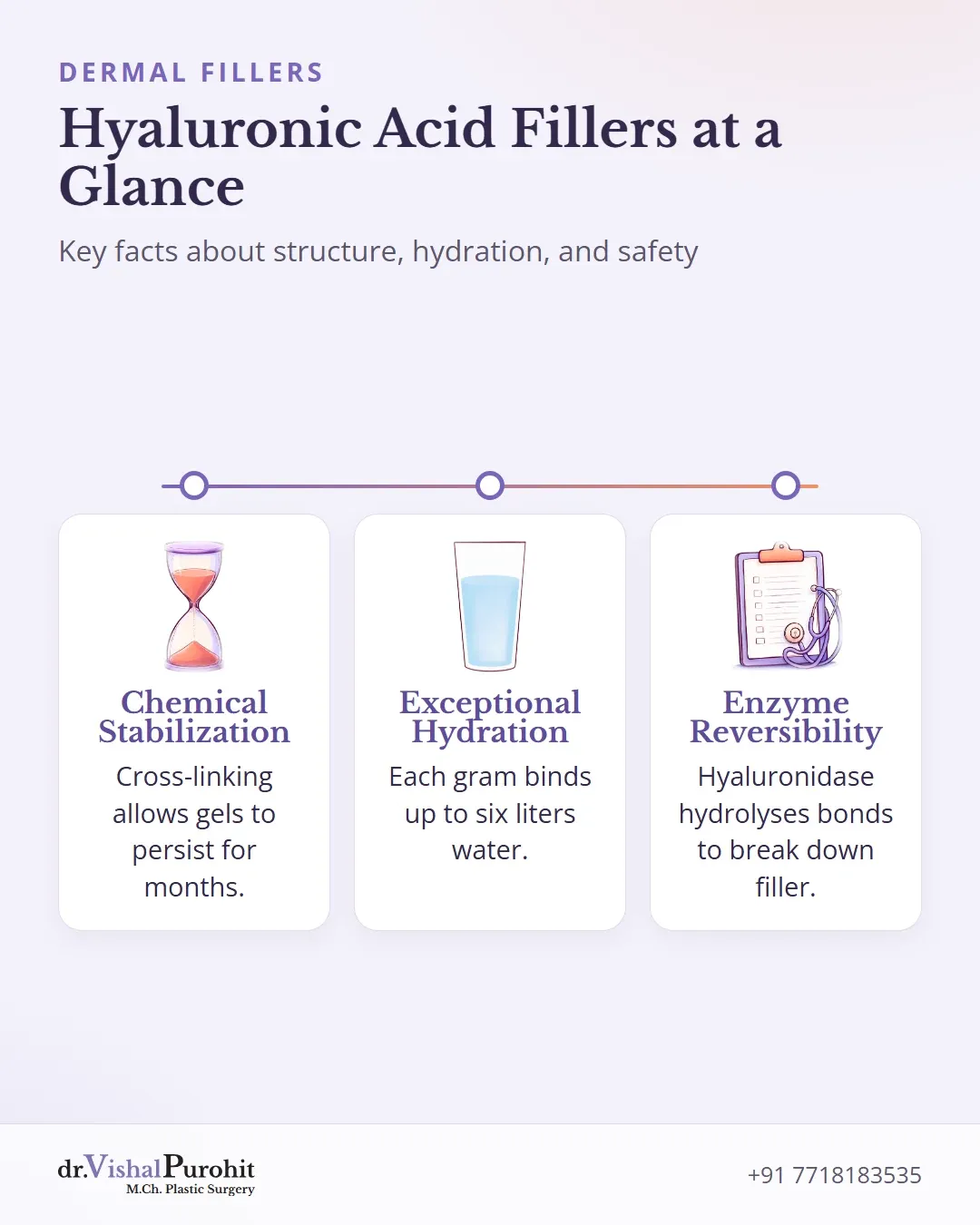
Endogenous hyaluronic acid is a naturally occurring carbohydrate polymer found throughout the body, including human skin and joint tissues1. In its natural liquid state, free polymer chains support tissue hydration and structural architecture12. However, native hyaluronic acid breaks down rapidly in human tissue, with the body turning over or restoring native reserves in approximately 12 to 24 hours13.
Stabilized Injectable Gels
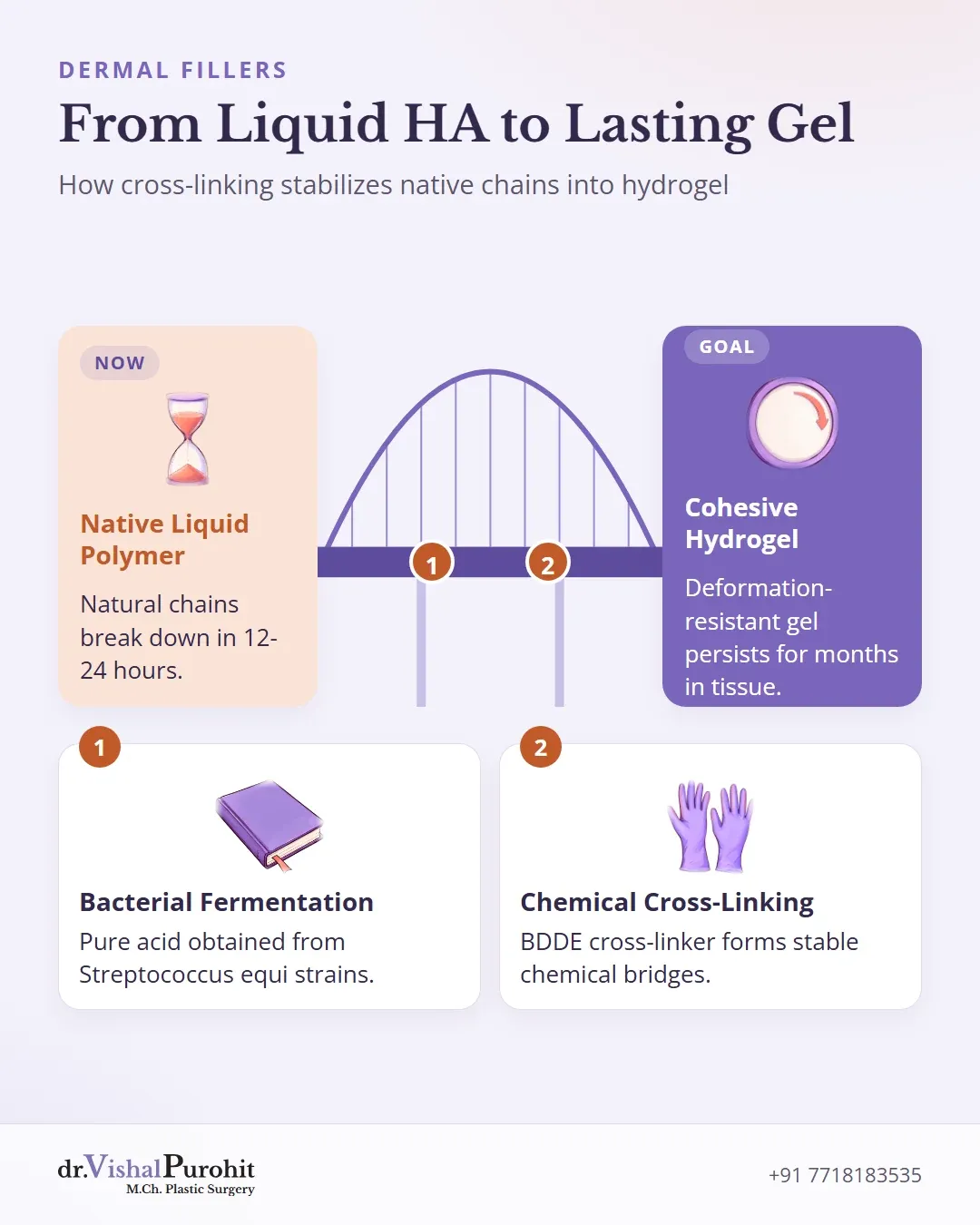
Manufactured dermal fillers use pure hyaluronic acid obtained via bacterial fermentation, typically from Streptococcus equi strains3. Because unmodified fluid degrades too quickly to maintain aesthetic correction, manufacturers chemically stabilize these polysaccharide chains through cross-linking, commonly using 1,4-butanediol diglycidyl ether (BDDE)23.
This chemical binding converts the liquid polymer into a cohesive, deformation-resistant gel23. By significantly slowing enzymatic degradation, cross-linking allows manufactured gels to persist in facial tissues for months rather than hours234.
Cosmetic intervention remains entirely personal. Choosing no treatment is always a valid option, and individuals should make decisions based on clear information rather than external pressure.
Water Binding and Cross-Linking Explained
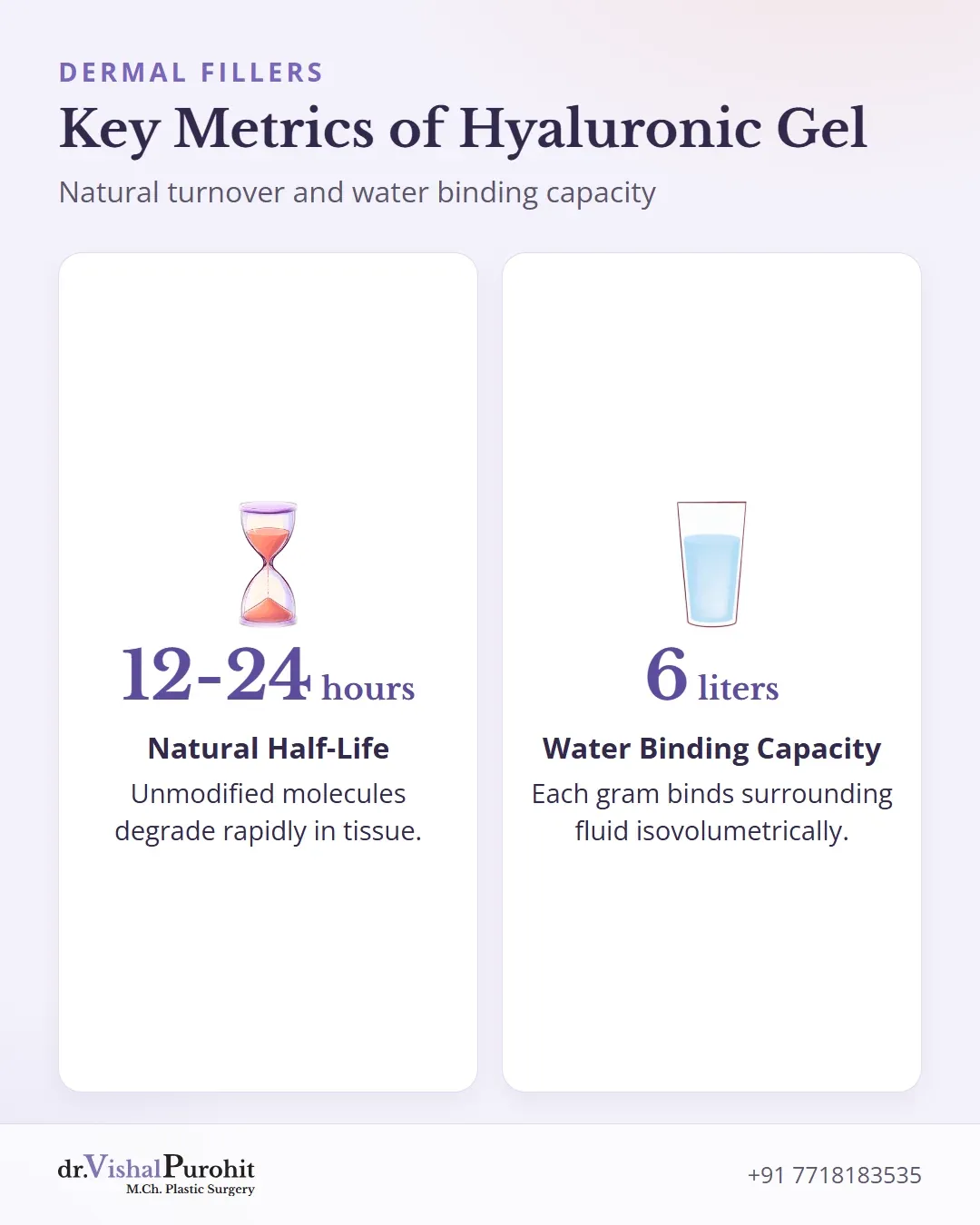
Natural hyaluronic acid exists as a liquid polymer with a short half-life25. To create a stable dermal filler, cross-linking agents such as 1,4-butanediol diglycidyl ether (BDDE) form chemical bridges with hydroxyl groups on linear hyaluronic acid chains26. This cross-linking converts runny fluid into a structured three-dimensional hydrogel that resists deformation and in vivo enzymatic breakdown2.
Key points
- Cross-linking stabilizes natural hyaluronic acid into a resilient gel that resists rapid breakdown.
- Hyaluronic acid binds extensive amounts of water, preserving treatment volume as it gradually degrades.
- Varying gel elasticity allows fillers to provide either firm structural lift or soft tissue integration.
Hyaluronic acid is exceptionally hydrophilic, with each gram capable of binding up to 6 liters of water from surrounding tissues7. As the filler gradually degrades, remaining molecules continue to bind fluid in an isovolumetric manner, maintaining treatment volume until nearly all product clears7.
Rheology and Tissue Behavior
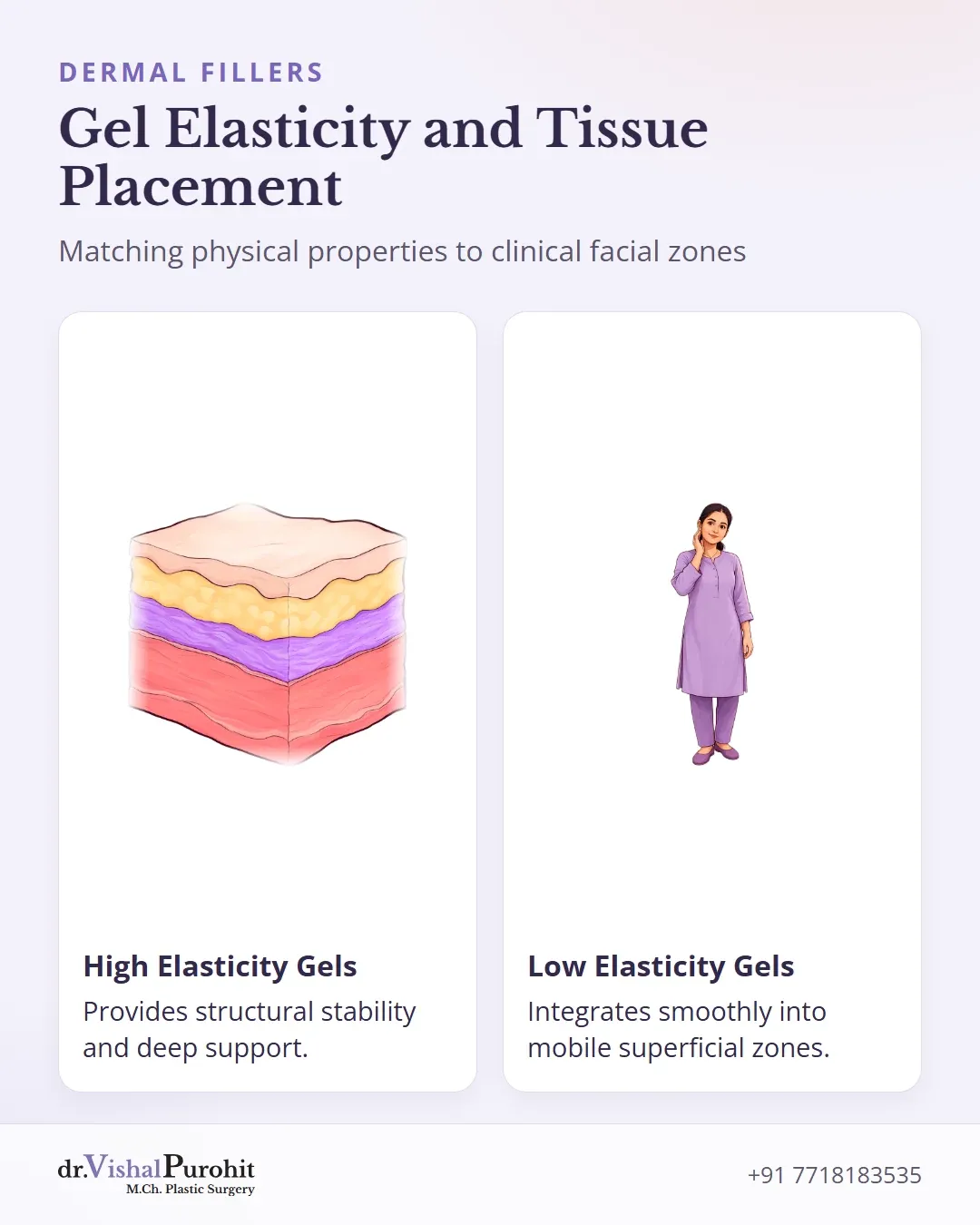
Filler formulations vary in their physical characteristics to match different anatomical needs7:
- Higher elasticity (high G′) provides firmness, structural stability, and optimum lifting capacity to support tissue78.
- Lower elasticity creates a softer, more fluid gel that integrates smoothly into mobile or superficial tissue zones2910.
Unbound BDDE must be thoroughly removed during manufacturing to undetectable levels6. Any remaining free cross-linker can cause tissue reactions, whereas properly bonded BDDE remains chemically stable and degrades safely6.
Understanding Brand Families and Differences
Different hyaluronic acid dermal fillers are developed using distinct manufacturing and cross-linking technologies, such as NASHA, Hylacross, Vycross, and CPM1112. These processes modify the gel’s physical properties without creating a single universal option for every facial concern1112.
The main differentiators among these products include:
- Hyaluronic acid concentration in each syringe12.
- Gel particulate size and cross-linking density1112.
- Rheological properties, such as elastic modulus and cohesivity111314.
Higher elasticity or firmer gels provide the structural support and lift capacity needed for deep structural projection and volume restoration1114. In contrast, softer, cohesive fine gels integrate smoothly to soften delicate areas, such as fine perioral lines or the tear troughs1415.
Because facial anatomy and aesthetic goals vary, no single brand or product is suitable for everyone.
Dr. Purohit’s note: At Dr. Vishal Purohit’s practice in Jaipur, the specific choice of product and formulation is decided at the consultation following an individual clinical evaluation.
Debunking Natural and Allergy Myths

Hyaluronic acid (HA) molecules share an identical chemical structure across all species16. Because of this uniform structure, biocompatibility is high, and severe immune responses are uncommon1617. However, hypersensitivity reactions can still occur despite appropriate screening, ranging from local swelling, erythema, and lumps to rare systemic reactions1617.
Injectable gels are manufactured medical products rather than raw extracts1819. Marketing claims labeling dermal fillers as organic or entirely natural can be misleading. Such promotional descriptions cannot replace a careful clinical safety assessment by a qualified doctor18.
Myth: Dermal fillers are completely natural and cannot cause reactions.
Fact: Hypersensitivity reactions can still occur despite screening, and marketing claims cannot replace a clinical safety assessment.
During a consultation, Dr. Vishal Purohit assesses individual medical history and skin characteristics before considering any treatment. Having dermal filler injected is a formal medical procedure requiring clinical oversight rather than an informal beauty therapy18. Patients should focus on documented manufacturing standards and practitioner qualifications rather than commercial slogans18.
How HA Reversibility Works
A key safety feature of hyaluronic acid dermal fillers is that they can often be degraded using an injected enzyme called hyaluronidase2021. Hyaluronidase hydrolyses the bonds within the hyaluronic acid chain to break down the product21.
However, reversal is not instant and is never without nuance. Controlling the exact degree of filler breakdown is difficult, meaning partial dissolution cannot be precisely calibrated22. Furthermore, enzymatic dissolving demands careful clinical judgment to avoid complications such as hypersensitivity reactions, which can include angioedema or urticaria122.
Emergency Reversal Protocols
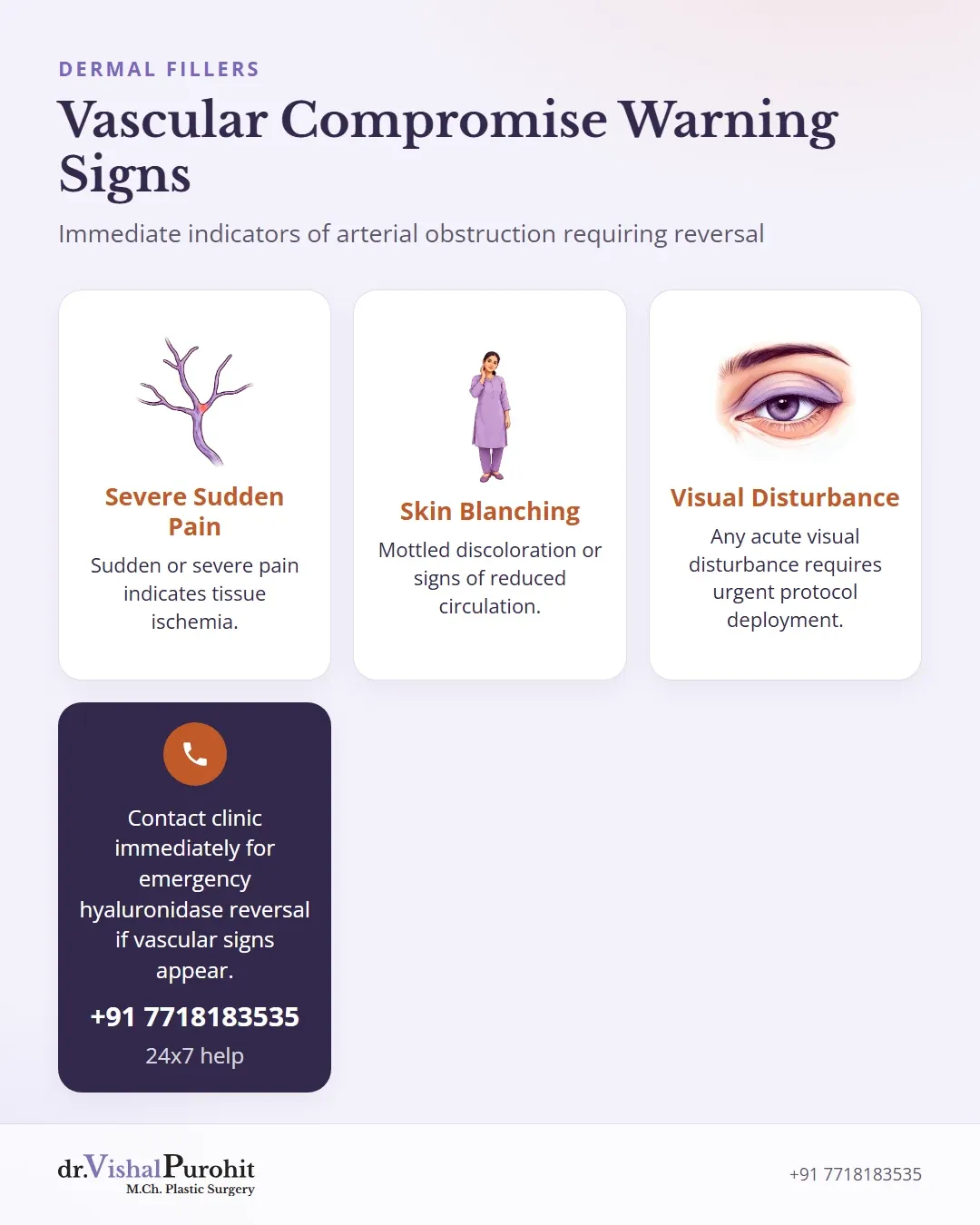
Immediate intervention is critical when vascular compromise occurs. If filler material enters an arterial lumen, it can obstruct blood flow and lead to tissue ischemia or necrosis2324.
Emergency reversal protocols are deployed without delay when severe warning signs appear:
- Sudden or severe pain24
- Skin blanching, mottled discoloration, or signs of tissue ischemia2425
- Any acute visual disturbance21
In these vascular emergencies, restoring circulation by rapidly breaking down the obstructing filler with hyaluronidase is the immediate priority2124.
Clinical Consultation in Jaipur
Undergoing aesthetic intervention remains an entirely personal choice. Having gel injected is a medical procedure requiring careful evaluation rather than an informal beauty therapy. To explore clinical treatment options, visit Dermal Fillers in Jaipur or review Dermal Fillers FAQs for further details. Consultations with M.Ch. plastic surgeon Dr. Vishal Purohit can be arranged by calling or messaging +91 7718183535.
This is educational information, not medical advice.