
Soft-tissue filler injections are among the most common aesthetic procedures, yet patients frequently ask: are dermal fillers safe? While most post-treatment responses are mild, temporary, and resolve without intervention, cosmetic fillers remain invasive medical treatments that carry potential risks.
Complications can range from minor localized swelling and bruising to rare but severe events such as infection, delayed inflammatory nodules, or vascular compromise. Reviewing Filler Aftercare: Swelling, Bruising and Normal Healing helps individuals recognize expected tissue responses and separate ordinary recovery from uncommon clinical problems.
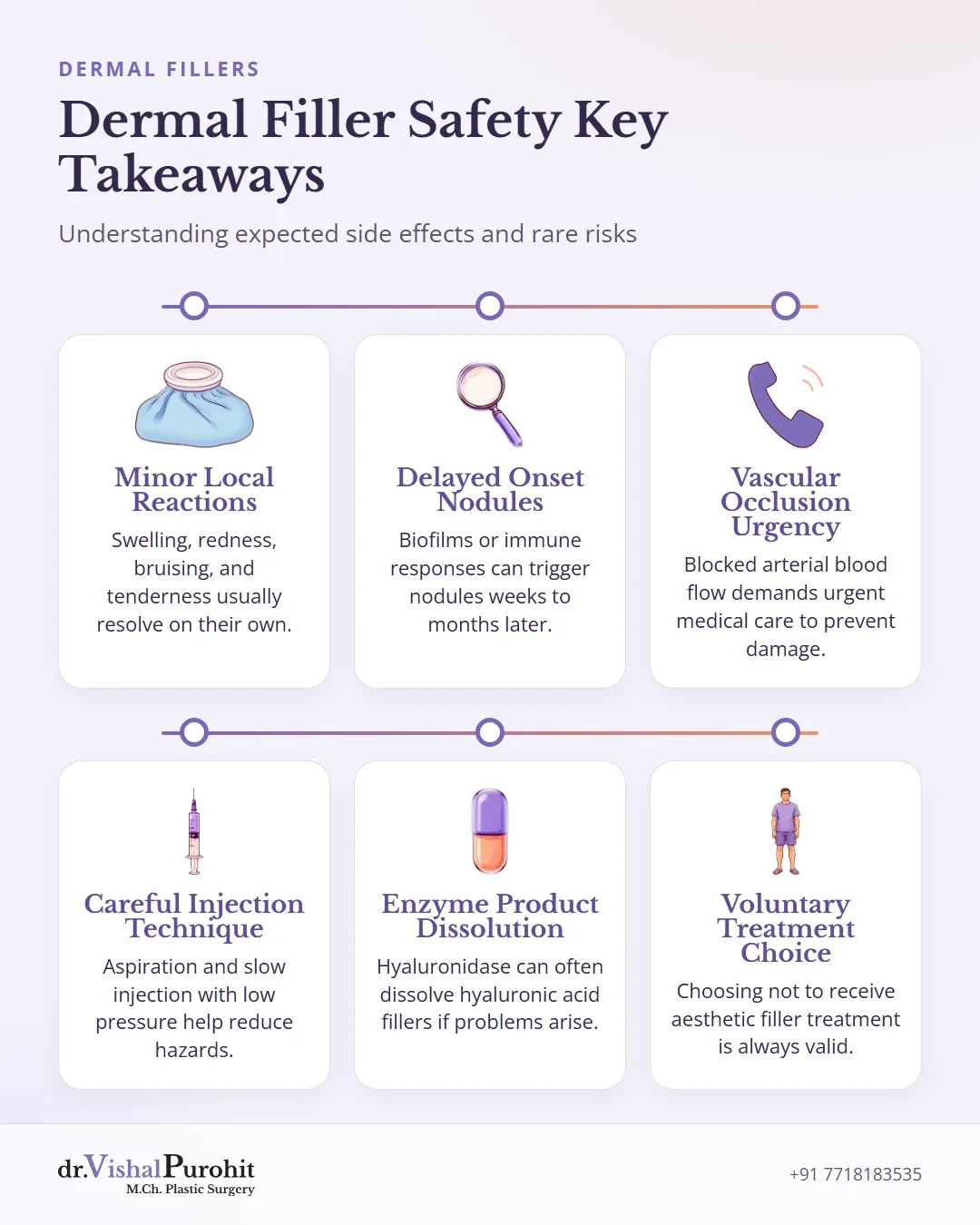
Common Minor Reactions Versus Rare Complications
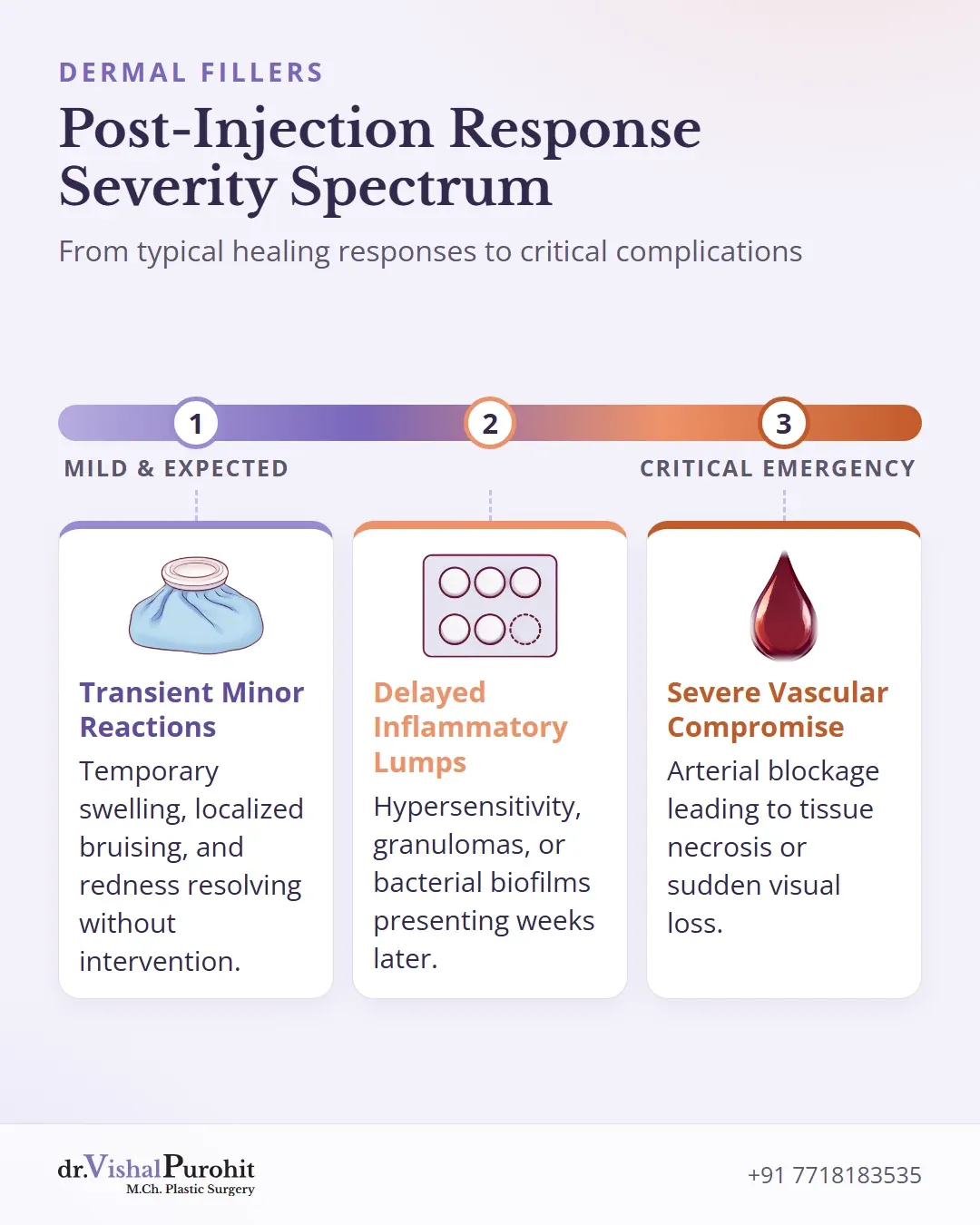
Most reactions following dermal filler injections are mild, transient, and resolve without further treatment12. These expected local responses relate directly to the injection procedure3.
Frequently reported minor reactions include:
Minor Reactions
Literature reports overall complication rates for dermal fillers ranging from 6.5% to 32.1%5. In addition, patient-reported rates of local events are consistently higher than investigator-assessed rates3.
Even though the vast majority of side effects are minor and self-limiting, cosmetic fillers remain medical procedures1. Serious complications, although rare, do occur26. Published analyses identify rare but severe events such as infection and vascular compromise, which can lead to tissue necrosis or blindness1.
Because serious outcomes can occur, potential risks must be explained clearly before treatment through an informed consent process1. Understanding this distinction helps patients separate expected injection recovery from true clinical complications.
Hypersensitivity, Infection and Delayed Nodules
Soft-tissue filler injections can lead to allergic reactions, sterile inflammatory responses, and bacterial infections789. Hypersensitivity may produce redness, swelling, burning, or subcutaneous lumps9.
Delayed Swelling and Nodules
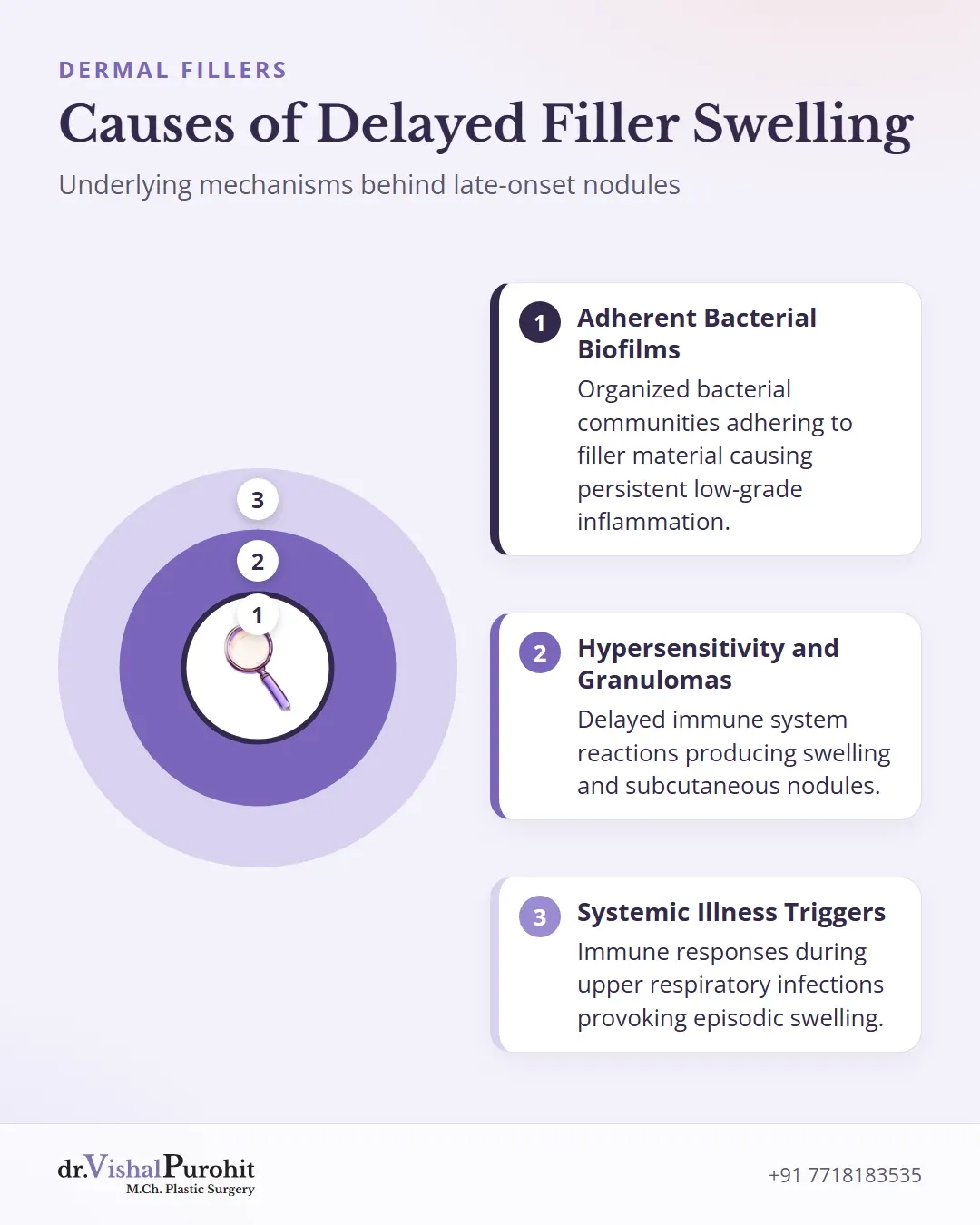
Nodules and swelling may appear weeks to months after treatment710:
- Delayed-onset nodules can stem from delayed hypersensitivity, granulomas, or infection78.
- Biofilms, which are organized communities of bacteria adhering to filler material, can cause persistent low-grade inflammation or tender lumps81112.
- Episodes of repetitive swelling can be provoked when the immune system reacts during an upper respiratory infection or period of systemic illness13.
When inflammatory nodules occur, antibiotics are typically considered, and hyaluronidase may be used under antibiotic coverage if hyaluronic acid filler is present714.
How potential delayed reactions or nodule concerns are evaluated, managed, or prevented in his own practice is decided at the consultation.
Vascular Occlusion and Critical Vision Symptoms
Vascular occlusion occurs when dermal filler is inadvertently injected directly into an artery or compresses a vessel wall from the outside1516. This blocks microvascular blood supply to surrounding tissues1617. If untreated, prolonged lack of blood flow progresses to localized skin necrosis151819.
Key points
- Vascular occlusion blocks tissue blood supply and can cause localized skin necrosis if untreated.
- Filler travelling into ophthalmic arterial branches can cause irreversible vision loss within 60 to 90 minutes.
- Immediate emergency care is vital if severe pain, skin blanching, or vision changes occur.
In rare facial danger zones, filler material can travel retrogradely into branches communicating with the ophthalmic system51520. An embolus reaching the retinal arterial circulation can lead to irreversible visual loss within 60 to 90 minutes5.
Emergency Warning Signs
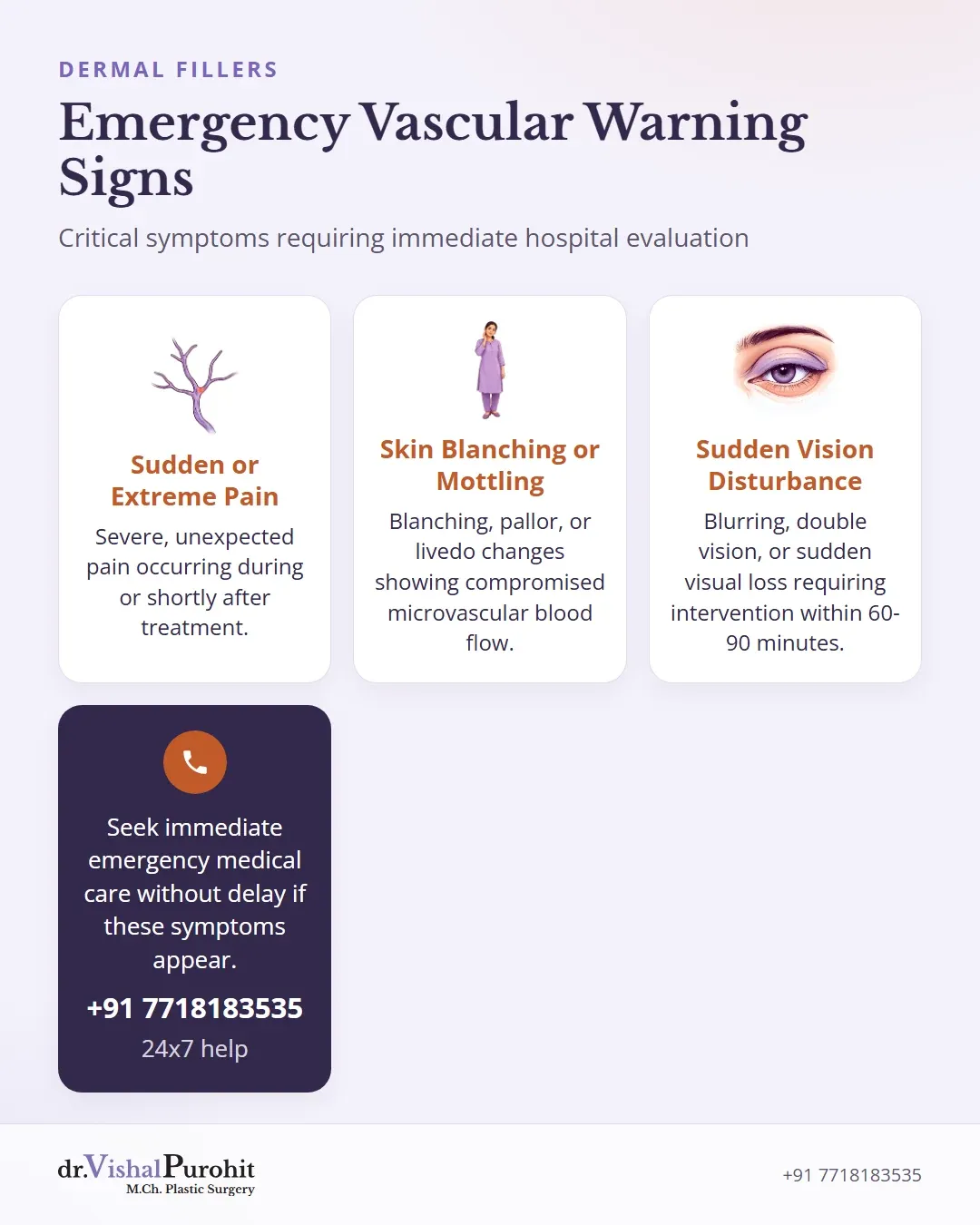
Immediate emergency medical evaluation is necessary if any of the following symptoms appear during or after treatment516:
- Sudden or extreme pain1516
- Skin blanching, pallor, or livedo changes1516
- Any visual changes, such as blurring, double vision, or sudden sight loss5
Patients experiencing severe pain, skin discoloration, or visual disturbance must seek immediate emergency medical care without delay516.
Strategies to Minimize Risk Without False Promises
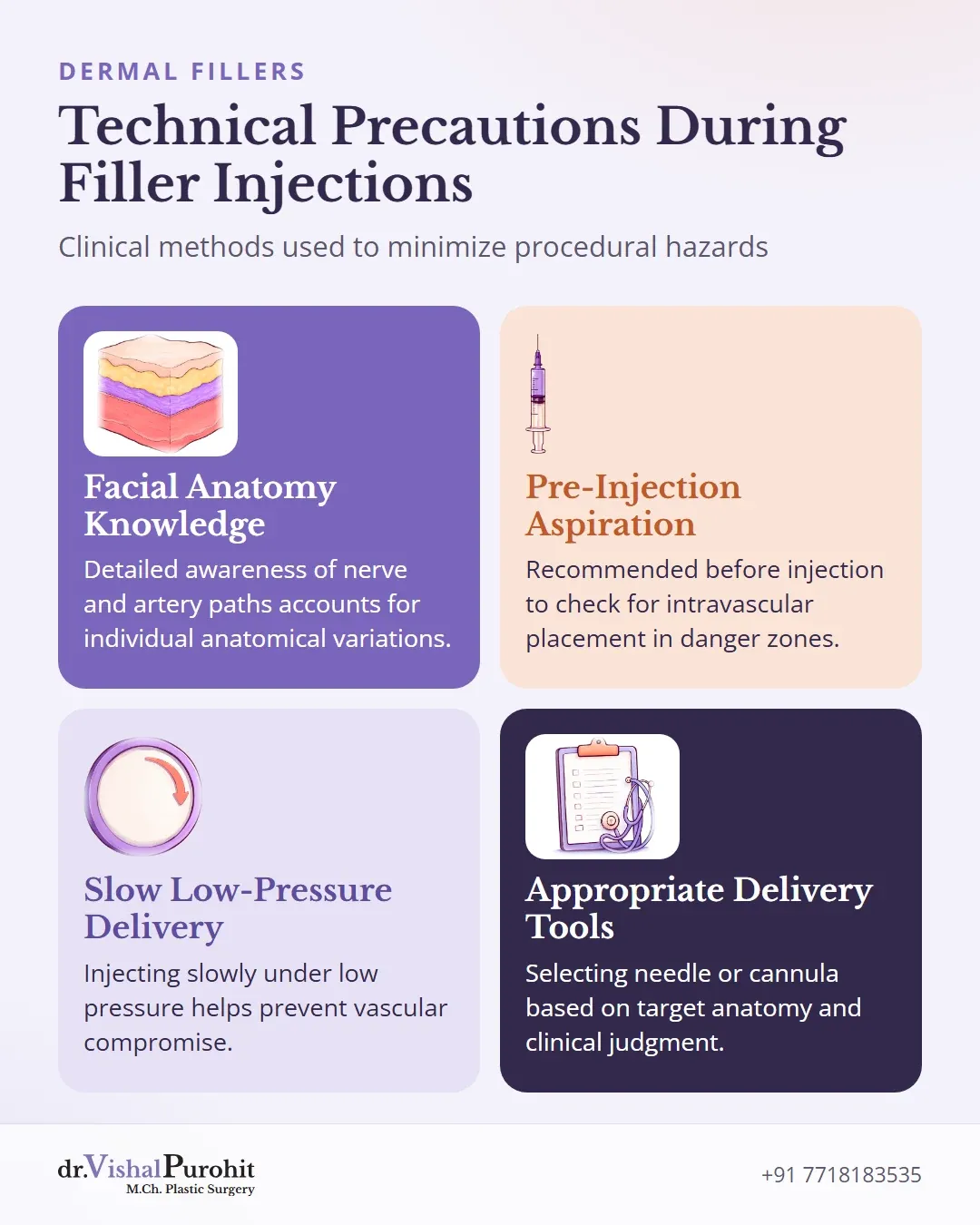
Practitioners take several technical precautions to reduce procedural hazards during soft-tissue augmentation. Detailed knowledge of facial anatomy, including the paths of nerves and arteries, is essential because individual anatomical variations are common2122. Aspiration before injection is recommended to help identify intravascular placement, particularly in higher-risk zones such as the glabella and nose22.
Key points
- Precise anatomical knowledge and careful injection techniques help reduce the risk of complications during soft-tissue augmentation.
- Neither needles nor cannulas provide absolute safety, and each tool is chosen according to individual clinical needs.
- Even with meticulous technique and reversal agents like hyaluronidase, procedural risks cannot be eliminated entirely.
Injecting slowly with low pressure helps avoid vascular compromise, as rapid delivery under high pressure increases danger23. Choosing delivery tools based on individual anatomy and clinical judgment is also standard practice24. Neither a needle nor a cannula offers universal safety: cannulas may cause less bruising or vascular trauma in certain settings, whereas needles allow precise placement24.
Even with meticulous technique, no practitioner, device, or method can eliminate procedural risk entirely2225. Complications can still emerge despite thorough precautions22. When hyaluronic acid filler requires reversal, the enzyme hyaluronidase can often dissolve the product23. However, treatment outcomes cannot be promised to resolve completely or carry absolute certainty.
Navigating Help and Emergency Clinic Contact
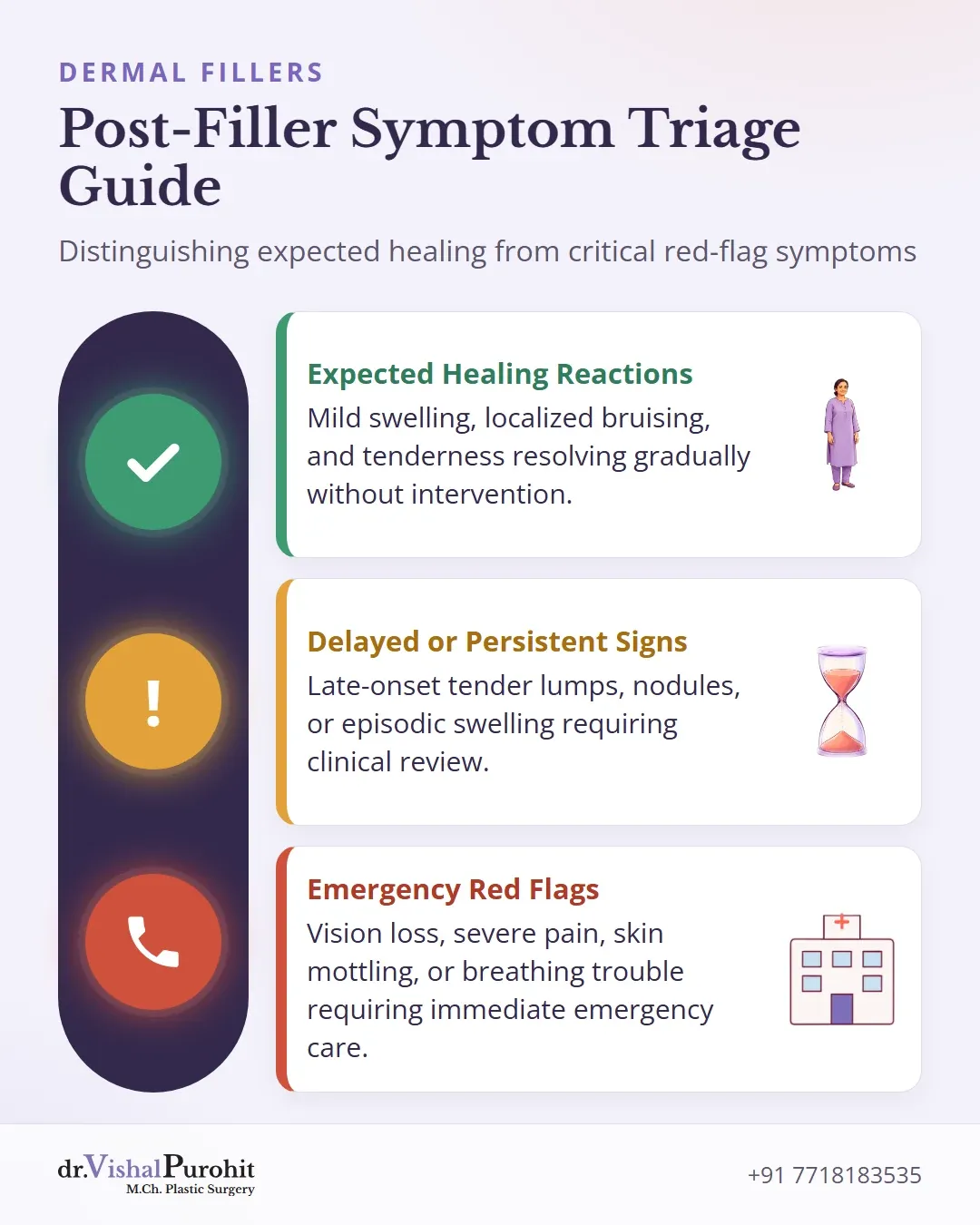
Prompt recognition and timely intervention are decisive when managing suspected adverse reactions. Vascular compromise is an emergency where quick intervention is crucial, as permanent vision loss can be imminent26. Preparedness includes accessible contact information and prompt emergency care pathways24.
Patients must seek emergency medical care at once if atypical symptoms arise, including:
- Vision change, blurred vision, double vision, or visual loss24
- Severe or unexpected ocular pain24
- Skin pallor, white or grey patches, blue discoloration, or livedoid mottling24
- Facial, lip, or throat swelling accompanied by a rash
- Difficulty breathing or swallowing
- Fever associated with spreading redness
However, blanket 24-hour phone availability is not promised, and urgent vascular signs require direct emergency medical attention.
Undergoing cosmetic procedures remains entirely voluntary, and choosing no treatment is always a valid aesthetic option.
Medical Consultation and Filler Safety in Jaipur
Understanding procedural risks, recovery milestones, and emergency warning signs allows patients to make confident, well-informed choices regarding aesthetic treatments. For comprehensive information on treatment options, visit Dermal Fillers in Jaipur or review common patient inquiries on Dermal Fillers FAQs. Routine non-emergency questions can be directed to the team by phone or WhatsApp at +91 7718183535.
This is educational information, not medical advice.