
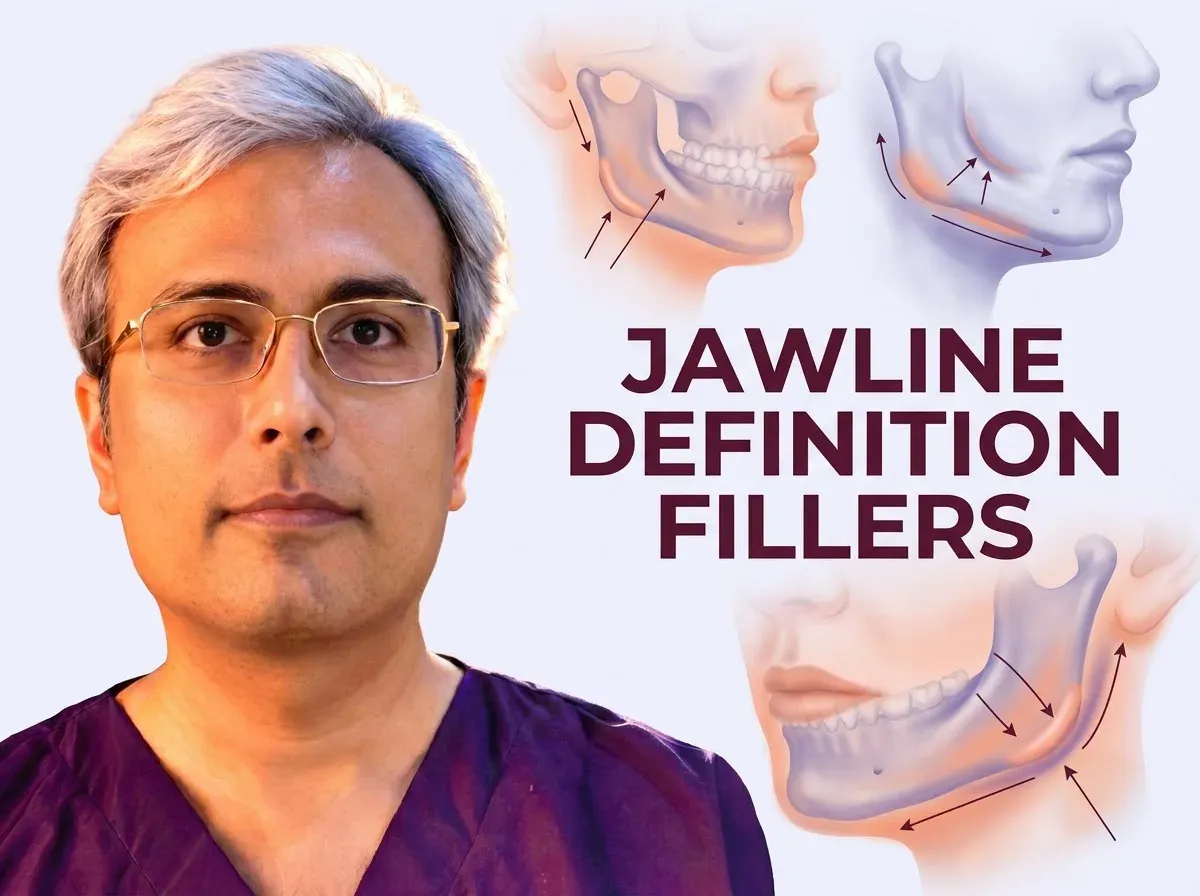

Volume and Contour Versus Laxity: What Filler Camouflages
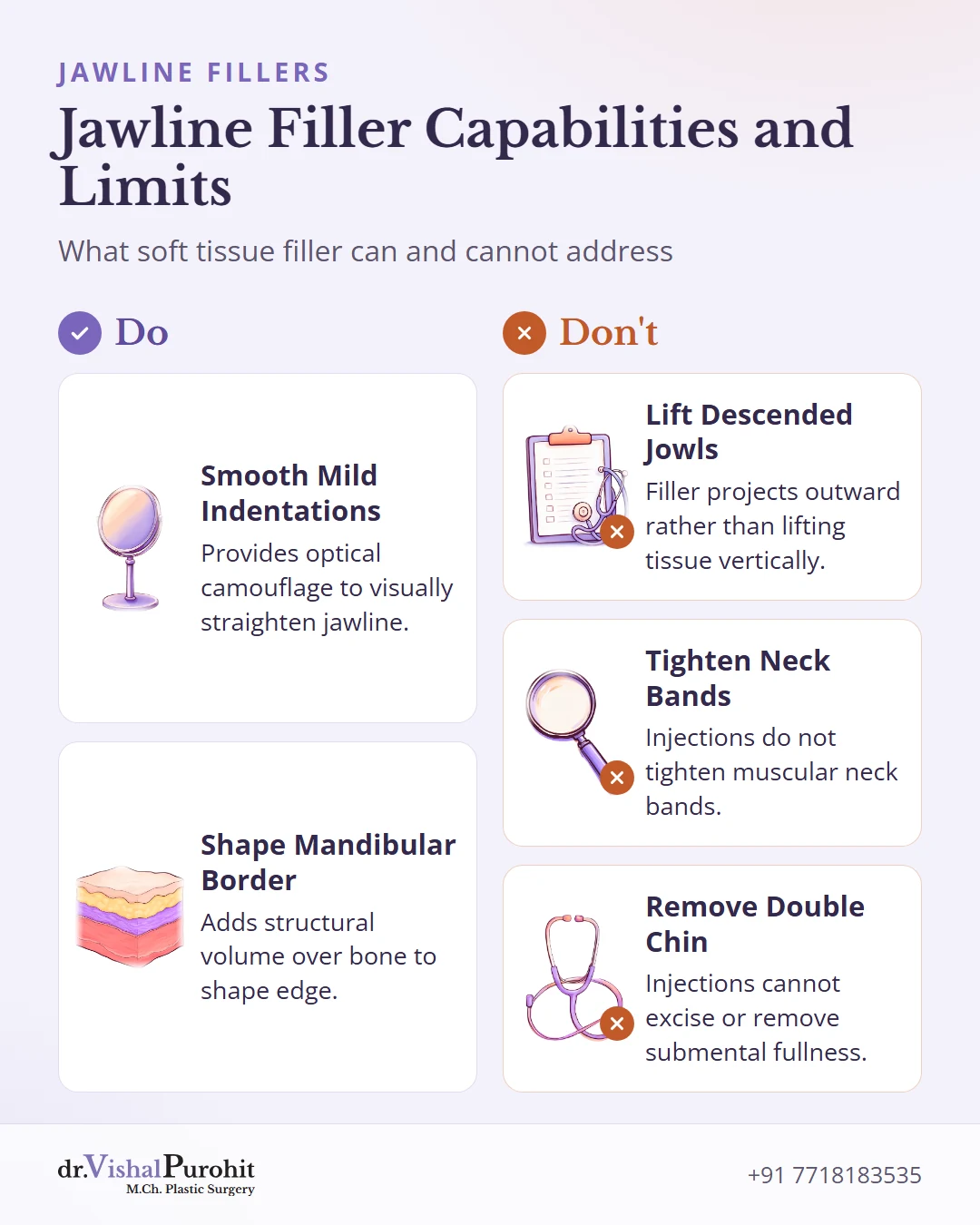
Dermal filler along the jaw adds structural volume over bone to shape the mandibular border. Because filler projects outward rather than lifting tissue vertically, it cannot tighten loose skin or remove excess fat.
In patients evaluating mandibular border definition and lower facial laxity, strategic placement can smooth mild indentations. When descending tissue creates a hollow known as the prejowl sulcus between the chin and a jowl, filler placed before and behind the depression provides optical camouflage to visually straighten an irregular jawline.
However, non-surgical injections have distinct physical boundaries and cannot address all lower facial concerns:
- They do not lift heavy, descended jowls.
- They do not tighten muscular neck bands.
- They do not remove double-chin fullness.
Injecting excess filler in an already heavy lower face risks widening facial dimensions, obscuring the separation between jaw and neck, or creating unwanted bulk. Whether soft-tissue filler is appropriate is decided at the consultation with Dr. Vishal Purohit, and choosing no treatment is always a valid option.
Diagnostic Alternatives and Structural Assessment Before Injections
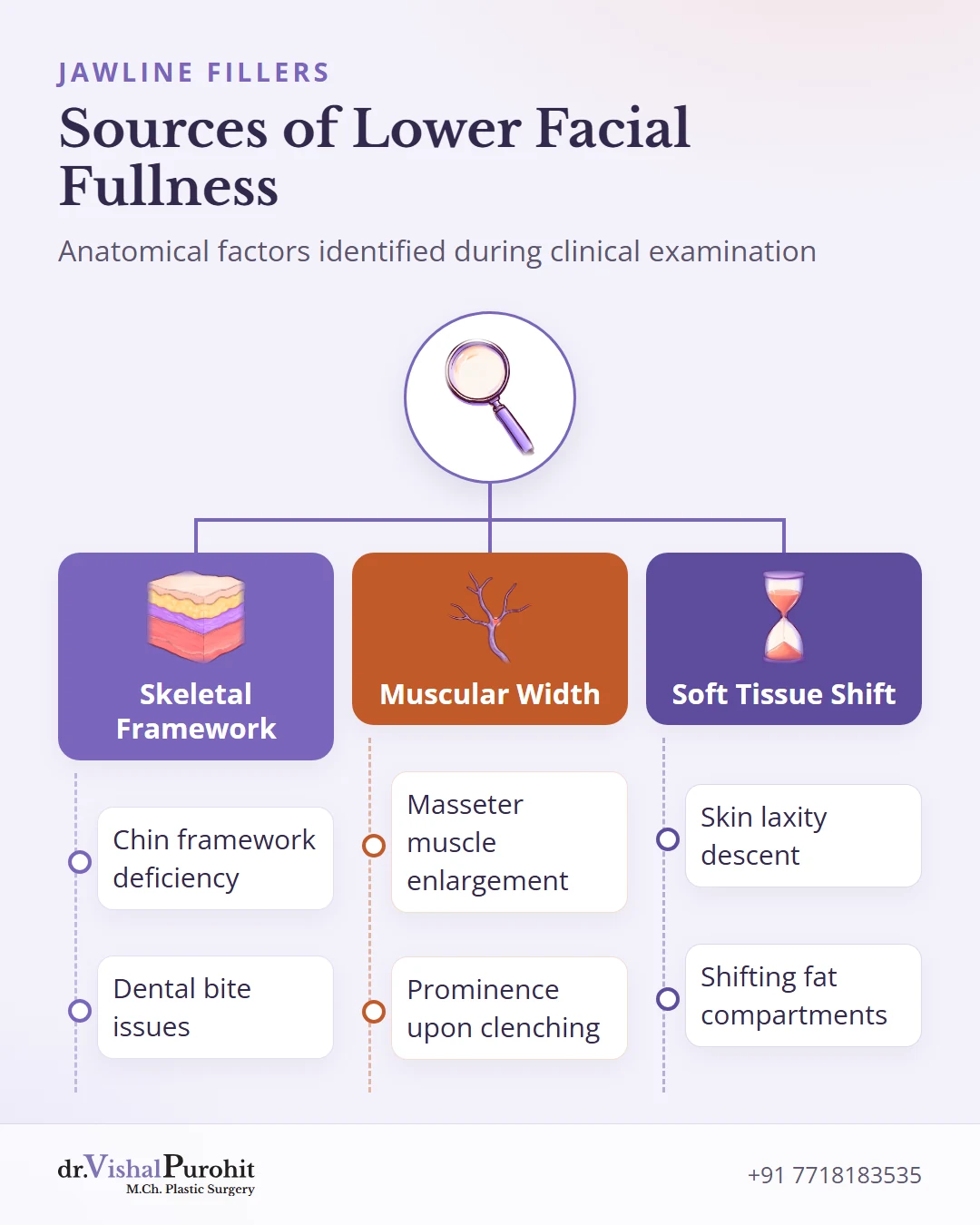
Evaluating lower facial definition requires distinguishing between underlying anatomical causes. Fullness or a less distinct jaw border may stem from skeletal structure, muscular enlargement, or shifting soft tissues. An in-person assessment identifies which anatomical factors contribute to your concerns before any procedure is selected.
A comprehensive examination identifies whether the primary concern involves:
- Skeletal deficiency in the chin or jaw framework.
- Muscular width caused by masseter muscle enlargement at the angle of the jaw, which becomes more prominent upon clenching.
- Soft tissue descent resulting from skin laxity and shifting fat compartments.
Structural bite issues and tooth alignment concerns require dental, orthodontic, or maxillofacial assessment rather than aesthetic camouflage. Dermal fillers place volume along bone to project borders, but they cannot correct dental misalignment or reposition structural tissues.
Understanding how jawline fillers define mandibular contours helps clarify what injectable treatments can achieve and when surgical options or orthodontic referrals are more suitable. Whether soft-tissue filler, structural referral, or alternative management is appropriate is decided at the consultation with Dr. Vishal Purohit. Choosing no treatment remains a valid choice.
Understanding Limitations and What Filler Does Not Remove
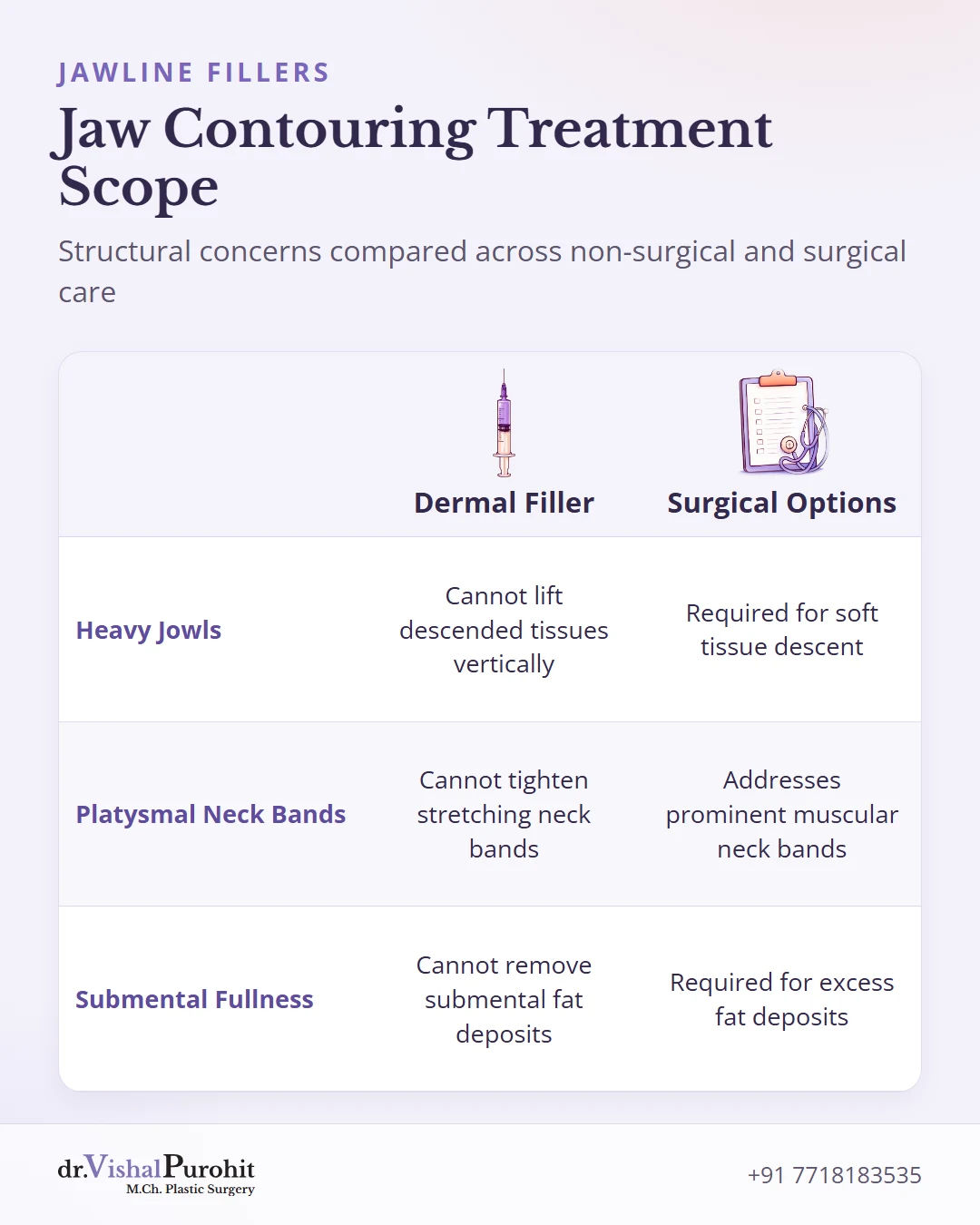
Dermal filler adds targeted volume outward along the bone to shape the mandibular border, but it has distinct mechanical limits. It cannot lift descended tissues vertically or tighten stretching skin.
Patients evaluating lower facial contouring can learn how jawline fillers define the mandibular border versus when surgical options are required. Injectables cannot replace surgery for certain structural concerns:
- Heavy jowls caused by soft-tissue descent along the lower jaw
- Prominent platysmal bands in the neck
- Submental fullness from double-chin fat deposits
Injecting filler into an already heavy lower face risks adding unwanted bulk rather than restoring definition. In Dr. Vishal Purohit's practice, suitability is determined after assessing individual facial anatomy.
Overfilling Risks and Preventing Unwanted Lower Face Bulk
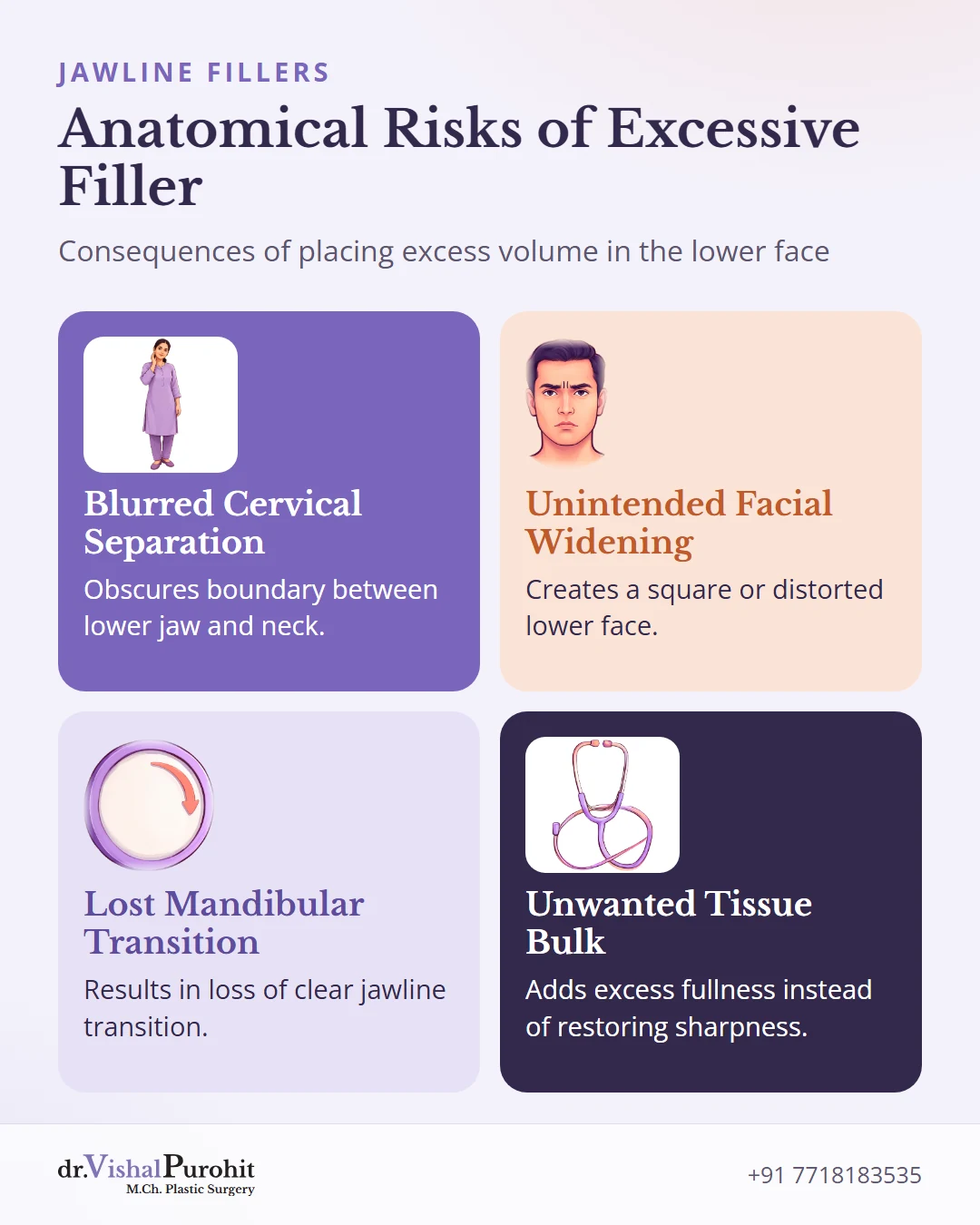
Dermal filler along the jawline provides targeted volume to shape bony borders, but injecting too much product can compromise definition. Excess filler can obscure the boundary between the jaw and neck, resulting in blurred cervical contours or creating an unintended heavy, widened appearance.
Understanding dermal filler limits for mandibular definition helps protect facial balance. Strategic placement cannot lift descended tissues or remove excess submental fat. Adding volume to an already heavy lower face risks producing excess bulk rather than restoring a sharp edge.
When excessive volume causes unwanted fullness, key anatomical consequences include:
- Blurred separation between the lower jaw and the neck.
- Unintended widening that creates a square or distorted lower face.
- Loss of a clear, natural mandibular transition.
In his Jaipur practice, Dr. Vishal Purohit assesses individual anatomy to avoid placing volume where it cannot help.
Jawline Fillers Cost in Jaipur: Longevity and Reassessment
Dermal fillers provide localized volume along the bone to shape the mandibular border. Because every face changes over time, long-term care relies on ongoing anatomical review rather than fixed treatment schedules.
The total treatment fee, what it includes, review visits, and any top-up policy are not fixed in advance and are explained at the consultation. Injectable products differ, and their doses are not interchangeable. During an assessment, patients can ask which specific product is selected and what its product label covers.
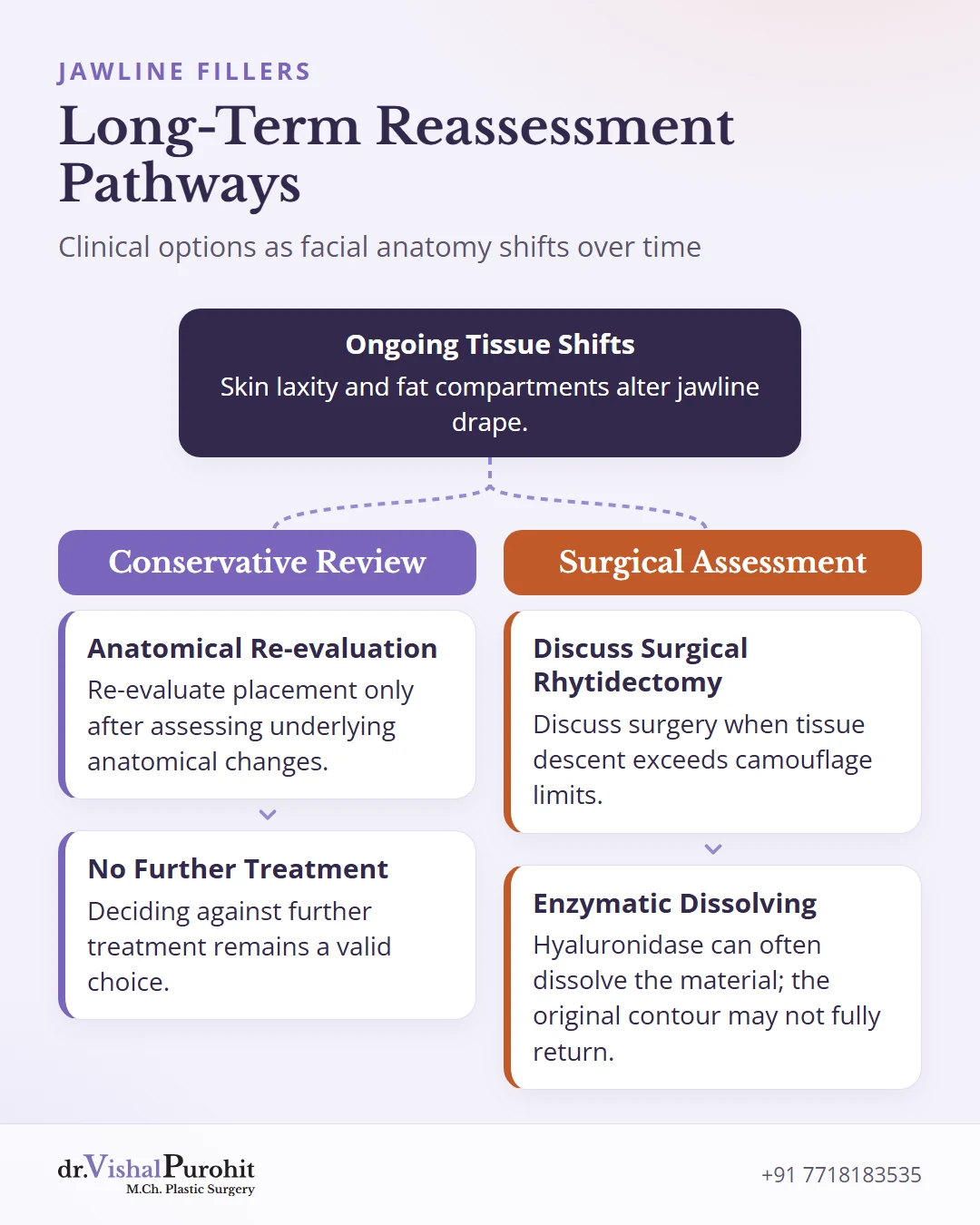
Understanding jawline filler definition and limits helps clarify why repeated volume addition requires careful anatomical review. Lower-face aging involves progressive skin laxity and shifting fat compartments. Over time, these structural shifts alter how tissues drape over the jawline, meaning repeat injections may not always remain suitable.
Individual filler persistence varies based on metabolism and tissue interactions. During follow-up, patients may consider several pathways:
- Deciding against further treatment, which remains a valid choice.
- Re-evaluating filler placement only after assessing underlying anatomical changes.
- Discussing surgical options, such as rhytidectomy, when tissue descent exceeds what volume can camouflage.
Policies regarding touch-ups and dissolving are explained at the consultation with Dr. Vishal Purohit. If hyaluronic acid filler requires adjustment, the enzyme hyaluronidase can often dissolve the material, though it does not ensure complete restoration of native tissue contours.