
TUE - SUN: 11:00 AM – 07:00 PM

Aesthetic & Reconstructive Surgery

Tear Trough & Under-Eye Dermal Fillers in Jaipur

Tear Trough & Under-Eye Dermal Fillers in Jaipur - Dr. Vishal Purohit Plastic Surgeon Jaipur11+ Years of Surgical Experience

Softening Under-Eye Hollow Grooves While Respecting Periorbital Anatomy

Hyaluronic acid dermal filler adds volume beneath hollow grooves between the lower eyelid and cheek. Dr. Vishal Purohit, M.Ch. plastic surgeon, assesses skin laxity, fat pads and lid support first, explaining what filler can and cannot change.

View clinic timings and contact details →
  • M.Ch Plastic Surgeon · RMC Reg. 28041/14185
  • Day-care / short-stay procedure
  • Tonk Road, Jaipur
  • Jump to FAQs

Treatment Time

A short clinic visit

Anesthesia

Comfort options discussed at the visit

Downtime

Usually little; precautions explained

Results Onset

Settling over days; full review later (studies)

Duration

Usually temporary; variable (studies)

Setting

Clinic visit, home the same day

Periorbital Rejuvenation • Anatomical Reality

Why Tear Trough Fillers Requires Precision Medical Care

The tear trough is the anatomical groove running between the lower eyelid and the upper cheek. It reflects how the orbicularis muscle attaches and how midfacial tissues sit over the underlying bone. In some faces, structural volume deficiency deepens this groove, creating a visible shadow.

Biological / Muscular Vector

Under-eye darkness arises from several distinct causes, including structural hollows, surface melanin pigment, prominent blood vessels and herniated orbital fat bags. Hyaluronic acid filler adds volume beneath a sunken groove; it does not lighten surface pigmentation, resolve vascular congestion or flatten protruding fat pads.

Aesthetic Frustration

Patients often feel their resting face conveys fatigue, stress, severity, or premature aging that does not reflect how energetic they truly feel inside.

Why Assessment Comes First

Product, amount and depth are planned for each face. A heavy brow, a droopy eyelid, an uneven smile or a problem with a blood vessel are known risks that careful assessment aims to reduce.

Biological Action

Hyaluronic acid dermal filler physically adds volume beneath the soft tissues along the infraorbital rim. Placing volume softens the hollow transition between the lower eyelid and anterior cheek, reducing shadows caused by structural depression. Injected filler gradually breaks down over time through natural degradation.

Dr. Vishal Purohit - M.Ch Plastic & Cosmetic Surgeon Jaipur

Dr. Vishal Purohit

M.Ch Plastic & Cosmetic Surgeon

✓

Credential Level

M.Ch Super-Specialty

RMC Reg. 28041/14185

Your Treatment Guide

Anatomy First, Honest Advice

"The lower eyelid has thin skin, complex vascular networks and delicate lymphatic drainage. As an M.Ch. plastic surgeon who also performs lower eyelid surgery, Dr. Vishal Purohit evaluates whether an under-eye shadow stems from structural bone and soft tissue loss, loose skin, or herniated fat, and explains the trade-offs honestly."

— Dr. Vishal Purohit

1

M.Ch Plastic & Reconstructive Surgery, SMS Medical College, Jaipur

India's super-specialty degree in plastic surgery, with detailed training in facial muscles, nerves and blood vessels.

2

11+ Years as a Plastic Surgeon

A focus on natural, proportionate results that still look like you.

3

Assessment Before Any Injection

Dr. Vishal Purohit assesses your face in person, explains what treatment can and cannot change, and says when another option would help more.

Simple & Transparent

Your 3-Step Treatment Plan

A clear pathway: an assessment first, treatment only if it suits you, and a review afterwards.

1

Assessment

Dr. Purohit evaluates skin tone, snap-back, lid-cheek transition, fat herniation and your medical and procedural history.

Step 1: Planning
2

Treatment Visit

If filler suits your anatomy, the plan and consent are reviewed, and the injection is performed in the clinic.

Step 2: Treatment
3

Settling and Review

Initial swelling and settling take time to resolve. Follow-up is explained at the visit, and urgent warning signs are explained before you leave.

Step 3: Review
Assessment and Method

Clinical Science and Methodology for Tear Trough Fillers

The tear trough is the anatomical groove running between the lower eyelid and the upper cheek. It reflects how the orbicularis muscle attaches and how midfacial tissues sit over the underlying bone. In some faces, structural volume deficiency deepens this groove, creating a visible shadow. Under-eye darkness arises from several distinct causes, including structural hollows, surface melanin pigment, prominent blood vessels and herniated orbital fat bags. Hyaluronic acid filler adds volume beneath a sunken groove; it does not lighten surface pigmentation, resolve vascular congestion or flatten protruding fat pads. Dr. Vishal Purohit assesses the eyelids, snap-back tone and anterior cheek support before planning any procedure. When significant skin laxity, fluid retention or large fat bags predominate, other approaches may be more appropriate than dermal filler. Choosing no treatment is always a valid option.

Planned for Your Face

Individual Assessment

The plan follows your own muscle movement, skin and facial structure, looked at in person.

A Named, Sealed Product

Know What Is Used

You are told which product is used. Products differ, and their doses are not interchangeable.

Care Around Vessels and Nerves

Anatomy First

Technique is chosen with facial vessels and nerves in mind. Bruising and rarer side effects are explained before treatment.

Candidate Indicators and Focus Points

Adults with visible hollow grooves along the infraorbital rim causing structural shadowing.

Clinical Indication

People with good lower eyelid skin snap-back and minimal eyelid laxity.

Clinical Indication

Individuals without marked morning eyelid puffiness, malar mounds or festoons.

Clinical Indication

People seeking softer hollow grooves who understand that filler cannot correct surface pigmentation.

Clinical Indication

Clinical Guide & In-Depth Information

Comprehensive Medical Overview

Detailed procedural analysis, anatomical considerations, and patient guidelines by Dr. Vishal Purohit.

Under-Eye Hollows, Dark Circles and Who Suits Filler
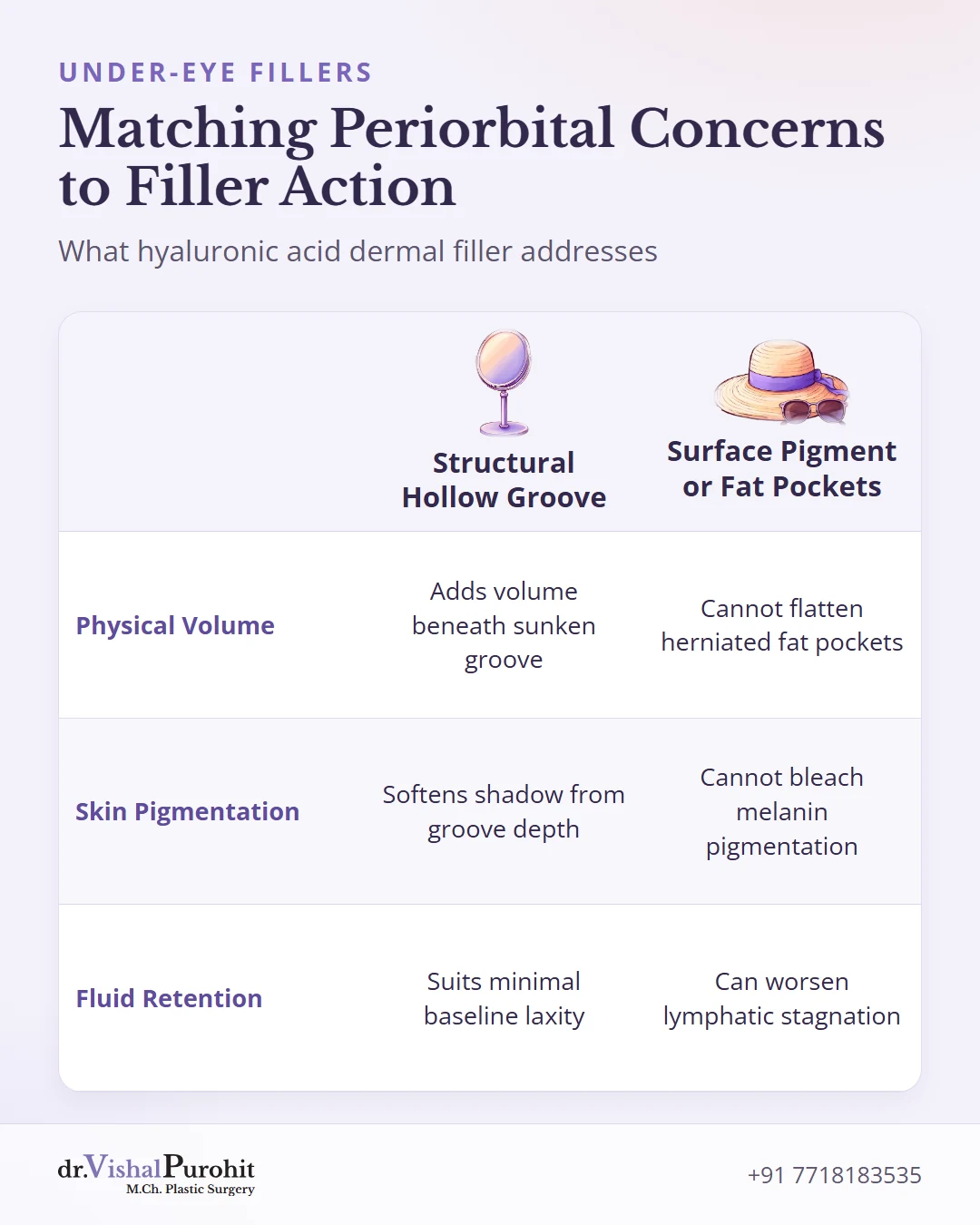
Matrix showing what tear trough dermal filler can and cannot treat.

Periorbital darkness is a descriptive presentation rather than a single condition, arising from distinct anatomical factors. Hyaluronic acid dermal filler adds physical volume beneath a sunken groove along the orbital rim. However, dermal filler cannot bleach superficial or constitutional melanin pigmentation, relieve vascular congestion, or tighten lax tissue over herniated orbital fat pockets.

An in-person clinical assessment of who may be unsuitable for tear trough filler examines tissue tone and fluid tendencies. Filler attracts water, which can worsen lymphatic stagnation in people prone to morning eyelid fluid retention, malar mounds, or festoons. People with good skin tone and minimal skin laxity are generally better candidates than those with significant laxity.

Dr. Vishal Purohit assesses each person's lower eyelid anatomy and the transition to the anterior cheek to determine if volume restoration is appropriate. Whether an individual is suitable for under-eye filler is decided at the consultation. Choosing no treatment remains a valid clinical outcome, and cosmetic procedures are never mandatory.

Clinical Assessment of Lid Cheek Transition and Eyelids
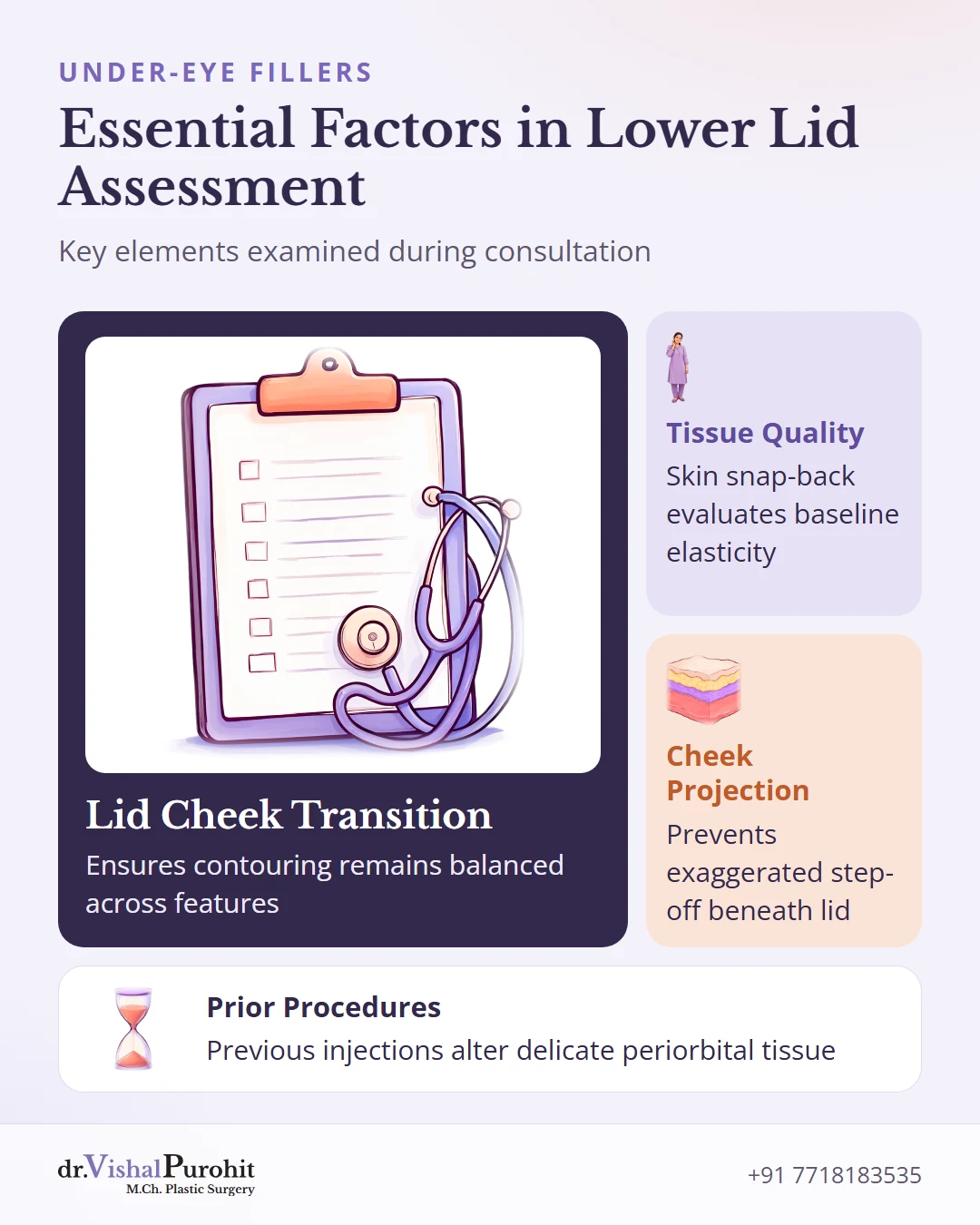
Bento layout of key lower eyelid and cheek assessment criteria.

The lower eyelid and anterior cheek meet along a continuous anatomic boundary. When evaluating structural under-eye hollows, examining this junction ensures contouring remains balanced across adjacent facial features.

Evaluating the midface gradient clarifies who may be unsuitable for tear trough filler due to fluid retention, festoons, surface pigment, or reduced cheek projection.

Dynamic physical assessment during consultation examines essential anatomical factors:

  • Baseline tissue quality and skin snap-back to evaluate elasticity.
  • Anterior cheek projection to prevent an exaggerated step-off beneath the lower lid.
  • Prior eyelid procedures or cosmetic injections that alter delicate periorbital tissue.

Choosing no treatment remains a valid option for every individual. Whether a person suits dermal filler or another approach is determined at the consultation.

Comparing Under-Eye Filler and Lower Eyelid Surgery Boundaries
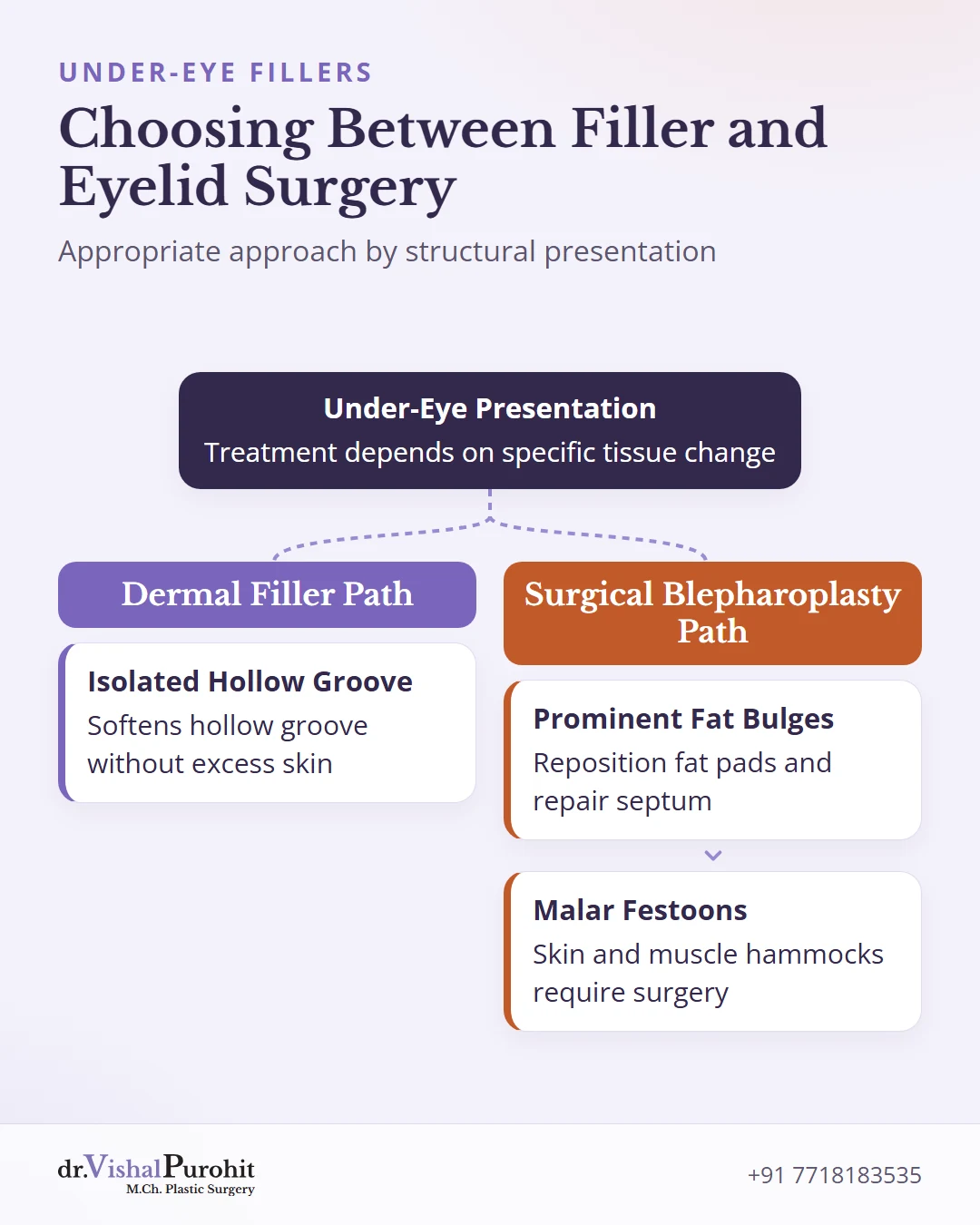
Paths diagram guiding decisions between dermal filler and blepharoplasty.

Under-eye hollows, fat bulges, and loose skin arise from different anatomical structures. Deciding between a non-surgical procedure and an operation depends on which specific tissue change drives the contour concern.

Hyaluronic acid dermal filler adds volume beneath soft tissues to soften a hollow groove between the lower eyelid and cheek. However, as explained in the guide comparing under-eye fillers vs eyelid surgery, filler cannot tighten loose skin or flatten large herniated fat pads. Lower blepharoplasty operates directly on native tissues to reposition fat pads, repair the orbital septum, and trim redundant skin.

During an evaluation, anatomical factors help determine the appropriate approach:

  • Isolated hollow grooves without excess skin or fat may suit temporary dermal filler.
  • Prominent fat bulges or severe skin laxity may require lower blepharoplasty.
  • Malar festoons, cascading hammocks of skin and muscle below the rim, require surgical approaches rather than injections.

Normal Healing, Delayed Swelling and Discolouration Warning Signs
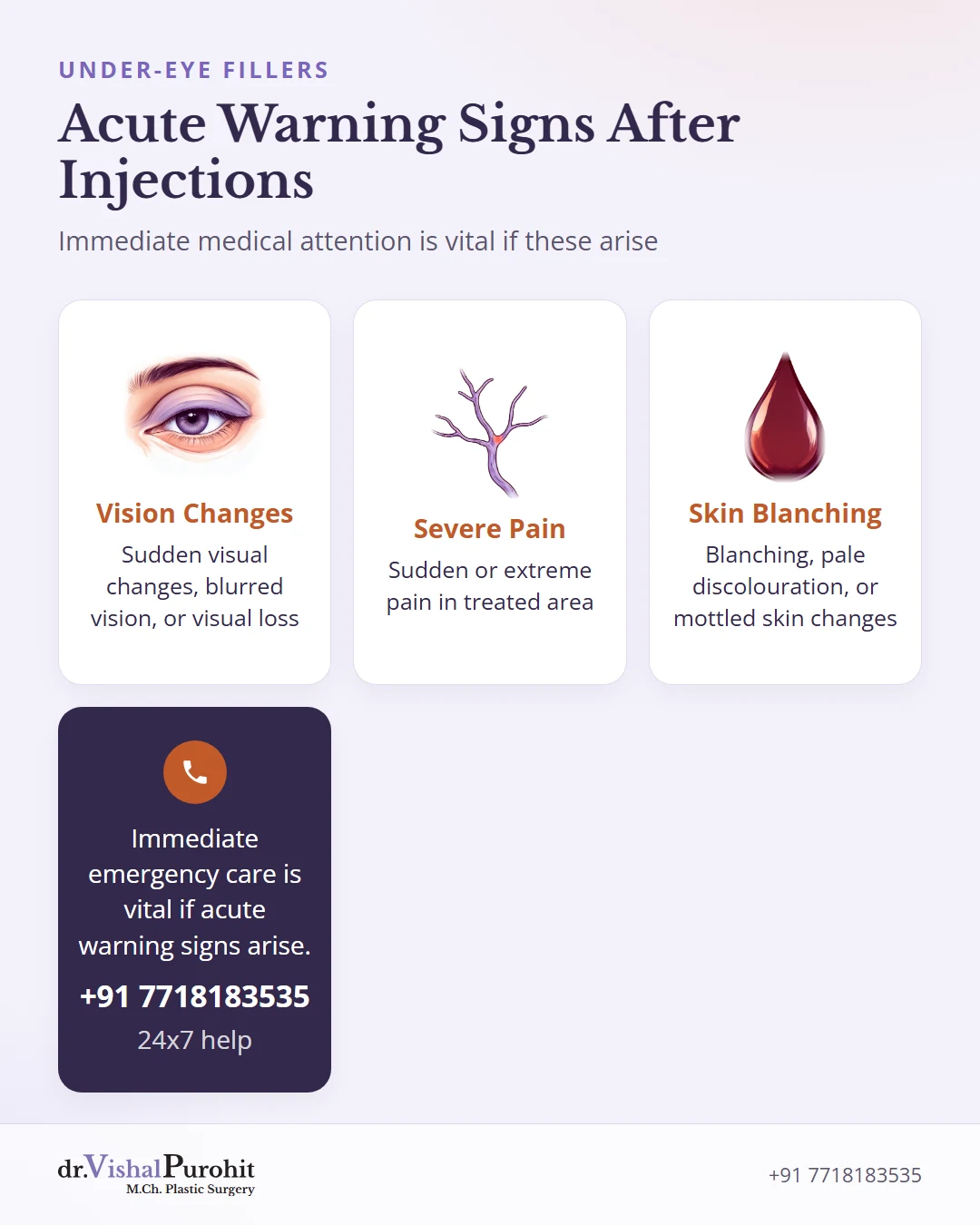
Warning signs requiring immediate emergency medical care after under-eye filler.
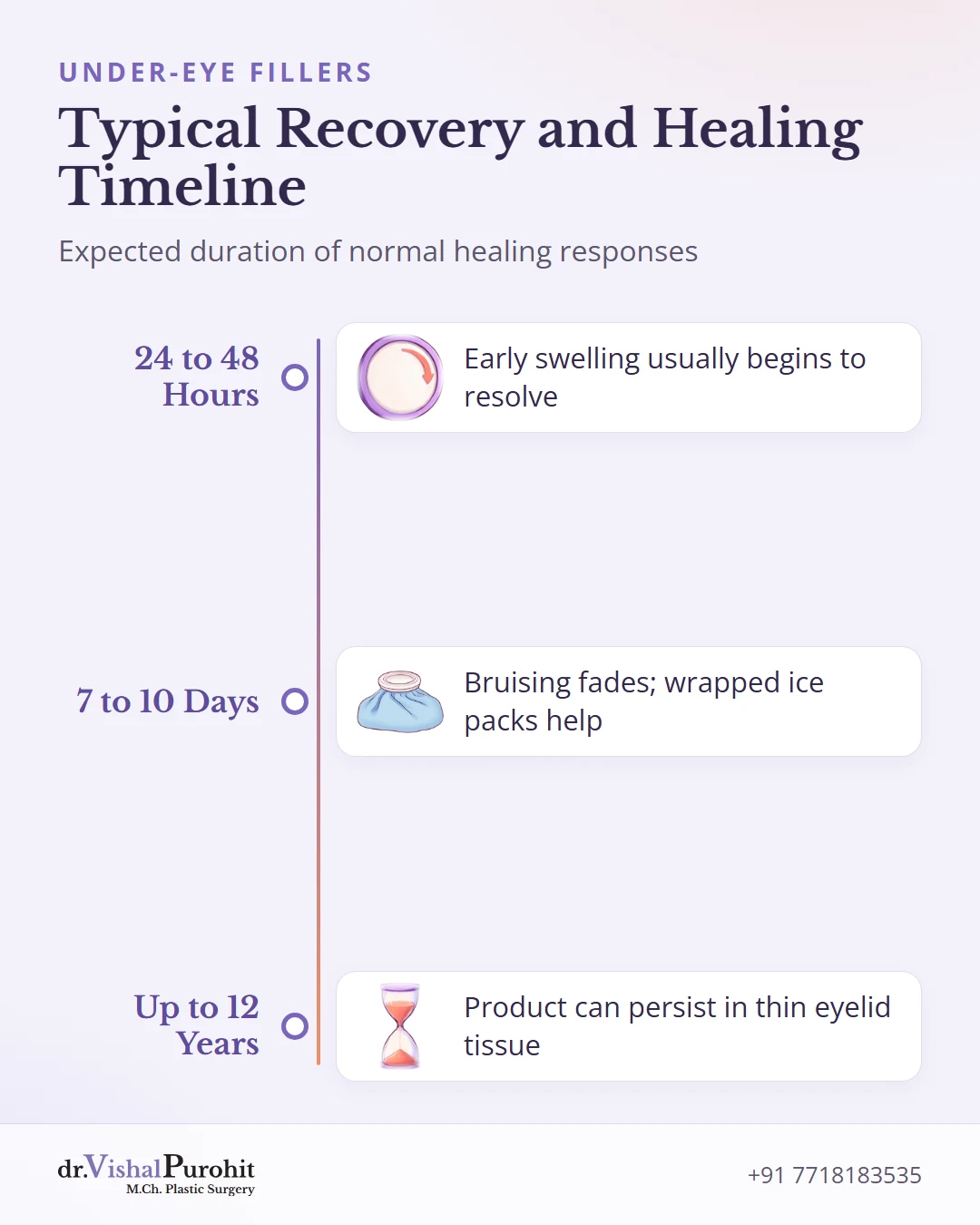
Timeline of expected healing and product longevity after under-eye filler.

Injecting hyaluronic acid dermal filler softens a hollow groove beneath the lower eyelid, but the delicate tissue can react. While early swelling or bruising often occurs, understanding typical recovery helps patients distinguish normal healing from issues that need medical review.

Studies report early swelling usually resolves within 24 to 48 hours or one to three days, though bruising may last 7 to 10 days. Wrapped ice packs can help reduce both. Aftercare rules for Dr. Vishal Purohit are decided at the consultation. To learn why superficial placement causes a bluish hue, read about delayed under-eye filler puffiness and discolouration.

Studies show product can persist for up to 12 years. If delayed lumps, veno-lymphatic compression, or late swelling appear, evaluation is essential.

Immediate emergency care is vital if acute warning signs arise:

  • Sudden changes in vision, blurred vision, or visual loss
  • Sudden or extreme pain
  • Blanching, pale discolouration, or mottled skin changes

Under-Eye Filler Cost and Consent in Jaipur
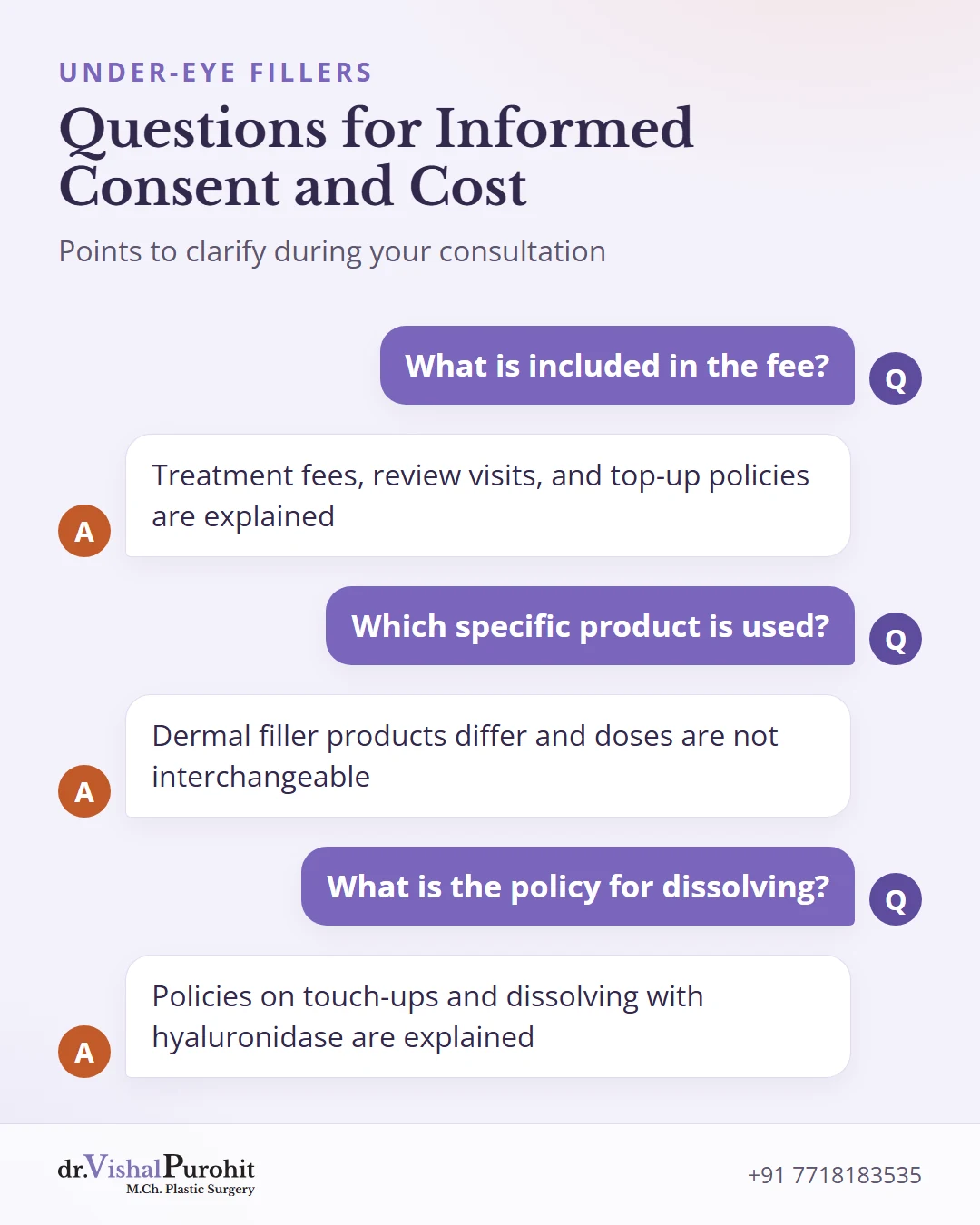
Key questions to ask during under-eye filler consultation regarding pricing and consent.

Informed consent for tear trough treatment involves weighing personal cosmetic goals against the unique healing patterns of thin eyelid skin. Planning ahead requires clear discussions on pricing, product details, and potential corrective care.

Treatment fees, what the cost includes, review visits, and any top-up policies are explained at the consultation. Dermal filler products differ and their doses are not interchangeable, so patients can ask which specific product is used and what its label covers.

Hyaluronic acid binds water, and studies report that dermal filler can sometimes persist for up to 12 years. If uneven contours develop, patients can review delayed swelling and discolouration after under-eye fillers to understand how tissue changes or misplaced material are evaluated.

Policies regarding touch-ups and dissolving with hyaluronidase are explained at the consultation.

Your Safety Comes First

Why Training and Assessment Matter

Tear Trough & Under-Eye Dermal Fillers in Jaipur involves facial muscles, nerves and blood vessels. A careful assessment, a named product and clear warning signs help lower the risk of a heavy brow, an uneven result or rarer complications.

With Dr. Vishal Purohit, you are told which product is used, what to expect, and which symptoms need a call or emergency care.

Risks worth avoiding

  • Treatment before the brows and eyelids are checked
  • A product that is not named or shown
  • No clear plan if a brow or eyelid droops
  • A quote that is unclear about reviews and top-ups

With Dr. Vishal Purohit

  • M.Ch plastic surgeon
  • Brows, eyelids and skin assessed first
  • The product named before treatment
  • Warning signs explained before you leave
What to Expect

The Aim: A Refreshed, Natural Look

Tear Trough / Under-Eye Hollow Fillers aims for a refreshed look that still looks like you. Results differ from person to person and are discussed honestly at the consultation.

Natural Expression

The plan aims to soften what bothers you while keeping the expressions you want to keep.

Risks Explained Up Front

Side effects and warning signs are explained before treatment by an M.Ch. plastic surgeon.

Planning Around Your Week

Most people return to daily routines soon after; any precautions are explained at the visit.

Got Questions?

Frequently Asked Questions

Honest, clinically precise answers from Dr. Vishal Purohit regarding Tear Trough & Under-Eye Dermal Fillers in Jaipur.

What should an under-eye filler quote include beyond the product itself?
A comprehensive quote typically covers the initial anatomical assessment, the filler material, clinical procedure costs and any planned follow-up appointments. Rather than quoting a standardized price, Dr. Vishal Purohit in Jaipur explains the fee and what it covers at the consultation, following a personalized evaluation of your lower eyelid anatomy and procedural needs.
What are tear trough under-eye dermal fillers?
Tear trough fillers are non-surgical injections of hyaluronic acid gel placed beneath the soft tissue along the infraorbital rim to soften sunken grooves. By adding volume between the lower eyelid and cheek, they reduce shadows caused by anatomical hollows. Dr. Vishal Purohit in Jaipur evaluates whether volume loss is the true cause of the under-eye shadow before recommending treatment.
Who is an ideal candidate for under-eye tear trough fillers in Jaipur?
Suitable candidates are adults with structural depressions along the orbital rim, healthy skin elasticity, and realistic expectations. Patients with prominent orbital fat bags, severe skin laxity, or chronic eyelid puffiness are generally poor candidates for filler. Dr. Vishal Purohit in Jaipur examines skin snap-back and midface support at the consultation to confirm whether filler is clinically advisable.
Why does Dr. Purohit choose specific injection instruments for under-eye fillers?
The lower eyelid contains delicate vessels, requiring careful anatomical handling to minimize trauma, bruising, and complications. Whether instruments such as needles or blunt microcannulas are selected depends on individual anatomy, tissue depth, and clinical preference. The specific technique and procedural approach used are explained by Dr. Vishal Purohit in Jaipur during the consultation.
How long do tear trough fillers last under the eyes?
Hyaluronic acid is temporary and breaks down gradually, though studies report persistence varies widely between individuals and can occasionally last significantly longer in the periorbital region. Longevity depends on tissue mobility, product characteristics, and individual metabolism. Expected timelines and reassessment plans are discussed in detail with Dr. Vishal Purohit in Jaipur at your consultation.
What is the Tyndall effect and how is it managed?
The Tyndall effect is a bluish or grey discoloration seen when hyaluronic acid filler sits too superficially under thin lower eyelid skin, scattering light. Management includes clinical observation or using hyaluronidase to dissolve misplaced gel. Techniques to avoid superficial placement and corrective options are evaluated by Dr. Vishal Purohit in Jaipur during an in-person assessment.
How much do tear trough under-eye fillers cost in Jaipur?
The cost of under-eye filler treatment varies according to the anatomical findings, the specific filler product selected, and whether follow-up reviews are included. Rather than providing fixed figures, Dr. Vishal Purohit in Jaipur explains the fee and what it covers at the consultation after a direct physical examination of the lower eyelids.
Is under-eye filler injection painful?
Most patients experience minor pricking, local pressure, or temporary tenderness during periorbital filler injections. Post-procedure soreness and mild swelling generally settle over the following days. Comfort options, procedural steps, and specific numbing methods are explained by Dr. Vishal Purohit in Jaipur at the visit to help manage any anxiety about needles.
Can under-eye fillers treat dark pigmentation as well as hollows?
Hyaluronic acid fillers add physical volume to soften shadows cast by structural hollows, but they do not bleach or lighten true superficial melanin hyperpigmentation or vascular redness. Discoloration from surface pigment requires other approaches. Dr. Vishal Purohit in Jaipur identifies whether your under-eye darkness stems from bone depression, skin pigment, or protruding fat during consultation.
Why is an M.Ch. plastic surgeon consulted for under-eye fillers?
The periorbital region is structurally complex, containing intricate vascular networks and delicate lymphatic drainage. An M.Ch. plastic surgeon who performs lower blepharoplasty understands the boundaries between soft tissue volume loss and surgical fat herniation. Dr. Vishal Purohit in Jaipur offers objective guidance on whether non-surgical filler, surgery, or choosing no treatment suits your anatomy.

Need more clinical answers?

Search 14,800+ answers in our FAQ directory.

Browse All 14,800+ FAQs
Begin Your Journey

Ready to Discuss Tear Trough & Under-Eye Dermal Fillers in Jaipur?

At his OPD suite, Kalpana Aesthetics (2nd Floor), Dr. Vishal Purohit evaluates your candidacy, discusses surgical options and gives you a transparent, tailored treatment plan.