
TUE - SUN: 11:00 AM – 07:00 PM

Types of Dermal Fillers: HA, Stimulators and Permanent Fillers

Author:Dr. Vishal Purohit
|
Published:

Dermal fillers address facial volume loss through distinct chemical classes, each offering different physical properties and clinical behaviours. Understanding these differences helps individuals make informed decisions regarding facial rejuvenation.

While traditional gels focus on immediate structural projection, other formulations work by stimulating the body’s natural collagen synthesis. An overview of Hyaluronic Acid Fillers: What They Are and How They Work explains how modern crosslinked gels function alongside alternative biostimulating agents.

Comparing Filler Categories
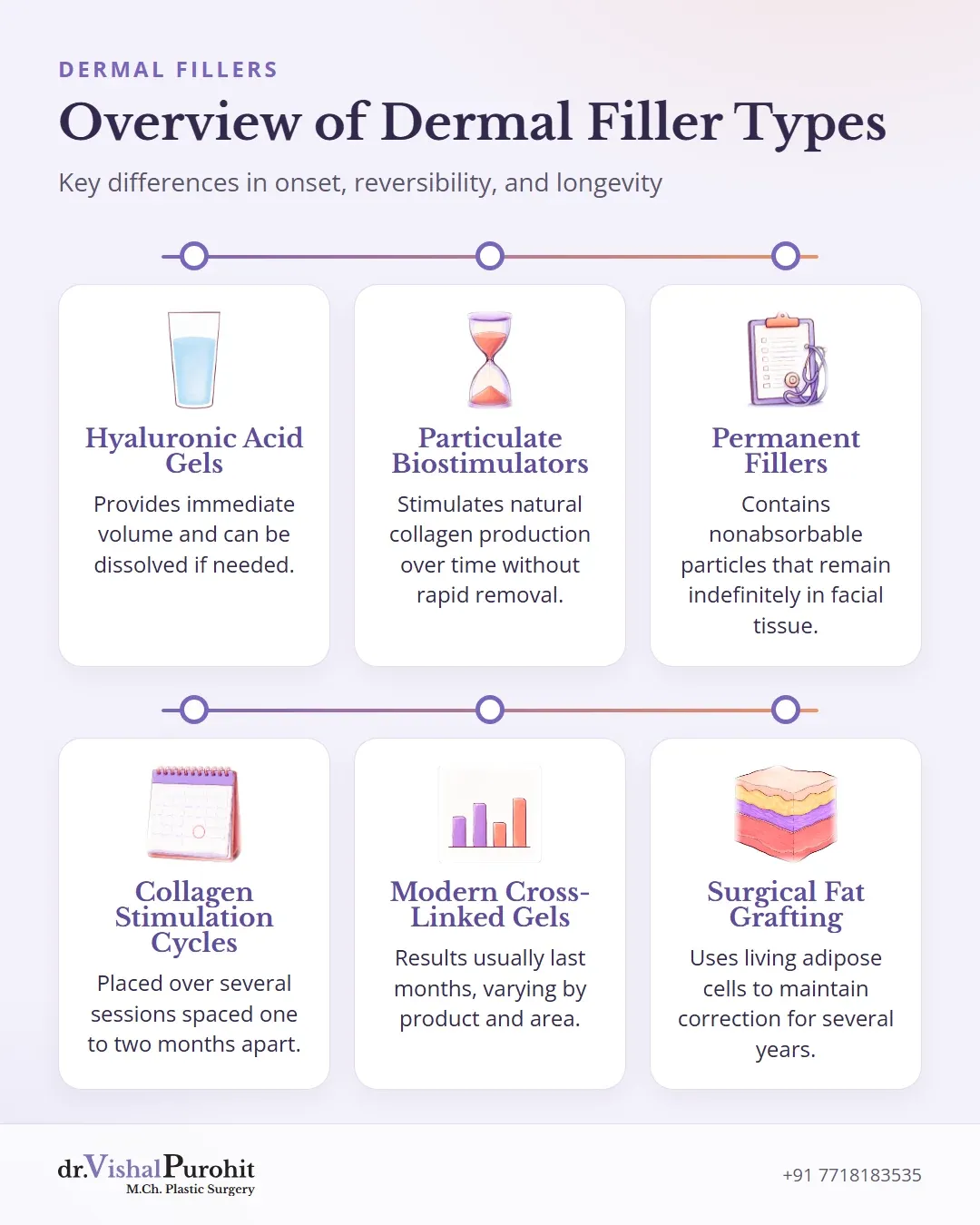
Summary card outlining four types of dermal fillers, treatment sessions, and surgical fat transfer.

Dermal fillers are categorised by their base material, speed of visual onset, tissue persistence, and reversibility1. In clinical practice, four primary chemical classes are commonly described: hyaluronic acid (HA), calcium hydroxylapatite (CaHA), poly-L-lactic acid (PLLA), and polymethylmethacrylate (PMMA)1.

Each category functions differently:

Hyaluronic Acid (HA)

  • Hyaluronic acid fillers provide immediate physical volume and structural shaping23.
  • Because HA can often be dissolved using the enzyme hyaluronidase, it offers an option for adjustment if required3.

Particulate Biostimulators

  • Particulate biostimulators, such as CaHA and PLLA, work gradually by stimulating the body’s natural collagen production over time4.
  • Because they do not break down with hyaluronidase, they cannot be rapidly removed once placed13.

Nonabsorbable Options

  • Nonabsorbable or permanent options, such as PMMA suspended in bovine collagen, remain indefinitely in tissue and are not naturally cleared14.

Choosing no treatment is always a valid option. Filler selection is not one-size-fits-all; the choice between an immediate, reversible gel or a gradual stimulator depends entirely on individual facial anatomy, skin thickness, and personal aesthetic goals356.

Dr. Purohit’s note: In Dr. Vishal Purohit’s practice, suitability and material choice are decided at the consultation.

HA Versus CaHA, PLLA and PMMA
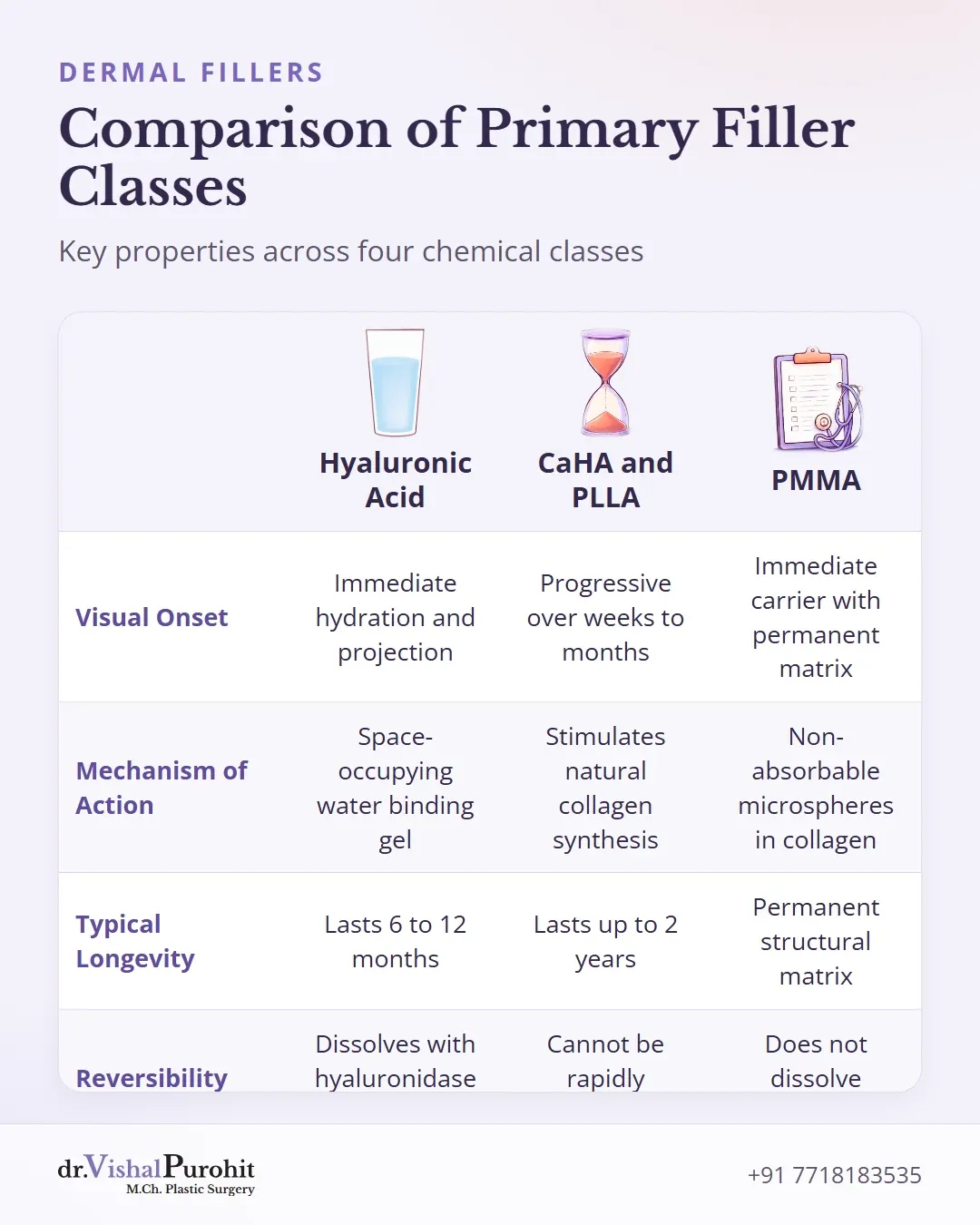
Matrix comparing onset, mechanism, duration, and reversibility among HA, CaHA/PLLA, and PMMA.

Dermal fillers are categorised into distinct chemical classes, each interacting with facial tissues through different mechanisms1.

Key points

  • Dermal fillers fall into distinct chemical classes with different mechanisms of action.
  • Hyaluronic acid provides reversible, immediate hydration lasting 6 to 12 months.
  • Non-HA fillers like CaHA, PLLA, and PMMA act as biostimulators or permanent structural matrices.

Hyaluronic acid (HA) is a naturally occurring polysaccharide found in skin and cartilage78. When crosslinked into an injectable gel, it binds water to swell and deliver immediate hydration, smoothing, and projection78, with clinical effects lasting approximately 6 to 12 months78. HA is widely used due to its favourable safety profile and reversibility3.

In contrast, other materials function differently:

  • Calcium hydroxylapatite (CaHA) consists of synthetic mineral microspheres suspended in a gel carrier79. It provides immediate volume along with high cohesivity and viscosity, while stimulating collagen synthesis over 12 to 18 months7910.
  • Poly-L-lactic acid (PLLA) is a biodegradable polymer suspension that acts as a pure stimulator89. Its clinical effect depends on progressive neocollagenesis over weeks to months rather than immediate physical filler volume10, lasting up to 2 years9.
  • Polymethylmethacrylate (PMMA) contains non-absorbable microspheres in a collagen carrier, creating a permanent structural matrix that does not dissolve9.

Whether a patient is suitable for HA or an alternative material is decided at the consultation with Dr. Vishal Purohit.

What Collagen Stimulation Means
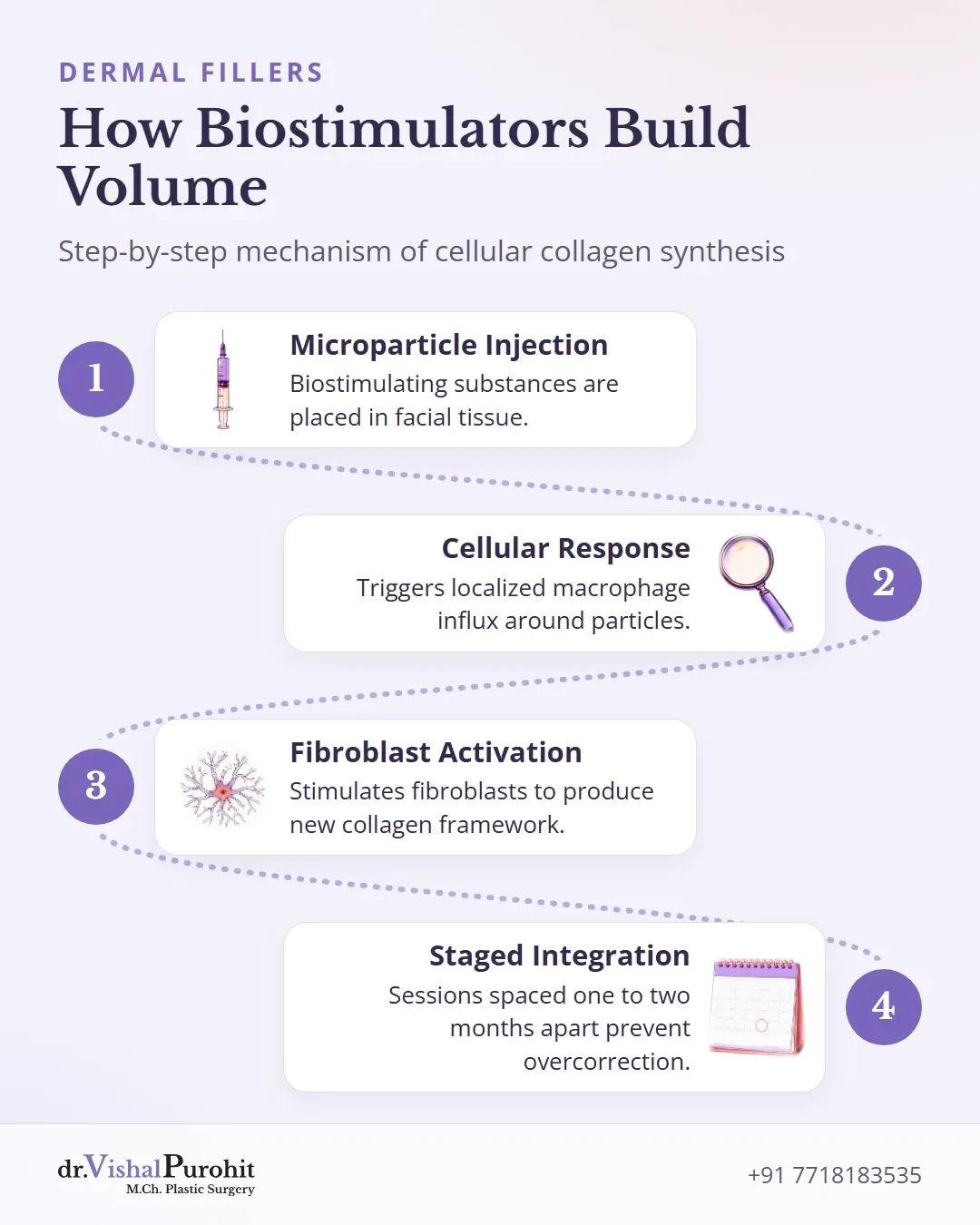
Process flow showing the four steps of tissue response and neocollagenesis following biostimulator injection.

Dermal fillers are categorised into space-occupying agents and biostimulants11. While space-occupying products fill volume deficits, biostimulants activate fibroblasts to produce new collagen11. Common biostimulating agents include calcium hydroxylapatite (CaHA) and poly-L-lactic acid11.

When injected, these substances trigger a localized tissue response involving macrophage phagocytosis and cellular influx1213. Fibroblasts are stimulated to synthesize collagen around the particles, creating structural reinforcement rather than relying solely on inert space filling111314.

Unlike immediate space-occupying corrections, fibroplastic agents often require smaller amounts placed over several sessions spaced 1 to 2 months apart or longer13. This planned approach allows progressive tissue integration and prevents overcorrection between treatment cycles13.

At consultation, Dr. Vishal Purohit assesses facial structure and explains the difference between volume-replacing gels and collagen-stimulating options. While he offers dermal fillers in Jaipur, product choice and treatment planning are decided at the consultation.

Brand Families and Legacy Collagens
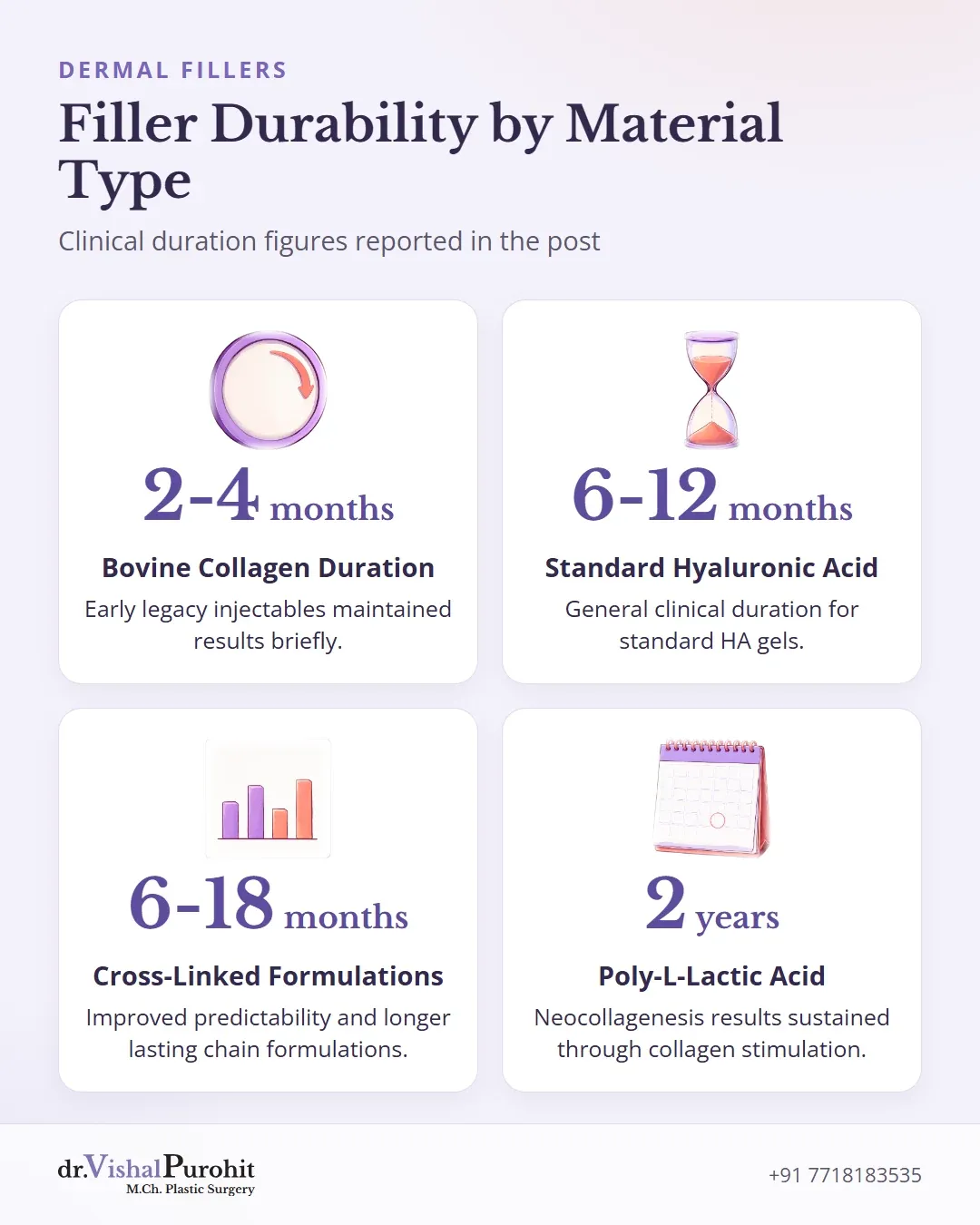
Statistical chart comparing longevity ranges across early bovine collagen, standard HA, cross-linked HA, and PLLA.

Early cosmetic filling historically relied on xenogenic and allogenic collagen preparations, such as bovine collagen (Zyderm, Zyplast) and bioengineered human collagen (Cosmoderm, Cosmoplast)151617. A notable limitation of bovine collagen was the requirement for pre-treatment allergy testing15. These early collagen injectables also provided limited durability, often lasting only 2 to 4 months18, and have largely been withdrawn from the market1519.

Modern practice has largely transitioned to biofermented hyaluronic acid (HA) derived from bacterial sources such as Streptococcus equi17, alongside refined microparticle suspensions918. Scientific cross-linking of HA chains creates distinct formulations that provide improved predictability and longer duration, generally lasting 6 to 18 months915.

Commercial brand families differ primarily by physical properties and rheology—such as particle sizing, gel technology, and viscosity suited for varying tissue depths—rather than a difference in overall quality91518.

Fat Transfer as a Separate Procedure
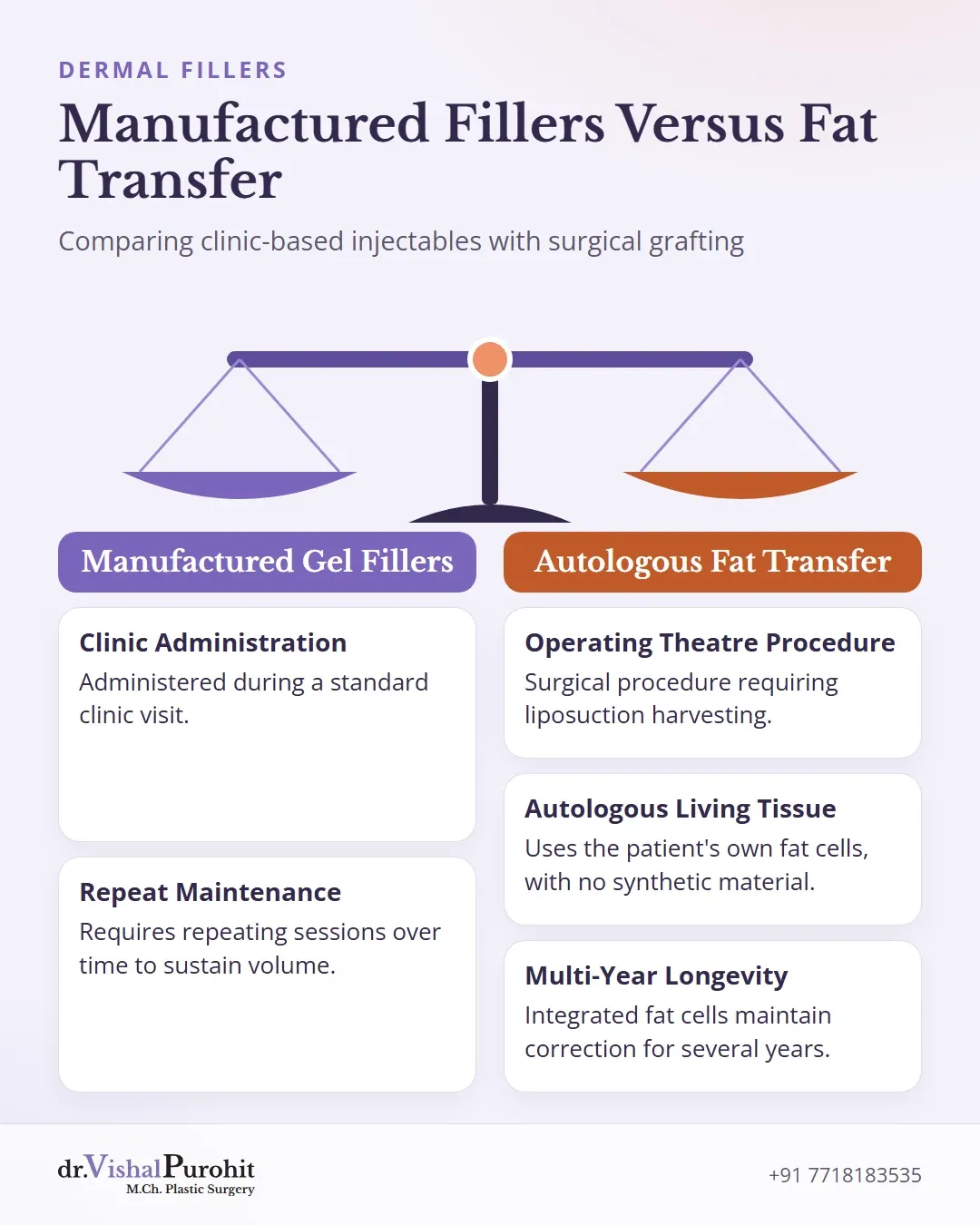
Balance comparison between in-clinic manufactured gel fillers and surgical autologous fat transfer.

Autologous fat grafting involves transferring a patient’s own living adipose cells to address facial volume loss2021. The tissue is harvested from donor sites using liposuction techniques, processed, and then reintroduced to correct facial hollowing2223.

Unlike manufactured gel fillers injected during a clinic visit, fat transfer is a surgical procedure performed in an operating theatre2223. The patient’s own cells provide natural tissue augmentation without the risk of an allergic reaction to foreign synthetic products2022. While dermal fillers require repeating sessions over time to sustain volume, grafted fat that integrates into facial tissues can maintain correction for several years2024.

Fat transfer is often considered when addressing broader areas of volume deficit2526. Whether a patient is a suitable candidate for autologous fat grafting rather than dermal fillers, or whether the two modalities might be combined, is decided at the consultation with Dr. Vishal Purohit. A surgical assessment evaluates tissue quality, donor site suitability, and personal recovery considerations.

Dermal Filler Consultations in Jaipur

Facial anatomy, skin thickness, and personal aesthetic goals determine the appropriate approach to volume restoration. Selecting between immediate reversible gels, collagen stimulators, or surgical options requires careful assessment. To explore treatment options and understand the procedure, read the Dermal Fillers FAQs or arrange a consultation for Dermal Fillers in Jaipur by contacting the clinic directly on +91 7718183535.

This is educational information, not medical advice.

Frequently Asked Questions

Can biostimulating fillers be dissolved if needed?▼

Biostimulating agents such as calcium hydroxylapatite and poly-L-lactic acid cannot be rapidly removed or dissolved with hyaluronidase. Because they work by stimulating natural collagen synthesis rather than serving as plain reversible gels, material characteristics and long-term implications are thoroughly evaluated by Dr. Vishal Purohit in Jaipur during consultation.

How long do hyaluronic acid fillers typically last?▼

Hyaluronic acid fillers generally deliver clinical effects lasting approximately 6 to 12 months, though scientific cross-linking in certain formulations may last 6 to 18 months. Longevity depends on the specific product formulation, tissue depth, and individual anatomy, which are reviewed by Dr. Vishal Purohit in Jaipur prior to treatment planning.

Why were bovine collagen fillers phased out?▼

Early bovine collagen preparations required pre-treatment allergy testing to avoid reactions to xenogenic proteins. Furthermore, these legacy injectables provided limited durability, often maintaining results for only 2 to 4 months. Material choices and modern biofermented alternatives are discussed by Dr. Vishal Purohit in Jaipur during initial clinical evaluation.

How does poly-L-lactic acid create volume?▼

Poly-L-lactic acid does not rely on immediate physical filler volume. Instead, this biodegradable polymer acts as a pure biostimulator, triggering localized cellular influx and neocollagenesis over weeks to months, with results lasting up to 2 years. Suitability for this progressive approach is assessed by Dr. Vishal Purohit in Jaipur.

What characterizes permanent injectable fillers?▼

Permanent options, such as polymethylmethacrylate suspended in bovine collagen, contain non-absorbable synthetic microspheres that create an enduring structural matrix. Because these particles do not break down naturally and remain indefinitely in tissue, nonabsorbable materials require careful consideration, as explained by Dr. Vishal Purohit in Jaipur during consultation.

Is facial fat grafting identical to dermal filler injection?▼

Facial fat grafting is a surgical procedure performed in an operating theatre using harvested autologous tissue, unlike manufactured gel fillers administered during a clinic visit. Grafted fat can maintain correction for several years. Whether surgical transfer or synthetic filler is appropriate is determined by Dr. Vishal Purohit in Jaipur.

Sources

  1. Comprehensive Analysis of Dermal Fillers and Soft Tissue Augmentation_ Biomaterial Profiles, Regulatory Frameworks, C.
  2. The Unfavorable Result in Plastic Surgery (textbook, PDF page 181).
  3. A Narrative Review of Evolving Techniques in Nonsurgical Rhinoplasty: Risk Profile and Clinical Outcomes of Fillers. Cureus doi.org/10.7759/cureus.102303
  4. 10_1097__PRS_0000000000010767.pdf.
  5. Hyaluronic Acid Fillers Versus Polynucleotides for Under-Eye Rejuvenation. Journal of Clinical Medicine doi.org/10.3390/jcm15134971
  6. Dermal Fillers (Soft Tissue Fillers) - FDA.
  7. FDA-Approved Dermal Fillers (fda.gov).
  8. FDA-Approved Dermal Fillers.
  9. Comprehensive Analysis of Dermal Fillers and Soft Tissue Augmentation: Biomaterial Profiles, Regulatory Frameworks, Complication Management, and Autologous Alternatives.
  10. Tips And Tricks In Plastic Surgery (textbook, PDF page 113).
  11. Practical Guide to Dermal Filler Procedures (textbook, PDF page 17).
  12. The Unfavorable Result in Plastic Surgery (textbook, PDF page 189).
  13. Procedures In Cosmetic Dermatology Soft Tissue Augmentation (textbook, PDF page 81).
  14. Beyond Volumization: Repositioning Hyaluronic Acid Fillers as Anatomy‐Guided Structural Support Tools in the Era of Biostimulators. Journal of Cosmetic Dermatology doi.org/10.1111/jocd.71179
  15. Neurotoxins and Fillers in Facial Esthetic Surgery - Bradford M. Towne, Pushkar Mehra - (2019) 136 pp., ISBN: 978-1-119-29429-0 (textbook, PDF page 81).
  16. Fundamentals for Cosmetic Practice (textbook, PDF page 16).
  17. Cosmetic Surgery Art And Techniques (textbook, PDF page 416).
  18. Pharmacologic and Other Noninvasive Treatments of the Aging Face: A Review of the Current Evidence.
  19. Procedures In Cosmetic Dermatology Soft Tissue Augmentation (textbook, PDF page 192).
  20. Neurotoxins and Fillers in Facial Esthetic Surgery - Bradford M. Towne, Pushkar Mehra - (2019) 136 pp., ISBN: 978-1-119-29429-0 (textbook, PDF page 74).
  21. Autologous Fat Transfer for Facial Rejuvenation: A Systematic Review on Technique, Efficacy, and Satisfaction doi.org/10.1097/GOX.0000000000001606](https://doi.org/10.1097/GOX.0000000000001606
  22. Autologous fat grafting for cosmetic temporal augmentation: a systematic review.
  23. [Bookshelf](https://www.ncbi.nlm.nih.gov/sites/books/).
  24. Eyelid And Periorbital Surgery 2nd Edition (textbook, PDF page 586).
  25. Sataloff's Comprehensive Textbook Of Otolaryngology Head And Neck Surgery Facial Plastic And Reconstructive Surgery (textbook, PDF page 336).
  26. Sataloff's Comprehensive Textbook Of Otolaryngology Head And Neck Surgery Facial Plastic And Reconstructive Surgery (textbook, PDF page 337).
More in Dermal Fillers & Injectables

Related Patient Guides

More in Dermal Fillers & Injectables
Specialist Consultation • Dr. Vishal Purohit

Considering Dermal Fillers & Injectables?

Consult directly with Dr. Vishal Purohit (M.Ch. Plastic Surgery) at his OPD suite, Kalpana Aesthetics (Tonk Road, Jaipur), to understand your surgical roadmap, risks, and recovery options.