
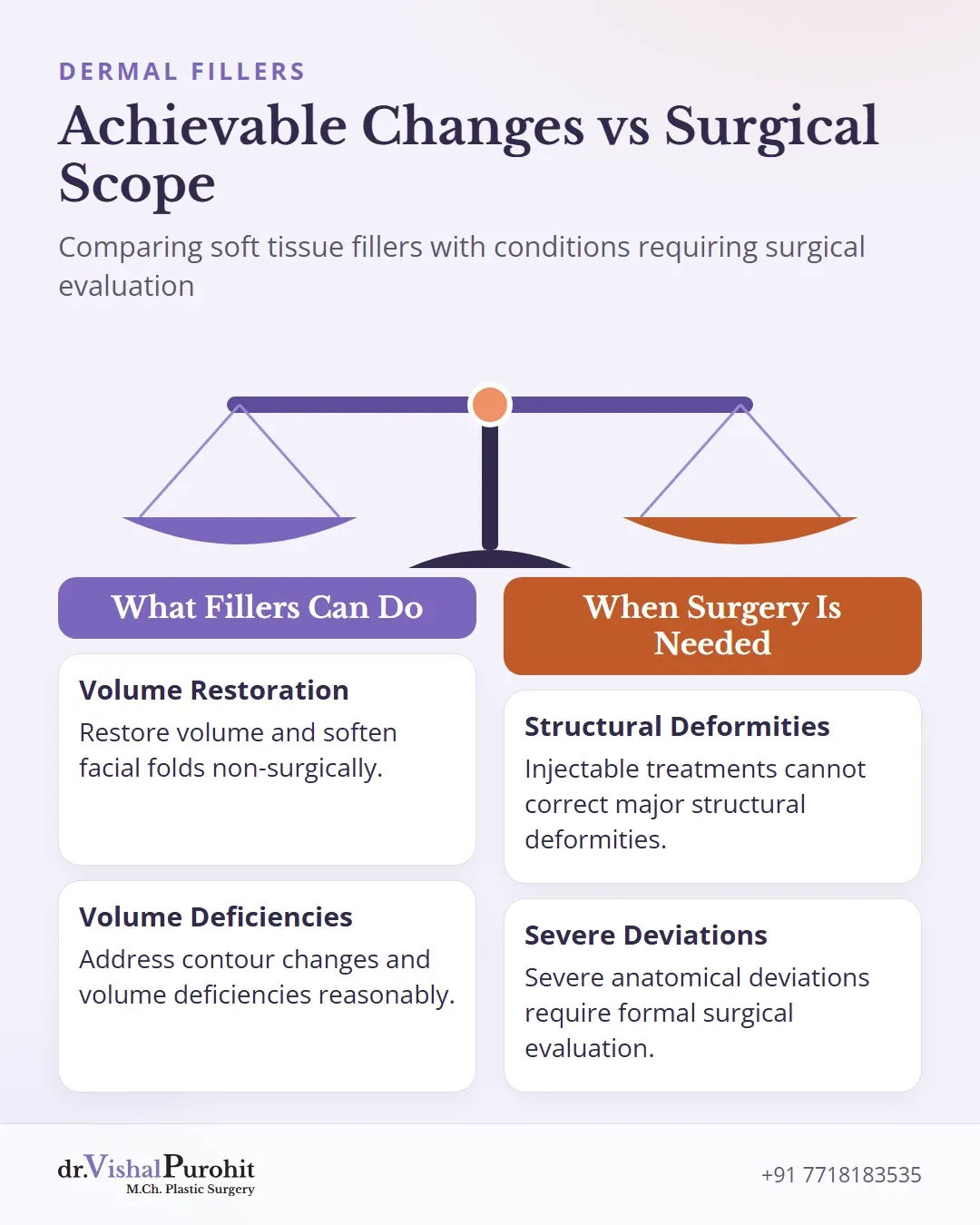
Dermal fillers provide non-surgical options to restore volume and soften facial folds. However, cosmetic injectable treatments are elective procedures that are not appropriate for every individual or situation.
Understanding health contraindications helps patients make informed aesthetic choices. Before scheduling an appointment, reviewing Are Dermal Fillers Safe? Side Effects, Risks and Warning Signs can clarify how medical factors affect treatment safety.
Pregnancy and Breastfeeding Evidence Limitations
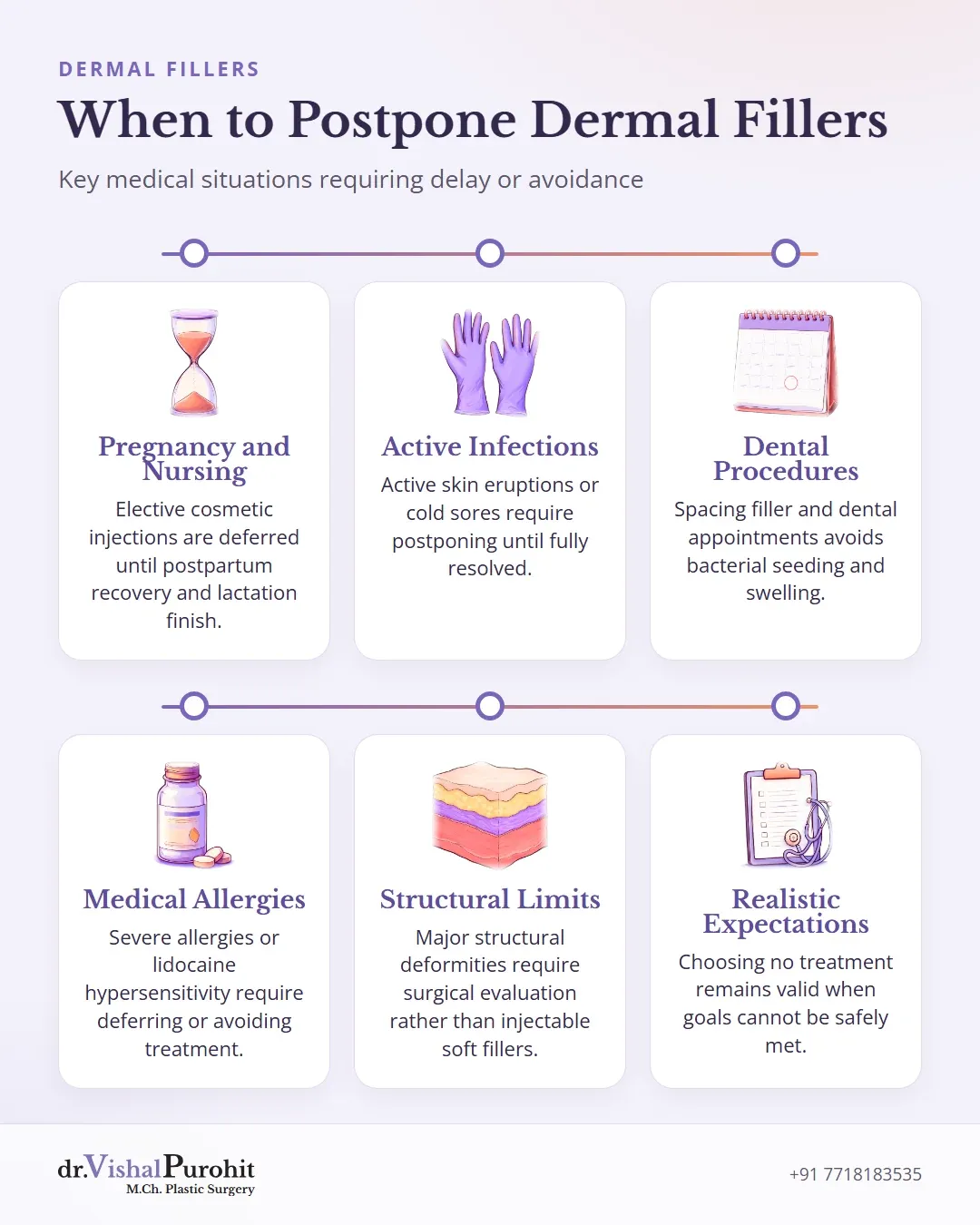
Controlled clinical safety trials evaluating dermal fillers in pregnant or nursing individuals do not exist1. Because clinical research studies systematically exclude participants who are pregnant or lactating2345, the safety of these products during pregnancy and while breastfeeding remains officially unknown1.
Medical reference guidelines list pregnancy and nursing as contraindications for dermal filler procedures6. Aesthetic injections are purely elective cosmetic treatments intended to restore volume, soften facial folds, or modify appearance without providing health benefits78. Because potential risks cannot be balanced against clinical necessity, elective cosmetic filler injections are universally deferred until postpartum recovery and lactation periods are completed.
Dr. Purohit’s note: At his practice in Jaipur, Dr. Vishal Purohit adheres to these preventive safety principles and postpones all non-surgical facial filler procedures for individuals who are currently pregnant or nursing.
Patients planning cosmetic injectable treatments are advised to wait until after completing breastfeeding before undergoing an in-person clinical assessment.
Active Infections and Dental Procedures
Dermal filler injections are contraindicated in the presence of an active infection9. Any ongoing skin infection or systemic issue requires postponing treatment until the condition has completely resolved69.
Key points
- Active infections or skin conditions require delaying dermal filler injections until fully resolved.
- Bacteria introduced during treatment can form antibiotic-resistant biofilms, causing chronic infections or delayed nodules.
- Dental work and sinus infections carry risks of delayed inflammatory reactions, requiring careful timing before and after fillers.
Why Infections and Dental Work Pose Risks
Injecting soft tissue filler into tissue near active inflammation or introducing bacteria can lead to complications:
- Active eruptions: Conditions such as active herpes simplex (cold sores) or acne lesions in the planned treatment area increase the likelihood of complications and must be resolved before proceeding69.
- Bacterial seeding and biofilms: When dermal filler is placed, bacteria can coat the gel mass to form a biofilm10. Biofilms are structured bacterial communities that adhere to surfaces, resist standard antibiotic penetration, and can cause chronic, low-grade infections or delayed inflammatory nodules10111213.
- Sinusitis and dental procedures: Sinus infections or dental work can trigger delayed inflammatory reactions or swelling near injection sites111314.
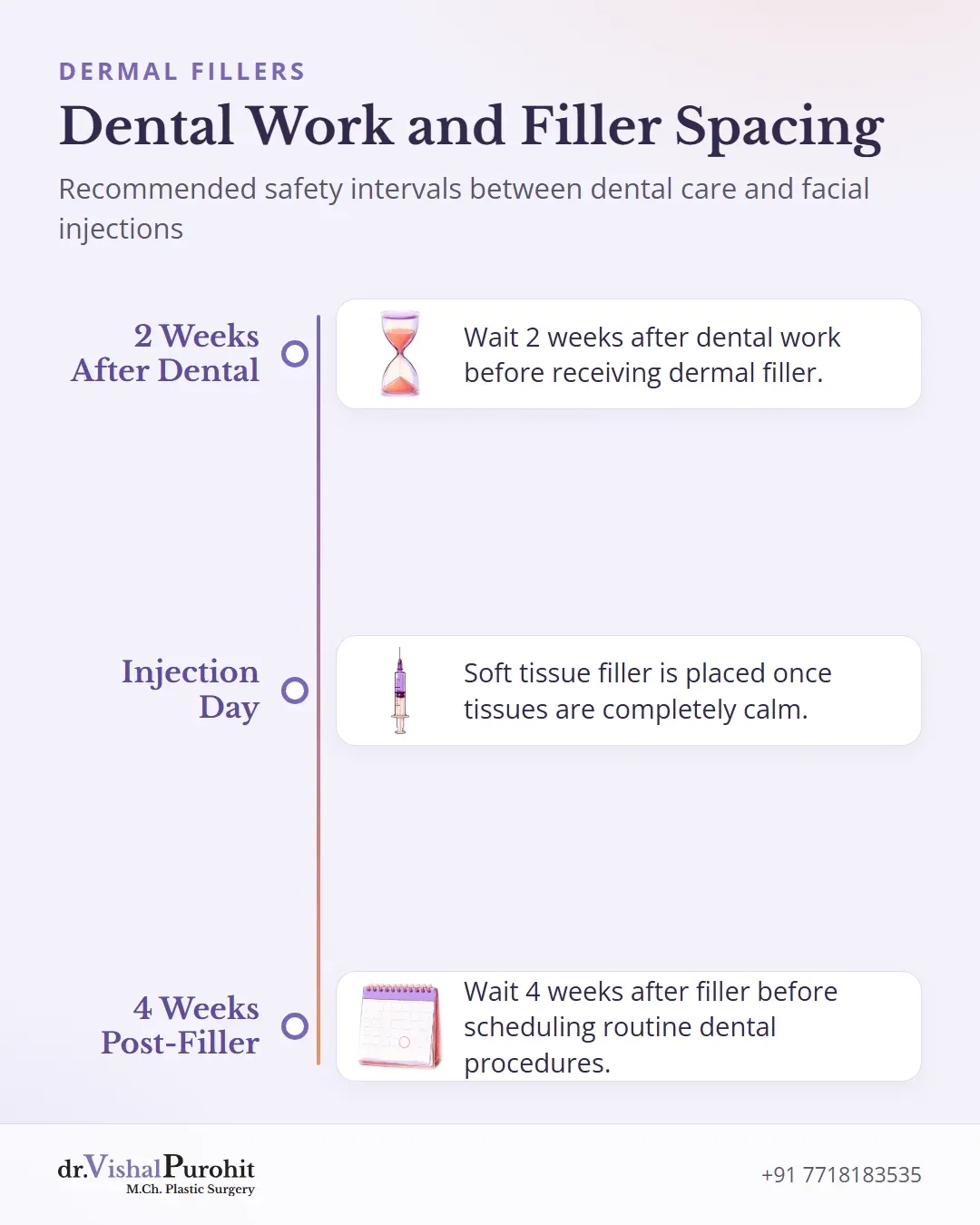
In clinical literature, it is commonly recommended to avoid filler placement until 2 weeks after dental work, or wait 4 weeks after filler placement before undergoing dental procedures13.
Dr. Vishal Purohit assesses any current skin concerns during the consultation in Jaipur to ensure treatment proceeds safely.
Allergies Medicines and Previous Fillers
A thorough medical history must be disclosed before considering treatment1516. Patients must inform the treating doctor about all underlying conditions, prior procedures, and current medications16.
Medical History and Allergies
Treatment must be deferred or avoided in certain situations:
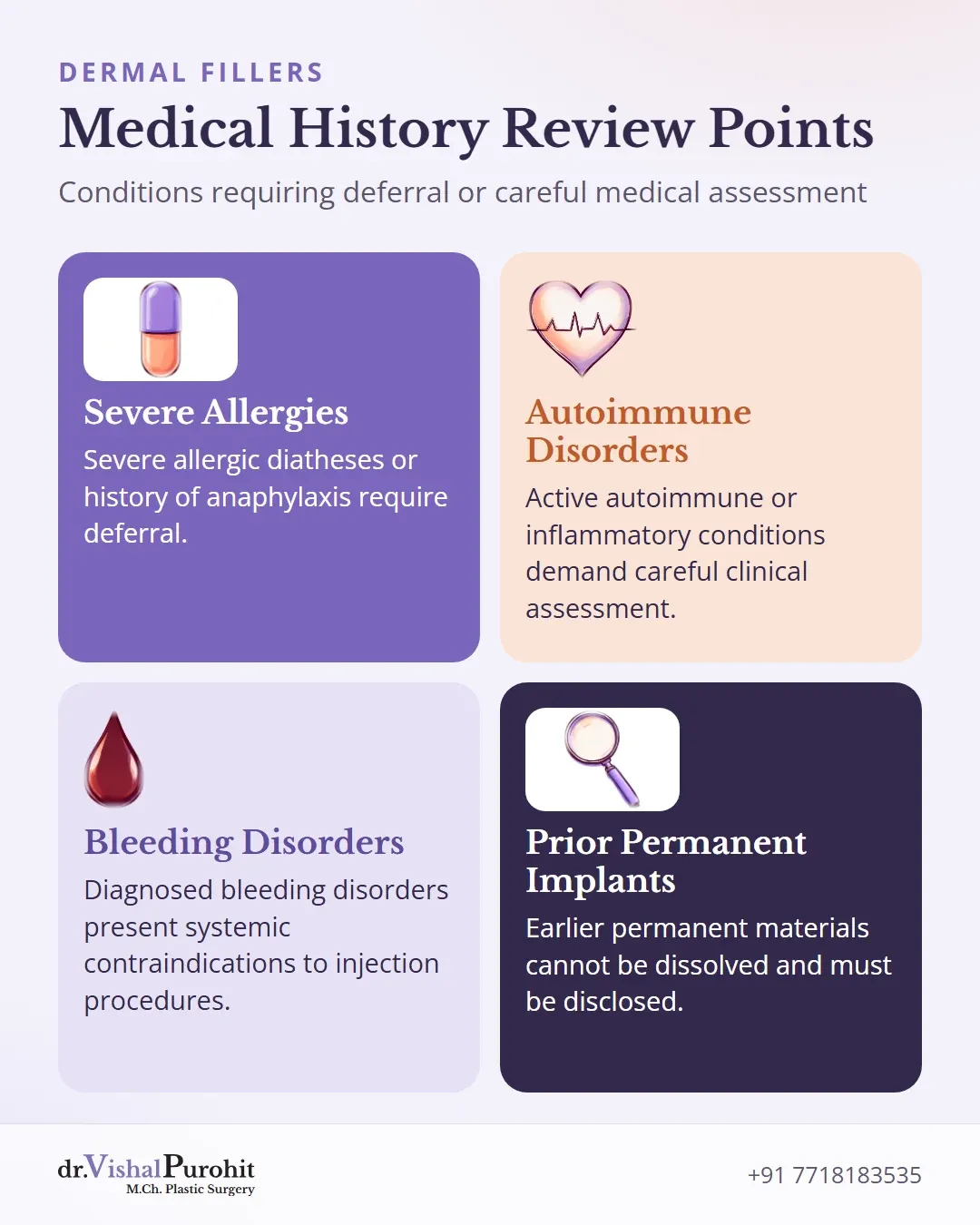
- Severe allergic diatheses, a history of anaphylaxis, or known hypersensitivity to product components, including lidocaine151718.
- Active autoimmune conditions or active inflammatory disorders, which require careful clinical assessment151920.
- Diagnosed bleeding disorders, which present systemic contraindications to injection15.
Previous Injections and Dissolving
A history of prior permanent implants or earlier filler treatments must be disclosed2021.
Hyaluronic acid (HA) fillers can often be dissolved using hyaluronidase22. However, hyaluronidase cannot dissolve permanent materials. Dissolving treatment is also never fully reversible and carries its own clinical risks, including rare allergic reactions22.
Any decision regarding treatment suitability is assessed individually during consultation with Dr. Vishal Purohit in Jaipur.
Age Expectations and Individual Suitability
Patients seeking cosmetic injectables must have realistic expectations regarding achievable tissue changes and facial balance2324. An ideal candidate understands what injectable soft tissue treatments can accomplish and understands their limits24.
Key points
- Realistic expectations and understanding procedural limitations are essential for anyone considering cosmetic injectables.
- Injectables cannot replace surgery for severe structural deformities, and psychological screening helps protect patient satisfaction.
- Declining or postponing treatment is always a valid choice if safe, achievable results cannot be matched to patient goals.
Pre-procedural assessment includes evaluating skin quality, identifying contour changes or volume deficiencies that can reasonably be corrected, and documenting baseline facial asymmetry2526. Promising more than a procedure can deliver can lead to dissatisfaction26.
Injectable treatments are not a simple or risk-free substitute for surgery, and they cannot correct major structural deformities2326. For example:
- Severe anatomical deviations or functional issues require surgical evaluation rather than injectable fillers23.
- Patients affected by body dysmorphic disorder often experience poor satisfaction and adverse psychological outcomes despite technically adequate treatment2327. Screening for such psychological conditions forms an essential component of the consultation2325.
Choosing no treatment is always a completely valid option. When soft tissue filler cannot fulfill aesthetic aims safely, or when personal expectations do not match achievable anatomic outcomes, declining or postponing treatment protects patient well-being. At his practice, Dr. Vishal Purohit assesses individual suitability during the consultation.
Medical Assessment and Decision Making
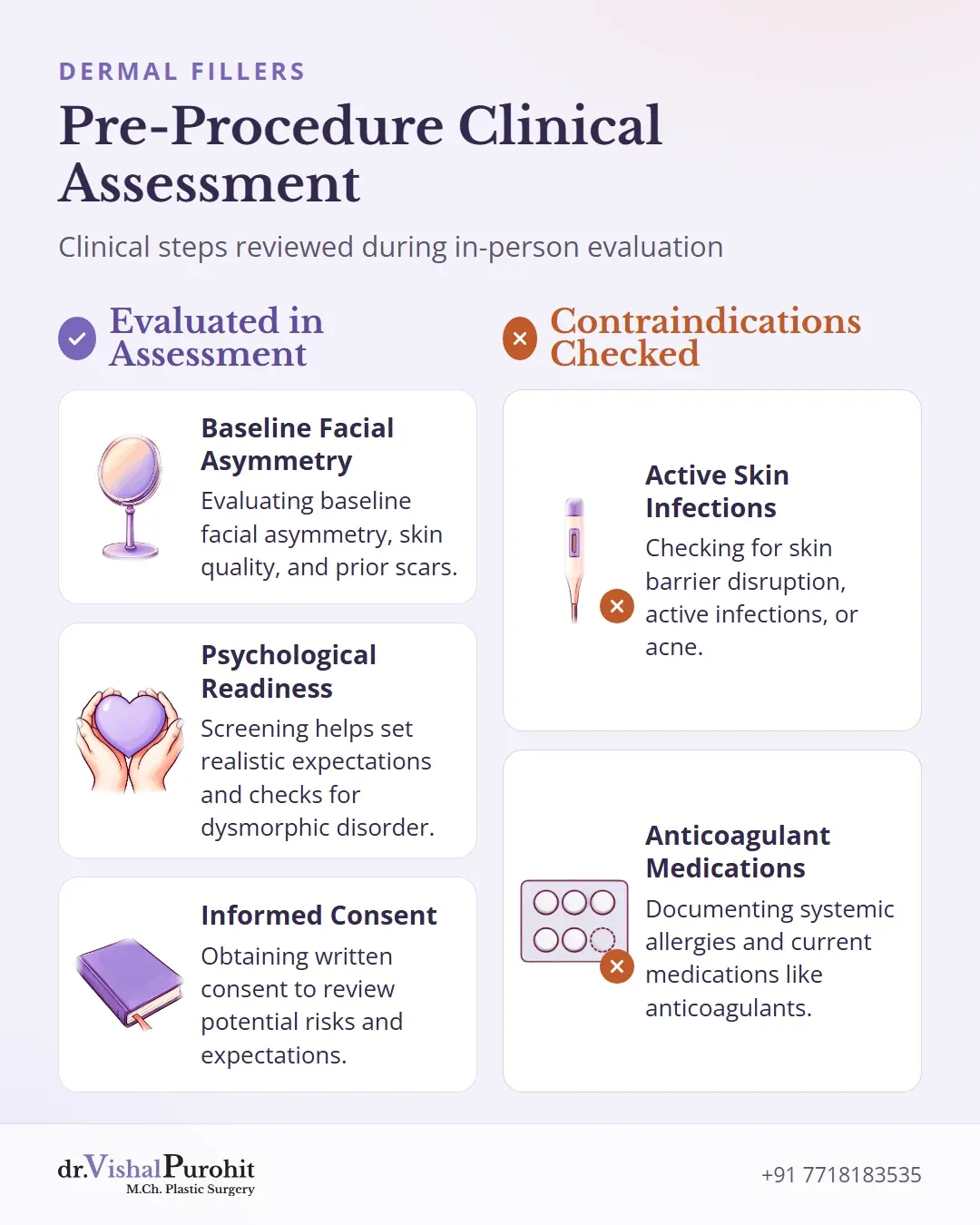
Every medical factor is evaluated comprehensively during an in-person clinical assessment. Whether a patient is accepted for treatment, along with the specific product choice, injection technique, and aftercare plan, is not confirmed in advance and is decided at the consultation.
Pre-procedure evaluation identifies underlying issues that may require postponing or avoiding treatment. Clinical literature emphasizes reviewing:
- Active skin conditions: Clinical examination checks for skin barrier disruption, active infections, or biofilm sources such as acne or rosacea at planned sites25.
- Medical and cosmetic history: Clinicians document systemic allergies, current medications like anticoagulants, history of cold sores, and pre-existing facial fillers or surgeries2528.
- Facial structure and asymmetry: Evaluating baseline facial asymmetry, skin quality, and prior scars helps align patient expectations with achievable outcomes252829.
- Psychological readiness: Screening identifies underlying conditions, such as body dysmorphic disorder, to ensure therapy is appropriate2530.
Written informed consent is obtained to review potential risks and realistic expectations2531.
Consulting an M.Ch. Plastic Surgeon in Jaipur
Every medical decision regarding cosmetic injectables requires careful clinical judgment. Patients seeking Dermal Fillers in Jaipur undergo a comprehensive medical assessment to evaluate facial structure, skin quality, and medical history. Addressing individual concerns through Dermal Fillers FAQs helps align expectations with achievable outcomes. Choosing no treatment remains a valid option whenever personal health or aesthetic aims cannot be safely met.
This is educational information, not medical advice.