
Before undergoing an aesthetic injectable treatment, confirming the origin, packaging, and regulatory standing of the planned formulation protects patient safety. A comprehensive consultation allows an individual to evaluate product documentation, understand cleared indications, and discuss realistic outcomes directly with their practitioner.
Patients seeking facial treatments can review How to Choose a Filler Practitioner: A Patient Checklist to prepare relevant questions regarding packaging inspection, consent, and qualifications before proceeding with an injectable procedure.
Verifying Packaging, Batch and Expiry Details
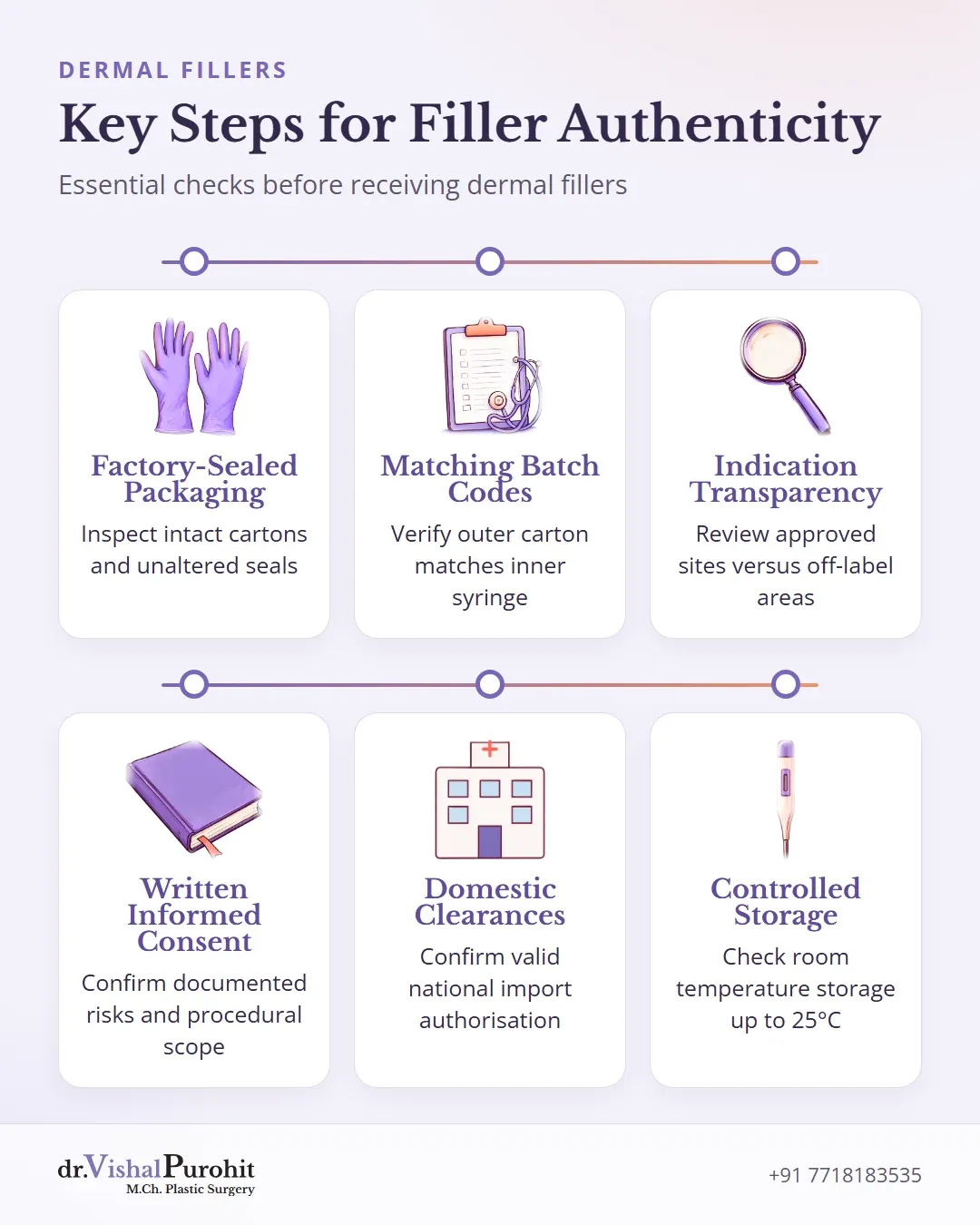
Before any procedure begins, checking product authenticity is an essential safety step. Injectable treatments carry serious clinical implications, and counterfeit formulations have been identified in medical markets12. Regulatory agencies urge health care providers to inspect all dermal filler packages carefully for authenticity before use12.
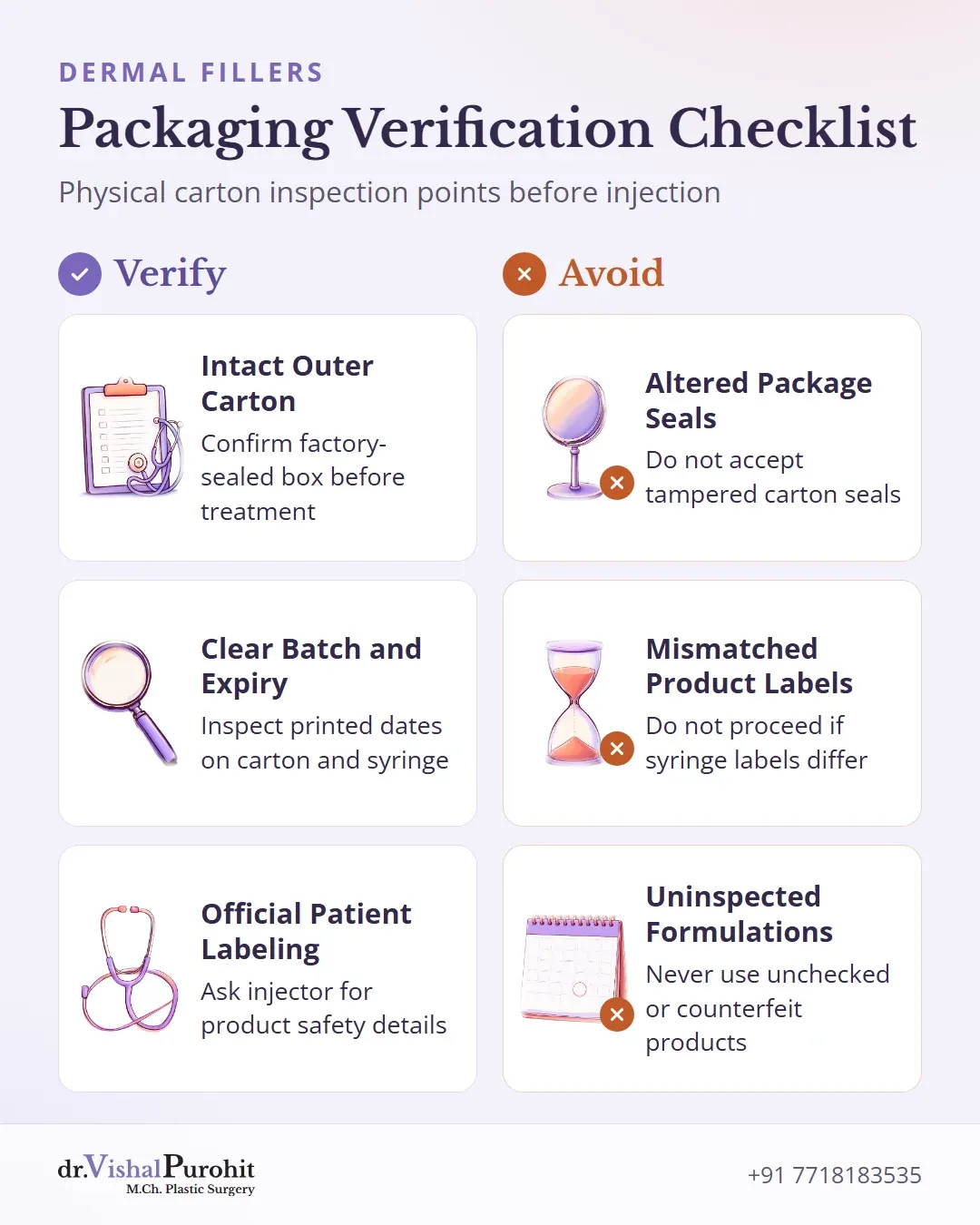
Patients can ask to see the packaging and manufacturer details before treatment. When reviewing the product, points of verification include:
- The box should be intact and factory-sealed.
- Tamper-evident seals must show no signs of alteration.
- The lot or batch number and the expiry date should be clearly printed on the outer carton.
- The product labeling should match the inner syringe documentation.
Patients may also ask their injector for the official patient labeling, which outlines the approved uses, device characteristics, and safety details of that specific formulation34. Prior to injection, injectors must thoroughly inform the individual about the specific product planned and its known clinical risks12.
Approved Products Versus Approved Indications
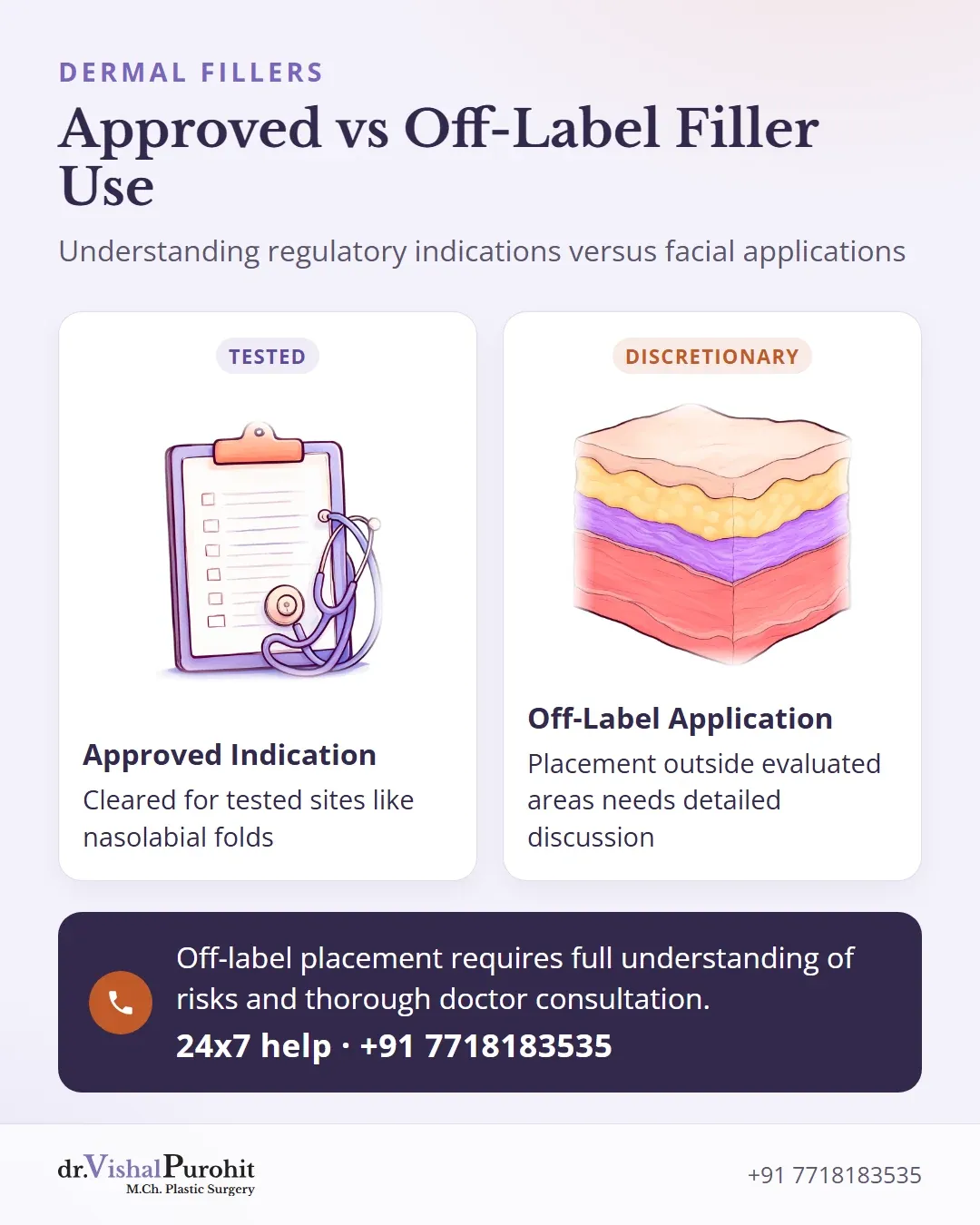
Regulatory agencies evaluate dermal fillers through controlled clinical studies examining their safe and effective use in specified anatomical areas, such as nasolabial folds or cheek acne scars56. An approved product is cleared only for those evaluated indications and defined locations36.
Using a cleared formulation in other facial areas constitutes an off-label application57. While off-label use is common in facial aesthetic practice, it requires careful discretion and thorough discussion between the doctor and patient578.
Key Considerations for Off-Label Applications
Evaluating off-label applications requires distinguishing between cleared regulatory boundaries and clinical considerations:
Regulatory Clearance
Dr. Vishal Purohit addresses the selection of dermal filler formulations, intended treatment sites, and suitability individually during the initial consultation. Every consultation includes an objective assessment outlining the product details, possible outcomes, and related procedural considerations.
Understanding Indian Regulations and Off-Label Consent
In India, medical devices and injectable implants are subject to regulatory oversight by national authorities such as the Central Drugs Standard Control Organisation (CDSCO).
Key points
- Injectable implants and medical devices in India fall under regulatory oversight by authorities like the CDSCO.
- Using dermal fillers outside formally approved indications is common in clinical practice when clinically indicated.
- Informed consent is an ongoing, transparent process covering limitations, expected outcomes, and potential complications.
Approved indications for soft tissue fillers vary by product9. Regulatory bodies may not have formally evaluated filler use across every anatomical location or indication9. Using products for indications outside approved labeling is common in clinical practice when guided by medical assessment.
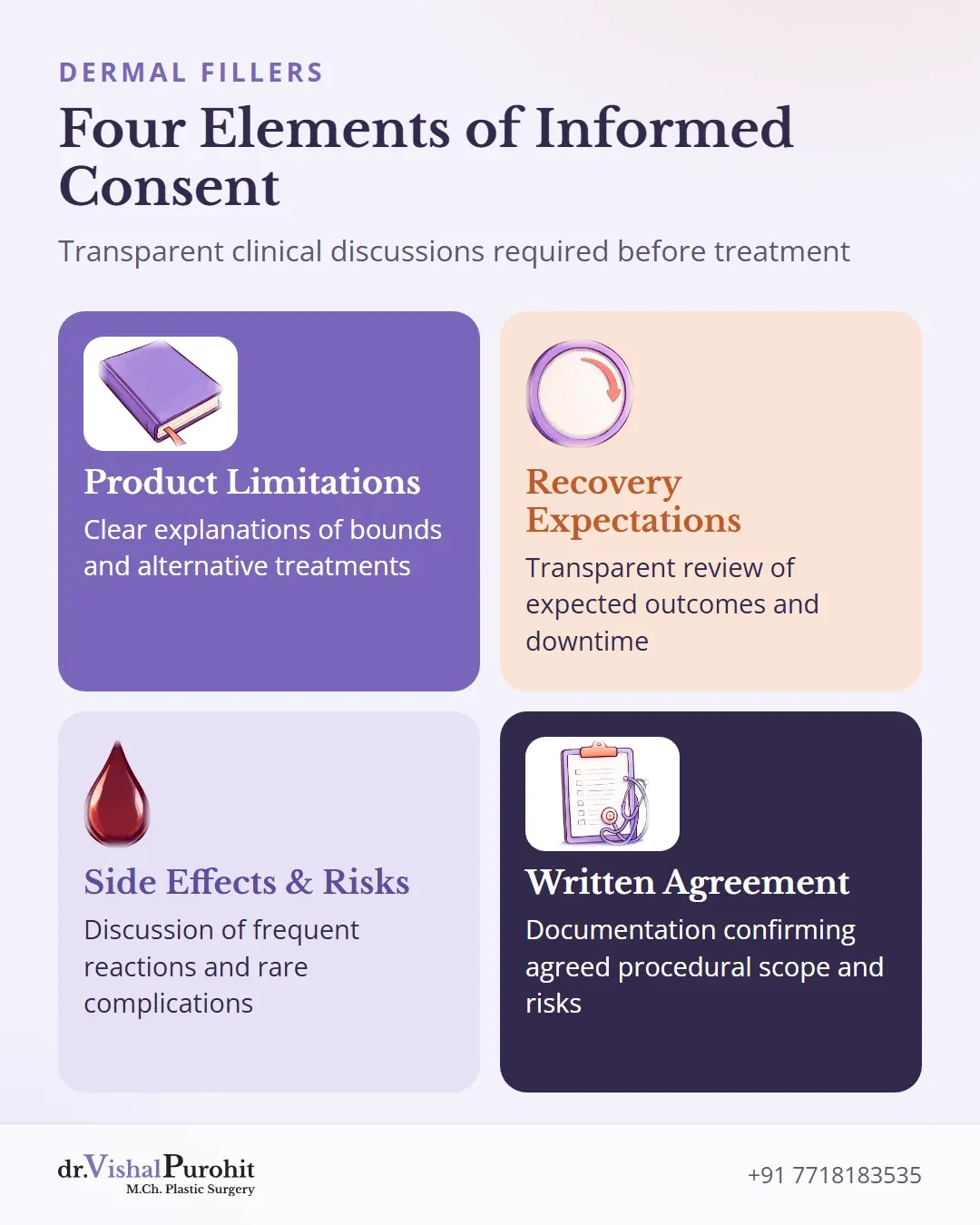
For any procedure, obtaining written informed consent prior to treatment is essential10. Consent serves as an ongoing process rather than a single administrative step11. The practitioner must ensure the patient receives a transparent explanation of the procedure1213.
A thorough consent discussion includes:
- Clear explanations of product limitations and alternative treatments13
- Transparent review of expected outcomes and recovery considerations13
- Detailed discussion of both frequent side effects and rare, serious complications13
- Documentation confirming that risks, benefits, and procedural scope were discussed and agreed upon before proceeding1013
In his practice, Dr. Vishal Purohit considers elective minor procedures on the same day after a first consultation only on a case-by-case basis, ensuring thorough assessment, detailed informed consent, and adequate time to decide.
Why US FDA Approval Differs from Indian Authorisation
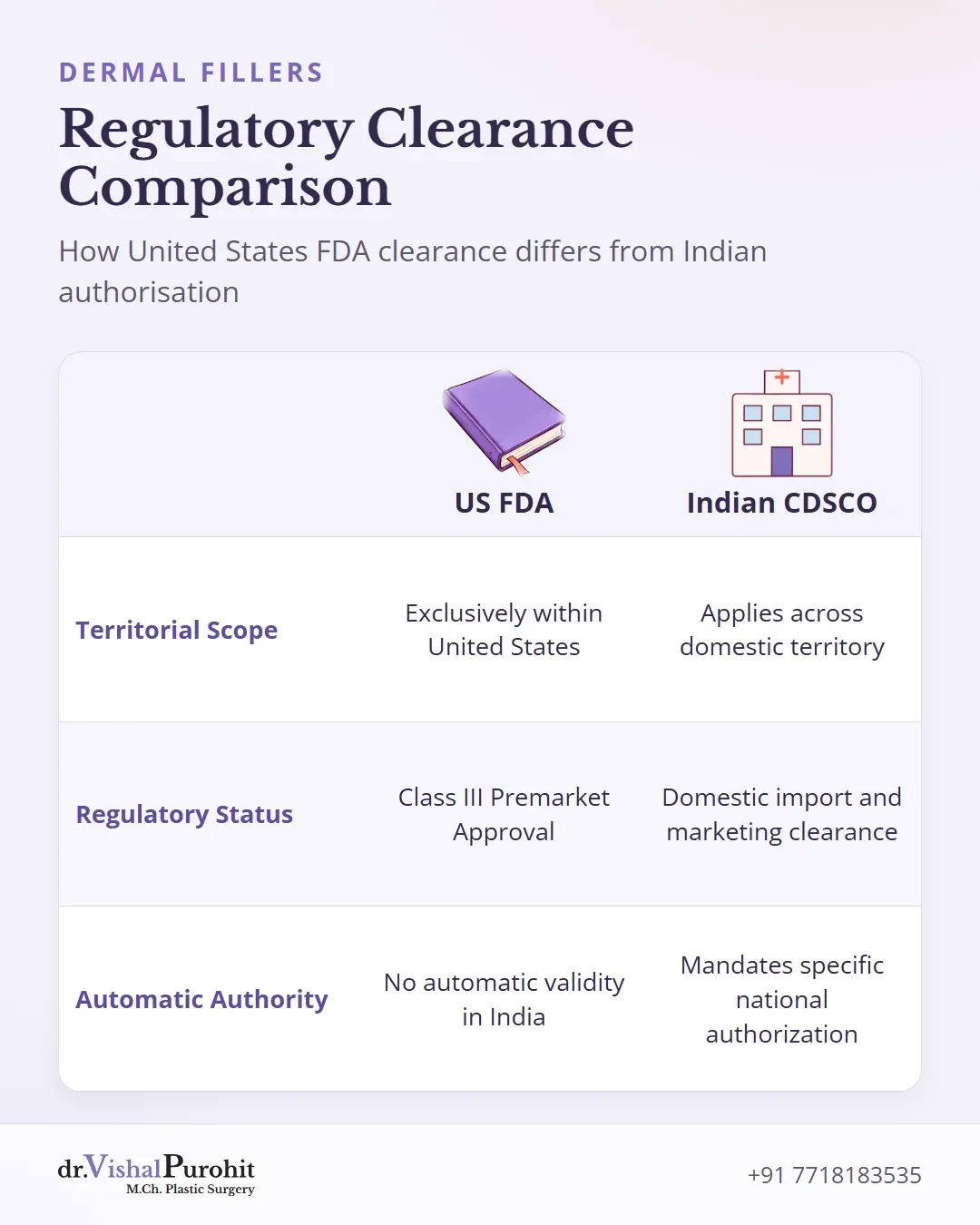
United States Food and Drug Administration (FDA) clearance applies exclusively to medical products distributed within the United States1415. Under US regulations, dermal fillers are classified as Class III medical devices requiring Premarket Approval (PMA) supported by controlled clinical study data for specific anatomical indications615.
However, clearance granted by an overseas regulatory authority does not establish automatic authorisation in India. Administrative registration or foreign approval alone does not permit commercial use under domestic laws15.
Regulatory Verification Steps
Patients considering treatment should verify:
- Whether an injectable holds valid domestic regulatory import and marketing clearance.
- That the product package is genuine, as counterfeit injectables exist216.
- That the procedure is conducted by a qualified plastic surgeon or dermatologist rather than self-administered16.
In his practice in Jaipur, Dr. Vishal Purohit assesses suitability individually during consultation, treating dermal filler placement strictly as a medical procedure16.
Storage Standards and Cold Chain Maintenance
Hyaluronic acid (HA) dermal fillers are supplied in prepackaged syringes and require strict adherence to specific storage guidelines17. Rather than relying on blanket refrigeration assumptions, clinics follow the exact temperature ranges specified by each manufacturer17.
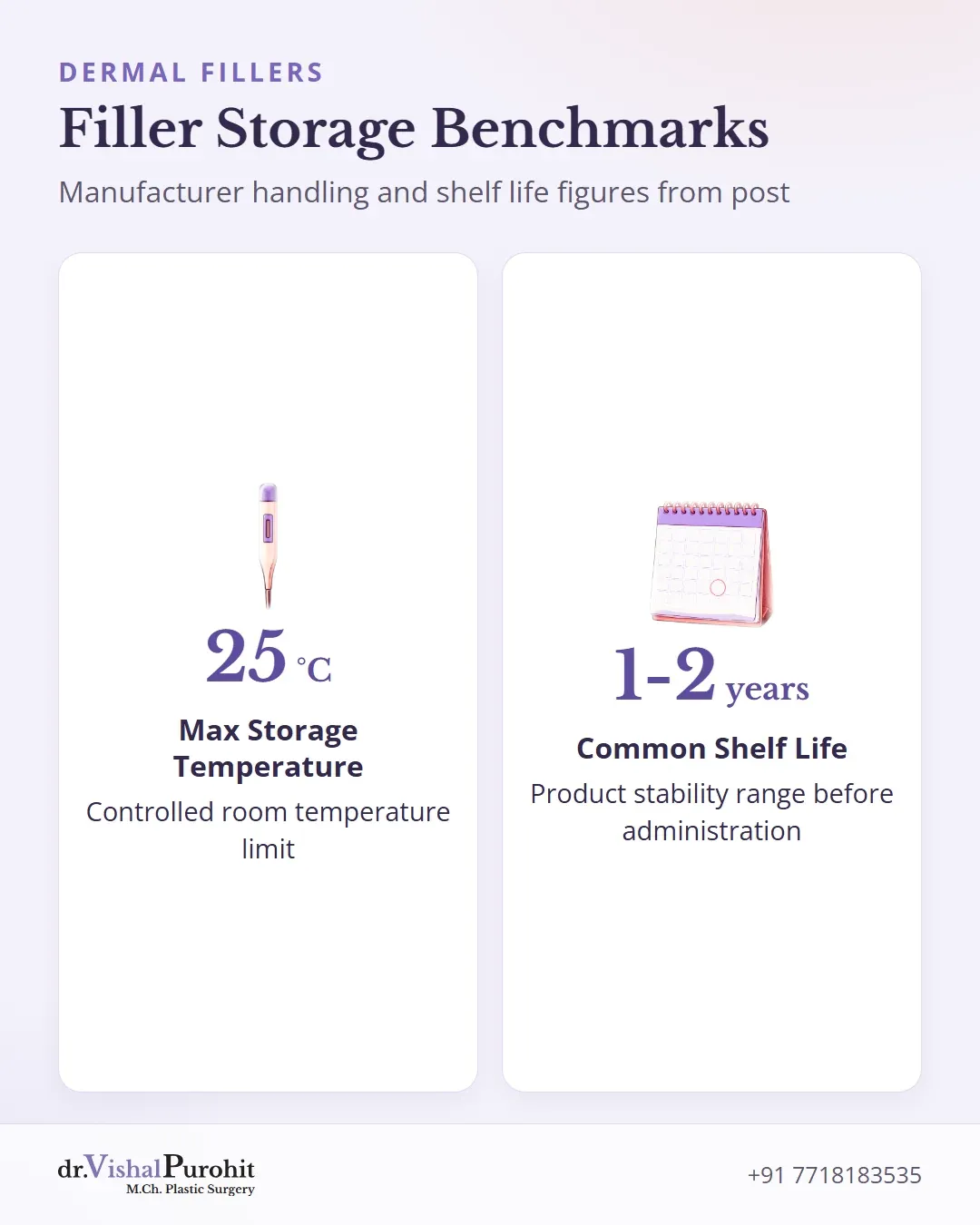
Prefilled dermal filler syringes are typically stored at controlled room temperature, up to 25°C (77°F), prior to clinical use17. Depending on the product formulation, overall shelf life commonly spans 1 to 2 years, though formulations containing lidocaine may carry a shorter shelf life17.
Adhering to manufacturer package insert instructions ensures that product stability and handling standards are properly maintained before administration17. Specific product selection and suitability are decided at the consultation.
Consulting on Dermal Fillers in Jaipur
Reviewing product verification details and regulatory documentation ensures patient safety before receiving injectables. Prospective patients seeking Dermal Fillers in Jaipur can review product characteristics, batch details, and anatomical considerations during a clinical evaluation. For further information regarding treatment planning and procedural guidelines, explore the Dermal Fillers FAQs.
This is educational information, not medical advice.