
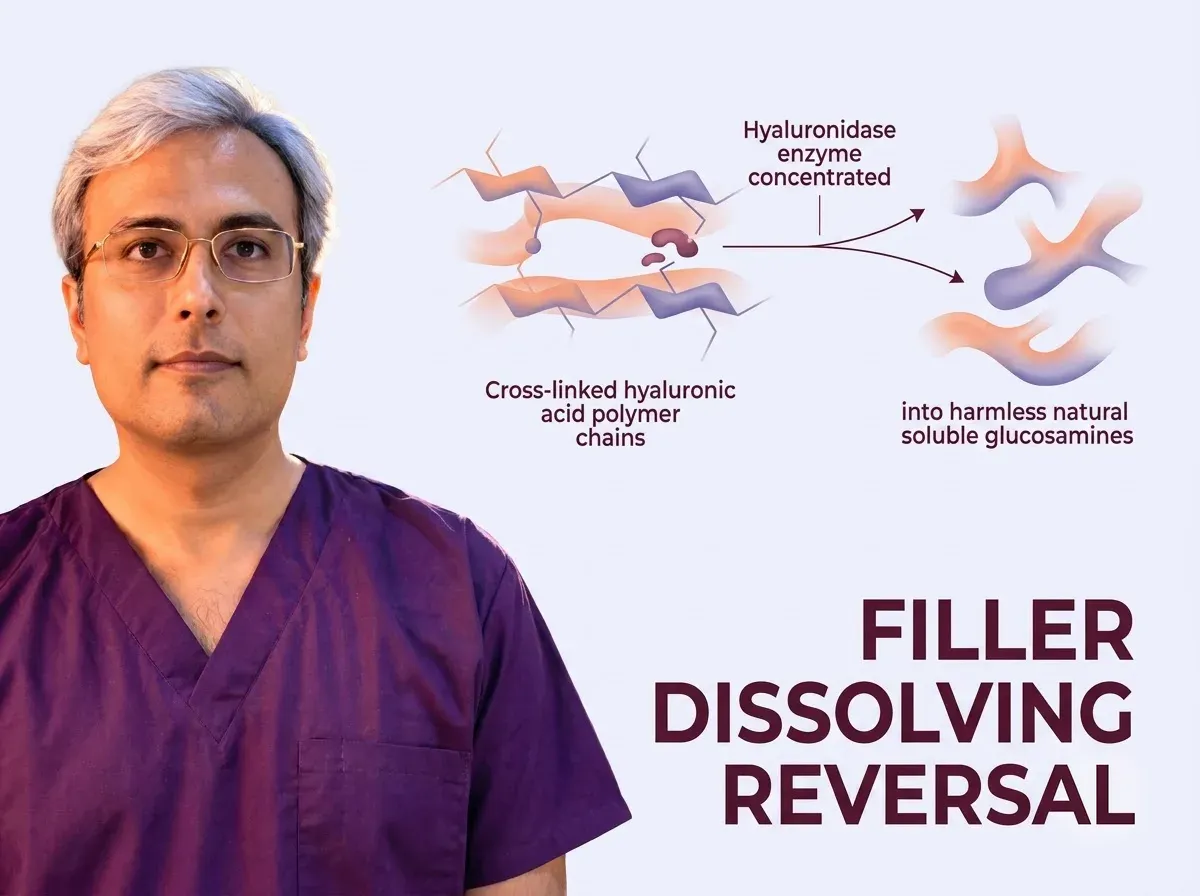

Filler Migration, Overfilling, and When Hyaluronidase Helps
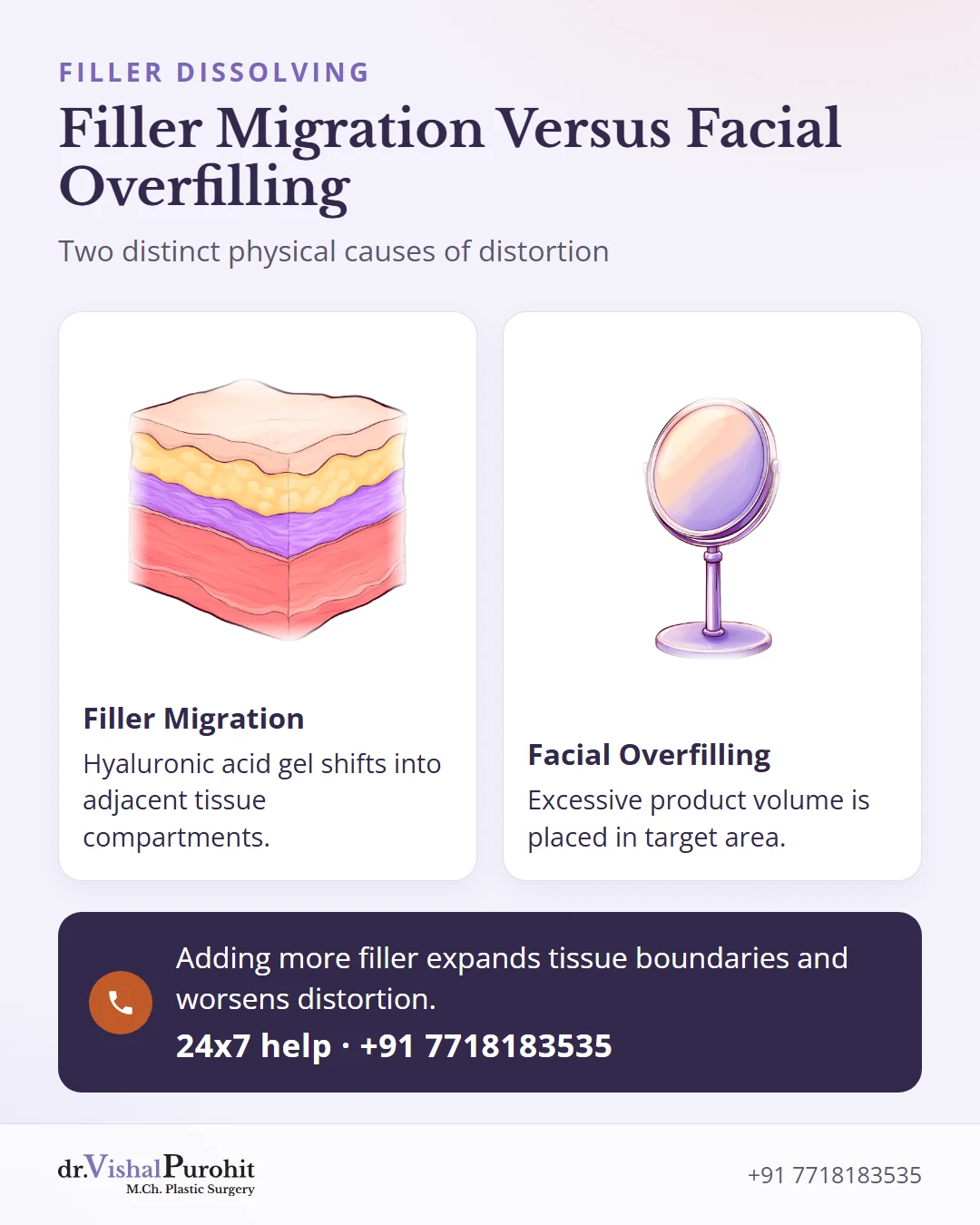
Unwanted fullness or unnatural contours after dermal filler can stem from different physical causes. Hyaluronidase is a soluble protein enzyme that breaks down hyaluronic acid filler, helping manage unwanted, uneven, or displaced product. Understanding these issues helps determine whether enzyme treatment, watchful waiting, or selecting no treatment is the most appropriate step.
An unnatural post-treatment contour often requires distinguishing between filler migration and facial overfilling before planning an intervention. Migration occurs when hyaluronic acid gel shifts into adjacent tissue compartments, whereas overfilling reflects excessive product volume placed in the target area. Attempting to correct either issue by injecting additional filler expands tissue boundaries and compounds underlying distortion.
During initial recovery, early swelling frequently mimics product displacement or excessive fullness. Clinicians evaluate tissue changes carefully because uncomplicated inflammatory edema typically resolves over subsequent days without active intervention. A structured physical examination reviews several aspects of the treated area:
- Reviewing medical history and checking tissue health for underlying pathology
- Evaluating tenderness to check that persistent swelling lacks discomfort
- Palpating local tissue texture to assess depth and localize firm deposits
- Confirming that selecting no treatment is always a valid choice
When displaced or excessive hyaluronic acid is identified, hyaluronidase injections can hydrolyse the product. Studies report that enzyme therapy is dose-dependent and works over hours to days, though multiple sessions may be discussed. Dr. Vishal Purohit, an M.Ch. plastic surgeon in Jaipur, assesses soft tissues individually at the consultation before planning management.
Clinical Examination and Checking Fillers Suitable for Dissolving
Dissolving misplaced, uneven, or excess gel requires evaluating what was injected and reviewing health history. Dr. Vishal Purohit assesses every patient individually in Jaipur, explaining all dissolving details at the consultation. Choosing no treatment remains a valid option whenever cosmetic concerns are minor.
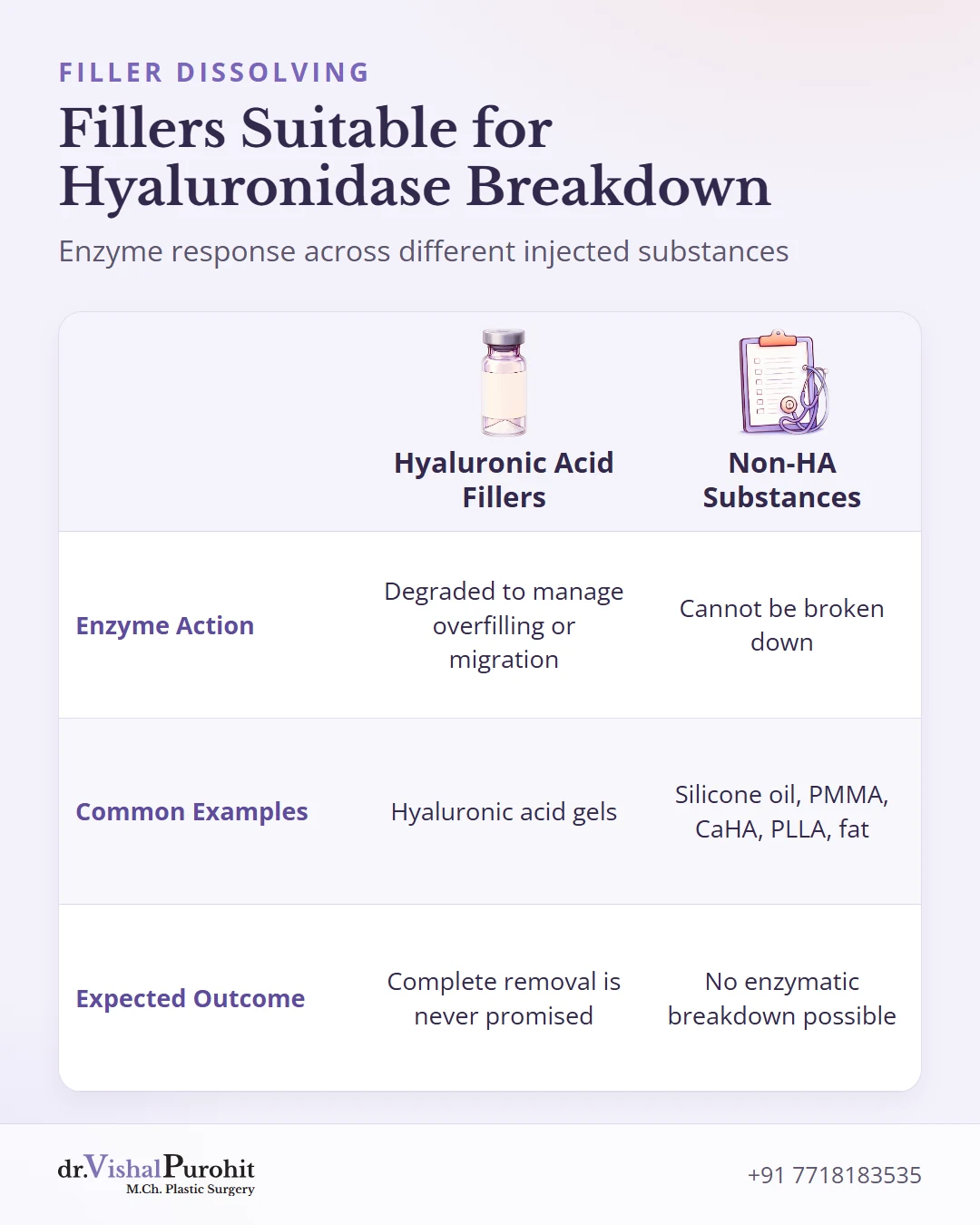
Understanding which products respond to enzymatic breakdown helps set realistic aesthetic expectations before proceeding with corrective care. Hyaluronidase works specifically on hyaluronic acid gel and cannot break down non-HA materials:
- Hyaluronic acid gels: often degraded to manage overfilling, asymmetry, product migration, or acute complications, though complete removal is never promised.
- Non-HA substances: silicone oil, polymethyl methacrylate, calcium hydroxylapatite, poly-L-lactic acid, and autologous fat cannot be broken down by hyaluronidase.
Medical background screening is essential before receiving care. As detailed in this review on dissolving dermal fillers with hyaluronidase, patients must disclose past reactions to bee or wasp stings because cross-reactivity can create an increased risk of severe allergic hypersensitivity, including anaphylaxis.
Before Injections: Allergy History and Medical Screening
Before receiving elective enzyme injections to dissolve hyaluronic acid filler, medical screening helps protect patient safety. Patients must disclose their full medical background, current medications, and past reactions to hyaluronidase.
Disclosing past reactions to insect stings is essential because bee and wasp venoms contain hyaluronidase, which can cause cross-reactivity. A history of severe reactions represents an increased risk for severe allergic hypersensitivity, including anaphylaxis. Learn more about dissolving dermal fillers with hyaluronidase before planning elective care.
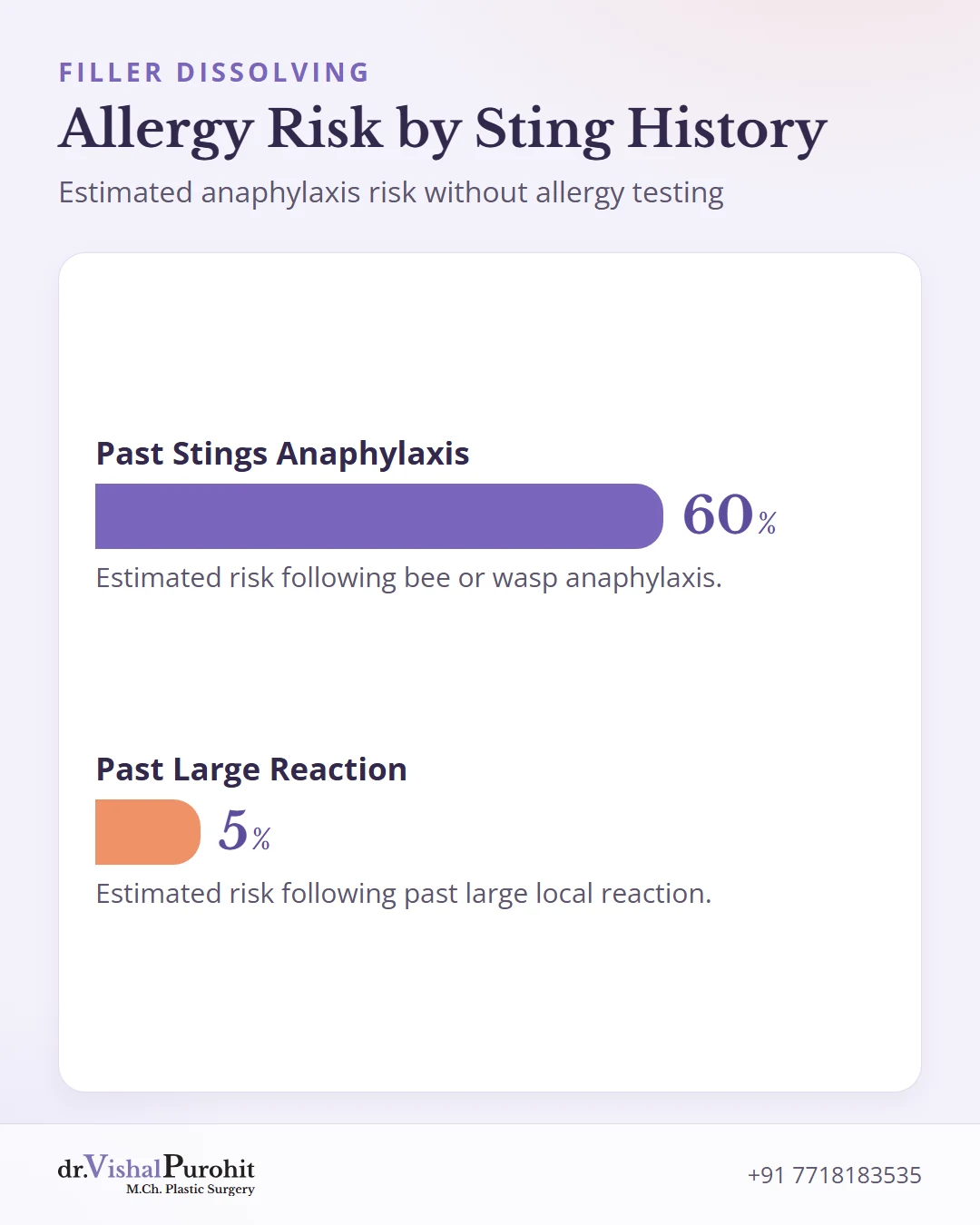
Studies report varying allergy risks based on sting history:
- Without allergy testing, a history of anaphylaxis to bee or wasp stings carries an estimated anaphylaxis risk of up to 60 percent.
- A past large local reaction carries a risk of up to five percent.
- Allergy to both bee and wasp stings increases the likelihood of sensitisation.
Guidelines note that routine skin tests should not serve as blanket screening tools without a compatible clinical history. Skin tests cannot rule out every allergic reaction. Whether skin testing is carried out is decided at the consultation with Dr. Vishal Purohit.
Normal Recovery Bruising and Emergency Warning Signs

Receiving hyaluronidase injections to dissolve hyaluronic acid filler causes immediate tissue responses that must be distinguished from true clinical complications. Understanding typical healing helps set grounded expectations while recognizing when urgent medical evaluation is required.
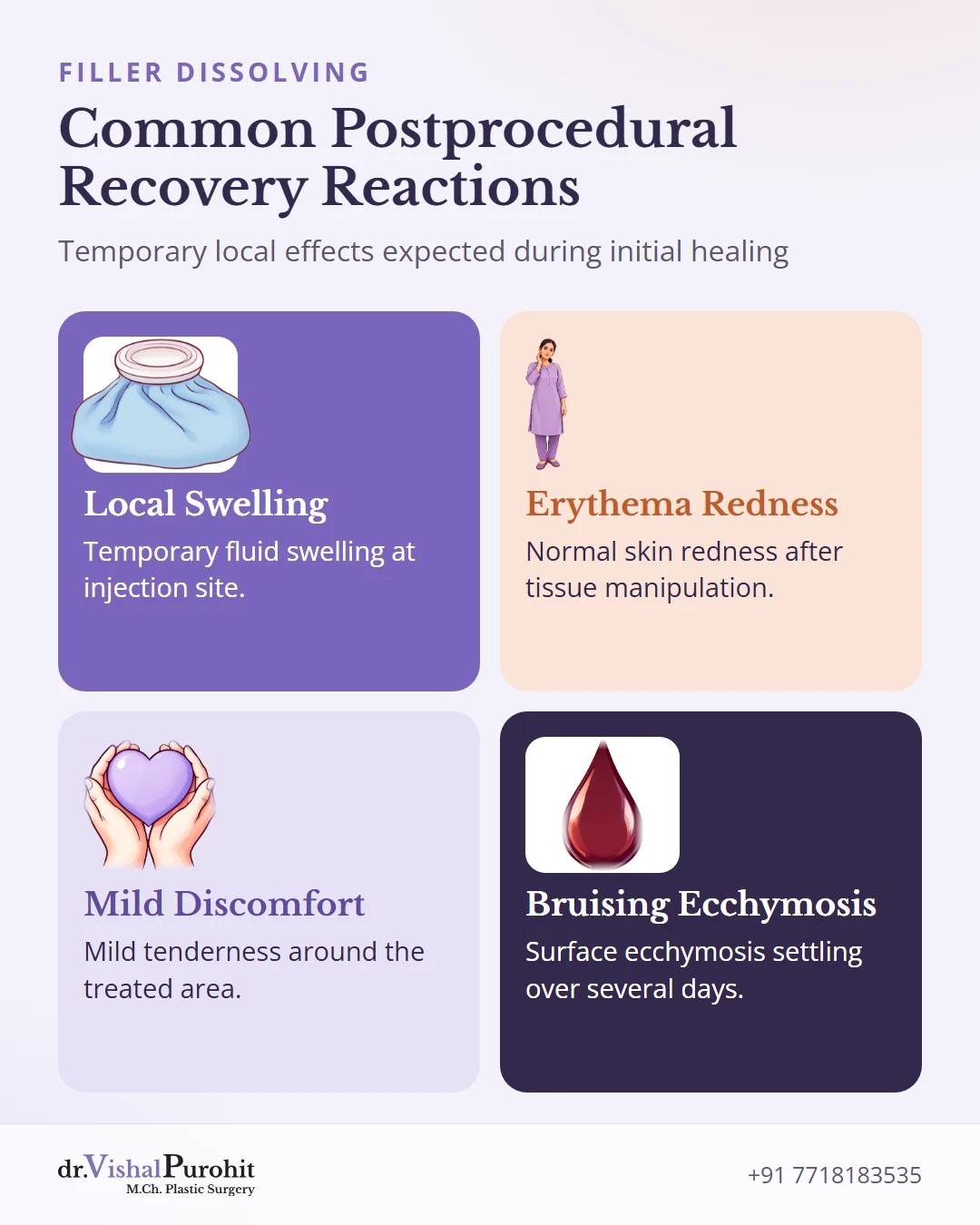
Following enzyme infiltration, temporary local reactions frequently occur as tissues respond to fluid placement and manipulation. Clinical practice documents common postprocedural effects:
- Local swelling at the injection site
- Erythema, or redness
- Mild tenderness or discomfort
- Bruising, also termed ecchymosis
Because acute swelling and bruising obscure underlying contours, assessing the ultimate aesthetic outcome requires allowing initial inflammation to settle. To understand how the enzyme breaks down hyaluronic acid gels and what baseline recovery entails, patients can learn more about dissolving dermal fillers with hyaluronidase before planning corrective care.
At Dr. Vishal Purohit's practice in Jaipur, specific aftercare rules and recovery guidelines are decided at the consultation based on an individualized clinical assessment.
Recognizing Vascular Emergencies
While elective dissolving proceeds at a measured pace, acute filler-induced vascular occlusion from unintentional vessel injection is a critical emergency requiring immediate medical care to prevent tissue necrosis or vision loss. Patients must seek emergency care at once if they notice acute warning signs:
- Skin turning white, grey, blue, or mottled
- Sudden severe pain
- Vision change, blurred vision, or vision loss
Filler Dissolving Cost in Jaipur: Enzyme and Consent
Deciding to dissolve hyaluronic acid filler involves a clinical assessment of the treated area, product characteristics, and individual medical history.
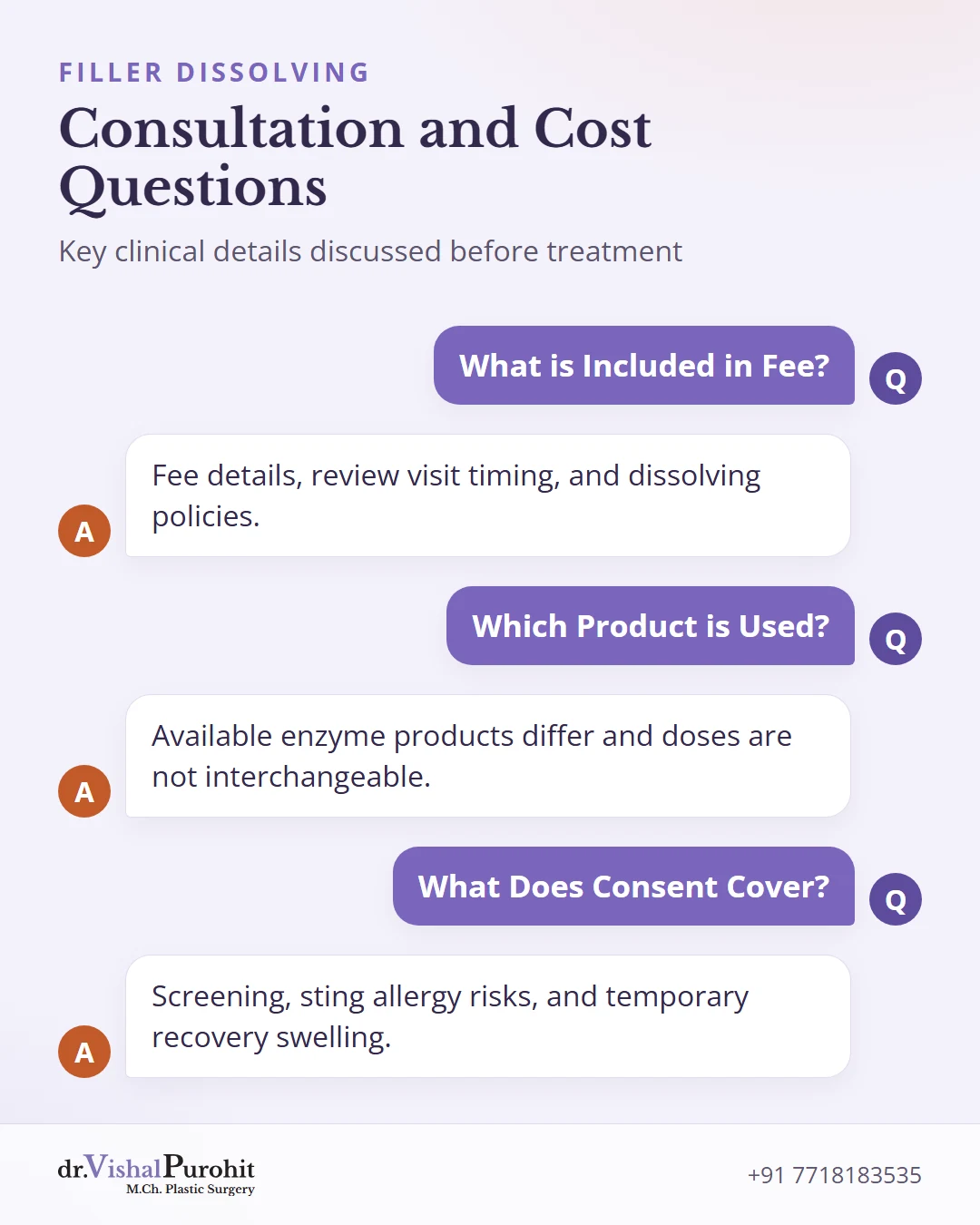
Dr. Vishal Purohit explains the fee, what it includes, review visit timing, and any touch-up or dissolving policy directly at the consultation. Available products differ, and their doses are not interchangeable. During evaluation, patients can ask which specific product is used and what its label covers.
Informed consent requires discussing medical screening and realistic baseline expectations before proceeding. A detailed review of dissolving dermal fillers with hyaluronidase outlines how the enzyme breaks down hyaluronic acid gel, the risk of allergic cross-reactivity from insect stings, and temporary postprocedural swelling.