
Undergoing aesthetic injections right before an important social function introduces avoidable cosmetic and logistical complications. Normal tissue reactions such as edema, bruising, and transient contour irregularity require adequate recovery time before any formal public appearance.
Planning appointments well ahead of time allows the injected material to settle naturally. Reviewing Filler Aftercare: Swelling, Bruising and Normal Healing helps individuals understand recovery patterns and avoid last-minute procedural complications.
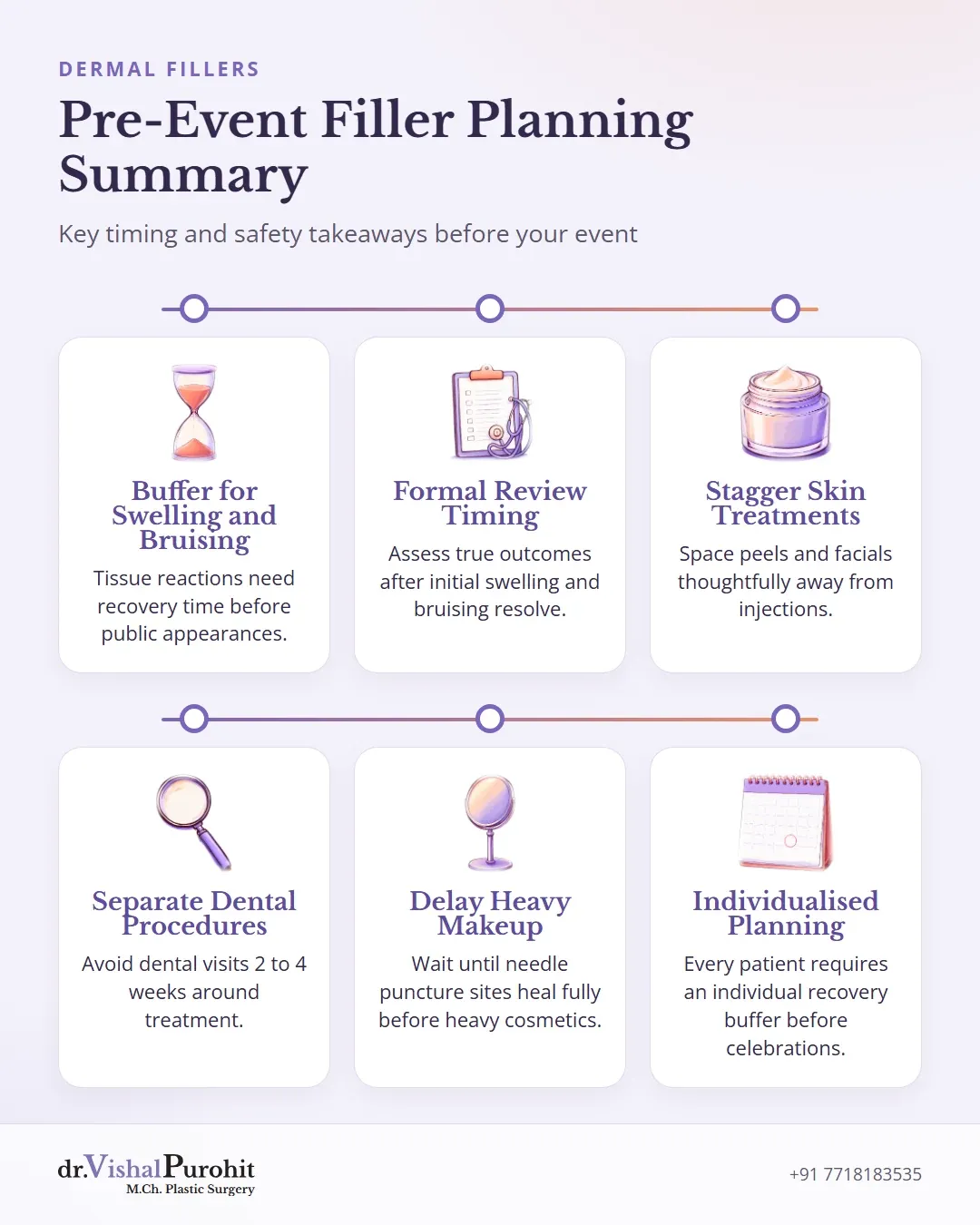
Risks of Last-Minute Filler Injections
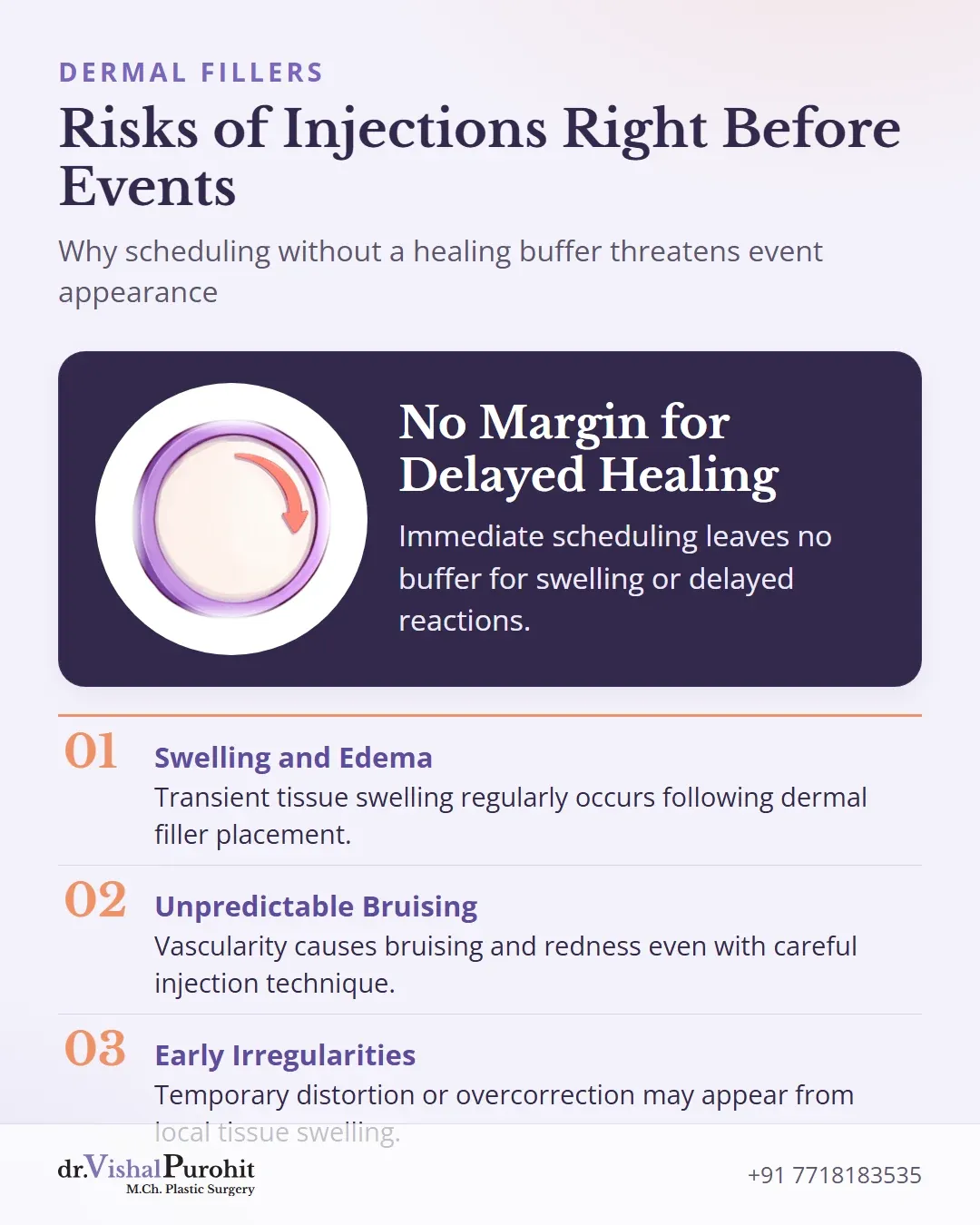
Scheduling dermal filler procedures immediately before important social gatherings, such as weddings or major photo sessions, introduces considerable aesthetic and logistical risk12. Facial tissues need adequate time to recover from needle trauma and product placement.
Key points
- Undergoing dermal filler treatments immediately before major events carries significant aesthetic risks.
- Normal side effects such as swelling, bruising, and temporary contour irregularities need adequate time to resolve.
- Elective injections should be scheduled well in advance of important functions to allow for complete tissue recovery.
Undergoing injections without a recovery buffer exposes patients to predictable post-treatment side effects:
- Transient swelling and edema occur regularly following dermal filler administration34.
- Bruising and erythema can appear even with careful technique due to facial vascularity145.
- Initial overcorrection or temporary contour irregularity may be visible early on from local swelling and tissue distortion24.
Because significant bruising can be unpredictable and may take days or longer to resolve, having injections right before important dates can leave individuals looking noticeably swollen or discolored during critical events12. Such last-minute scheduling leaves no margin to accommodate delayed healing or unexpected tissue reactions12. For this reason, elective filler treatments right before significant public functions should be avoided and rescheduled2.
Allowing Adequate Time for Settling and Review
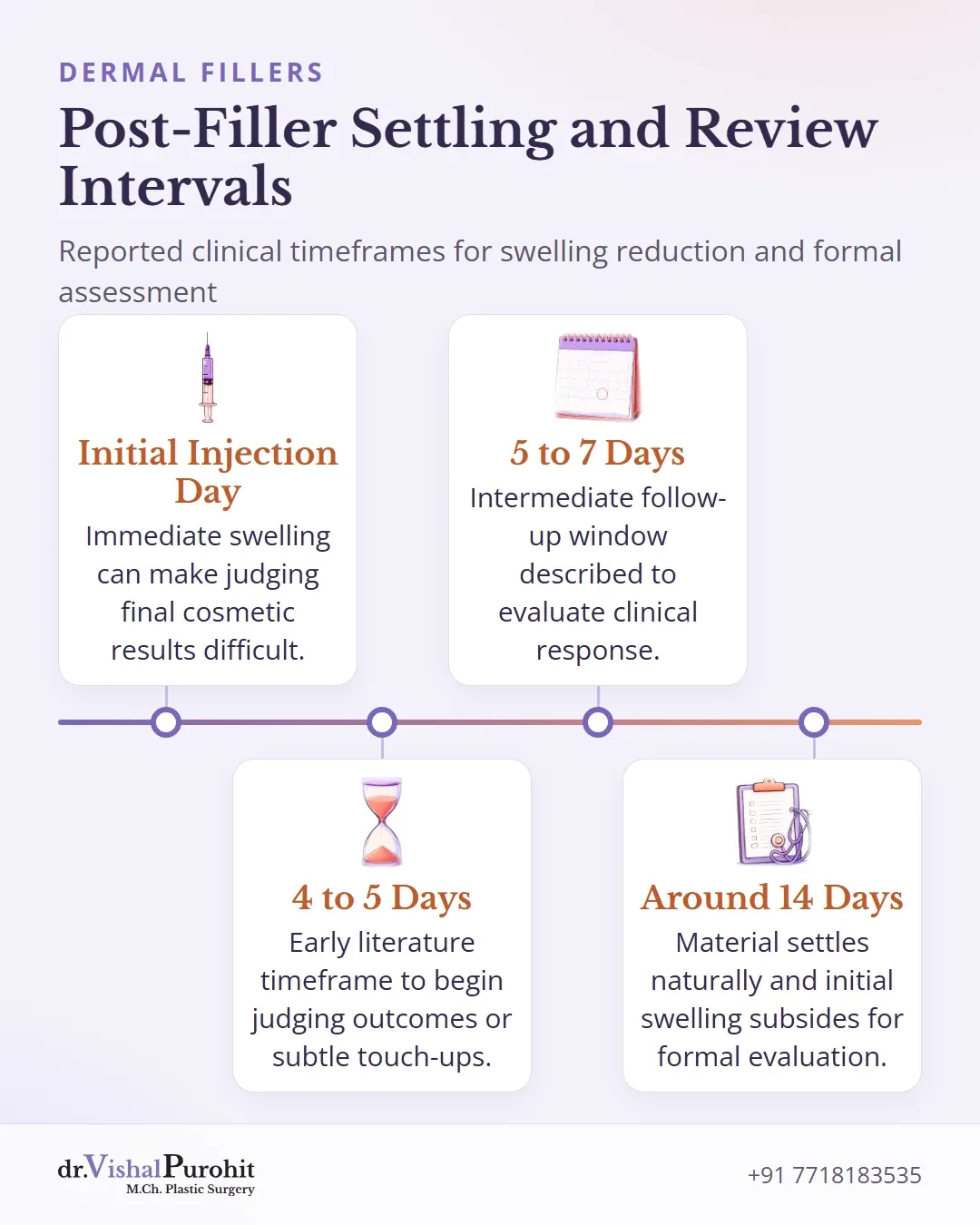
Hyaluronic acid dermal fillers cause immediate swelling after injection, which can make judging the final cosmetic result difficult at the initial appointment6. Follow-up assessments are beneficial to evaluate the true outcome once this initial swelling and any bruising subside67. In general literature, appointments to judge results or perform subtle touch-ups are described after 4 to 5 days8, 5 to 7 days7, or around 14 days6.
Planning an injectable treatment well ahead of a significant event ensures the material has settled into its natural contour and provides sufficient time for a formal review.
Follow-up and Review
A planned review visit allows the treating surgeon to evaluate tissue response, observe the full benefit of the treatment7, and assess whether any minor adjustments are indicated.
Dr. Purohit’s note: The scheduling of a review visit and the policy regarding touch-ups are decided at the consultation.
Settling Variations Across Different Facial Areas
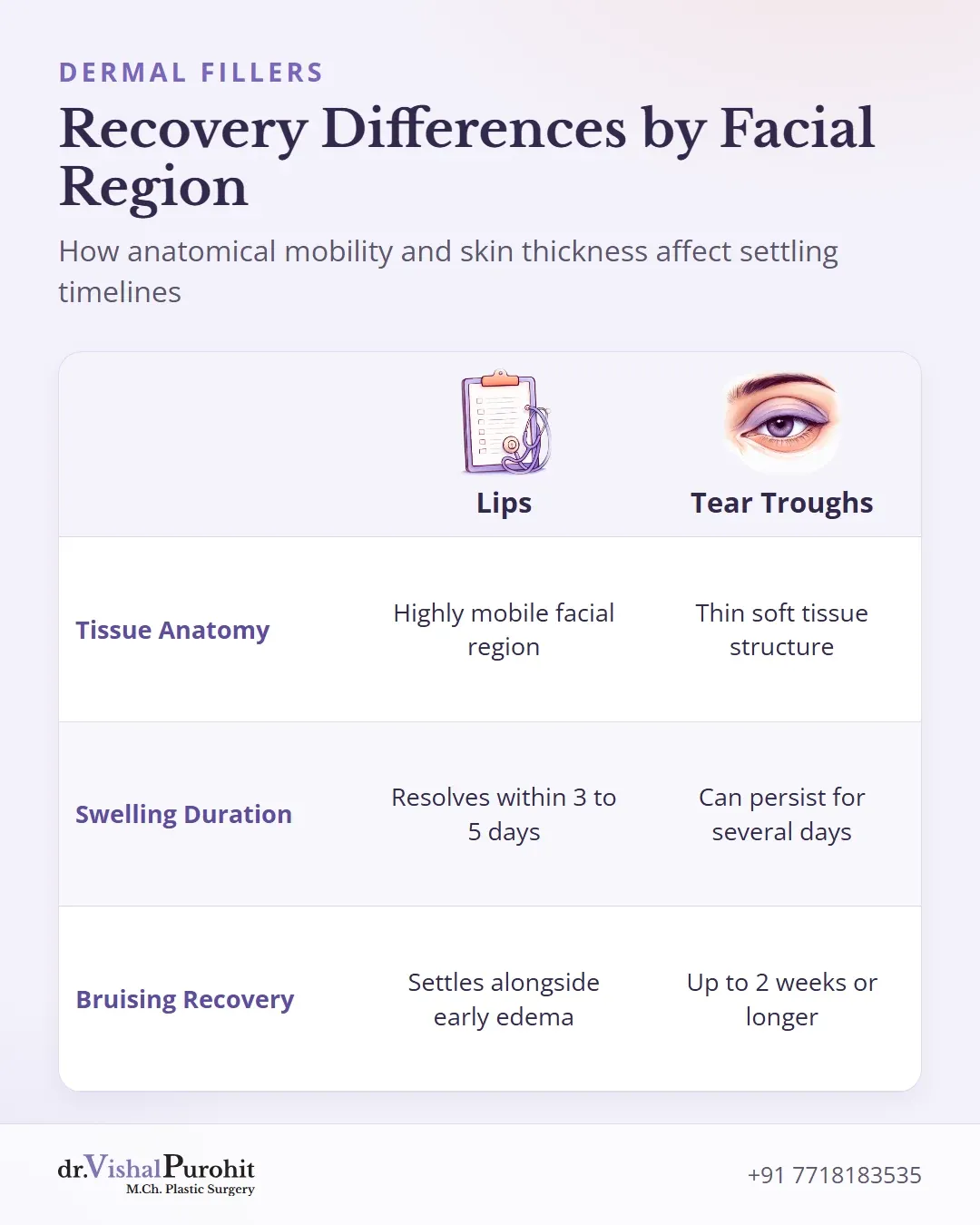
Recovery timelines differ markedly depending on anatomical vascularity, mobility, and the material injected.
Mobile and Sensitive Regions
Highly mobile and thin-skinned regions often display more obvious early tissue reactions:
- Lip edema is common immediately following treatment and typically resolves within 3 to 5 days91011. Because the lip is a highly mobile region, effects generally last 6 to 9 months, or 9 to 12 months for lip lines91011.
- In the infraorbital tear trough, thin soft tissue makes the area prone to contour irregularity12. Swelling can persist for several days, while bruising may last up to 2 weeks or possibly longer13.
Biostimulatory Agents
At his practice in Jaipur, Dr. Vishal Purohit assesses each patient individually during consultation to plan appropriate treatment intervals before important events.
Coordinating Fillers with Facials and Skin Prep
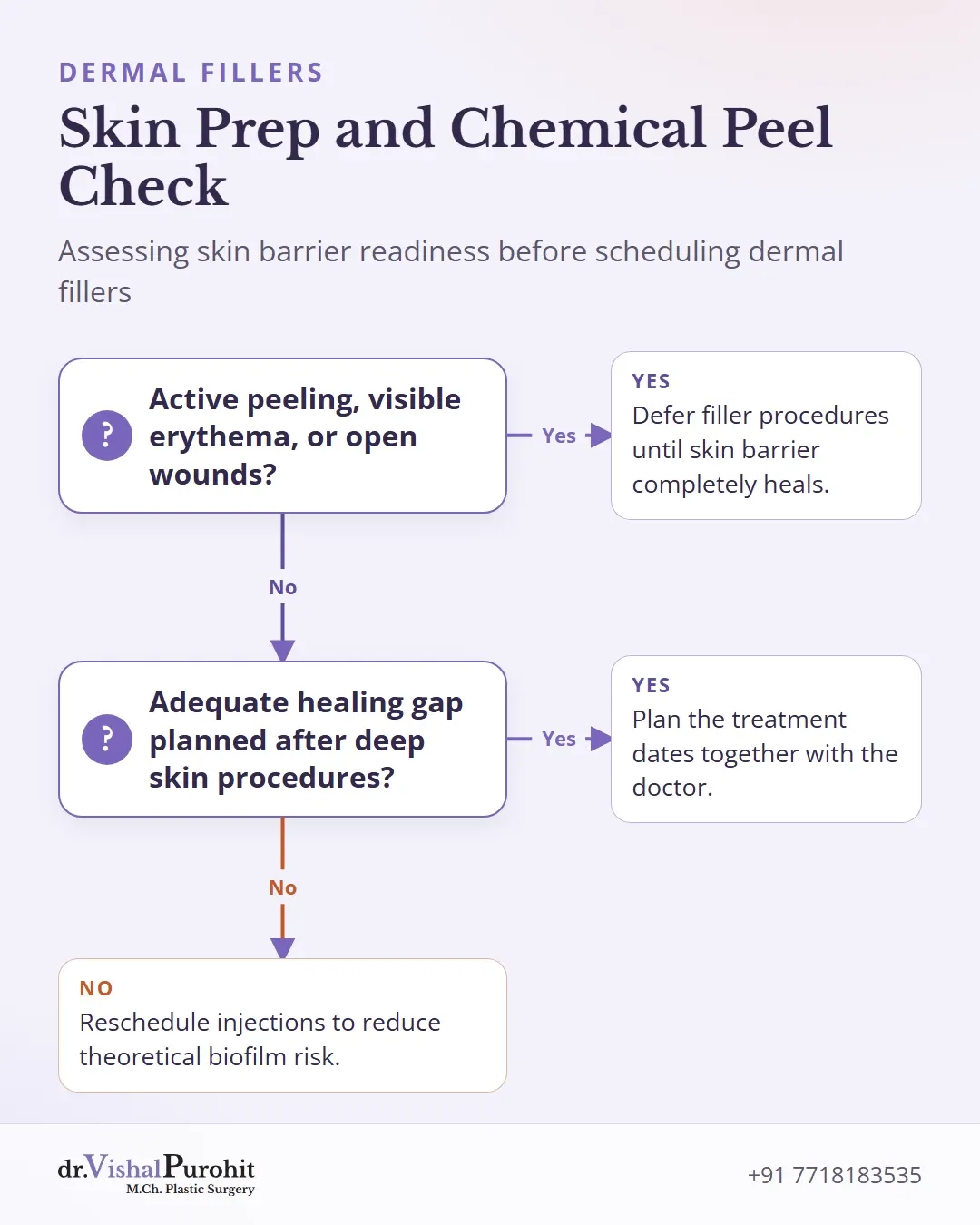
Bridal skin preparation often combines procedures such as chemical peels, deep cleansing facials, and intensive skin therapies with injectable treatments1415. These modalities must be spaced thoughtfully to protect healing tissues and allow optimal outcomes15.
Key points
- Combining facials, chemical peels, and dermal fillers requires thoughtful spacing to protect healing tissue.
- Active exfoliation, redness, or mechanical pressure can compromise filler outcomes and increase complication risks.
- Planning all treatment dates together with the doctor helps space them sensibly before the wedding.
Mechanical Pressure and Energy Concerns
Applying strong mechanical pressure or thermal energy can interfere with freshly injected dermal filler or irritate recent puncture marks. In clinical literature, chemical peels induce controlled wounding of the skin to stimulate epidermal and dermal regeneration1617. If a patient presents with active exfoliation, visible erythema, persistent redness, or open wounds from recent chemical peeling, injector guidance recommends deferring filler procedures15. Placing injections without an adequate gap after deep procedures may also introduce a theoretical risk of biofilm formation15.
Planning a Unified Calendar
To avoid adverse interactions, all planned facial treatments, peels, and injectable appointments should be reviewed together in clinic. Dr. Vishal Purohit assesses combined treatment timing during the individual consultation, ensuring each procedure is safely staged well ahead of the wedding.
Synchronising Dental Visits and Makeup Trials
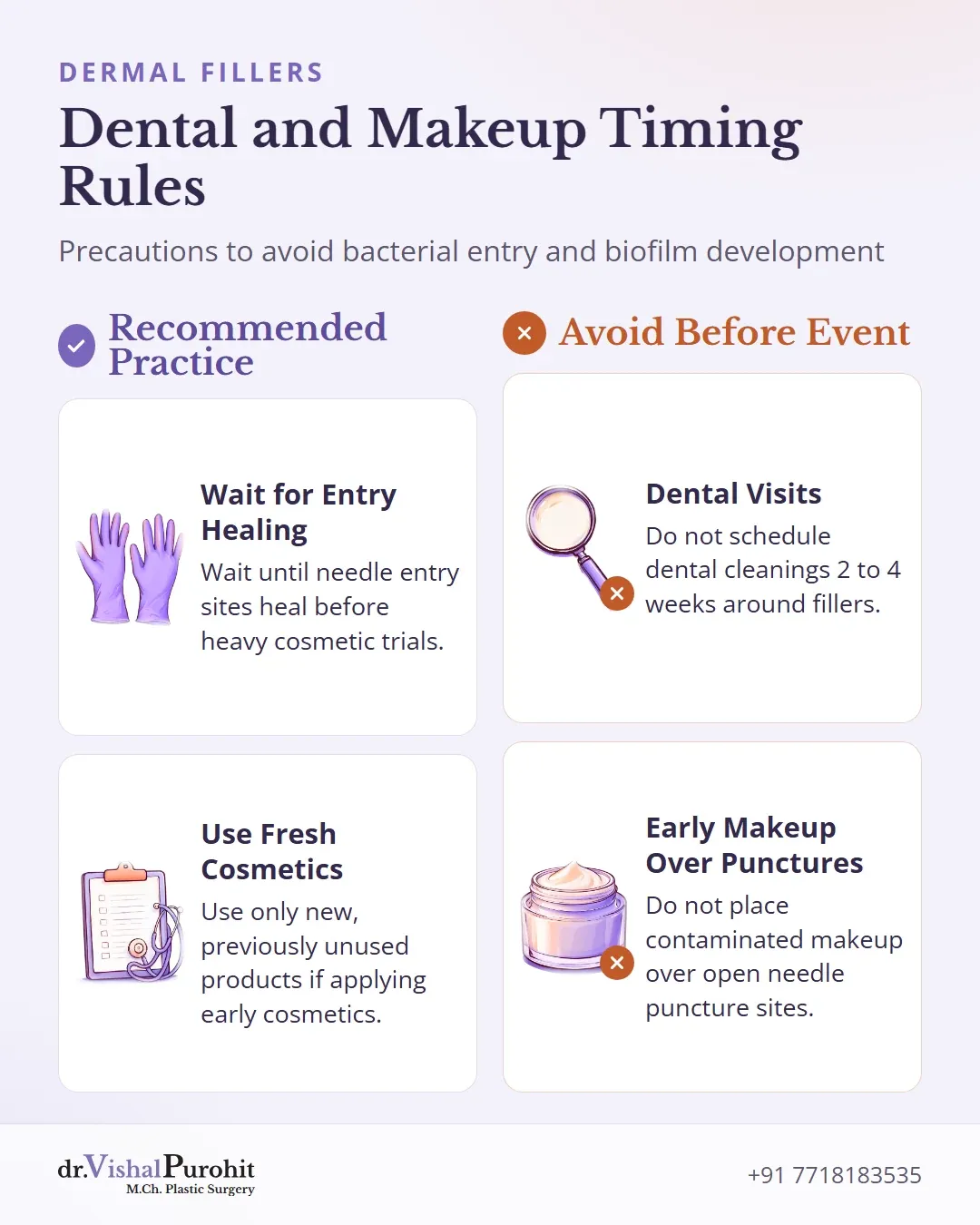
Routine dental appointments and professional makeup sessions require careful scheduling around dermal filler treatments to minimise complications.
Dental Procedures
Dental cleanings, examinations, and extensive dental interventions risk introducing transient bacteremia18. In the published literature, dental procedures, visits to the oral hygienist, and tooth bleaching are best avoided during the two to four weeks before and after filler treatment to reduce the risk of hematogenous bacterial seeding and potential biofilm development18.
Makeup Application
Puncture sites break the skin barrier, creating a pathway where bacteria or cosmetic particles could enter1920. Following the procedure, patients should initially avoid makeup or use only new, previously unused products to reduce the risk of infection and delayed-onset nodules20. Professional bridal trials or heavy cosmetic applications should wait until all entry sites have fully healed1920.
Deciding against dermal filler treatment remains an entirely valid, respected aesthetic choice for any individual preparing for an upcoming event.
Pre-Event Facial Aesthetic Consultations in Jaipur
Every patient requires an individualised recovery buffer before major public celebrations. Exploring Dermal Fillers in Jaipur provides insight into how facial volume can be carefully restored. To clarify common procedural concerns, read the Dermal Fillers FAQs before finalising your event preparation calendar.
This is educational information, not medical advice.