

TUE - SUN: 11:00 AM – 07:00 PM

Aesthetic & Reconstructive Surgery

Face Implants Surgery in Jaipur

Face Implants Surgery in Jaipur - Dr. Vishal Purohit Plastic Surgeon Jaipur11+ Years of Surgical Experience

Achieve Perfect Facial Harmony and Confidence

Permanent enhancement for your chin, cheeks, and jawline with Jaipur’s trusted M.Ch plastic surgeon.

View clinic timings and contact details →
  • M.Ch Plastic Surgeon · RMC Reg. 28041/14185
  • Day-care / short-stay procedure
  • Tonk Road, Jaipur
  • Jump to FAQs (10)

Treatment Areas

Face

Procedure Time

3-4 hours

Anesthesia

General Anaesthesia

Hospital Stay

1-2 days

Recovery Time

Swelling for 5-7 days, result in 21 days

Cost

Starting at ₹85,000 (consult for details)

The Structural Foundation

Desiring a Stronger Jawline, Defined Chin, or High Sculpted Cheekbones?

Bone structure defines facial beauty. A recessed chin (microgenia), weak jawline, or flat cheekbones can make your nose look disproportionately large, cause premature neck laxity, and diminish profile confidence.

Recessed / Weak Chin Profile

Under-projected chin disrupting the profile aesthetic line between the nose, lips, and neck.

Flat, Undefined Cheeks

Lack of cheekbone projection that gives the midface a tired, hollow, or prematurely aged look.

Lack of Mandibular Jaw Angle

Blunt jawline transition blending softly into the neck without masculine strength or feminine contour.

Bony Architecture: The Keystone of Facial Harmony

Soft tissue and skin drape directly over the facial skeleton. When bone projection is deficient, the soft tissues collapse inward. Biocompatible implants permanently augment the skeletal foundation, tightening submental tissue and restoring the golden ratio of facial aesthetics.

Dr. Vishal Purohit - M.Ch Plastic & Cosmetic Surgeon Jaipur

Dr. Vishal Purohit

M.Ch Plastic & Cosmetic Surgeon

✓

Credential Level

M.Ch Super-Specialty

RMC Reg. 28041/14185

Your Surgical Guide

Artistic Proportion & Advanced Surgical Safety

"Facial implants permanently enhance the underlying bony architecture. A custom chin or cheek implant balances your entire profile, drawing natural focus to your eyes and smile."

— Dr. Vishal Purohit

1

M.Ch Plastic & Reconstructive Surgery, SMS Medical College, Jaipur

The highest super-specialty surgical qualification in India, ensuring total anatomical mastery of neurovascular planes and soft tissues.

2

11+ Years as a Plastic Surgeon

Practising plastic surgery in Jaipur since 2015, with a focus on natural, proportionate results.

3

Accredited Operating Suites

Dr. Vishal Purohit operates in sterile hospital operating theatres, with certified cardiac anaesthesiologists and ICU support.

Simple & Transparent

Your 3-Step Surgical Journey

We remove anxiety and uncertainty with a structured, transparent pathway designed for absolute safety and peace of mind.

1

Confidential Assessment

Dr. Purohit evaluates your anatomical baseline, skin elasticity, and health history. You receive an honest feasibility blueprint, personalized surgical plan, and transparent cost with zero pressure.

Step 1: Planning
2

Precision Operating Suite Procedure

Performed by Dr. Vishal Purohit in a sterile hospital operating theatre under gentle anaesthesia. Using advanced minimally invasive techniques, target areas are treated with microscopic care.

Step 2: Procedure
3

Monitored Recovery & Transformation

Supported with tailored recovery guidelines and post-operative follow-up visits. As tissue heals and settling occurs over the coming weeks, your refined results emerge.

Step 3: Recovery
Custom Bio-Compatible Implants

Precision Chin, Cheek & Jawline Augmentation

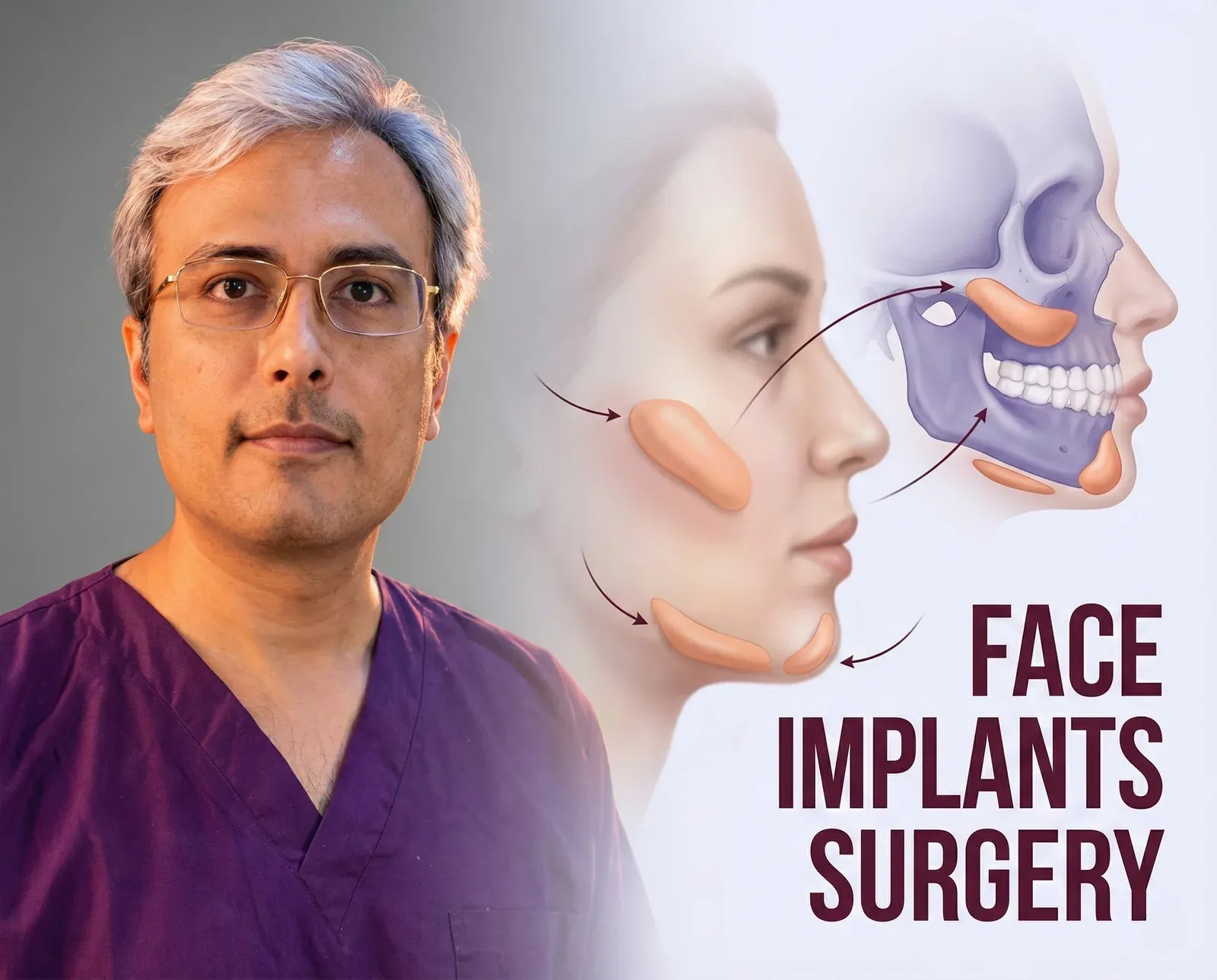
Using anatomically contoured silicone and porous polyethylene (Medpor) implants designed for permanent facial harmony.

Anatomical Chin Augmentation (Genioplasty)

Balanced Profile Projection

Placed through a hidden intraoral incision or tiny submental crease to project the chin forward and sharpen the jawline.

Malar & Submalar Cheek Implants

High Cheekbone Definition

Restores projection to flat cheekbones, lifting midface soft tissues and restoring youthful three-dimensional volume.

Mandibular Angle Implants

Chiseled Jawline Definition

Widens and defines the lower jaw angles, creating a strong, athletic lower facial frame.

Skeletal Enhancement Targets

Chin Anterior Projection

Restoring profile projection line

Chin Vertical Height

Lengthening or squaring the chin

Submental Skin Tension

Sharpening the neck-chin angle

Malar Cheekbone Apex

Youthful midface prominence

Mandibular Jaw Angle

Crisp masculine/feminine jaw

Intraoral Concealment

Zero visible facial scars

Clinical Guide & In-Depth Information

Comprehensive Medical Overview

Detailed procedural analysis, anatomical considerations, and patient guidelines by Dr. Vishal Purohit.

Face Implants: A Leap in Aesthetic Transformations

The realm of plastic surgery has observed quantum leaps in innovation and technique over the past few decades. Among the myriad procedures, face implants have emerged as a significant procedure, not just for aesthetic enhancements but for reconstructive purposes as well. These implants, designed to augment or restore facial contours, have given countless individuals renewed self-confidence and a fresh outlook on life.

Having spent numerous years in the heart of Jaipur, I, Dr. Vishal Purohit, Mch Plastic Surgeon, have had the privilege to be at the forefront of this transformative journey. Every face tells a story, and as a surgeon, it has always been my endeavor to ensure that each story reflects self-assurance, contentment, and positivity. My experiences with face implants, from initial consultations to post-operative care, have reinforced my belief in the profound impact these procedures can have on an individual’s life.

While the decision to undergo any form of surgical intervention is deeply personal, it’s paramount that one is armed with comprehensive knowledge. Throughout this article, I will draw upon my professional experiences, shedding light on the what, why, and how of face implants. Whether you’re considering this for yourself or merely seeking to understand the procedure better, I hope this insight proves valuable.

Understanding Face Implants

Face implants have revolutionized the world of aesthetic and reconstructive surgery, offering solutions tailored to the unique requirements of each individual. When we talk about face implants, we’re referring to biocompatible materials meticulously shaped to augment or restore specific facial contours. These implants can be permanent or temporary, depending on the needs and desires of the patient. Their versatility and adaptability have made them a popular choice among both patients and surgeons.

The primary types of face implants include:

  • Chin Implants: Enhance or modify the size and shape of the chin, bringing it into harmony with the rest of the face.
  • Cheek Implants: Add volume to sunken or flat cheeks, creating a fuller and more youthful appearance.
  • Jaw Implants: Enhance the width of the lower third of the face, providing a stronger and more defined jawline.

While the above are the most commonly implants, the world of facial implant surgery is vast and varied. Custom implants can also be crafted to address specific needs, ensuring that each patient achieves the desired outcome.

Over the years, I’ve witnessed the profound impact of these implants on my patients’ lives. They not only enhance facial aesthetics but often instill a newfound sense of confidence and self-assurance. With advancements in surgical techniques and materials, face implants today promise safer procedures, shorter recovery times, and more natural-looking results.

Why Consider Face Implants?

The decision to undergo facial implant surgery, like any other procedure, should be well-informed and rooted in a clear understanding of one’s objectives. Throughout my tenure in Jaipur, I’ve consulted with countless individuals, each presenting their unique reasons and aspirations. However, despite the diversity, there’s a common thread – the desire for enhanced facial harmony and self-assurance.

Reasons Patients Opt for Face Implants:

Aesthetic Enhancement:

  • The desire to enhance facial contours is, perhaps, the most common reason. This could be for a more pronounced chin, fuller cheeks, or a more defined jawline. The goal is to achieve facial harmony where each feature complements the other.

Age-related Changes:

  • As we age, it’s natural for the face to lose some of its volume, leading to a more sunken appearance, especially in the cheek area. Implants can restore this lost volume, offering a more youthful appearance.

Congenital Defects or Injuries:

  • Some individuals might have been born with certain facial asymmetries, or perhaps they’ve sustained injuries that altered their facial structure. In such cases, face implants can be a transformative solution, restoring balance and symmetry.

While the motivations for opting for face implants vary, it’s essential to note that the procedure can do more than just alter one’s appearance. I’ve seen firsthand the profound impact on an individual’s self-esteem. The positive change in their demeanor, the newfound confidence in their interactions, and the joy of looking into the mirror and loving the reflection staring back are truly priceless. For many, face implants are not just about changing a part of their face; it’s about changing a part of their life.

Material and Techniques for Face Implants

In the intricate world of face implant surgeries, the materials and techniques employed play a pivotal role in the outcome. Over the years, I’ve made it my mission to stay updated with the most innovative materials and modern techniques to ensure that my patients receive the best care and results possible. While the foundation of every surgical procedure remains rooted in medical science, the choice of materials and techniques can be likened to an artist selecting the right brush and colors.

Popular Materials Used in Face Implants:

  • Silicone: A versatile and widely used material, silicone implants are flexible, durable, and biocompatible. Their smooth surface reduces the chance of tissue ingrowth, making them relatively easier to remove or adjust if required.
  • Medpor (Porous Polyethylene): This material allows for tissue ingrowth, which can offer a more integrated feel. Medpor implants are firm and provide a natural contour to the face.
  • Gore-Tex (Expanded Polytetrafluoroethylene): Known for its biocompatibility, Gore-Tex is another preferred choice. It’s soft, flexible, and allows minimal tissue integration.

Techniques in Face Implant Surgery:

  • Incision Placement: Depending on the implant type and area, incisions can be placed inside the mouth (thus leaving no visible scar) or in a concealed external area, like below the chin or near the ear.
  • Pocket Creation: A pocket is carefully created in the facial tissue where the implant will reside. Precision in this step ensures the implant sits perfectly and provides the desired enhancement.
  • Implant Positioning: The implant is then meticulously positioned, ensuring it aligns perfectly with the patient’s facial structure and desired outcome.

Ensuring the right combination of material and technique is crucial for achieving the desired results and minimizing potential complications. Over the years, I’ve honed my skills and expertise in this realm, and it’s a matter of immense pride to see the joy and satisfaction in my patients post their transformation.

Procedure Overview for Face Implants

Diving deep into the procedural aspects of face implant surgeries provides prospective patients a clearer picture of what to expect. My approach to these surgeries, honed from years of experience in Jaipur, aims to ensure safety, precision, and satisfaction. Every surgery is a blend of art and science, and understanding the steps can alleviate apprehensions and foster trust.

Steps Involved in a Typical Face Implant Surgery:

  1. Consultation and Planning: Here, we discuss the patient’s desires, evaluate facial anatomy, and decide on the implant type and size. This step lays the foundation for a successful procedure.
  2. Anesthesia: Depending on the complexity of the procedure and patient preference, either local anesthesia with sedation or general anesthesia is administered, ensuring the patient is comfortable during the surgery.
  3. Incision: As mentioned previously, the incision can be made inside the mouth or in a concealed area, ensuring minimal visible scarring.
  4. Implant Positioning: The pre-selected implant is then precisely positioned in the pre-prepared pocket.
  5. Closure: Once satisfied with the implant’s placement, I use sutures to close the incision. Over time, these sutures either dissolve or are removed during a post-operative visit.
  6. Recovery: The patient is moved to a recovery area and monitored until they wake up from the anesthesia, after which they’re provided with post-operative instructions.

While the procedure’s steps may seem straightforward, the intricacies and nuances of each patient’s facial anatomy demand a keen eye and meticulous attention to detail. Over the years, I’ve always emphasized the importance of a thorough consultation, as this sets the stage for setting clear expectations and ensuring optimal results.

Ultimately, the goal is to enhance or restore the patient’s facial contour in the most natural way possible, while ensuring they feel comfortable and confident throughout the process. Knowing the procedure, understanding its steps, and trusting your surgeon can make the journey toward facial transformation a rewarding experience.

Post-Operative Care and Recovery

Post-operative care is as critical as the surgery itself. The days following the procedure are pivotal for ensuring the implant settles well, potential complications are minimized, and the desired outcomes are achieved. As a dedicated plastic surgeon, I ensure that each patient is well-informed and equipped to navigate the recovery phase with confidence and ease.

Essential Guidelines for Post-Operative Care:

  • Swelling and Bruising: It’s normal to experience some swelling and bruising in the initial days post-surgery. Cold compresses can be beneficial in reducing these symptoms.
  • Medication: Patients are often prescribed pain relievers to manage any discomfort and antibiotics to prevent potential infections.
  • Oral Hygiene: If the incision is made inside the mouth, maintaining impeccable oral hygiene becomes paramount. Regular mouth rinsing with a prescribed solution can help.
  • Dietary Restrictions: Soft foods are recommended initially to prevent undue pressure on the implant site. Gradually, as healing progresses, one can return to their regular diet.
  • Activity Levels: Strenuous activities and heavy lifting should be avoided for at least a few weeks. It’s essential to follow the specific guidelines provided.
  • Regular Check-ups: Post-operative visits are crucial to monitor healing, address any concerns, and ensure the implant is settling as desired.

Every patient’s recovery journey is unique, shaped by their body’s healing capabilities, the procedure’s complexity, and their adherence to post-operative guidelines. I’ve witnessed countless transformations and can attest to the resilience and adaptability of the human body. With a combination of professional guidance, patience, and self-care, the post-operative phase can be navigated smoothly, leading to a rewarding and fulfilling outcome.

Always remember: the path to enhanced facial harmony is not just about the surgery but also about the care and dedication invested in the recovery. Embrace this phase with optimism, and you’re bound to witness the remarkable results of your face implant surgery.

Potential Risks and Complications

In the realm of medical procedures, transparency and informed decision-making stand paramount. While face implant surgeries, under the right expertise, yield transformative results, it’s essential to be aware of the potential risks and complications. This knowledge not only equips patients to make well-informed decisions but also prepares them for the rare event of an unforeseen challenge.

Common Potential Complications of Face Implant Surgery:

  • Infection: As with any surgical procedure, there’s a risk of infection. While it’s rare, timely detection and treatment are crucial to prevent any adverse effects on the implant and surrounding tissues.
  • Implant Shifting: There’s a slight possibility that the implant could shift from its intended position, requiring a corrective procedure.
  • Hematoma: This refers to the accumulation of blood in the surgical area, which might necessitate drainage.
  • Adverse Reaction to Anesthesia: Some patients might experience nausea, dizziness, or allergic reactions post-surgery, linked to the anesthesia used.
  • Scarring: Though incisions are strategically placed to minimize visible scarring, there’s a possibility of scar formation, especially if the patient’s skin has a tendency to form hypertrophic or keloid scars.
  • Numbness or Altered Sensation: Some patients may experience temporary or, in rare cases, permanent changes in sensation in the operated area.

In my practice in Jaipur, I’ve always prioritized patient safety and well-being. By adhering to stringent surgical protocols and maintaining open communication, the incidence of these complications remains minimal. Moreover, I emphasize the importance of post-operative visits, which play a pivotal role in early detection and management of any potential issues.

While potential risks and complications might sound daunting, it’s essential to place them in perspective. When patients are well-informed, take their post-operative care seriously, and maintain regular communication with their surgeon, the journey towards facial enhancement becomes smoother and more predictable. Every surgical procedure, while aiming for perfection, demands respect for the human body and its complexities.

Conclusion

Face implant surgeries, as we’ve explored in this comprehensive guide, hold the transformative potential to enhance facial harmony, address structural deficiencies, and instill a newfound sense of confidence in individuals.

Given the highly personalized nature of this procedure, thorough consultations and open dialogues form the cornerstone of successful outcomes. A detailed assessment, coupled with a clear understanding of a patient’s desires and expectations, paves the way for results that not only enhance physical aesthetics but also elevate one’s emotional well-being.

As we wrap up this informative journey, it’s pivotal to emphasize the role of a skilled and experienced surgeon in ensuring that the face implant journey is smooth, rewarding, and transformative. If you’re considering taking this transformative step or have further questions, I invite you to reach out and embark on a collaborative journey towards facial enhancement.

Get in Touch: For personalized consultations, inquiries, or to discuss your aesthetic aspirations, please feel free to call us at +91-7718183535. Your journey towards a more harmonious and confident self awaits.

Your Safety Comes First

Why Your Surgeon’s Training Matters

Face Implants Surgery in Jaipur involves delicate anatomy, blood supply and tissue handling. Choosing on price alone, or an operator without plastic-surgery training, raises the risk of contour irregularities and complications.

With Dr. Vishal Purohit, your safety is backed by intensive-care support, certified cardiac anaesthesiologists and hospital-grade theatre protocols.

What to watch out for

  • Operators without plastic-surgery training
  • Rushed or imprecise tissue handling
  • Clinic rooms without emergency backup
  • Higher chance of visible scars or revision surgery

With Dr. Vishal Purohit

  • M.Ch super-specialist plastic surgeon
  • Careful, tissue-preserving technique
  • Hospital-grade operating theatre
  • Personal follow-up through recovery
Your Transformation

Sculpted Structure, Lifelong Balance

Experience the undeniable confidence that comes from a strong, chiseled, and perfectly proportioned facial profile.

Flawless Profile in Photos

Look striking and defined from every side angle without feeling self-conscious about a weak chin.

Sharper Jawline & Neckline

Augmenting the chin pulls underlying neck skin taut, creating a clean, defined separation between face and neck.

Permanent, Bio-Compatible Results

Implants integrate permanently with bone structure and will never reabsorb or deflate over time.

Got Questions?

Frequently Asked Questions

Honest, clinically precise answers from Dr. Vishal Purohit regarding Face Implants Surgery in Jaipur.

What is facial implant surgery?

Facial implant surgery places solid, pre-shaped implants to enhance the chin, jaw or cheeks and create a more balanced face. The operation usually takes about one and a half hours and is done under general anaesthesia or intravenous sedation with local anaesthesia. M.Ch. plastic surgeon Dr. Vishal Purohit in Jaipur can explain whether this approach suits your facial structure.

These implants augment areas where the facial skeleton lacks projection, improve contour irregularity and restore harmony; common sites include the chin, jaw, cheeks and nasal bridge. They may also address congenital or traumatic asymmetries and midface hollowing, with computer-assisted custom designs for complex defects. Different materials and shapes are chosen for the treated area and desired change. Alloplastic implants offer a long-term solution, while using your own tissue carries donor-site problems, shrinkage and shaping limits. They are placed in the subperiosteal plane and anchored, so they remain stable while soft tissues age. When performed by a qualified plastic surgeon, facial implants are considered safe and effective, but risks such as bleeding, infection, asymmetry, numbness or implant movement should be discussed.

After surgery, care may include antibiotics, a liquid then soft diet for several days, drains and close follow-up; significant complications are uncommon, but swelling or fluid collections may need attention. Implants are often fixed with screws to reduce movement. If you are considering facial contour enhancement, you may consult Dr. Vishal Purohit in Jaipur to discuss likely benefits, limitations and recovery expectations.

What are facial enhancement implants?

Facial enhancement implants are solid, pre-shaped three-dimensional objects placed to increase size or projection of specific facial areas such as the chin, jaw and cheeks, aiming for a more harmonious, balanced appearance. M.Ch. plastic surgeon Dr. Vishal Purohit in Jaipur can explain whether this approach suits your facial proportions and goals.

They are used to improve facial proportions or reconstruct defects, and may be made from your own tissue or other materials. Common placement sites include the chin, jaw, cheeks and nasal dorsum. The material and shape are chosen according to the area treated and the contour change desired. Because each face and goal differ, planning varies; risks such as infection, malposition, asymmetry, nerve injury, seroma, extrusion or exposure should be discussed with your surgeon. When performed by a qualified plastic surgeon, facial implants are considered safe and effective, but risks should be discussed. The important trade-off is accepting a permanent implant and possible risks for a more defined contour. A qualified plastic surgeon can discuss suitability.

The procedure is approximately one and a half hours and commonly uses general anaesthesia or intravenous sedation with local anaesthesia. Recovery and aftercare also vary by placement site and individual healing. If you are considering facial implants, you may consult Dr. Vishal Purohit in Jaipur to discuss likely contour change, material choice, risks and whether this option fits your goals. You can ask about scars, swelling and follow-up during consultation.

What is facial augmentation surgery?

Facial augmentation surgery uses solid, pre-shaped implants to enhance or balance areas such as the chin, jaw and cheeks, aiming for a more harmonious facial appearance. M.Ch. plastic surgeon Dr. Vishal Purohit in Jaipur can explain whether added contour or skeletal support may suit your facial proportions and goals.

Implants may improve facial proportions or reconstruct defects using your own tissue, donor tissue or synthetic material. Common sites include the chin, jaw and cheeks, and the choice depends on the area treated and desired contour change. A qualified plastic surgeon considers skeletal anatomy and facial shape patterns to select implant shape, size and position. The procedure usually takes about one and a half hours and may use general anaesthesia or intravenous sedation with local anaesthesia. Risks include infection, malplacement, asymmetry, nerve injury, seroma, contour imperfection, implant exposure or extrusion, and over- or under-correction, so benefits and limitations should be discussed individually.

When performed by a qualified plastic surgeon, facial implants are considered safe and effective, but risks remain and should be discussed before surgery. Because implant placement and incision approach vary with the treated area, your surgeon will discuss expected changes, possible asymmetry and follow-up needs. If facial contour concerns affect your confidence, you may consult Dr. Vishal Purohit in Jaipur to understand suitable options, likely improvement and the risks that matter for you.

What are chin, cheek, and jawline implants?

Chin, cheek and jawline implants are solid, pre-shaped three-dimensional objects used to enhance the size and appearance of these facial areas for a more harmonious, balanced look. M.Ch. plastic surgeon Dr. Vishal Purohit in Jaipur can explain during a consultation whether this kind of augmentation suits your facial proportions and goals.

The procedure changes facial skeletal contour rather than skin or fat alone. Implants are chosen in different materials and shapes according to the area treated and the contour change desired. Custom designs can extend along the jawline when more projection is needed, while jaw implants augment the gonial angle and cheek implants sit on the cheekbones. Incisions are made through intact skin or mucosa away from the implant site to reduce exposure and contamination risk. Fixation with screws may be used to limit movement. The operation is usually about one and a half hours and commonly uses general anaesthesia or intravenous sedation with local anaesthesia.

When performed by a qualified plastic surgeon, facial implants are considered safe and effective, but risks such as bleeding, infection, swelling, asymmetry, numbness or implant movement can occur and should be discussed. Recovery details depend on the areas treated and your surgeon's plan. If you are considering facial contour enhancement, you may consult Dr. Vishal Purohit in Jaipur to discuss likely benefits, limitations and risks.

Why do people undergo facial implant surgery?

People often choose facial implant surgery to improve facial harmony and balance, or to correct cosmetic, traumatic or congenital asymmetry. Solid implants can enhance the chin, jaw or cheeks. M.Ch. plastic surgeon Dr. Vishal Purohit in Jaipur can explain whether augmentation fits your goals and anatomy.

Facial implants are solid, pre-shaped three-dimensional objects placed to enhance specific facial areas and create a more harmonious appearance. Motives vary: some people want better facial balance, some want to address asymmetry, and others want to soften aging-related changes. Implants can be used alone or with other facial procedures. Different implant materials and shapes are chosen according to the treated area and desired contour. Compared with temporary fillers, midface implants provide three-dimensional augmentation that is permanent yet removable; fillers may move with sagging tissues, while lifting results can relapse. Autologous tissue remains the gold standard, but it can involve donor-site problems, resorption and limited shaping, so alloplastic materials are often chosen.

The procedure usually takes about one and a half hours and uses hidden incisions, so scars are not visible and results are immediately evident. Risks include infection, malposition, asymmetry, numbness, hematoma or seroma, and implant or hardware problems; significant complications are uncommon with midface implants. If you are considering facial implants, you may consult Dr. Vishal Purohit in Jaipur to discuss likely benefits, limitations and recovery.

Which areas of the face can be enhanced with implants?

Facial implants can enhance the chin, jaw, cheeks and other selected facial areas to create a more balanced profile. M.Ch. plastic surgeon Dr. Vishal Purohit in Jaipur can explain which area and implant shape may suit your facial proportions and goals, and what improvement is realistic.

Facial implants are solid, pre-shaped three-dimensional objects used to enhance the size and appearance of specific areas, including the chin, jaw and cheeks, for a more harmonious balance. Common sites include the nasal dorsum, chin and malar eminence; midface augmentation may involve the malar, submalar, paranasal and infraorbital rim areas. Most aesthetic facial augmentation occurs in the middle and lower thirds of the face. There are different implant materials and shapes, chosen according to the area being treated and the desired contour changes, and a qualified plastic surgeon can discuss suitability with you during a consultation. Implants are often used to improve facial proportions rather than create an unnatural look.

Facial implant surgery may take about one and a half hours and is often done under general anaesthesia or sedation with local anaesthesia. Risks such as bleeding, infection, asymmetry, numbness or implant movement can occur and should be discussed. You can speak to your surgeon about these areas in more detail during a consultation. If you are considering facial implants, you may consult Dr. Vishal Purohit in Jaipur to discuss likely improvement, incision placement and scarring.

What facial problems can facial implants correct?

Facial implants can improve facial balance by augmenting underdeveloped or deficient areas and correcting some asymmetry from trauma or congenital differences. M.Ch. plastic surgeon Dr. Vishal Purohit in Jaipur can explain whether your concern is skeletal contour, aging-related hollowness, or asymmetry, and what realistic change an implant may offer.

They are solid, pre-shaped objects placed to enhance specific facial areas such as the chin, cheeks and jaw angles, and may also address the nose, temple or glabella. They can augment skeletal deficiency, restore contour irregularity and rejuvenate midface hollowness, but they disguise rather than fully correct jaw skeletal discrepancies. Common sites include the chin, zygomas and mandibular angles; less frequently the nose, glabella and temple. Implants may be organic or synthetic, and synthetic materials include high-density polyethylene, silicone and titanium. Because implants are foreign bodies, risks include asymmetry, malposition, infection, bone erosion or poor cosmesis; pooled complication rates in systematic reviews range from 4% to 11%, lower for malar and chin implants and higher for paranasal regions.

Surgery is often about one and a half hours under general anaesthesia or intravenous sedation with local anaesthesia. A qualified plastic surgeon considers facial implants safe and effective, but risks should be discussed individually. If facial imbalance or asymmetry concerns you, you may consult Dr. Vishal Purohit in Jaipur during a consultation to discuss likely improvement, implant placement, risks and possible complications.

Can facial implants improve overall facial balance?

Facial implants can improve overall facial balance by adding carefully chosen volume to areas such as the chin, cheeks or jaw, creating a more harmonious facial appearance. They are solid, pre-shaped three-dimensional implants used to enhance specific facial areas. M.Ch. plastic surgeon Dr. Vishal Purohit in Jaipur can explain whether this approach suits your facial structure and goals.

Facial implants alter facial form by changing volume and mass in selected anatomical zones, helping correct aesthetic deficiencies and improve balance. They may be used when skeletal relationships are within the normal range but more definition or angularity is desired, or when facial dimensions seem unbalanced. Common placement areas include the chin, malar eminence and nasal dorsum. Alloplastic implants offer a long-term way to augment skeletal deficiency and restore contour, while autogenous tissue may be less predictable in shape and size retention. When performed by a qualified plastic surgeon, facial implants are considered safe and effective, though risks should be discussed.

The procedure takes about one and a half hours, using general anaesthesia or intravenous sedation with local anaesthesia. Preparation may include dental cleaning, chlorhexidine mouthwash for 48 to 72 hours, and stopping clotting-affecting medicines. After surgery, a liquid diet for three days and soft diet for five days may be advised. Risks should be discussed with your surgeon. If considering facial implants, consult Dr. Vishal Purohit in Jaipur to discuss improvement, recovery and risks.

Can facial implants make my face look more attractive?

Facial implants can improve harmony and balance in selected areas such as the chin, cheeks or jaw, but they do not guarantee a more attractive face for everyone. M.Ch. plastic surgeon Dr. Vishal Purohit in Jaipur can explain which areas may benefit and what changes are realistic for your features.

Facial implants are solid, pre-shaped objects placed to enhance specific facial areas and create a more harmonious, balanced appearance. They are used for cosmetic, traumatic or congenital asymmetry, with common sites including the chin, malar area and nasal dorsum. Alloplastic materials are frequently chosen because they can be shaped predictably, while autologous tissue remains the gold standard but may involve donor-site problems, resorption or limited molding. Stable results depend on anchoring implants to fixed bone and avoiding mobile areas where displacement or extrusion is more likely. The approach varies by anatomy, desired contour and whether implants are combined with other procedures for carefully selected suitable patients.

Midface implants can be a relatively low-risk, long-lasting option in appropriate candidates, and significant complications are uncommon, although swelling, fluid collection or malposition can occur. Implants are reversible and may be combined with facelift surgery when volume loss is present. If you are considering facial implants, you may consult Dr. Vishal Purohit in Jaipur to discuss realistic contour changes, incision placement and possible risks.

Can facial implants improve facial symmetry?

Facial implants can improve some facial asymmetries by adding volume or contour to areas such as the chin, cheeks or nasal dorsum, but they do not fully correct underlying skeletal differences. M.Ch. plastic surgeon Dr. Vishal Purohit in Jaipur can explain whether your asymmetry may be improved, disguised or better addressed another way.

Facial implants are solid, pre-shaped objects used to enhance specific facial areas and create a more harmonious, balanced appearance. They are used for cosmetic, traumatic and congenital asymmetries, and can restore balance after craniomaxillofacial treatment or with jaw surgery. However, asymmetry can also occur from surgical malposition or too large a pocket, especially with cheek implants. Pre-existing asymmetry should be discussed before treatment, because implants may disguise rather than fully correct skeletal discrepancies. Minor asymmetries may settle over about six months as swelling resolves. The procedure takes about one and a half hours and is commonly done under general anaesthesia or intravenous sedation with local anaesthesia.

After surgery, swelling and bruising can occur; minor asymmetries may improve over about six months as tissues soften. Cold packs and tapering steroids may be used for significant early swelling. Risks such as malposition, asymmetry, infection or implant-related problems should be discussed beforehand. If facial imbalance concerns you, you may consult Dr. Vishal Purohit in Jaipur to review your facial proportions, realistic improvement and whether implants suit your goals.

Need more clinical answers?

Explore all 557 answered Facial Implants (Chin & Jaw) questions.

Facial Implants (Chin & Jaw) FAQ Hub (557 FAQs)
Begin Your Journey

Ready to Discuss Face Implants Surgery in Jaipur?

At his OPD suite, Kalpana Aesthetics (2nd Floor), Dr. Vishal Purohit evaluates your candidacy, discusses surgical options and gives you a transparent, tailored treatment plan.