
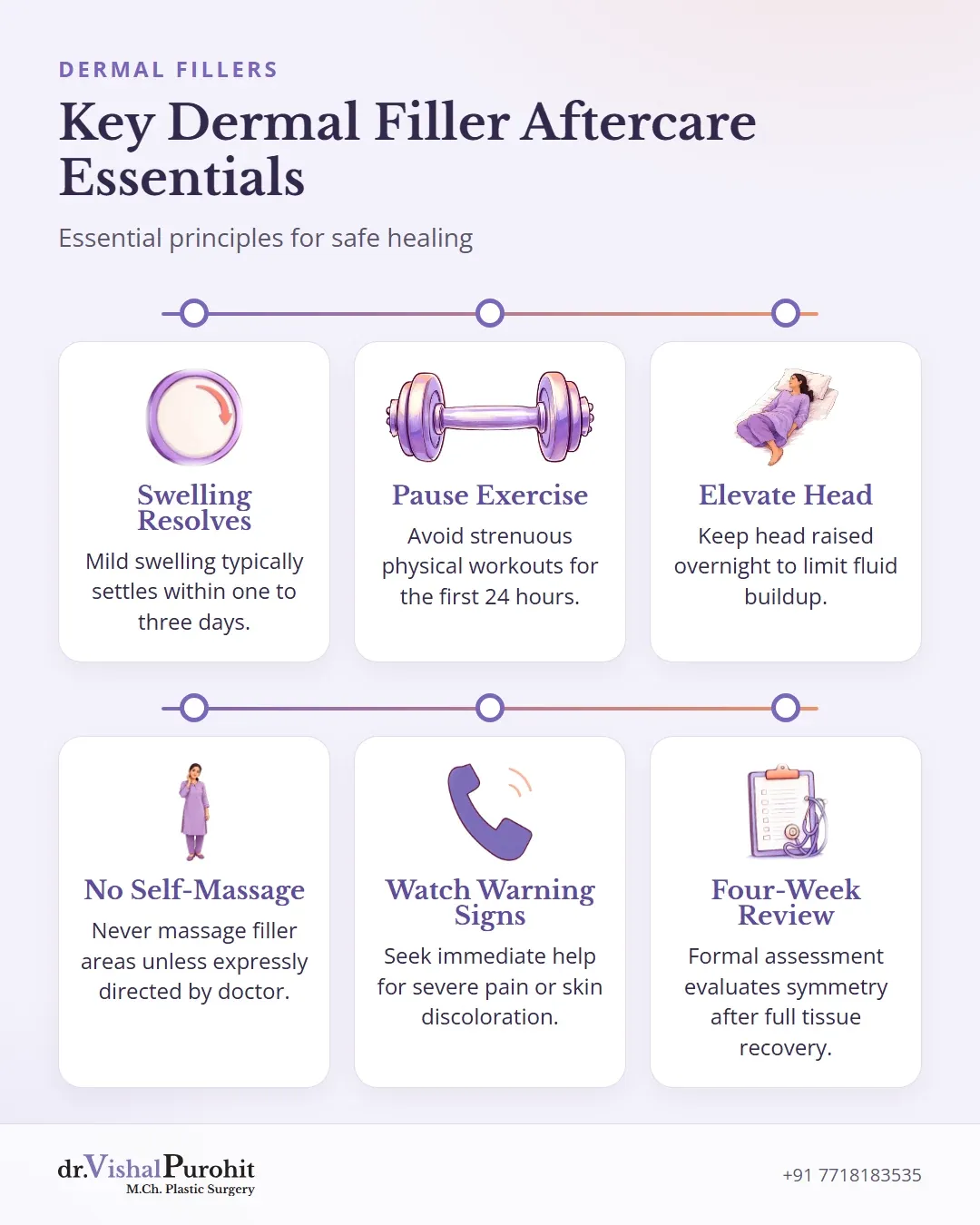
Mild swelling, redness, tenderness, and bruising represent standard physiologic responses following soft-tissue filler injections. While these side effects usually appear shortly after placement, uncomplicated swelling often subsides within 1 to 3 days or roughly 1 week, with bruising lasting 7 to 10 days.
Understanding normal tissue recovery helps patients distinguish expected post-procedure changes from critical issues. For detailed guidance on identifying serious complications early, read about severe pain, skin changes or vision symptoms after filler: urgent steps to ensure prompt medical evaluation when necessary.
Typical Recovery Timeline and Regional Variation
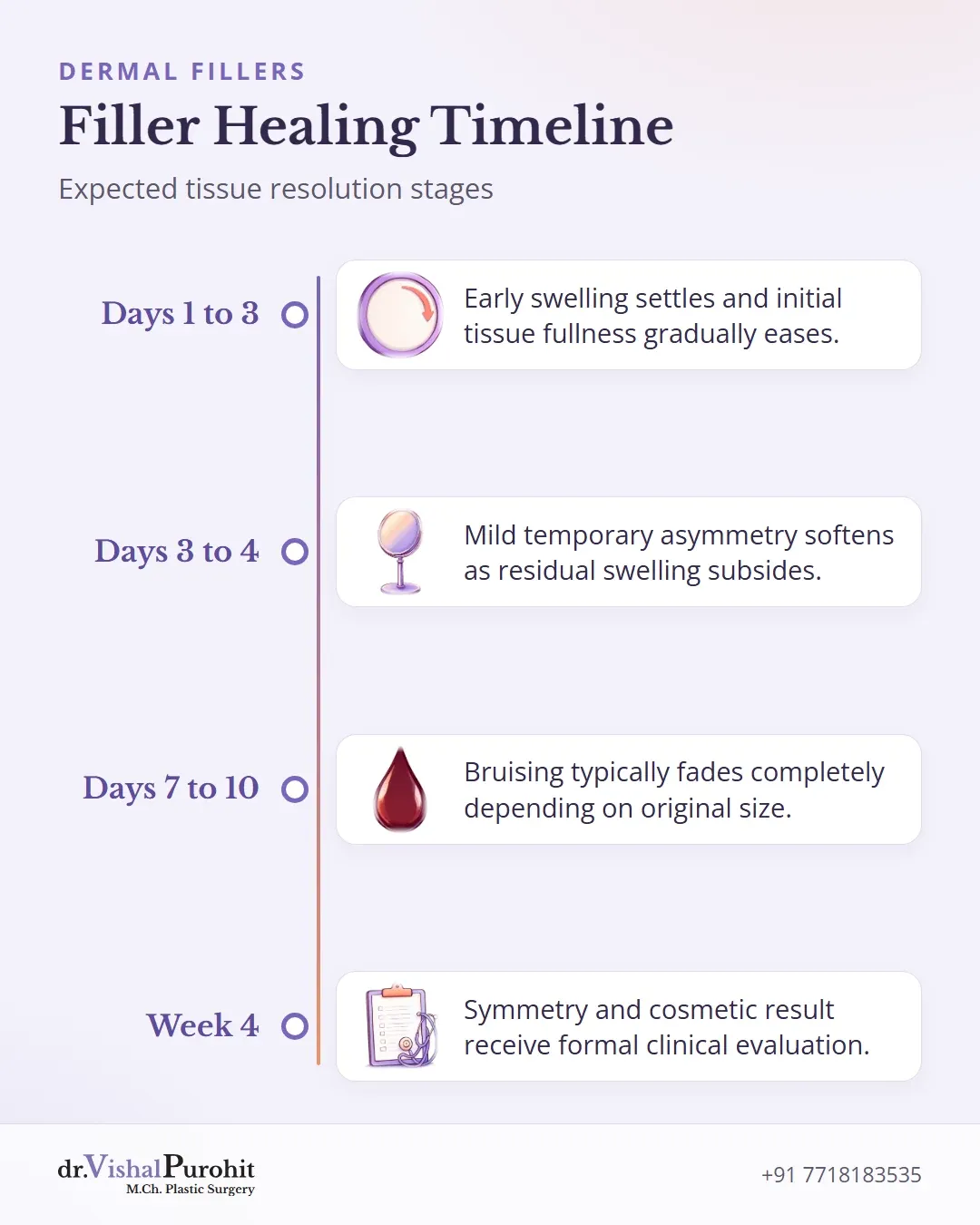
Immediate erythema, swelling, tenderness, and bruising are expected physiologic responses following dermal filler procedures12. Most side effects appear shortly after placement, and many resolve within a few days to weeks3.
Uncomplicated post-procedural edema typically subsides in 1 to 3 days14 or within approximately 1 week25. Bruising generally lasts 7 to 10 days, depending on its size14. Mild asymmetry can also occur during the first 3 to 4 days while early swelling persists6.
Tissue edema and recovery duration vary considerably across anatomical regions:
Managing Lip Swelling and Firmness Stages
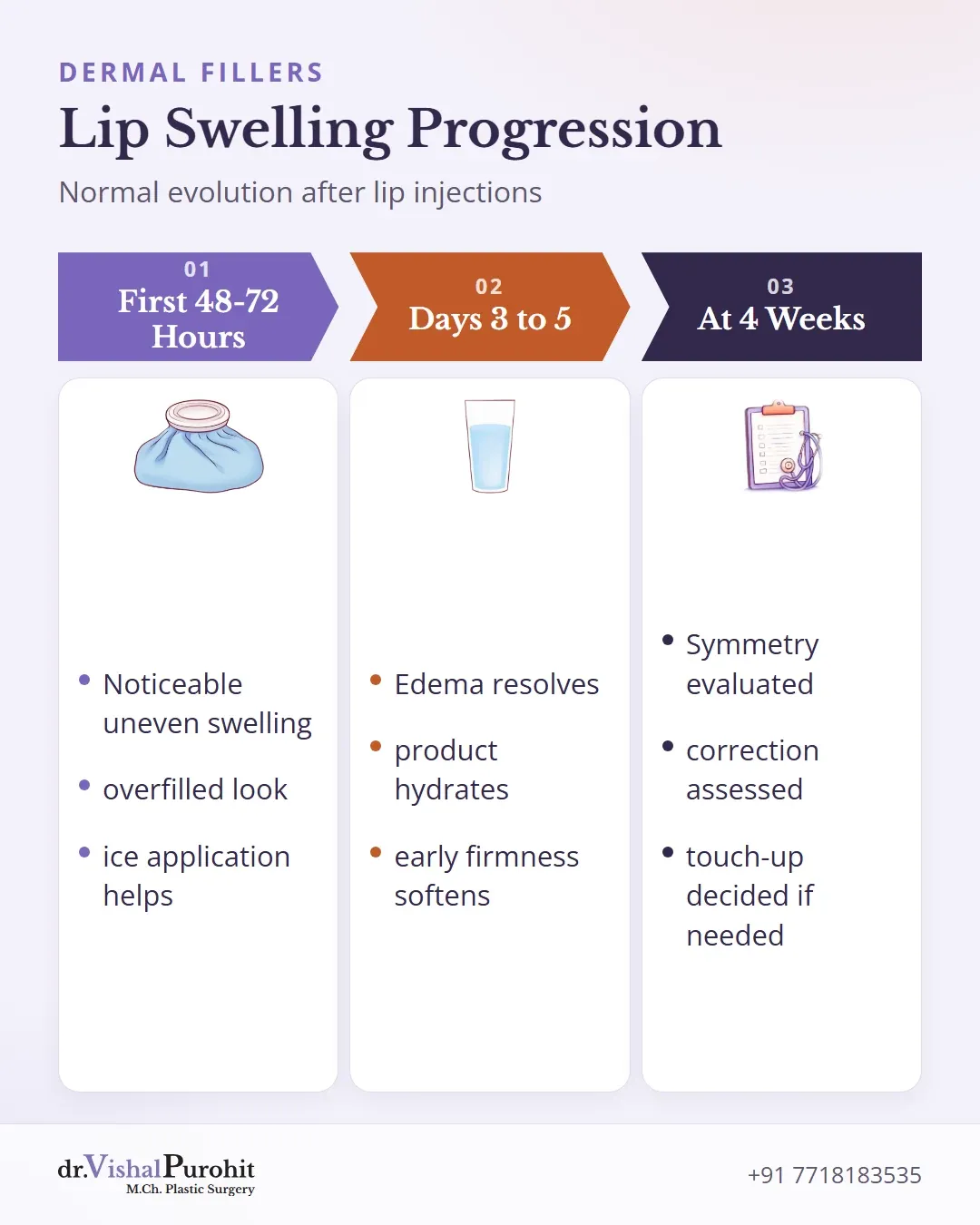
Immediately following dermal filler treatment, lips often appear overfilled and project forward because of post-procedure edema78. The lips possess extensive vascularity and thin mucosa, which can lead to noticeable, uneven swelling within the initial 48 to 72 hours.
Early firmness or minor textural asymmetries frequently soften as post-traumatic edema subsides and the product hydrates. Typical lip edema resolves within 3 to 5 days7. Other common early issues can include bruising, redness, and tenderness7. In published literature, application of ice immediately after the injection helps reduce swelling7.
In general practice, patients are assessed at 4 weeks to evaluate symmetry and adequacy of correction7. At that stage, any persisting mild asymmetry may relate to uneven filler distribution or require additional volume7.
Dr. Purohit’s note: Specific aftercare rules, review visit timing, and follow-up touch-up policies in Dr. Vishal Purohit’s practice are not preset; these aspects are decided at the consultation.
Daily Activities, Exercise, Sleep and Travel
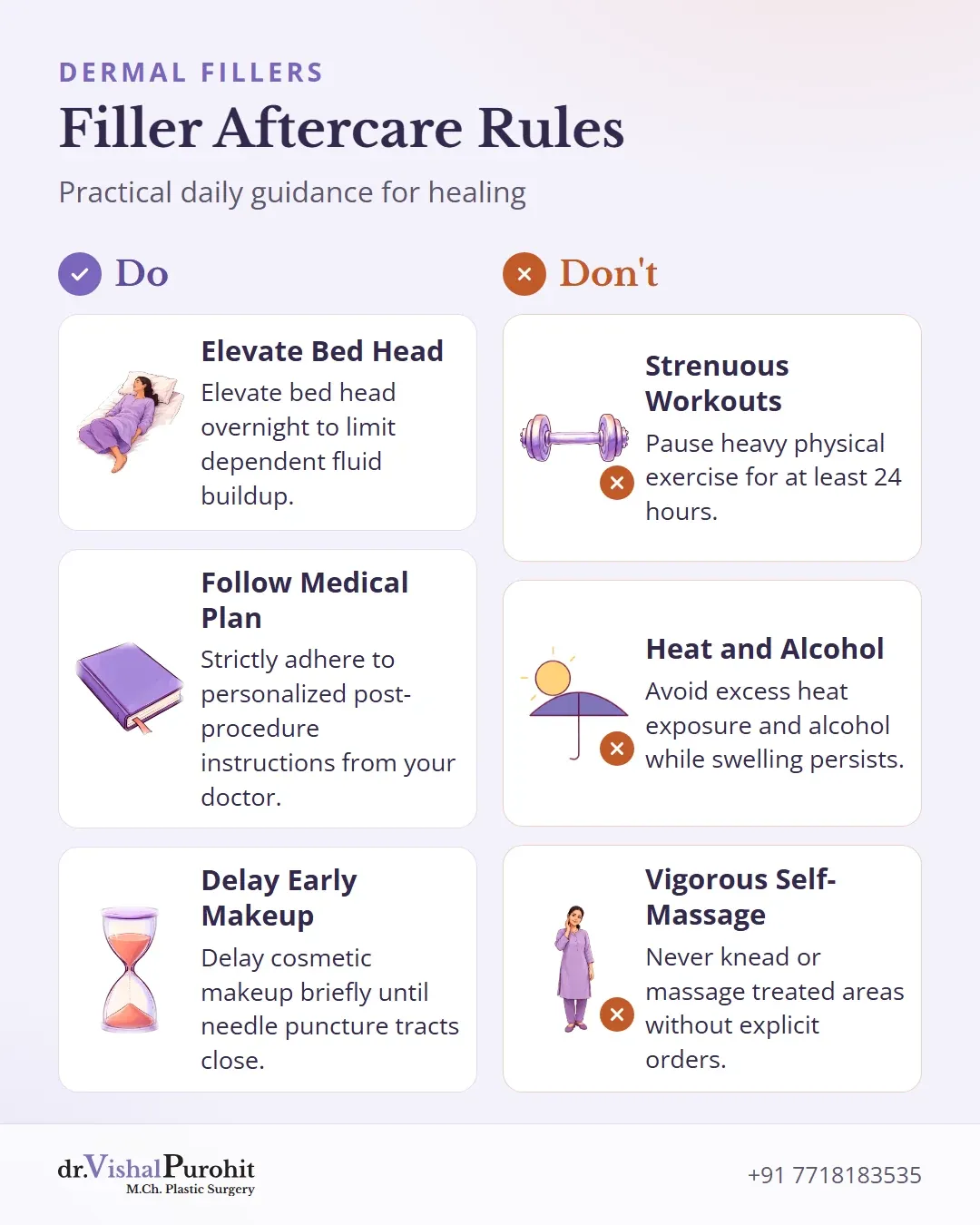
Strenuous physical activity, alcohol consumption, and excess heat exposure can cause local blood vessels to dilate, increasing the likelihood of post-treatment swelling, bruising, or redness91011.
- Avoiding strenuous exercise for the first 24 hours helps limit swelling and bruising911. Some guidelines advise pausing physical exercise, heat exposure, and alcohol until immediate swelling subsides10.
- Elevating the head of the bed on the night following injection provides positional support to reduce dependent fluid buildup and swelling1012.
- Cosmetic makeup may generally be applied within a few hours once puncture sites begin to close, or delayed briefly to keep needle entry tracts clean11.
Adhering to Clinic Instructions and Massage Advice
Patients must strictly follow the bespoke post-procedure instructions issued by their treating medical professional. Clear pre- and post-procedure education helps individuals understand what to expect, outlines possible complications, and identifies activities that could compromise cosmetic results13. Specific aftercare rules in Dr. Vishal Purohit’s practice are decided at the consultation.
Key points
- Follow all customized post-procedure instructions closely to ensure optimal results and avoid complications.
- Never perform vigorous self-massage unless explicitly directed by your treating doctor.
- Have any lumps, unusual reactions, or prolonged swelling evaluated by your injector rather than attempting home management.
Vigorous self-massage should never be attempted unless expressly instructed by the treating doctor. Forceful mechanical manipulation or excessive movement risks displacing the placed filler material laterally14 or irritating tender, healing tissues.
Following clinician guidance also ensures that individuals do not attempt unverified interventions at home. While clinicians may apply targeted massage during specific emergency treatments, such as dispersing hyaluronidase during clinical management15, self-treatment should be avoided. Any unusual localized reaction, lumps, or prolonged swelling should be formally evaluated by the injector16 rather than managed through self-directed pressure or unapproved manipulation. Tailored guidance remains central to a predictable recovery.
Urgent Symptoms Requiring Immediate Medical Help
Expected recovery after dermal filler typically involves mild tenderness, whereas critical vascular complications represent an urgent medical emergency17. While severe vascular complications occur in fewer than 0.3% of procedures17, immediate medical assessment is required if any vascular warning signs appear.
Key points
- Severe vascular complications after dermal fillers are rare but require immediate emergency medical care.
- Critical warning signs include escalating pain, sudden skin whitening, mottled discoloration, and vision changes.
- Prompt medical evaluation is vital to restore tissue blood flow and prevent necrosis.
Critical Warning Signs
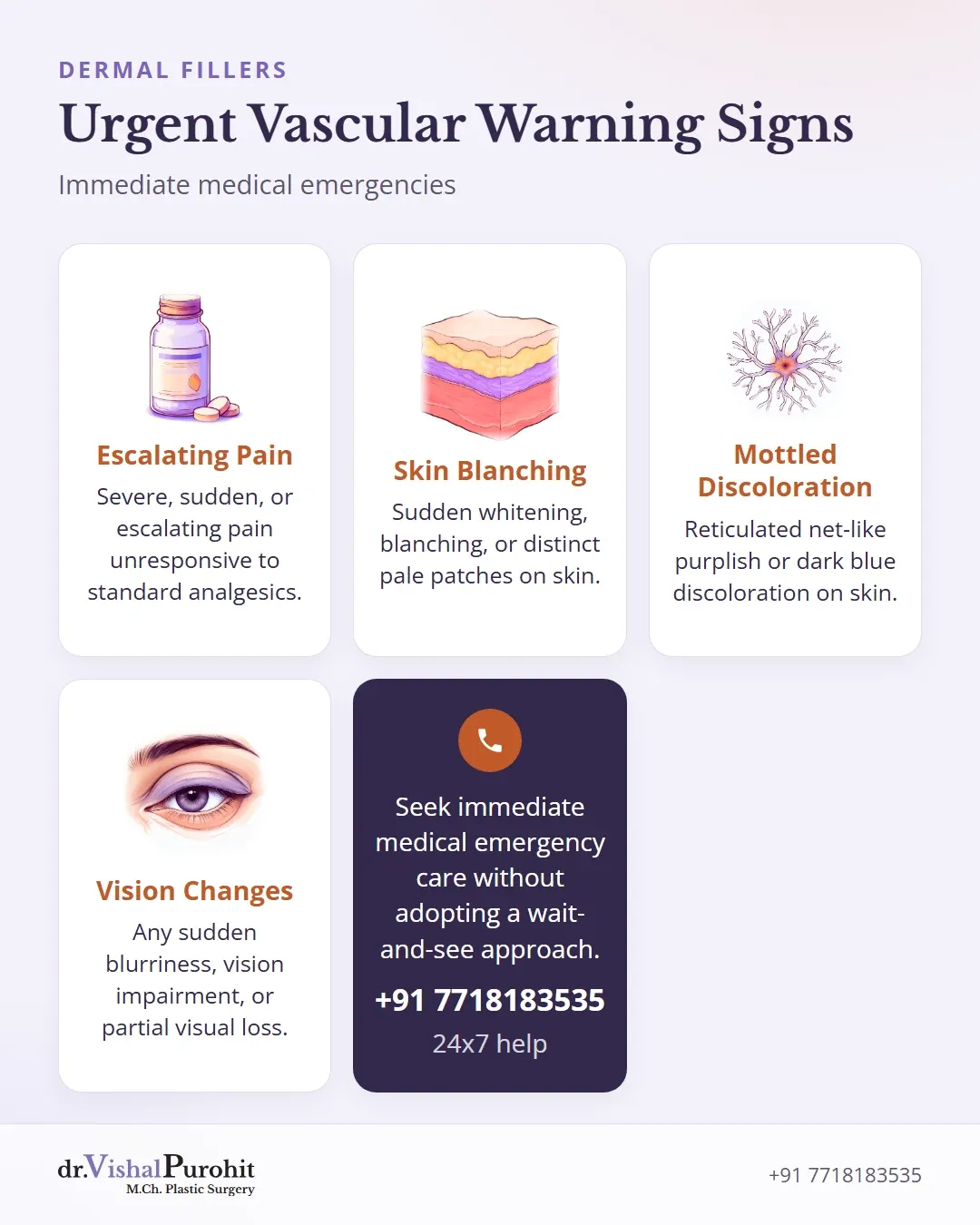
Patients must contact their treating doctor or seek emergency care immediately if they notice:
- Sudden, disproportionate, or escalating pain that fails to respond to standard analgesics1819. Pain may initially be masked if local anaesthetic was present1920.
- Skin colour changes, such as sudden blanching, whitening, or pale patches181921.
- A mottled, reticulated, or net-like purplish or dark blue discoloration (livedo reticularis)192223.
- Any sudden change in vision, blurring, or visual impairment222425.
A wait-and-see approach must never be adopted if these symptoms arise1824. Vascular compromise can lead to progressive tissue ischemia, ulceration, or necrosis17192021. Quick clinical intervention remains essential to restore tissue perfusion2124. Postoperative patients treated by Dr. Purohit receive individual contact instructions for urgent clinical concerns.
Spacing Subsequent Skin and Aesthetic Procedures
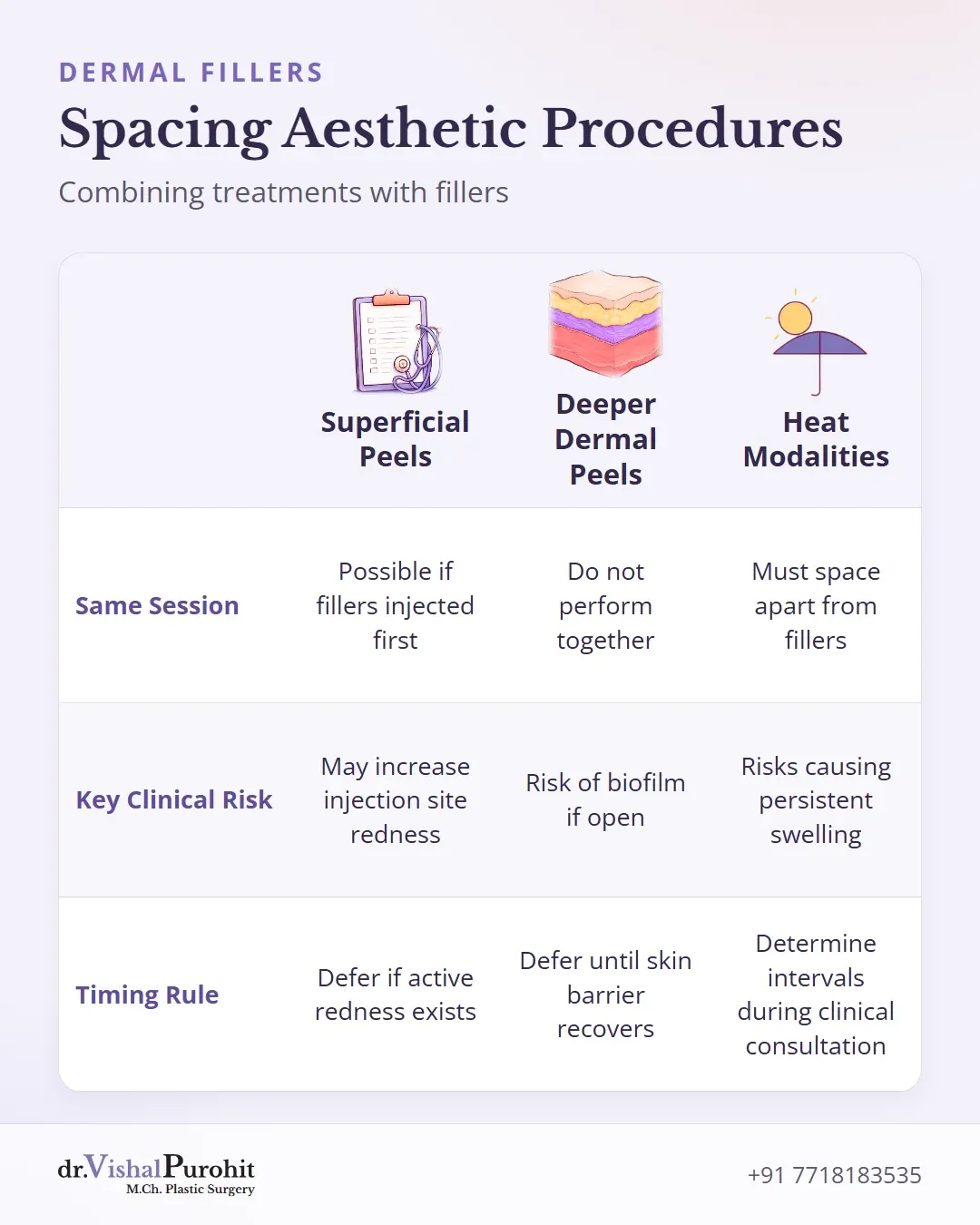
Chemical exfoliations, facials, dermaplaning, and heat-generating skin procedures must be spaced apart from filler sessions to prevent irritation and infection. Allowing adequate healing time ensures both product stability and skin barrier recovery.
In the literature, superficial chemical peels and dermal fillers are sometimes described during the same session if fillers are placed first, though injection site redness may increase26. Conversely, deeper peels that affect the dermis should not be performed in the same session26. Deferring filler injections is recommended when visible exfoliation, redness, or open wounds exist from prior chemical peeling, helping reduce theoretical risks of biofilm formation27. Additionally, energy-based and heat-generating modalities can cause persistent swelling if applied over superficially placed filler28.
Detailed treatment intervals and sequence decisions are determined during formal clinical evaluation with Dr. Vishal Purohit in Jaipur. The clinic offers no laser and no resurfacing treatments.
Clinical Assessment and Filler Aftercare in Jaipur
Careful adherence to clinical instructions supports tissue recovery and limits swelling or bruising following injectable procedures. Individuals considering facial rejuvenation can explore Dermal Fillers in Jaipur to understand available treatment options and consultation processes. For further information on procedural preparation, recovery stages, and clinical safety considerations, consult the comprehensive Dermal Fillers FAQs.
This is educational information, not medical advice.