
Atrophic acne scarring presents in several distinct forms, including deep icepick pits, sharp boxcar depressions, and distensible rolling contours. Because scar tissue behaves differently from uninjured skin, identifying scar architecture determines whether injectable products can provide meaningful elevation.
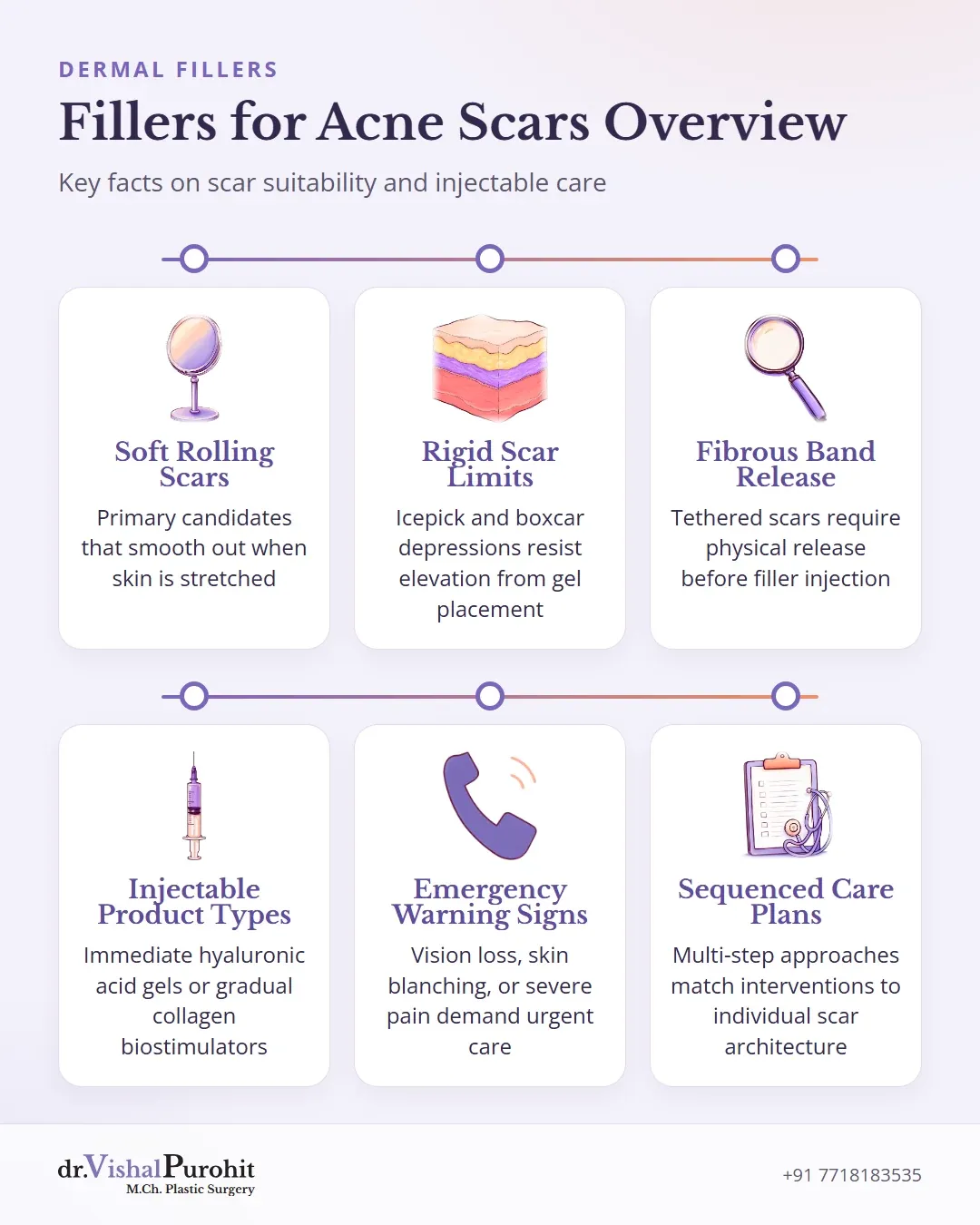
While soft rolling depressions may lift when tissue is stretched, tethered bands and narrow tracts resist soft-tissue expansion. Exploring the Types of Dermal Fillers: HA, Stimulators and Permanent Fillers helps clarify how absorbable gels and collagen stimulators function when addressing depressed contours.
Scar-Type Distinctions and Assessment
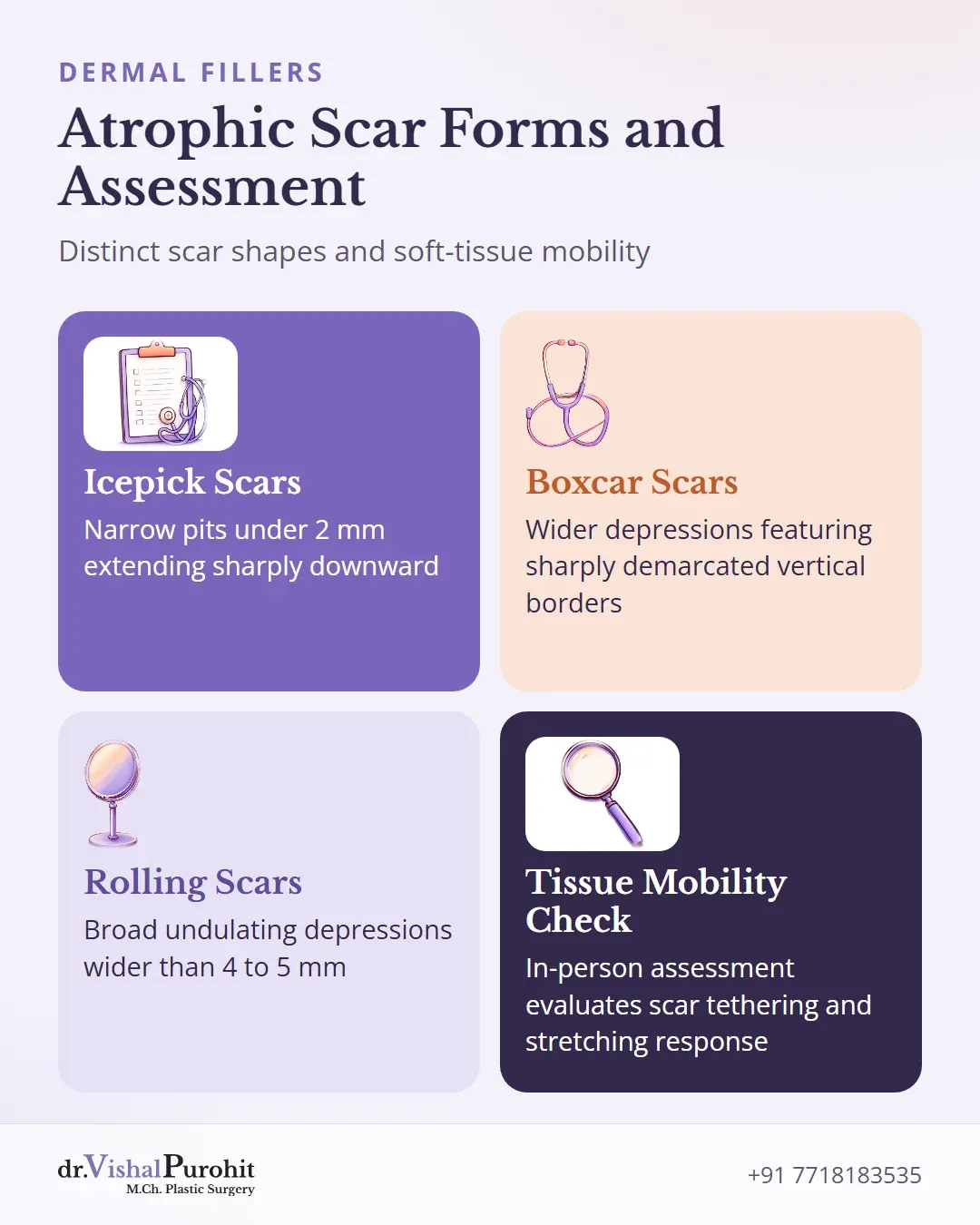
Atrophic acne scars are broadly divided into three main morphological categories12:
- Icepick scars: Narrow, deep depressions measuring less than 2 mm across that extend sharply downward into the skin12.
- Boxcar scars: Wider depressions featuring sharply demarcated, vertical borders12.
- Rolling scars: Broad, undulating depressions, typically wider than 4 to 5 mm, that create a shadowed surface pattern123.
Dermal fillers are primarily considered for soft rolling scars that smooth out when the surrounding tissue is gently stretched134. In contrast, deep icepick tracts and sharply stepped boxcar scars do not level out with soft-tissue elevation alone12.
Dr. Purohit’s note: At his practice in Jaipur, Dr. Vishal Purohit assesses scar tethering and tissue mobility during an in-person consultation to determine if soft-tissue filling offers a suitable option. Whether acne-scar filler is appropriate for an individual patient is decided at the consultation.
Why Some Scars Need Other Methods
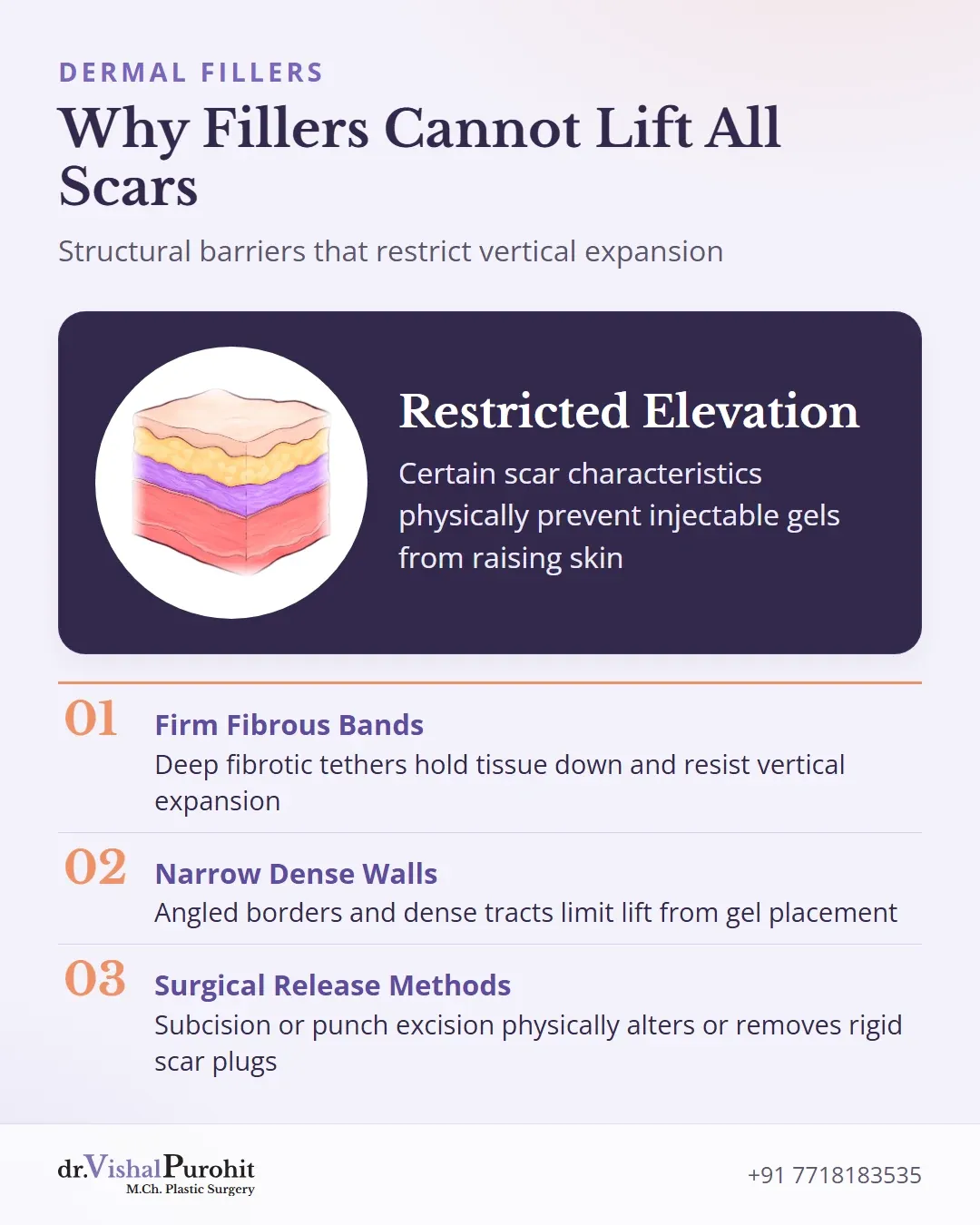
Injecting filler directly beneath an acne scar is not always sufficient to elevate the depression. Certain scar characteristics physically prevent injectable gels from raising the skin:
Key points
- Deep fibrous bands and narrow scar walls can physically prevent filler gel from lifting depressed skin.
- Tethered rolling scars or deep pits often need surgical alteration or subcision before filler can provide optimal elevation.
- Alternative surgical scar procedures are evaluated individually during consultation.
- Firm fibrous bands: Rolling scars often possess deep fibrotic tethers bound to underlying tissues that hold the skin down, resisting vertical expansion from soft tissue filler alone56.
- Narrow architecture: Deep, narrow pits like icepick scars and steep boxcar scars have angled borders and dense walls that limit lift from direct gel placement57.
In the literature, tethered or deep scars are described as requiring physical release or surgical alteration to make them distensible before soft tissue filler can provide optimal correction5. For icepick scars and deep boxcar defects, surgical punch excision or punch elevation is used to physically remove or elevate the scar plug89. Subcision is similarly described to release rigid fibrous strands under rolling scars567.
In his practice in Jaipur, Dr. Vishal Purohit does not offer any laser treatments or skin resurfacing. Any surgical release or alternative scar procedure is assessed and decided at the consultation.
Temporary Versus Longer-Lasting Products
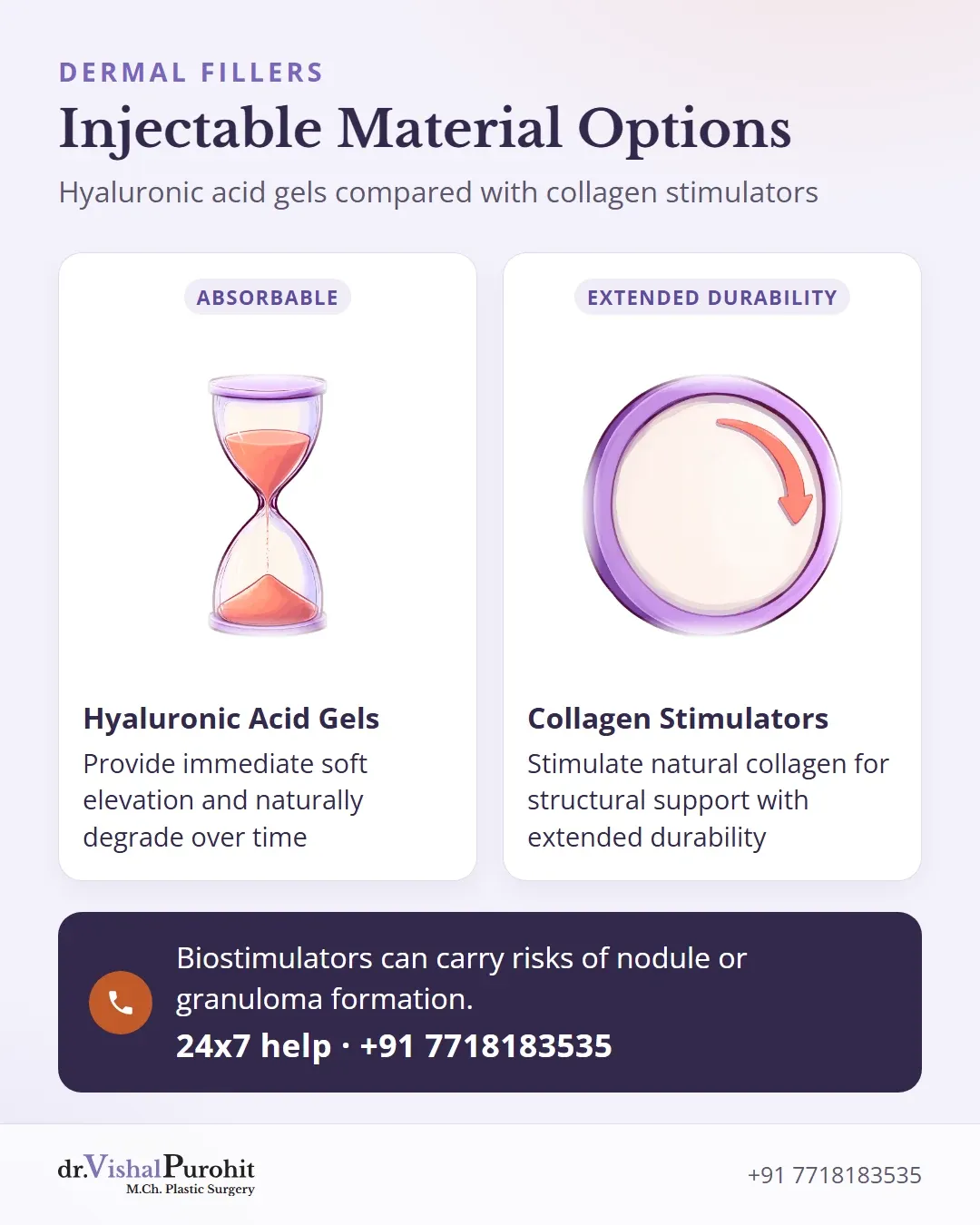
Injectable options for atrophic acne scars differ in how they interact with tissue and how long their effects persist101112.
Hyaluronic Acid Gels
Hyaluronic acid fillers provide immediate soft elevation to lift depressed scars and soften surface shadows1314. These absorbable products degrade over time10. Because some formulations can cause a bluish discoloration if placed too close to the surface, they are selected for deeper placement to elevate the tissue1314.
Collagen Stimulators
Biostimulators—such as calcium hydroxylapatite and poly-L-lactic acid—work differently from traditional gels11. Rather than simply filling a void, they encourage gradual structural support by stimulating the body’s natural production of collagen and elastin11. These longer-lasting agents offer extended durability12, though they can carry risks of nodule or granuloma formation15.
Selecting an Appropriate Material
The choice of product depends on several clinical factors:
Hyaluronic Acid Gels
Collagen Stimulators
Dr. Vishal Purohit evaluates scar depth and individual tissue requirements in person. Whether an absorbable gel, a collagen stimulator, or another approach is appropriate is decided at the consultation.
Limits and Procedural Risks
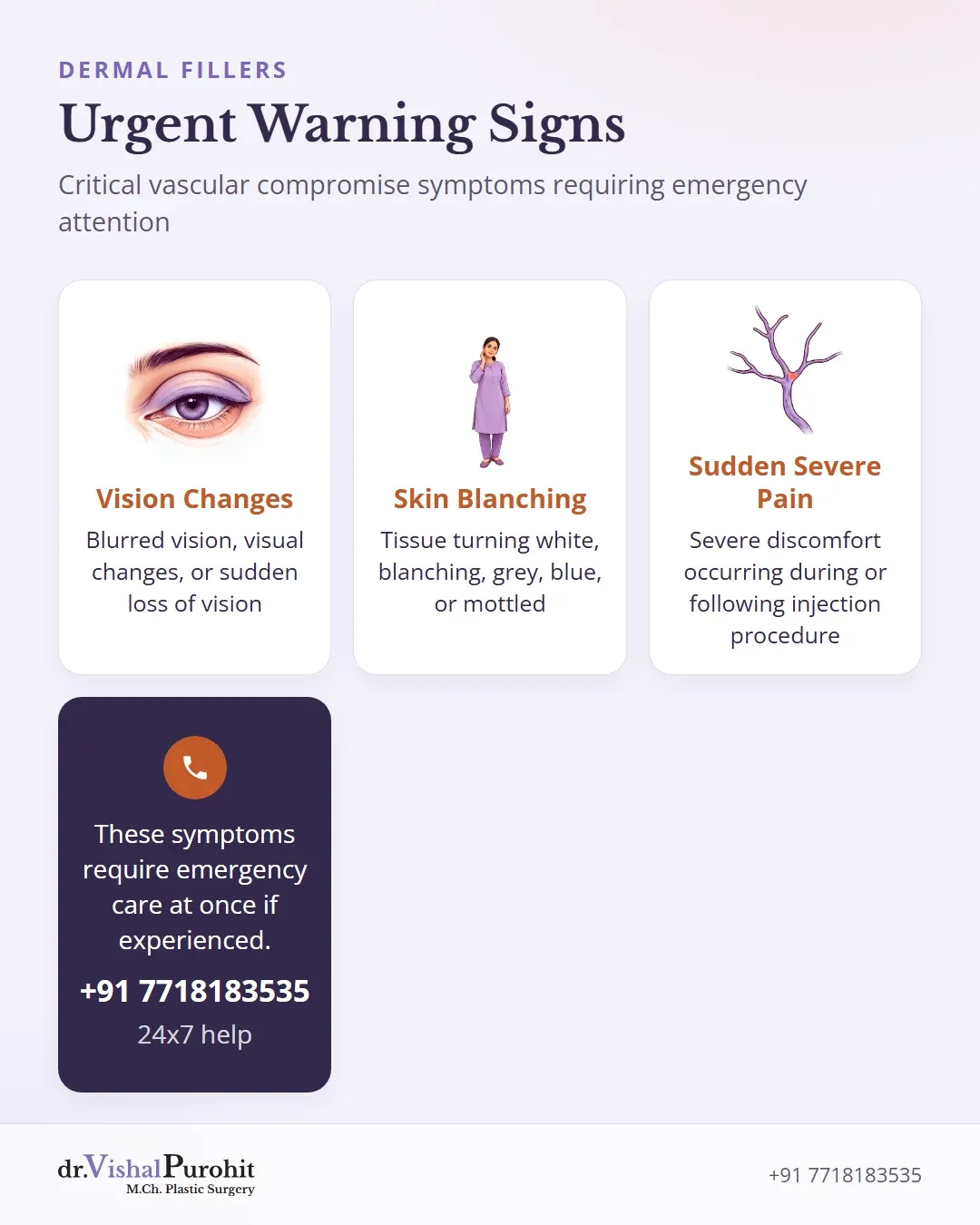
Treating scar tissue with dermal fillers carries distinct technical challenges and risks. When filler is placed beneath or within scar tissue, it can lead to visible lumps, contour irregularities, or skin irregularities1819. There is also an inherent danger of vascular compromise or occlusion if filler enters or compresses a blood vessel18202122.
Urgent Warning Signs
Vascular complications can result in tissue damage or vision loss182122. The following symptoms require emergency care at once:
- Vision change, blurred vision, or loss of vision182122
- Skin turning white, blanching, grey, blue, or mottled18212223
- Sudden severe pain during or following the procedure1821
Injectable treatments are medical interventions that carry genuine risks. Choosing no treatment is always a valid option, and an individual should never feel pressured to undergo cosmetic procedures. For anyone considering treatment, assessment by an M.Ch. plastic surgeon helps ensure safety and realistic expectations.
Comprehensive Scar Care Planning
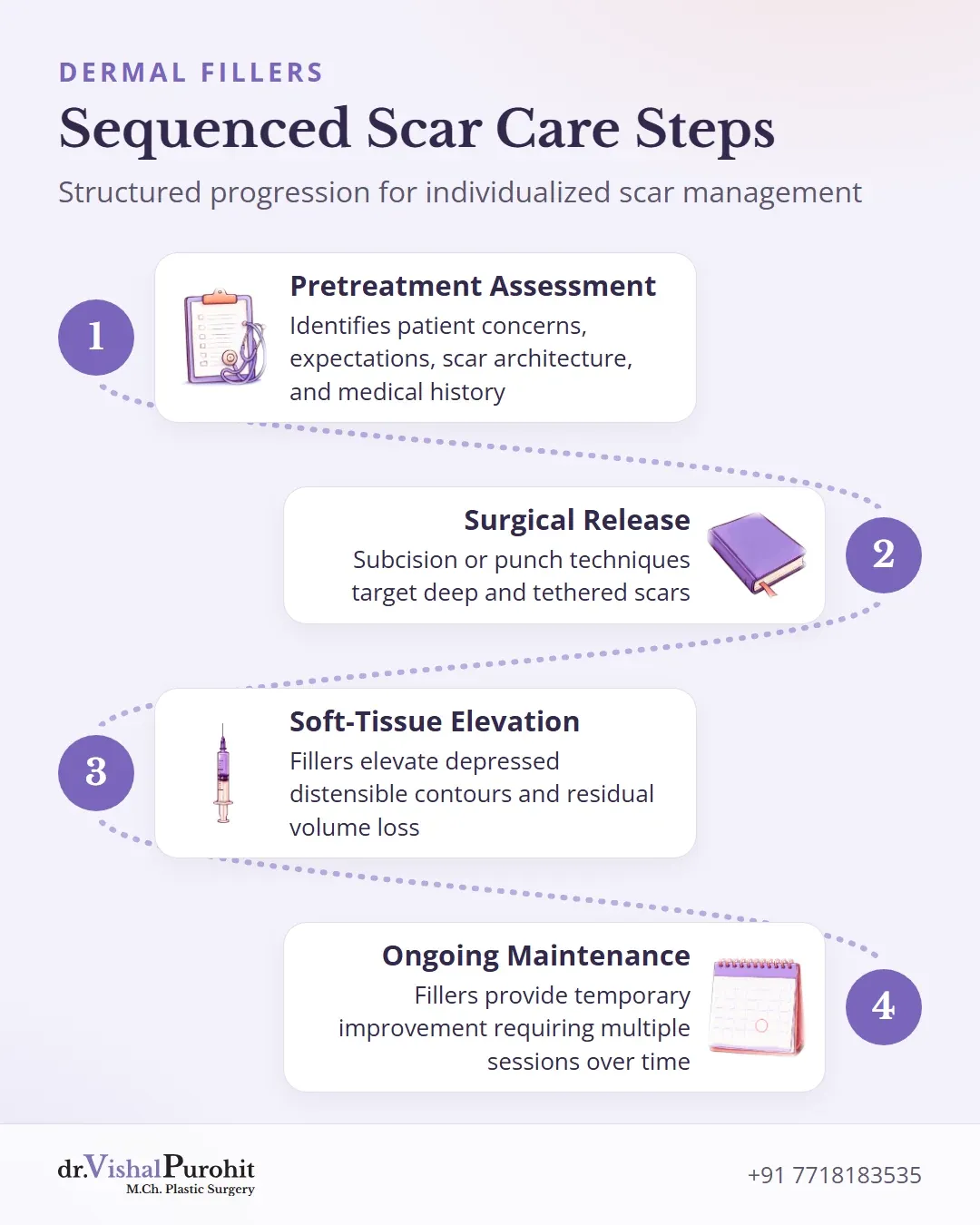
Acne scarring involves diverse scar shapes and depths that a single procedure cannot fully address24. A sequenced, multi-step plan is often used to match interventions to individual tissue characteristics24.
Assessment and Staging
The medical literature outlines structured approaches to planning scar revision:
- Pretreatment assessment identifies patient concerns, expectations, scar appearance, and relevant medical history before starting care25.
- Surgical techniques such as subcision, punch methods, or excision target deep and tethered scars2426.
- Dermal fillers may be used to elevate depressed, distensible contours or residual volume loss2426.
- Fillers provide temporary improvement, and multiple sessions may be required over time27.
Whether dermal filler is offered for acne scars, or combined with other modalities in a multi-step sequence, is not a fixed protocol. Dr. Vishal Purohit assesses suitability, scar structure, and sequence options individually, and this is decided at the consultation. Patients can discuss their goals and treatment expectations during an in-person clinical evaluation.
Clinical Evaluation for Scar Care in Jaipur
Planning effective scar management requires matching specific clinical techniques to individual scar architecture. Depressed, distensible contours may benefit from soft-tissue elevation, whereas rigid or narrow depressions often need surgical release. To explore treatment suitability, tissue mobility, and realistic expectations, patients can learn about Dermal Fillers in Jaipur and review common queries through Dermal Fillers FAQs before attending an in-person clinical consultation.
This is educational information, not medical advice.