
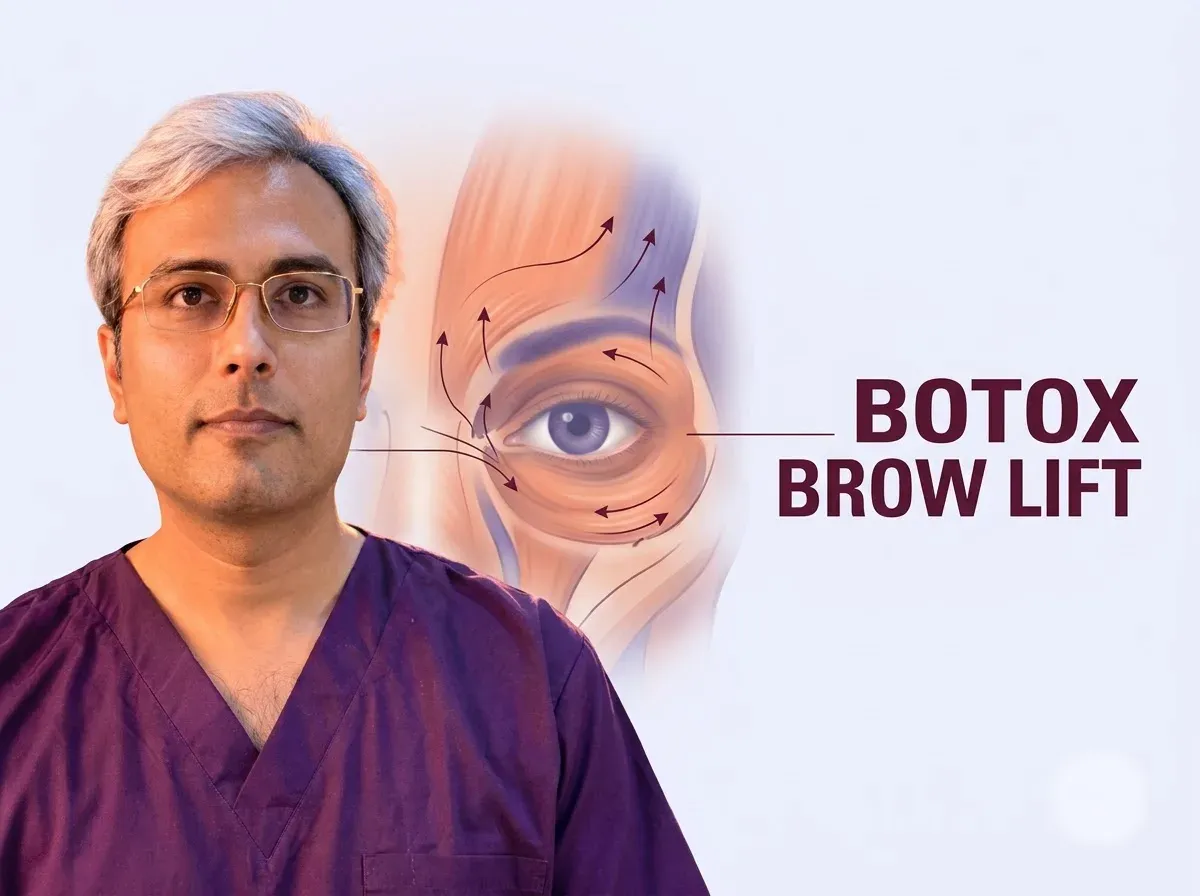

What a Botox Brow Lift Can and Cannot Change
A chemical brow lift is a non-surgical injection treatment using botulinum toxin type A to adjust dynamic muscle pull in the upper face. It provides subtle, millimeter-level contour refinement for adults seeking minor shaping. Individual anatomy determines whether this approach suits personal goals, and choosing no treatment is always a valid option.
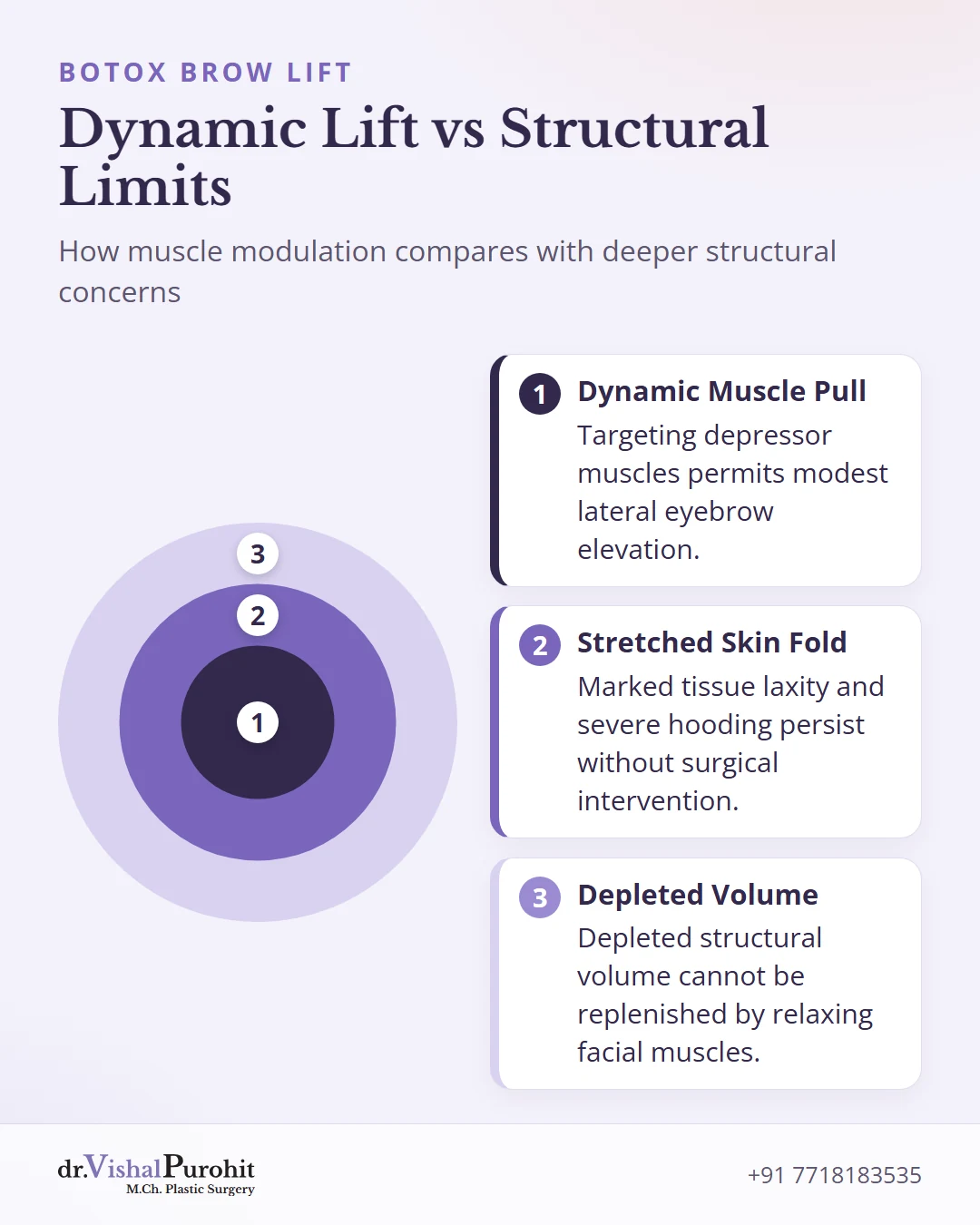
Evaluating realistic eyebrow shape and subtle lift involves understanding dynamic muscular balance. Injections temporarily relax targeted brow depressors, allowing the unopposed frontalis muscle to gently elevate parts of the eyebrow. However, studies report that neuromodulators cannot contract stretched skin, remove redundant tissue, or restore depleted structural fat and bone around the orbital rim.
When considering surgical intervention versus dynamic modulation, reviewing brow surgery versus blepharoplasty and Botox clarifies anatomical boundaries. While botulinum toxin softens muscle pull without incisions, structural descent requires operative techniques. Surgical procedures reposition descended tissues or excise overhanging eyelid folds, which non-surgical injections cannot accomplish.
Anatomical evaluation balances dynamic muscle tone against structural laxity:
- Targeting depressor muscles permits modest lateral eyebrow elevation.
- Marked tissue laxity and severe hooding persist without surgical intervention.
- Depleted structural volume cannot be replenished by relaxing facial muscles.
Checking Hooded Eyes and Eyelid Ptosis Before Injections
Looking in the mirror, heavy-looking eyes can stem from different anatomical origins rather than a single concern. A clinical evaluation identifies the exact structure before considering non-surgical botulinum toxin type A treatment, ensuring an appropriate conversation takes place.
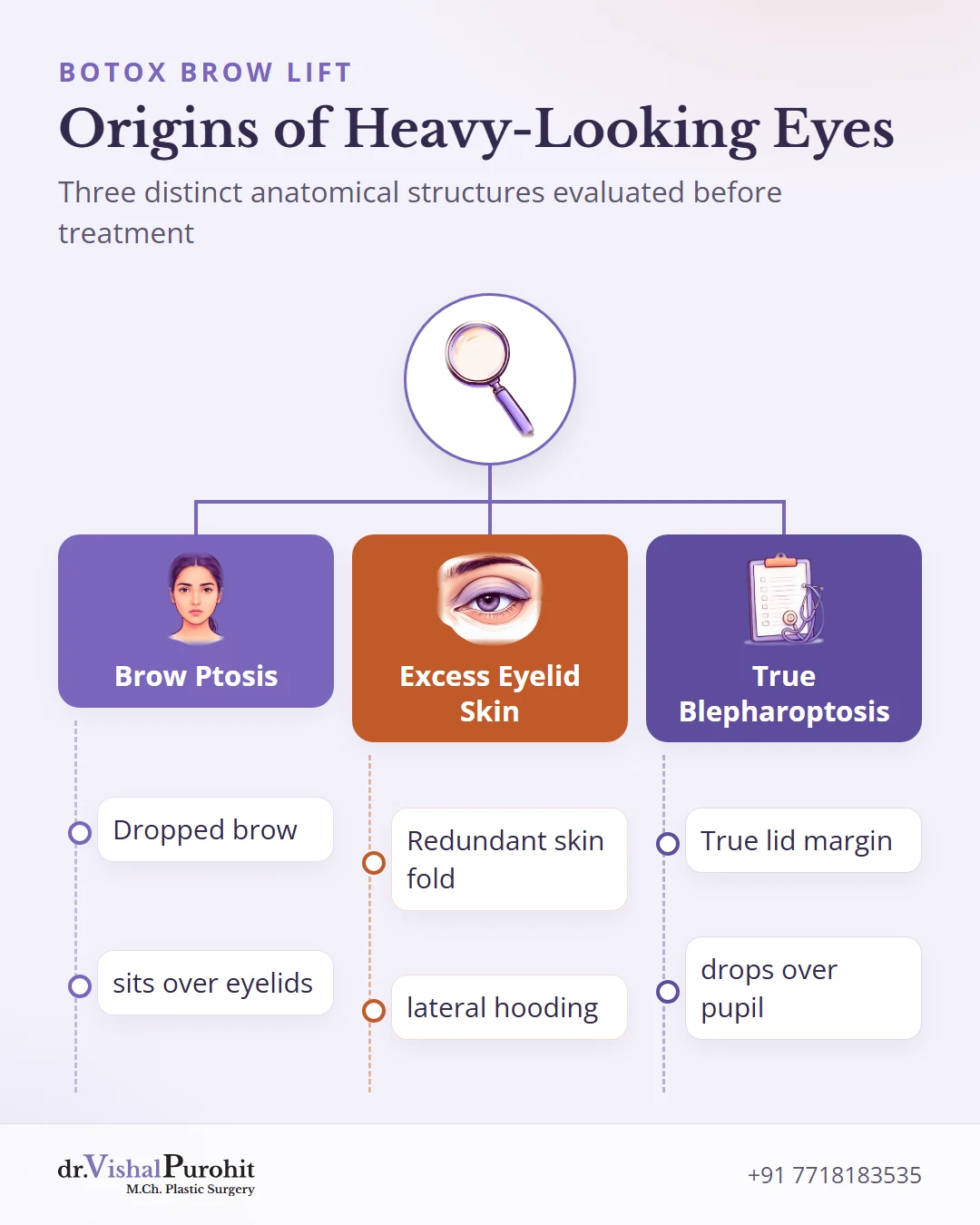
An examination separates three distinct structures:
- The bony position of the eyebrow, where brow ptosis describes a dropped brow sitting over eyelids.
- The upper eyelid skin fold, where redundant skin can create dermatochalasis or lateral hooding.
- The true lid margin, which drops over the pupil in true blepharoptosis when the main lifting muscle is weak.
When evaluating whether heavy lids come from the brow, the skin or the eyelid itself, clinicians review whether descending brow tissue mimics extra eyelid skin or if involuntary frontalis muscle activity is masking an underlying eyelid droop.
Advanced skin laxity or ptosis may cause visual field impairment and reading difficulty, requiring formal visual-field testing. Whether to pursue non-surgical treatment, seek further assessment, or choose no treatment is evaluated during the consultation.
Before Treatment: Eye History and Medical Assessment
A chemical brow lift uses botulinum toxin type A to adjust eyebrow position slightly without surgery. Before planning any treatment, a plastic surgeon conducts a detailed medical assessment to evaluate baseline facial anatomy and protect patient safety.
Evaluating previous eyelid surgery, prior toxin responses, and baseline ocular surface symptoms like dry eye helps minimize functional complications. Patients can review the medical assessment of eye history and medicines for a botox brow lift to learn how underlying muscle dynamics are examined.
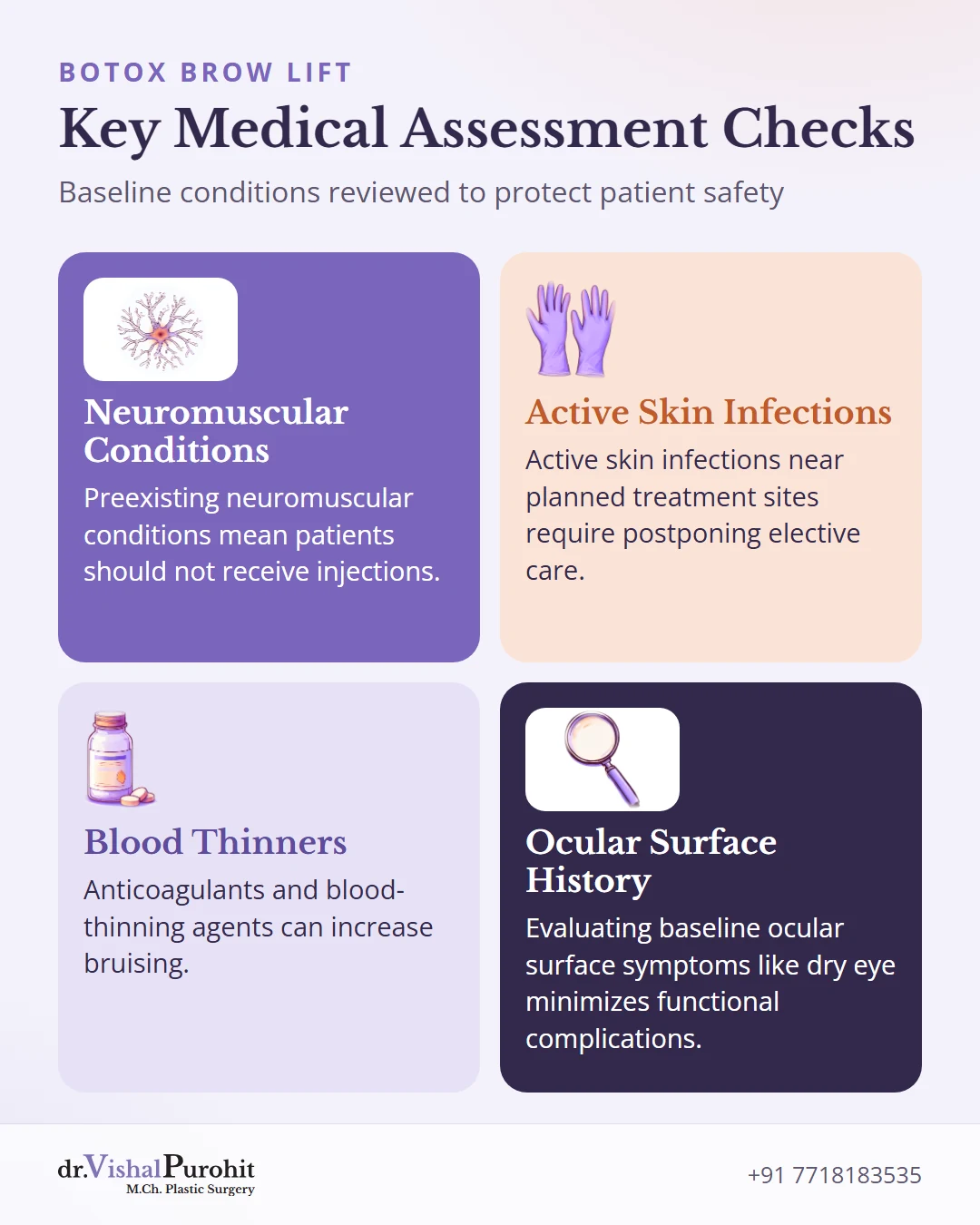
Preexisting health conditions and current prescriptions are also thoroughly assessed before any procedure:
- Preexisting neuromuscular conditions such as myasthenia gravis, Lambert-Eaton syndrome, or amyotrophic lateral sclerosis mean patients should not receive injections.
- Active skin infections near planned treatment sites require postponing elective care until the skin completely heals.
- Anticoagulants and blood-thinning agents can increase bruising, while certain antibiotics like aminoglycosides can potentiate muscle weakness.
Clinical photographs are retained strictly for treatment records and are never shown publicly. Any medication adjustments or procedural plans are decided at the consultation.
After Treatment: Recovery and Warning Signs to Watch For
Understanding recovery helps individuals monitor their healing after a chemical brow lift. Aftercare instructions, expected onset, and review timing are explained at the consultation. Direct observation ensures any unusual changes receive prompt medical attention.
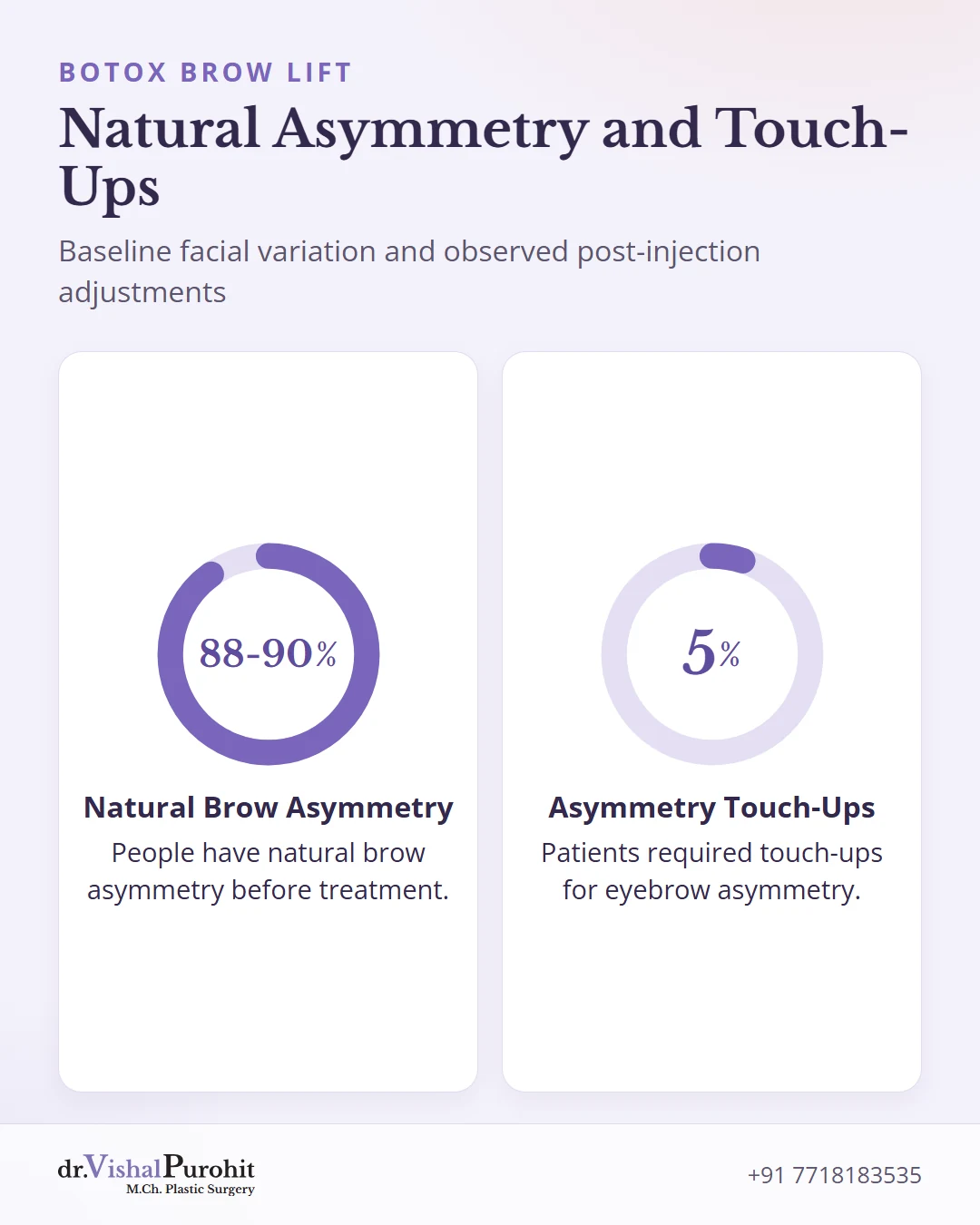
Mild asymmetry can happen after injections. Studies report that over 88% to approximately 90% of people have natural brow asymmetry before treatment. When evaluating heavy uneven brows or eyelid ptosis after a brow lift, doctors separate brow descent from true lid drooping. Studies note that 5% of patients required touch-ups for eyebrow asymmetry.
Injections near the eye can occasionally alter normal blinking. When relaxing the orbicularis oculi muscle reduces eyelid closure, incomplete coverage exposes the ocular surface to environmental drying. Patients noticing dry eye or vision changes after treatment should contact the doctor promptly for evaluation and possible referral to an ophthalmologist to protect the cornea.
Certain symptoms require immediate emergency medical care rather than watchful waiting:
- Difficulty breathing or shortness of breath
- Difficulty swallowing
- Difficulty speaking, slurred speech, or hoarseness
- Generalized muscle weakness or profound fatigue
Botox Brow Lift Results, Review and Wearing Off
A chemical brow lift subtly changes dynamic muscle balance to elevate the eyebrow. Because visible changes occur gradually rather than immediately, planning appointments and setting realistic expectations help individuals follow their progress comfortably.
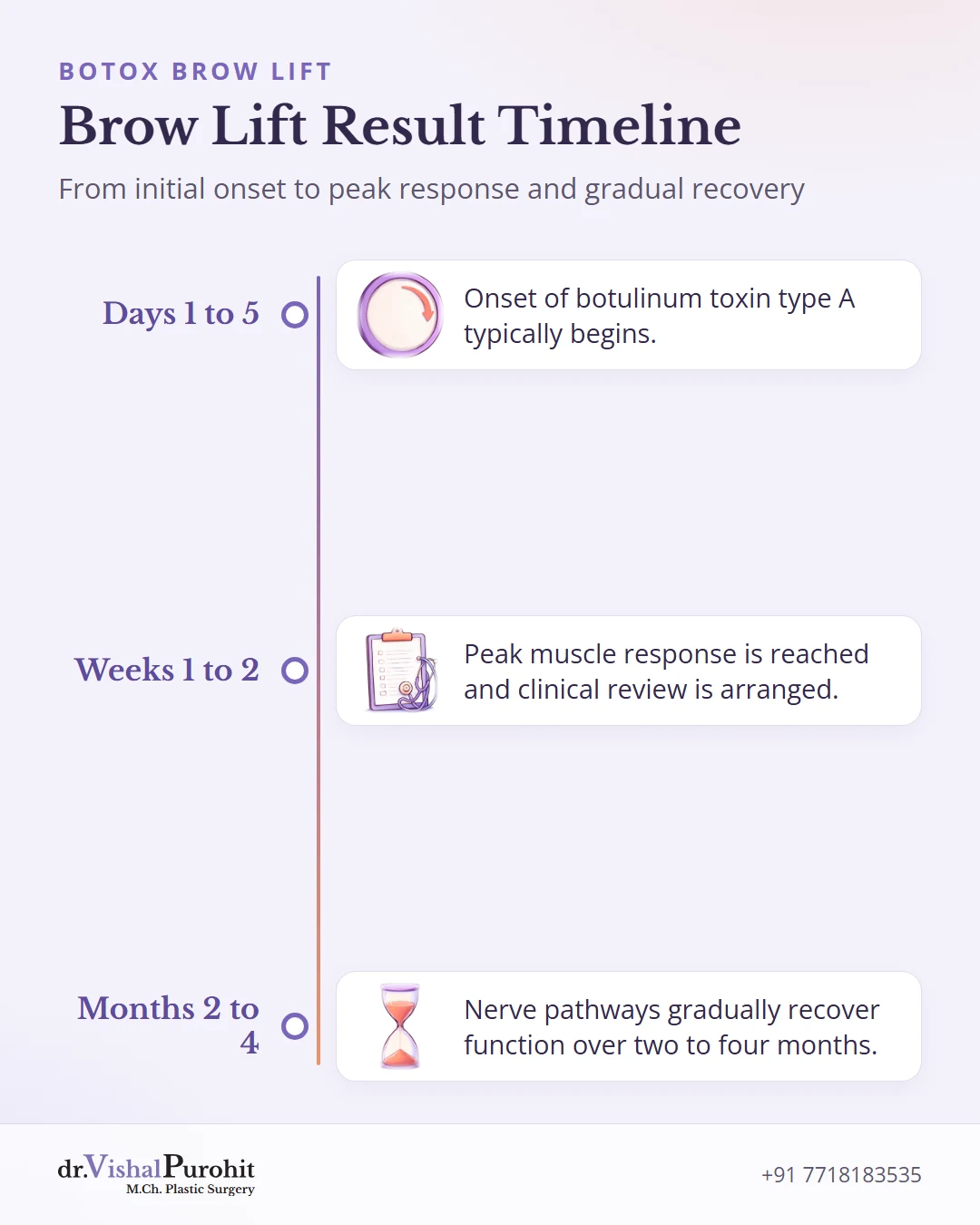
Studies report that the onset of botulinum toxin type A typically begins within 1 to 3 days or 3 to 5 days, reaching peak muscle response at 1 to 2 weeks or 4 to 6 weeks. When coordinating treatments before significant personal commitments or celebrations, reading about scheduling daily routines and social events after brow injections helps allow necessary time for minor swelling or bruising to resolve.
Literature recommends arranging a clinical review two weeks after treatment, when relaxing effects are stable, using standardized photographs taken under consistent lighting to assess eyebrow position. Understanding the process of judging eyebrow lift results and natural muscle recovery explains why dynamic brow elevation differs from wrinkle smoothing and how nerve pathways gradually recover function over two to four months.
In Dr. Purohit's practice, clinical photographs are kept strictly for treatment records and are never shown publicly. His specific product, numbing, aftercare rules, review visit timings, and duration are explained at the consultation.
Botox Brow Lift Cost in Jaipur: Products and Consent

The total fee for a chemical brow lift, what the treatment includes, review visits, and any top-up policy are not fixed in advance. Dr. Vishal Purohit explains every cost detail directly during the consultation, ensuring patients understand the plan before deciding whether to proceed.
Different botulinum toxin products are available, and their clinical doses are not interchangeable. During the consultation, patients can ask which specific product is selected and what its official label covers.