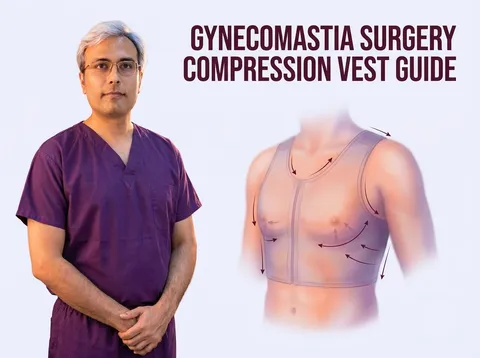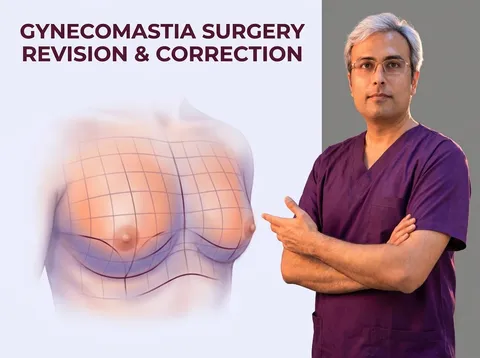
If you are struggling with the appearance of your chest, the first and most important step is to get a clear, medical diagnosis. In Dr. Vishal Purohit’s practice, diagnosis begins with clinical examination and direct palpation first, followed by ultrasound or MRI when imaging is needed, and hormone blood tests only when there are other symptoms of hormonal imbalance. Many men feel self-conscious about this condition, but it is crucial to know that “man boobs” are a recognised medical issue, not a personal failing.
While understanding the causes is vital, many men whose glandular tissue persists ultimately consider surgical correction. Dr Vishal Purohit specialises in Gynecomastia Surgery in Jaipur, aimed at restoring a flatter, more masculine chest contour. In this guide, we will break down exactly what this condition is, why it occurs, and how to distinguish it from simple weight gain.
Gynecomastia is the most common condition affecting the male breast. It is a benign (non-cancerous) growth of glandular and supporting tissue1, and it typically looks and feels like a button-sized growth underneath the nipple2. In Dr. Vishal Purohit’s practice, gynecomastia is never a hard lump; a hard lump suggests another condition such as carcinoma or a tense cyst and needs immediate MRI or ultrasound and referral to an oncologist.
Key point: gynecomastia is a medical condition, usually driven by a shift in hormone balance. Some causes, such as puberty, are a natural phase; others, such as certain medicines, anabolic steroids or an underlying illness, can be looked for and addressed. Referral to an endocrinologist is made only when gynecomastia develops suddenly, well after puberty is complete, or when there are other symptoms of hormonal imbalance. Finding the cause comes first.
“Everyone deserves to feel good and confident about their body.” — Dr. Vishal Purohit
What Is Gynecomastia? (The Medical Definition)
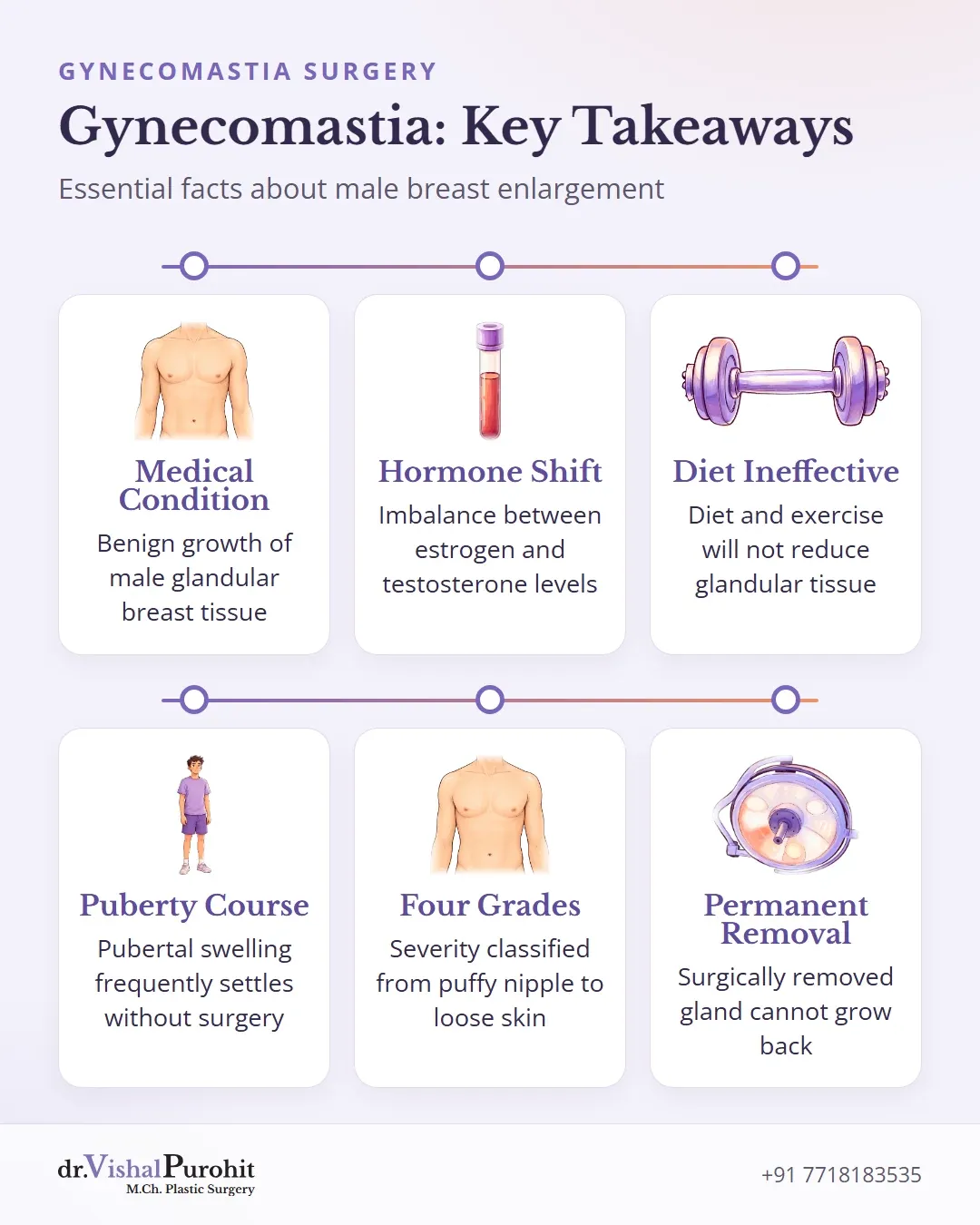
Gynecomastia (often colloquially called “man boobs”) is the enlargement of male breast tissue3.
What most people don’t know is that both men and women have breast glands; in men they are usually not noticeable3.
Men make mostly testosterone but also some estrogen. Estrogen makes breast tissue grow, while testosterone holds that growth back, so when the balance tips toward estrogen, the glandular tissue can enlarge3.
True Gynecomastia vs. Pseudo-Gynecomastia
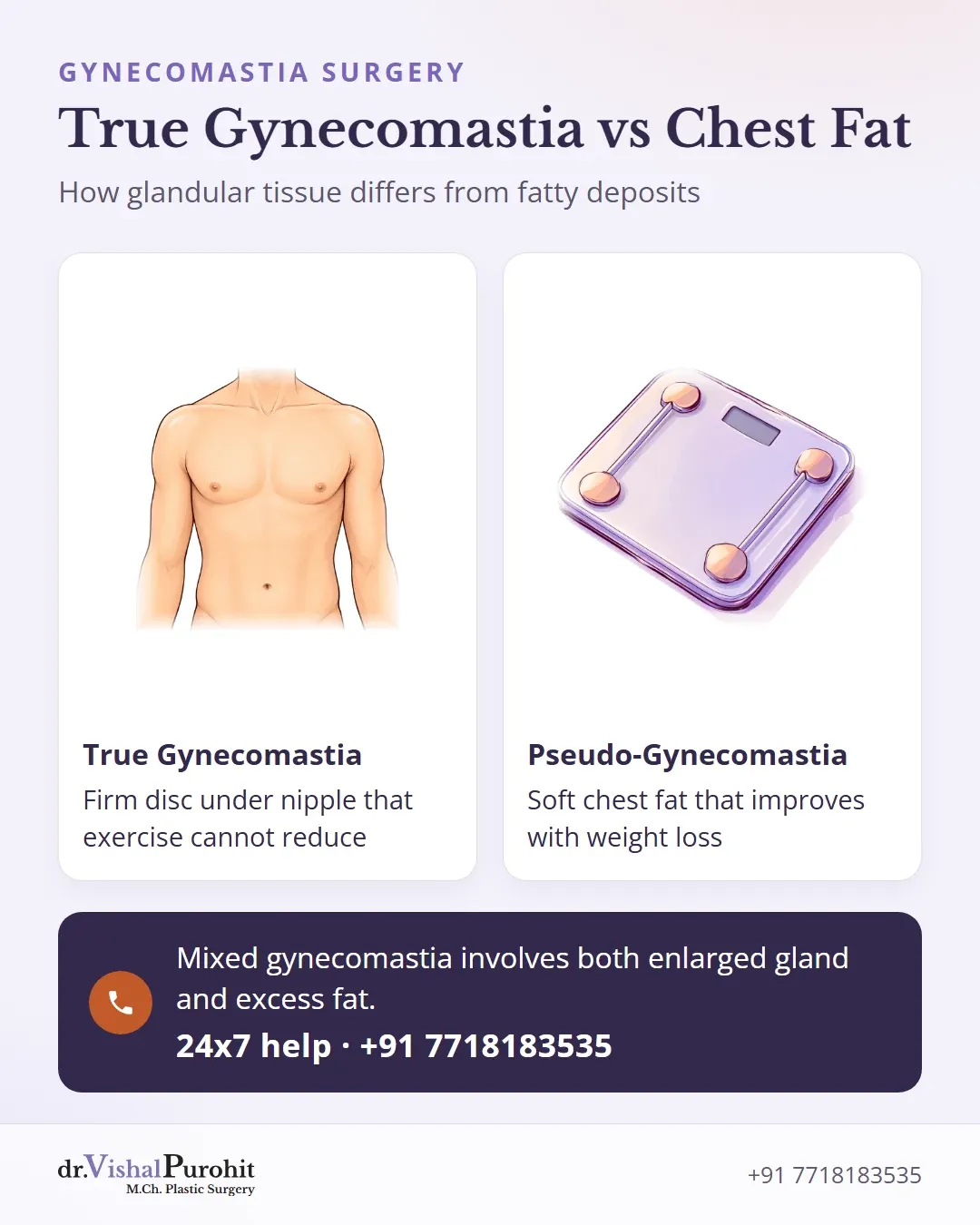
It is vital to distinguish between conditions that can look very similar4:
True Gynecomastia
This involves the growth of glandular tissue, felt as a firm, button-like disc under the nipple that may be tender2. Exercising or losing weight will not reduce this breast tissue3.
Pseudo-Gynecomastia
This is caused by fat deposits without glandular growth and accounts for most breast enlargement in men with obesity. It looks like a general increase in chest size rather than a lump2, and a weight-loss and exercise programme is the first-line treatment4. Dr. Vishal Purohit does not operate on obese and massively obese men because the surgical risk is too high and skin may sag after subsequent weight loss, requiring further correction; the target BMI is within the normal range, though slightly overweight men may also benefit from surgery without waiting.
Mixed Gynecomastia
Both enlarged gland and excess fat are present4.
Do you need surgery?
Not always. Pubertal gynecomastia often settles on its own, and when a medicine or an illness is responsible, the first step is to treat the illness or stop the contributing drug5.
Dr. Purohit’s note: Dr. Vishal Purohit does not prescribe medicines for gynecomastia, as pubertal gynecomastia does not require medication and once the gland is surgically removed it cannot grow back. Furthermore, in his practice, surgery in teenagers is considered only at least 2 years after puberty is complete.
Surgery is generally recommended when gynecomastia has persisted for longer than 12 months and has not resolved on its own or with medical treatment4. If you are assessing whether a procedure is right for you, several factors determine your candidacy and eligibility for surgery.
Simon Classification vs. Rohrich Grading System
The two grading systems cited most often are those of Simon and Rohrich6. Simon (1973) grades the chest by size and loose skin7; Rohrich grades it by the estimated weight of tissue and the degree of droop (ptosis)8.
The rows below sit side by side for comparison; they are not exact equivalents.
| Simon grade7 | What it means | Rohrich grade8 | What it means |
|---|---|---|---|
| Grade I | Minor enlargement, no excess skin | Grade I | Minimal hypertrophy (under 250 g), no ptosis |
| Grade IIa | Moderate enlargement, no excess skin | Grade II | Moderate hypertrophy (250–500 g), no ptosis |
| Grade IIb | Moderate enlargement with minor excess skin | Grade III | Severe hypertrophy (over 500 g) with grade I ptosis |
| Grade III | Marked enlargement with excess skin, resembling a drooping female breast | Grade IV | Severe hypertrophy with grade II or III ptosis |
Why Does It Occur? The Root Causes
When seeking treatment, understanding what causes gynecomastia is the first step.
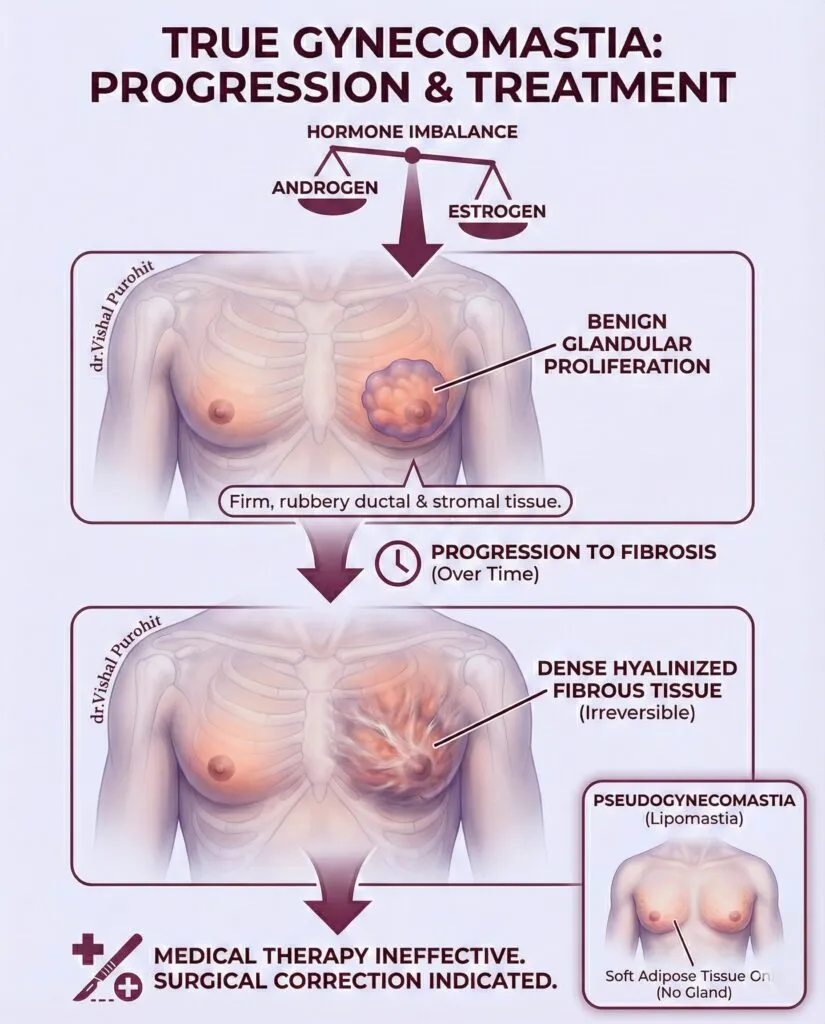
Dr. Vishal Purohit explains how true gynecomastia can progress from active glandular growth to fibrosis: pubertal gynecomastia does not need medication, and once the gland is removed surgically it cannot grow back9; gynecomastia that persists and becomes fibrous is usually corrected surgically4.
The Core Mechanism: Hormonal Imbalance
The underlying mechanism of true gynecomastia is an imbalance between estrogens (female hormones) and androgens (male hormones) such as testosterone3.
While men primarily produce testosterone, they also produce small amounts of estrogen. If this balance shifts, through a drop in testosterone or a rise in estrogen, breast tissue is stimulated to grow3. In about one in four cases, no specific cause is found (idiopathic gynecomastia)5.
Common Triggers by Age Group
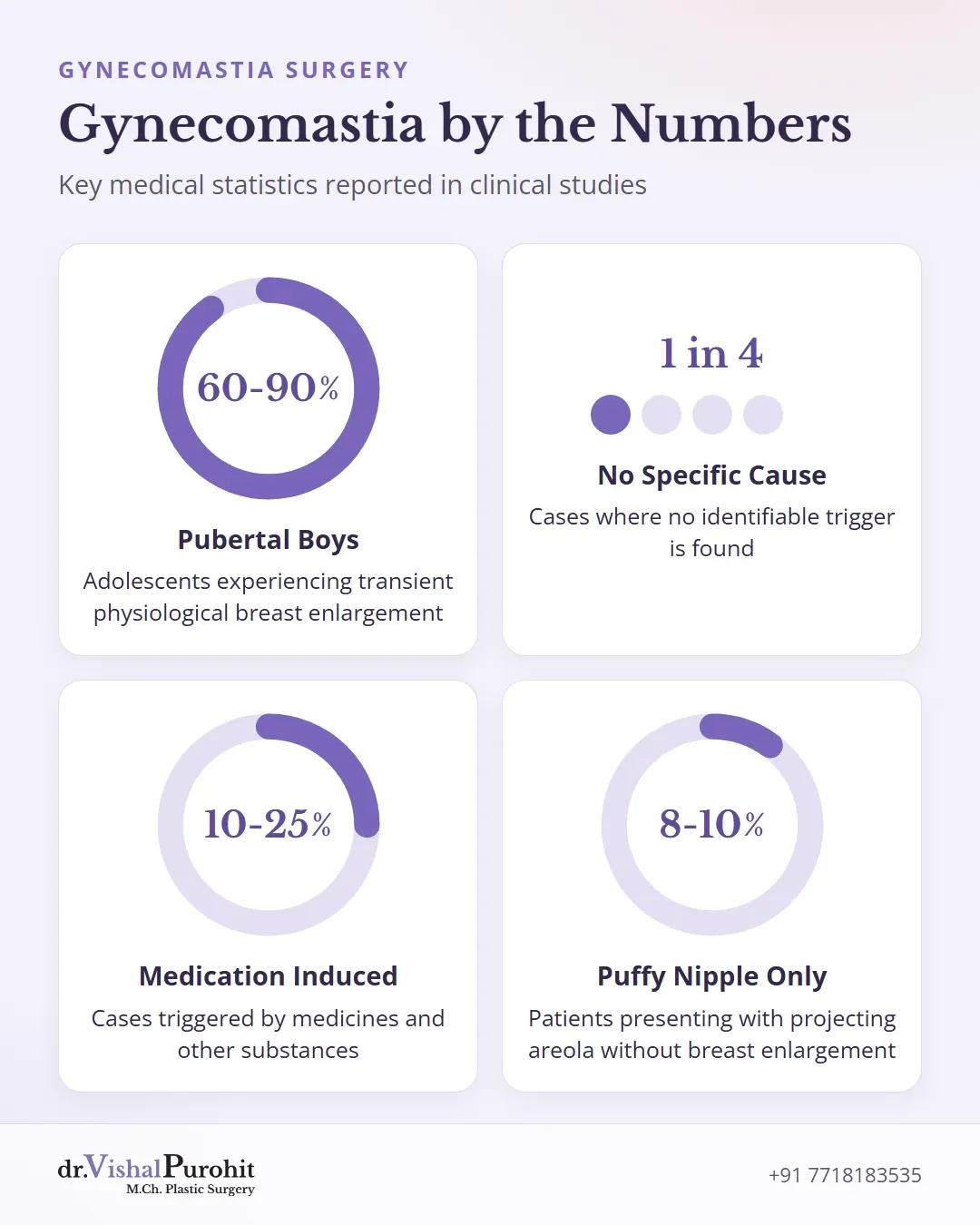
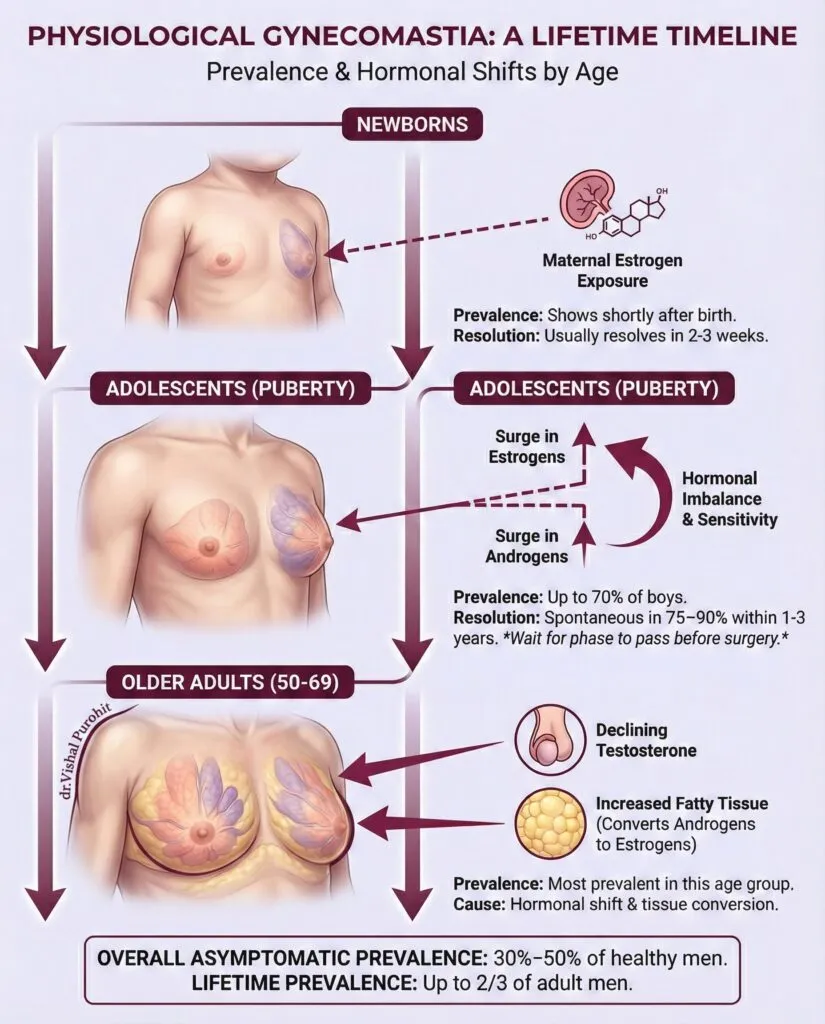
Dr. Vishal Purohit provides this educational infographic on the causes of physiological gynecomastia across a male’s lifetime, to help patients understand hormonal shifts and natural resolution patterns before considering surgical options.
Puberty (Physiologic Gynecomastia)
During puberty, a boy undergoes many physiological changes. Sometimes, there is a transient imbalance in hormonal levels.
- The Stats: Physiologic gynecomastia is reported in approximately 60–90% of adolescent boys during puberty10.
- The Outlook: It should resolve within six months to two years after onset; if it persists beyond two years or past 17 years of age, further evaluation is advised5. In some boys it does not regress, and the gland becomes enlarged and fibrous4.
- Surgical Timing: For teenagers considering surgical correction, Dr. Vishal Purohit evaluates the appropriate age and timing for surgery at least 2 years after puberty is complete.
Medication-Induced Gynecomastia
Medicines and other substances account for roughly 10 to 25% of cases5. Common culprits include:
- Anti-androgens (used for an enlarged prostate or prostate cancer)11.
- Anabolic steroids (often used for bodybuilding)3.
- Anti-anxiety medicines such as diazepam, and some heart medicines, including certain ACE inhibitors and calcium channel blockers11.
In Dr. Vishal Purohit’s practice, managing steroids and gynecomastia requires stopping steroid and prohormone use for a minimum of 6 weeks before surgery, with 3 months being preferable.
Do not stop a prescribed medicine without first speaking to your doctor11.
Obesity & Lifestyle
Fatty tissue is a major site of aromatase, an enzyme that converts testosterone into estrogen12, so obesity can result in more estrogen11. Extra chest fat on its own, however, is pseudogynecomastia rather than glandular growth4.
Evaluating gynecomastia and weight loss helps clarify who is suitable for surgery. Slightly overweight men may benefit from surgery without waiting. Obese and massively obese men are not operated on because the risk is too high and skin may sag after later weight loss, needing further correction.
Myth: Protein supplements cause or worsen gynecomastia.
Fact: Protein supplements have no role in increasing or decreasing gynecomastia, whereas growing chest muscle can push the gland outwards and make it look more prominent.
Chronic Health Issues Create Hormonal Imbalance
Sometimes, gynecomastia is a sign of an underlying illness that disturbs how hormones are made or broken down.
In Dr. Vishal Purohit’s diagnostic practice, evaluation begins with clinical examination and direct palpation first. Ultrasound or MRI follows when imaging is needed, while hormone blood tests are ordered only when there are other symptoms of hormonal imbalance5.
Referral to an endocrinologist is made only when gynecomastia develops suddenly, well after puberty is complete, or when other symptoms of hormonal imbalance appear.
A clinical assessment evaluates how gynecomastia is diagnosed to rule out several systemic conditions:
- Liver Disease and Cirrhosis: Liver injury can impair the breakdown of estrogens; men with alcohol-related liver disease are at particular risk5.
- Kidney Failure: Chronic kidney insufficiency is one of the recognised causes5.
- Hypogonadism: Low testosterone production, from problems in the testes (primary) or in the hormone signals that drive them (secondary), can cause gynecomastia; about half of men with Klinefelter syndrome have it5.
- Thyroid Disease: Gynecomastia occurs in 10 to 40% of men with hyperthyroidism, and restoring normal thyroid function resolves it in one to two months5.
- Tumours: Rarely (about 3% of cases), tumours are responsible, such as testicular Leydig or Sertoli cell tumours, adrenal tumours or cancers that produce the hormone hCG5.
The Symptoms: What to Look For
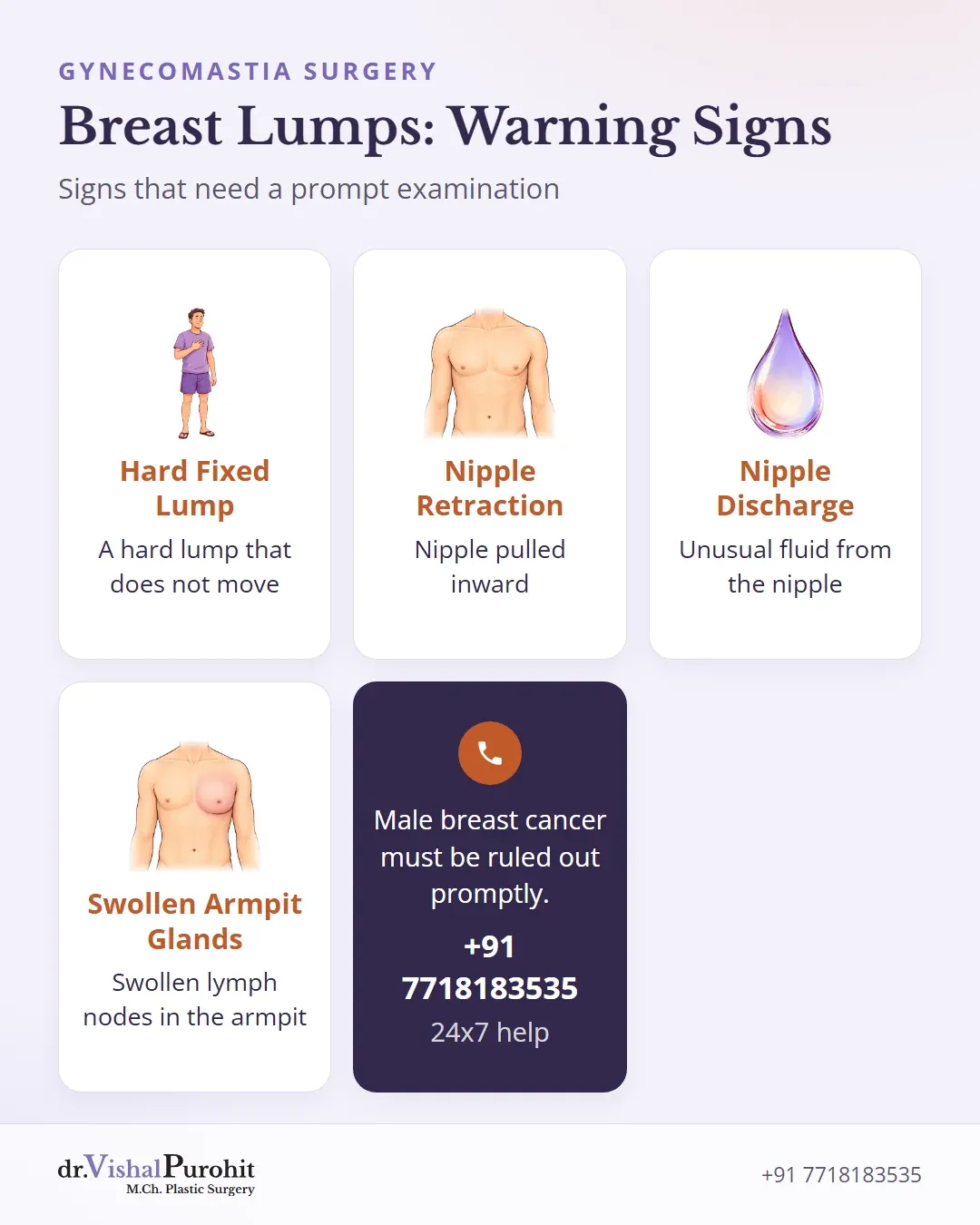
How do you know if you have gynecomastia? Look for these signs:
Key points
- Common symptoms include a firm or tender lump beneath the nipple, tissue swelling, and puffy areolas.
- Gynecomastia usually occurs on both sides, but when unilateral it typically affects the left breast.
- A hard or fixed lump, nipple discharge, or skin changes require prompt medical evaluation.
- Swelling or a lump: A button-sized growth under the nipple that you may see or feel; it may move easily and can affect one or both breasts2.
- Tenderness: The area may feel tender or sore11.
- Texture: Glandular tissue feels like a firm, rubbery disc beneath the nipple, while fat feels softer and more diffuse10.
- A “puffy nipple”: Nearly 8 to 10% of patients present with an enlarged, projecting areola without major breast enlargement8.
Gynecomastia is most often on both sides; when it is one-sided, it is usually on the left5.
When to get checked promptly: a hard, immobile lump, skin changes, nipple retraction, nipple discharge or enlarged lymph nodes should raise concern for breast cancer until proven otherwise5. Male breast cancer is much rarer than gynecomastia, but an examination is essential to tell the two apart if you notice a male breast lump2.
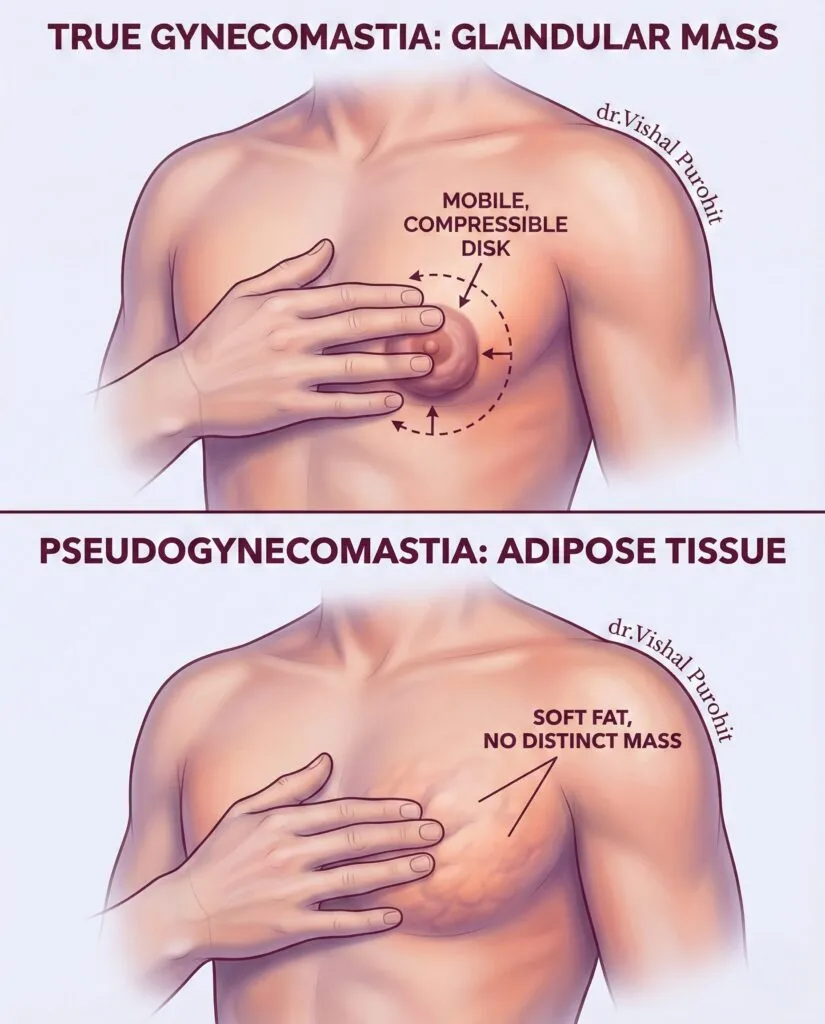
This educational infographic by Dr. Vishal Purohit distinguishes the glandular disc of true gynecomastia from the fatty tissue of pseudogynecomastia. An accurate diagnosis guides the right treatment plan.
The 4 Grades of Gynecomastia
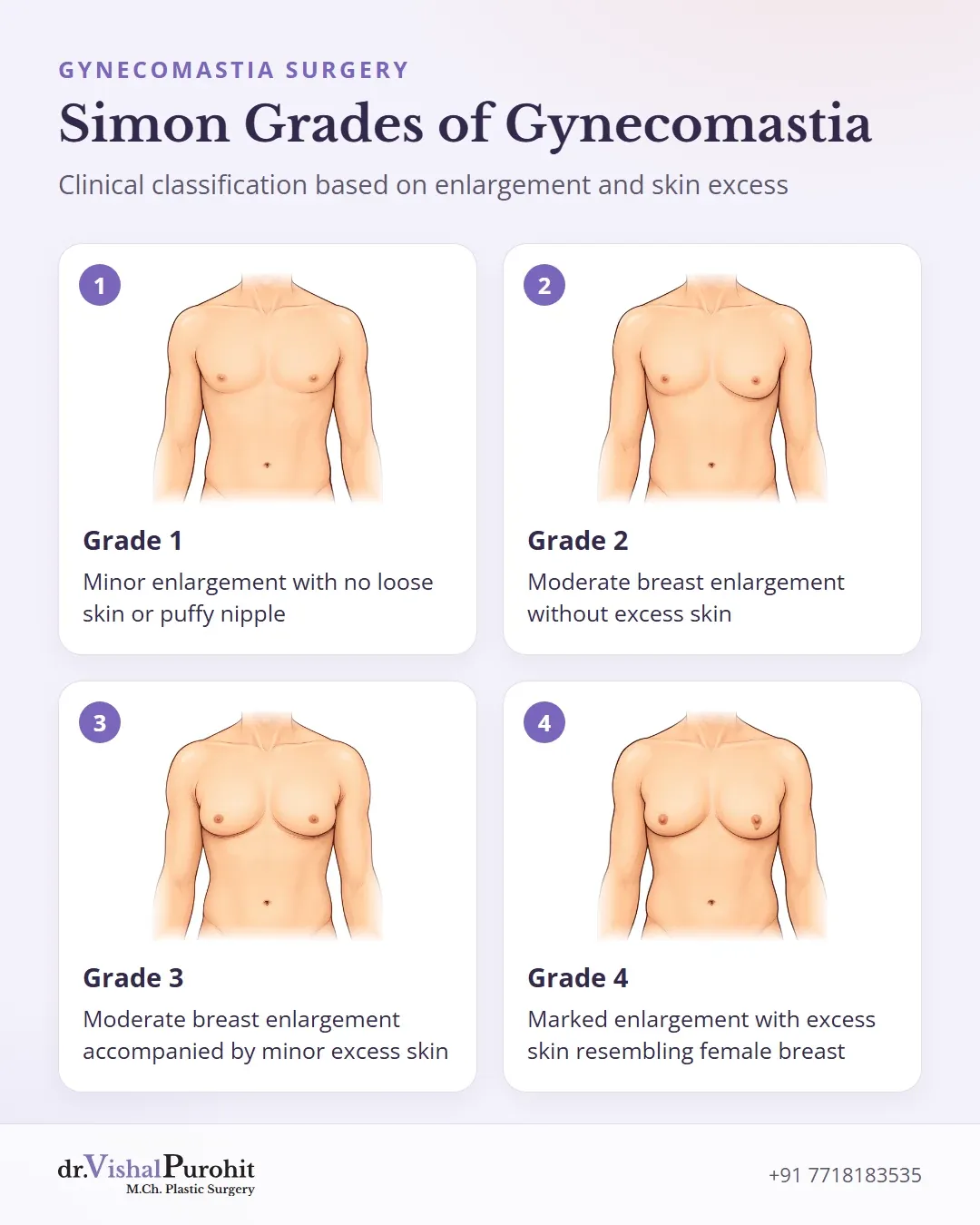
Surgeons classify the severity of the condition to plan the surgical approach. This grading also influences the cost of gynecomastia surgery: in Jaipur the fee ranges from ₹45,000 to ₹95,000, depending on grade and technique.
Clinical assessment follows the Simon system to define the grades of gynecomastia7:
- Grade 1: Minor enlargement with no excess skin; it may appear as a “puffy nipple”8.
- Grade 2: Moderate enlargement with no excess skin.
- Grade 3: Moderate enlargement with minor excess skin.
- Grade 4: Marked enlargement with excess skin, resembling a female breast.
In Dr. Vishal Purohit’s Jaipur practice, surgery for simpler grades usually takes 60 to 120 minutes, while grade 4 or massive gynecomastia can take up to about 4 hours. Drains are placed only in grade 4; lower grades usually do not need them.
Is It Treatable?
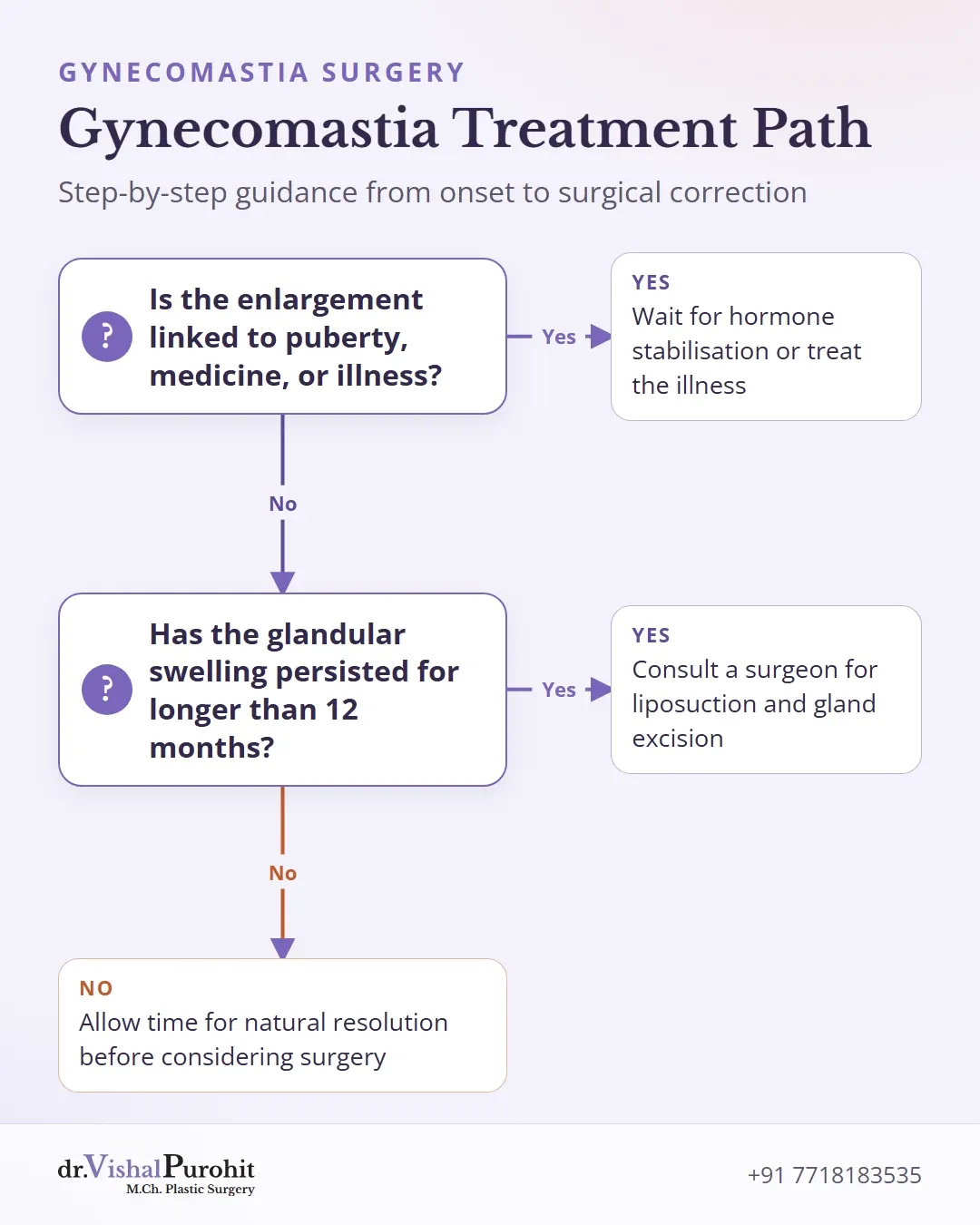
Yes. Pubertal gynecomastia often resolves on its own, and gynecomastia caused by a medicine or illness is first managed by treating that cause5. Glandular tissue that persists, however, can become fibrous and may not regress4. Understanding the full range of gynecomastia treatment options helps clarify the right approach for each stage.
-
Medical Treatment: Medicines such as tamoxifen and raloxifene are the most commonly used, and they can help when given during the early, growing phase, before the gland becomes fibrous9. However, pubertal gynecomastia does not need medication, and once the gland is removed surgically it cannot grow back, whereas surgery can be done at any time with similar results5. This timing is critical when evaluating medical treatment efficacy before fibrous tissue sets in.
-
Surgical Treatment: For established cases, surgery usually combines liposuction of the surrounding fat with direct removal of the glandular tissue; men with significant excess skin and droop may need a more extensive approach6. Dr. Vishal Purohit combines tumescent liposuction with gland excision through an inconspicuous incision along the lower half of the areola border, under local or general anaesthesia. All removed tissue is sent for histopathology.
Ready to Restore Your Confidence?
If you suspect you have gynecomastia, you don’t have to live with it. A consultation can confirm the diagnosis and rule out other issues.
“Everyone deserves to feel good and confident about their body.” (Dr. Vishal Purohit)
Choose your next question
Start with the question that matters most to you right now.
Causes
- What causes gynecomastia, from puberty to medicines
- How anabolic steroids lead to gynecomastia
- The right age and timing for gynecomastia surgery
Recognition and diagnosis
- A male breast lump: when to get it checked
- How gynecomastia is diagnosed: examination and tests
- Gynecomastia and weight loss: what diet and exercise can change
- Gynecomastia grades explained, from puffy nipple to drooping chest
Treatment
- Gynecomastia treatment options compared
- How well medicines work for gynecomastia
- Gynecomastia surgery techniques: liposuction and gland excision
Surgery and recovery
- Who is eligible for gynecomastia surgery and how to prepare
- The gynecomastia surgery recovery timeline, week by week
- Safety and risks of gynecomastia surgery
- Gynecomastia surgery scars and incision healing: where they sit and how they heal
- Are gynecomastia surgery results permanent?
Cost and choosing care
- Cost of gynecomastia surgery in Jaipur
- How to choose a gynecomastia surgeon
Still have a question?
- Browse all gynecomastia FAQs by topic
Expert Gynecomastia Surgery & Male Chest Contouring in Jaipur
Considering treatment for gynecomastia? Schedule a confidential consultation with Dr. Vishal Purohit, M.Ch. plastic surgeon registered with the Rajasthan Medical Council (RMC Reg. 28041/14185), in Jaipur.
During your visit, you can discuss personalized options for gynecomastia surgery in Jaipur, review the surgical technique, and understand available technology.
Our team provides comprehensive details covering:
- Procedure options, surgical techniques, and consultation booking
- Expected surgery costs in Jaipur along with gynecomastia grades and classifications
- Structured aftercare with mandatory follow-up visits on day 5 and at 1 month, alongside 24x7 support
This is educational information, not medical advice.