
Gynecomastia surgery reshapes the male chest wall by removing excess glandular tissue and localized fat deposits. While most recovery periods progress smoothly, patients should remain informed about potential postoperative healing issues such as bleeding, fluid buildup, and contour depressions.
Understanding these conditions and recognizing gynecomastia surgery risks and complications allows men to identify changes early. Prompt communication with the surgical team ensures appropriate clinical intervention whenever unexpected swelling, persistent hollows, or altered areolar sensation develop.
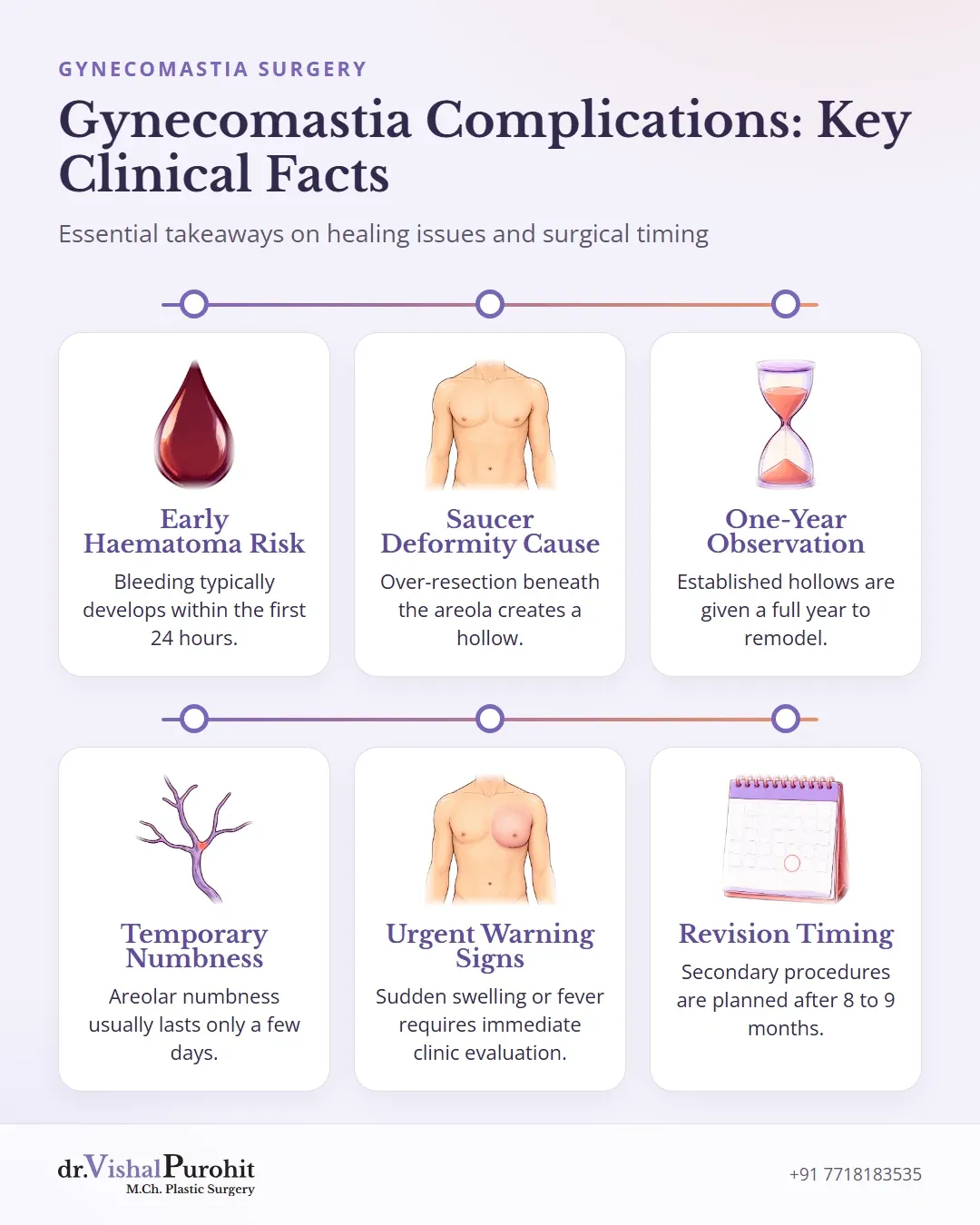
Haematoma: Bleeding Under the Skin
A haematoma is a collection of blood that forms under the skin following surgery. When bleeding occurs after male breast reduction, it typically develops within the first 24 hours. In the published medical literature, haematoma is reported as the most common early complication of gynecomastia surgery. Overall complication rates in published studies range from 14.5% to 53%. For mild gynecomastia treated with liposuction alone or an arthroscopic shaver, literature rates of haematoma are reported as low as 1%, whereas open subcutaneous mastectomies show higher rates between 11% and 16%.
Warning Signs
Patients should monitor for sudden changes on the chest. Common signs include:
- Rapid swelling on one side of the chest
- A feeling of tightness or severe fullness
- Increasing pain
- Noticeable skin bruising or discoloration
Any rapid swelling, skin discoloration, or increased pain requires immediate medical assessment.
Haematoma Versus Seroma
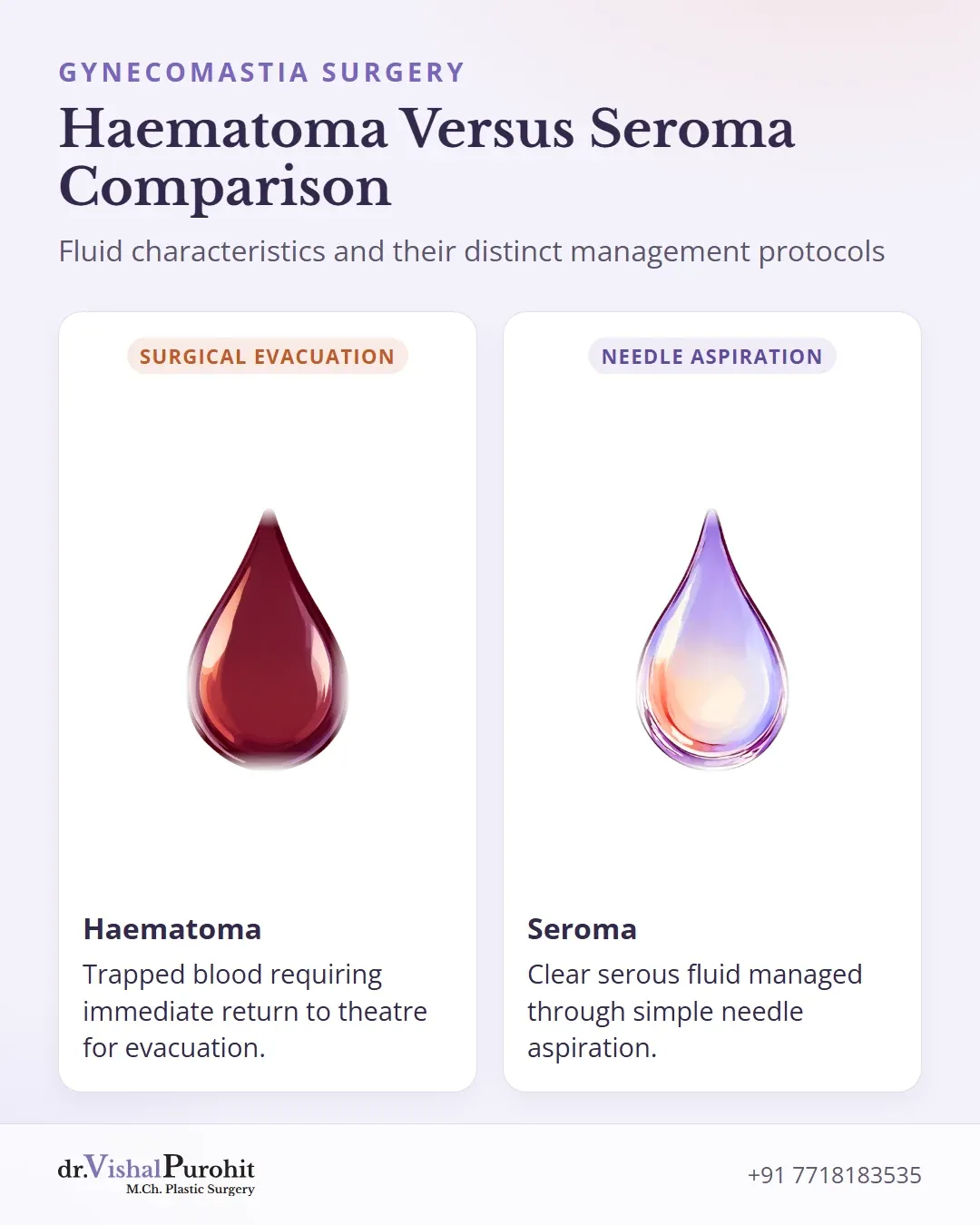
While a haematoma consists of pooled blood, a seroma is a collection of clear serous wound fluid. Their management is different.
Dr. Purohit’s note: In Dr. Purohit’s practice in Jaipur, a haematoma needs an immediate return to the operating theatre for surgical evacuation, whereas a seroma is treated simply by aspiration.
Surgical drainage of a haematoma is necessary to evacuate the trapped blood, relieve tension, and help prevent long-term contour deformities or scarring. By contrast, seromas generally settle with simple needle aspiration until the fluid accumulation resolves.
Saucer (Crater) Deformity
A saucer or crater deformity is an unnatural depression or hollow beneath the nipple-areola complex. It happens when breast tissue directly under the areola is over-resected, creating a visible dish-like dip on the chest wall. In the surgical literature, overcorrection leading to a saucer deformity is reported as a late aesthetic complication.
Key points
- A saucer deformity is a depression under the nipple-areola complex caused by over-resection of breast tissue.
- It is recognized as a late aesthetic complication in surgical literature.
- Management includes a year of massage and natural remodelling before considering surgical correction.
Prevention and Management Protocol
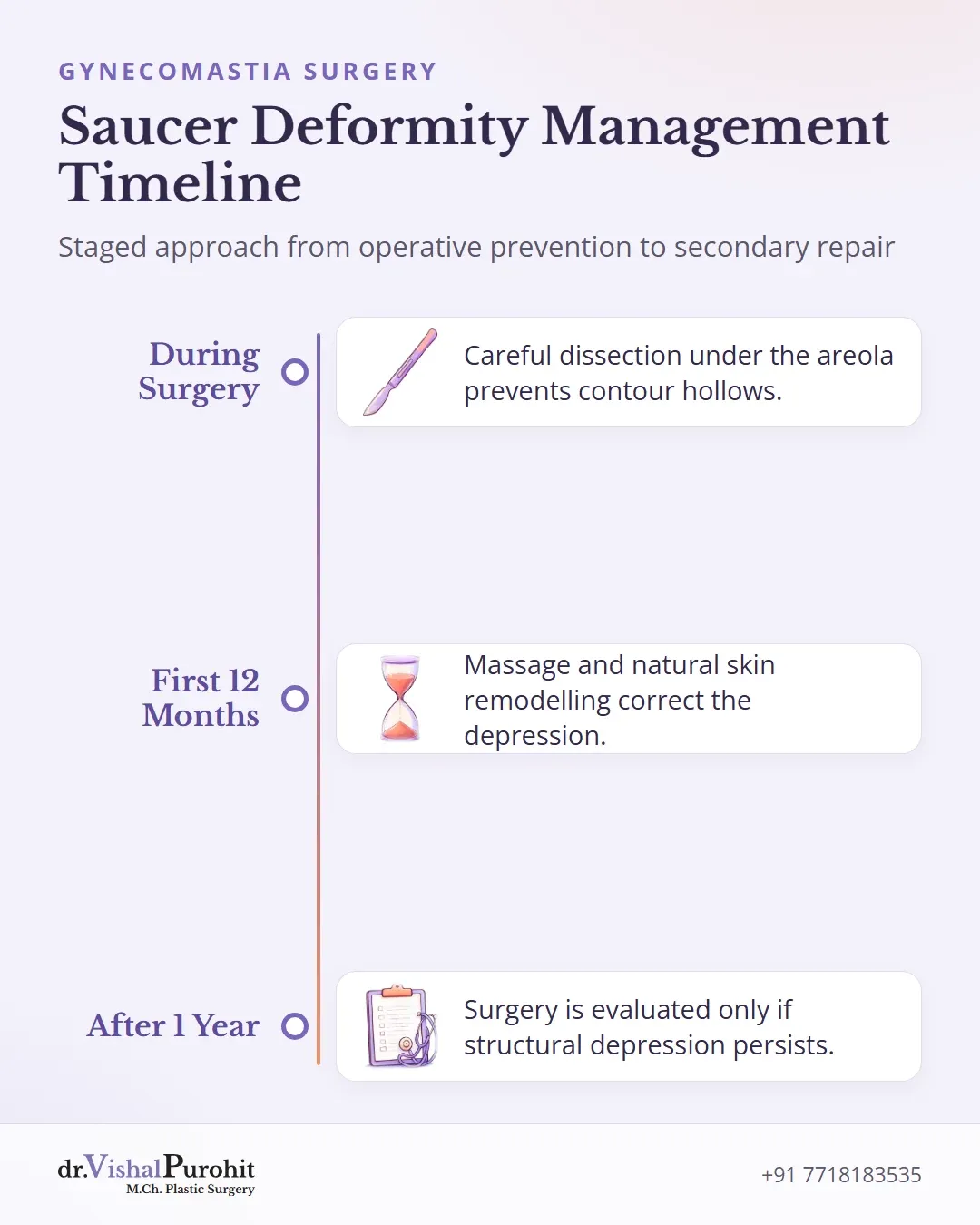
In Dr. Vishal Purohit’s practice in Jaipur, this deformity is prevented by careful dissection during surgery.
If an established saucer deformity is present after surgery, Dr. Vishal Purohit does not operate on it for a full year. Massage and natural skin remodelling over that time correct the depression, so further surgery is considered only if a hollow remains after a year.
General Correction Options from the Literature
When a severe concavity persists beyond the remodelling period, corrective procedures are documented in surgical publications as general options:
- Undermining surrounding subcutaneous tissue or performing wider chest contouring through liposuction to smooth step-offs around the depression.
- Autologous structural fat grafting to restore lost volume beneath the retracted area.
These secondary techniques are noted in clinical reports for contour restoration, but they are evaluated only after allowing full structural tissue maturation.
Nipple and Areola Problems
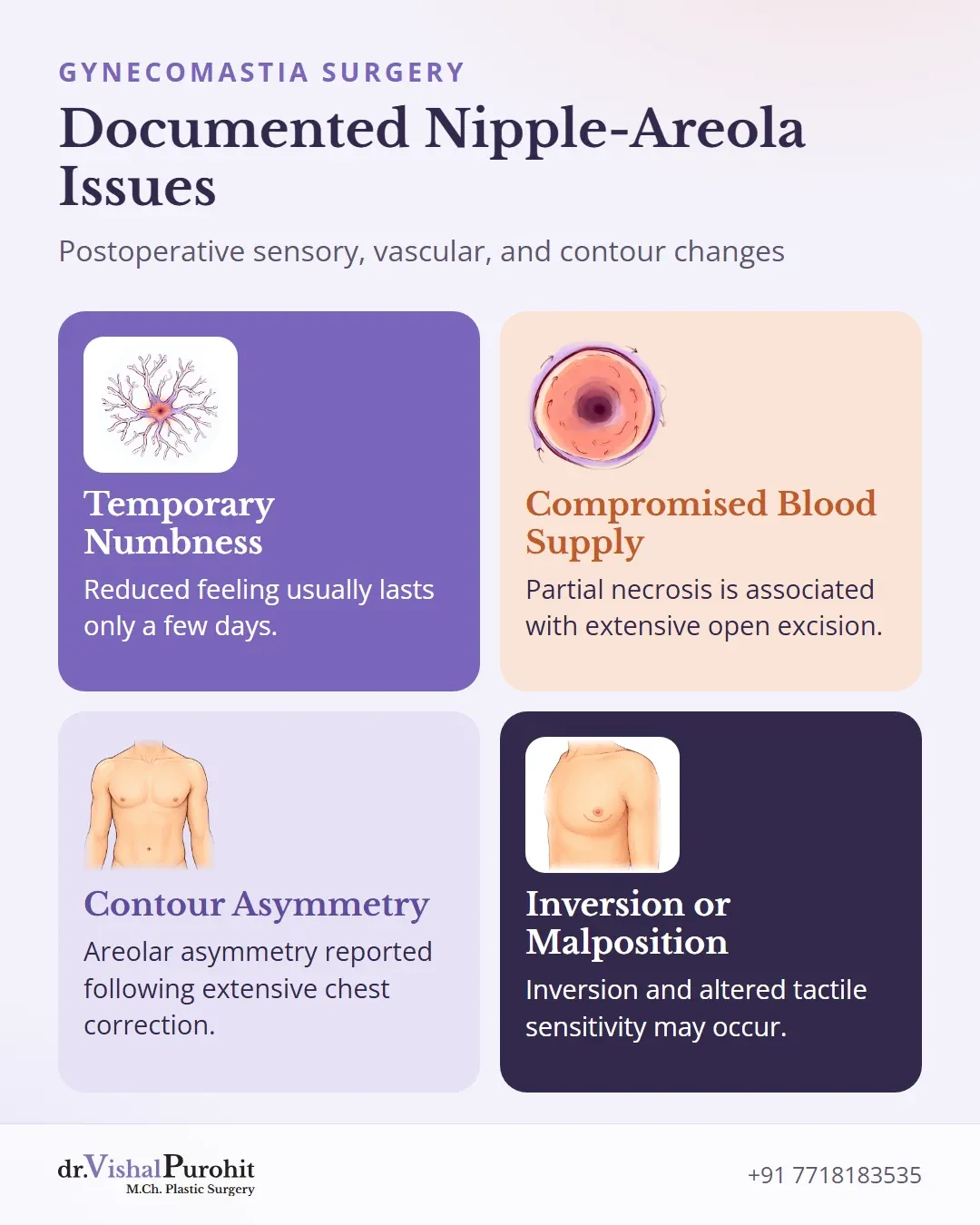
Changes affecting the nipple-areola complex can happen after surgical correction, though severe issues are uncommon.
Sensation and Temporary Numbness
A reduction in feeling or numbness across the nipple and areola is a known occurrence following surgery. In Dr. Vishal Purohit’s practice in Jaipur, numbness usually lasts only a few days, though sensation occasionally takes longer to return. Sensation is routinely evaluated at the mandatory day-5 and 1-month follow-up visits.
Blood Supply and Necrosis
Loss of blood supply to the nipple tissue, known as necrosis, is an uncommon complication. Published clinical studies associate compromised blood supply with extensive open surgical resection or skin excision, whereas combining liposuction with excision shows less compromise to blood flow, areola slough, and tissue necrosis. In large breast reductions or complex excisions, partial nipple necrosis has been documented in published cohorts.
Inversion and Contour Asymmetry
Other documented nipple changes include asymmetry and contour irregularities. Asymmetry of the nipple-areola complex has been reported in published surgical series following extensive correction. In addition, nipple inversion or malposition may occur, and temporary alteration of tactile sensitivity can follow corrective procedures.
Warning Signs: When to Call
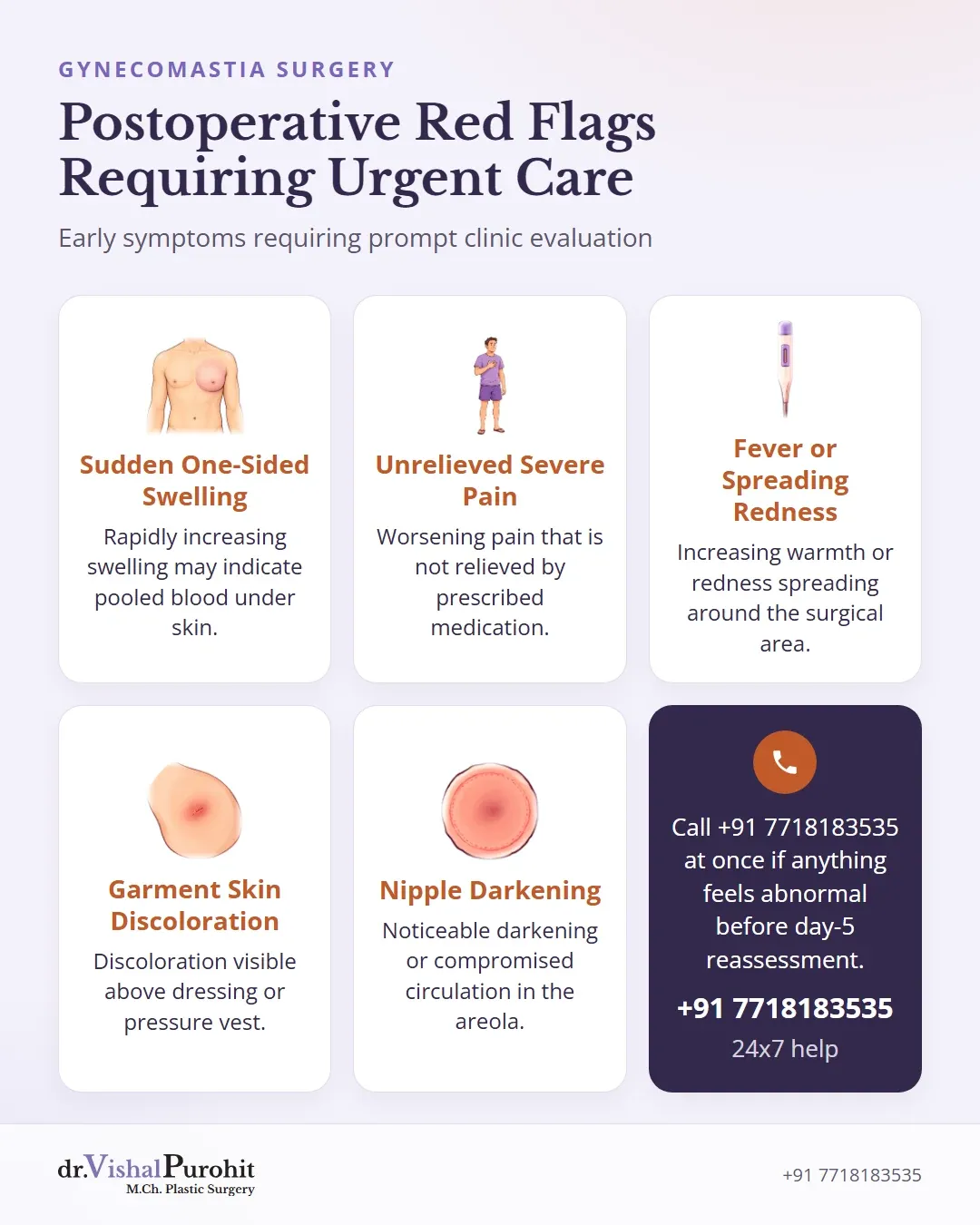
Routine healing involves mild soreness and gradual settling of tissues, but certain symptoms require urgent attention. In the practice of Dr. Vishal Purohit in Jaipur, the first scheduled reassessment takes place on day 5 after surgery for dressing evaluation and garment release. However, developing early red flags before this visit warrants an immediate return to the clinic.
Contact the surgical team without delay if any of the following occur:
- Sudden or rapidly increasing swelling on one side of the chest, which may indicate a collection of blood
- Severe or worsening pain that is not relieved by prescribed medication
- Fever, increasing warmth, or redness spreading around the surgical area
- Skin discolouration visible above the dressing or pressure vest
- Changes in the nipple-areola complex, such as noticeable darkening or compromised circulation
Early intervention remains the most important factor in managing any postoperative complication. Patients should call +91 7718183535 at once if anything feels abnormal, even if unsure, as 24x7 help is always accessible. What is normal at each stage is set out in the gynecomastia recovery timeline.
Second Opinions and Revision
Patients who have undergone surgery elsewhere and remain concerned about residual fullness, contour asymmetry, or breast tissue changes may seek an independent evaluation. Reoperations in published literature are primarily performed to address residual glandular tissue, contour asymmetries, or persistent skin redundancy. Across major clinical series, surgical revision rates range from 0% to 14.1%.
Key points
- Patients with persistent concerns after gynecomastia surgery may seek an independent evaluation for residual fullness, asymmetry, or tissue changes.
- Revision surgery typically addresses residual glandular tissue, contour asymmetry, or skin redundancy, with reported revision rates of 0–14.1%.
- Dr. Purohit schedules any revision 8–9 months after the primary procedure, and, for his own patients, does not charge for touch-ups under local anaesthesia.
Assessment and Surgical Timing
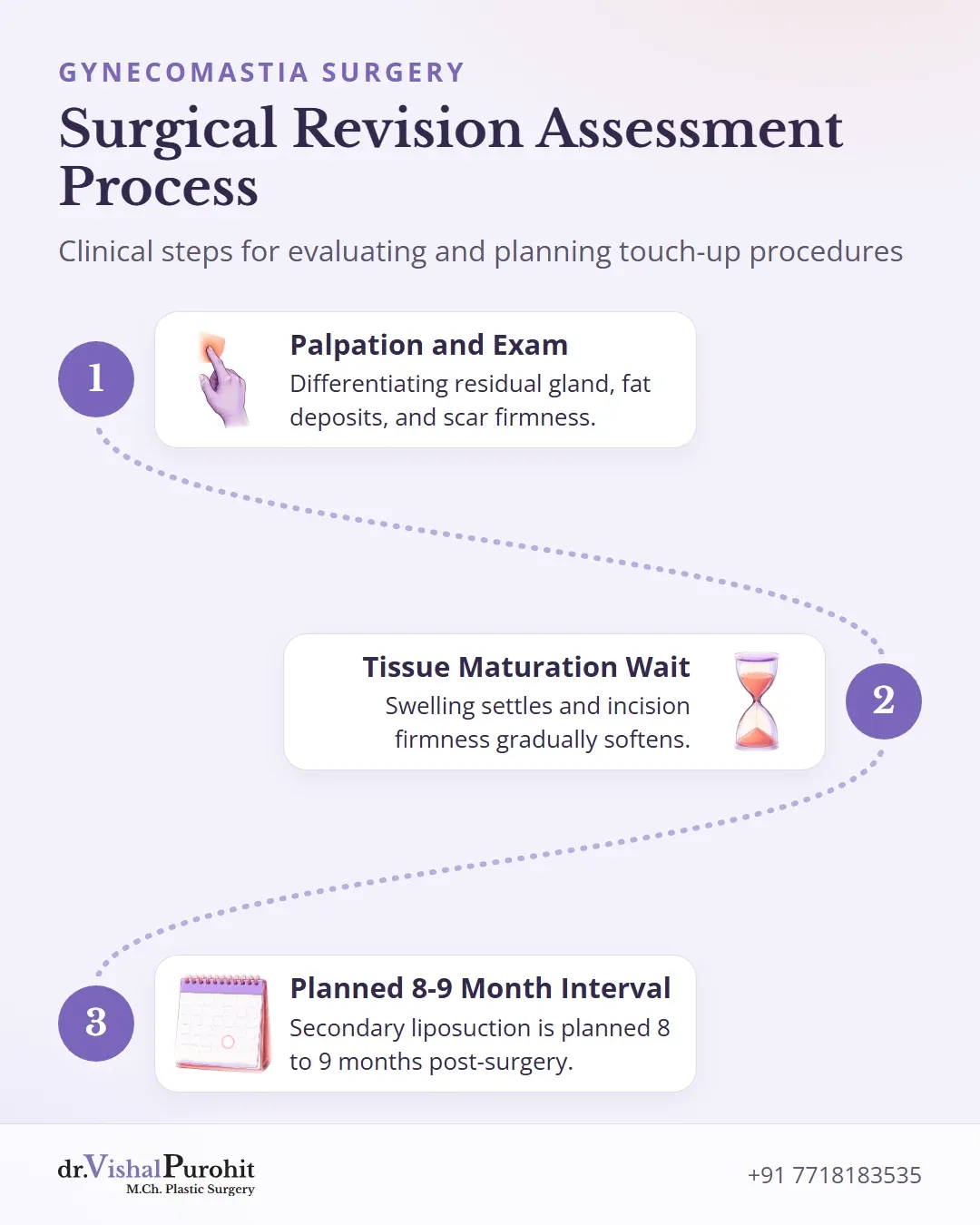
A clinical assessment begins with direct palpation and examination of the chest to differentiate between residual glandular tissue, uneven fat deposits, or scar tissue firmness. Swelling can persist for several months, and firmness beneath the incision line gradually softens during recovery. Operating too early on tissues that are still healing can compromise the final aesthetic outcome.
In Dr. Vishal Purohit’s practice in Jaipur, if a revision or touch-up procedure (such as secondary liposuction) is required, it is planned with an interval of 8 to 9 months after the primary surgery. For his own patients, touch-ups performed under local anaesthesia are not charged; if general anaesthesia is needed, those anaesthesia charges are paid by the patient.
How a second operation is planned, and its limits, is explained in the guide to revision gynecomastia surgery.
Postoperative Care and Consultations in Jaipur
Recognizing early warning signs and following structured recovery protocols ensure safe healing after male chest reduction. For men experiencing unexpected swelling, contour depressions, or residual fullness following prior procedures, a careful clinical examination helps determine the proper management plan. The operation itself is described on the page for gynecomastia surgery in Jaipur, and common questions are answered in the gynecomastia FAQs.
This is educational information, not medical advice.