
Armed forces medical boards enforce defined physical standards to evaluate officer candidates for entry into defence services. During physical examinations, medical officers check whether chest enlargement represents true glandular tissue or simple adipose deposition. Knowing how gynecomastia is diagnosed helps applicants understand how medical examiners assess tissue composition.
Official regulations require candidates who have had surgery to meet rigorous recovery standards before being declared fit. Planning surgical correction well ahead of scheduled recruitment boards ensures incisions heal and chest tissues mature under established medical criteria.
What the Medical Standards Say
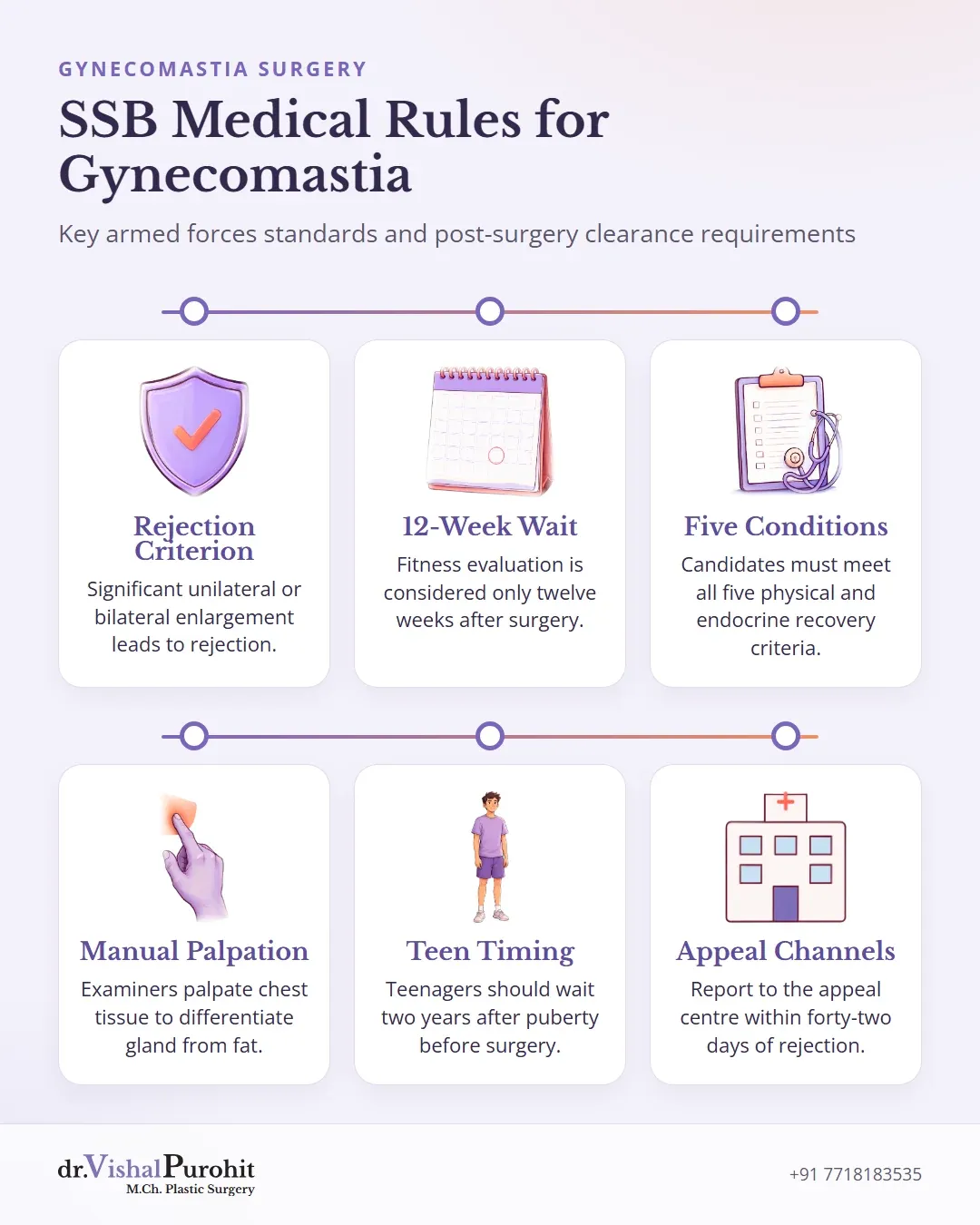
Official medical criteria for armed forces officer recruitment establish clear physical standards regarding chest conditions. In the Indian Navy medical standards for officer entries, significant bilateral or unilateral gynaecomastia is listed as a criterion for rejection.
The same standard says gynaecomastia can be evaluated for fitness 12 weeks after surgery, provided five conditions are met. These are set out in the next section.
These details come from the Indian Navy officer-entry standards. The Indian Army and the Indian Air Force publish their own medical standards, so candidates should check the current notification for their entry.
The Five Conditions for Fitness After Surgery
Under official Indian Navy medical standards, candidates who undergo surgery for gynecomastia (enlarged male breast gland, often with chest fat) are considered only after 12 weeks. The medical board alone decides fitness, and having surgery does not ensure a fit declaration.
Key points
- Fitness after gynecomastia surgery requires meeting five specific conditions.
- All conditions must be satisfied, including healed wound, no post-operative complication, matured scar, normal physical exam, and normal endocrine workup.
- The medical board makes the final fitness decision; surgery alone does not ensure fitness.
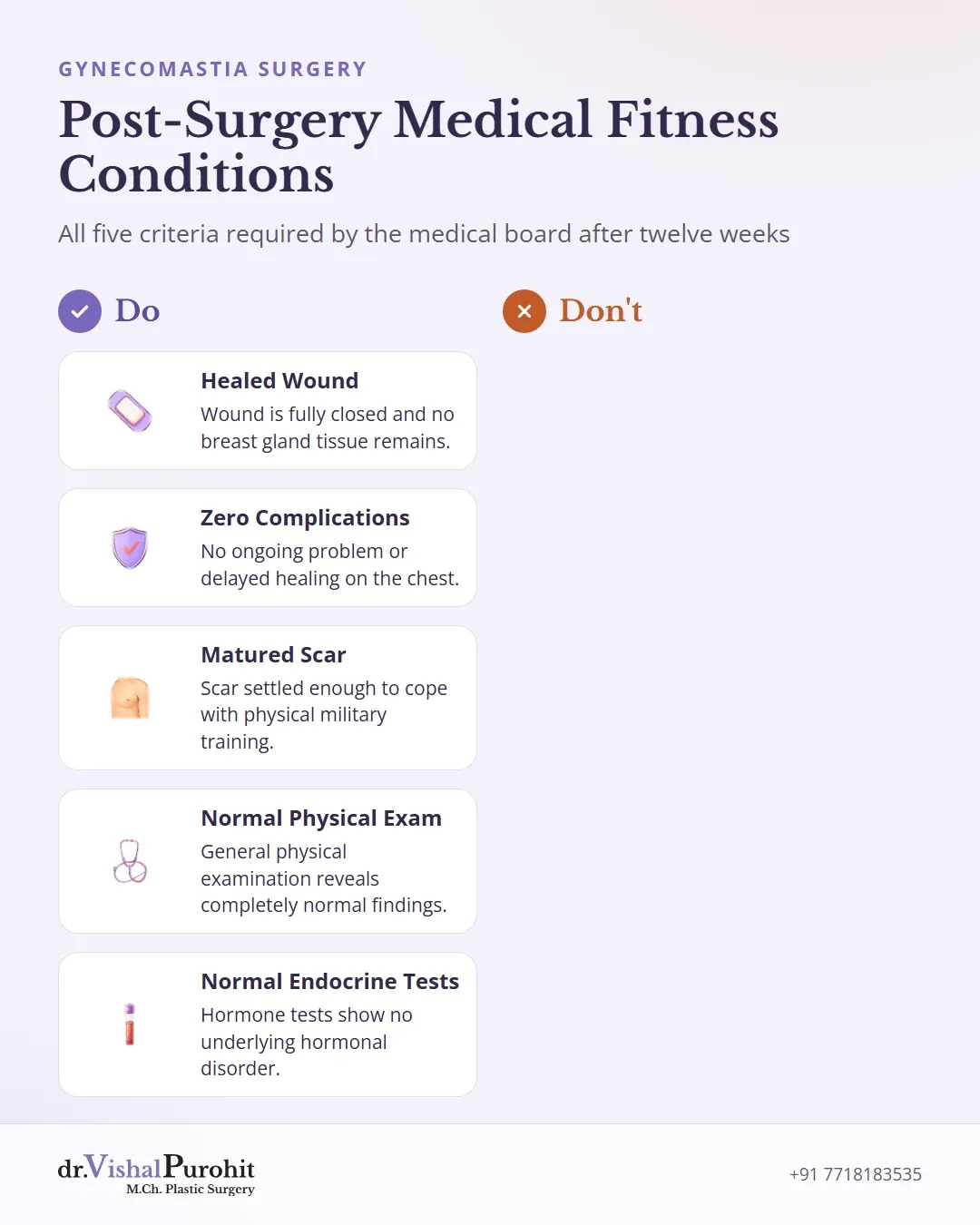
Candidates are considered fit after 12 weeks only if all five conditions are met:
- A well healed surgical wound with no residual disease: the wound is fully closed and no breast gland tissue remains.
- No post-operative complication: no ongoing problem or delayed healing on the chest.
- A scar sufficiently matured and unlikely to cause problems during military training: the scar must be settled enough to cope with physical training.
- A normal general physical examination.
- A normal endocrine workup: hormone tests show no underlying hormonal disorder.
Together, the conditions check that healing is complete and that no cause of the enlargement is still active.
Gland or Fat: What the Board Checks
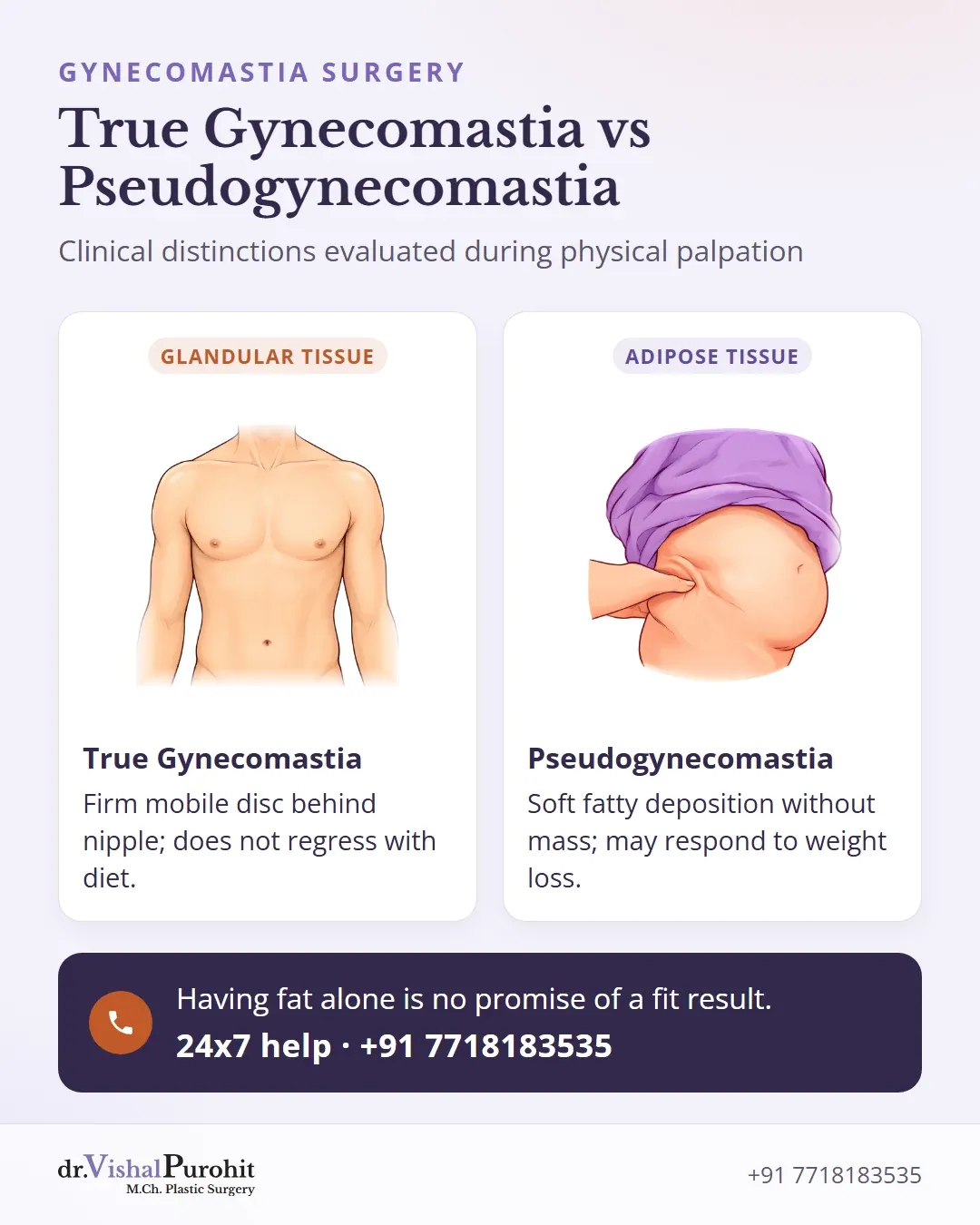
During the medical examination, the board assesses chest enlargement primarily by direct palpation. The main objective is to distinguish true glandular tissue from simple adipose accumulation, also known as pseudogynecomastia.
A candidate may have true gynecomastia, pseudogynecomastia, or a combination of both:
- True gynecomastia presents on palpation with a distinct, firm, mobile disc of glandular tissue located centrally beneath the nipple-areolar complex. Glandular tissue usually does not regress with diet or exercise alone.
- Pseudogynecomastia consists of soft fatty deposition without a discrete retroareolar mass. This fat-only enlargement may respond to weight management and overall health measures.
The difference is explained further in the guide to true gynecomastia and pseudogynecomastia. The standard speaks of significant gynaecomastia, and the board decides on examination; having fat alone is no promise of a fit result.
Dr. Purohit’s note: In his clinical practice in Jaipur, Dr. Vishal Purohit starts the diagnostic workup with a clinical examination and direct palpation, reserving ultrasound or MRI for cases where imaging is required to confirm tissue composition.
Timing Surgery Before the Medical
Candidates must work backwards from their expected medical board date. Official Indian Navy standards state that gynecomastia can be evaluated for fitness 12 weeks post-operatively, provided the wound has healed cleanly, there has been no post-operative complication, and the scar has matured sufficiently without residual tissue. Planning well in advance is essential to meet these criteria.
Teen Surgery Timing
For younger applicants, Dr. Vishal Purohit advises that surgery in teenagers should take place at least 2 years after puberty is complete; the right age for gynecomastia surgery is discussed separately.
Post-Op Protocol
Dr. Vishal Purohit follows a structured post-operative protocol in Jaipur to ensure tissue stabilizes ahead of physical evaluation.
Scar Maturation
Because firmness along the stitch line can take up to 4 months to settle, leaving more than the minimum 12 weeks before the medical gives the scar extra time. Week-by-week care is in the gynecomastia recovery timeline, and scar healing is covered in the guide to gynecomastia scars.
The Recovery Milestones
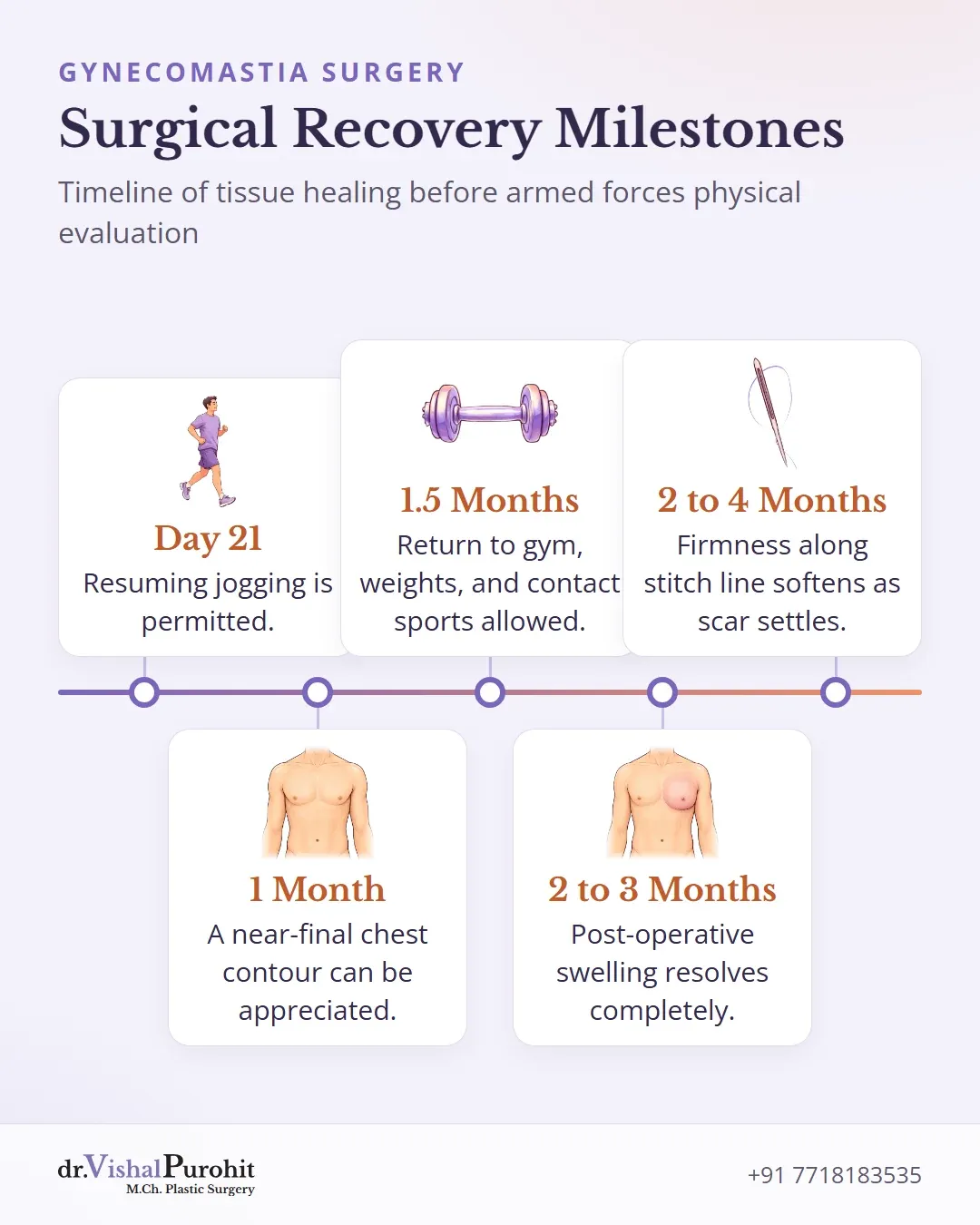
- Day 21: Resuming jogging is permitted.
- 1 Month: A near-final chest contour can be appreciated.
- 1.5 Months: Return to the gym, weights, and contact sports is allowed.
- 2 to 3 Months: Post-operative swelling resolves completely.
- 2 to 4 Months: Firmness along the stitch line below the areola settles as the scar tissue softens.
If You Are Declared Unfit
Candidates declared unfit at the initial medical examination have defined channels of appeal under armed forces regulations.
Medical Board Timelines
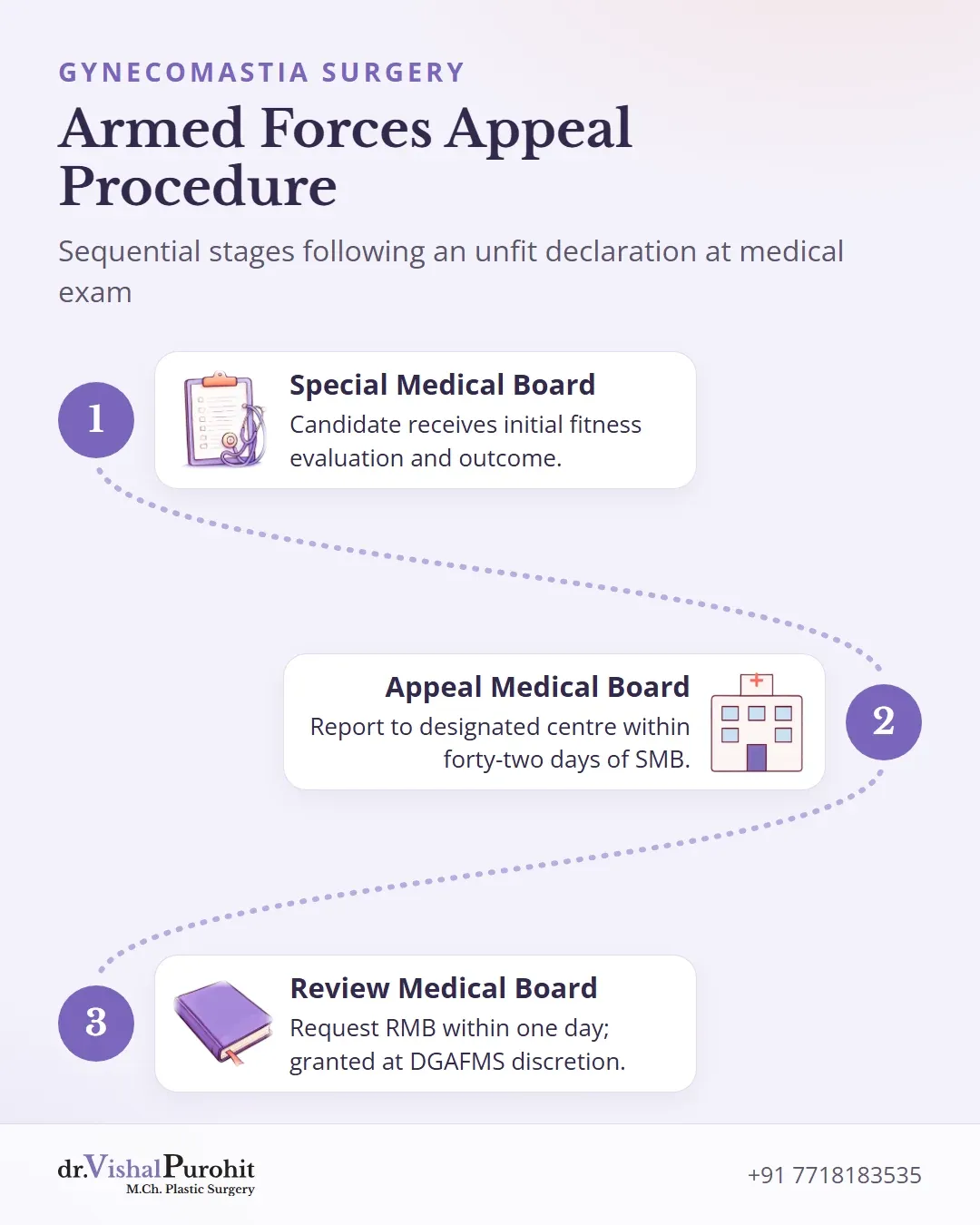
According to official Indian Navy medical standards, the appeal process follows specific procedural steps:
- Appeal Medical Board (AMB): The candidate must report to the designated AMB centre within 42 days of the Special Medical Board (SMB).
- Review Medical Board (RMB): If declared unfit by the AMB, a candidate may request an RMB within one day of completing the AMB. Approval for holding an RMB is granted at the discretion of the DGAFMS based on the merit of the case; an RMB is not a matter of right.
Because armed forces medical guidelines, entry instructions, and service notifications can change, candidates should verify the latest official notification for their specific service entry.
Planning Gynecomastia Assessment in Jaipur
Candidates preparing for armed forces medical examinations must plan sufficient time for tissue healing and scar maturation. In-person clinical evaluation is available for men seeking gynecomastia surgery in Jaipur with Dr. Vishal Purohit. Questions about special situations are answered in the gynecomastia FAQs before scheduling their visit.
This is educational information, not medical advice.