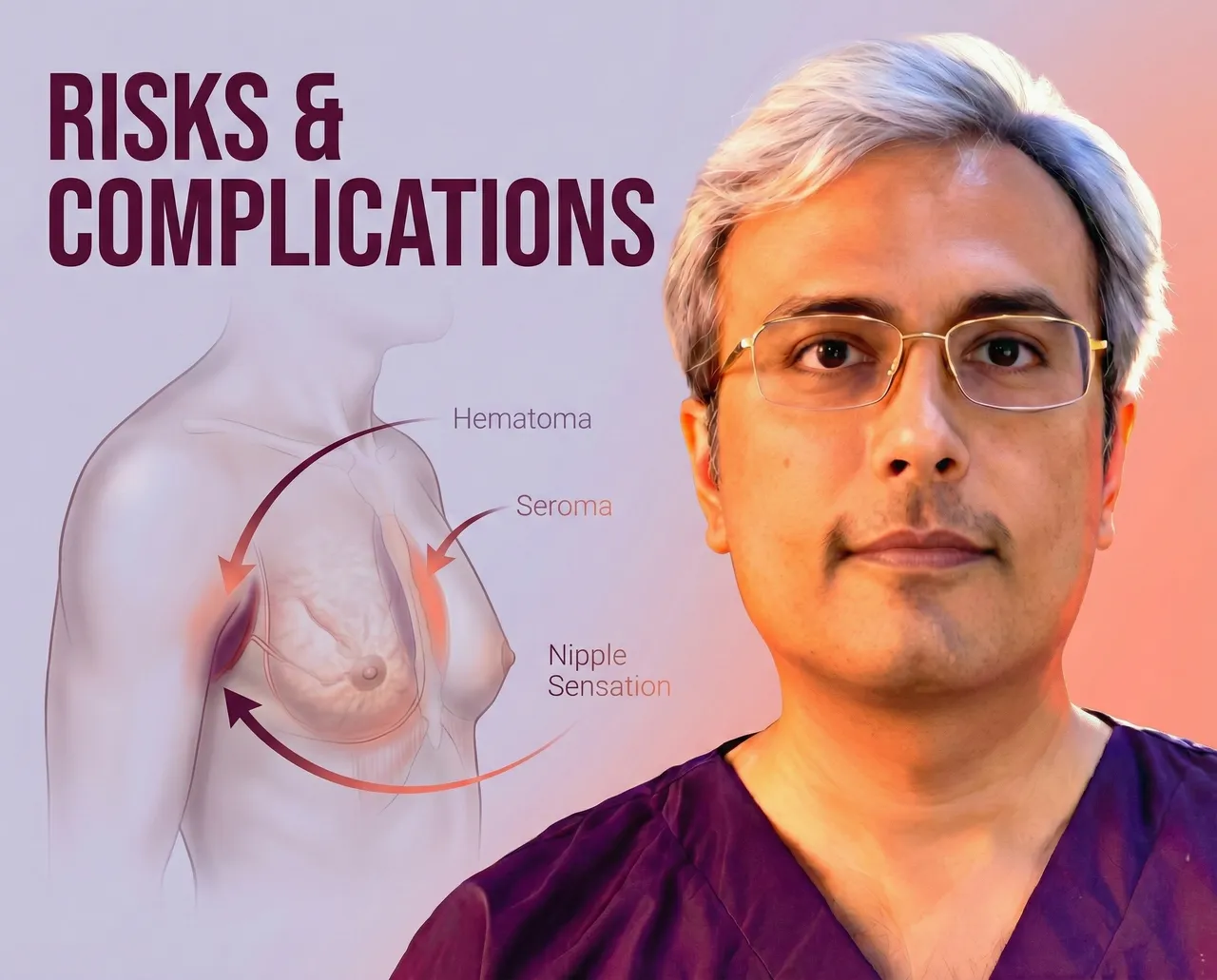
Any surgeon who tells you a procedure has “zero risk” is not being honest with you. Every surgery, from wisdom tooth removal to heart surgery, carries some degree of risk.
However, published series on gynecomastia surgery report that severe complications are rare and that most problems can be treated [1].
You deserve to know exactly what can go wrong, how likely it is, and what is done to prevent it. This guide breaks down the safety profile of Gynecomastia Surgery in Jaipur with total transparency.
Minimising these risks begins with choosing an experienced M.Ch. plastic surgeon who prioritises patient safety above all else.
The Safety Data: What the Research Says
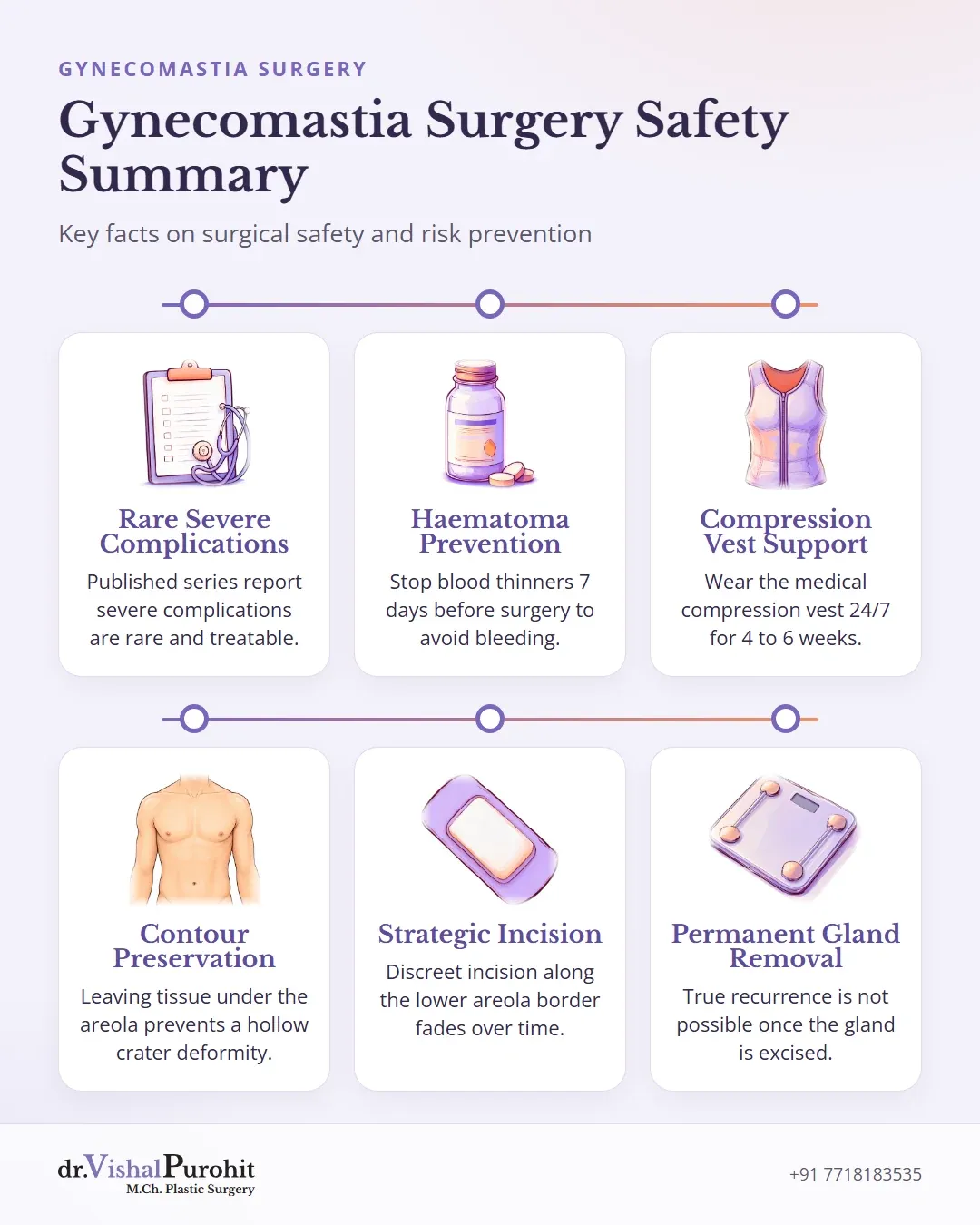
Gynecomastia surgery is a planned (elective) operation, and published case series give a realistic picture of what can happen.
Rates differ with the technique, the grades treated and the length of follow-up, so the figures below describe those studies, not a promise for any one patient.
Overall Complication Rate: Published studies report the following findings across different techniques:
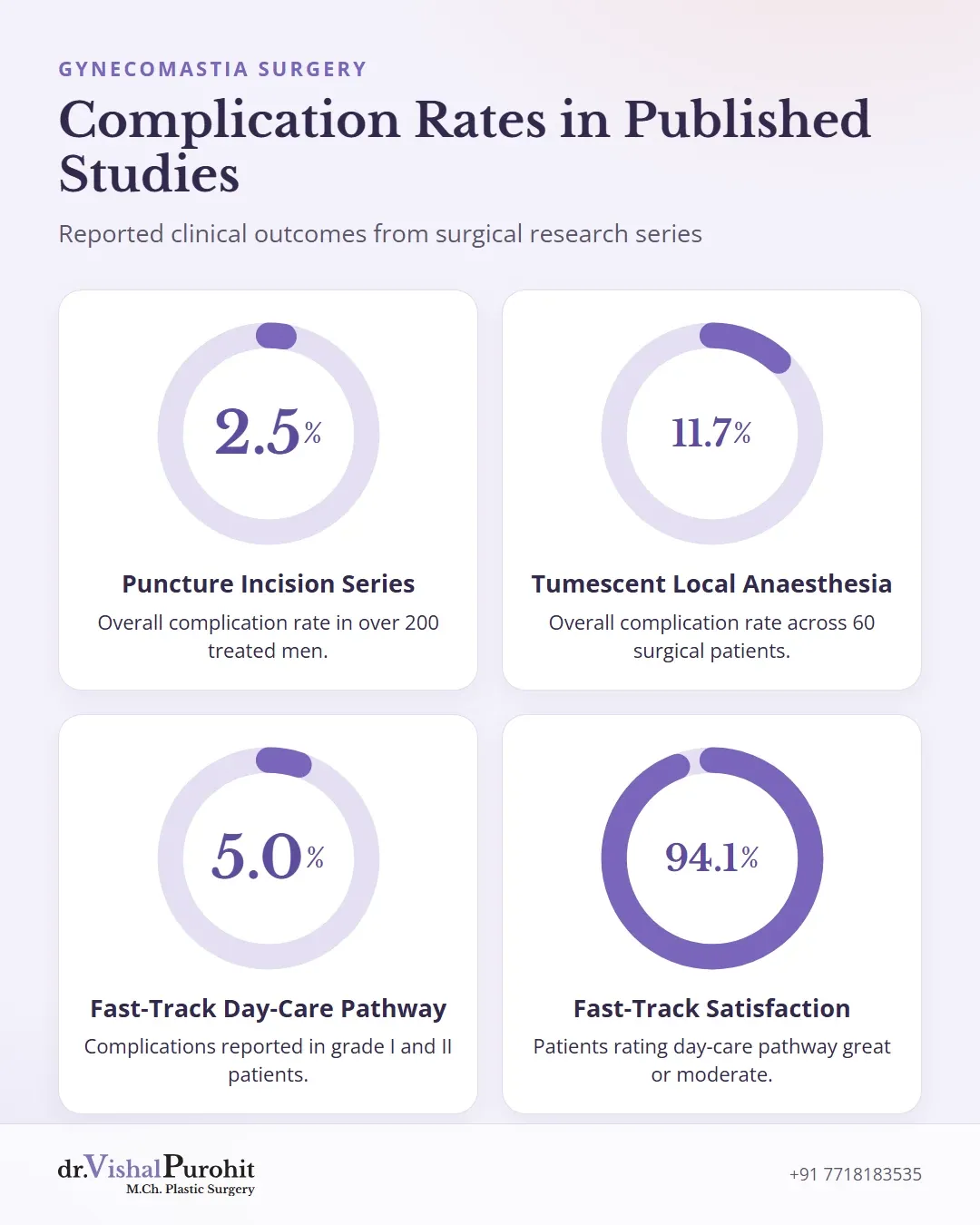
- In a series of more than 200 men treated through a small puncture incision, the total complication rate was 2.5% [2].
- In 60 men operated on under tumescent local anaesthesia between 2010 and 2023, the overall complication rate was 11.7%: 6.7% major complications (hematoma and seroma) and 5% minor complications (nipple-areola retraction and recurrence) [1].
- In a study of grade I and II gynecomastia, complications were 5.0% in a fast-track day-care pathway and 0% in a standard pathway, a difference that was not statistically significant [3].
- More severe complications, such as necrosis of the nipple-areola complex and deep vein thrombosis, are described as rare [1].
Patient Satisfaction: Combining cross-chest liposuction with gland excision through a single minimal incision at the areolar border gave good and satisfactory aesthetic outcomes in grade I and II gynecomastia [4].
In the fast-track study, 94.1% of patients rated the day-care pathway as “great” or “moderate” at the 3-month follow-up [3]. At Kalpana Aesthetics, Dr. Vishal Purohit does not quote outcome or satisfaction percentages for the clinic.
Surgical Safety Profile & Complication Prophylaxis Protocols
| Potential Complication | What Published Series Report | How It Was Managed or Prevented |
|---|---|---|
| Hematoma | 1.0% of 200+ men [2]; 3.3% of 30 patients [4]; 3 of 60 patients [1] | Small hematomas were evacuated at the clinic [2] |
| Seroma (Fluid Pocket) | 1 of 60 patients [1]; 2 patients in the fast-track group [3] | Repeated syringe aspiration [3] |
| Nipple-Areola Retraction (Crater) | 2 of 60 patients [1] | Leaving enough tissue under the areola to avoid depression [4] |
| Superficial Nipple Necrosis | 3 patients in the fast-track group [3] | Healed with conservative treatment [3] |
| Infection | None in the 200+ series [2] | Listed among the risks discussed before consent [5] |
| Altered Nipple Sensation | Can be temporary or permanent [5]; no permanent changes in the 200+ series [2] | Discussed at the day-5 and 1-month visits |
| Undercorrection | 1.0% needed secondary suctioning [2] | Secondary liposuction [2] |
Most Common Complications (And How We Prevent Them)
The American Society of Plastic Surgeons lists several risks of gynecomastia surgery [5]:
- Bleeding (hematoma)
- Fluid accumulation (seroma)
- Infection
- Changes in nipple or breast sensation
- Contour irregularities
- Asymmetry
- Poor wound healing
- Unfavourable scarring
- The possibility of revision surgery
Three of them are explained below.
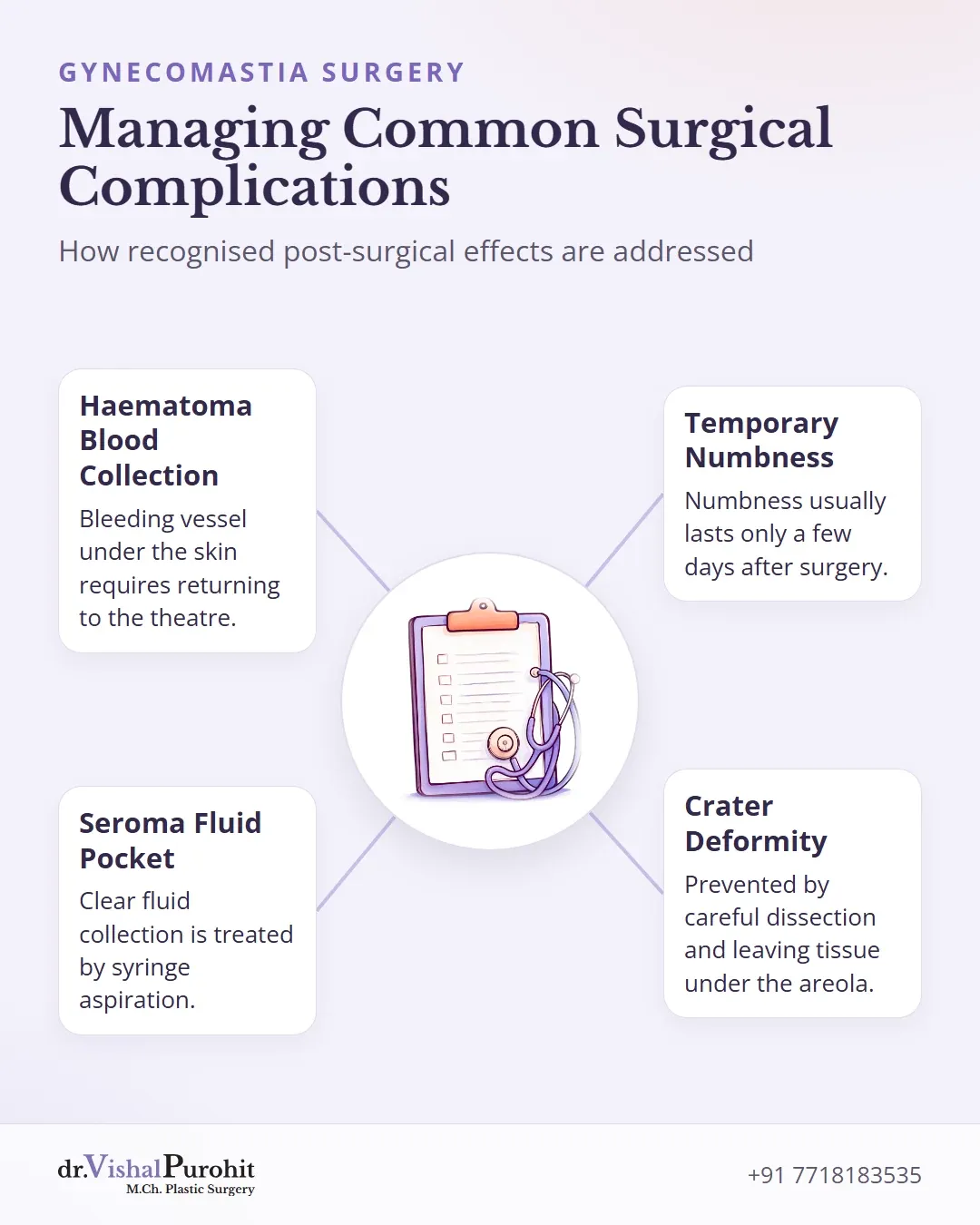
This infographic by Dr. Vishal Purohit details the causes, visualisation, and prevention of common complications like hematoma and seroma following grade 3/4 gynecomastia surgery. It illustrates the successful management and recovery pathways for optimal patient outcomes in Jaipur.
Hematoma (Collection of Blood)
A hematoma is a pool of blood that forms under the skin when a small blood vessel keeps bleeding after surgery. In Dr. Vishal Purohit’s practice, a haematoma needs a return to the operating theatre.
The Data: Hematoma was reported in each of three published series reviewed here: in 1.0% of more than 200 men [2], in 3.3% of 30 patients [4], and in 3 of 60 patients [1]. In the larger series, the small hematomas were evacuated at the clinic [2].
Prevention: Aspirin, anti-inflammatory drugs and herbal supplements can increase bleeding [6]. In Dr. Vishal Purohit’s practice, aspirin, blood thinners and supplements must be stopped 7 days before surgery.
At Kalpana Aesthetics, prevention protocols include several specific measures:
- A custom medical-grade compression vest is worn 24/7 for 4 to 6 weeks
- Shoulder movement is strictly restricted for the first 5 to 7 days
- Jogging resumes around day 21
- Drains are placed only in grade 4 gynecomastia
Help is available 24x7 if anything worries you after surgery. Patients are advised to call the clinic at once for anything abnormal, even if unsure, because early intervention in a complication is the most important factor in the outcome.
Call the surgical team immediately if you notice anything abnormal or worrying after surgery.
Seroma (Fluid Buildup)
A seroma is a pocket of clear fluid that can collect where tissue was removed [5]. In the fast-track study, seromas were treated successfully by repeated syringe aspiration [3]. In Dr. Vishal Purohit’s practice, a seroma is treated by aspiration.
Risk Factors: Surgical drain requirements vary by severity, and Dr. Purohit places drains only in grade 4 while lower gynecomastia grades usually do not need drains.
Following your prescribed gynecomastia surgery recovery timeline, wearing your compression vest as instructed, and attending follow-up visits are described as essential to the success of the surgery [7]. Mandatory clinic visits occur on day 5 (first vest release and dressing change if needed) and at 1 month.
Temporary Numbness
Numbness or decreased sensitivity in the breast area is a recognised effect of gynecomastia surgery [8]. Changes in nipple or breast sensation may be temporary or permanent [5].
Outlook: In a series of more than 200 men, no patient had permanent sensation changes [2]. In Dr. Vishal Purohit’s practice, numbness usually lasts only a few days, though sometimes sensation takes longer to return; sensation is checked at the day-5 and 1-month visits.
Aesthetic Risks: Contour Irregularities
The goal is a flat, smooth chest. However, contour and shape irregularities and asymmetry are listed among the risks of the operation [5].
Crater Deformity
If too much tissue is removed directly behind the nipple, the nipple can retract and the chest can look excessively flattened [9]. Leaving enough tissue under the areola preserves the contour of the nipple-areola complex and avoids its depression [4].
Asymmetry
No two sides of the body are perfectly identical. Breasts that are not the same size or shape are listed among possible complications [8], so minor differences in shape may persist.
Undercorrection
Liposuction alone usually will not fully correct a significant proportion of gynecomastia cases, and recurrence may be higher when the gland is not removed [2]. In grade I and II gynecomastia, under-resection of gland tissue is the most common aesthetic complaint, particularly after liposuction alone [10].
In the tumescent series, two patients had retraction of the nipple-areola complex [1].
In Dr. Vishal Purohit’s practice, crater (saucer) deformity is prevented by careful dissection. An established saucer deformity is not operated on for a year because massage and skin remodelling over time correct it in most patients. If a deformity persists, treatment options include:
- Liposuction of the whole chest
- Subcision and fat grafting where the areola is stuck to the underlying muscle
Dr. Vishal Purohit therefore combines VASER or power liposuction with gland excision through an inconspicuous hemi-periareolar incision along the lower half of the areola. If a patient is not satisfied, a revision or touch-up (such as liposuction) is planned, with a gap of 8 to 9 months after the first surgery. The FAQs on risks and complications of gynecomastia surgery cover more.
Dr. Vishal Purohit explains potential complications of gynecomastia surgery, including residual tissue and crater deformities. This infographic details the causes of undercorrection and overcorrection in male chest contouring.
Scarring and Factors that Undermine Permanence
When committing to gynecomastia surgery, you want a lasting improvement that restores confidence. Dr. Purohit’s focus is on keeping incisions inconspicuous and explaining the lifestyle choices that help results last.
Key points
- Surgical scars are placed along natural contours such as the lower areola border and fade over time.
- Gland excision provides permanent results, though stable body weight and avoiding triggering substances are essential to prevent new fullness.
- Any excised tissue is routinely examined by pathology to confirm health and safety.
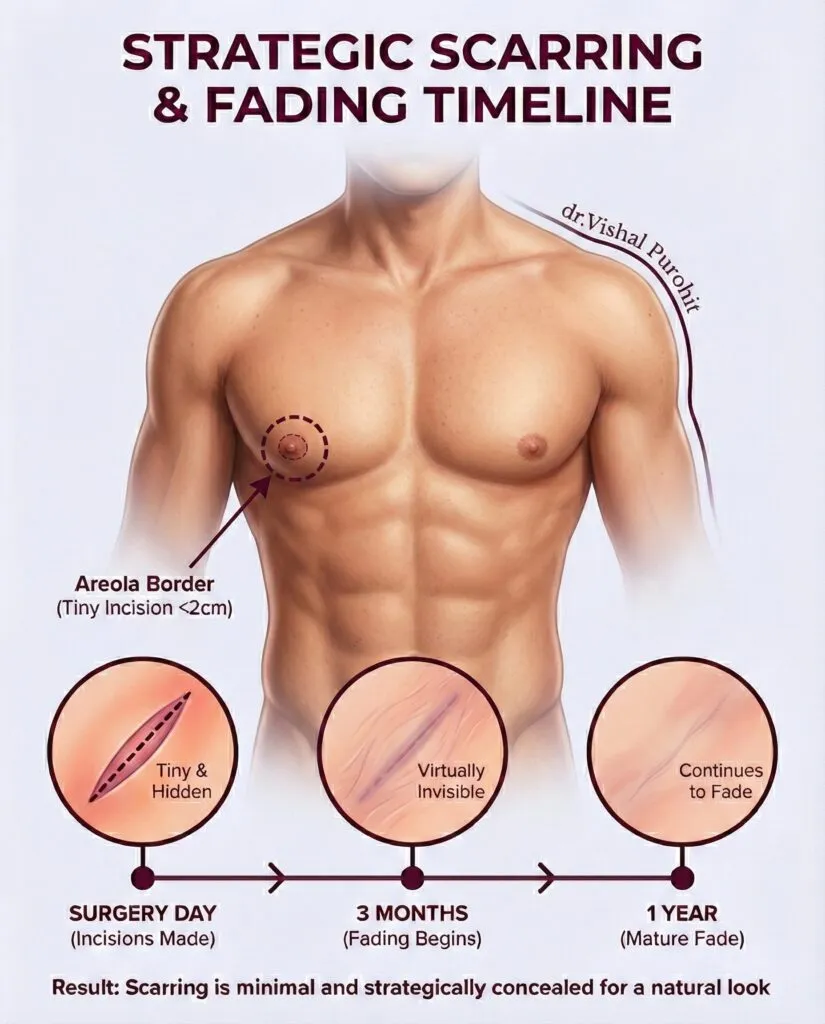
Dr. Vishal Purohit uses a small incision along the lower border of the areola for gynecomastia surgery to keep the scar inconspicuous. Like every surgical scar, it is permanent but continues to fade over time.
Scarring is Manageable and Strategic
Any surgical treatment for gynecomastia requires incisions. All gynecomastia surgery scars are permanent, although they continue to fade over time [11]; they fade but never go away completely [8].
- Technique: At Kalpana Aesthetics, Dr. Vishal Purohit performs combined liposuction and gland excision through an inconspicuous hemi-periareolar incision along the lower half of the areola border. Published minimal-incision techniques work in a similar way, for example through a single 1-cm stab incision at the lower outer areolar border [4]. Understanding the reality of gynecomastia surgery scars helps set realistic post-operative expectations.
- Concealment: Most incision lines are concealed within the natural contours of the chest, although some may be visible [11].
- Fading: Final results may take 3 to 6 months, and incision lines continue to fade over time [11]. In the cross-chest series, 6.7% of patients had a hypopigmented (lighter) scar, which did not affect the aesthetic outcome [4].
Avoiding Recurrence Requires Commitment
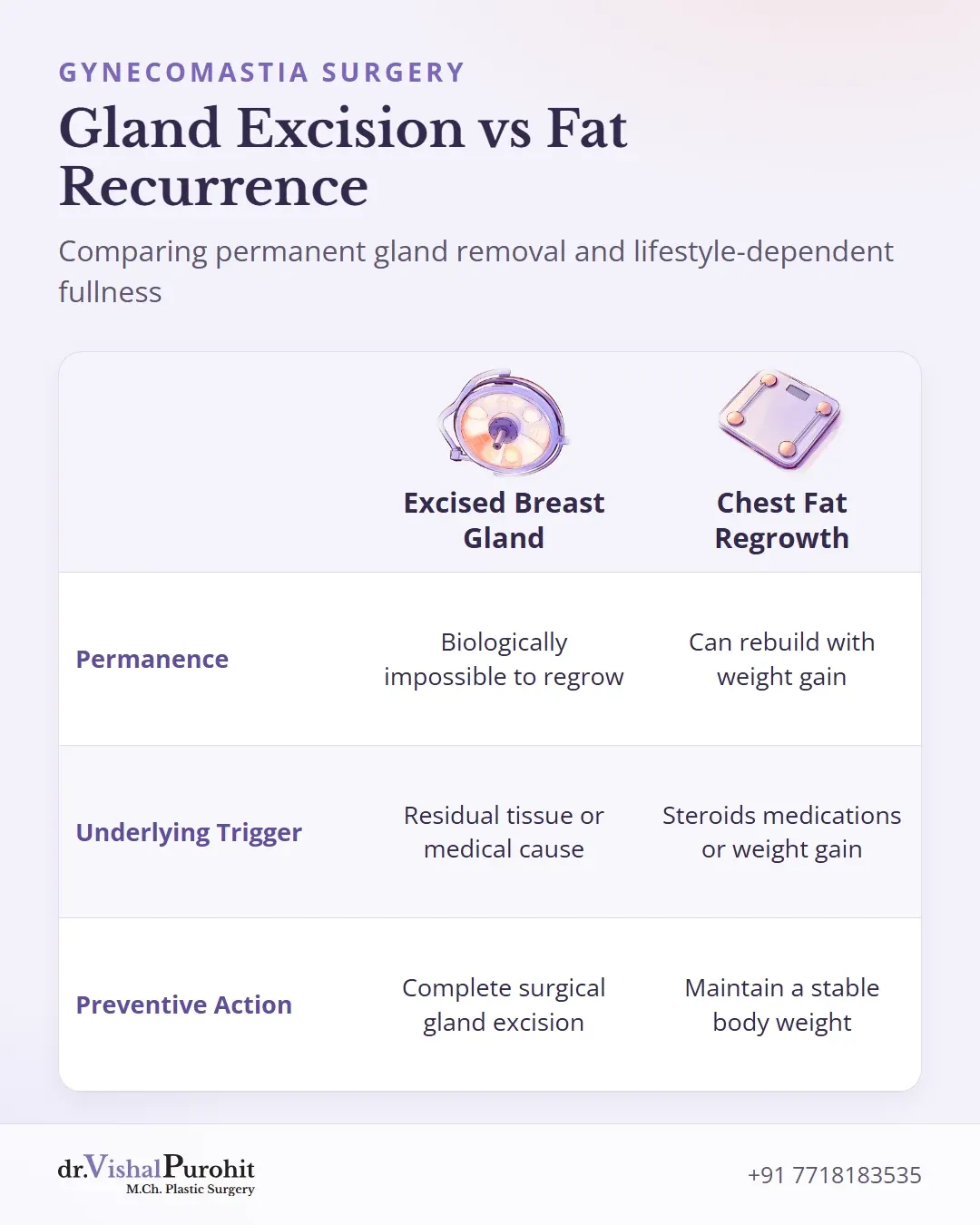
The results of gynecomastia surgery are permanent in many cases [7]. In Dr. Vishal Purohit’s practice, once the gland is removed, true recurrence is biologically not possible; any fullness noticed afterwards is residual tissue, which needs a planned return to theatre.
However, if gynecomastia resulted from certain prescription medications, drugs (including steroids) or weight gain, you must stay free of these substances and remain at a stable weight to maintain your results [7].
- Recurrence in Studies: In Dr. Vishal Purohit’s practice, true recurrence is biologically impossible once the gland is excised, and any fullness represents residual tissue that requires a planned return to theatre. In published literature, true recurrence was uncommon in published series: one of 60 patients in the tumescent series needed an additional procedure [1], and no recurrence was seen at the 1-year follow-up in the round-the-clock series [9]. Residual tissue left after surgery has to be told apart from true recurrence, because a true recurrence raises suspicion of an underlying medical cause [10].
- Lifestyle Management: Maintain a stable weight. If your gynecomastia was linked to a substance such as anabolic steroids, stay off it. Discuss any change in prescription medicines with your physician first [7].
- Tissue Testing: At Kalpana Aesthetics, all excised breast tissue is always sent for histopathology. Surgeons have reported a recurrence that turned out to be ductal carcinoma in situ on pathology [10], so any new male breast lump needs to be checked promptly.
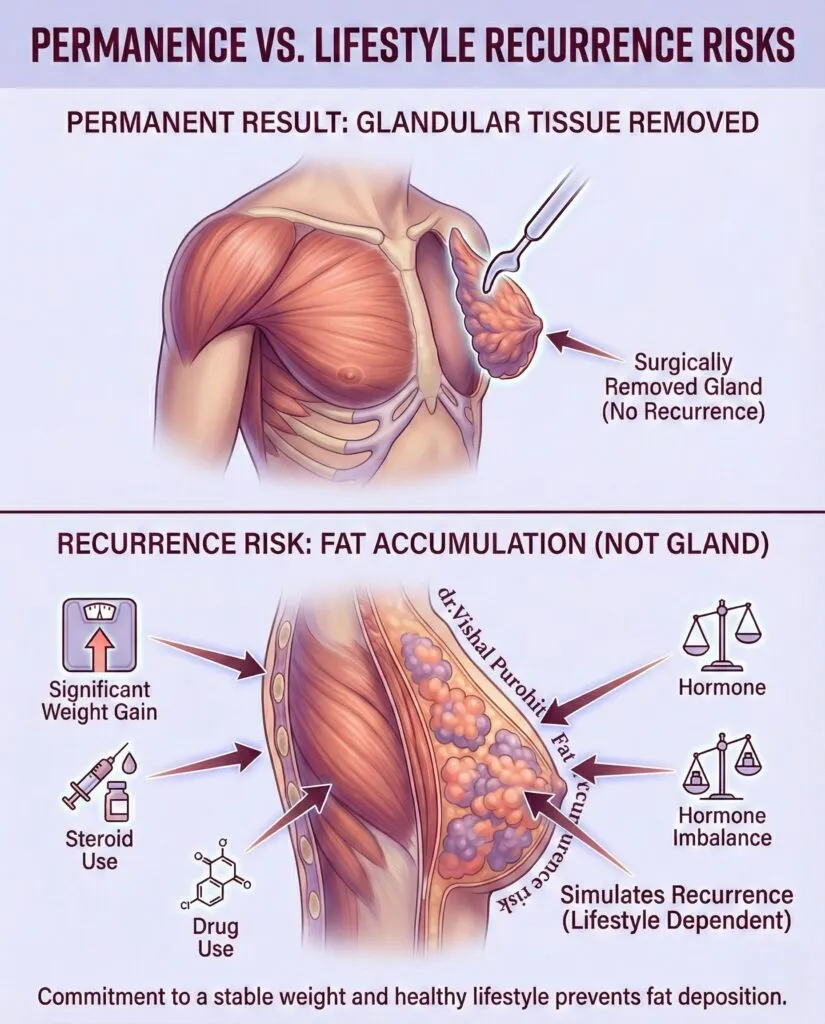
This medical infographic, presented by Dr. Vishal Purohit, contrasts surgical removal of the gland with fat that can build up again in the chest if weight is gained. Keeping a stable weight after surgery helps maintain the result.
Anaesthesia Safety: Local vs. General
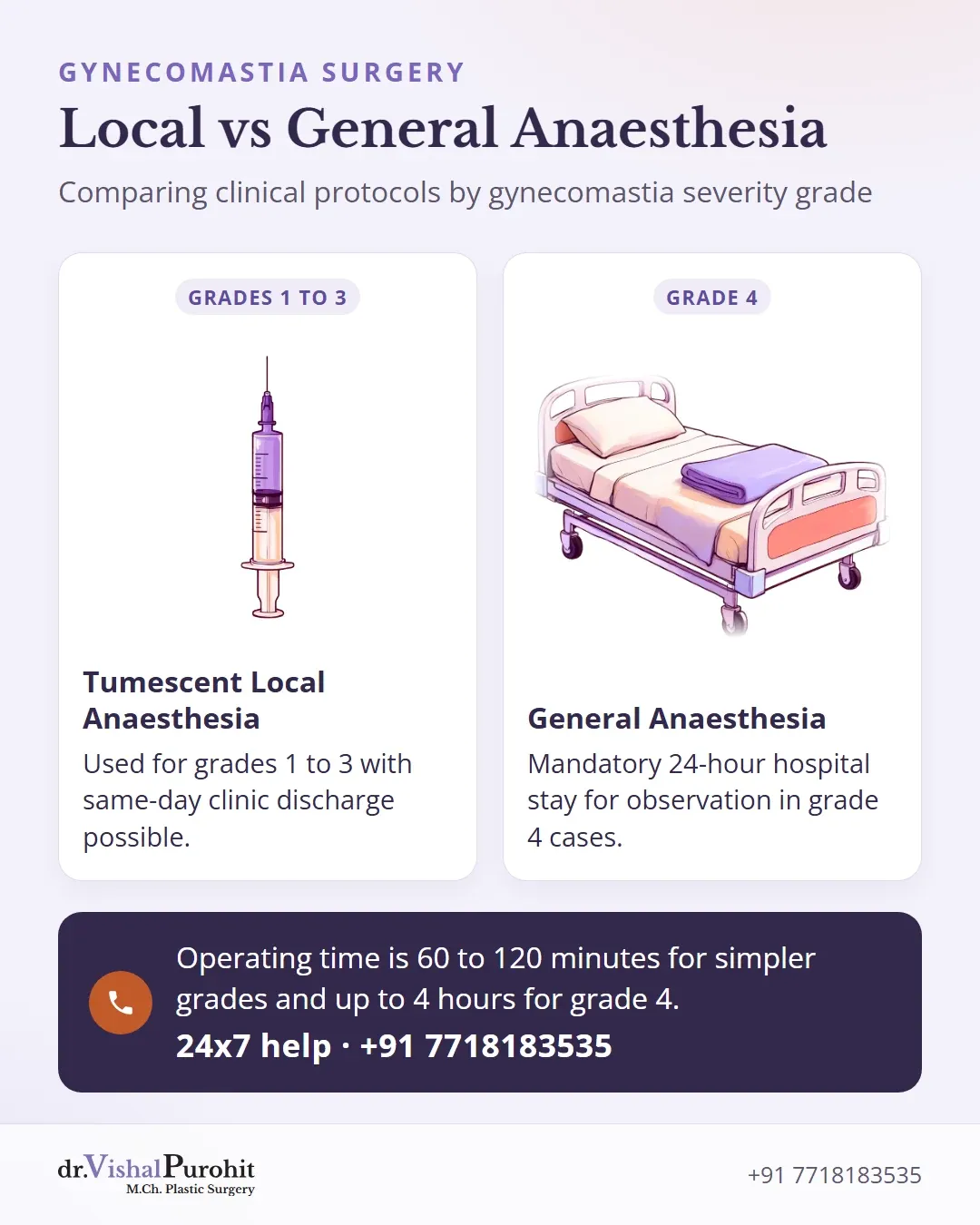
Many patients are anxious about “going under.” At Kalpana Aesthetics, gynecomastia surgery is performed under either local anaesthesia (LA) or general anaesthesia (GA). Dr. Vishal Purohit performs grades 1 to 3 under local anaesthesia, whereas grade 4 requires a longer procedure and is done under general anaesthesia.
Key points
- Gynecomastia surgery is performed under either local or general anaesthesia depending on the grade and procedure length.
- Grades 1 to 3 are typically managed with tumescent local anaesthesia, allowing same-day discharge.
- Grade 4 cases require general anaesthesia and a mandatory 24-hour hospital stay for observation.
- Local Anaesthesia: Tumescent local anaesthesia means infiltrating a dilute solution containing lidocaine and epinephrine into the tissues, which numbs them and narrows small blood vessels [1]. In a series of 60 men, there was no lidocaine or adrenaline toxicity and no case needed conversion to general anaesthesia [1]. Under LA, same-day discharge is possible at Kalpana Aesthetics; patients travelling from outside Jaipur may stay overnight.
- General Anaesthesia: Under GA, a minimum 24-hour hospital stay for observation is mandatory at Kalpana Aesthetics. Some patients prefer to be asleep: in the fast-track study, four patients asked for general anaesthesia because of fear of surgery [3].
- Safety Record: Even for local anaesthesia, the authors of the tumescent study recommend that an anaesthesiologist is present to monitor oxygen saturation and heart and breathing status, with the option to convert to general anaesthesia [1]. Operating time at Kalpana Aesthetics is 60 to 120 minutes for simpler grades and up to about 4 hours for grade 4 or massive gynecomastia.
Reducing Your Risk: The Patient’s Role
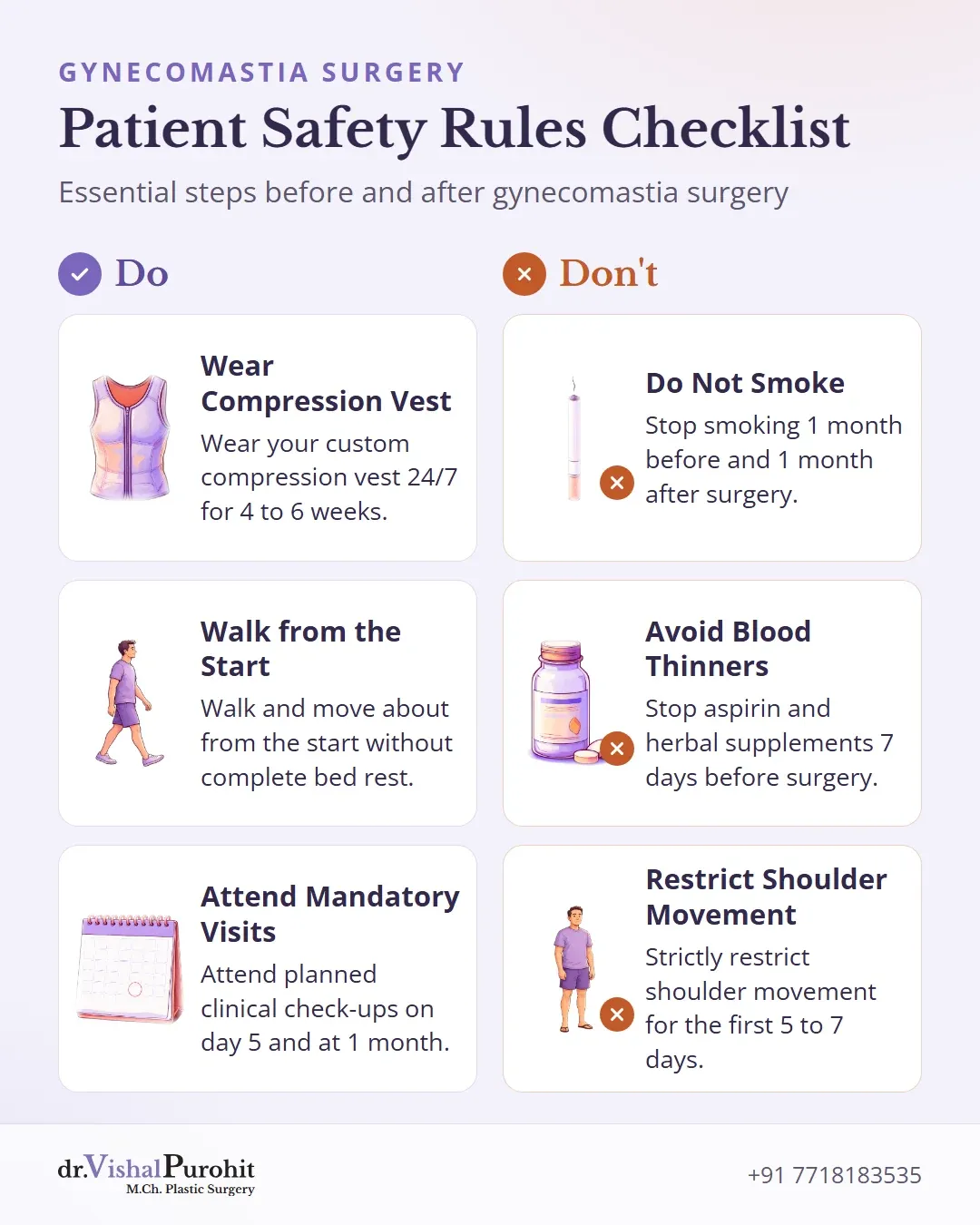
Safety is a partnership. You can help lower your risk of complications by following these rules:
- Stop Smoking: Stop smoking for 1 month before and 1 month after surgery; Dr. Purohit considers this a good opportunity to quit smoking altogether [6].
- Avoid Blood Thinners: Stop aspirin, blood thinners and supplements 7 days before surgery, as they can increase bleeding [6]. Never stop a prescribed medicine on your own; ask first.
- Wear Your Vest: At Kalpana Aesthetics, the custom medical-grade compression vest is your “second skin”: it is worn 24/7 for 4 to 6 weeks.
- Keep Moving, Protect Your Shoulders: Bed rest is never advised; you walk and move about from the start. Shoulder movement is strictly restricted for the first 5 to 7 days and then increased gradually from the second to the fourth week.
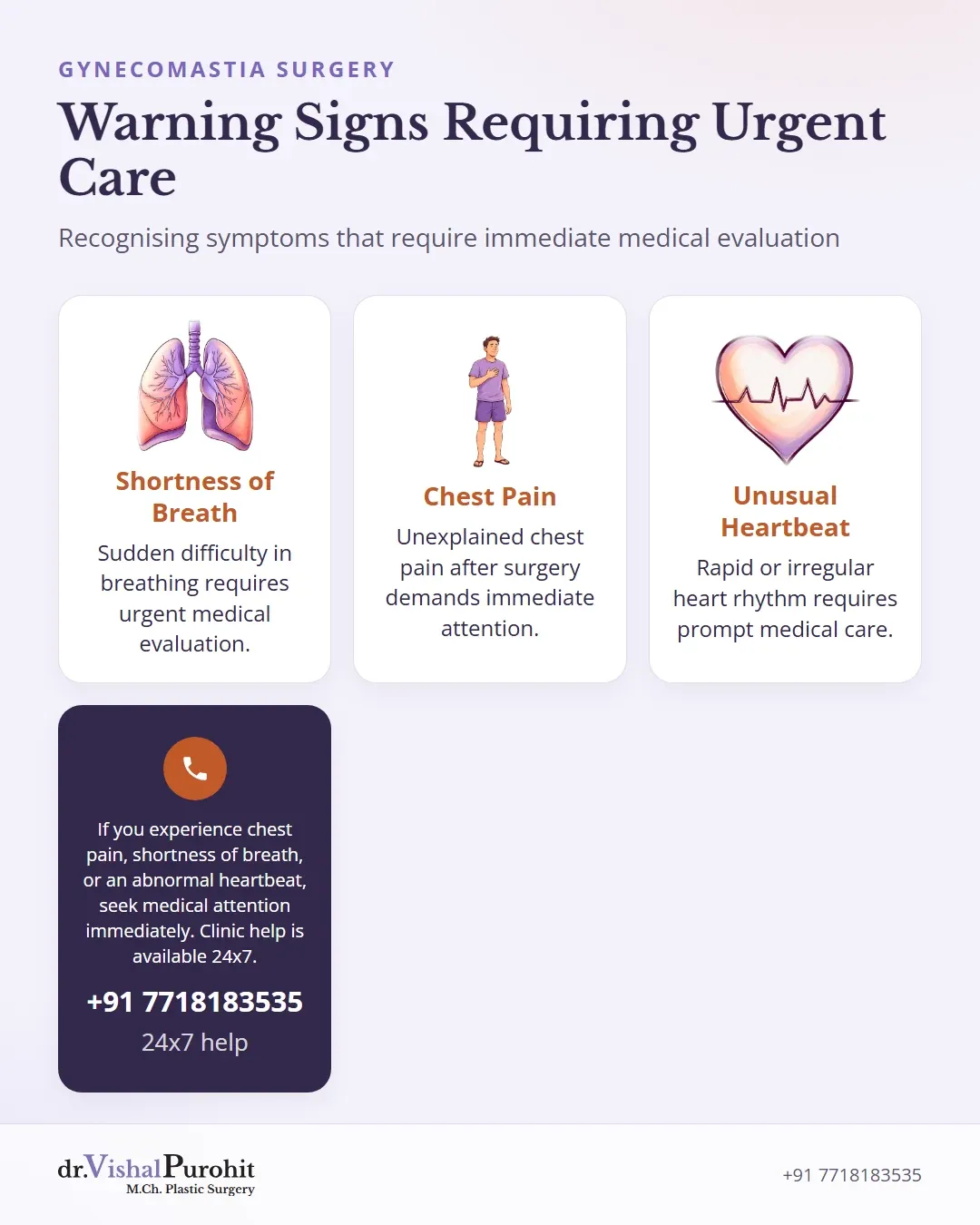
- Attend Follow-Up and Ask for Help: Visits on day 5 and at 1 month are mandatory, and 24x7 help is always available. If you experience shortness of breath, chest pain or an unusual heartbeat, seek medical attention immediately [7].
Expert Gynecomastia Surgery & Male Chest Contouring in Jaipur
Are you dealing with enlarged male breast tissue or stubborn chest fullness? Schedule a confidential clinical evaluation with Dr. Vishal Purohit, M.Ch. plastic surgeon in Jaipur, registered with the Rajasthan Medical Council.
Understanding the underlying causes, grades, and treatment options helps clarify whether glandular tissue, excess fat, or both contribute to the condition.
For those considering correction, gynecomastia surgery in Jaipur covers tailored surgical techniques, anaesthesia options, hospital stay details, before-and-after results, and appointment booking.
This is educational information, not medical advice.