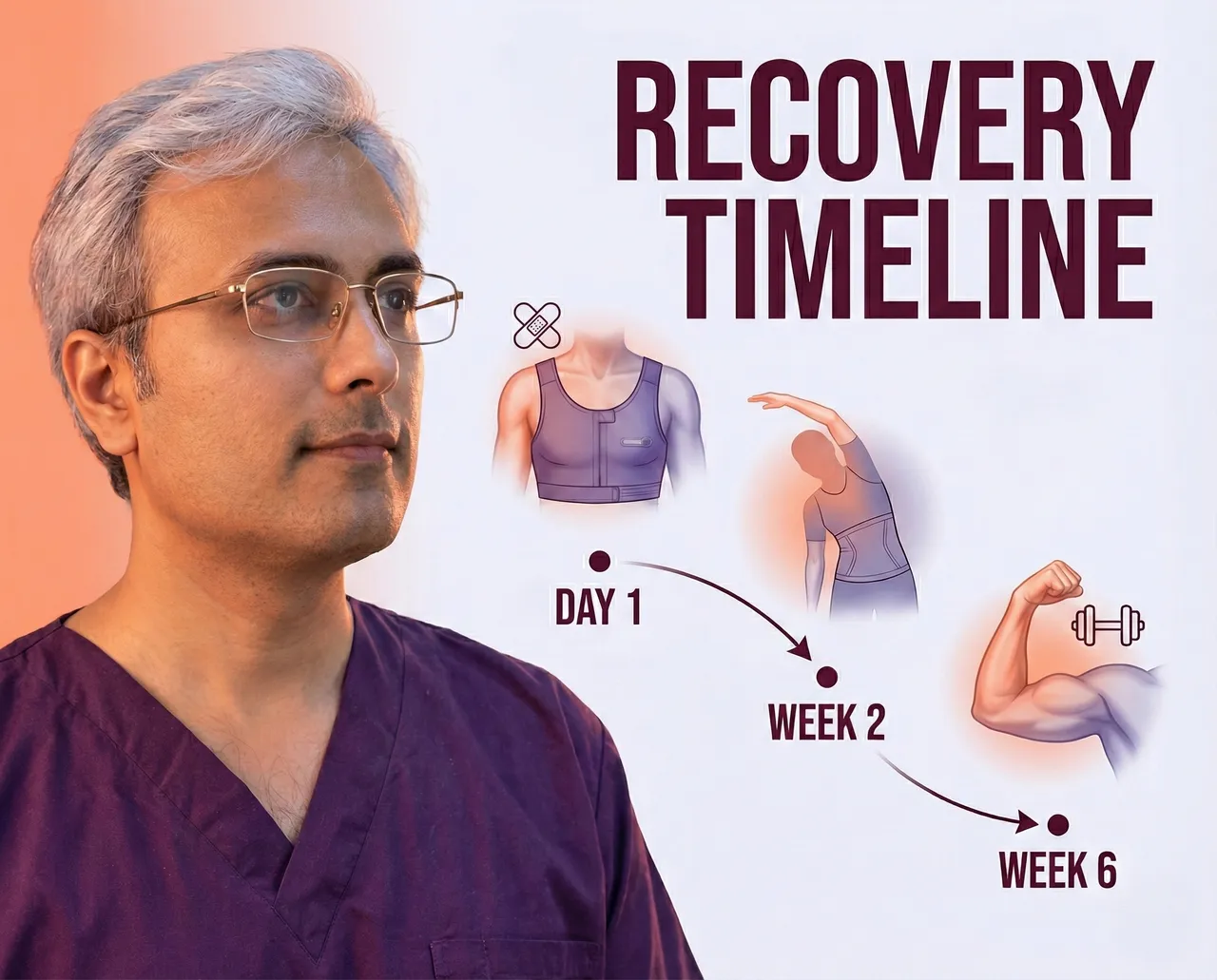
Gynecomastia surgery removes the enlarged gland and excess fat to give a flatter chest. At Kalpana Aesthetics in Jaipur, Dr. Vishal Purohit performs it in 60 to 120 minutes for most grades, under local or general anaesthesia, but the final result also depends on how recovery is managed.
This guide follows his recovery protocol week by week: the compression vest, wound and scar care, the return to work, driving and exercise, and the warning signs that need a call to the clinic. If you are still deciding, start with eligibility and preparation for gynecomastia surgery.
The Recovery Timeline After Gynecomastia Surgery
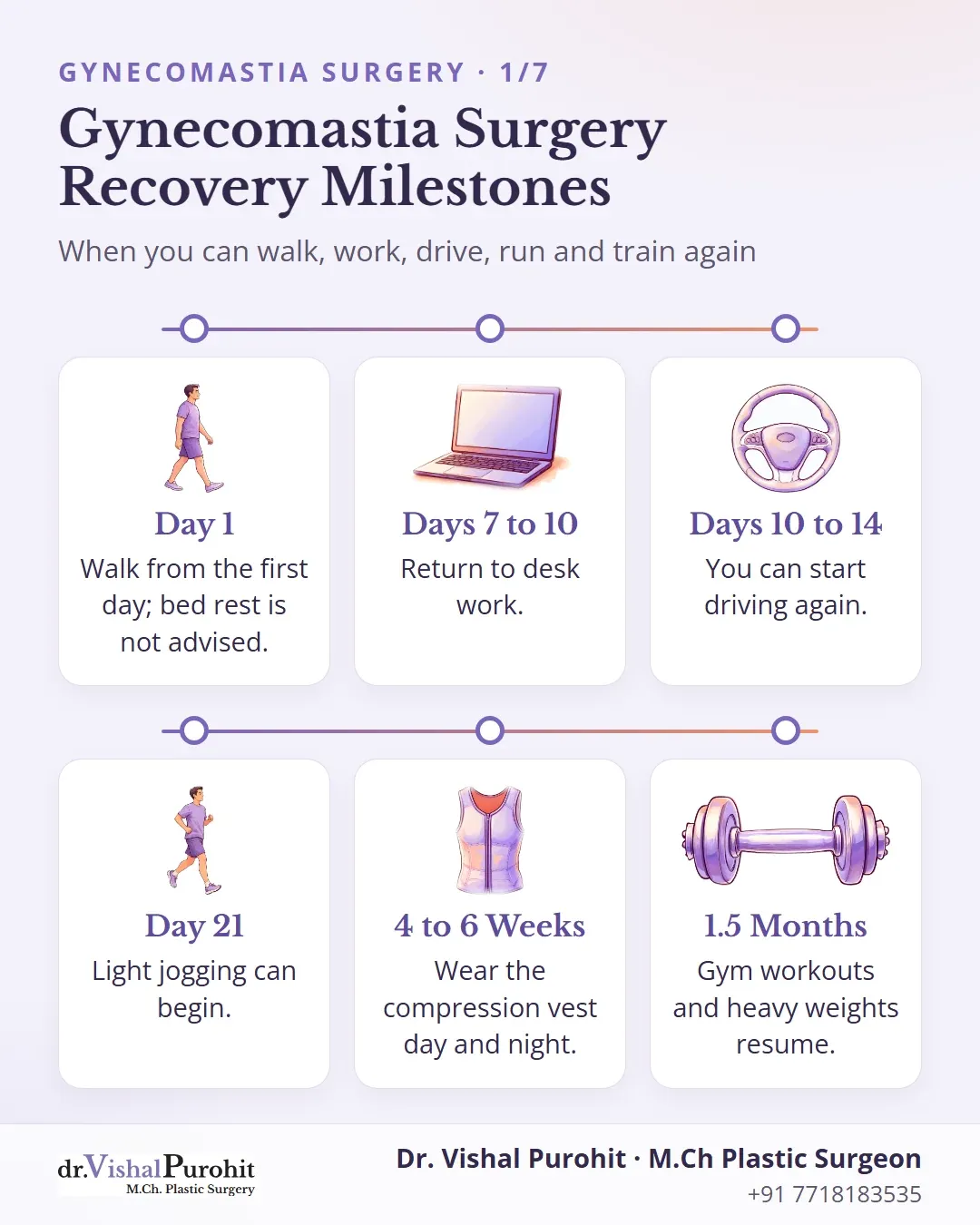
Recovery follows a structured progression to protect healing tissues while allowing a steady return to daily life. At Kalpana Aesthetics in Jaipur, Dr. Vishal Purohit manages recovery through defined phases.
Day of Surgery
Following gynecomastia surgery, the length of stay depends directly on the type of anaesthesia administered. When the procedure is performed under local anaesthesia, same-day discharge is possible, though patients travelling from outside Jaipur may choose to stay overnight. When general anaesthesia is used, a minimum 24-hour hospital stay for observation is mandatory. Drains are placed only in grade 4 gynecomastia; lower grades usually do not need drains. From the day of surgery, bed rest is never advised, and patients are encouraged to walk and move about from the start.
First Week
Strict shoulder restriction is maintained for the first 5 to 7 days to protect the surgical site. During the initial 24 to 48 hours, patients experience swelling, bruising, and discomfort [1]. On day 5, a mandatory clinic visit takes place for the first pressure-garment release and dressing removal or dressing change if required. Surgical incisions must not be subjected to excessive force, swelling, abrasion, or motion during early healing [2].
Days 7 to 14
Patients can resume desk work between day 7 and day 10. Driving can be resumed between day 10 and day 14.
Weeks 2 to 4
Shoulder movement is increased gradually from the second to the fourth week. Patients can return to light jogging starting on day 21.
1 Month to 1.5 Months
A mandatory follow-up visit is scheduled at 1 month. Patients wear a custom medical-grade compression vest 24/7 for 4 to 6 weeks to ensure proper skin redraping. Full shoulder movement—including activities such as swimming, bowling, and arm circling—is permitted at 1 month to 1.5 months. Gym workouts, heavy weights, contact sports, and sexual activity can also be resumed at 1.5 months. Literature notes that full recovery across physical activities can take up to 6 weeks [1].
Later Months
Scars fade over time but do not disappear completely [3]. The result usually lasts, provided weight stays stable and medicines or substances that can stimulate breast tissue (such as anabolic steroids) are avoided [2, 1]. If a patient is not satisfied with the chest contour, Dr. Vishal Purohit plans any revision or touch-up, such as secondary liposuction, with a gap of 8 to 9 months after the first surgery. See whether gynecomastia can come back after surgery.
| Time | What to expect | What you can do |
|---|---|---|
| Day of surgery | Immediate post-operative observation; drains present only for grade 4 | Walk and move about from the start; discharge home or stay overnight based on anaesthesia |
| Days 1–6 | Swelling, bruising, and mild discomfort; mandatory day-5 garment release visit | Strict shoulder movement restriction; walking permitted; avoid bed rest |
| Days 7–14 | Early tissue healing and steady reduction in acute soreness | Return to desk jobs (day 7–10); resume driving (day 10–14) |
| Weeks 2–4 | Gradual restoration of upper-body mobility; continuous vest wear | Gradually increase shoulder movement; resume jogging from day 21 |
| Weeks 4–6 | Compression garment wear completed (4–6 weeks); mandatory 1-month check | Full shoulder movement (swimming, bowling, arm circling at 1–1.5 months); resume gym, weights, contact sports, and sexual activity at 1.5 months |
| Later months | Scars continue to mature and fade | Unrestricted lifestyle; evaluation for touch-up only after 8–9 months if indicated |
Compression Vest, Swelling and Bruising
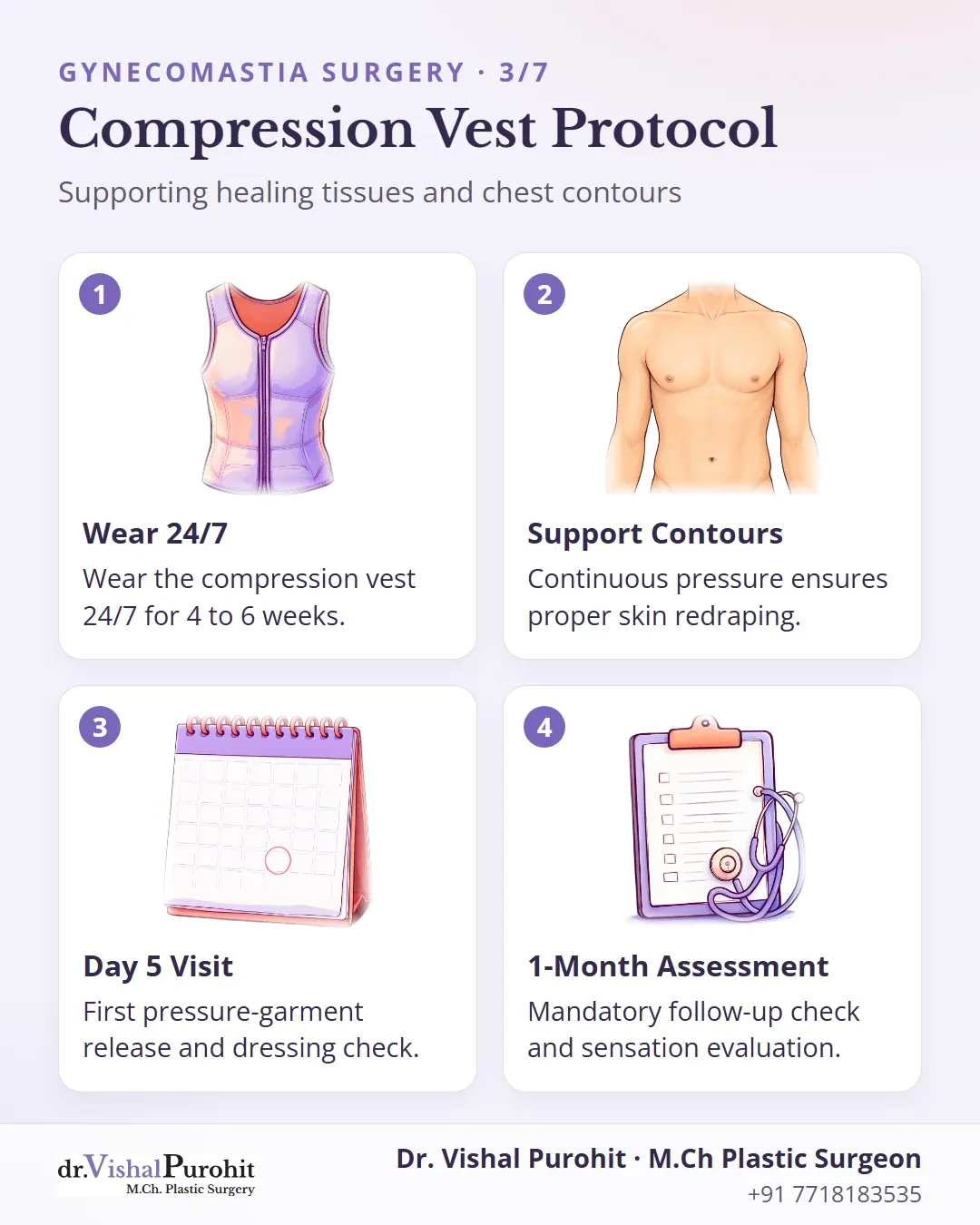
Managing post-operative swelling and tissue adaptation is an essential stage of gynecomastia recovery. Following surgery, Dr. Vishal Purohit advises patients at Kalpana Aesthetics in Jaipur to wear a custom medical-grade compression vest 24/7 for 4 to 6 weeks. This continuous pressure supports the treated chest contours and ensures proper skin redraping. Common questions about garments and dressings are answered in the FAQ section on compression garments, dressings and wound care.
Patients attend a mandatory clinic visit on day 5 for their first pressure-garment release, along with dressing removal or a dressing change if required. Subsequent formal assessment takes place at a mandatory follow-up visit at 1 month.
Swelling, Bruising and Fluid Accumulation
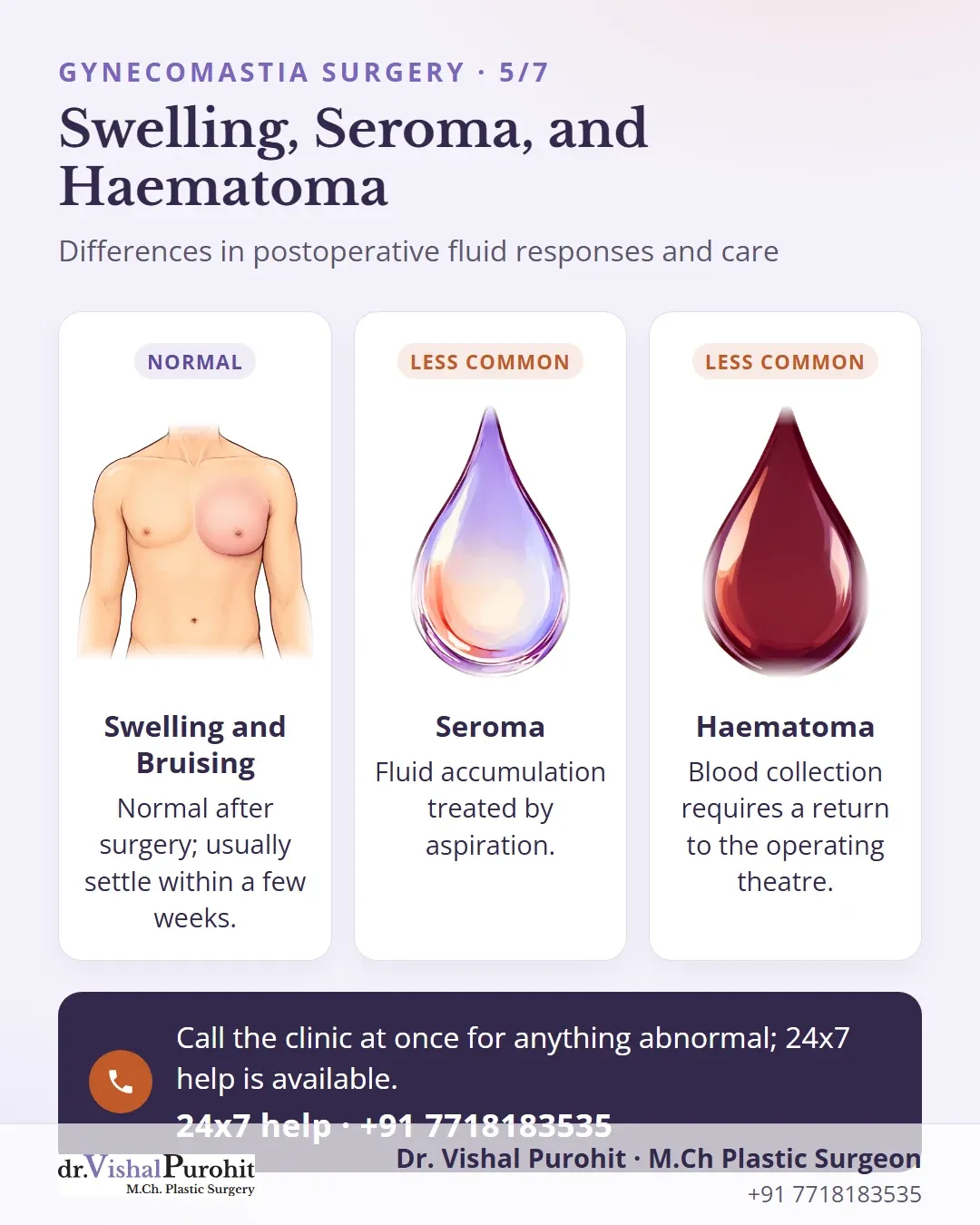
Surgical recovery involves predictable physical responses as tissues heal:
- Swelling and Bruising: Experiencing swelling and bruising across the chest area is normal after gynecomastia surgery [1]. These changes typically subside within a few weeks [1].
- Seroma and Haematoma: Fluid accumulation is recognized as a less common surgical risk [1]. In Dr. Vishal Purohit’s practice, a seroma is treated by aspiration, whereas a haematoma requires a return to the operating theatre.
When to Contact the Clinic
While mild discomfort, manageable bruising, and moderate swelling are expected healing responses [1], sudden or uneven changes require prompt evaluation. Patients should look out for signs such as increased redness, sudden swelling, or discharge, which may indicate an infection or unexpected complication [1]. Dr. Vishal Purohit advises patients to call the clinic at once for anything abnormal, even if unsure, because early intervention in a complication is the most important factor in the outcome.
Kalpana Aesthetics provides 24x7 help to all patients following surgery. If there is rapid enlargement, worsening asymmetrical swelling, or unexpected discharge from the incision sites, patients can immediately contact Dr. Vishal Purohit’s team at +91 7718183535 for guidance.
Incision Care and Scar Management
Every surgical incision leaves a scar. Minimizing its visibility and promoting sound healing depend on precise placement and systematic postoperative care.
Incision Placement and Initial Wound Care
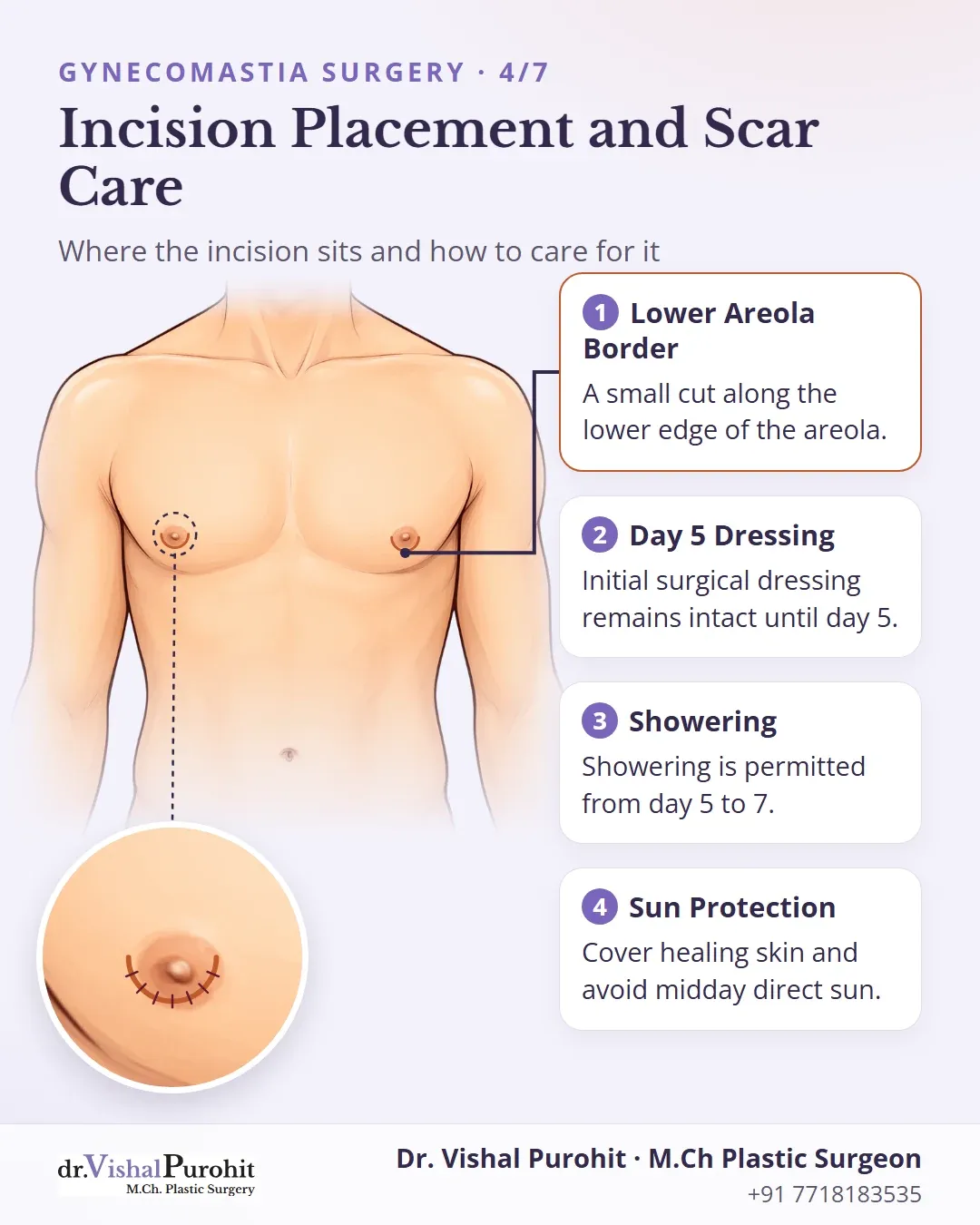
At Kalpana Aesthetics in Jaipur, Dr. Vishal Purohit performs glandular excision through an inconspicuous hemi-periareolar incision along the lower half of the areolar border. Where the scar sits and how it settles is covered in gynecomastia surgery scars.
The initial surgical dressing remains in place until the mandatory follow-up visit on day 5, when Dr. Purohit performs the first pressure-garment release and checks or changes the dressing. To protect the healing wound edges, strict shoulder restriction is maintained for the first 5 to 7 days, and a custom medical-grade compression vest is worn 24/7 for 4 to 6 weeks. The vest is not removed for showering before the first dressing on day 5; showering is permitted from day 5 to 7 after this dressing is evaluated. Patients should call the clinic immediately for anything abnormal or warning signs, as early intervention is vital for managing complications, and 24x7 clinical support is always available.
Scar Maturation and Care
Unfavorable scarring remains a recognized potential risk after gynecomastia surgery [4]. Although individual tissue response varies, general evidence in wound management demonstrates the value of non-invasive scar interventions:
- Silicone therapy: In wound care, silicone gel sheets are widely recognized for their effectiveness in improving the texture and color of scars, while silicone-based creams assist in fading scar tissue [5].
- Sun protection: Protecting healing scars from sun exposure is critical to prevent long-term sun damage, protect skin health, and minimize mark visibility [6]. Patients should cover healing skin with clothing, seek shade, and steer clear of direct sunlight, especially between 10 a.m. and 4 p.m. [6].
In Dr. Purohit’s practice, routine scar treatment is necessary for only a few patients; firm scar massage and topical silicone sheets or gel are initiated only if signs of a hypertrophic scar appear.
Returning to Exercise and the Gym
Resuming physical activity after gynecomastia surgery requires a phased progression to protect the surgical site while encouraging healthy recovery.
Clinic Activity Milestones
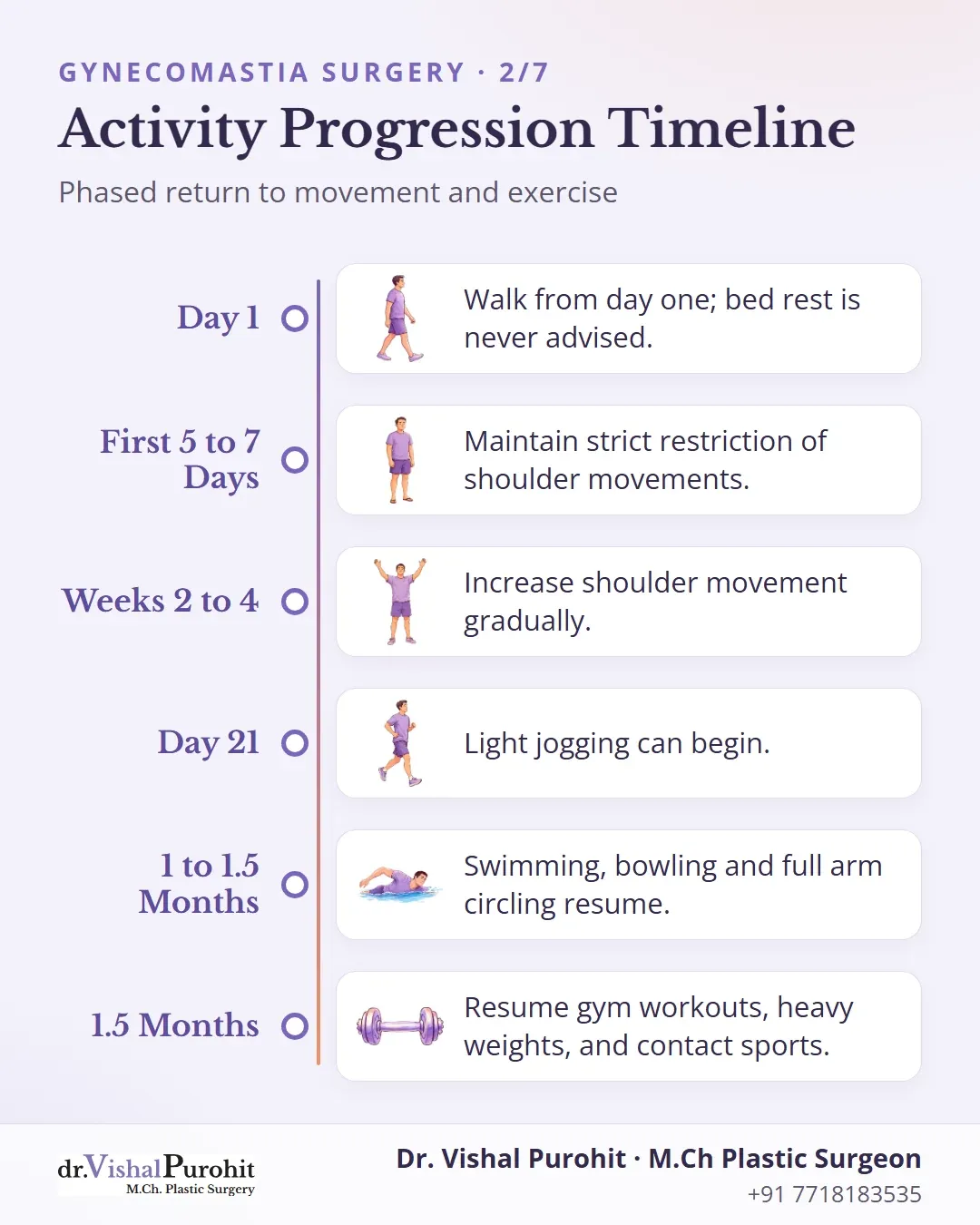
At Kalpana Aesthetics in Jaipur, Dr. Vishal Purohit advises patients against complete bed rest. Walking and gentle movement begin from day one to maintain basic mobility.
Recovery follows a structured activity timeline:
- Walking: Begins immediately from day one; bed rest is never advised.
- Shoulder restriction: Strict restriction of shoulder movements is required for the first 5 to 7 days, with movement gradually increasing through weeks two to four.
- Jogging: Light cardiovascular running or jogging can be safely resumed from day 21.
- Full shoulder mobility: Unrestricted shoulder movement, including swimming, bowling, and full arm circling, is permitted at 1 month to 1.5 months.
Strenuous Activity and Weight Training
Heavy exertion that strains the chest wall too early is best avoided while the tissues heal; a collection of blood (haematoma) is a recognised risk of the operation [4].
Dr. Vishal Purohit advises that patients can resume the gym, weight training, contact sports, and sexual activity at 1.5 months post-surgery.
Patients should avoid heavy chest exercises and resistance training until cleared during routine postoperative follow-ups to ensure healing tissues remain undisturbed.
Numbness, Firmness and the Final Result
Nipple and Chest Sensation
Surgical correction of male breast tissue can lead to sensory changes across the chest and nipple-areola complex. Recognized risks of gynecomastia surgery include a loss of sensation, numbness, or decreased sensitivity in the breast area [3]. In addition, patients may experience prolonged pain [3].
In Dr. Vishal Purohit’s practice, numbness after gynecomastia surgery usually lasts only a few days, though sensation can sometimes take longer to return. He checks sensation during the mandatory follow-up visits on day 5 and at 1 month.
Firmness and Lumpiness Under the Skin
Revealing the Final Contour
Tissue healing and scar maturation take time following male breast reduction. Scars fade over time but do not disappear entirely [3].
Diet, Rest and Emotional Recovery
Nutrition for Healing
Maintaining a balanced diet rich in vitamins and minerals leading up to surgery supports healing and recovery [1]. After surgery, Dr. Vishal Purohit advises patients to maintain a balanced diet and strictly avoid alcohol and smoking for one month.
Body Image and Emotional Changes
Enlarged male breast tissue often causes significant self-esteem issues, body image distress, embarrassment, and social withdrawal, such as avoiding swimming or taking off one’s shirt [1]. Many men also experience anxiety, depression, or frustration that affects their broader quality of life [1]. Mental preparation involves understanding the recovery timeline and setting realistic expectations, while relaxation techniques can help reduce perioperative anxiety [1]. Continuous 24x7 clinical support remains available throughout recovery to assist patients with physical or emotional concerns.
Warning Signs: When to Call Your Surgeon
Monitoring recovery closely helps detect any rare complications early. While mild soreness and swelling are expected after male chest reduction, certain symptoms require immediate medical attention.
Symptoms Requiring Immediate Medical Attention
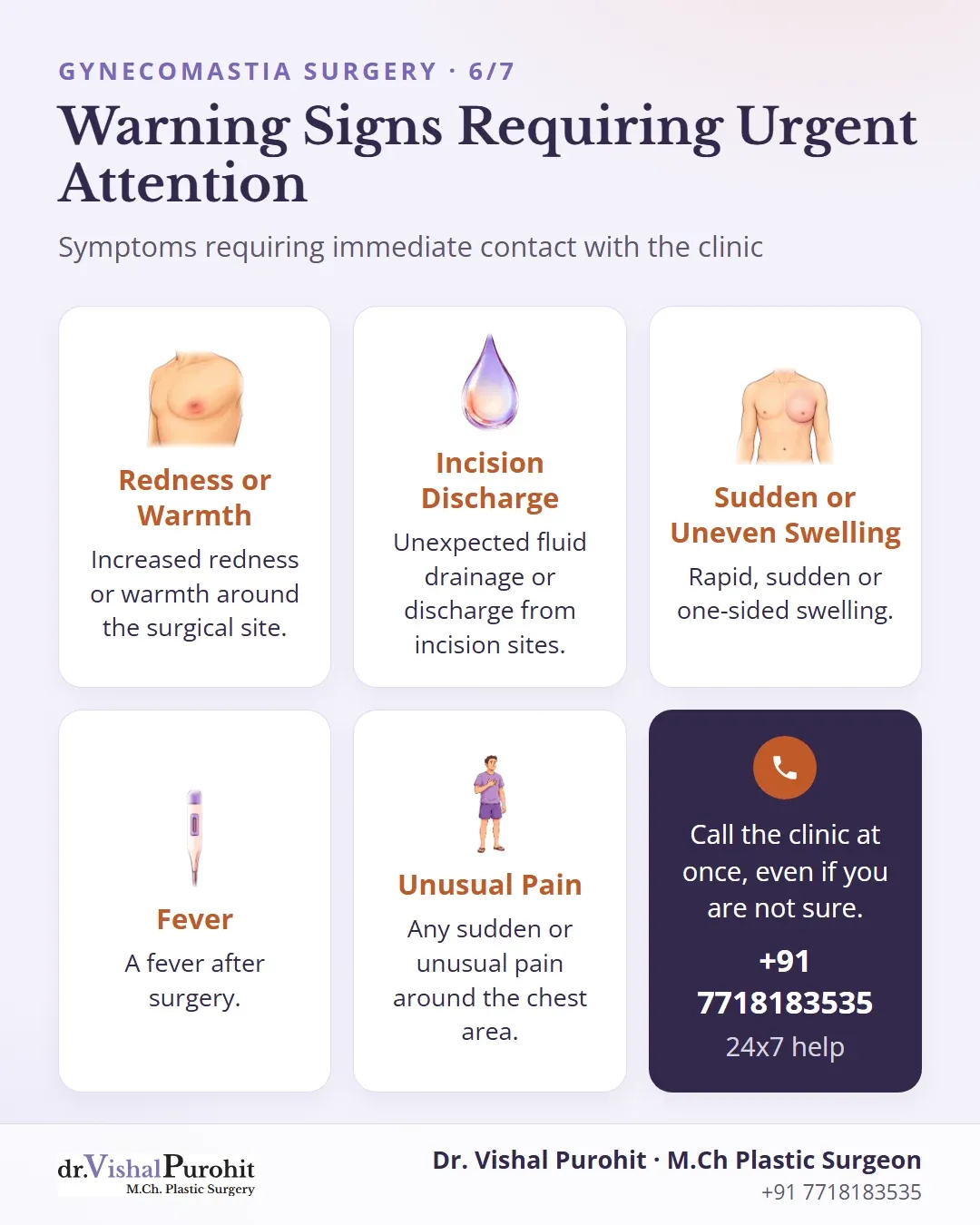
Patients should contact their surgeon immediately if they observe any of the following warning signs:
- Signs of infection: Increased redness, warmth, swelling, or discharge from the incision site, as well as a fever [1].
- Excessive swelling or unusual pain: Any sudden, excessive swelling or unusual pain around the chest area [1]. Dr. Vishal Purohit asks patients to call the clinic at once for anything that seems abnormal, even if they are not sure, because early intervention in a complication matters most for the outcome.
For a fuller picture of complications and how they are prevented, read gynecomastia surgery safety and risks.
Smoking and Alcohol Restrictions
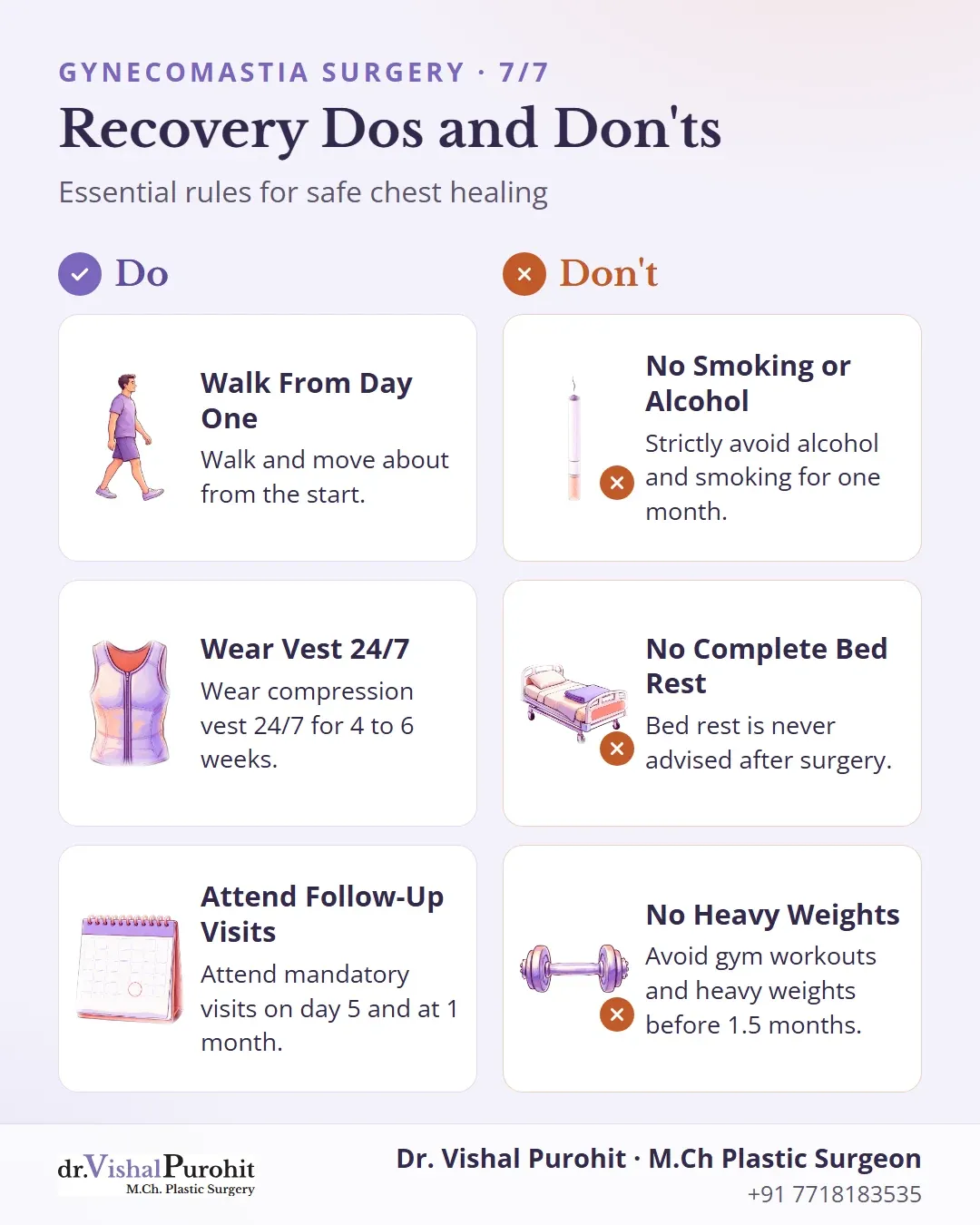
Patients must avoid smoking and alcohol during recovery [1]. Both substances impede the body’s natural healing process and increase the overall risk of surgical complications [1].
Continuous Postoperative Support
At Kalpana Aesthetics in Jaipur, patient safety remains the highest priority under the care of M.Ch. plastic surgeon Dr. Vishal Purohit. Clear postoperative instructions are provided to every individual, and 24x7 help is always available to patients after surgery whenever concerns arise. If any concerning symptoms develop, do not hesitate to reach out to the surgical team for prompt evaluation and guidance.
Your Consultation in Jaipur
Dr. Vishal Purohit, M.Ch. plastic surgeon registered with the Rajasthan Medical Council (RMC Reg. 28041/14185), plans each patient’s recovery at Kalpana Aesthetics in Jaipur, with mandatory visits on day 5 and at 1 month and 24x7 help in between. Surgery costs ₹45,000 to ₹95,000 depending on grade and technique, a complete package that includes follow-up visits for 6 months and tele-consultations; see the gynecomastia surgery page for the full procedure.
-
Call or WhatsApp: +91 7718183535
-
Visit Us: Kalpana Aesthetics, 2nd Floor, Jaipur Hospital Building, Tonk Road, Mahaveer Nagar, Jaipur
Expert Gynecomastia Surgery & Male Chest Contouring in Jaipur
Are you dealing with enlarged male breast tissue or stubborn chest fullness? Schedule a confidential clinical evaluation with Dr. Vishal Purohit, M.Ch plastic and cosmetic surgeon in Jaipur.
- Comprehensive Master Guide: Review our complete clinical overview on What is Gynecomastia? Causes, Grades, and Treatment.
- Surgical Procedures & Pricing: Visit our dedicated Gynecomastia Surgery in Jaipur procedural suite to explore surgical techniques, day-care recovery, before/after transformations, and book your appointment.
This is educational information, not medical advice.