Understanding Gynecomastia in the Context of Weight Loss
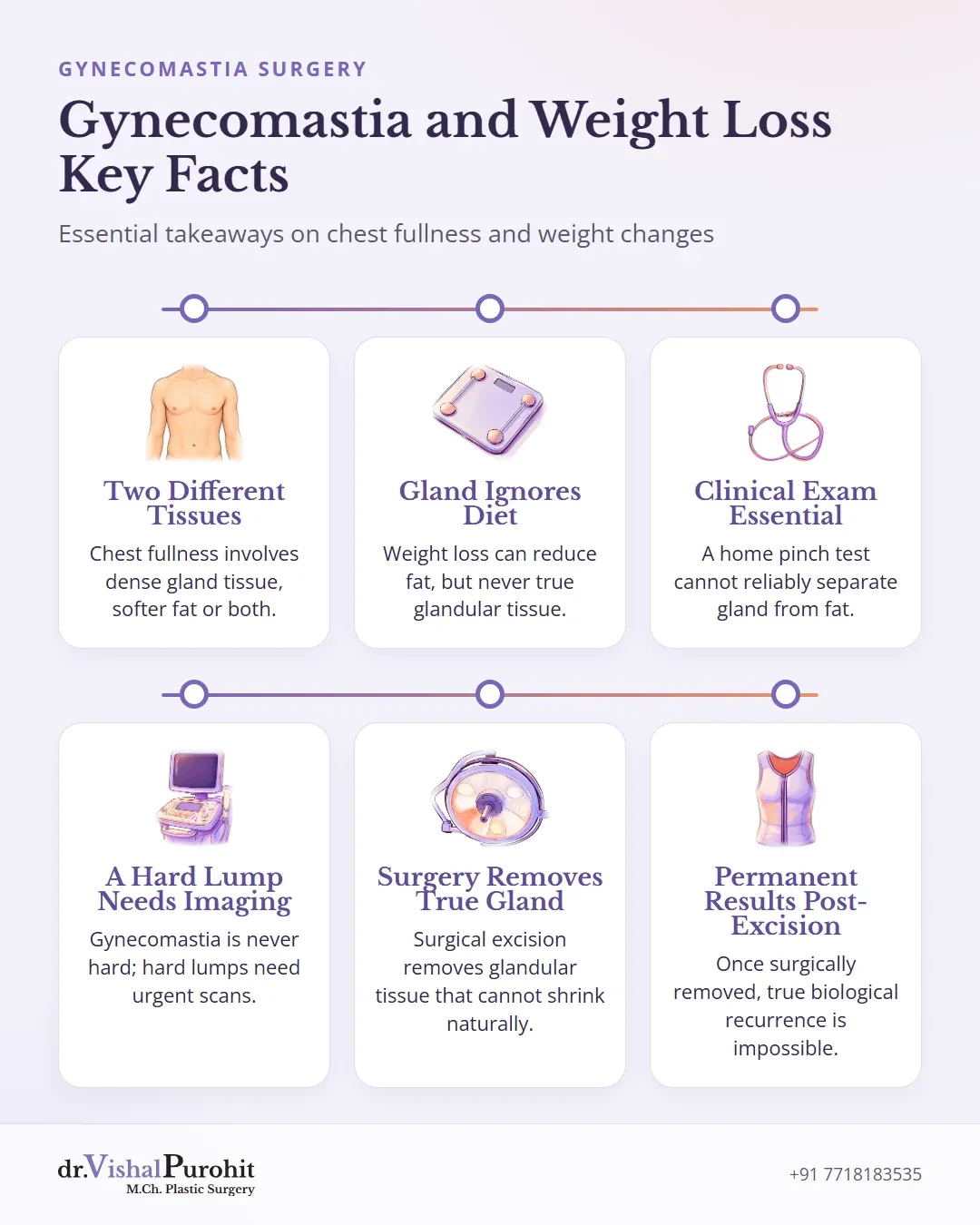
Gynecomastia, commonly referred to as the development of enlarged breast tissue in males, often emerges as a surprising challenge during one’s weight loss journey. While many associate weight loss with improved body image and health, the persistence or onset of gynecomastia can pose unique concerns. It’s crucial to understand that gynecomastia is not just excess fat but a complex interplay between fat and glandular tissue, influenced significantly by hormonal imbalances [1]. This condition, while physically benign, can deeply impact an individual’s mental health and self-perception, especially in a society where physical appearance is closely scrutinized [2].
The question most men bring to a consultation is simple: is my chest fullness gland, fat or both? This guide, reviewed by Dr. Vishal Purohit, M.Ch. plastic surgeon at Kalpana Aesthetics in Jaipur, explains the three possibilities, why the answer cannot be settled in front of a mirror, how a clinician tells them apart, and what weight loss can and cannot change. For the wider picture of causes and grades, start with the overview of gynecomastia causes, symptoms and grades.
Gland, fat or both: what is under the skin
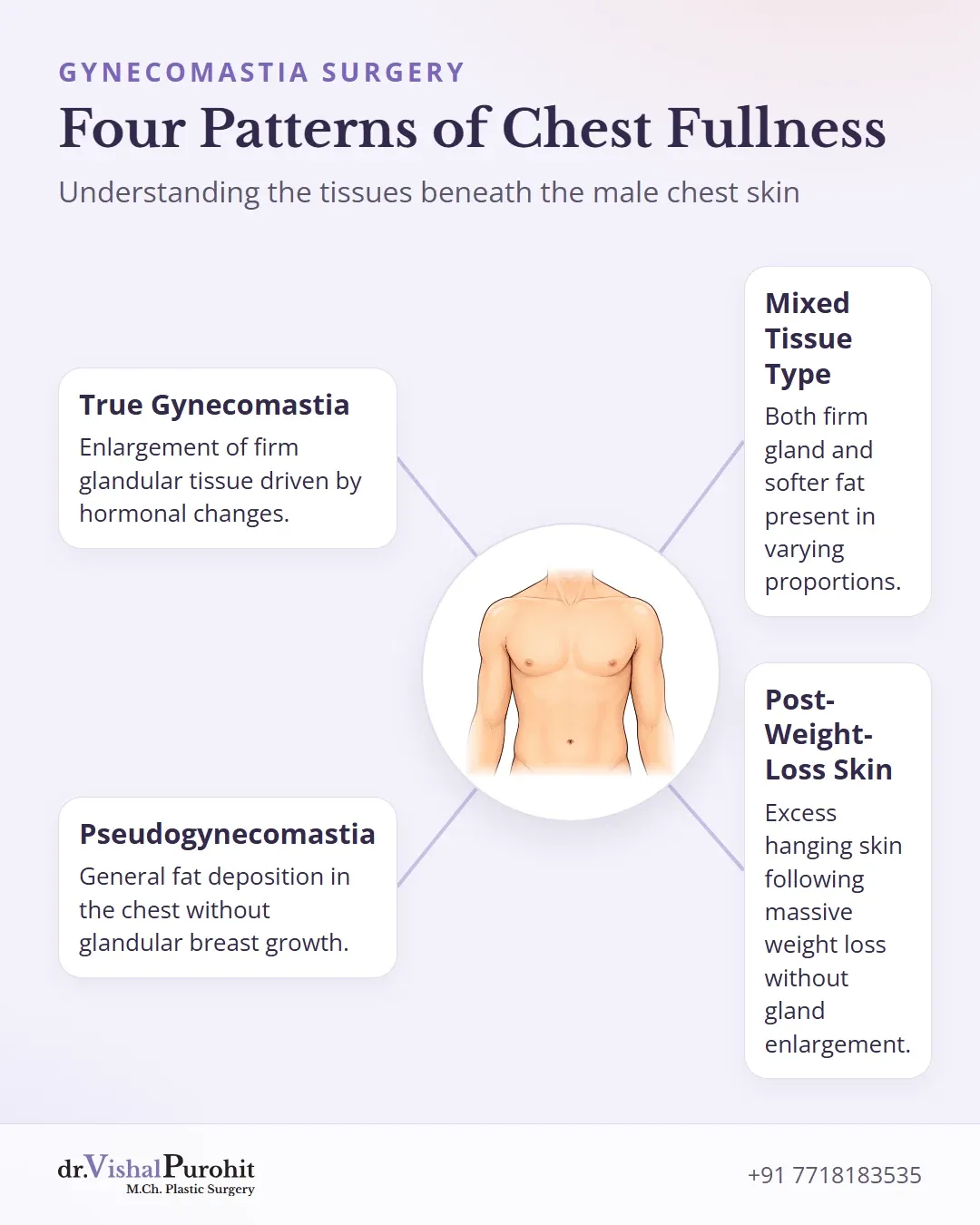
The male breast contains firm, dense glandular tissue and softer fatty tissue, and the ratio between the two differs from one man to the next [1]. Three patterns are described:
True gynecomastia
This is enlargement of the glandular breast tissue itself. It is the result of additional breast tissue rather than fat, and it is driven by a change in the balance between testosterone and estrogen [1][2].
Pseudogynecomastia
Also called lipomastia, this is fat deposition without growth of the gland, often linked to being overweight [3][4]. It accounts for most cases of breast enlargement in men with obesity [4].
Both together
A man with gynecomastia may have too much of both tissue types [1]; some have more gland than fat, others the reverse [2]. One surgical classification groups patients by whichever component is most represented, fat, gland or both, along with any sagging (ptosis) [5].
A fourth factor matters after very large weight loss: skin. In men who have lost a great deal of weight, chest fullness can be mainly excess skin over the chest, the side of the chest, the armpit and the upper abdomen, without any enlargement of the gland [6].
| Pattern | What is enlarged | How sources describe it | What weight loss may do |
|---|---|---|---|
| True gynecomastia | Glandular breast tissue | Often a button-sized growth under the nipple that may move and be tender [2] | Does not reduce the gland tissue [1] |
| Pseudogynecomastia | Fat, without gland growth | A general increase in breast size rather than a lump [2] | May decrease it [2] |
| Mixed | Both gland and fat | Features of both, in varying proportions [1][2] | Fat part may reduce; gland part stays [1][2] |
| Post-weight-loss chest | Mainly excess skin | Skin excess over the chest, side of chest and armpit [6] | Weight loss is what produced it [6] |
The descriptions in this table are what clinicians look for. They are not a self-test, for the reasons in the next section.
Why the mirror and a pinch test cannot confirm a diagnosis
It is tempting to squeeze the chest at home and decide “it’s just fat” or “it’s gland”.
Dr. Purohit’s note: Gynecomastia diagnosis begins with a clinical examination and direct palpation first, followed by ultrasound or MRI when imaging is needed, and hormone blood tests only when other symptoms of hormonal imbalance are present.
The medical literature also does not support relying on home self-assessment:
- Telling gland from fat on palpation is described as a key clinical skill [3], meaning a skill built on training and examining many chests, not something a pinch can replace.
- Both mistakes happen. One guide lists over-investigating simple obesity-related pseudogynecomastia as a common error, and also lists the opposite error: assuming that all breast enlargement in an overweight boy is simple fat without considering gland [3].
- Proportions vary. Because fat and gland occur together in different ratios [1][2], soft tissue on the surface says little about how much gland lies underneath.
- A lump is not always gynecomastia. Gynecomastia is never a hard lump; in Dr. Purohit’s practice, a hard lump suggests another condition such as carcinoma or a tense cyst and needs immediate MRI or ultrasound followed by referral to an oncologist. While male breast cancer is much rarer than gynecomastia, an examination by a healthcare provider is what helps distinguish the two [2].
Men also come with different worries. Some have breast pain, some feel embarrassed and some fear cancer, and understanding which concern applies helps direct treatment [7]. That is a conversation to have with a clinician, not a conclusion to reach alone.
How a clinician tells gland from fat
History and examination
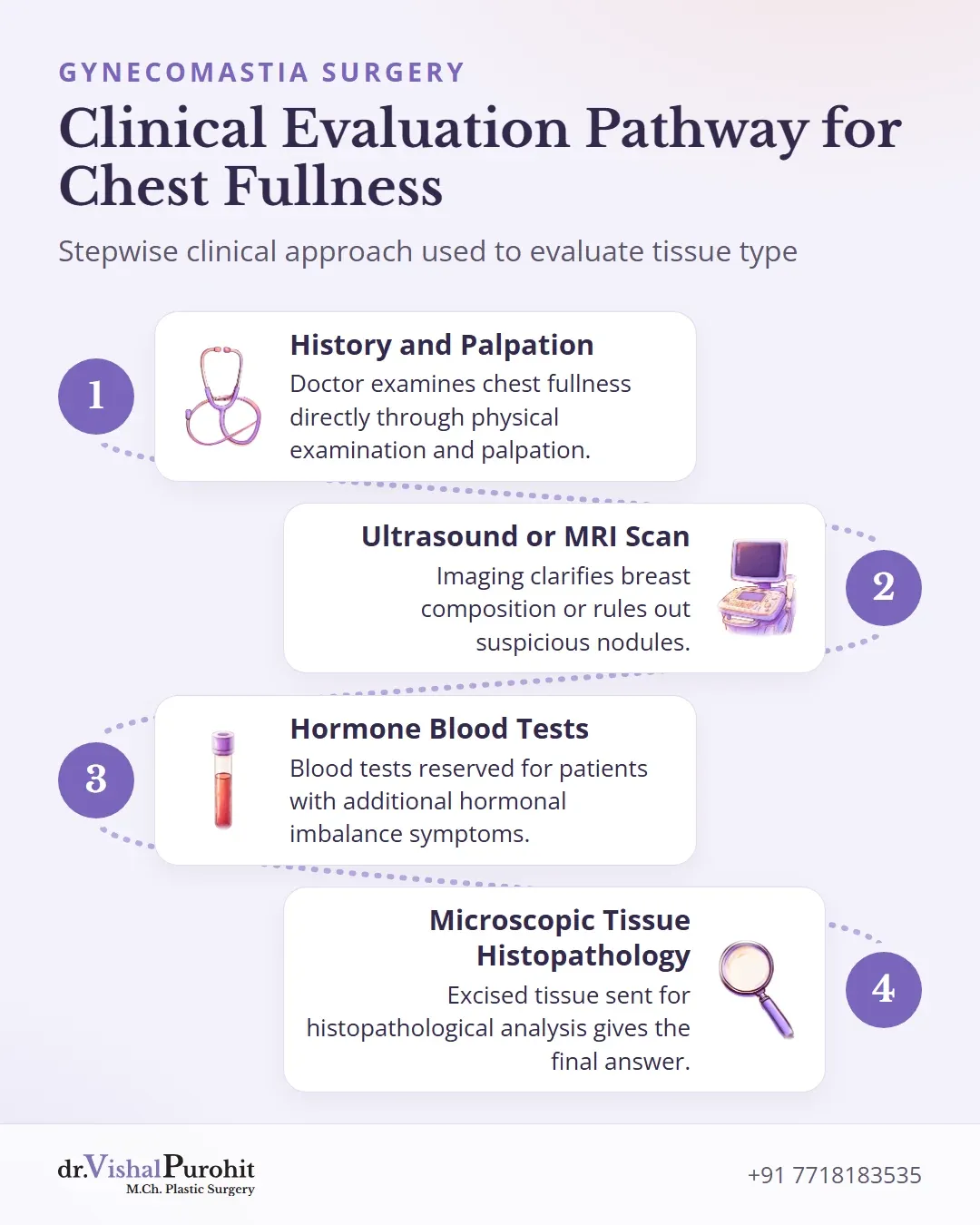
Assessment starts with a thorough history and physical examination [3]. On examination, a clinician feels for the firm, button-like tissue under the nipple that suggests gland, and for the diffuse enlargement that suggests fat [2][3].
The examination also checks for atypical features to determine how gynecomastia is diagnosed when further tests are needed.
When ultrasound helps
Imaging is generally not required for simple obesity-related pseudogynecomastia, but ultrasound may be useful to assess the composition of the breast tissue when the distinction is unclear [3].
In one surgical series of 148 patients, every patient had an ultrasound before surgery to confirm whether fat or gland was prevalent and to exclude other breast disease [5]. The authors describe two uses for it:
- Identifying abnormal findings such as suspicious nodules
- Guiding the choice of operation by showing which tissue type dominates [5]
In his practice, Dr. Vishal Purohit starts gynecomastia diagnosis with clinical examination and direct palpation first, ordering an ultrasound or MRI only when imaging is needed.
If a patient presents with a hard breast lump—which is never gynecomastia and suggests another condition such as carcinoma or a tense cyst—he orders an immediate MRI or ultrasound followed by referral to an oncologist. Hormone blood tests are reserved for patients with other symptoms of hormonal imbalance.
The final answer: the tissue itself
When surgery is done, the removed tissue gives the final answer. At Kalpana Aesthetics, Dr. Vishal Purohit sends all excised breast tissue for histopathology, where it is examined under a microscope.
Histopathology resolves key questions about gynecomastia vs chest fat by identifying the exact cellular structure under the microscope.
The Link Between Gynecomastia and Weight
How Weight Gain Contributes to Gynecomastia
Weight gain affects the chest in two ways. The direct one is more fat in the chest, which is pseudogynecomastia [4].
Key points
- Weight gain contributes to chest enlargement directly through fat accumulation and indirectly by raising estrogen levels through fatty tissue aromatase.
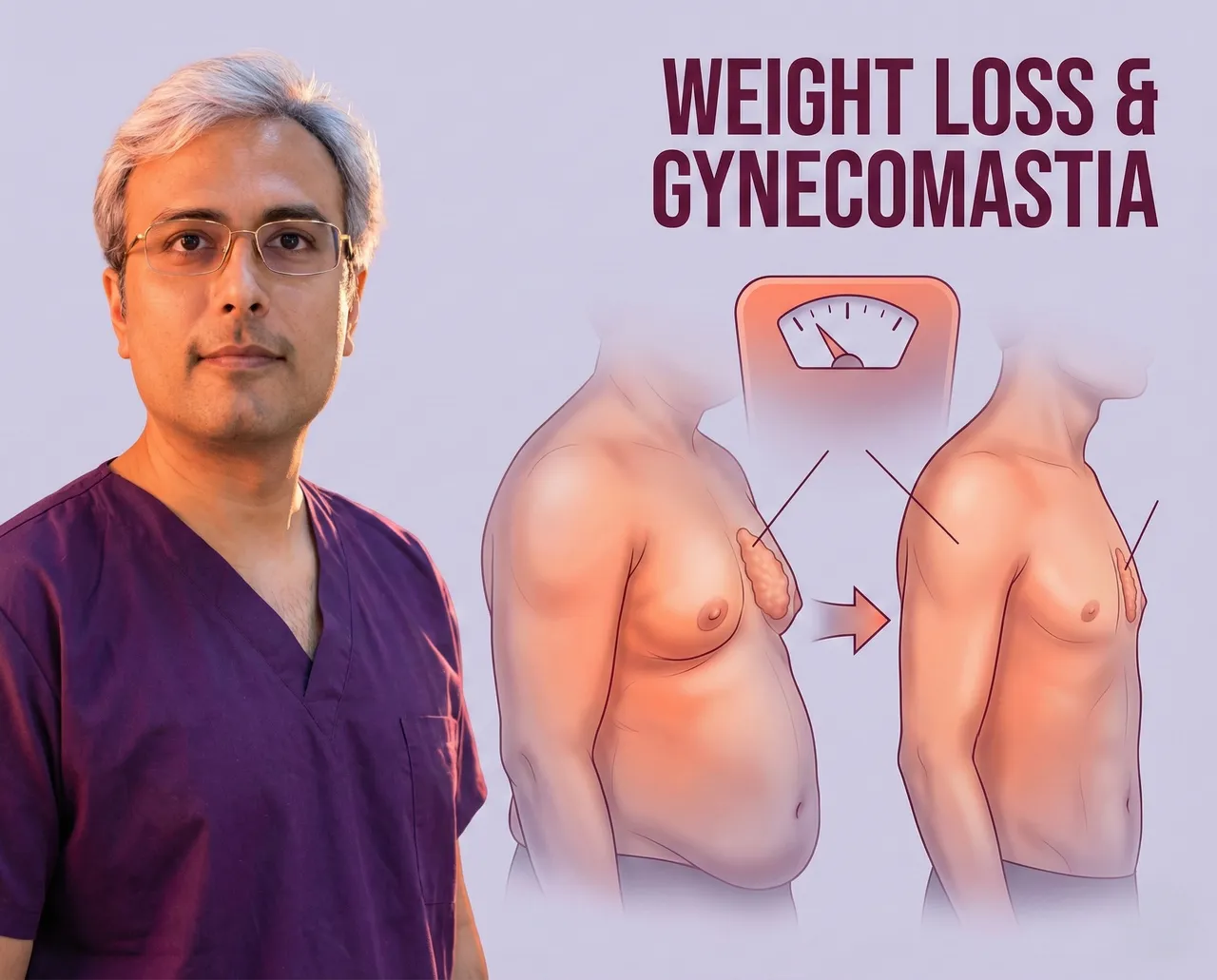
- Weight loss can reduce fatty tissue in pseudogynecomastia, but true glandular breast tissue does not decrease with diet or exercise.
- Evaluation through physical examination helps distinguish glandular tissue from fat and identify underlying hormonal or medication-related causes.
The indirect one is hormonal: fatty tissue contains aromatase, an enzyme that converts androgens such as testosterone into estrogens, so obesity is a common cause of raised estrogen levels [8]. The same mechanism is described in older men, whose fatty tissue increases with age [8].
Weight is only part of the story, though. Gynecomastia itself concerns glandular breast tissue and does not depend on the amount of fat in the body, so enlarged breasts do not always mean that a man needs to lose weight [2].
Weight Loss and Its Effects on Gynecomastia
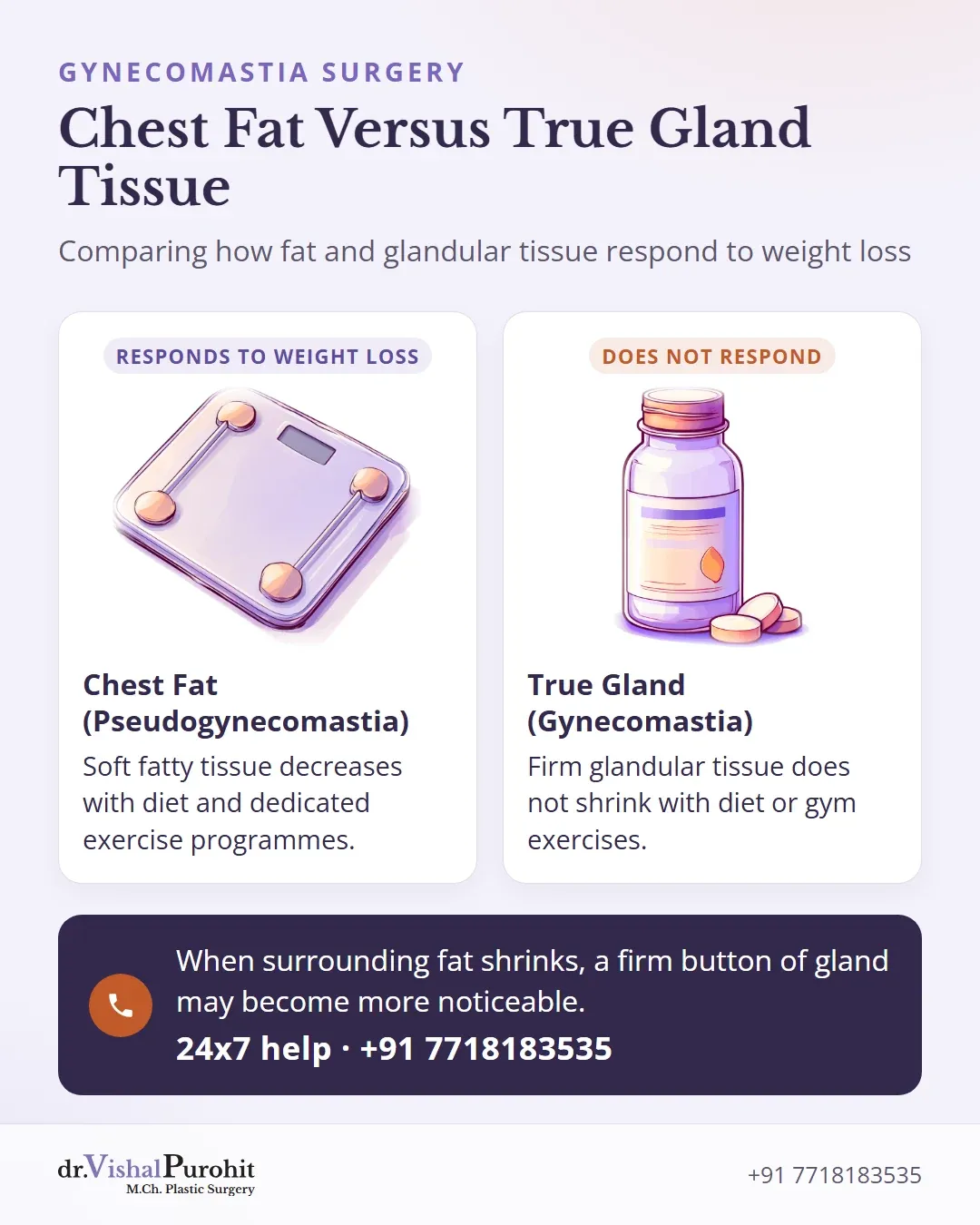
What weight loss changes depends on the tissue:
- Fat responds. If the enlargement is due to obesity, weight loss may decrease it, and exercise can contribute to that weight loss [2]. For pseudogynecomastia, a weight-loss and exercise programme is described as a first-line treatment [4], and obesity-related pseudogynecomastia is reported to have an excellent outlook with weight management [3].
- Gland does not. Exercising or losing weight will not reduce the breast tissue in true gynecomastia [1]. If a hormonal imbalance is responsible, exercise likely won’t make a difference [2]. When the surrounding fat shrinks, a firm area of gland can therefore remain. In Dr. Vishal Purohit’s practice, the target BMI for gynecomastia surgery is within the normal range; slightly overweight men may also benefit from surgery without waiting, but he does not operate on obese and massively obese men because the surgical risk is too high and skin may sag after subsequent weight loss, requiring further correction.
- Large weight loss can add a new problem. After massive weight loss, the chest skin can lose its elasticity and the nipple-areola complex can become overstretched [6]. Reshaping the male chest after massive weight loss is described as challenging because severe sagging often makes standard techniques inadequate [9].
| What changes with weight loss | What does not |
|---|---|
| Fat in and around the chest [2][4] | Glandular breast tissue [1] |
| Overall body size and shape | Hormone-driven gland growth [2] |
| Skin that has lost elasticity after massive weight loss [6] |
Understanding Hormonal Imbalances
Gynecomastia usually happens when the balance between testosterone and estrogen is thrown off and estrogen predominates [2].
Some of this is temporary: pubertal gynecomastia can settle on its own, but sometimes it does not, leaving enlarged gland tissue that has become fibrous [4]. Medicines can also cause it, and breast enlargement does not always settle after the medicine is stopped [4].
A history of weight gain does not rule out these other causes, which is why clinical examination and direct palpation are performed first, with ultrasound or MRI used if imaging is needed and hormone blood tests reserved for when there are other symptoms of hormonal imbalance.
The Weight Loss Journey
Strategies for Effective Weight Loss
For men whose fullness is mainly fat, weight loss is a sensible first step [2][4]. It is worth knowing in advance what to expect: the fat component may reduce, while any gland component will not [1].
Losing weight is still worthwhile for general health even when it does not fully flatten the chest.
In Dr. Vishal Purohit’s practice, slightly overweight men may also benefit from surgery without waiting. Obese and massively obese men are not operated on because the surgical risk is too high and skin may sag after later weight loss, requiring further correction.
Incorporating Exercise and Diet
Exercise helps by contributing to weight loss [2]. It cannot override an estrogen-testosterone imbalance, so it does not remove hormone-driven gland tissue [2]; neither exercise nor weight loss reduces true gland tissue [1].
Dr. Purohit notes several specific factors regarding fitness and chest appearance:
- Protein supplements have no role in increasing or decreasing gynecomastia.
- Anabolic steroids can directly cause breast tissue growth.
- Growing chest muscle can push the gland outwards, making it appear more prominent.
Medicines are a separate question. Drugs such as tamoxifen are used for some forms of gynecomastia, although two small controlled trials found only modest benefit compared with placebo [7].
Dr. Vishal Purohit does not prescribe medical treatment for gynecomastia: pubertal gynecomastia does not need medication, and once the gland is removed surgically it cannot grow back.
Myth: Creams, Ayurvedic or herbal products, and home remedies can treat gynecomastia.
Fact: In Dr. Vishal Purohit’s view, creams, Ayurvedic or herbal products, and home remedies are useless and a waste of time and money.
Monitoring Progress and Adjusting Plans
If the chest still looks full after a period of steady weight loss, that is the point to have it examined rather than to keep cutting calories. Patient information on gynaecomastia correction notes that risks can be reduced by having surgery at a healthy and steady weight, and that results are affected by later weight gain and weight loss [10].
Where gynecomastia followed weight gain, staying at a stable weight is part of maintaining the result [11].
For men who have lost a very large amount of weight, for example after bariatric surgery, stability matters too. One long-term study of 80 men who had each lost more than 30 kg after bariatric surgery excluded men whose weight was unstable [9].
When Weight Loss Isn’t Enough
Recognizing Persistent Gynecomastia
Fullness that remains after weight loss is often gland, loose skin or both [1][6]. Dr. Vishal Purohit diagnoses gynecomastia through clinical examination and direct palpation first. He uses ultrasound or MRI when imaging is needed, reserving hormone blood tests for when other symptoms of hormonal imbalance are present [3][5].
He notes that once the gland is removed surgically, true recurrence is biologically impossible. Any fullness afterwards is residual tissue, which needs a planned return to theatre [12].
Exploring Surgical Options
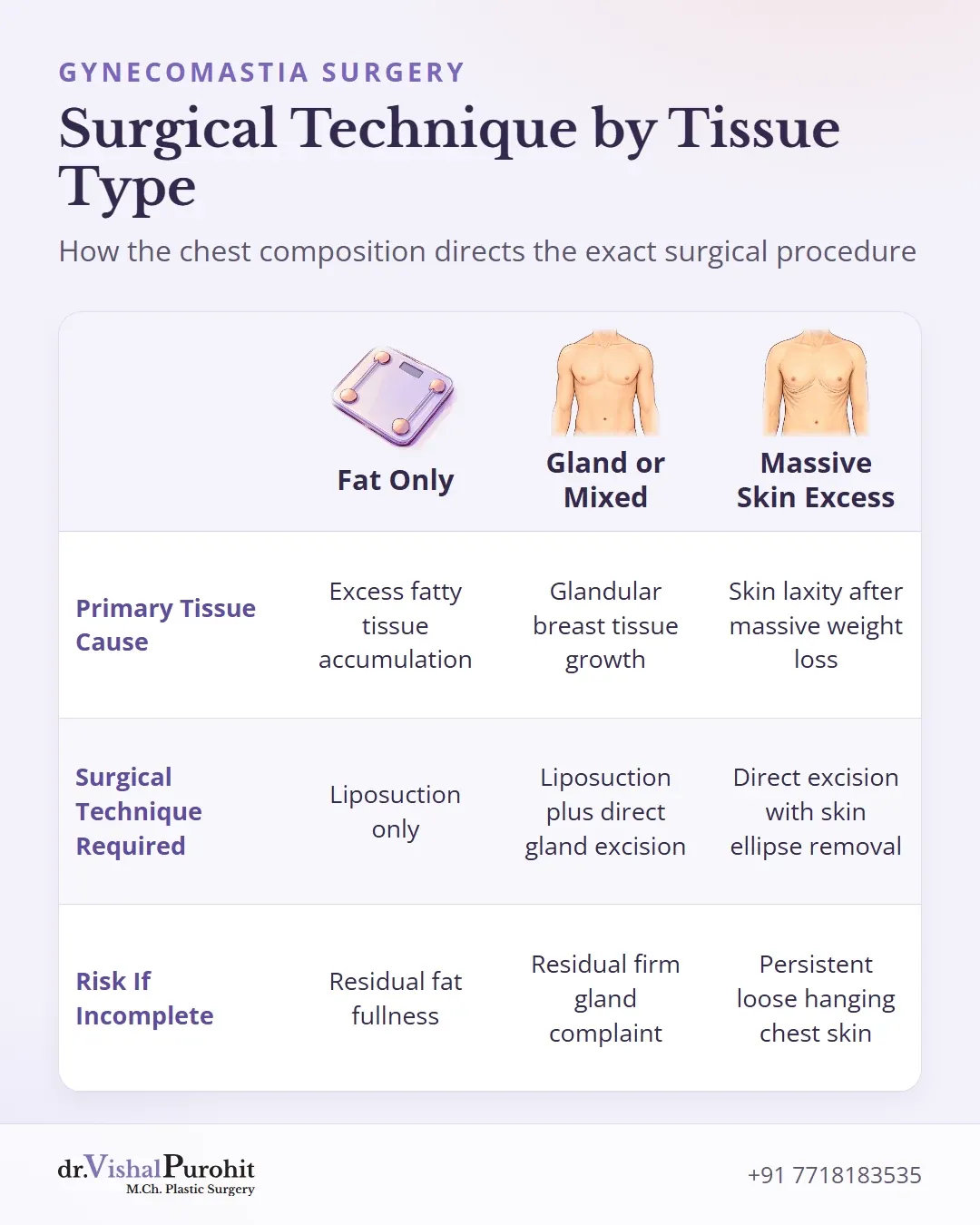
The operation follows the tissue:
- Fat only: pseudogynecomastia needs liposuction only [13].
- Gland, or gland with fat: liposuction removes only part of the gland, so the gland also needs direct surgical excision [13]. After liposuction alone, leaving gland behind is reported as the most common aesthetic complaint in lower grades [12].
- Excess skin after massive weight loss: liposuction alone suits only carefully selected men; most need direct excision of fat and gland together with an ellipse of hanging skin [14].
At Kalpana Aesthetics, Dr. Vishal Purohit combines VASER or power liposuction with gland excision through an inconspicuous hemi-periareolar incision along the lower half of the areola border. Surgery for grades 1 to 3 is done under local anaesthesia, while grade 4 requires a longer procedure under general anaesthesia.
The procedure takes 60 to 120 minutes for simpler grades, and up to about 4 hours for grade 4 or massive gynecomastia. Drains are used only in grade 4. The cost of gynecomastia surgery in Jaipur at Kalpana Aesthetics is ₹45,000 to ₹95,000, depending on grade and technique.
For men with marked skin excess in grade 4 gynecomastia, Dr. Purohit removes excess skin when needed, without reducing the areola. Combined procedures after massive weight loss are priced separately.
The Role of Surgery in the Weight Loss Journey
Surgery is not a weight-loss method. Its role is to remove the tissue that weight loss cannot: the gland, residual fat and, where needed, excess skin [13][14].
For grade I and II gynecomastia, a study of cross-chest liposuction combined with gland excision through a single small incision at the lower outer areolar border reported good and satisfactory aesthetic outcomes [15].
Psychological Impacts
The Emotional Toll of Gynecomastia
Gynecomastia can cause significant social and psychological distress [4].
Reported effects can be especially hard for adolescents and include:
- Body image concerns
- Negative attitudes towards eating
- Self-esteem problems
- Social withdrawal
- Anxiety and shame [8]
Studies also link gynecomastia with depression and disordered eating, and some men are anxious about the possibility of breast cancer [8].
Building Confidence Through Weight Management
Weight management can reduce fat-related fullness [2][4], and that progress is real. It helps to know, though, that a firm area that stays after weight loss is not a failure of effort: glandular tissue simply does not respond to diet or exercise [1].
Weight management can reduce fat-related fullness [2][4], and that progress is real.
In Dr. Vishal Purohit’s practice, diagnosis begins with clinical examination and direct palpation, followed by ultrasound or MRI when imaging is needed, while hormone blood tests are reserved for patients with other symptoms of hormonal imbalance.
Knowing which tissue is present, gland, fat or both, sets realistic expectations from the start.
While slightly overweight men may also benefit from surgery without waiting, obese and massively obese men are not operated on because the surgical risk is too high and skin may sag after later weight loss, requiring further correction.
The Role of Support Systems and Counseling
If gynecomastia is causing distress, Cleveland Clinic advises talking to a healthcare provider and/or a mental health professional [2]. A clinician who understands what is worrying a man, whether pain, embarrassment or fear of cancer, can direct treatment accordingly [7].
Dr. Vishal Purohit maintains that everyone deserves to feel good and confident about their body, and refers patients to an endocrinologist only when gynecomastia develops suddenly, well after puberty is complete, or when other symptoms of hormonal imbalance are present.
Life After Gynecomastia Treatment
Long-Term Maintenance Post-Surgery
The final results of gynecomastia surgery are permanent in many cases [11]. In Dr. Vishal Purohit’s practice, any fullness afterwards is residual tissue, which needs a planned return to theatre [10].
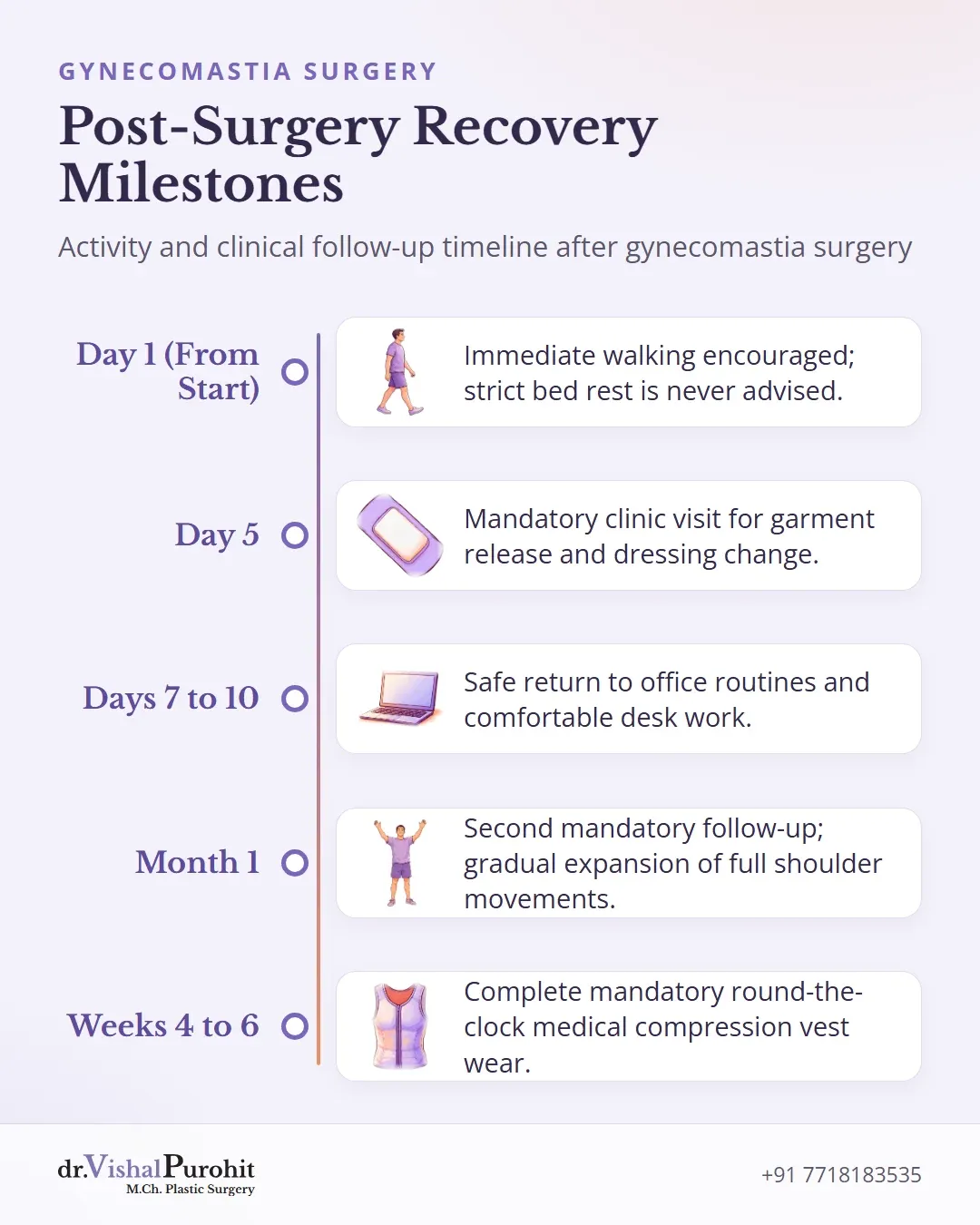
After surgery at Kalpana Aesthetics, patients wear a custom medical-grade compression vest 24/7 for 4 to 6 weeks. Follow-up visits on day 5 (first pressure-garment release and dressing change if needed) and at 1 month are mandatory, and 24x7 help is always available.
Bed rest is never advised. Recovery milestones include:
- Walking from the start
- Returning to desk work at day 7 to 10
- Gradually building up shoulder movement over the first month
Lifestyle Changes for Sustained Wellness
Where gynecomastia was linked to certain prescription medicines, drugs (including steroids) or weight gain, staying free of those substances and at a stable weight is needed to maintain the result [11]. Any change to prescribed medicines should be discussed with the prescribing doctor first [11].
The Impact on Overall Quality of Life
Many men feel more confident and comfortable after gynecomastia surgery. Daily improvements often include:
- Buttoning a shirt without gaps
- Feeling more at ease in a t-shirt or swimsuit
- Running and jumping more comfortably [16]
Sometimes a second, smaller procedure is needed, and the possibility is worth discussing before surgery [12]. At Kalpana Aesthetics, if a patient is not satisfied, a revision or touch-up (such as liposuction) is planned with a gap of 8 to 9 months after the first operation.
Summary
Recap of Gynecomastia’s Role in Weight Loss
Chest fullness in men can involve several components:
- Gland tissue
- Fat deposits
- Excess skin, particularly after very large weight loss
Weight loss may reduce the fat; it does not reduce gland tissue.
A home pinch test cannot reliably tell them apart. Dr. Vishal Purohit starts with a clinical examination and direct palpation, followed by an ultrasound or MRI when imaging is needed.
Encouraging a Holistic Approach to Wellness
Losing weight, staying at a steady weight and getting support for the emotional side of gynecomastia all matter, whatever the tissue type. Surgery has a place when gland, residual fat or skin remains.
Inviting Readers to Take Action for Their Health
If you are unsure whether your chest fullness is gland, fat or both, an examination will answer it.
Dr. Vishal Purohit, M.Ch. plastic surgeon registered with the Rajasthan Medical Council (RMC Reg. 28041/14185), sees patients at Kalpana Aesthetics in Jaipur. You can review contact details and booking for gynecomastia surgery in Jaipur.
Expert Gynecomastia Surgery & Male Chest Contouring in Jaipur
Are you dealing with enlarged male breast tissue or stubborn chest fullness? Schedule a confidential clinical evaluation with Dr. Vishal Purohit, M.Ch. plastic surgeon in Jaipur (RMC Reg. 28041/14185).
Review our complete clinical overview on what gynecomastia is, its causes, grades, and treatment options. During your consultation, you can discuss individualized gynecomastia surgery in Jaipur to evaluate appropriate surgical techniques, recovery expectations, procedural costs, and appointment booking.
This is educational information, not medical advice.