
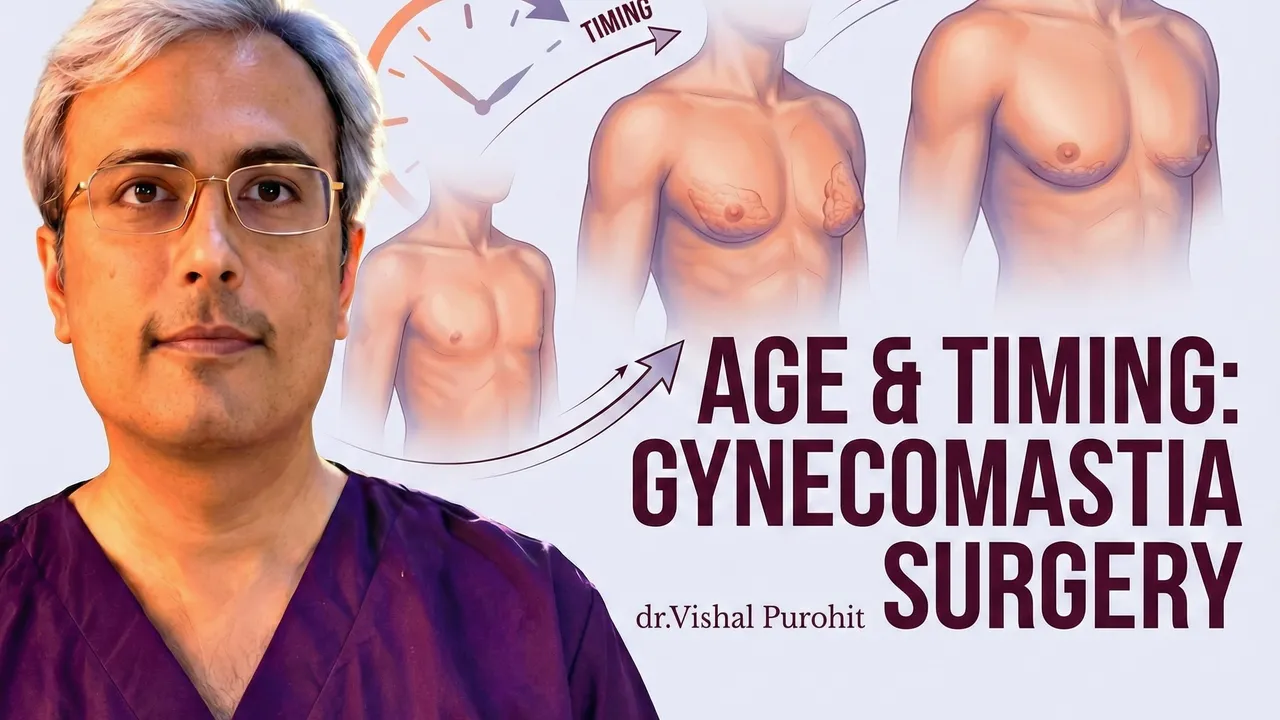
One of the most common and complex questions I hear comes from adolescents or the parents of teenage boys: “Do we have to wait for surgery?” It’s a question that balances physical maturity against psychological well-being.
My approach to Gynecomastia Surgery is never based on a single number. It’s based on your individual health, the stability of the condition, and its impact on your life.
Observation Period Confirms Permanence Need
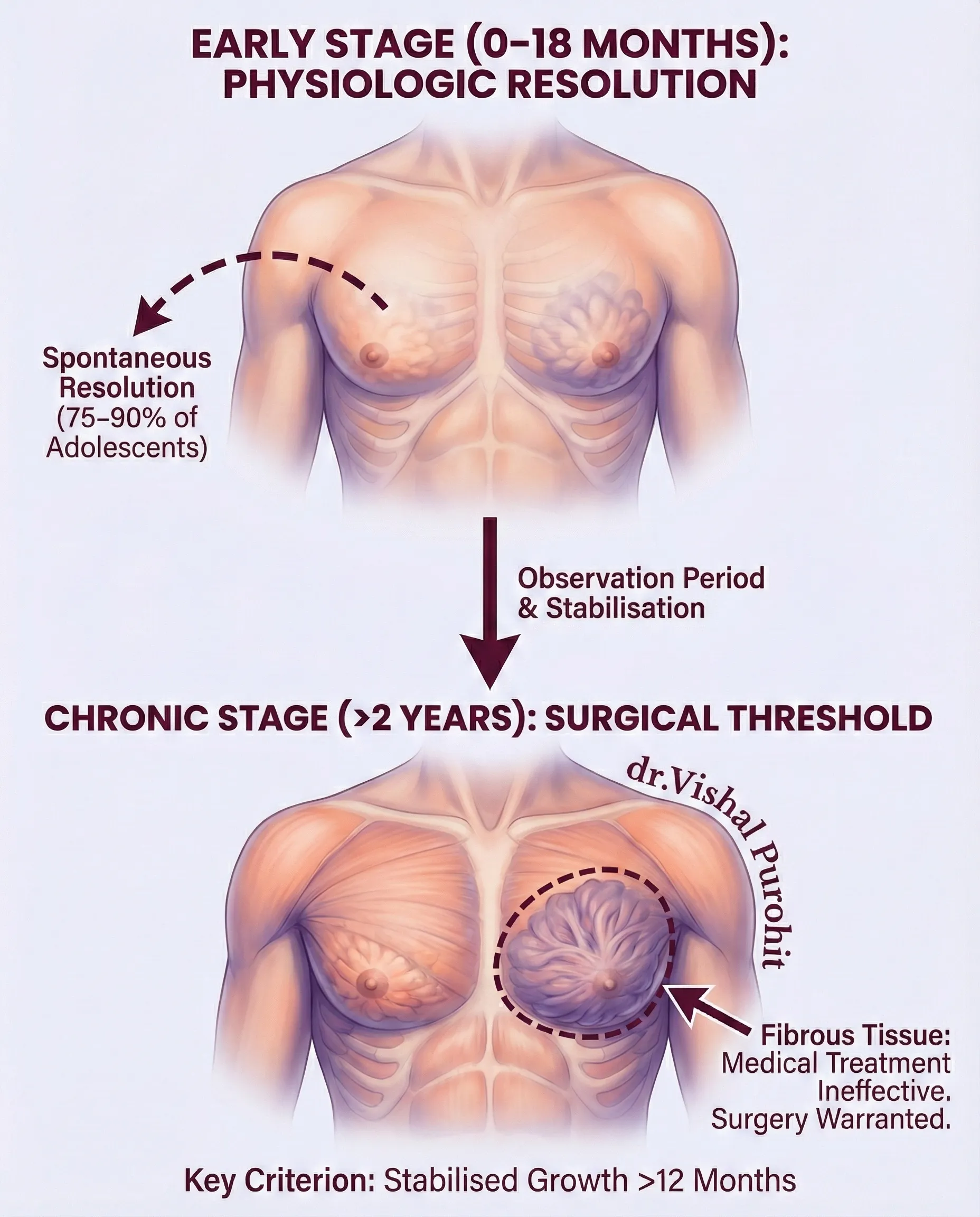
Dr. Vishal Purohit provides a visual guide on the progression of gynecomastia, distinguishing between temporary adolescent conditions and chronic fibrous tissue. The infographic clearly marks the surgical threshold for effective male chest reduction.
Gynecomastia surgery is successfully performed on adolescents and adult men alike. The core decision on when to proceed with male breast reduction is based on the stabilisation of the breast growth, not a fixed chronological age.
This principle involves a period of observation to confirm that the enlargement is permanent and will not resolve spontaneously.
Natural Resolution Window Closes After Two Years
The necessity for surgery is often determined by observing how long the condition persists, especially during the turbulent hormonal changes of adolescence.
-
Physiologic Resolution: Pubertal gynecomastia, which occurs in adolescent males, resolves spontaneously within 1 to 3 years in 75–90% of adolescents. In more than 75% of cases, the condition goes away on its own in 18 months.
-
Treatment Threshold: If the condition does not resolve within two years, treatment is warranted. By this point, the tissue has often become chronic and fibrous, which is why medical treatment is often ineffective after this period.
-
Stability is Key: Stabilised breast growth, or growth that has persisted for more than twelve months, is one of the key criteria for an ideal candidate for surgery.
Gynecomastia Presentation & Management Across Life Stages
| Age Group | Typical Etiology | Natural Regression Likelihood | Recommended Clinical Approach |
|---|---|---|---|
| Adolescents (12–15 yrs) | Transient pubertal estrogen/androgen surge | Very High (75–90% resolve in 1–2 years) | Watchful waiting, reassurance, annual check |
| Late Adolescents (16–18 yrs) | Persistent post-pubertal fibroglandular tissue | Low if persistent >24 months | Candidacy evaluation for surgical correction |
| Young Adults (19–35 yrs) | Idiopathic, steroid use, or persistent pubertal | Negligible without surgical excision | Definitive VASER + Webster gland excision |
| Mature Adults (45–65+ yrs) | Age-related androgen decline, medications, obesity | None; progressive tissue hypertrophy | Hormonal screening + tailored surgery |
Surgical Timing Aligns with Maturity and Psychological Distress
The decision to proceed with surgery is based on balancing physical maturity and emotional health. While surgery is possible for patients over 16, there are important factors to consider.
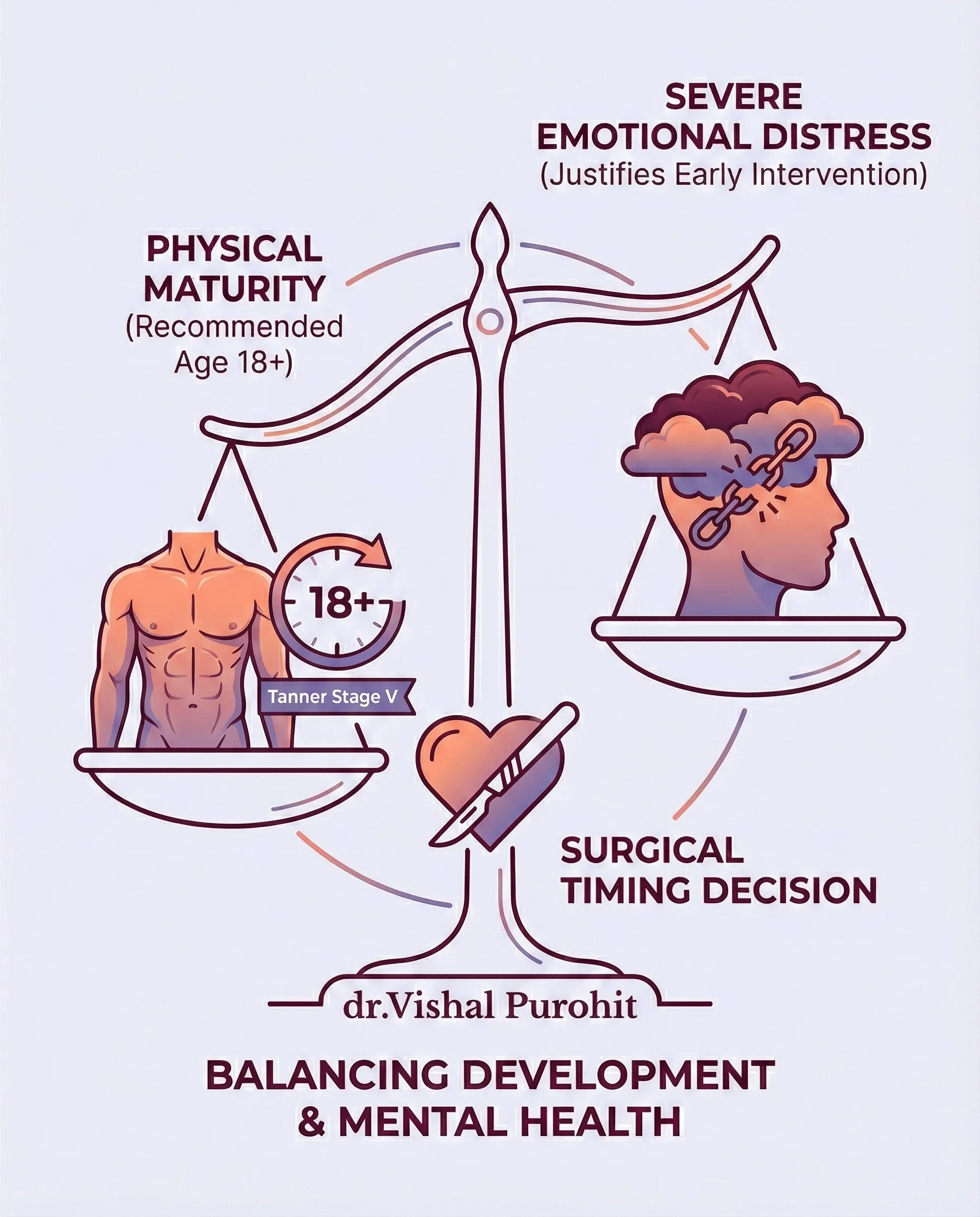
This infographic by Dr. Vishal Purohit illustrates the critical decision-making process for surgical intervention, weighing physical maturity against severe emotional distress. It provides a framework for determining the optimal timing for procedures like male chest reduction.
Age 18 Is Recommended for Maximum Physical Development
While surgery is possible for patients over 16, a majority of surgeons in Jaipur suggest that individuals should wait until they attain the age of 18 years old before considering surgery.
Why? By this age, the human body is likely to have developed to its maximum potential. From a medical perspective, it is recommended that surgery be postponed until puberty is completed (Tanner scale Stage V). This waiting period minimises the chance that any residual hormonal fluctuations could impact the long-term permanent results of the procedure.
It is important to distinguish between pubertal changes and other causes of gynecomastia before deciding on a surgical plan.
Severe Emotional Distress Justifies Earlier Intervention
This is the critical exception. The need to wait must be balanced against the significant mental health implications of persistent male breast enlargement.
Gynecomastia is associated with significant psychological distress, social stigma, and dysphoria. If the condition causes embarrassment, pain, or tenderness, surgery is warranted. The procedure is performed to alleviate this distress and is one of the most profound psychological benefits of male breast reduction.
For many young men, the condition is so severe that they avoid going outside, playing sports, or swimming. When the psychological impact of the enlarged breasts outweighs the risk of operating before full physical maturity, earlier surgical intervention is a justifiable and compassionate treatment.
Frequently Asked Questions
What is the ideal age for undergoing gynecomastia surgery in Jaipur?
The ideal age for gynecomastia surgery is 18 years and older, once pubertal hormonal fluctuations have stabilized and persistent glandular breast tissue is confirmed by Dr. Vishal Purohit in Jaipur. However, severe pubertal gynecomastia causing extreme psychological distress or bullying can be evaluated earlier in older adolescents with parental consent. As a board-certified plastic surgeon, Dr. Purohit ensures glandular enlargement has stabilized before surgical intervention.
Can pubertal gynecomastia resolve naturally without surgery?
Yes, pubertal gynecomastia spontaneously regresses in approximately 80% of adolescent boys within 1 to 2 years as testosterone-to-estrogen ratios balance naturally, notes Dr. Vishal Purohit in Jaipur. However, if firm glandular tissue persists past age 18 or for more than 24 months, it becomes fibrotic and permanent, requiring surgical excision. Dr. Purohit conducts hormonal evaluations to distinguish transient swelling from mature fibrotic tissue.
Is there an upper age limit for male breast reduction surgery?
There is no upper chronological age limit for gynecomastia surgery with Dr. Vishal Purohit in Jaipur; men in their 40s, 50s, and 60s regularly achieve safe, flat chest contours under modern tumescent anesthesia protocols. Older candidates receive complete cardiopulmonary clearance and medication reviews prior to surgery. As an M.Ch. plastic surgeon, Dr. Purohit customizes surgical time to ensure swift recovery.
What is the cost of gynecomastia surgery in Jaipur?
The cost of gynecomastia surgery with Dr. Vishal Purohit in Jaipur typically ranges from ₹45,000 to ₹85,000 depending on the clinical grade and whether VASER liposuction is combined with surgical gland excision. The all-inclusive package includes hospital theater fees, anesthesia, medical compression vest, and follow-up care. Dr. Purohit’s team at Kalpana Aesthetics offers 0% interest EMI payment options.
Your Consultation in Jaipur
Whether you are an adult seeking correction or a parent navigating adolescent gynecomastia, my priority is both physical maturity and psychological well-being. The only way to know the right time is to have a full diagnostic assessment.
To receive a comprehensive, compassionate assessment tailored to your unique timeline and needs, I invite you to schedule a consultation.
To book your personalised, confidential consultation, please reach out to my team at Kalpana Aesthetics.
-
Call or WhatsApp: 7718183535
-
Visit Us: Kalpana Aesthetics, 2nd Floor, Jaipur Hospital, Mahaveer Nagar, Tonk Road, Jaipur
Expert Gynecomastia Surgery & Male Chest Contouring in Jaipur
Are you dealing with enlarged male breast tissue or stubborn chest fullness? Schedule a confidential clinical evaluation with Dr. Vishal Purohit, board-certified M.Ch plastic and cosmetic surgeon in Jaipur.
- Comprehensive Master Guide: Review our complete clinical overview on What is Gynecomastia? Causes, Grades, and Treatment.
- Surgical Procedures & Pricing: Visit our dedicated Gynecomastia Surgery in Jaipur procedural suite to explore surgical techniques, day-care recovery, before/after transformations, and book your appointment.