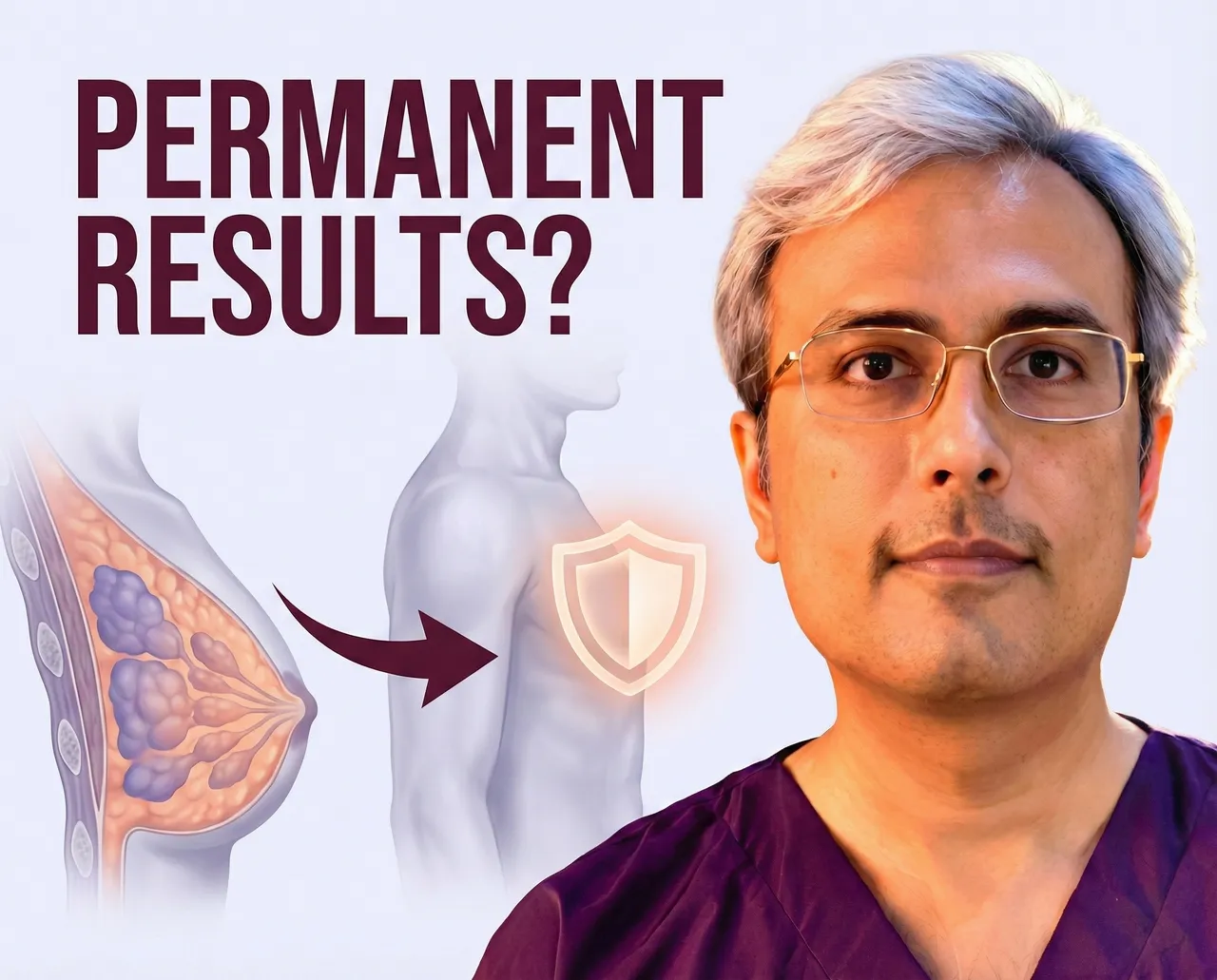
After patients feel confident about the safety and cost of gynecomastia surgery, their next, most important question is: “Is it permanent? Can it come back?”
Dr. Vishal Purohit, an M.Ch gynecomastia surgeon in Jaipur, explains below how gland excision and fat removal influence long-term stability.
This is a critical question, and it deserves a clear and honest answer. The investment you make in your confidence should be a lasting one. Here is the medical and practical reality of surgical results.
The short answer: in many cases, the results of gynecomastia surgery are permanent1, but no surgeon can honestly promise that chest fullness will never return.
In Dr. Vishal Purohit’s practice, once the gland is surgically removed, true biological recurrence is not possible. Removing the breast gland takes away the tissue behind true gynecomastia, which is why recurrence appears less likely when the gland is excised than when it is left in place2. Any fullness afterwards is residual tissue, which needs a planned return to theatre. The chest can still fill out again through tissue left behind, new fat, or renewed hormone or drug exposure, and each of these is explained below.
Unlike weight loss efforts that only address fat, a core part of comprehensive gynecomastia treatment in Jaipur is an anatomical correction: the gland itself is removed.
Glandular Excision Confirms Permanent Results
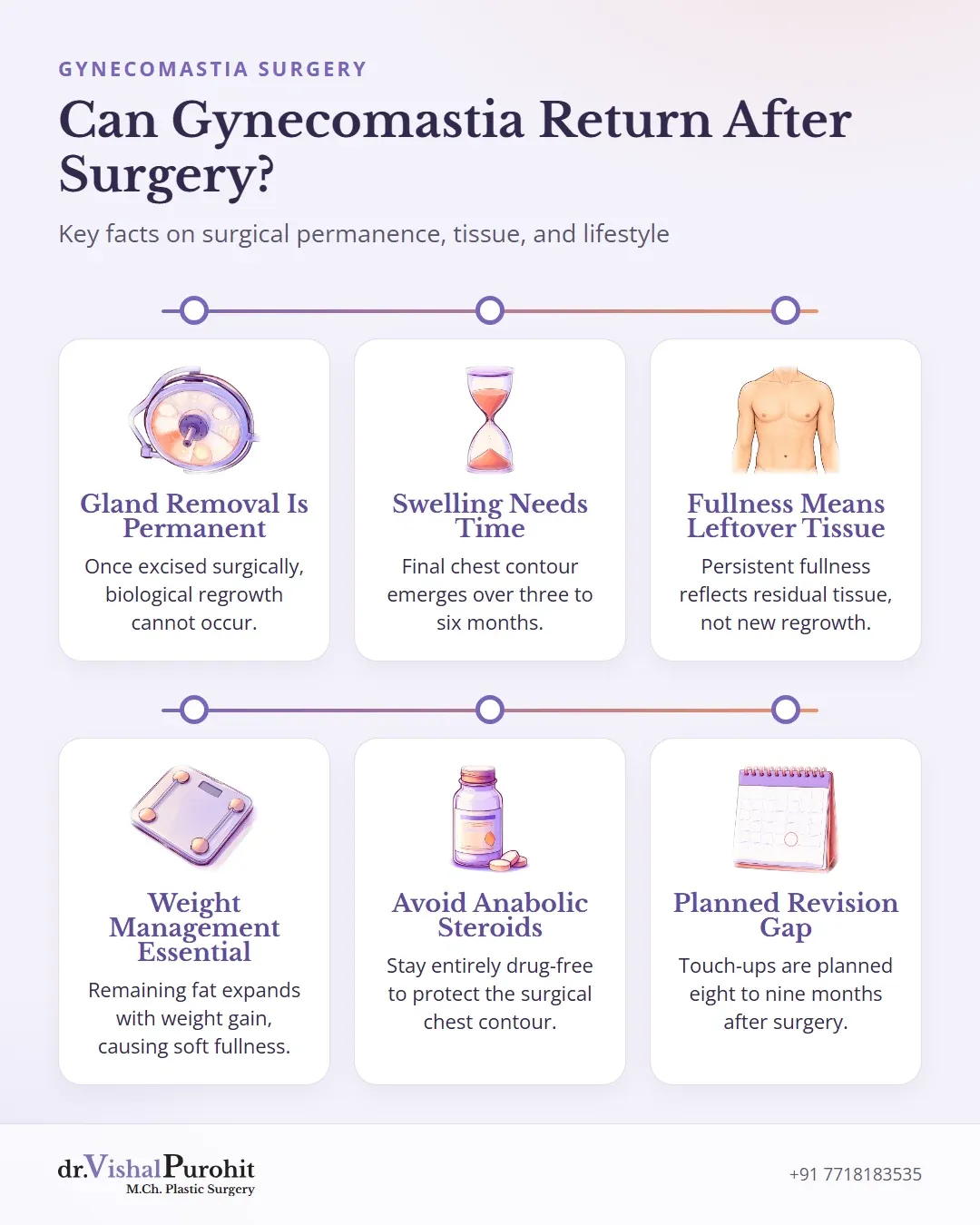
The lasting nature of this procedure stems directly from the surgical techniques used in Jaipur, specifically the excision of glandular tissue. That heading is only fair with its limits spelled out, so both sides are covered here.
-
The Problem: True gynecomastia is a benign enlargement of the male breast caused by proliferation of the gland ducts and stromal components, including fat3. Long-standing gynecomastia is characterised by stromal fibrosis and reduced cell activity, which makes it less responsive to medicines; a clinical policy of the US insurer Cigna summarises this4. For long-standing gynecomastia, surgical treatment combining liposuction with removal of the gland is needed3.
-
The Solution: Dr. Vishal Purohit combines tumescent liposuction with excision of the gland through an inconspicuous hemi-periareolar incision along the lower half of the areola border. Gland and fat that are removed are no longer in the chest. All excised tissue is always sent for histopathology; surgical authors also advise sending removed tissue to pathology, particularly when the glands are asymmetric2.
-
The Outcome: After the tissues are removed, the chest is shaped into a flatter, more masculine contour. Removal is not total by design: surgeons deliberately leave enough tissue beneath the areola to keep the nipple from sinking in5. In Dr. Vishal Purohit’s practice, once the gland is removed surgically, it cannot grow back, and true recurrence is biologically not possible. A stable, flatter chest is one of the main benefits of gynecomastia surgery.
-
The Technical Point: Liposuction alone usually will not fully correct a significant proportion of gynecomastia cases, and the recurrence rate may be higher when the breast gland is not resected2. Liposuction on its own leaves a residual fibrous tissue component, which is why liposuction and excision are combined6.
This medical illustration shows the change achieved through gynecomastia surgery performed by Dr. Vishal Purohit. The diagram highlights excision of the enlarged glandular core to restore a flatter, masculine chest contour.
Risk of Undercorrection:
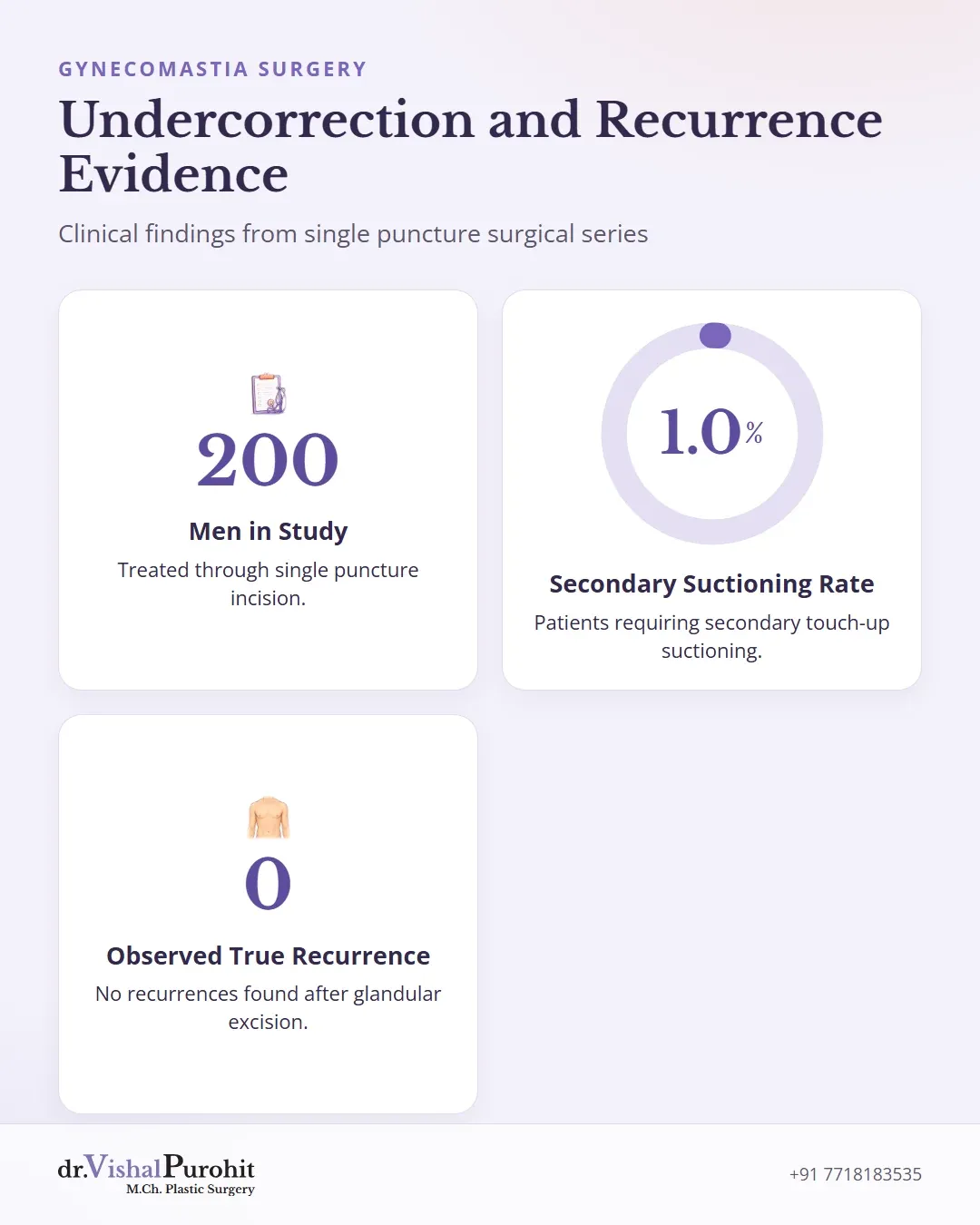
Fullness that is still there once healing is complete is residual tissue, not recurrence. In Dr. Vishal Purohit’s practice, true recurrence is biologically not possible once the gland is removed, and any fullness afterwards is residual tissue, which needs a planned return to theatre.
Surgical Margin
In a series of 200 men treated through a single puncture incision, 2 patients (1.0%) needed secondary suctioning because of undercorrection, and no recurrences were encountered2. Excision that follows the natural layout of the gland around the nipple reduces the possibility of leaving residual gland behind7.
Skin Redraping
In higher grades, loose skin can also remain after liposuction or gland removal without skin excision, and sometimes needs a second operation6.
Healing Timeline
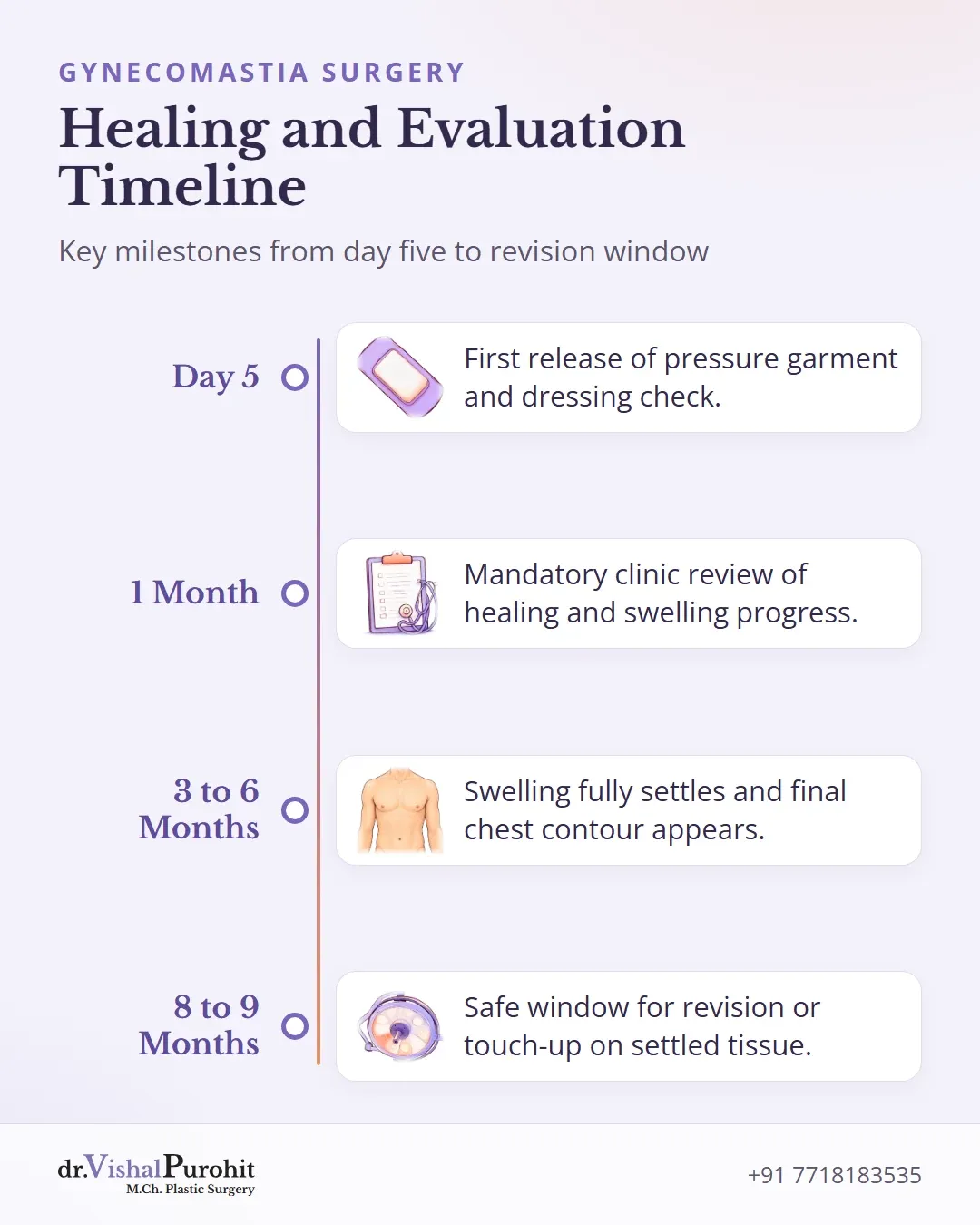
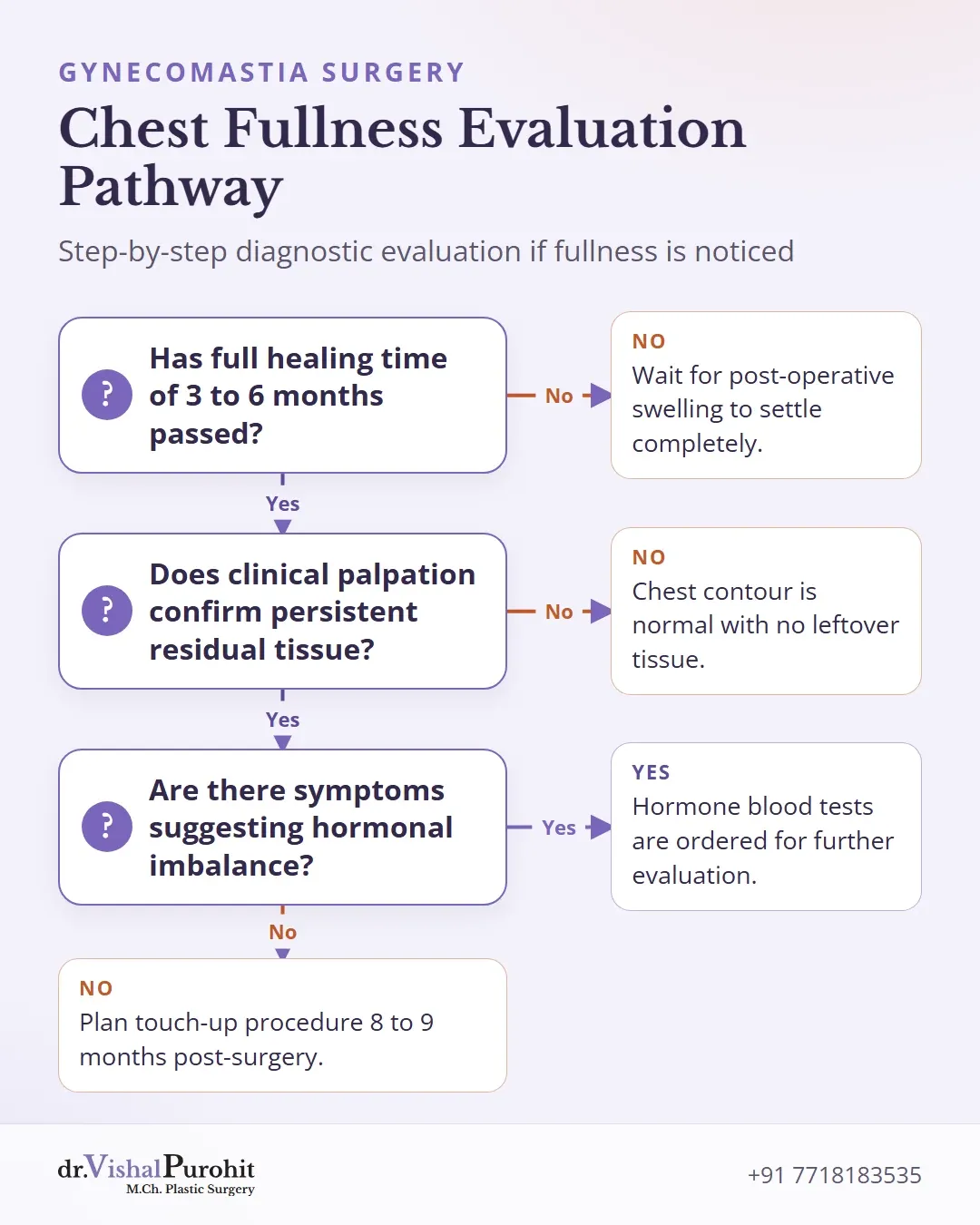
Early swelling can look like leftover tissue. Final results may take 3 to 6 months to appear8, so residual tissue is judged once the swelling has settled.
Tissue Composition Risk
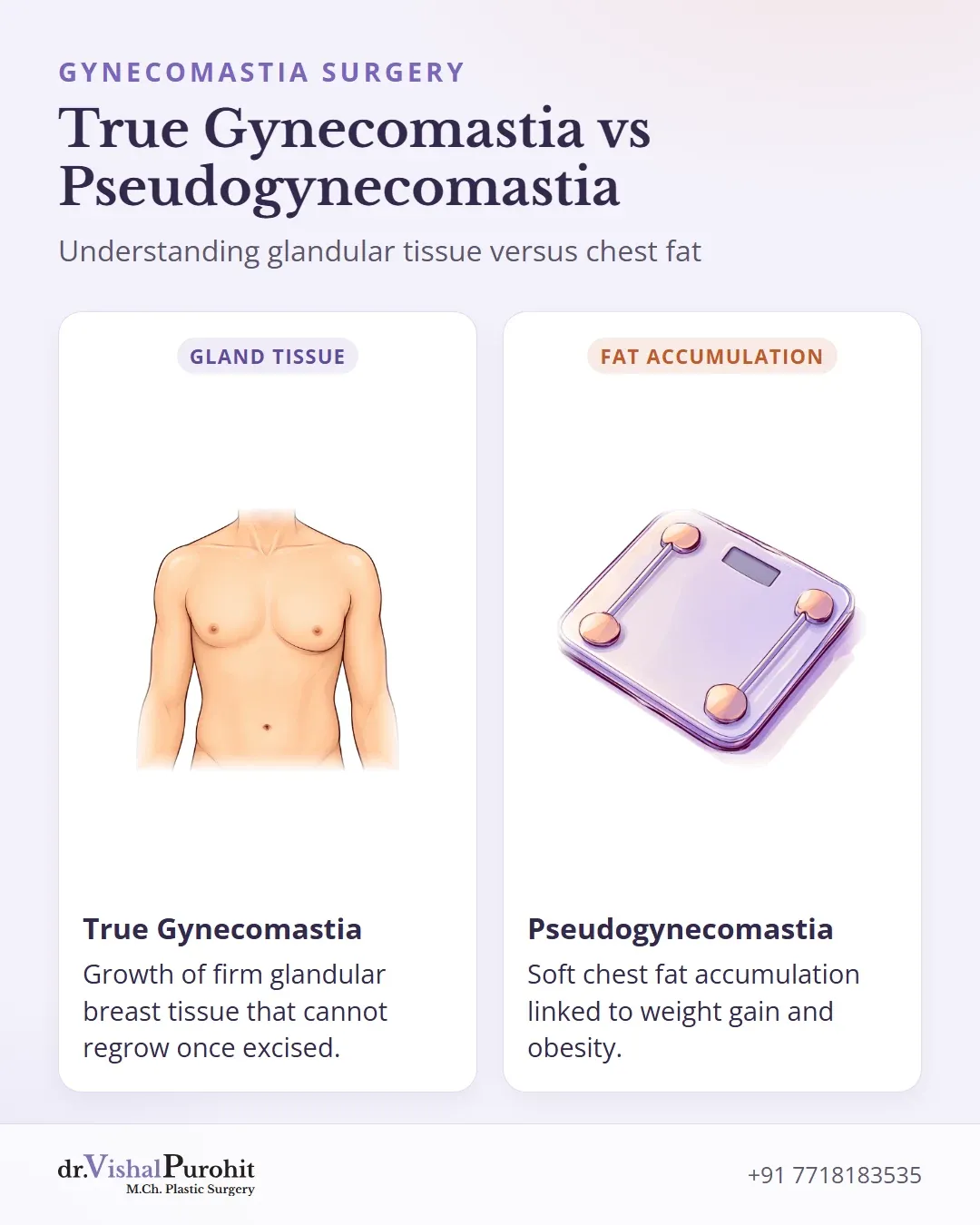
Not all chest fullness is gland. Doctors distinguish true gynecomastia (growth of glandular tissue) from pseudogynecomastia, which is fat accumulation often linked to obesity9. In men who are overweight, chest enlargement comes from fat rather than breast tissue growth10.
Because fat responds to changes in body weight, the American Society of Plastic Surgeons advises that patients whose gynecomastia was linked to weight gain stay at a stable weight to maintain their results1.
Dr. Purohit’s note: Target BMI is within the normal range; slightly overweight men may also benefit from surgery without waiting, but obese and massively obese men are not operated on because the risk is too high and skin may sag after later weight loss, needing further correction.
Biological Factors Determining Result Permanence vs. Recurrence
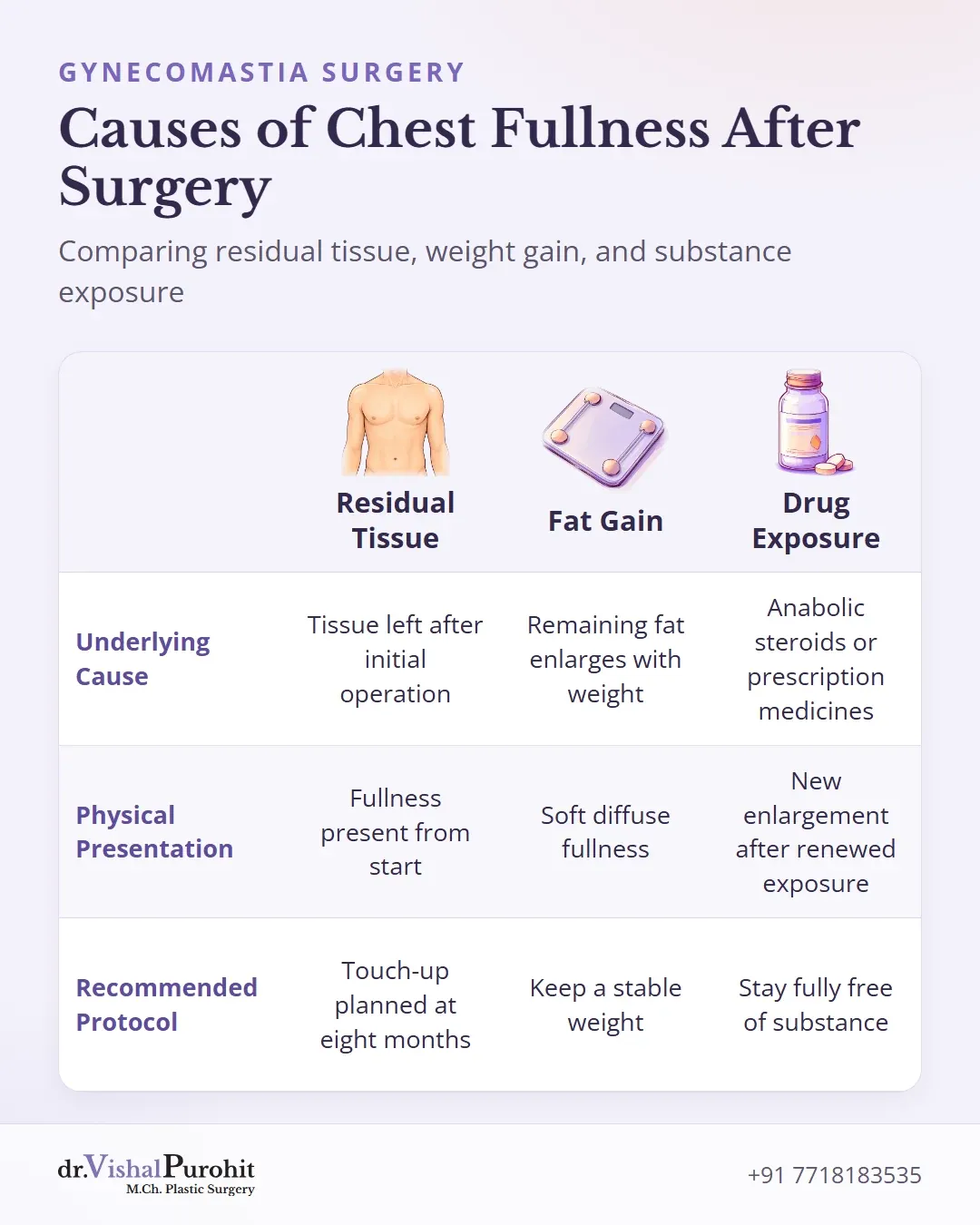
| Biological Factor | What Happens | How It Usually Shows | Recommended Patient Protocol |
|---|---|---|---|
| Residual tissue | Gland, fat or skin left after the first operation, including the small amount deliberately kept under the areola5 | Fullness present from the start, clearer once swelling settles at 3 to 6 months8 | Review at follow-up; a touch-up, if needed, is planned 8 to 9 months after the first surgery |
| Fat gain | Fat that remains in the chest and body enlarges with weight gain | Soft, diffuse fullness (pseudogynecomastia) rather than a firm lump9 | Keep a stable weight1 |
| Steroid or drug exposure | Anabolic steroids, marijuana and some prescription medicines can cause gynecomastia11; steroid-related gynecomastia is often irreversible12 | New enlargement after renewed exposure | Stay fully free of the substance1 |
| True recurrence | New glandular growth after a period with a flat chest | Uncommon in published series (none among 200 men in one report)2; long-term recurrence data remain limited13 | Medical review to find and treat the cause4 |
Lifestyle Changes Protect Your Permanent Results
While the surgical removal of the gland is lasting, the longevity of your new contour is heavily influenced by your lifestyle. The procedure does not make anyone immune to new weight gain or to the effects of hormones and drugs.
Key points
- Maintaining a stable weight and avoiding substances like steroids protect your surgical chest contour.
- Fullness after surgery usually stems from new fat or residual tissue rather than true gland regrowth.
- Secondary procedures or touch-ups are carefully evaluated only after all post-operative swelling settles.
A “puffy” or enlarged chest can return if certain external factors change, such as significant weight gain, steroid or drug use, or an untreated hormonal condition14.
“Recurrence” is a term used loosely. It helps to keep four situations apart:
- Tissue left at the first operation
- New fat
- Renewed hormone or drug exposure
- True regrowth of gland
Each has a different cause and a different answer.
Commitment to Stability Prevents Recurrence
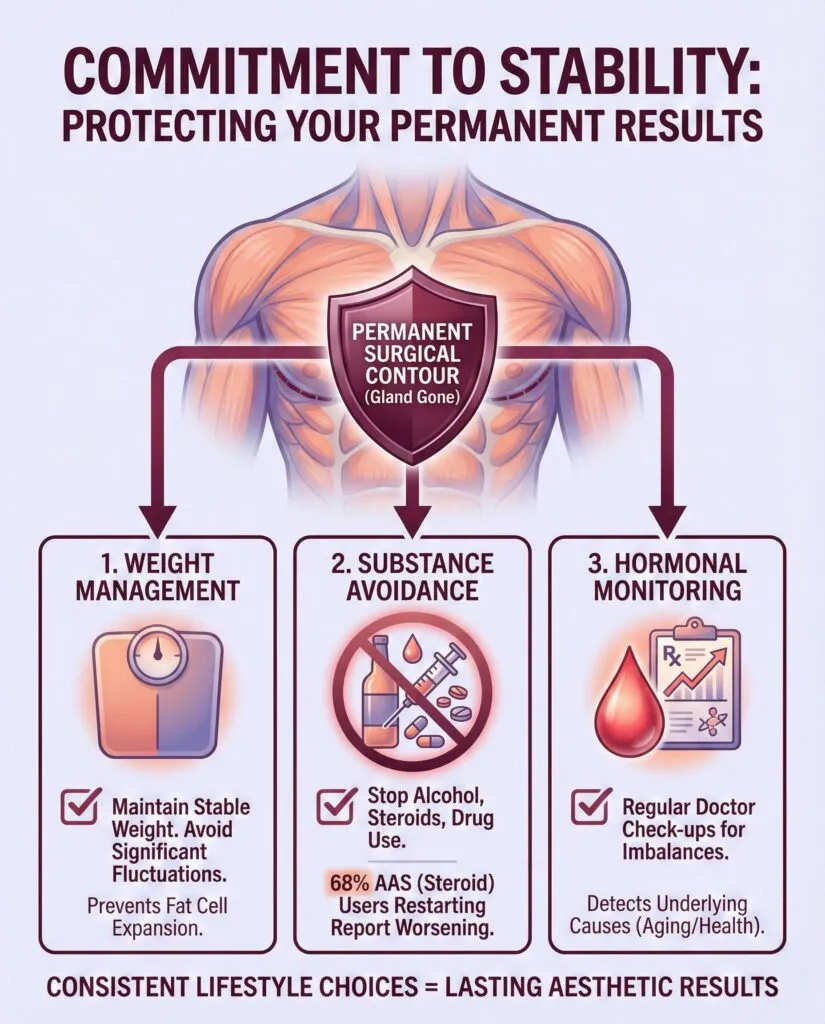
This infographic outlines post-operative care for gynecomastia surgery by Dr. Vishal Purohit to support stable results. It emphasises weight management, substance avoidance and hormonal monitoring to protect the chest contour after gland removal.
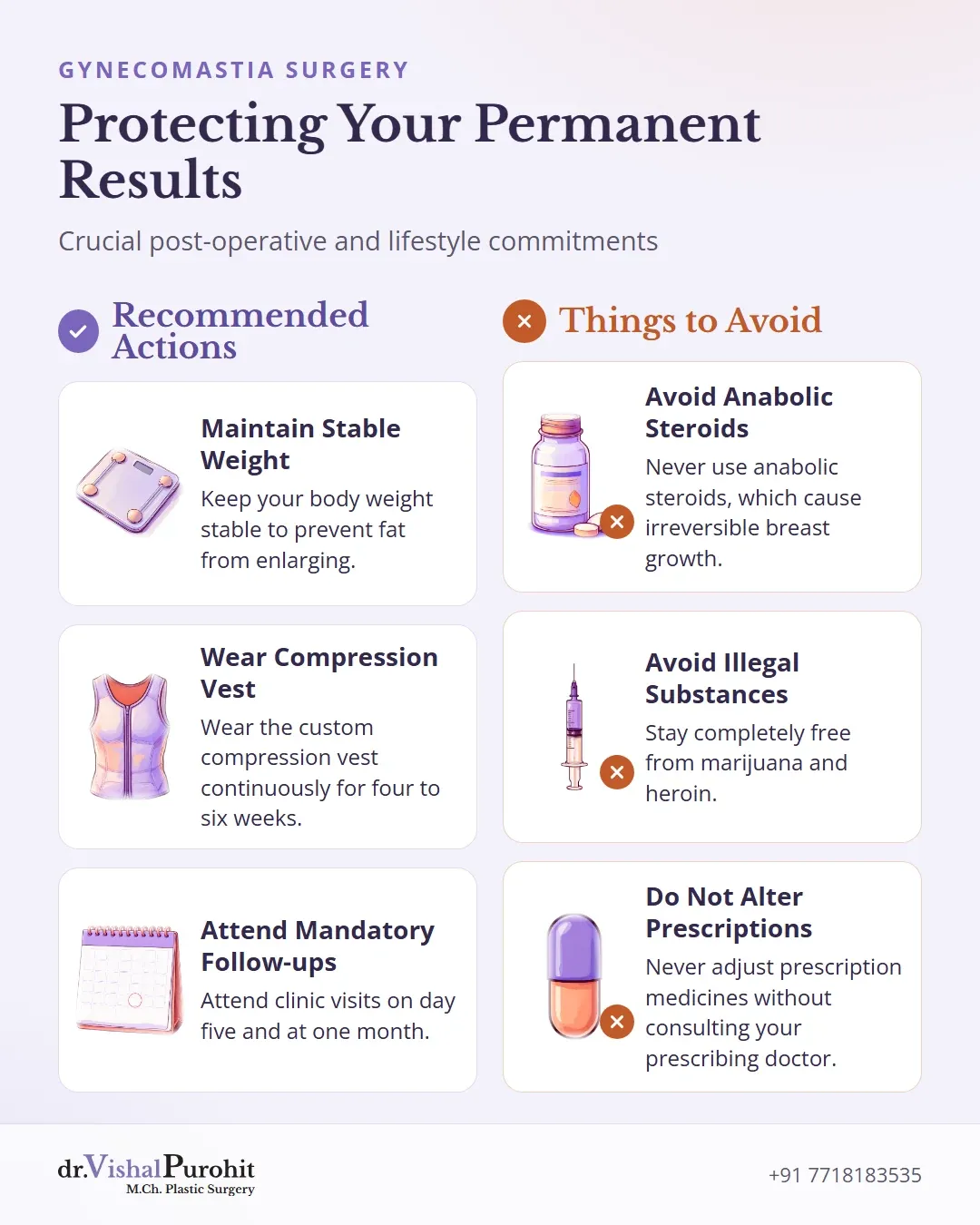
To keep the flatter chest contour achieved in surgery, a few commitments matter:
-
Weight Management: The American Society of Plastic Surgeons advises patients to remain at a stable weight to maintain results1. Fullness that appears after weight gain is usually fat, not regrown gland, as explored in gynecomastia and weight loss.
-
Substance Avoidance: Anabolic steroids, illegal drugs such as heroin or marijuana, and certain medicines are common causes of gynecomastia11. Anabolic steroid use often causes irreversible gynecomastia12, and patients whose gynecomastia came from drugs, including steroids, must be fully free from these substances to maintain their results1. The risks of steroids and gynecomastia are particularly high for gym-goers. Prescription medicines should only be changed after discussion with the doctor who prescribed them1.
-
Hormonal Monitoring: When a hormonal or other medical condition contributed to gynecomastia, management is directed at that underlying cause, including correction of endocrine abnormalities4. Continuing care with the treating doctor protects the result and overall health.
-
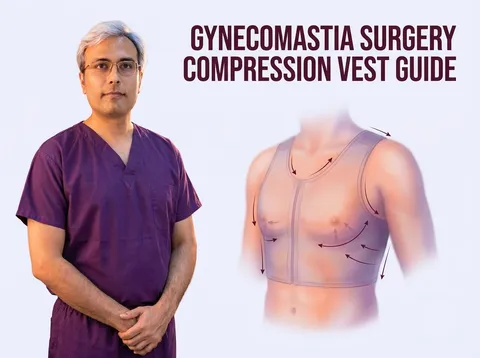
Follow-up: In Dr. Vishal Purohit’s Jaipur practice, follow-up visits on day 5 (first release of the pressure garment and dressing change if needed) and at 1 month are mandatory, and 24x7 help is available. The custom medical-grade compression vest is worn 24/7 for 4 to 6 weeks.
This care is a crucial part of your long-term gynecomastia surgery recovery. Many practical measures also support long-term follow-up and prevention of recurrence to protect your chest contour over time.
Secondary Surgery for Unforeseen Changes
If fullness remains or returns, a second procedure may be considered. Cleveland Clinic notes that some men need more than one surgery to get the result they want14. Residual fat that is still present once post-operative swelling and inflammation have settled can be improved with secondary surgery15.
In the Aesthetic Plastic Surgery classification study of 148 patients, minor contour problems in 9 patients were treated with secondary surgery under local anaesthesia, using fat grafting3.
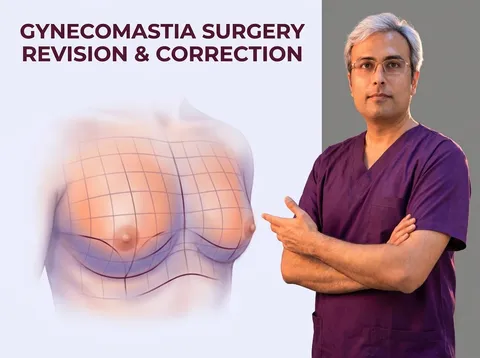
In Dr. Vishal Purohit’s Jaipur practice, if a patient is not satisfied, Dr. Vishal Purohit plans a revision or touch-up, such as liposuction, with a gap of 8 to 9 months after the first surgery. That interval is well beyond the 3 to 6 months final results may take to appear8, so any further treatment is planned on settled tissue rather than on swelling.
In Dr. Vishal Purohit’s practice, any fullness that appears or persists represents residual tissue rather than regrowth, and it is addressed through a planned return to the operating theatre.
When evaluating patients, his approach begins with clinical examination and direct palpation, followed by ultrasound or MRI if imaging is needed. Hormone blood tests are ordered only when there are other symptoms of hormonal imbalance.
Your Consultation in Jaipur
Gland that is removed at surgery is no longer in the chest. Whether the new contour stays depends on several factors:
- How much tissue remains
- Body weight stability
- Avoiding steroids and other medications that trigger breast tissue growth
Dr. Vishal Purohit, M.Ch. plastic surgeon registered with the Rajasthan Medical Council (RMC Reg. 28041/14185), explains during your consultation which of these factors apply to you and what can realistically be expected.
To book a personalised, confidential consultation, please reach out to the team in Dr. Vishal Purohit’s practice.
-
Call or WhatsApp: +91 7718183535
-
Visit Us: 2nd Floor, Jaipur Hospital, Mahaveer Nagar, Tonk Road, Jaipur
Expert Gynecomastia Surgery & Male Chest Contouring in Jaipur
Are you dealing with enlarged male breast tissue or stubborn chest fullness? Schedule a confidential clinical evaluation with Dr. Vishal Purohit, M.Ch. plastic surgeon in Jaipur (RMC Reg. 28041/14185).
During your consultation, you can review causes, grading, and treatment options for male breast enlargement, or discuss gynecomastia surgery in Jaipur to understand surgical techniques, recovery timelines, expected results, and scheduling.
This is educational information, not medical advice.